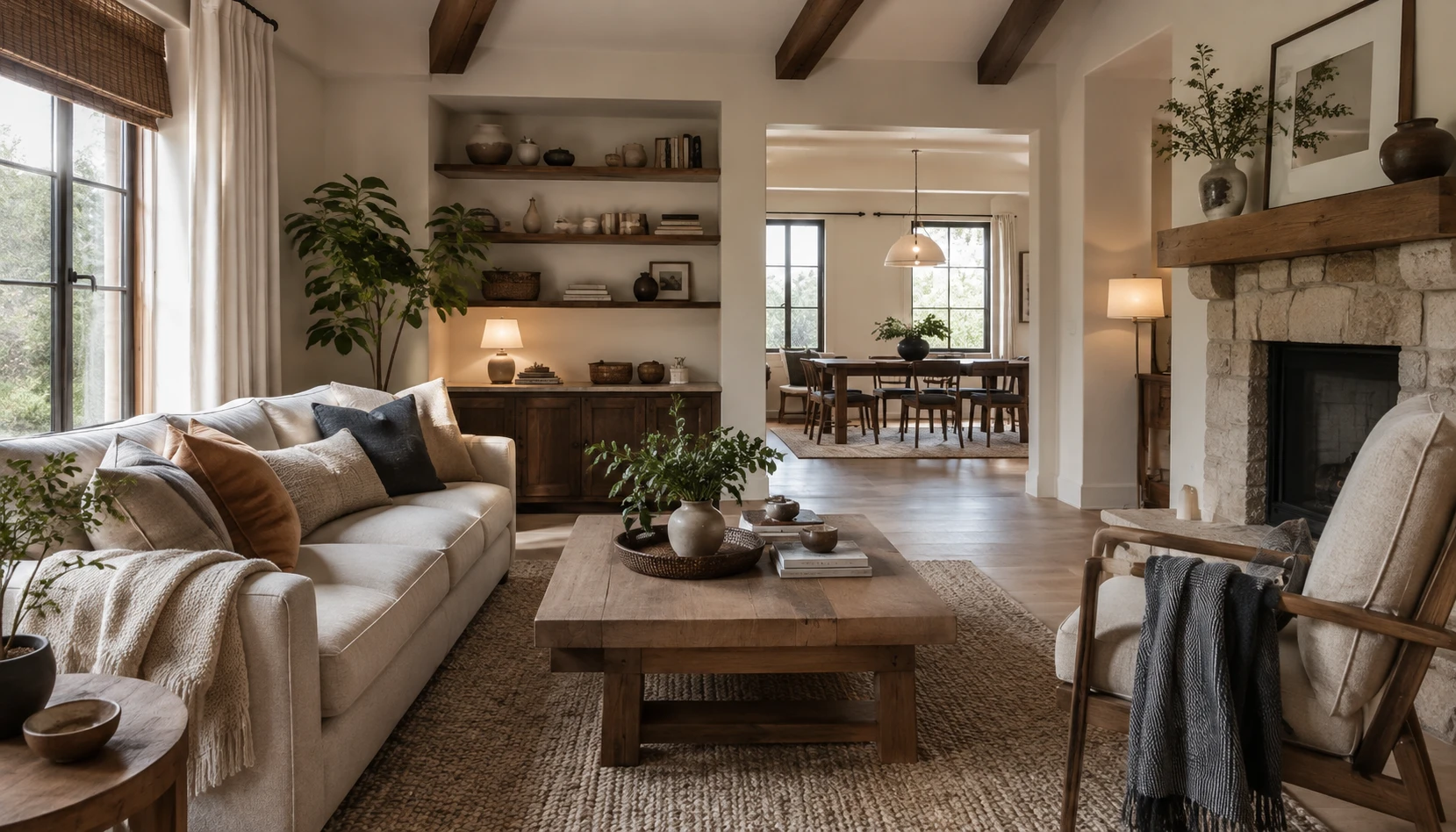
The homes I remember are rarely the ones with the most decoration. They are the ones where the rooms seem to belong to the same people.
A wood tone appears again in the next room. The lamps give off the same warm light. Storage is practical but does not look like an afterthought. There are personal objects, but they are not spread across every available surface.
That is the useful side of home inspiration. It should help you notice the decisions that make a room work, not leave you with another hundred images and no idea what to change first.
What Makes a Home Feel Considered
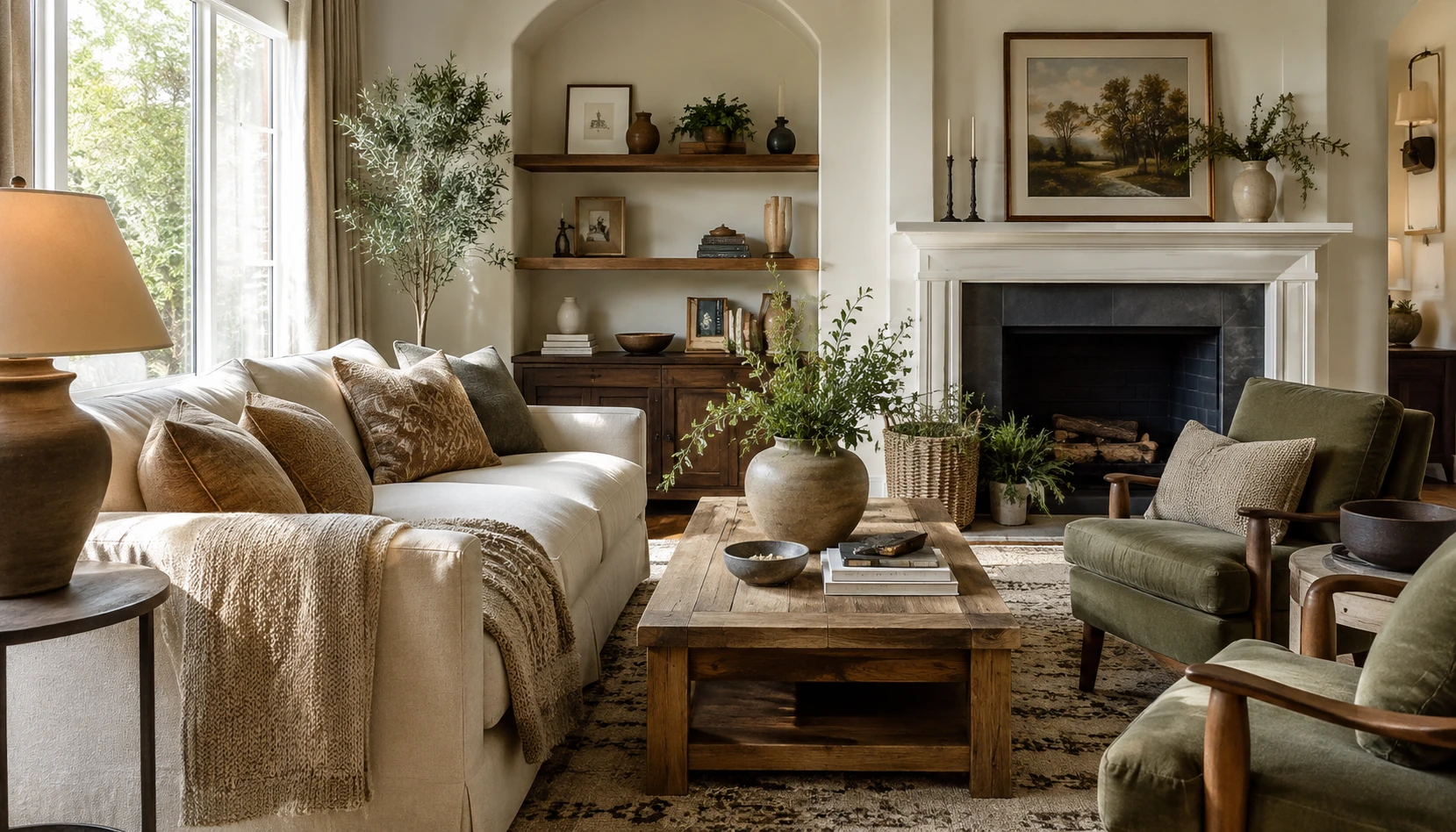
A considered home is not a matched set. It has variation, but the variation is controlled.
The rooms share a visual vocabulary. Similar wood tones, metal finishes, or fabric colors appear in more than one place.
The useful things are handled well. Lamps sit where light is needed. Storage sits near the activity it supports.
The scale makes sense. Rugs connect furniture instead of floating alone. Artwork is large enough for the wall.
There is room to pause. Not every shelf and corner is filled. Empty space makes the chosen pieces easier to notice.
Use More Than One Light Source
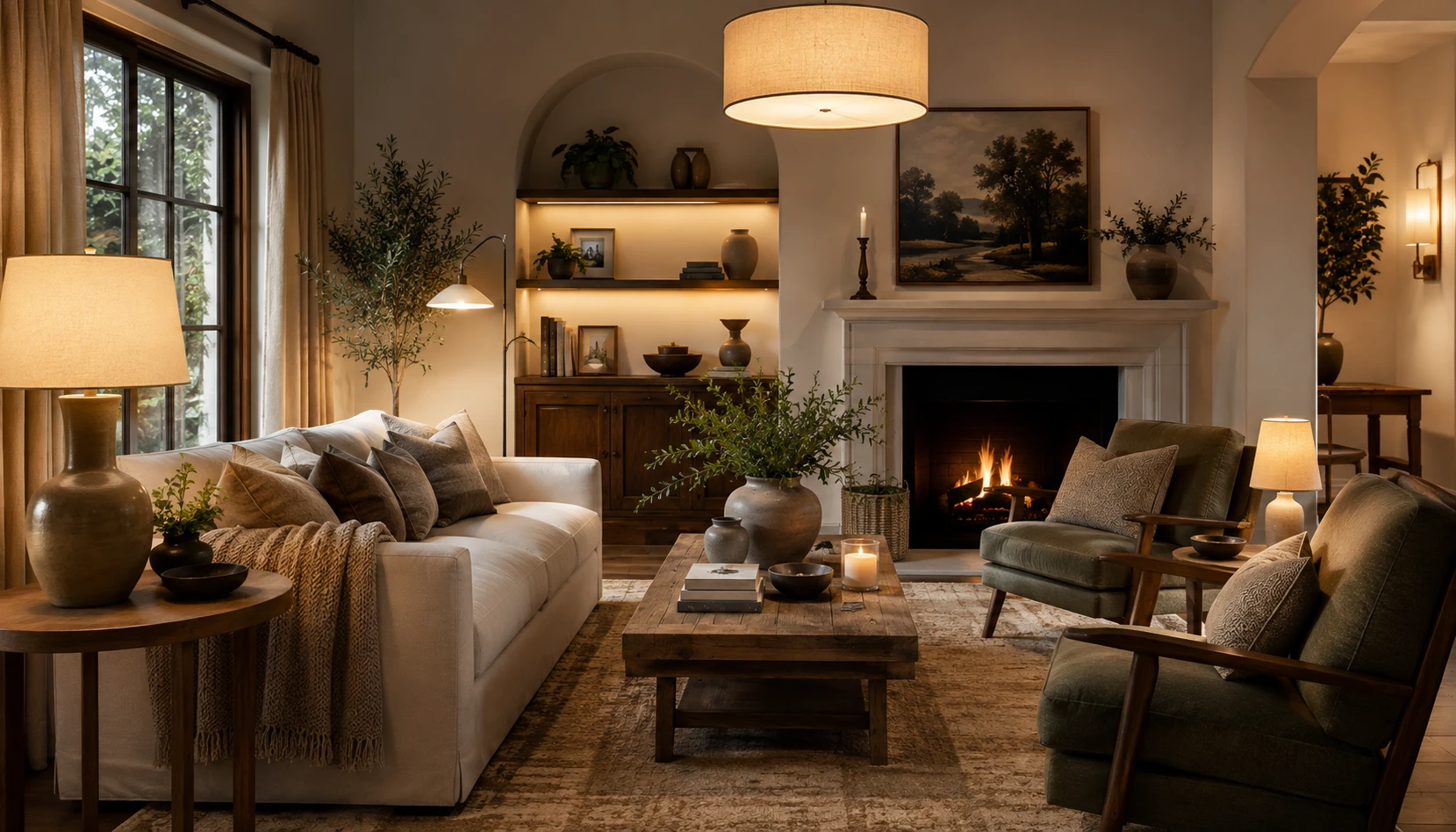
One ceiling fixture asks too much of a room. Add light at different heights: a floor lamp near a chair, a table lamp on a console, or a small lamp in a dark corner.
Use similar color temperatures so the lamps do not fight each other. Warm bulbs around 2700K to 3000K work well in living rooms and bedrooms.
Let Curtains Improve the Architecture
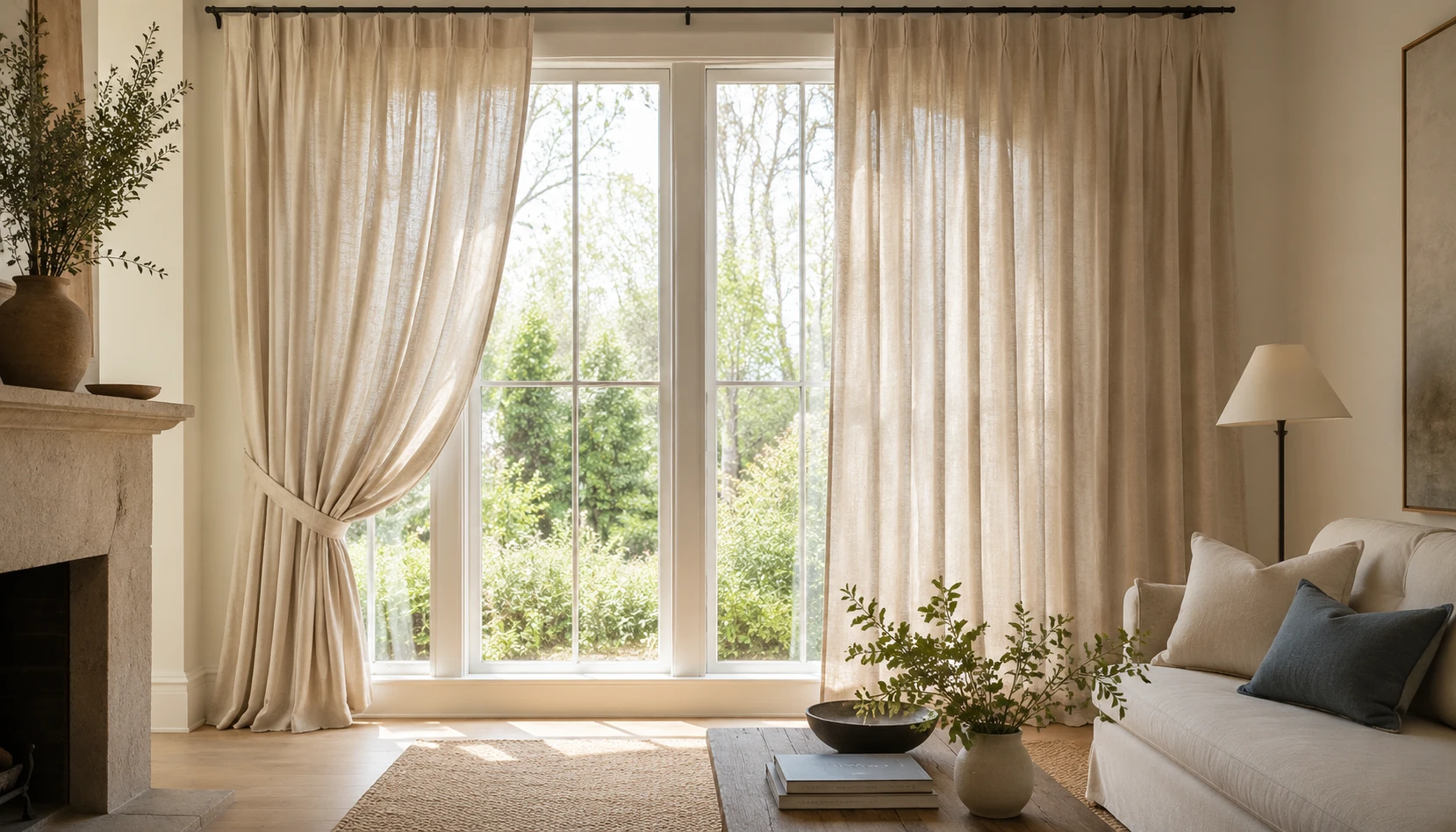
Mount the curtain rod above the frame where possible, and extend it beyond the sides so the curtains sit partly off the glass when open. That exposes more daylight and makes the window appear wider.
Full-length curtains usually look more deliberate than panels that stop above the floor. For small rooms, see Bright Small Living Room.
Repeat One Color Across the Home
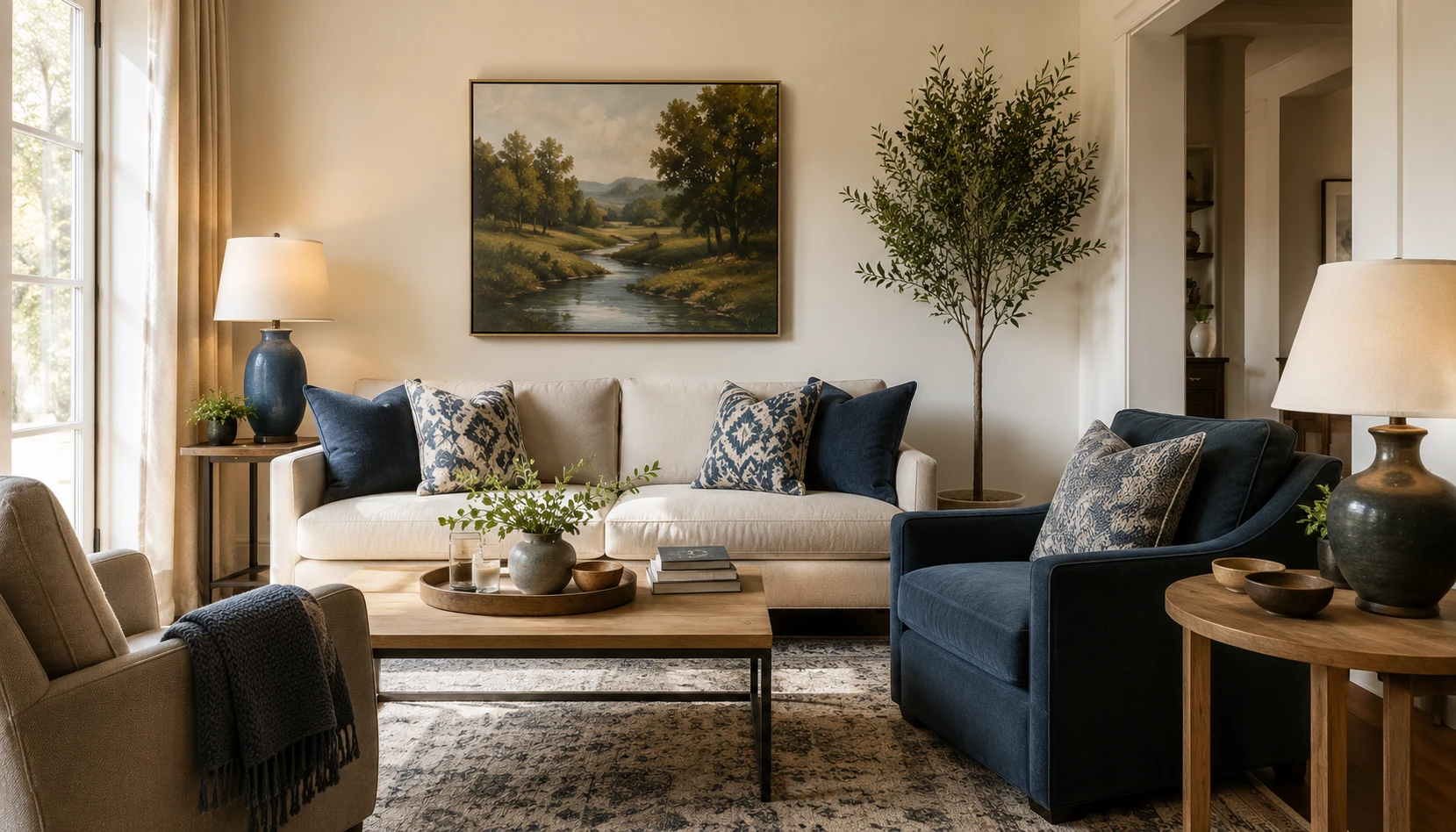
Choose one supporting color that can travel through several rooms. Olive might be a living room pillow, a kitchen towel, and a framed print in the hallway.
The repetition should be noticeable only after you look for it. InterestDecor covers olive in the living room, kitchen, and bedroom.
Repeat Materials, Too
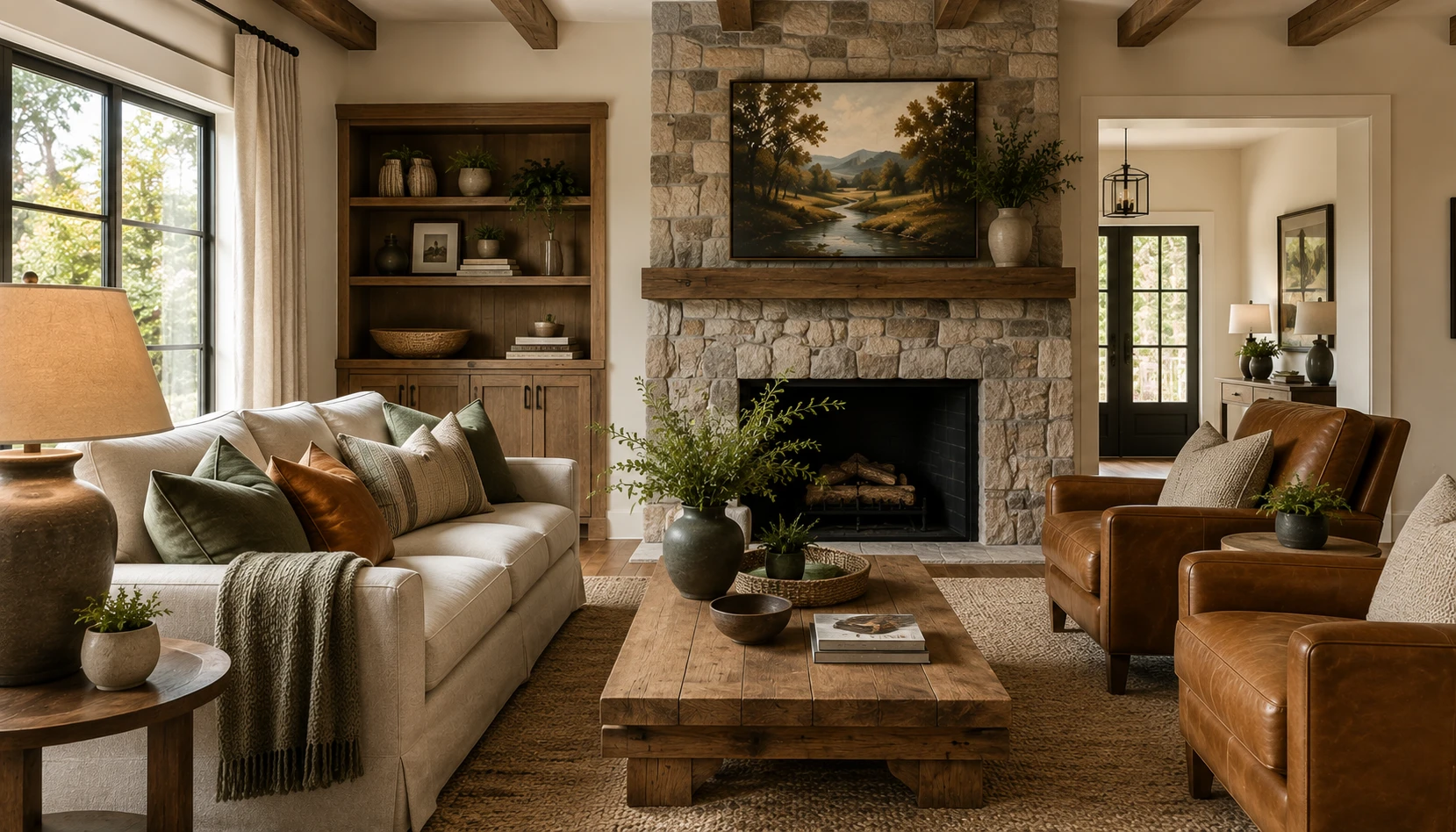
Material repetition is useful if you prefer neutral rooms. Warm oak, walnut, cane, linen, wool, brass, black metal, and matte ceramic all have a recognizable character.
Repeat two or three across the home. The pieces do not need to be identical, but their undertones should cooperate.
Use Rugs That Fit the Furniture
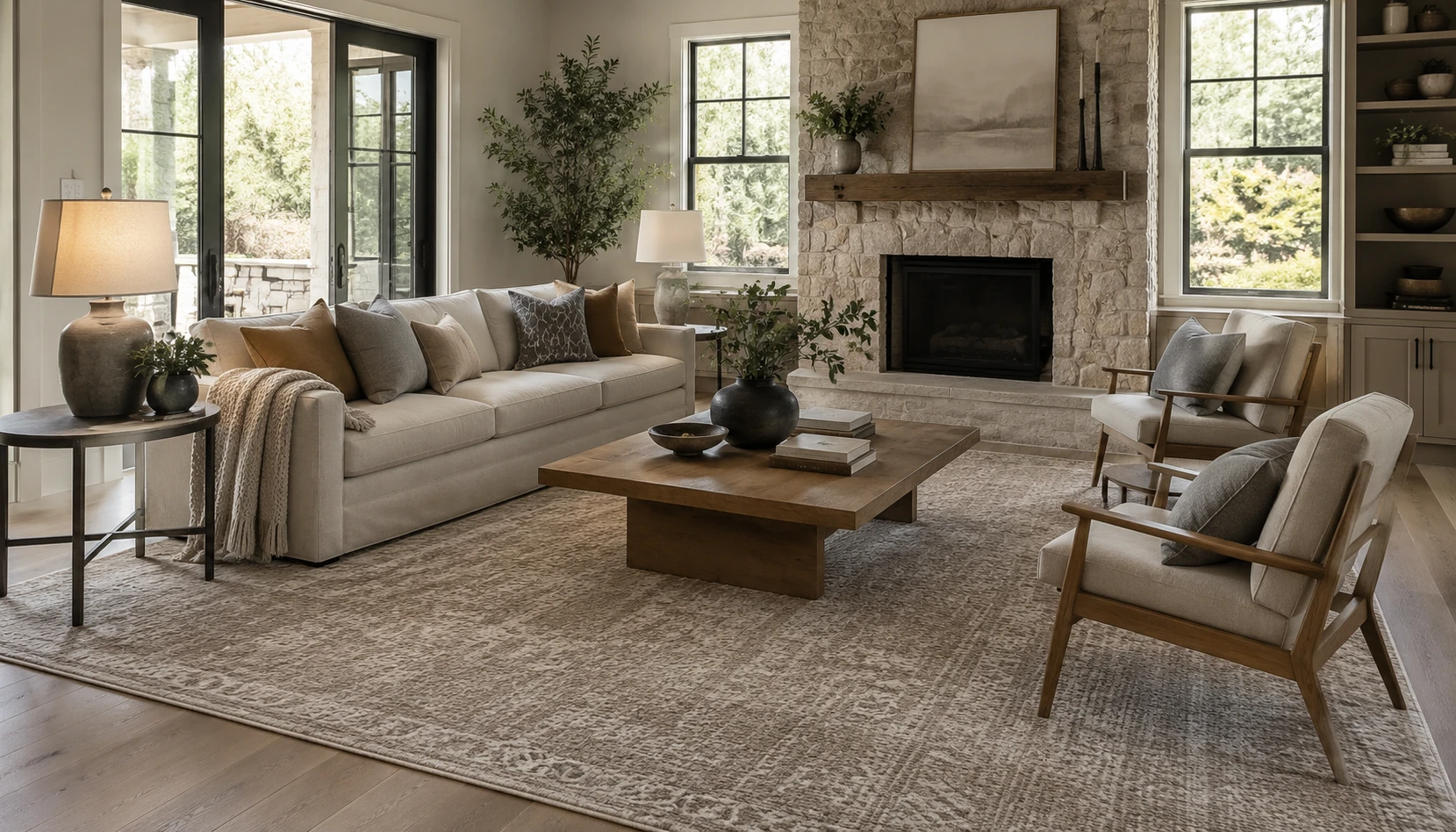
In a living room, aim for at least the front legs of the main seating pieces to sit on the rug. In a bedroom, the rug should extend far enough beyond the bed that you step onto it comfortably.
Mark the dimensions on the floor with painter’s tape before buying. A simple rug in the right size does more than a decorative rug that floats in the middle.
Give Each Room One Focal Point
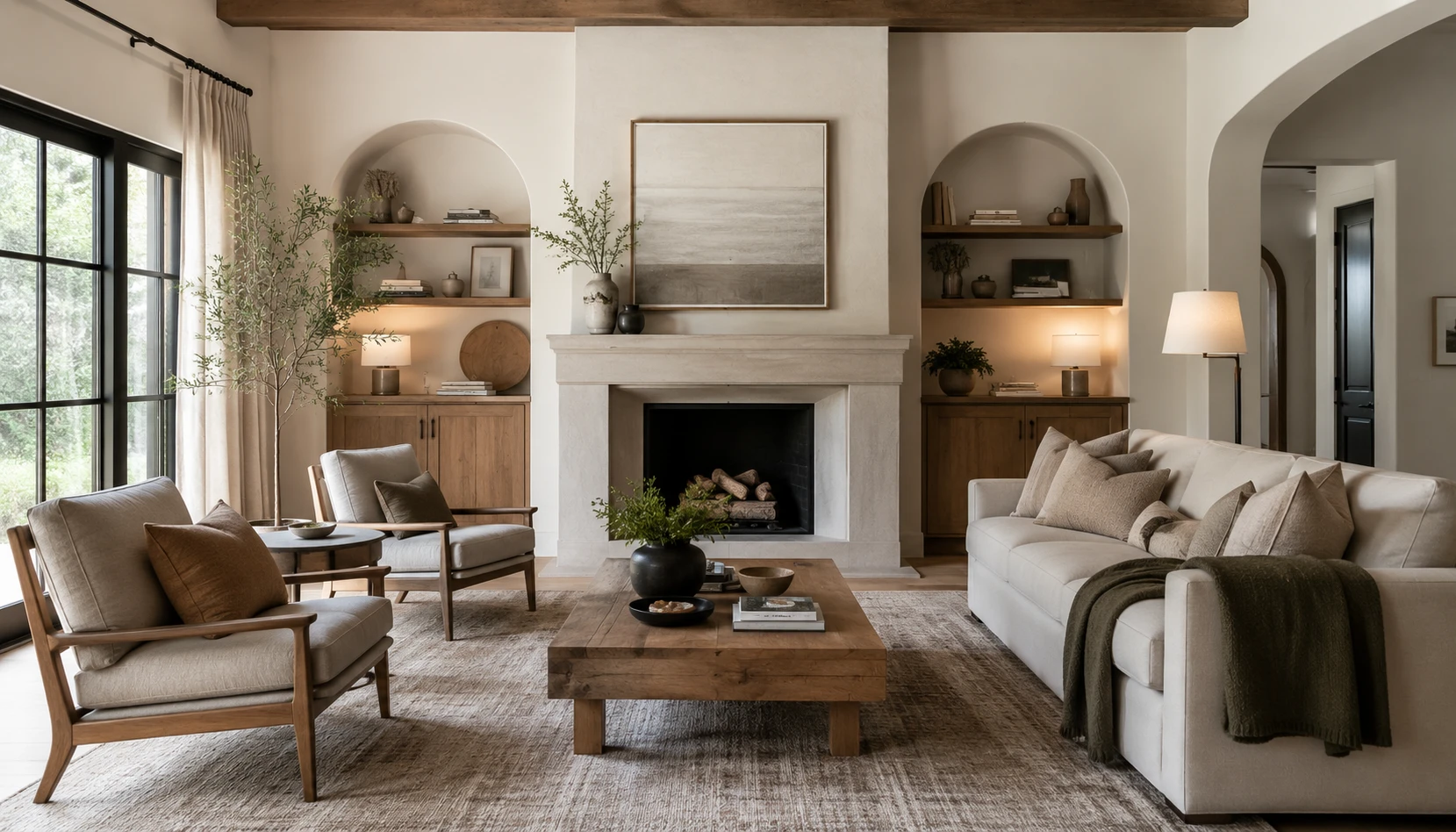
Choose one focal point: a fireplace, bed, sofa wall, dining table, large artwork, or strong cabinet color. Support it, then let the rest of the room stay quieter.
If the sofa wall has large art, the opposite wall may need only a lamp and plant. This is editing, not under-decorating.
Make Storage Part of the Room
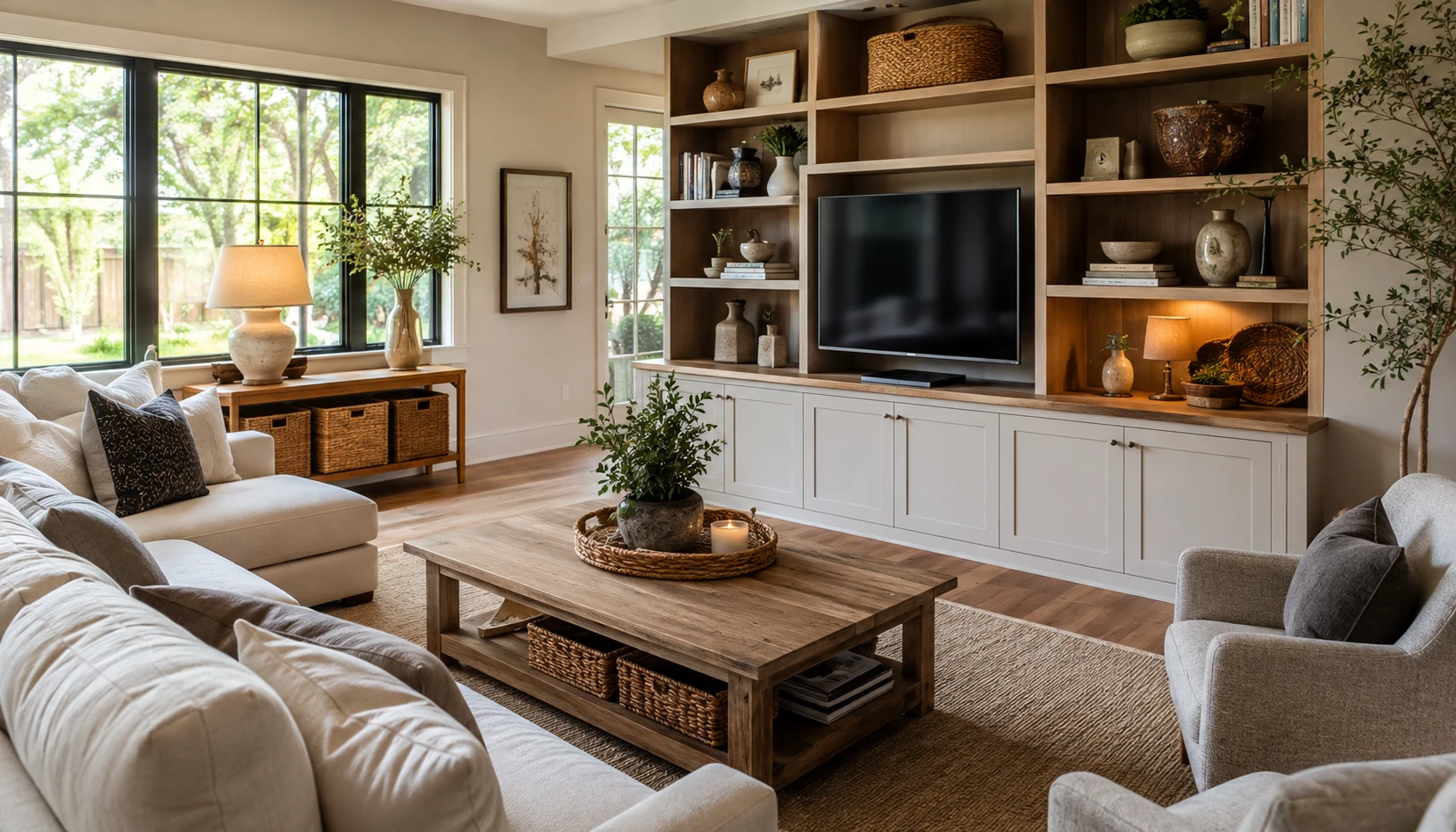
Use baskets for loose groups, trays for small objects that live together, and hooks near the activity they support. Repeat container materials instead of buying a different organizer for every problem.
Small Bathroom Ideas and Small Laundry Closet Ideas both use vertical storage without turning the walls into clutter.
Clear the Most Visible Surfaces
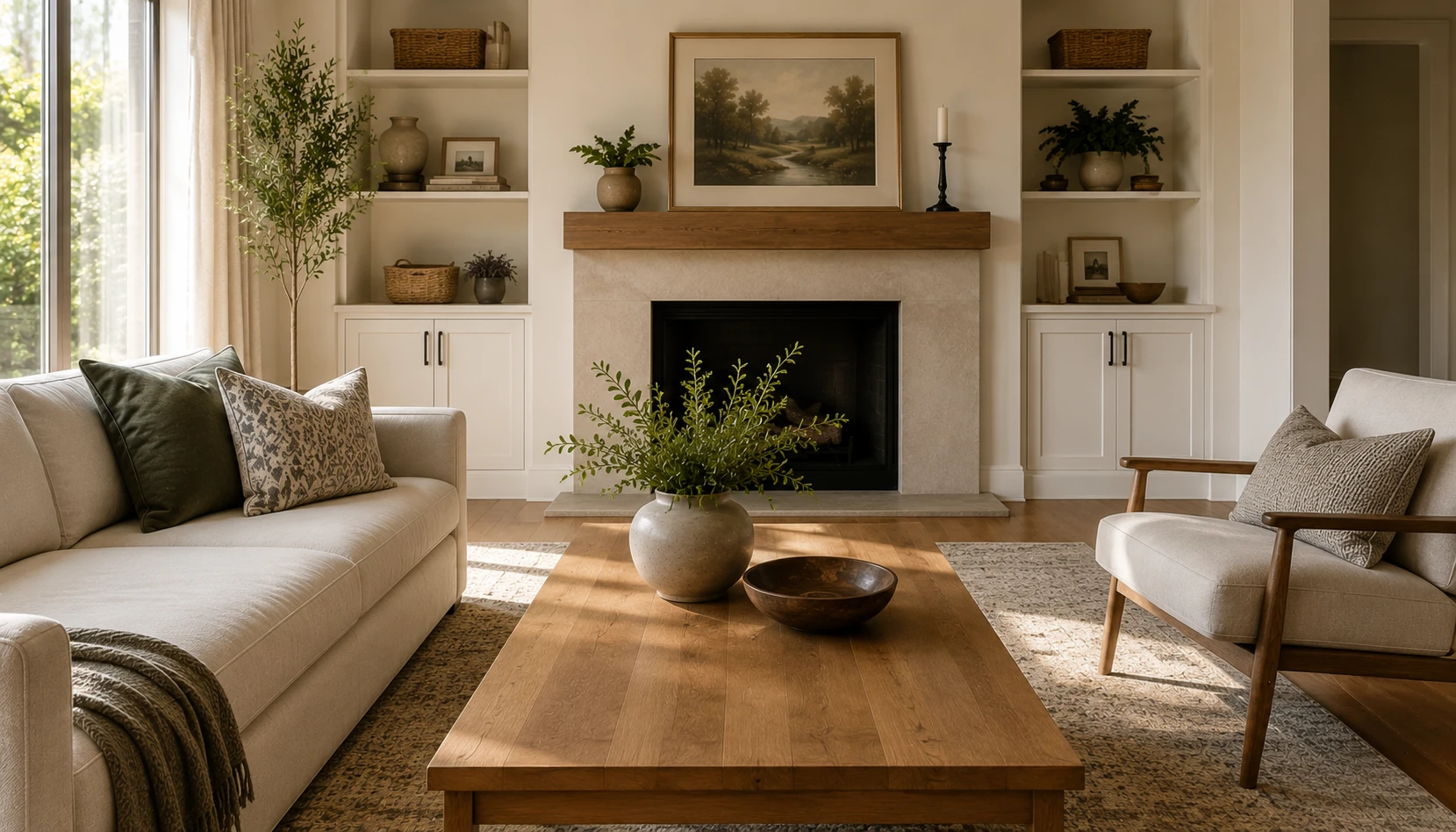
Start with the surface you see first: the kitchen counter, bathroom vanity, coffee table, or entry console. Remove everything, return the objects used daily, then decide whether one decorative piece earns the remaining space.
Bathroom Decor Ideas on a Budget explains why coordinated essentials often outperform extra decorative trays.
Use Plants Where a Room Feels Hard
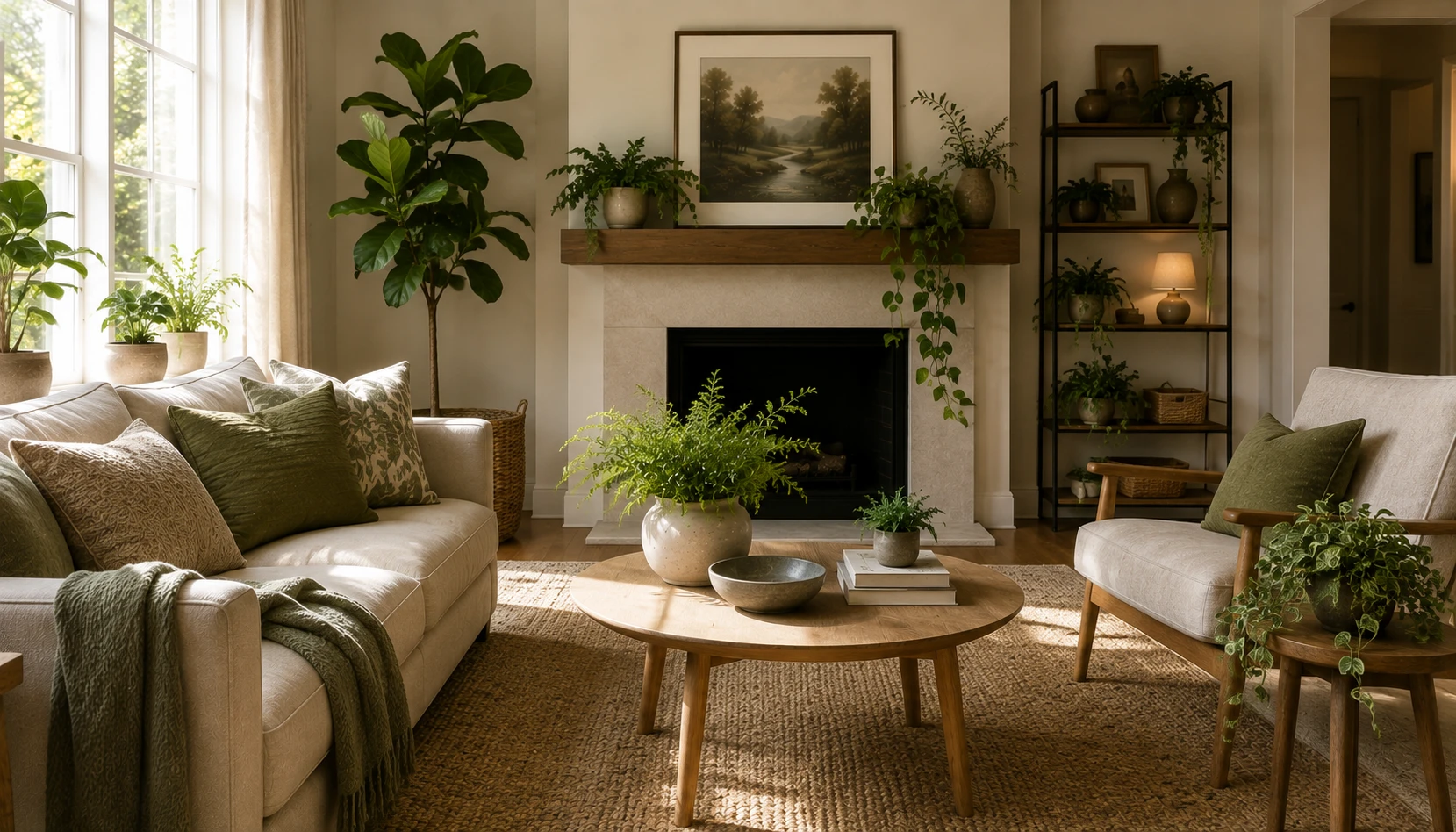
A tall plant softens a corner beside a cabinet. A trailing plant breaks the straight line of a shelf. Choose the plant for the actual light, not the photo you want to recreate.
Best Houseplants for Your Living Room can help match the plant to the room.
Group Small Objects
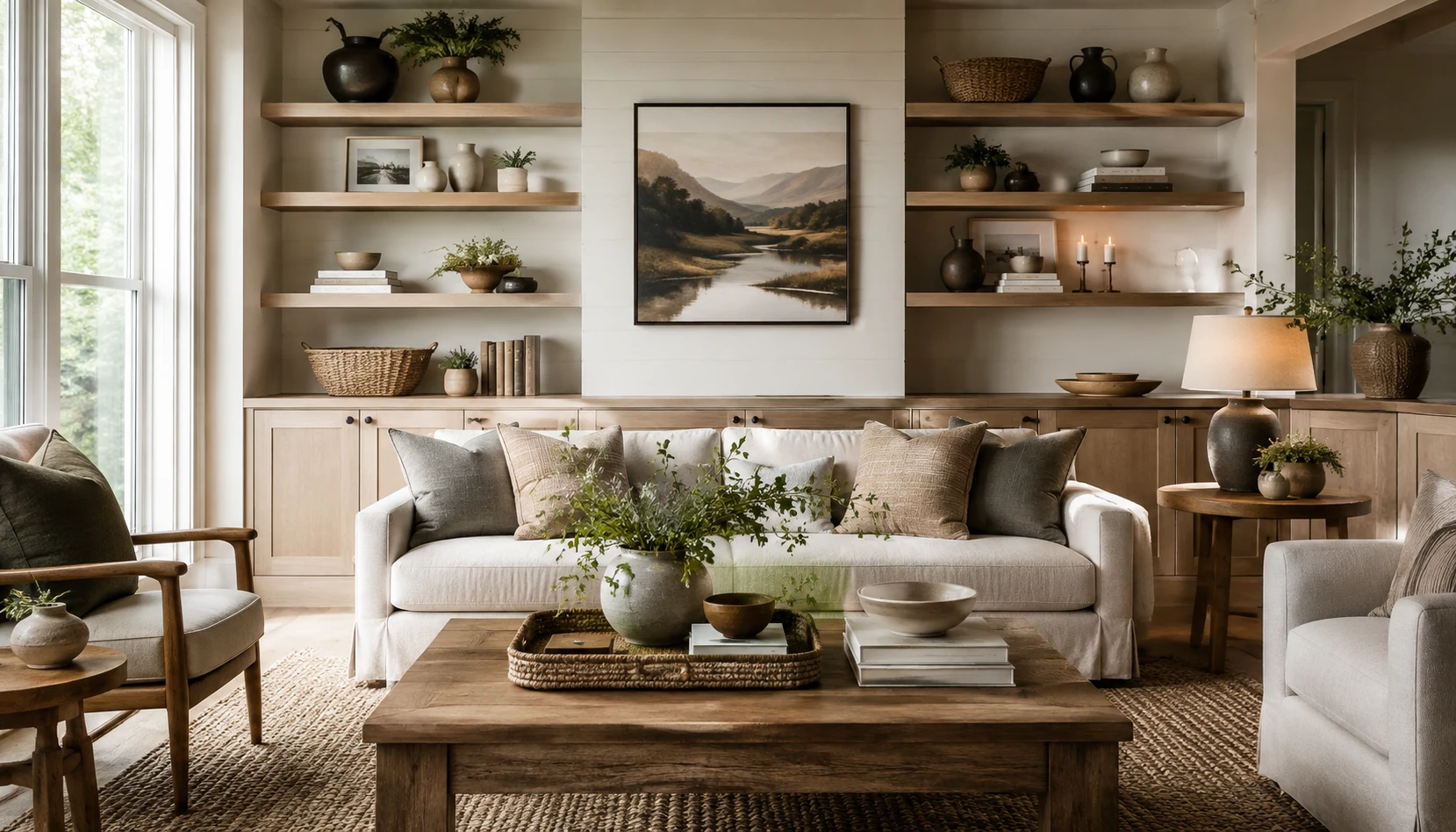
Small objects look more deliberate when grouped on a tray, stack of books, or shared surface. Vary height and shape, but keep the group limited.
Grouping also makes cleaning easier. You can move one arrangement instead of handling six unrelated pieces.
Mix One Older Piece With Newer Furniture
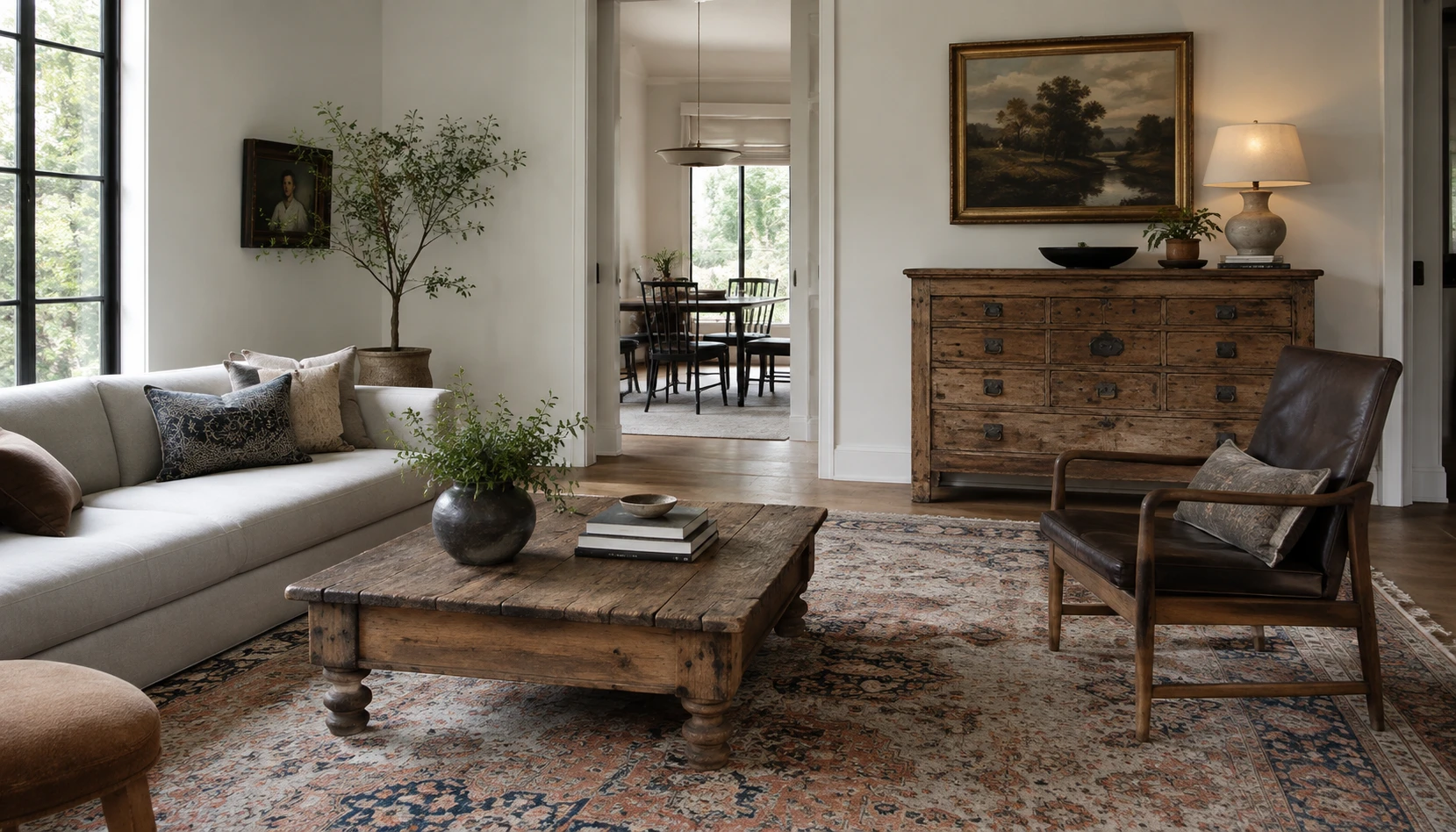
Add one older or handmade object: a wood stool, framed print, ceramic bowl, small table, mirror, or textile. It does not need to be valuable. It needs a shape or finish that interrupts the sameness of newer furniture.
Keep the surrounding styling simple so the older piece looks intentional.
Leave Something Empty
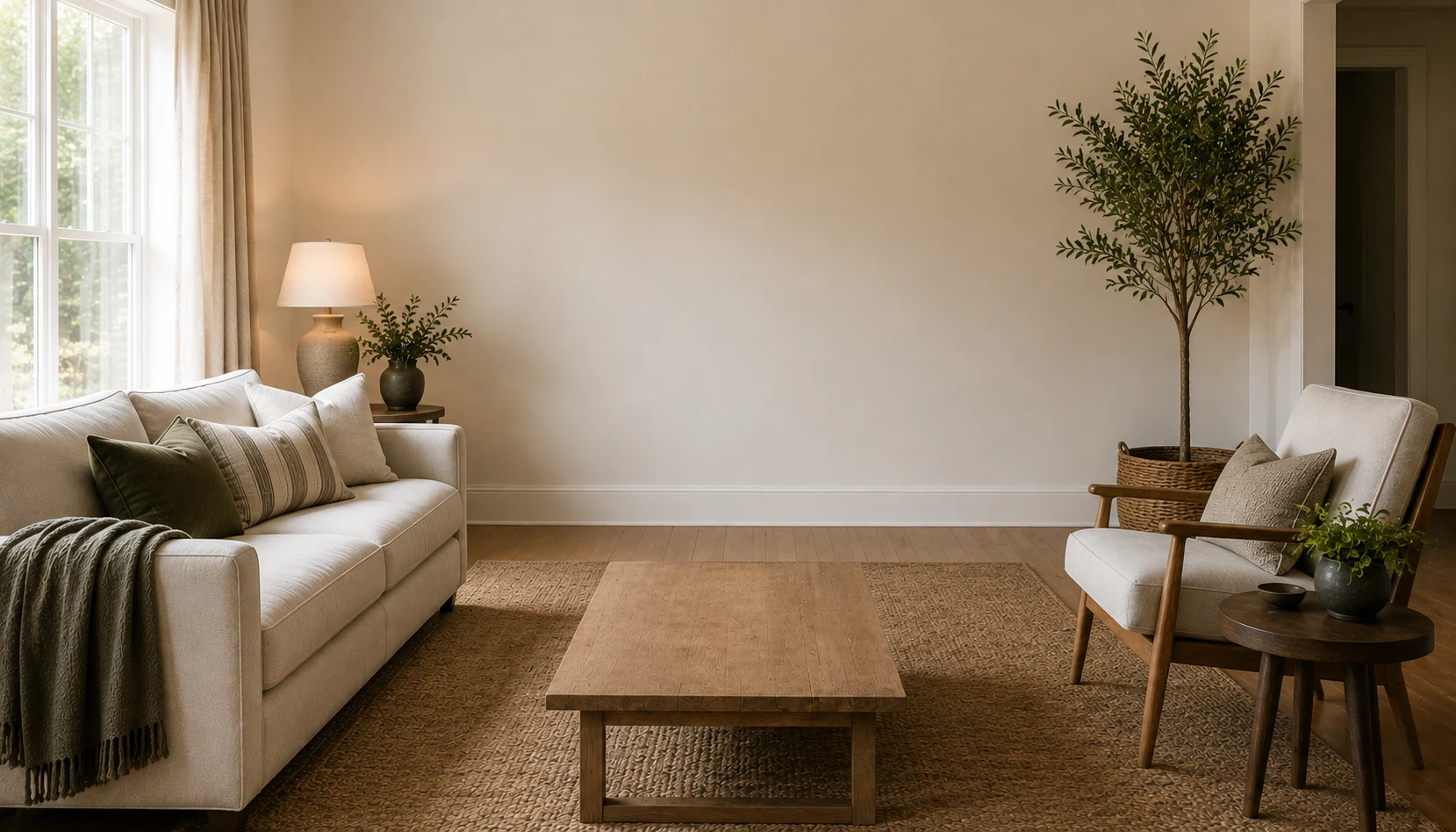
Leave part of a shelf, wall, or tabletop empty on purpose. Empty space is what gives chosen objects value.
The goal is not minimalism for its own sake. It is enough visual pause that the room does not ask for attention everywhere.
A Simple Order for Refreshing a Room
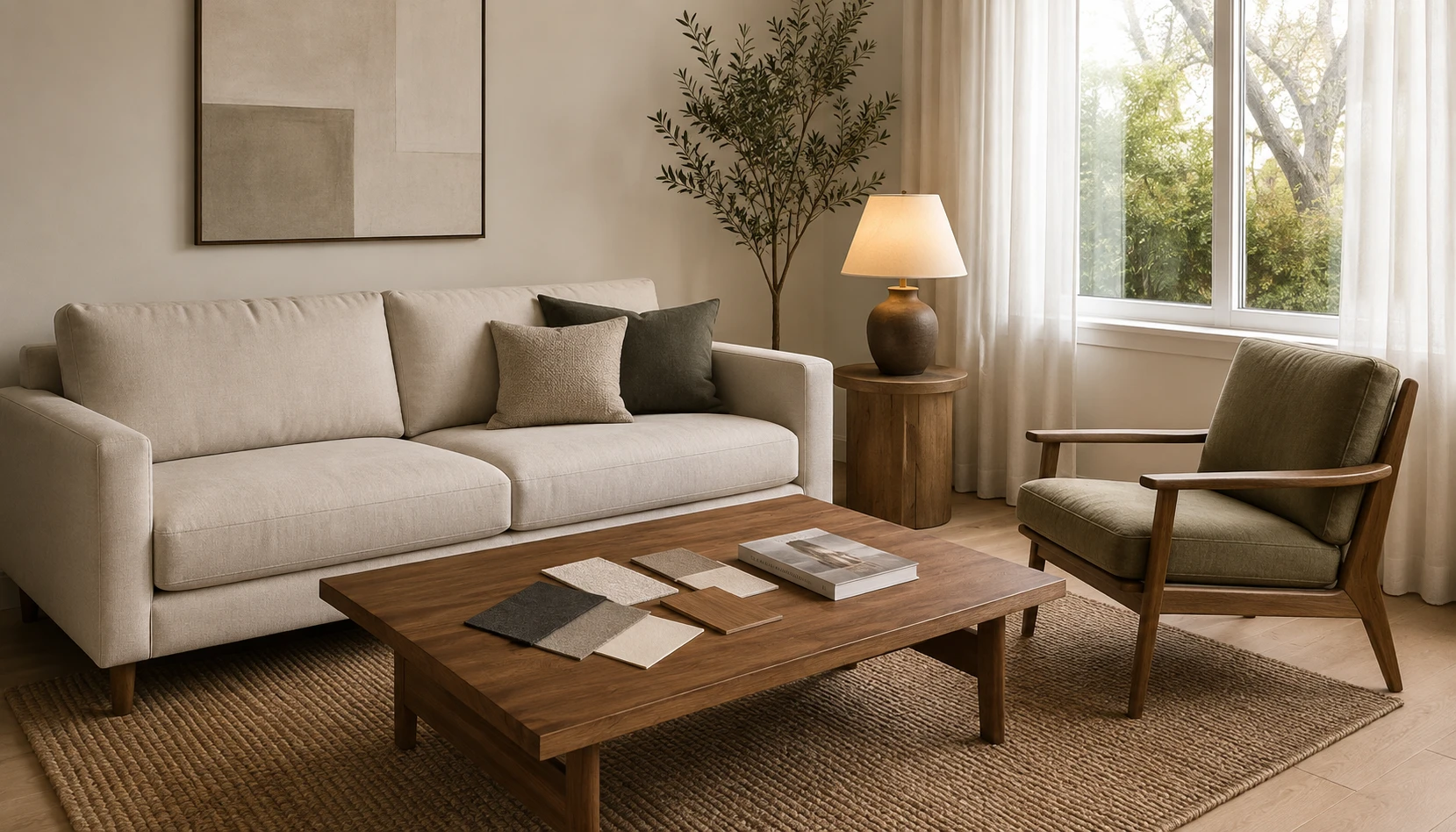
If a room feels wrong but you cannot identify one problem, work in this order:
- Check the lighting at night.
- Clear the most visible surface.
- Confirm the rug and artwork are large enough.
- Adjust curtains if they shorten or block the window.
- Repeat one color or material already in the room.
- Improve storage near the activity that creates clutter.
- Add plants, art, and smaller objects last.
Decorative objects cannot fix a rug that is too small, one harsh fixture, or a window hidden behind heavy fabric. Once the larger elements relate, the finishing pieces become easier to choose and easier to keep.
If you rent, continue with these renter-friendly apartment room ideas for ways to apply the same principles without permanent changes.