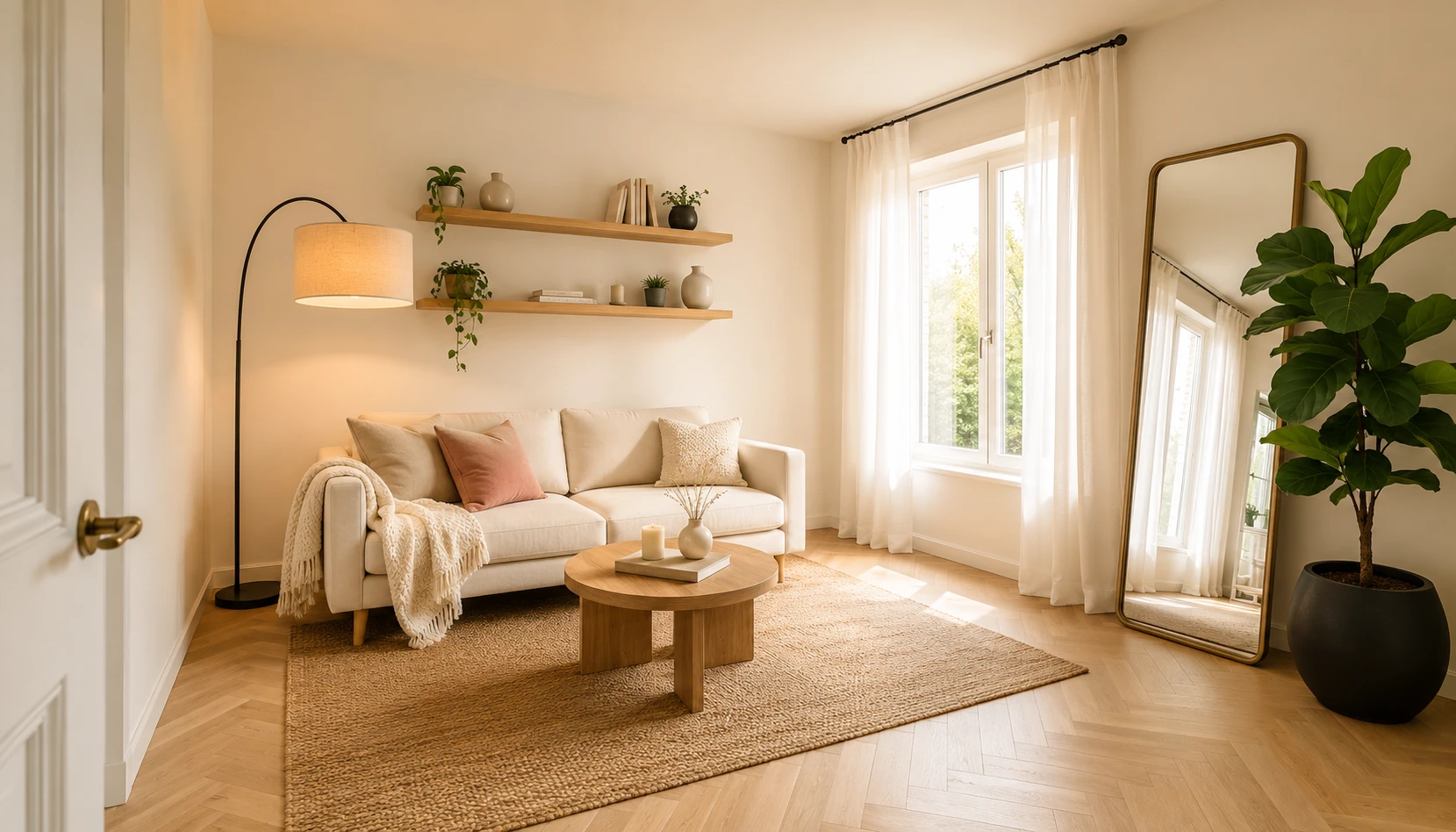
In 2026, the approach to small living rooms has fundamentally shifted. Instead of adding pieces, layouts are simplified, storage is integrated, and furniture is chosen for how it affects movement and light. The goal isn’t to cram as much as possible into a small space anymore. It’s to make every element work harder and feel more intentional.
The result: smart design has become the real luxury, and making the most of a small living room comes down to getting every square inch to work harder and look better.
Whether you’re in a studio apartment, a compact terraced house, or a rented flat, the same principles apply. These 10 ideas are used by interior designers at every budget level, and most of them cost nothing at all.
The Psychology of Why Small Rooms Feel Small
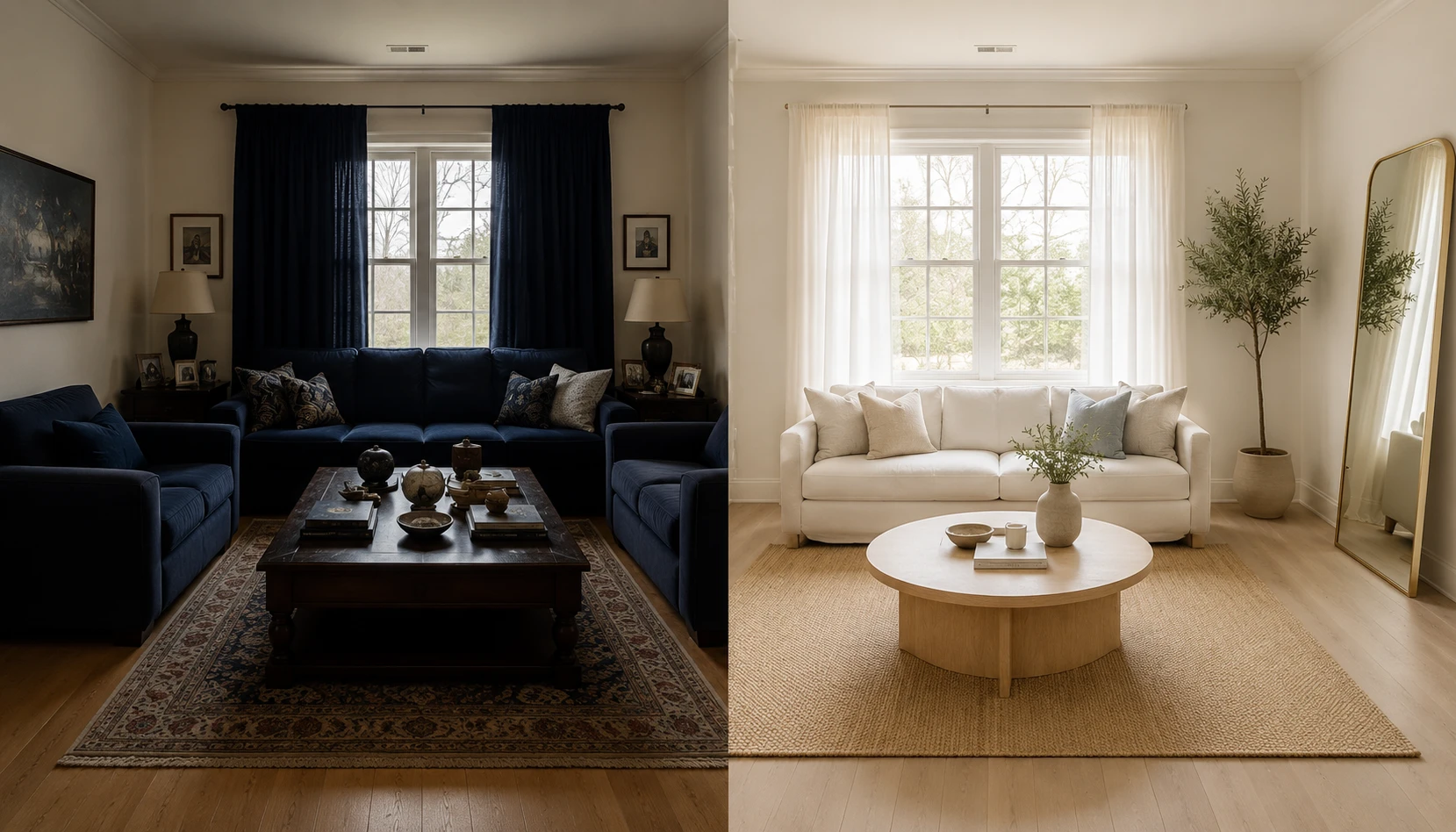
It helps to understand what actually makes a room feel small before getting into the fixes. It’s rarely just about square footage. Rooms feel small when:
Light is blocked or absorbed. Dark walls, heavy curtains, and dark furniture absorb light rather than reflecting it, which makes rooms feel smaller and heavier than they are.
Sightlines are interrupted. When furniture blocks the eye from travelling across the room, especially when pieces are pushed against every wall, the brain perceives a small, fragmented space rather than a single open one.
Clutter overwhelms negative space. Every object on display competes for visual attention. When too many things compete simultaneously, the room feels chaotic and compressed.
Scale is wrong. Oversized furniture in a small room looks crammed. But, counterintuitively, too many small pieces looks just as bad. One well-scaled sofa looks better than three small chairs that crowd the same space.
Understanding these four causes makes the solutions obvious. Everything below addresses one or more of them.
Choose Light Colours That Reflect and Expand
Colour is the single most powerful tool for changing how a room feels, and it’s available to almost everyone regardless of budget.
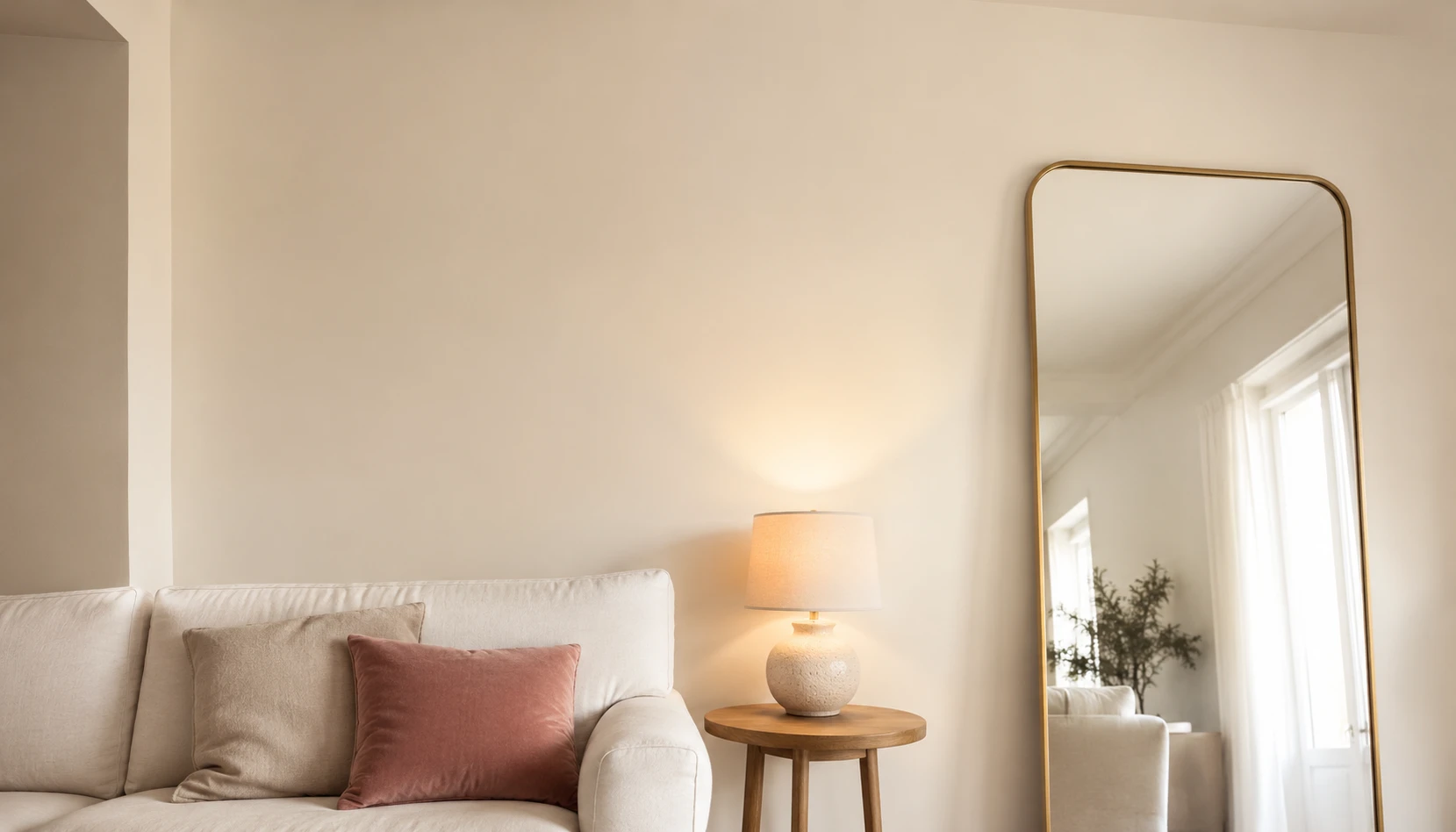
Using light neutral colors like white, beige, and soft grey instantly makes a small living room feel bigger and brighter. These shades reflect natural light and reduce visual heaviness, creating an airy and open atmosphere.
Best colours for a bright small living room in 2026:
Warm white: Not brilliant white (which can feel clinical) but a warm white with a slight cream or yellow undertone. These warm whites reflect light while remaining inviting, so the room feels bright without feeling like a hospital.
Soft oat and cream: The most popular small living room colour in 2026. Warm, inviting, reflects light beautifully, and works with literally every accent colour.
Pale greige (grey-beige): A sophisticated neutral that works in both warm and cool light conditions. Particularly effective in north-facing rooms that don’t get direct sunlight.
Soft sage green: One of the biggest trends of 2026. Lighter sage tones (not dark forest green) feel fresh and airy while adding colour interest. This same soft sage tone works just as well in other rooms. See our sage green bedroom ideas for the bedroom version of this palette.
The monochromatic approach: Using the same colour family (slightly varied tones) on walls, ceiling, and large furniture pieces reduces visual contrast and makes the room feel seamlessly larger. When nothing feels separate, everything speaks the same language. In small homes, that continuity matters a lot: it makes the entire space feel like one thoughtful, well-designed moment.
What to avoid: Stark bright white (too harsh), dark accent walls (divide the space visually), and multiple competing colours (creates visual noise).
Place Mirrors Strategically to Double the Space
Mirrors are the most effective space-expanding trick available, and they work every single time when placed correctly.
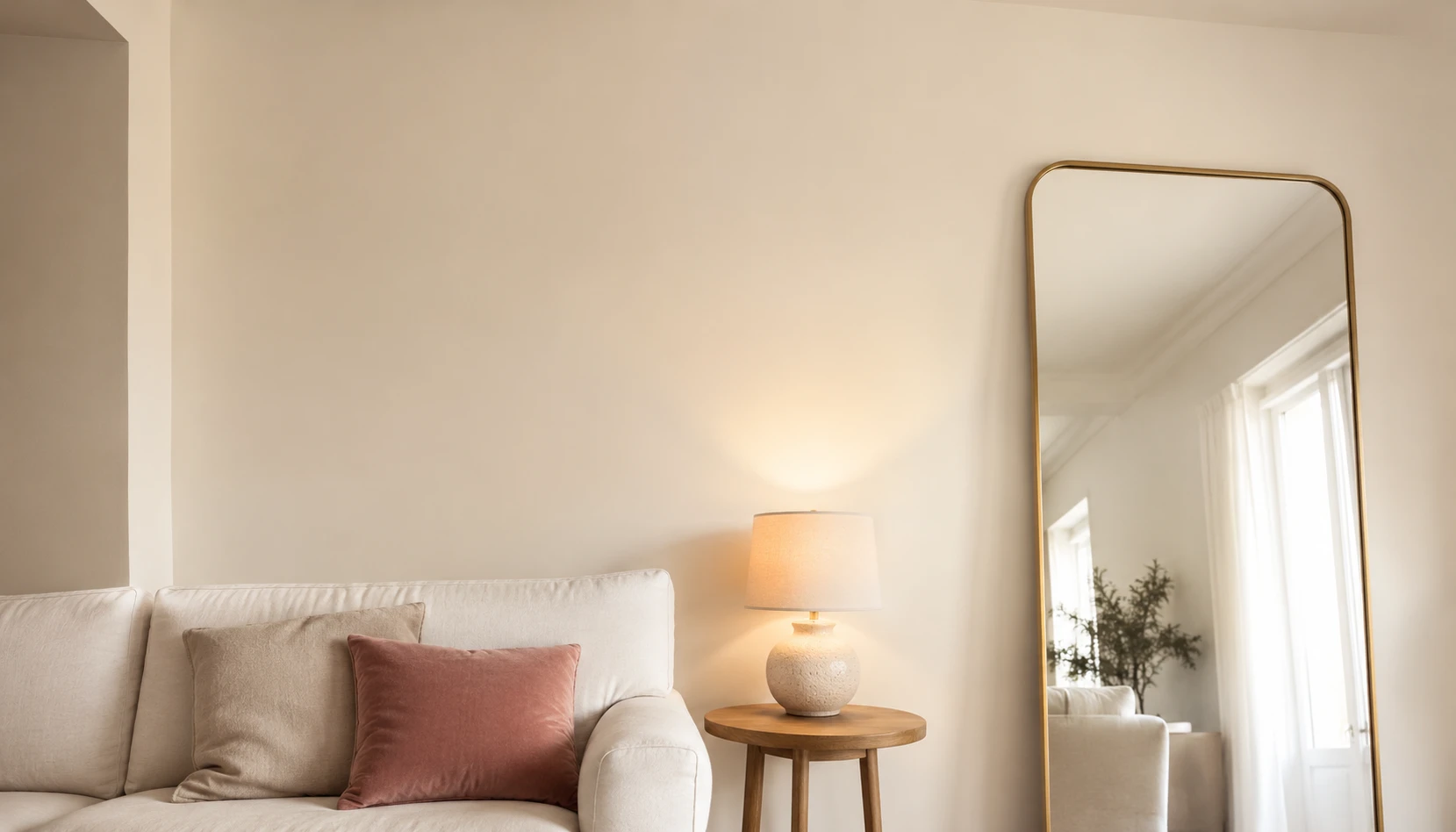
Mirrors are a great way to create the illusion of more space and make a room feel brighter and airier. Hanging a mirror on one wall to reflect light makes the room feel more balanced and spacious.
Strategic mirror placement:
Opposite a window: This is the most effective placement. The mirror reflects the entire window, doubling the perceived natural light source and creating the illusion of a second window. The room appears to extend beyond the mirror.
Large floor mirror leaning against a wall: A tall mirror leaning rather than hung looks casually stylish and reflects the room back at you from floor to ceiling, visually extending the ceiling height.
At the end of a narrow room: A mirror placed on the end wall of a long narrow living room visually extends the length. The room appears to continue beyond the wall.
Grouping small mirrors: A gallery arrangement of different-sized mirrors works similarly to one large mirror while adding decorative interest.
What size matters: The bigger the mirror the more dramatic the effect. A mirror that’s too small looks like an afterthought. For a small living room aim for a mirror that’s at least 80cm in its largest dimension.
Frame style for 2026: Slim brass or aged gold frames are the most popular mirror choice; they add warmth without visually cluttering the wall.
Layer Your Lighting for Depth and Warmth
Poor lighting is one of the most common reasons small living rooms feel depressing. A single overhead bulb creates flat, shadowless light that makes even beautiful rooms look dull.
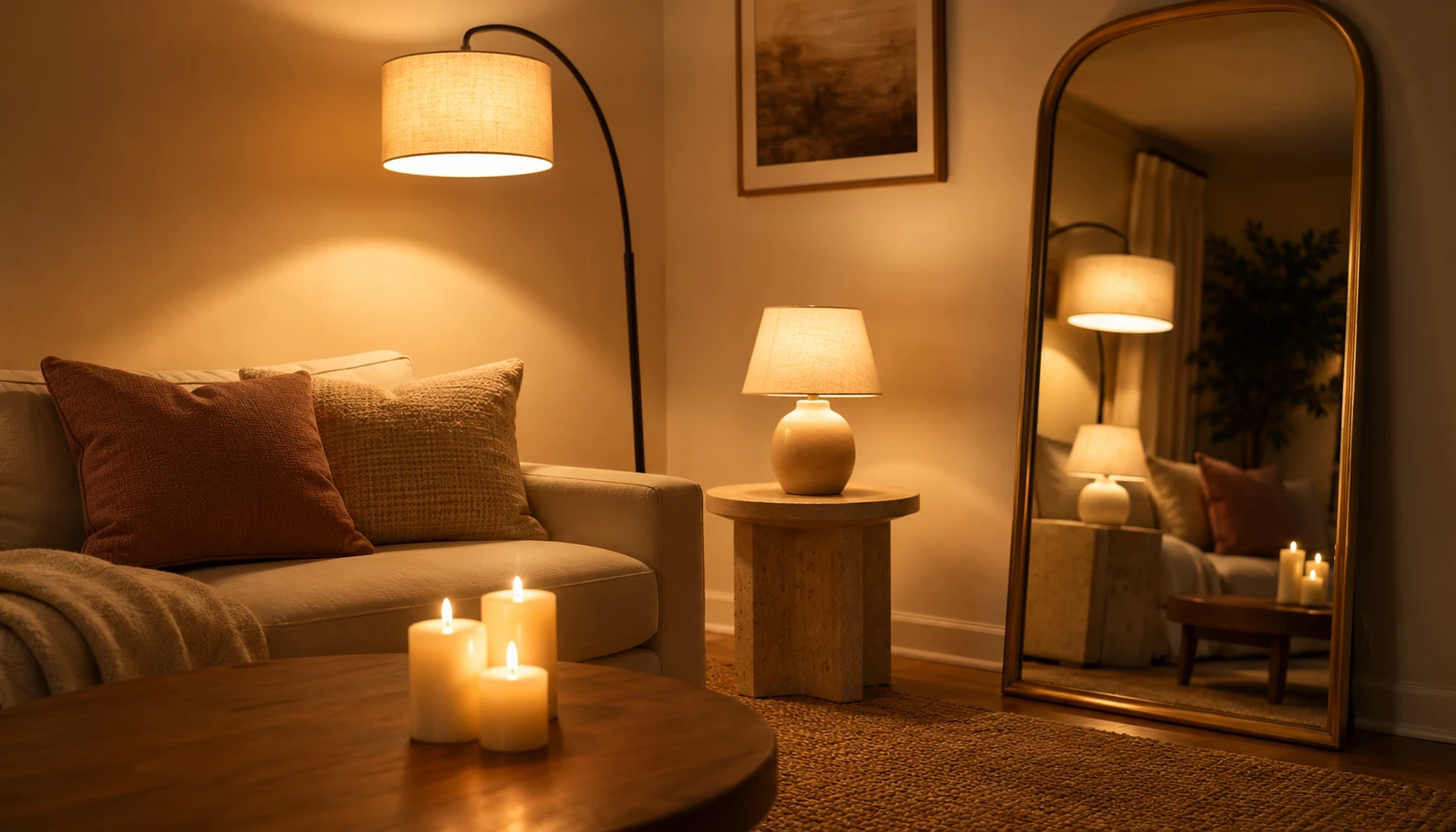
The right type of lighting is essential to making a tiny living room feel more spacious. Try using a combination of overhead lighting, floor lamps, and table lamps to create a warm and inviting atmosphere.
The three-layer lighting formula:
Layer 1 — Ambient (overhead): Your main light source. Use a dimmer if possible; being able to lower the main light in the evening transforms the atmosphere. Choose a fitting that draws the eye upward (a pendant or semi-flush fitting) rather than a fitting that spreads light down and out.
Layer 2 — Task (floor and table lamps): A floor lamp in one corner and a table lamp on a side table create pools of warm light at different heights. This layering creates visual depth that makes the room feel more spacious.
Layer 3 — Accent (candles, LED strips): Candles on the coffee table, LED strips behind the TV, or fairy lights on a shelf add intimate warmth at the lowest level. These small light sources create contrast that adds dimension.
Bulb warmth is critical: Use bulbs in the 2700K-3000K range (warm white). Cool white or daylight bulbs make small rooms feel sterile and even smaller. The warm amber tone of 2700K bulbs adds an enveloping cosiness that’s particularly important in compact spaces.
The uplight trick: A floor lamp or uplighter aimed at the ceiling rather than downward makes ceilings feel higher and rooms feel larger. Light on the ceiling expands the perceived height of the space.
Get Furniture Scale Right
The most common small living room mistake is choosing furniture that’s either too large (obvious) or too small (less obvious but equally problematic).
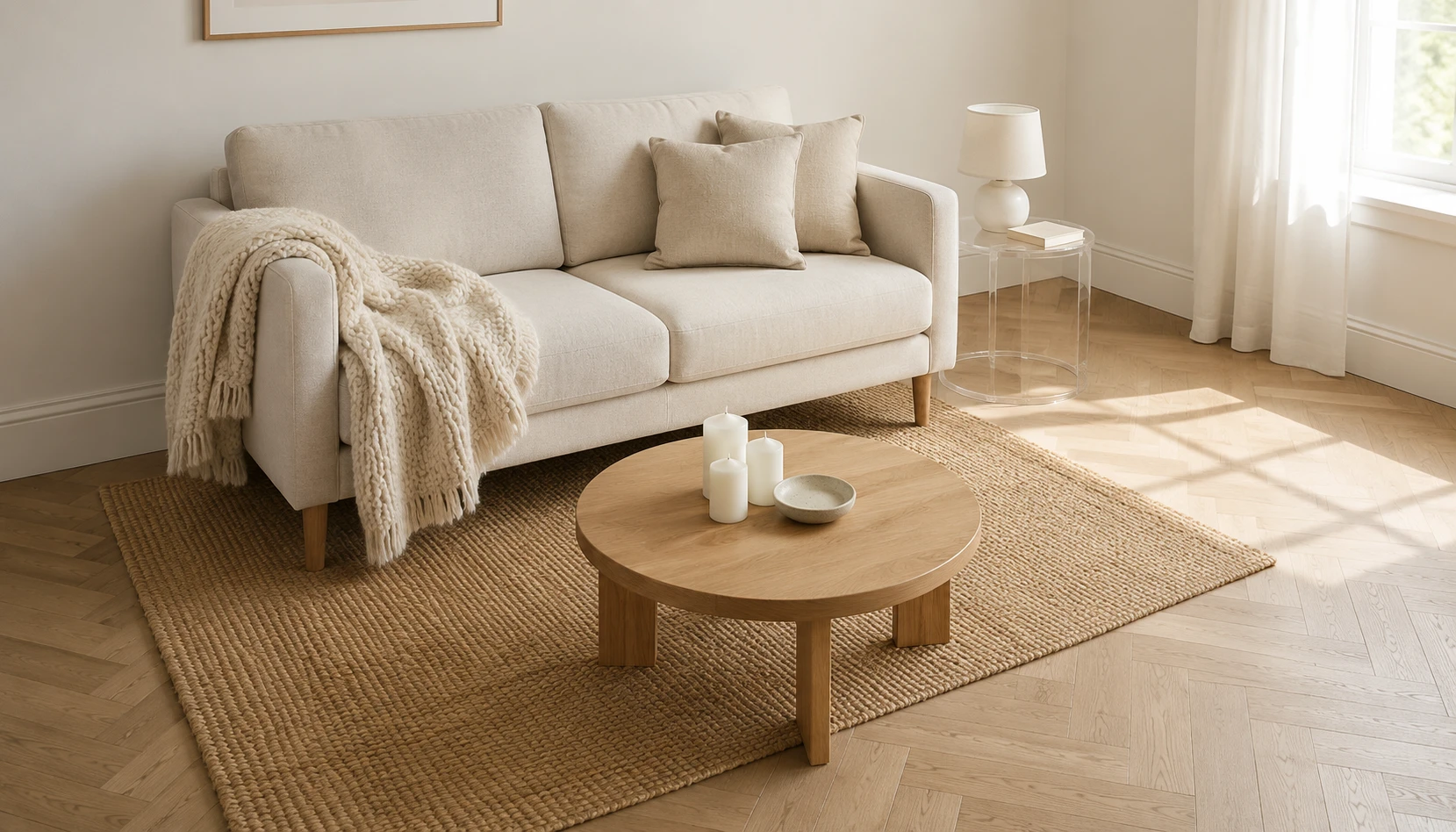
A compact living area benefits from keeping furniture low and visually light. Using a simple arrangement keeps sightlines open, which makes the room feel wider than it is.
Furniture scale principles for small living rooms:
Low-profile furniture: Sofas and chairs with lower backs (under 85cm tall) allow the eye to travel across and over them, keeping sightlines open. High-backed furniture blocks sightlines and creates visual barriers.
Legs on furniture: Sofas and chairs with visible legs (as opposed to floor-skimming pieces) show the floor beneath, creating visual breathing room. This single detail makes furniture look lighter and the room feel larger.
One generous sofa vs many small pieces: Counterintuitively, one properly scaled two or three-seater sofa often looks less crowded than three armchairs attempting to fill the same space. Fewer pieces with more breathing room between them = more spacious feeling.
Round tables over rectangular: Round coffee tables and dining tables take up less visual space than rectangular ones because they have no corners. They also allow easier movement around them in tight spaces.
Transparent furniture: Glass or lucite coffee tables are invisible: the floor shows through them and the room feels uncluttered even when they’re present. One of the most effective small space tricks available.
Multi-function pieces: An ottoman that serves as coffee table, extra seating, and storage. A sofa with under-seat storage. A nesting side table set. Every multi-function piece removes the need for an additional piece of furniture.
Float Your Furniture Away From the Walls
This is the most counterintuitive of all small living room ideas, and the most consistently effective.
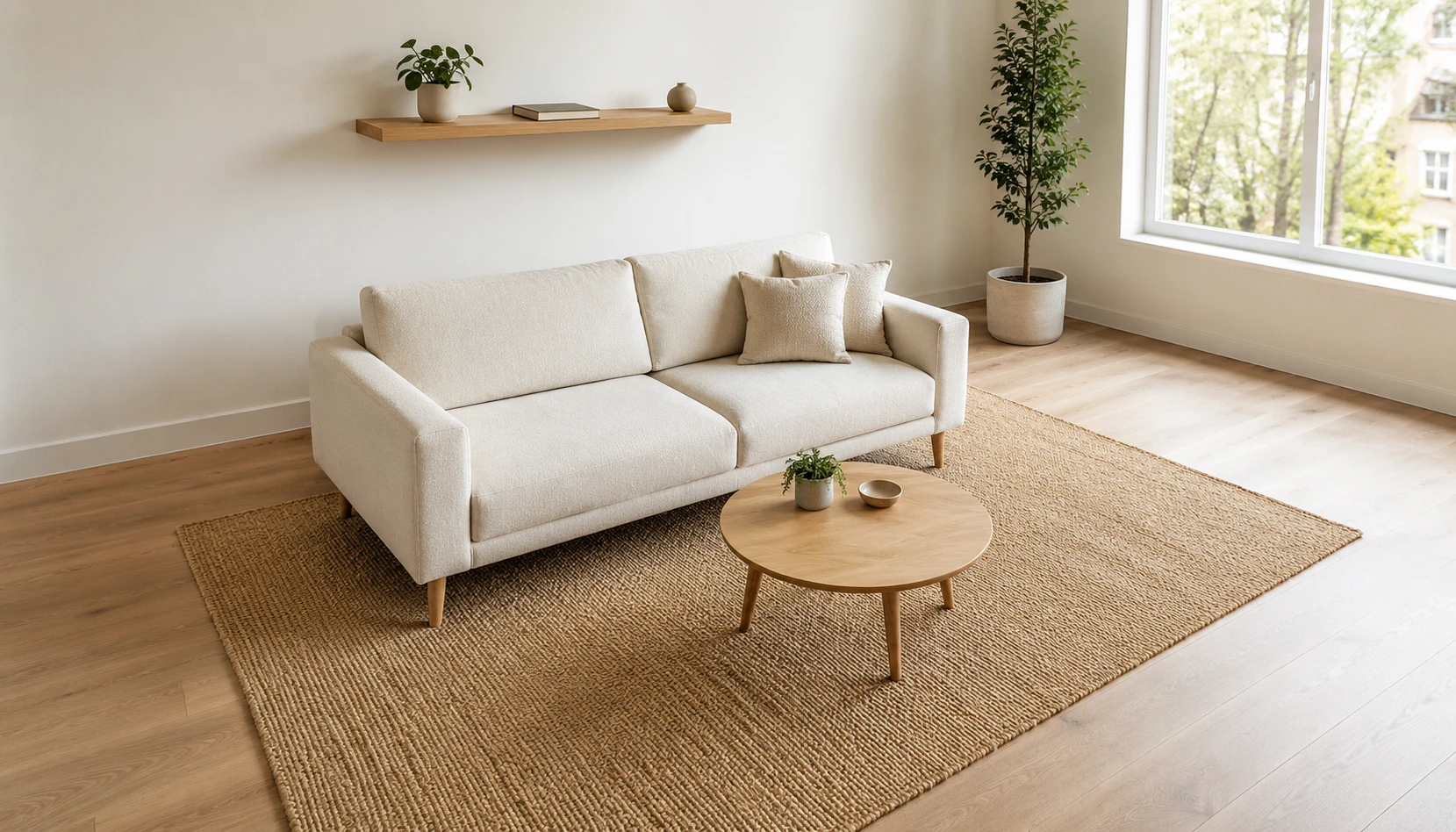
The instinct in a small room is to push all furniture against the walls to maximise floor space. This instinct is wrong.
When furniture is pushed against every wall the room looks like storage: a series of objects lining the perimeter with an empty middle. The eye reads this as a small, cramped room.
When furniture is floated (pulled slightly away from the walls, grouped together in the center of the room) the space reads as one continuous room. The gaps between furniture and walls become intentional breathing room rather than accidents.
How to float furniture in a small living room:
Pull the sofa 15-20cm away from the wall behind it. This tiny gap immediately makes the room feel larger: the wall behind the sofa becomes visible as a deliberate design choice rather than an edge you’ve run out of.
Use an area rug to anchor the floating furniture arrangement. The rug defines the seating zone and makes the floated arrangement look intentional. Size matters: the rug should be large enough that at least the front legs of all major furniture pieces sit on it.
Create a conversation zone: angle chairs slightly toward the sofa rather than running them parallel to walls. This creates a functional social space that feels designed rather than default.
Leave clear circulation paths of at least 80cm around the furniture arrangement. Clear paths make the room feel larger and more functional simultaneously.
Maximise Natural Light With Smart Window Treatments
Windows are a small living room’s most valuable asset. How you treat them determines how much of that asset you actually use.
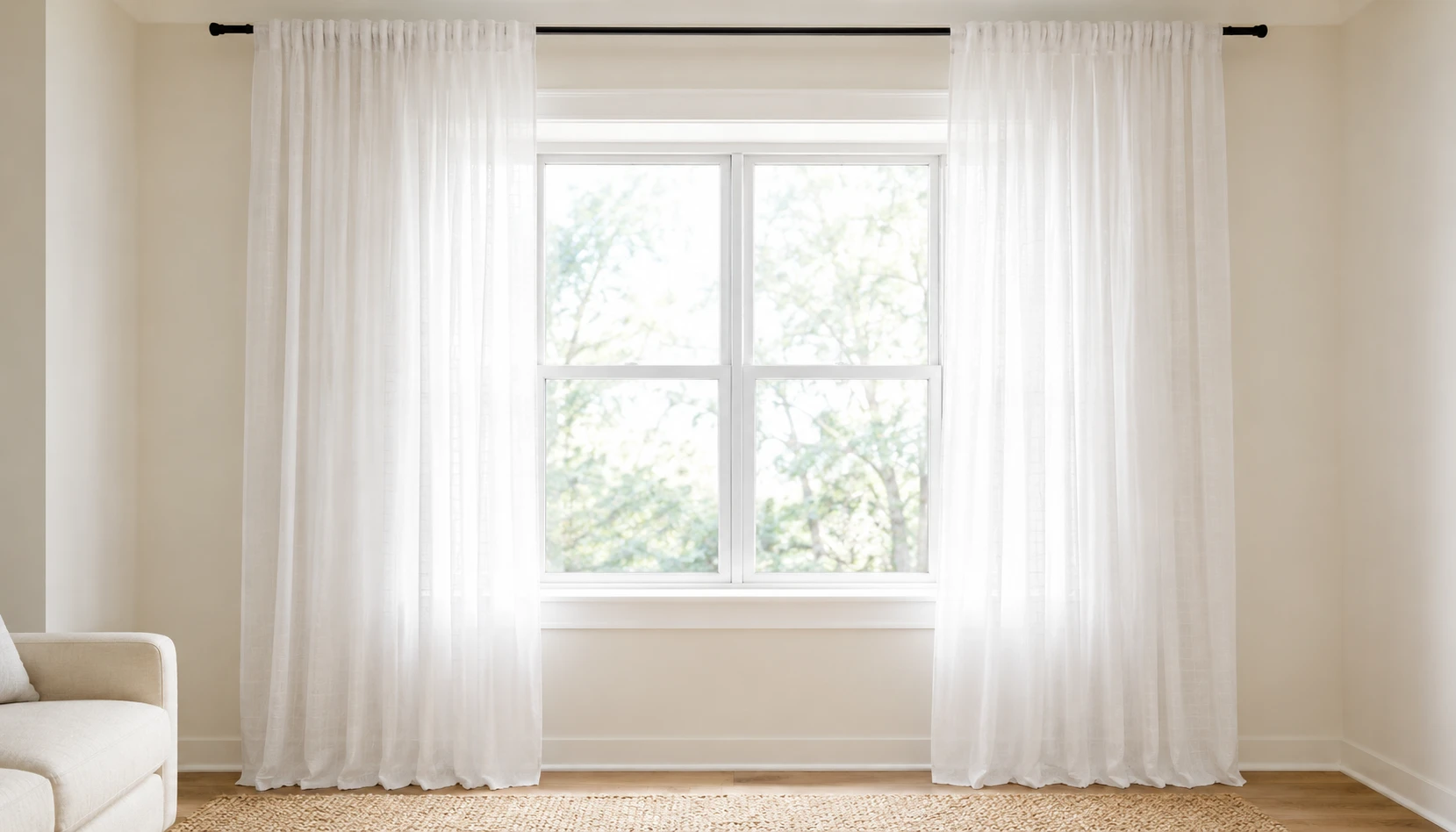
The curtain rules that change everything:
Hang curtains HIGH: Mount the curtain rod as close to the ceiling as possible, not just above the window frame. When curtains run from ceiling to floor the eye reads the full ceiling height, making the room feel taller.
Hang curtains WIDE: Extend the curtain rod 20-30cm beyond each side of the window frame. When open, the curtains clear the glass entirely, maximising the amount of natural light entering the room. When closed, they appear to frame a much larger window than actually exists.
Choose sheer or light fabrics: Heavy blackout curtains block the light that makes small rooms feel large. For living rooms, opt for sheer linen or cotton panels that diffuse rather than block daylight.
Keep windowsills clear: Remove anything sitting on the windowsill that blocks light from entering at lower levels. Even a small plant on the sill blocks a surprising amount of light.
Light-coloured curtains: White, cream, or pale natural linen curtains reflect light into the room. Dark curtains absorb it. In a small room this difference is significant.
Blinds as an alternative: Roman blinds in a light fabric that stack neatly above the window when open are a clean, minimal alternative to curtains that maximise the window opening when you want full light.
Use Vertical Space to Draw the Eye Upward
In a small living room floor space is limited but vertical space is often completely ignored. Using vertical space not only adds storage, it draws the eye upward, making ceilings feel higher and rooms feel larger.
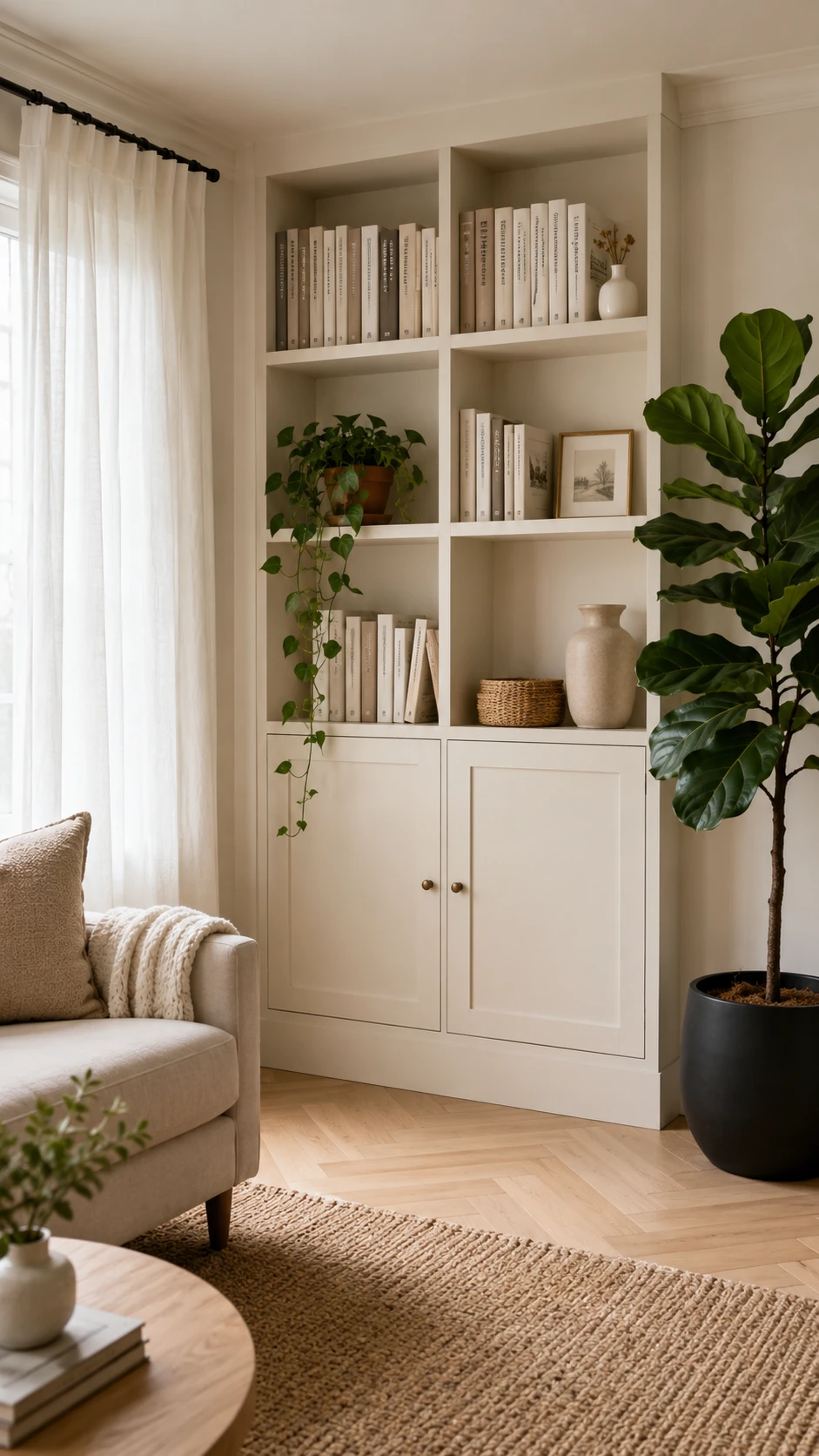
Ways to use vertical space in a small living room:
Tall bookshelves: Floor-to-ceiling bookshelves draw the eye from floor to ceiling: the full height of the room becomes the focal point rather than its width or length. Styled well (not overfilled) a tall bookshelf is one of the most beautiful and functional elements in a small living room.
Ceiling-height curtains: As described above, curtains from ceiling to floor instantly add perceived height.
Vertical artwork: Portrait-format artwork rather than landscape draws the eye upward. A tall narrow artwork or a vertical gallery wall emphasises ceiling height.
Tall plants: A fiddle leaf fig, snake plant, or tall monstera in a corner draws the eye upward and adds organic height to the room. Plants at different heights (tall in one corner, medium on a shelf, trailing on another shelf) create a sense of layered vertical dimension. For specific plant recommendations, see our guide to the best houseplants for your living room.
Floating shelves above eye level: Shelves mounted higher than standard (above 170cm) encourage the eye to travel upward. Even empty floating shelves with a few carefully chosen objects add height to a room.
Wall-mounted TV: Mounting the TV on the wall rather than placing it on a unit removes a large piece of furniture from the floor entirely, freeing floor space and keeping the focus vertical.
Edit Ruthlessly — Negative Space Is Part of the Design
In interior design, negative space (the empty space around and between objects) is as important as the objects themselves. In a small living room negative space is essential.
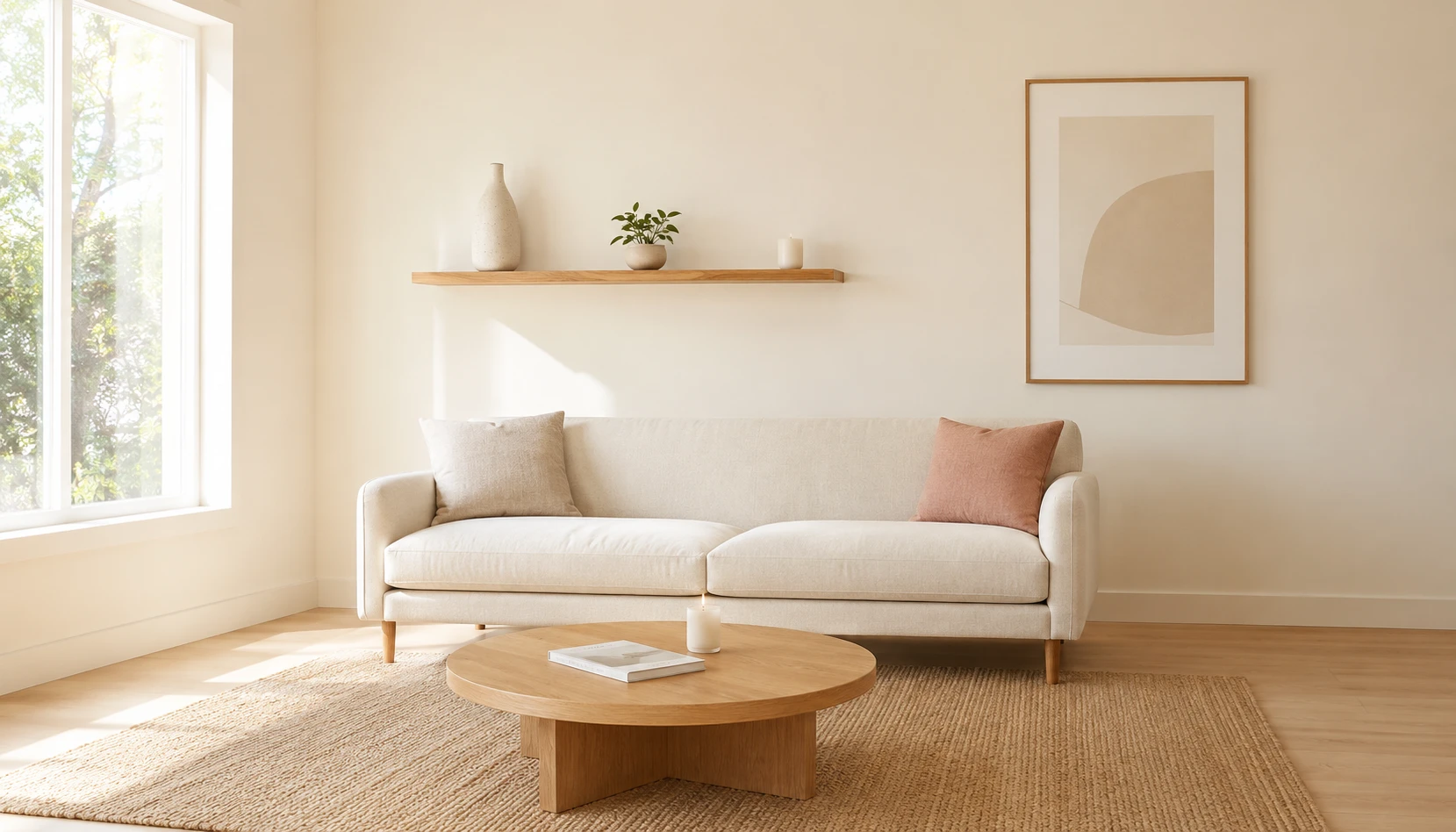
Every additional object in a small living room competes for visual attention. The more objects competing simultaneously, the more chaotic and compressed the room feels.
The solution is ruthless editing: keeping only what is genuinely loved or needed, and giving each kept object enough space to be seen properly.
Practical decluttering for small living rooms:
The one-in-one-out rule: Before adding any new decorative object, remove one. This prevents gradual accumulation that slowly makes rooms feel smaller over months.
Clear surface policy: Choose one surface (coffee table, side table, or shelf) as your “display surface” where decoration is intentional. All other surfaces stay clear.
Hidden storage for everyday items: Remote controls, magazines, chargers, blankets: the objects of daily life that accumulate on surfaces. Each one in a dedicated storage spot (drawer, basket, box) rather than left out.
The 60-second edit: Stand at the doorway and look at your living room for 60 seconds. The first three things that feel “wrong” or cluttered are the things to remove. Your eye tells you what doesn’t belong before your brain makes excuses for it.
Less is genuinely more: A room with 40% less stuff in it consistently looks twice as large as the same room fully furnished. This is the most powerful no-cost living room transformation available.
Add Reflective Surfaces to Multiply Light
Beyond mirrors, many everyday objects and materials have reflective qualities that contribute to making a small room feel brighter and larger.
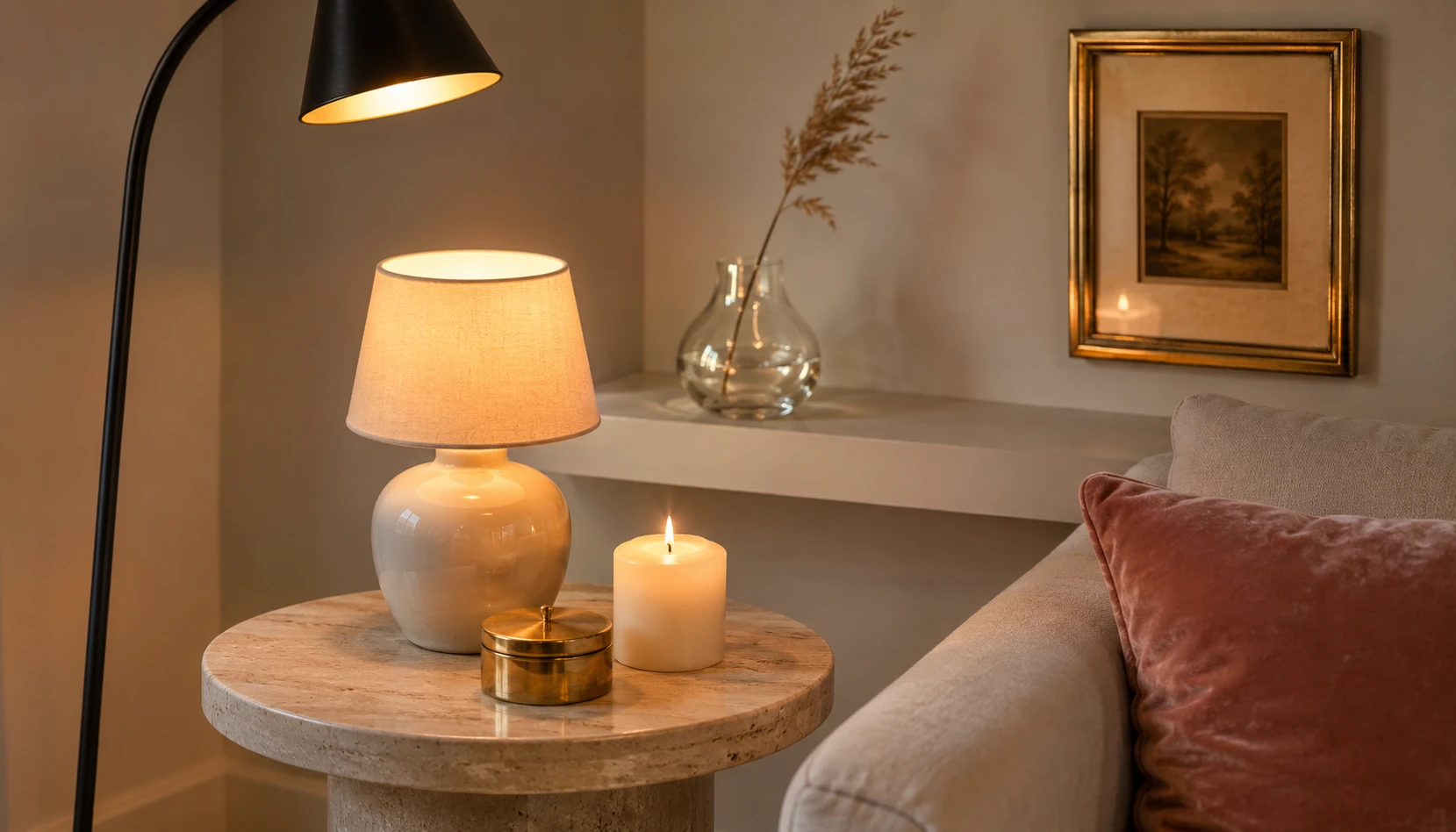
Reflective surfaces that work in living rooms:
Brass and gold accents: Lamp bases, picture frames, side table legs, and decorative objects in brass catch and reflect warm light. They add visual warmth while actively brightening the space. This is why brass hardware is such a popular choice in small spaces.
Glass surfaces: A glass coffee table, glass-fronted cabinet, or glass vase catches and distributes light throughout the room. Each glass surface is essentially a mini-mirror.
Glossy ceramics: A vase or bowl with a glossy glaze reflects light differently than a matte one, contributing to the sense of brightness in the room.
Lacquered furniture: A lacquered side table or cabinet reflects light from its surface, adding to the room’s perceived brightness.
Metallic cushion covers: A cushion with a subtle sheen (velvet or satin-weave) catches light as people move through the room, adding dynamic visual interest.
What to avoid: Too many reflective surfaces can feel chaotic or look like a showroom. The goal is selective use of reflective materials: a few pieces that catch light without overwhelming the eye.
Smart Storage That Disappears
The final idea ties everything together. Clutter is the enemy of a bright, spacious-feeling small living room. Smart storage makes the clutter disappear, keeping the room feeling edited and intentional.
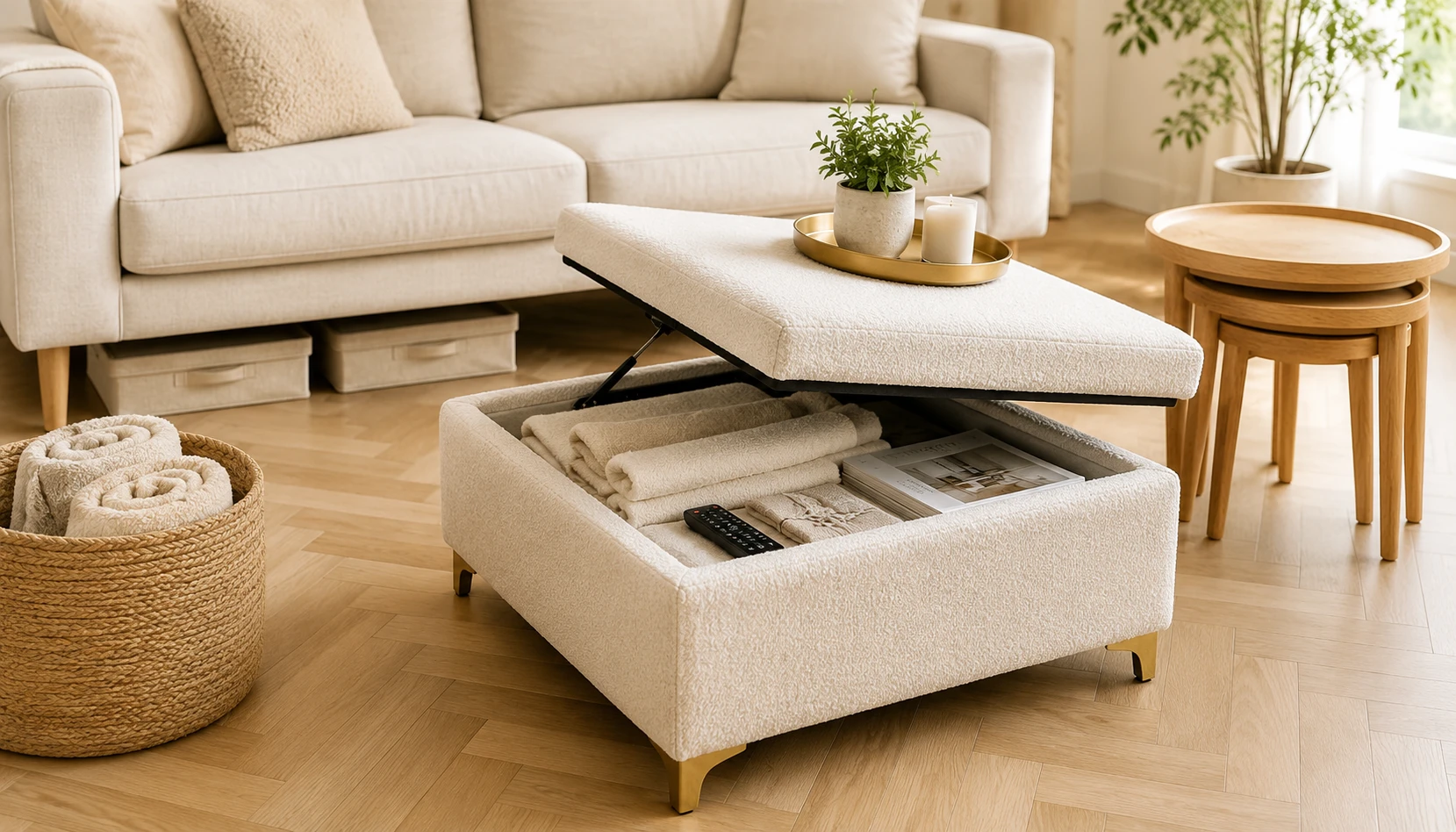
Best smart storage solutions for small living rooms:
Storage ottoman as coffee table: A large storage ottoman replaces the coffee table, providing a surface for drinks and books on top, and hiding blankets, games, and magazines inside. One piece does three jobs.
Built-in shelving alcoves: If you have alcoves beside a fireplace or chimney breast, built-in shelving makes use of space that often goes wasted. Floor-to-ceiling built-ins with lower cupboards for hidden storage and open shelves above for display are one of the most effective small living room storage solutions.
Under-sofa storage: Flat storage boxes that slide under a sofa with legs use otherwise completely wasted space. Perfect for extra bedding, books, or seasonal items.
Media unit with closed storage: An entertainment unit with closed cabinet doors rather than open shelving hides the visual clutter of media equipment, cables, and accessories.
Nesting tables: Two or three tables that nest together take up the space of one when not in use. Pull them apart when you need extra surface space, nest them again afterward.
Woven storage baskets: Baskets on shelves or under console tables provide hidden storage that looks decorative rather than functional. The organic texture also adds warmth and softness to a room.
If you’re renting rather than owning, pair these ideas with our small living room ideas for renters for more no-damage solutions.
A bright, spacious-feeling small living room in 2026 is less about square footage and more about intention. When a room is balanced, it just feels expensive in the calmest way possible.
Start with the idea that addresses your biggest frustration. If it’s darkness, change the colour and add mirrors. If it’s clutter, edit ruthlessly before buying anything new. If it’s feeling cramped, float the furniture away from the walls.
One well-executed change often makes three others unnecessary. And sometimes the most powerful transformation costs absolutely nothing at all.
For more ways to make a compact room work harder, see our guide to room decoration ideas for small spaces.