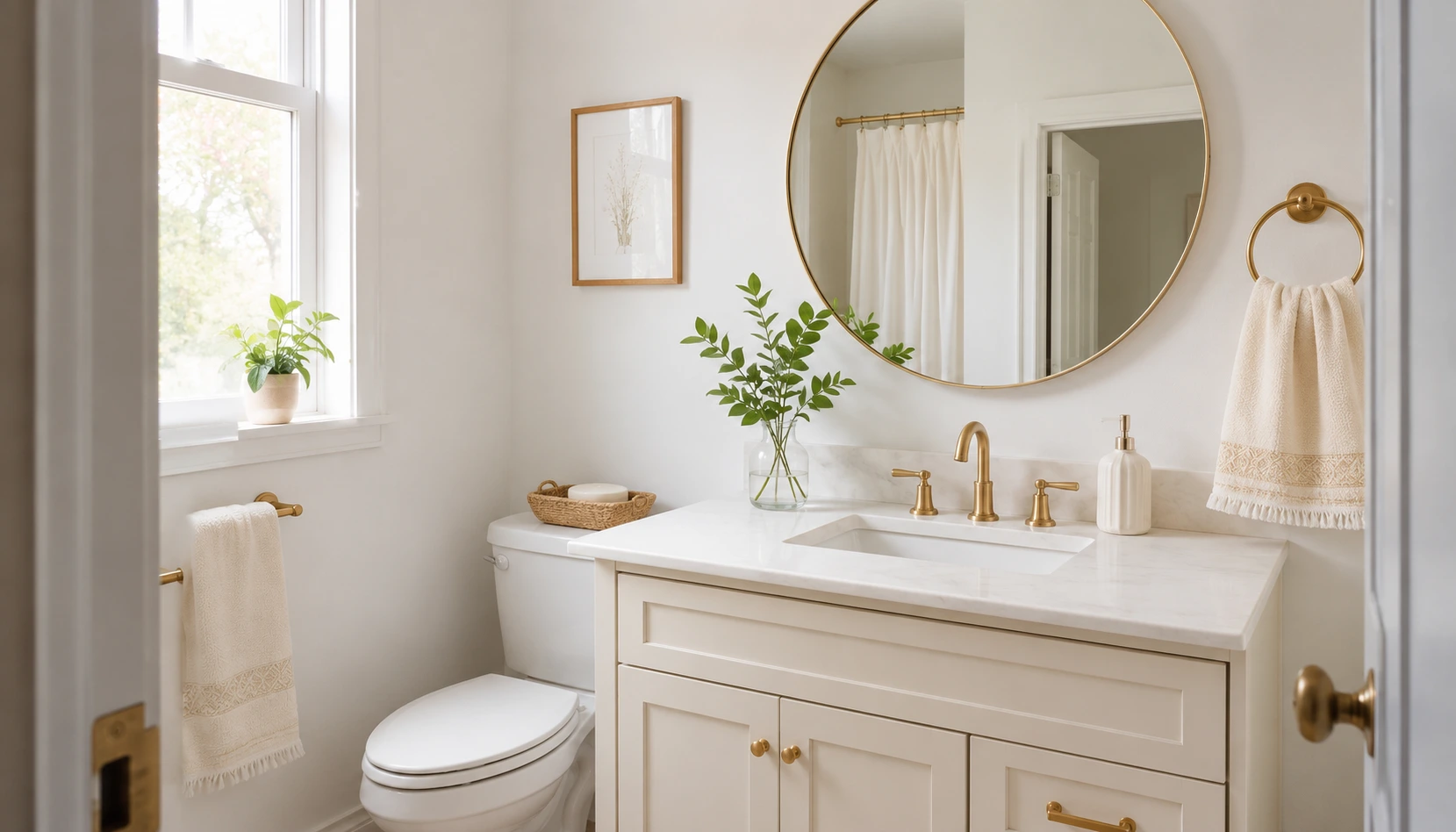
A full bathroom renovation runs into the thousands. A bathroom refresh that improves the room’s lighting, coordination, and daily function does not have to cost anywhere close to that. The ideas below prioritize visible changes over decorative purchases that add cost without solving the room’s main problems.
The trick with a budget bathroom refresh is being honest about where the money matters and where it doesn’t. A few of these upgrades cost almost nothing and change the whole room. A few things people spend money on barely register once the room’s finished. This guide covers both sides.
Every idea below stays under $50, and most land well under that.
Why Budget Updates Actually Work Here

Bathrooms are small, which sounds like a limitation but is actually the whole reason budget updates punch above their weight here.
A gallon of paint covers an entire bathroom for around $30 to $40, but that same gallon barely touches a bedroom or living room. New hardware for a bathroom means four or five drawer pulls, not the dozen a kitchen would need. Even a nicer mirror or light fixture is a smaller, cheaper item than the equivalent upgrade anywhere else in the house.
None of this means every dollar spent here matters equally, some of the ideas below genuinely change the room and some barely register. The rest of this guide separates the two.
Paint: The Highest ROI Change
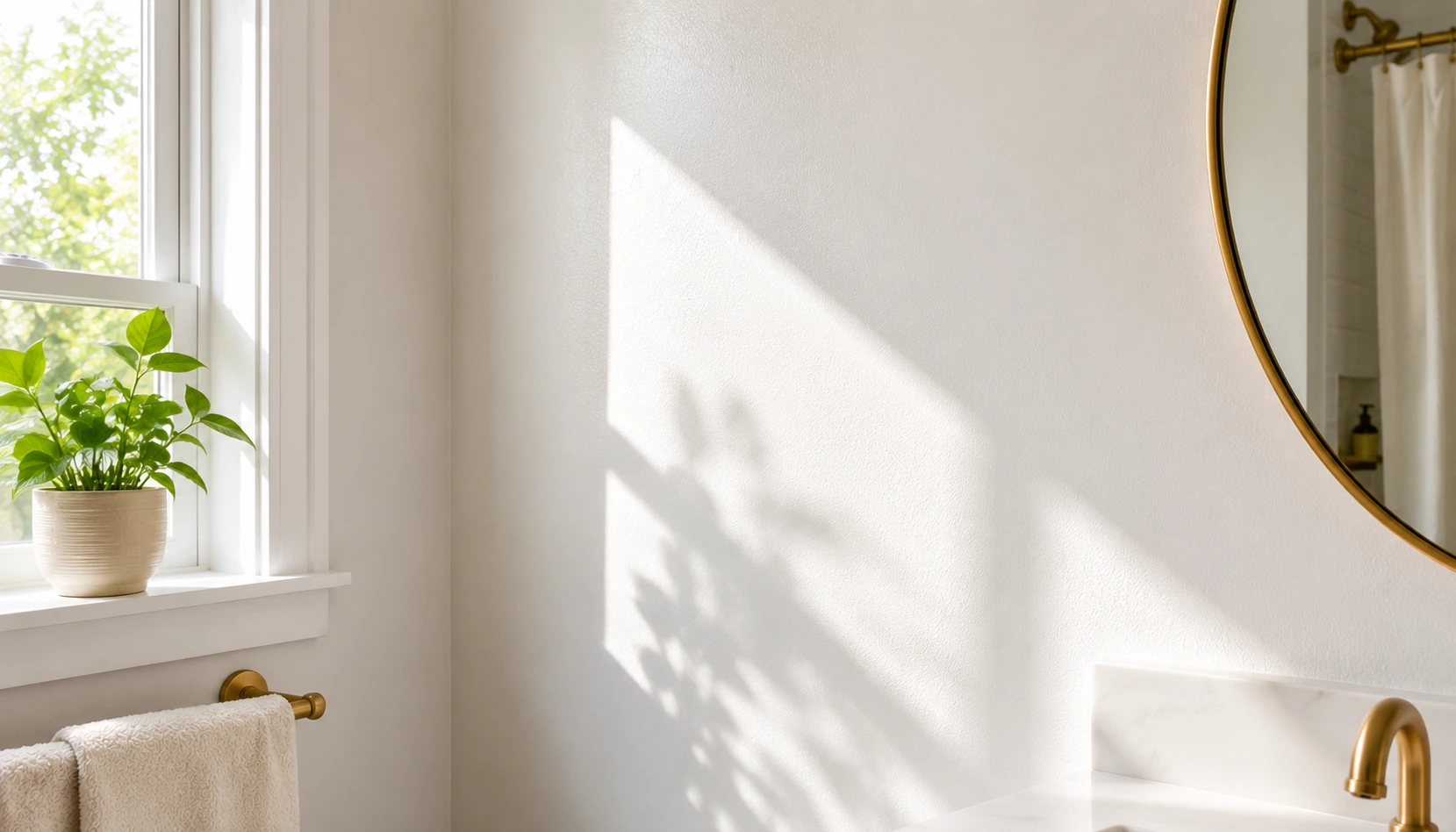
If you only do one thing from this entire guide, do this one.
A gallon of paint runs $30 to $45 depending on the brand, and it’s enough to cover a full bathroom with room to spare. A soft, light, reflective color, similar to the principles covered in our small bathroom guide, does the most work bouncing available light around a room that usually doesn’t have much of it. Satin or semi-gloss finish holds up to moisture and steam far better than flat, which matters more here than in any dry room in the house.
If a full repaint feels like too much commitment, painting just the vanity or a single accent wall costs a fraction of that and still delivers visible change. Use paint rated for the surface and humid conditions, follow its preparation instructions, and confirm that the lease permits painting before starting in a rental.
Hardware Swaps Under $30
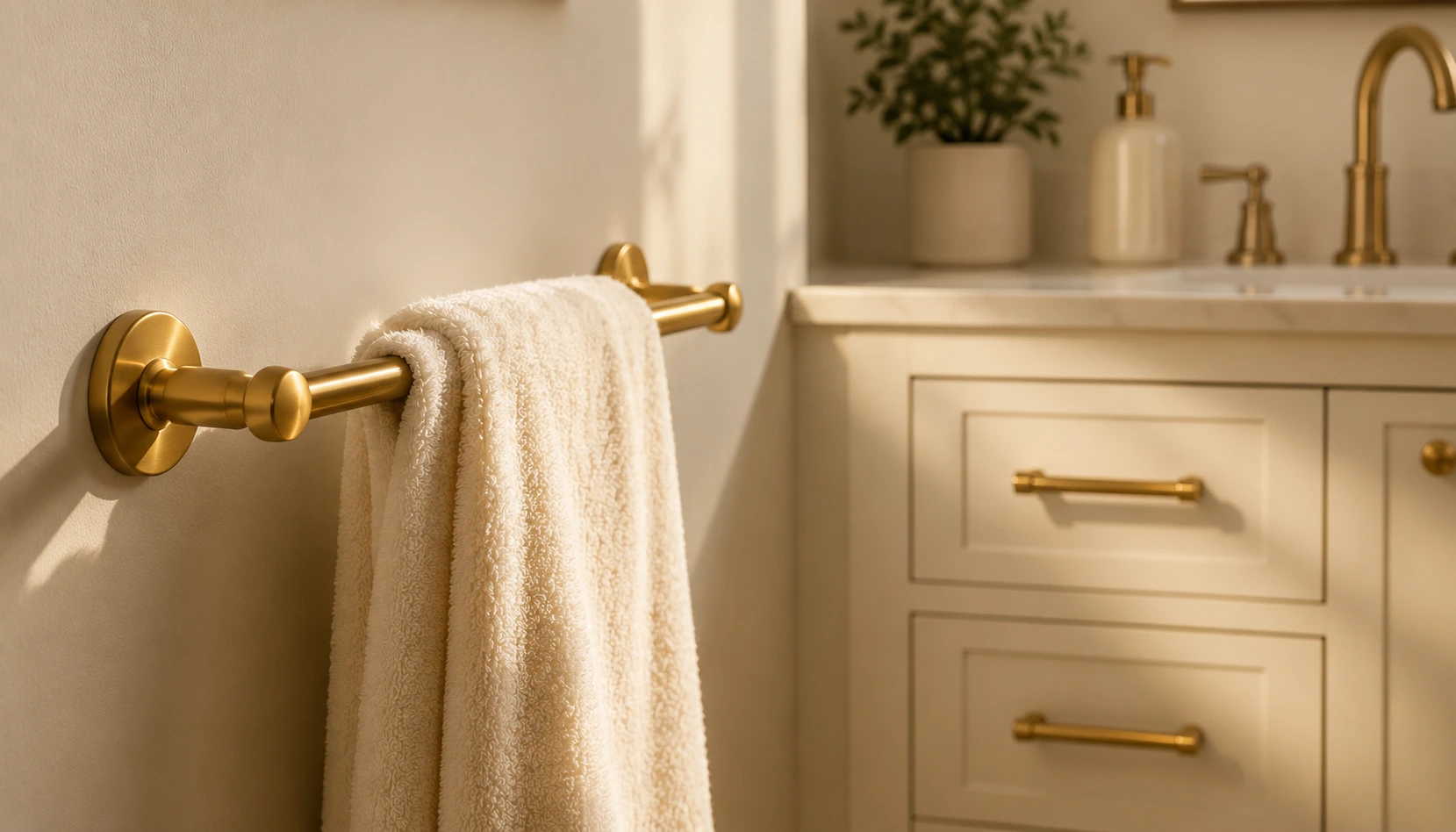
Cabinet pulls, a towel bar, a toilet paper holder, these small metal objects get overlooked constantly, and they’re some of the cheapest wins available.
A full set of drawer pulls for a typical vanity runs $15 to $25 for a decent finish, and swapping dated gold-tone or brass-toned 1990s hardware for something current changes the whole room’s perceived age. A new towel bar or ring in a matching finish, usually $10 to $20, ties the room together in a way that’s easy to underestimate until you’ve actually done it.
Keep every piece of hardware in one metal finish. This is the single most common mistake people make when doing this upgrade piecemeal over time, buying one nice towel bar and leaving mismatched chrome drawer pulls undercuts the whole point of the swap.
Lighting Upgrades on a Budget
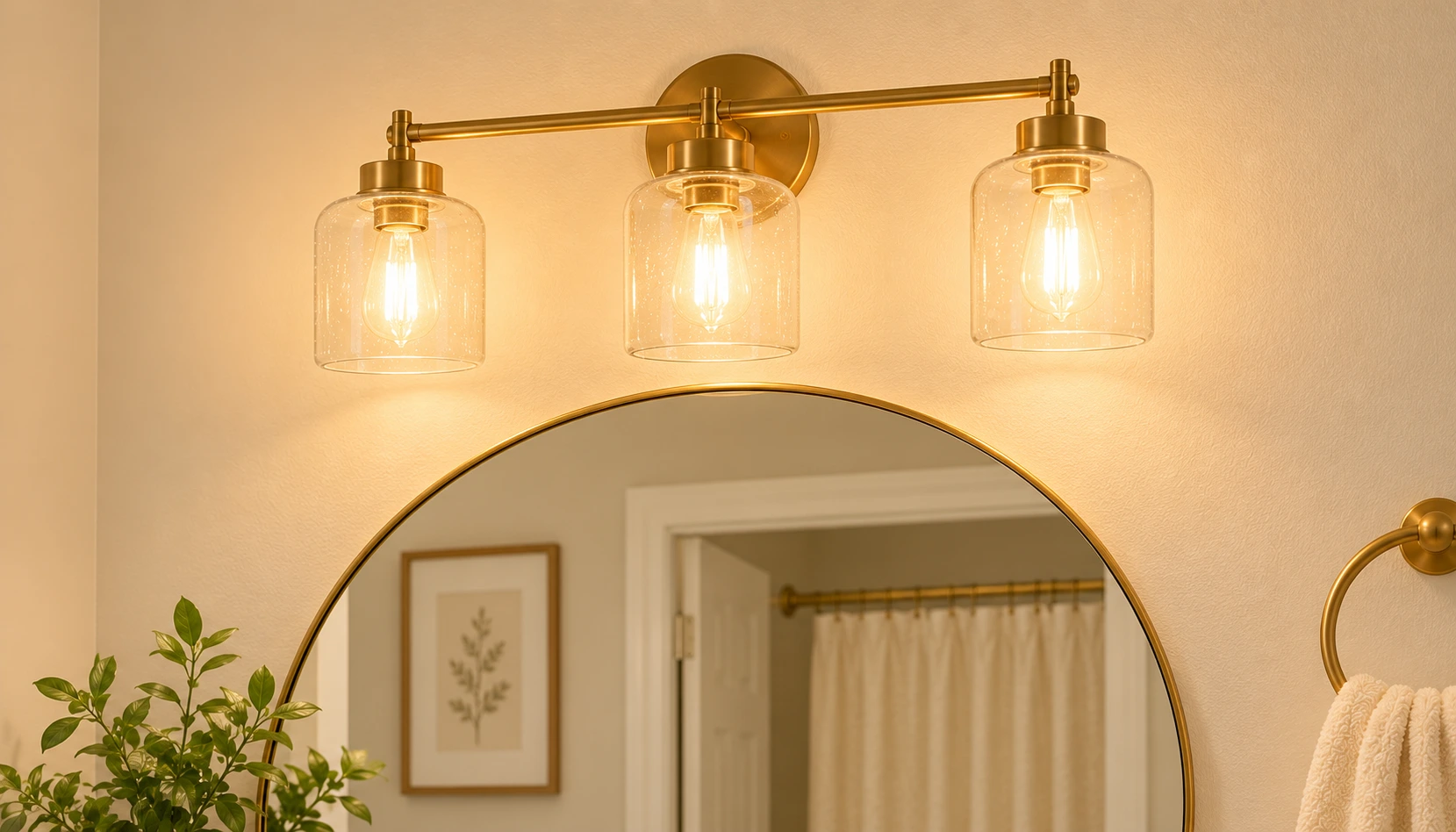
Most builder-grade bathrooms come with a single cool-toned overhead fixture, and this is a genuinely easy fix at almost any budget.
The absolute cheapest version: swap the bulbs for a warm 2700K to 3000K option, a few dollars per bulb, and the room instantly feels less clinical. One step up, a plug-in or battery-operated sconce style light beside the mirror runs $20 to $35 and adds real, flattering side light where an overhead fixture alone leaves shadows. If you’re a renter and can’t touch the wiring, this is the move.
If you do own the space and can swap the actual fixture, a $40 to $50 vanity light in a warm brass or matte black finish is one of the highest-impact single purchases in this whole guide, on par with the paint.
Mirror Swaps Without Full Replacement
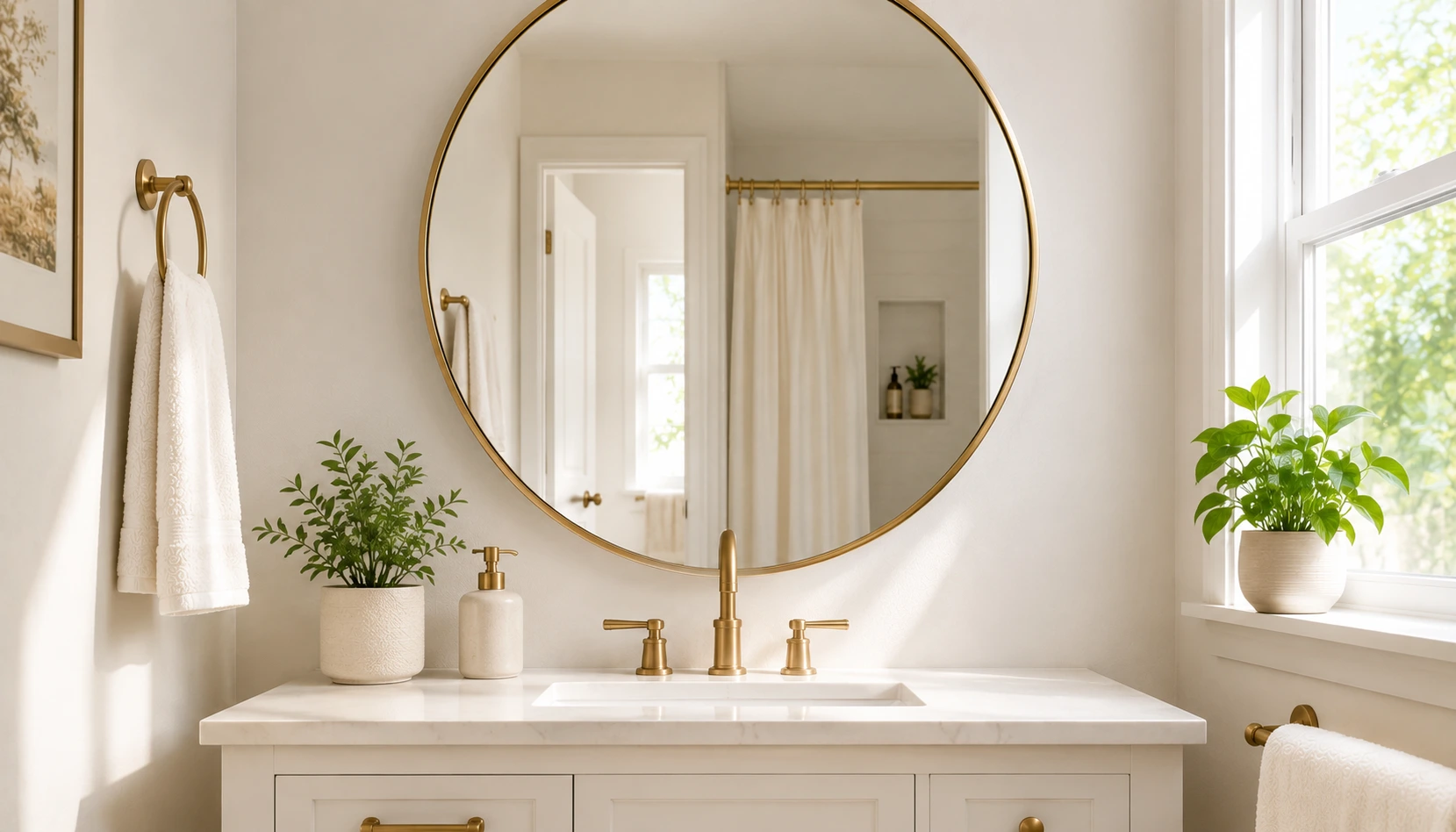
A mirror upgrade doesn’t have to mean replacing a recessed medicine cabinet, which gets expensive fast.
A simple frame kit, the kind that clips onto an existing basic mirror’s edge, runs $25 to $40 and transforms a plain builder mirror without removing anything. A separate, larger round or oval mirror mounted just in front of an existing medicine cabinet, if there’s wall space for it, gives you the visual upgrade of a bigger mirror for the cost of the mirror alone, usually $30 to $50 depending on size.
Either approach avoids the plumbing and structural cost of actually removing a recessed cabinet, which is where mirror upgrades usually blow past a reasonable budget.
Towels, Mats, and Textiles
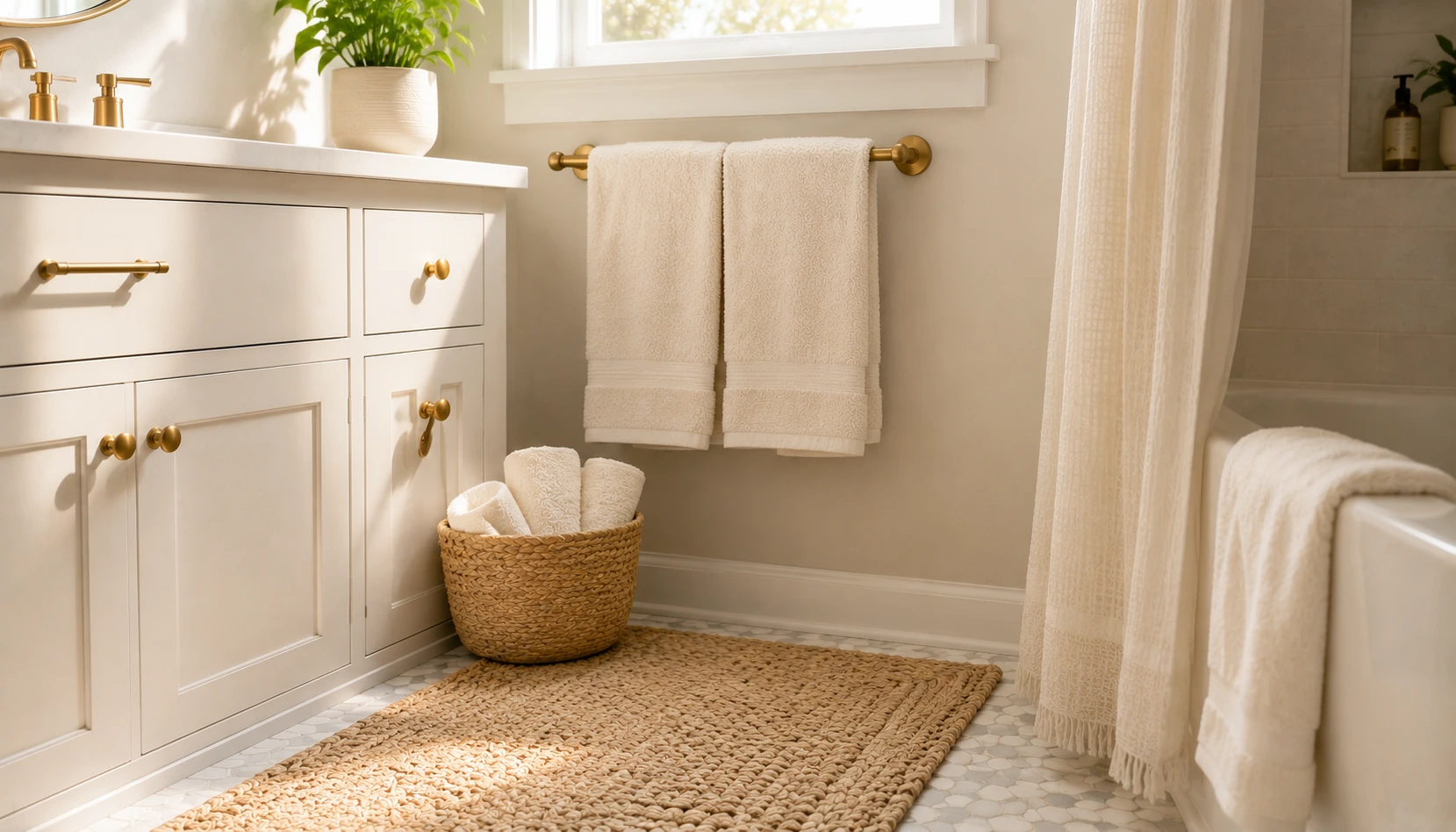
This is the cheapest category in the whole guide, and one of the most visually effective.
A set of matching towels in a single color family, rather than whatever mismatched colors have accumulated over the years, costs $20 to $35 and instantly makes a bathroom look more put-together. A woven bath mat over a basic bath rug adds texture for $15 to $25. A simple shower curtain in a solid color or subtle texture, if you don’t have a glass panel, runs about the same and is one of the fastest visual resets available.
I’d genuinely put this category ahead of some of the pricier ideas on this list. Fresh, coordinated textiles do more per dollar than almost anything else here.
Peel-and-Stick and Removable Solutions
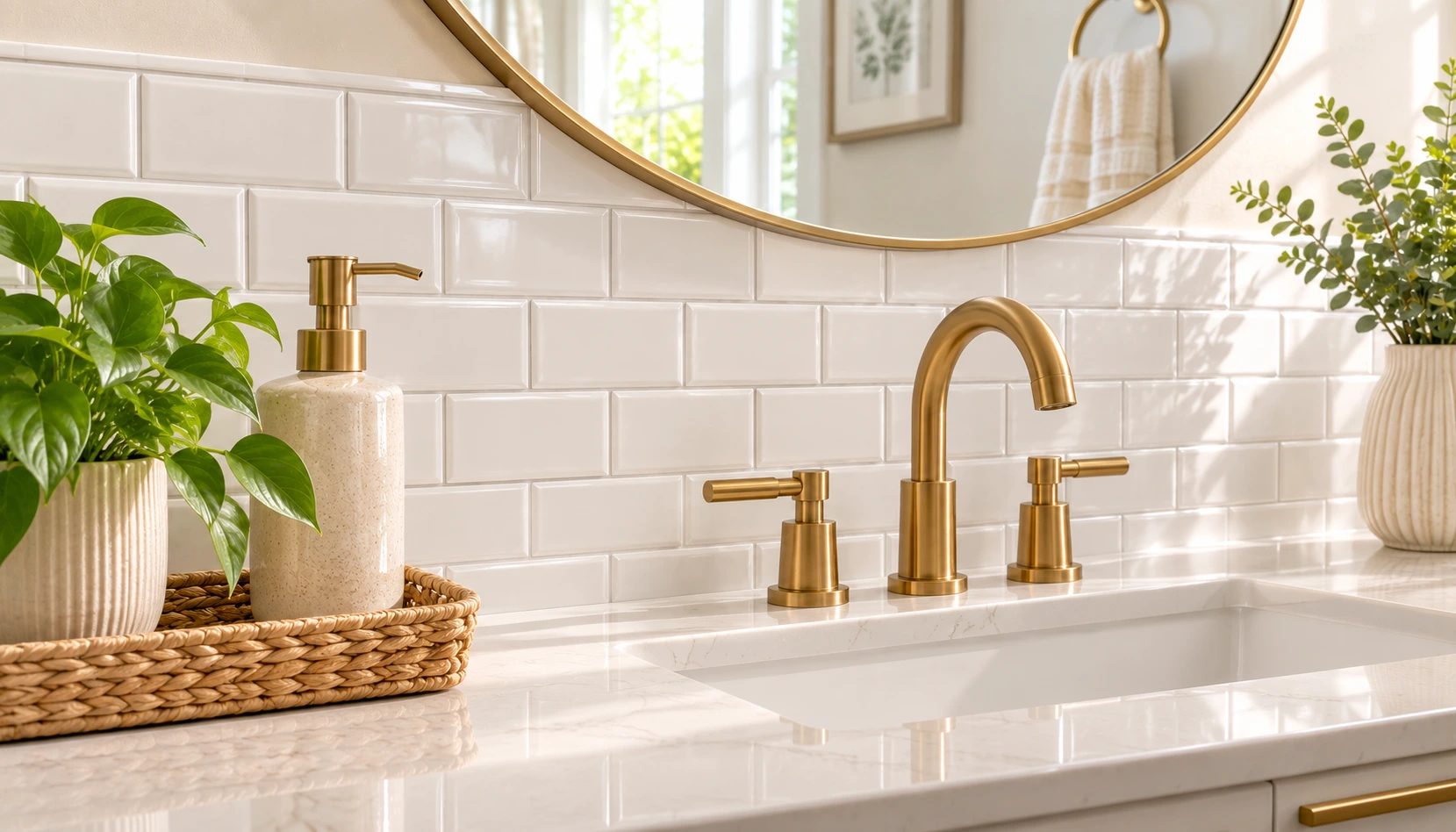
If you’re renting and can’t repaint or retile, this category exists specifically for you.
Peel-and-stick tile for a small backsplash area runs $25 to $45 for enough coverage behind a typical vanity, and it comes off cleanly at move-out. Removable wallpaper for one accent wall, usually $30 to $50 for a small bathroom-sized wall, gets you pattern and color without touching the actual wall surface. Frosted window film for privacy, if your landlord won’t let you swap the window treatment itself, costs under $20 and solves a real problem cheaply.
Always test a small hidden section first with any of these. Wall texture and paint quality vary enough between buildings that what worked perfectly in a friend’s apartment can peel unevenly in yours.
Storage That Doesn’t Cost Much
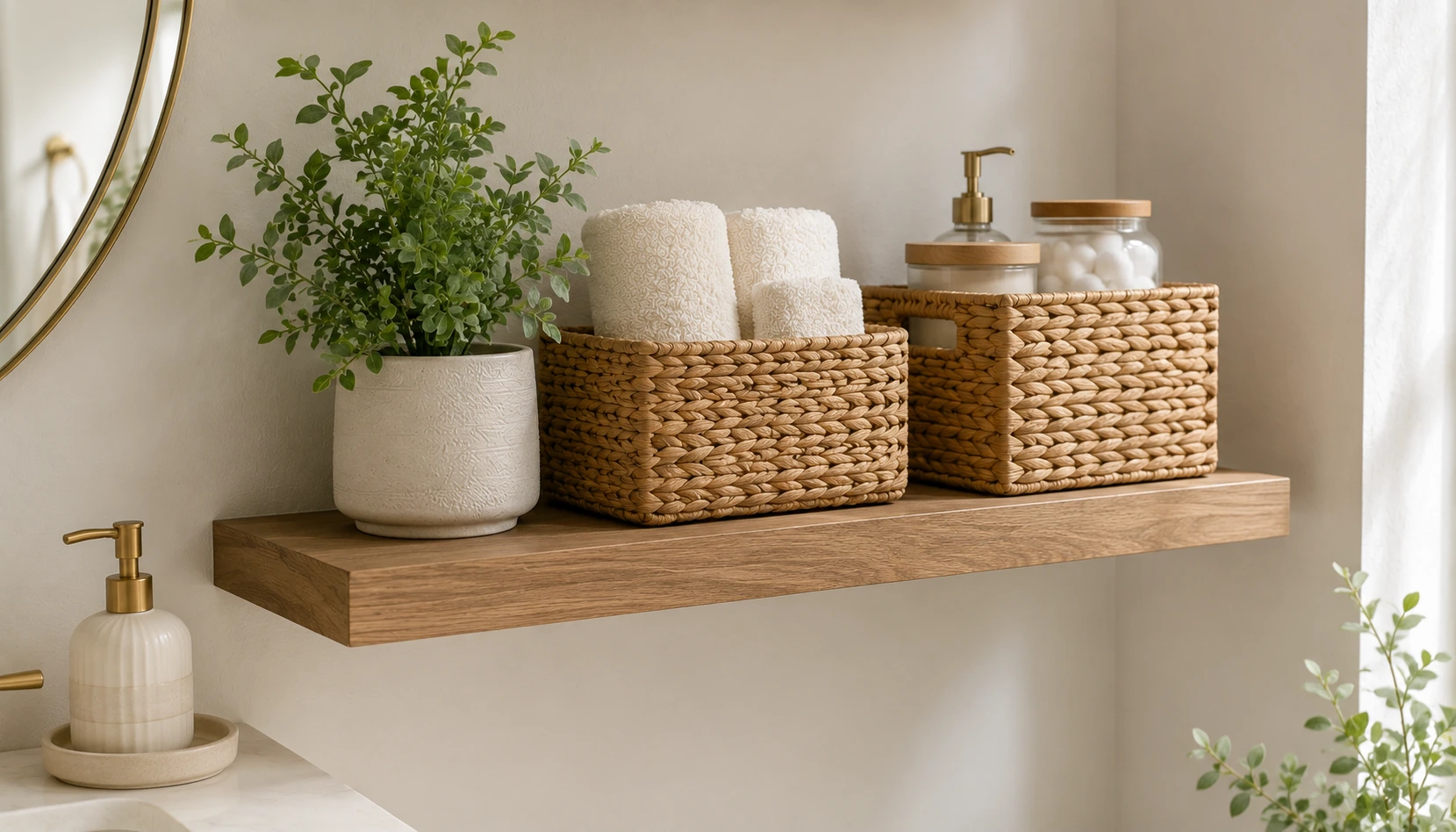
Storage upgrades don’t need to mean a full cabinet install.
A single floating shelf, $15 to $25 including basic hardware, adds real storage without the cost or commitment of built-in cabinetry. A woven basket or two on that shelf, another $10 to $20 total, turns loose bottles into something that reads as styled rather than cluttered. An over-the-door organizer, usually under $15, uses space that otherwise does nothing at all.
The same one-shelf-not-five principle that applies to a small bathroom in general applies here too, one well-chosen shelf beats several cluttered ones, and it costs less.
Small Plant and Styling Touches
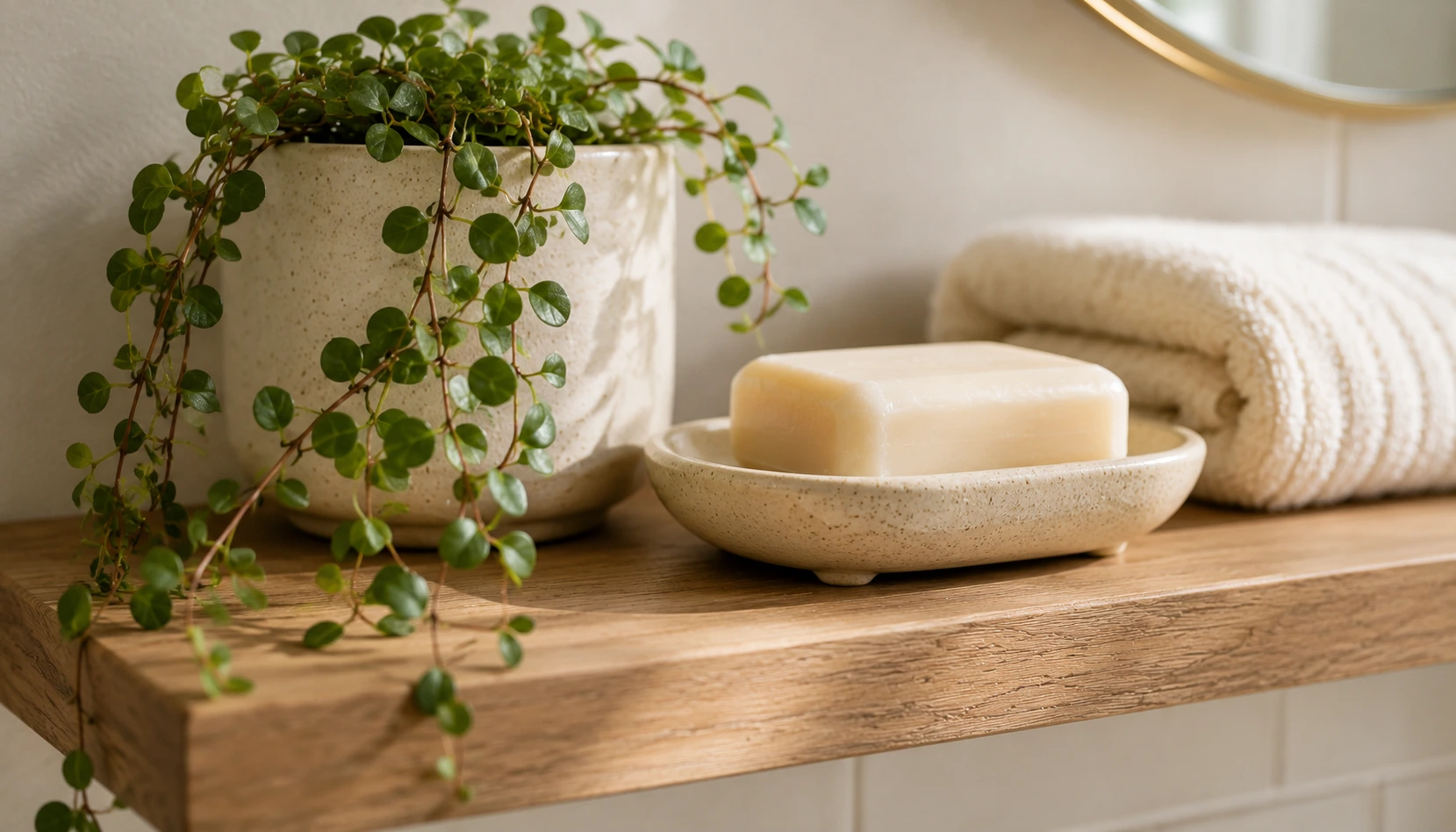
These are the smallest purchases in the entire guide, and they matter more than their price tags suggest.
A small pothos cutting in a simple jar, often free if a friend has one growing, or a few dollars at a nursery, adds life to an otherwise sterile room. A nice ceramic soap dish or dispenser, $10 to $15, replaces whatever plastic bottle came with the space. A single candle or reed diffuser adds a sensory layer that changes how the room feels to use daily, not just how it looks.
None of these cost more than $15 individually, and together they’re often the difference between a bathroom that looks refreshed and one that looks merely repainted.
What to Skip Spending Money On
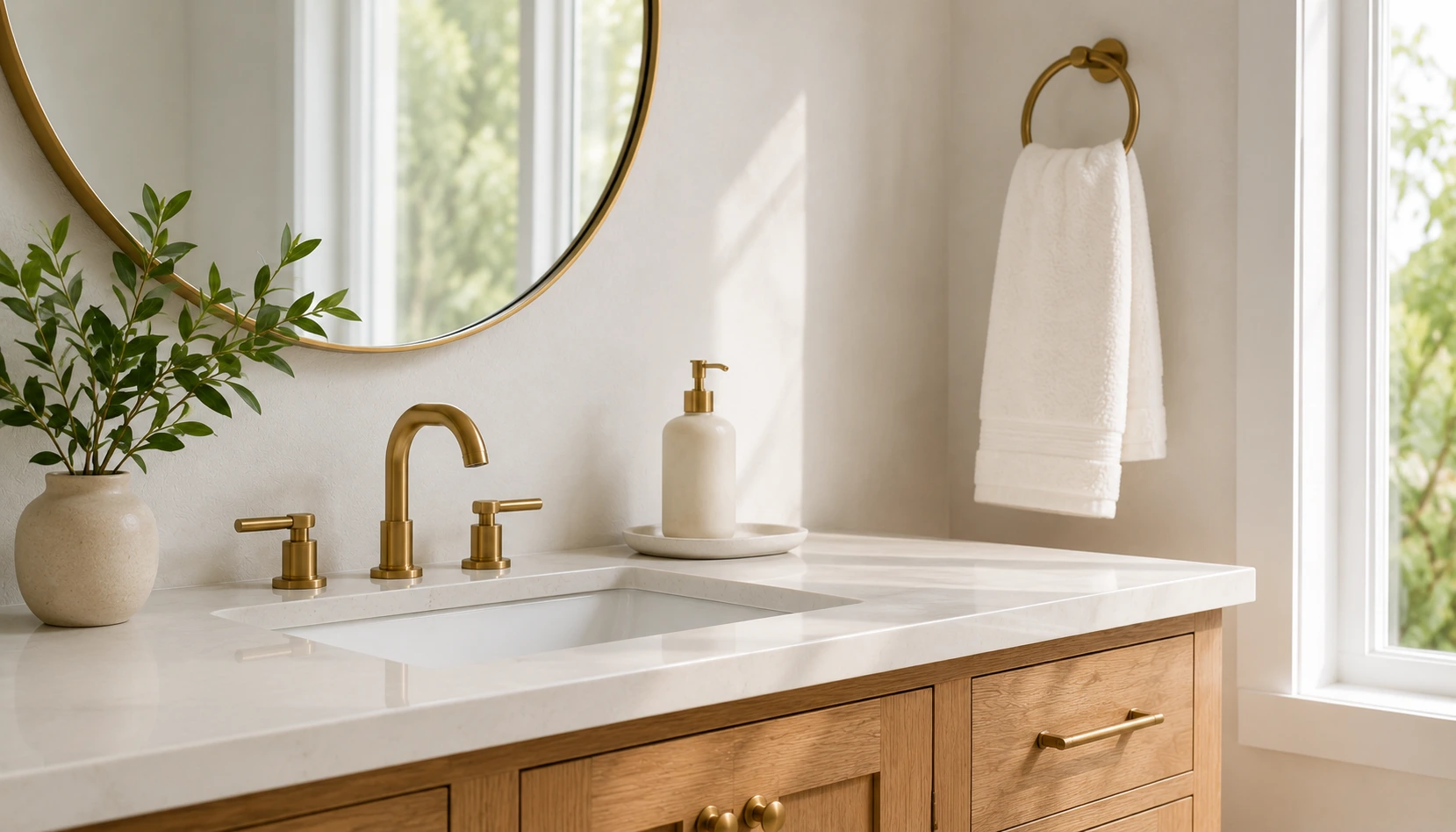
I’d rather tell you honestly where the money doesn’t matter than pad this list with ideas that sound good and do little.
Decorative soap and towel sets that just sit there unused are a classic budget-decor trap, they look nice in a photo and add clutter in real life. Cheap decorative trays and small trinket dishes multiply fast and rarely earn their shelf space. A brand-new shower curtain liner, unless the old one is actually moldy or torn, is functional and invisible, not a styling upgrade worth prioritizing.
If money’s tight, I’d cut all three of these before cutting paint, hardware, or lighting. Those three do the real work. The rest is decoration on top of decoration.
A Sample $50 Refresh Plan
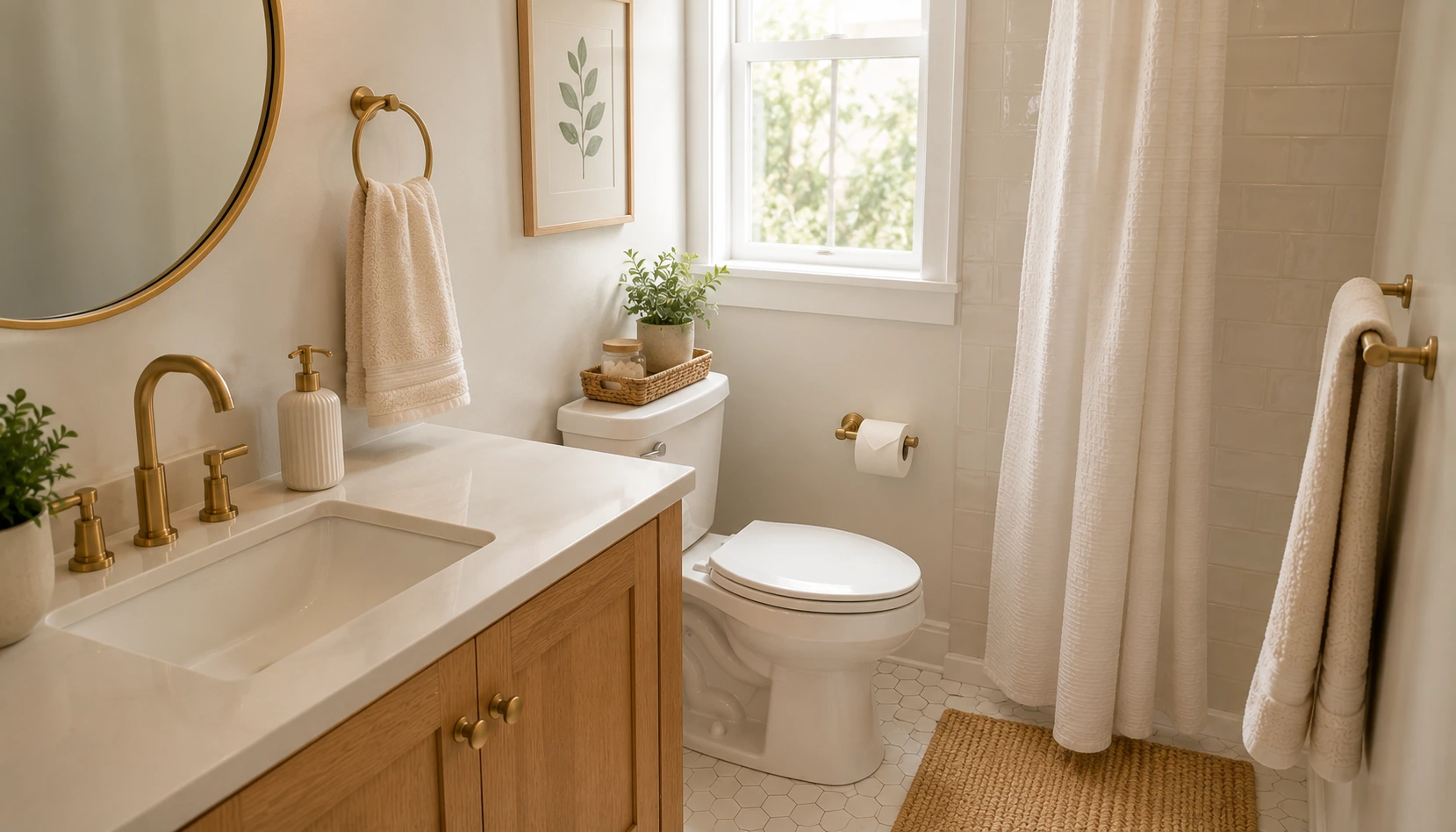
If you want a concrete starting point instead of picking from the list above, here’s roughly how I’d spend $50 in a rental bathroom.
Warm-toned light bulb swap, about $8 for two bulbs. A set of coordinated cream towels, around $22. A woven bath mat, about $15. A small plant cutting in a jar, free to $5. That stays under $50 total and spreads the budget across lighting, textiles, and one natural accent instead of relying on a single decorative purchase.
If you have a bit more room in the budget, swap the drawer pulls next, then the mirror frame kit after that. Paint, if you’re not renting or your landlord allows it, is worth doing before any of the above, since everything else looks better against a fresh wall color.
Common Budget Bathroom Mistakes
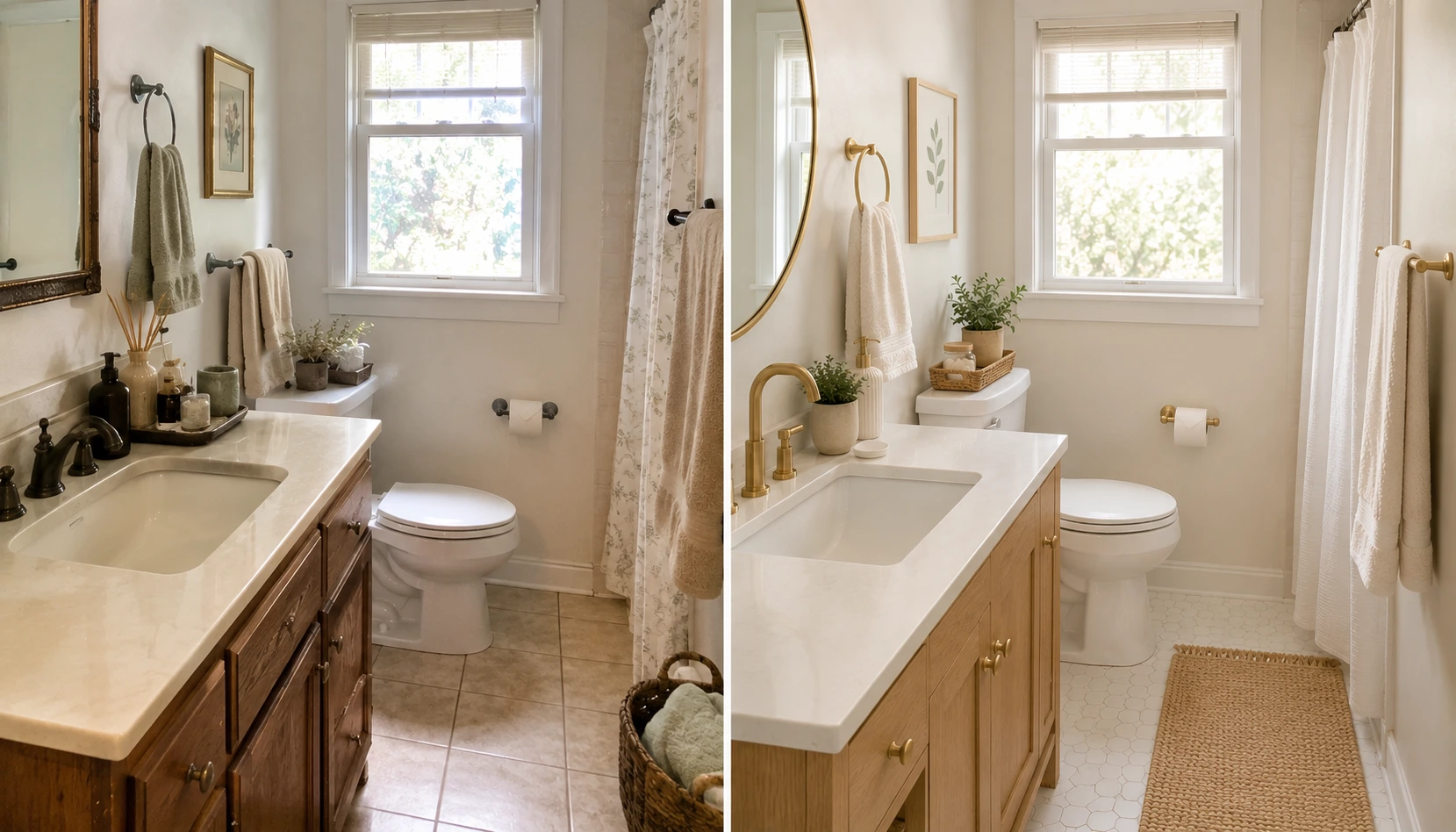
A few patterns show up again and again in budget bathroom projects, and they’re worth naming directly.
Buying one nice item and leaving everything else mismatched around it undercuts the whole effort, a beautiful new towel bar next to old chrome drawer pulls just highlights the inconsistency. Spending the bulk of a budget on decorative extras before covering paint, lighting, and hardware means the fundamentals stay untouched while money goes to things that barely register. Skipping a hidden-spot test before applying peel-and-stick products to a rental wall risks a mess that costs more to fix than it saved.
And treating every idea on this list as equally worth doing, rather than prioritizing paint, hardware, and lighting first, is how people spend $50 and end up with a bathroom that doesn’t look meaningfully different than before they started.
None of this requires a renovation budget or even a particularly large one. Start with paint if you can, then hardware, then lighting, in that order of impact per dollar. The smaller styling touches matter, but only after the fundamentals are handled.
For more ways to make a small bathroom feel bigger regardless of budget, see our guide to Small Bathroom Ideas, or for a full room built around one calming color, see Sage Green Bathroom Ideas.