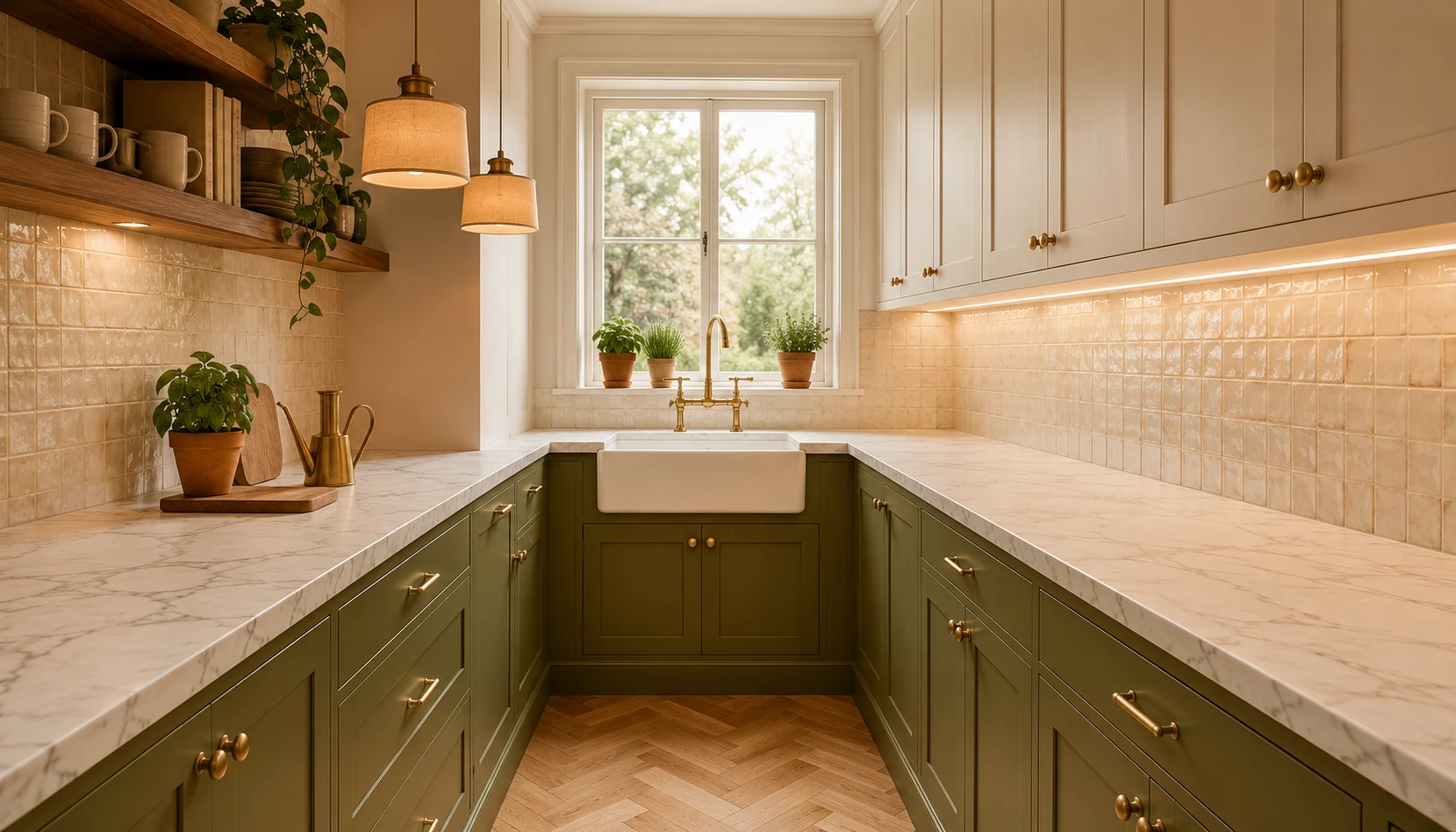
In 2026, designers have collectively decided. Olive green has officially become the kitchen color of the year. Across interior design publications, Pinterest mood boards, and high-end kitchen reveals, one shade keeps appearing: a deep grounded olive green that feels both ancient and entirely current.
The shift makes sense. As people move away from cold all-white kitchens and stark grey palettes, olive green offers something neither extreme provides. Warmth without being heavy. Color without being loud. Personality without sacrificing timelessness. Olive green is the kitchen color that feels like it was always meant to be there.
If your kitchen is overdue for a refresh in 2026, olive green deserves a serious look. Here are 12 ways to design an olive green kitchen that feels warm, grounded, and genuinely expensive, whether you’re considering a full renovation or just dreaming of a future one.
Why Olive Green Is the Kitchen Color of 2026
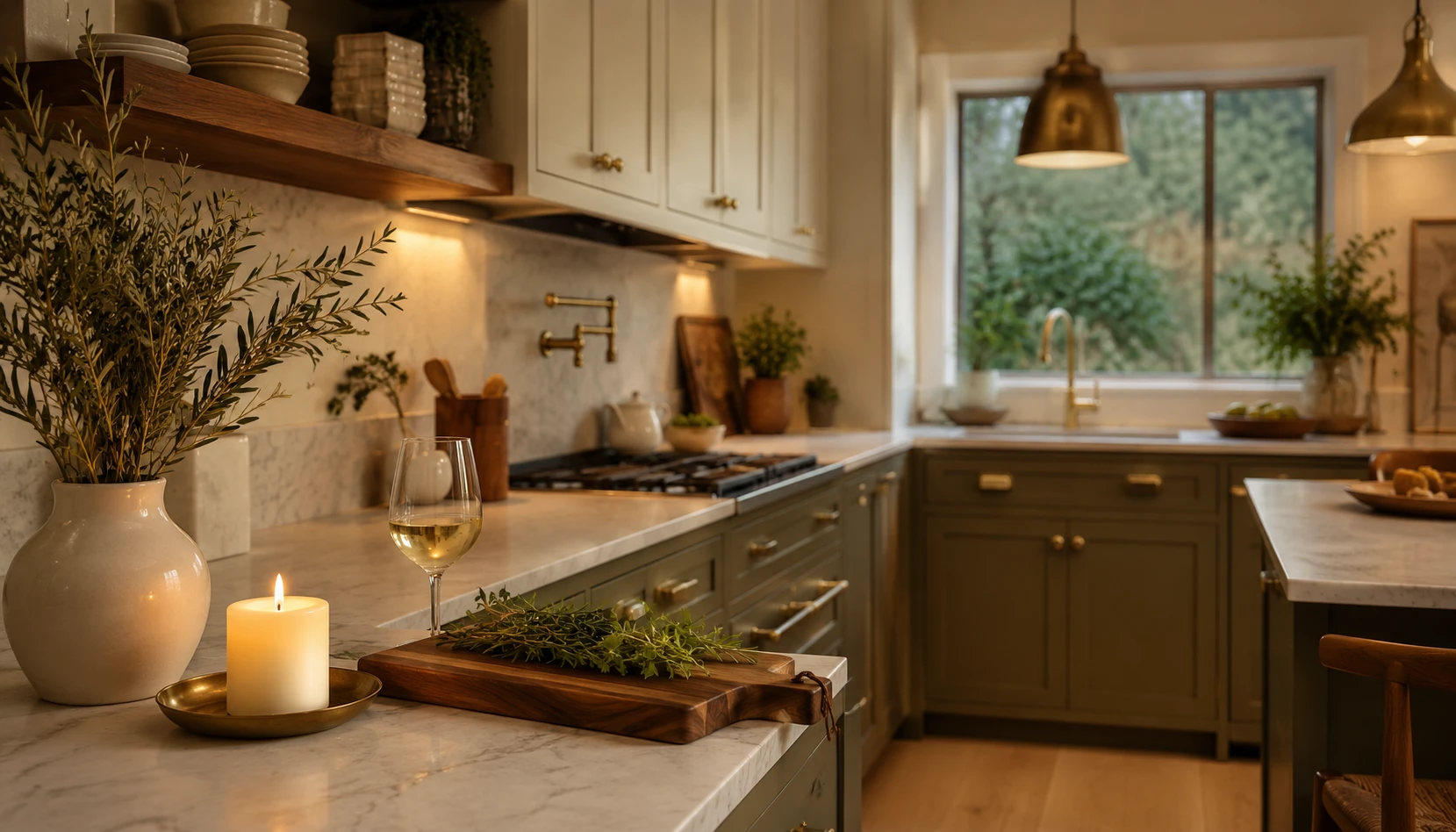
Several reasons explain why olive green has become the defining kitchen color of 2026:
It feels grounded and natural. Olive green has a deeply rooted connection to nature: to growing things, to ancient olive trees, to the earth itself. In a kitchen this organic quality reads as warm, calming, and genuinely homey.
It pairs beautifully with everything. Olive green works with warm wood tones, cream, terracotta, brass, copper, black, marble, and even cool blue. Few kitchen colors offer this much flexibility for accent pieces and design evolution over time.
It is replacing sage green in kitchens. While sage will remain popular for bedrooms and bathrooms, designers are confirming the shift to deeper greens in living and cooking spaces. Olive green has more depth and soul. Sage green’s lighter cousin is moving on while olive takes the kitchen spotlight.
It looks expensive without trying. Muted olive cabinet paired with a warm veined stone and unlacquered brass feels incredibly elevated and timeless. The combination reads as genuinely high-end even in modest kitchens.
It works in any light condition. Olive green has yellow undertones that prevent it from going flat in north-facing rooms while being deep enough to hold up in bright south-facing rooms.
It has serious staying power. Unlike trend-driven colors that look dated within a few years, olive green has been used in interior design for centuries. This is the kind of color you will still love in 10 years.
The Best Olive Green Paint Shades for Kitchens
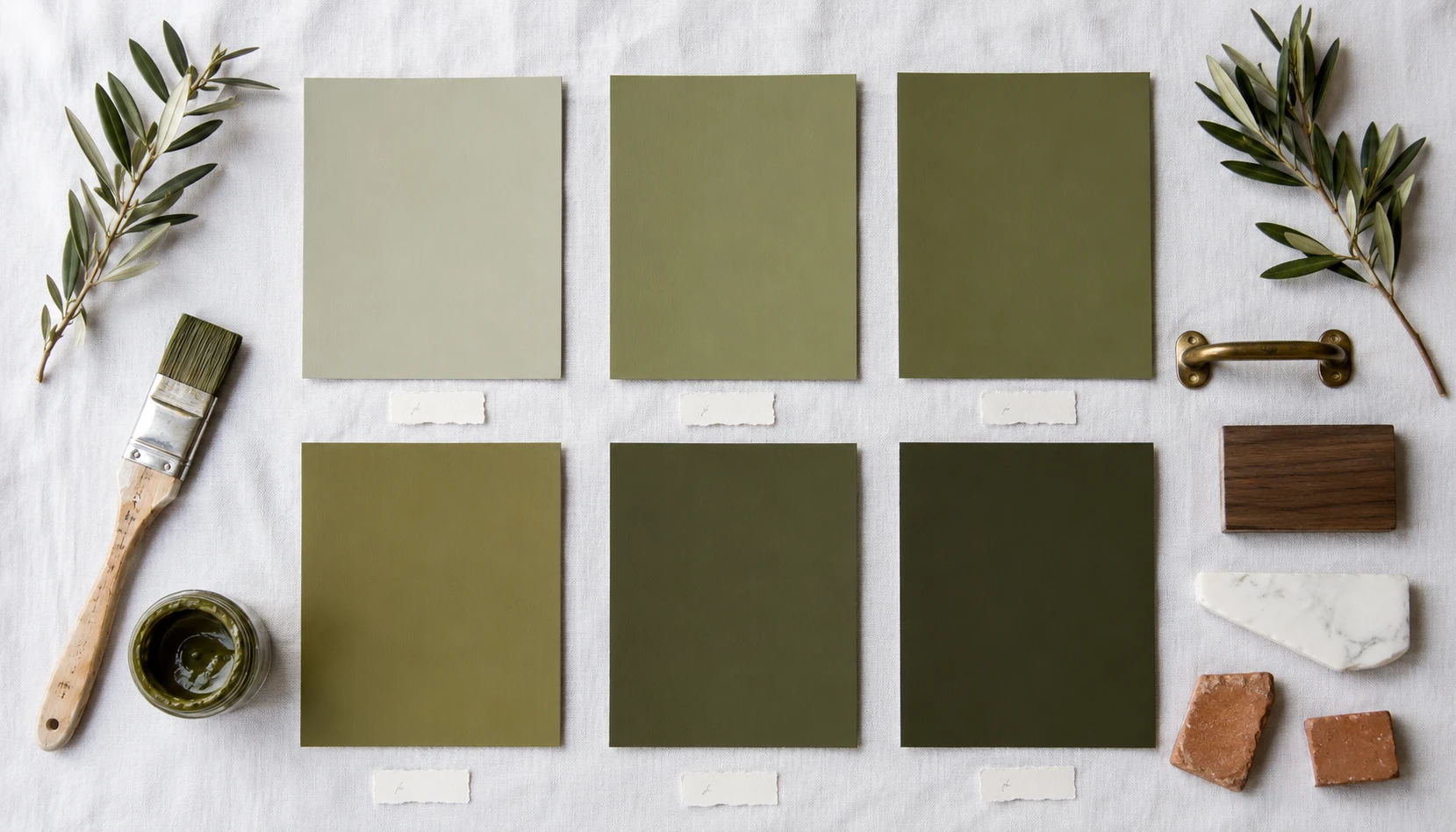
Not all olive greens are equal. The right shade depends on natural light, kitchen size, and how dramatic you want the result.
Lighter olive shades (for smaller or darker kitchens):
Farrow and Ball Treron: a pale olive-grey with a sophisticated muted quality. Works beautifully in north-facing kitchens.
Benjamin Moore Creekside Green: a balanced soft olive with warmth. A designer favorite for 2026 cabinets.
Sherwin-Williams Muddled Basil: a gentle muted olive that reads as a sophisticated neutral. Perfect for first-time olive users.
Medium olive shades (the most popular):
Farrow and Ball Olive: their classic olive shade. Deep enough to feel grounded but light enough to read clearly in most lighting.
Benjamin Moore Olive Branch 2143-30: a well-balanced medium olive with warm undertones. Photographs beautifully.
Little Greene Sage and Onions: a rich warm olive with depth. Excellent for cabinet drenching.
Deep olive shades (for full statement kitchens):
Farrow and Ball Bancha: a rich deep olive with golden undertones. One of the more sophisticated olives available.
Sherwin-Williams Ripe Olive (SW 6209): a deeply saturated olive that creates serious drama in a kitchen.
Edward Bulmer Olive: a warm deep olive with serious depth. For maximum impact.
Pro tip: Always sample paint colors on actual cabinet doors (or large card swatches) in your actual kitchen lighting before committing. Olive greens shift more than most colors with light direction; sample in morning, afternoon, and evening light.
Cabinets — Full Olive or Lower Cabinets Only?
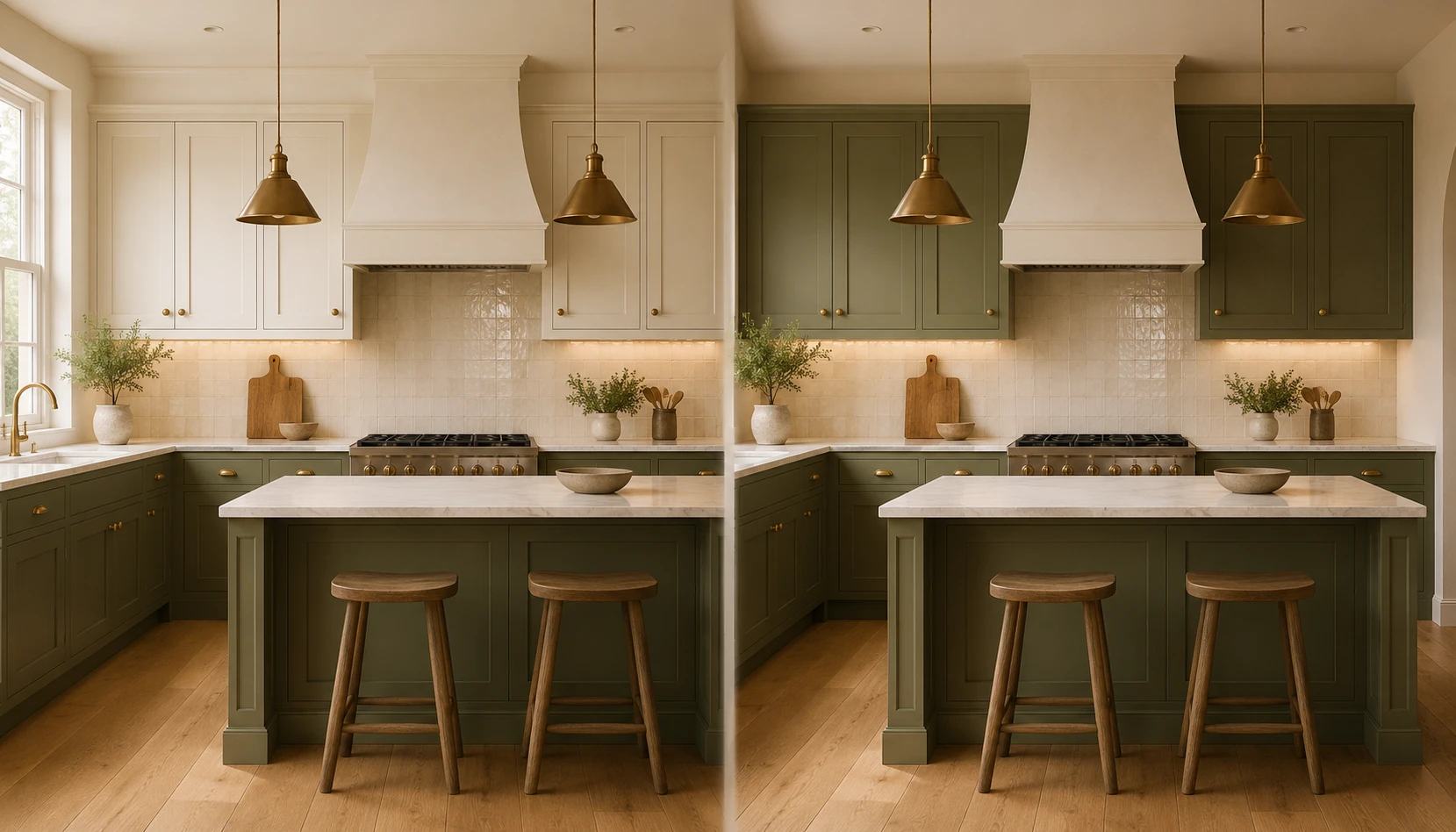
The cabinet approach you choose determines how immersive your olive green kitchen will feel.
Full olive cabinets (upper and lower):
The most dramatic option. All cabinets painted in olive green creates a completely immersive earthy kitchen. The effect is grounded, sophisticated, and serious. Best in kitchens with abundant natural light.
Best for: Statement kitchens, design-confident homeowners, kitchens with islands bringing in lighter elements, high-ceilinged spaces.
Lower cabinets only, upper cabinets in cream:
The most popular and beginner-friendly approach. The olive grounds the kitchen at lower level while cream uppers keep the space feeling open and bright. This is the formula in the majority of trending olive kitchens on Pinterest.
Best for: Most kitchens, first-time bold color choices, smaller kitchens, anyone wanting earthy character without full commitment.
Olive on the island only:
A statement island in olive green surrounded by neutral cabinets is a sophisticated middle ground. The island becomes the kitchen’s focal point, beautifully framed by lighter cabinetry.
Best for: Larger kitchens with islands, homeowners testing the color before committing further, kitchens that want a defined focal point.
Color drenching (walls + cabinets + ceiling):
The boldest approach: paint walls, cabinets, and ceiling all in the same olive green. This 2026 designer-favorite technique eliminates color breaks entirely, creating a seamless envelope. The room feels intentional, expensive, and architecturally considered.
Best for: Bedrooms or formal dining rooms more than kitchens, but works in kitchens with abundant natural light and high ceilings.
Olive Green and Brass — The Most Beautiful Pairing of 2026
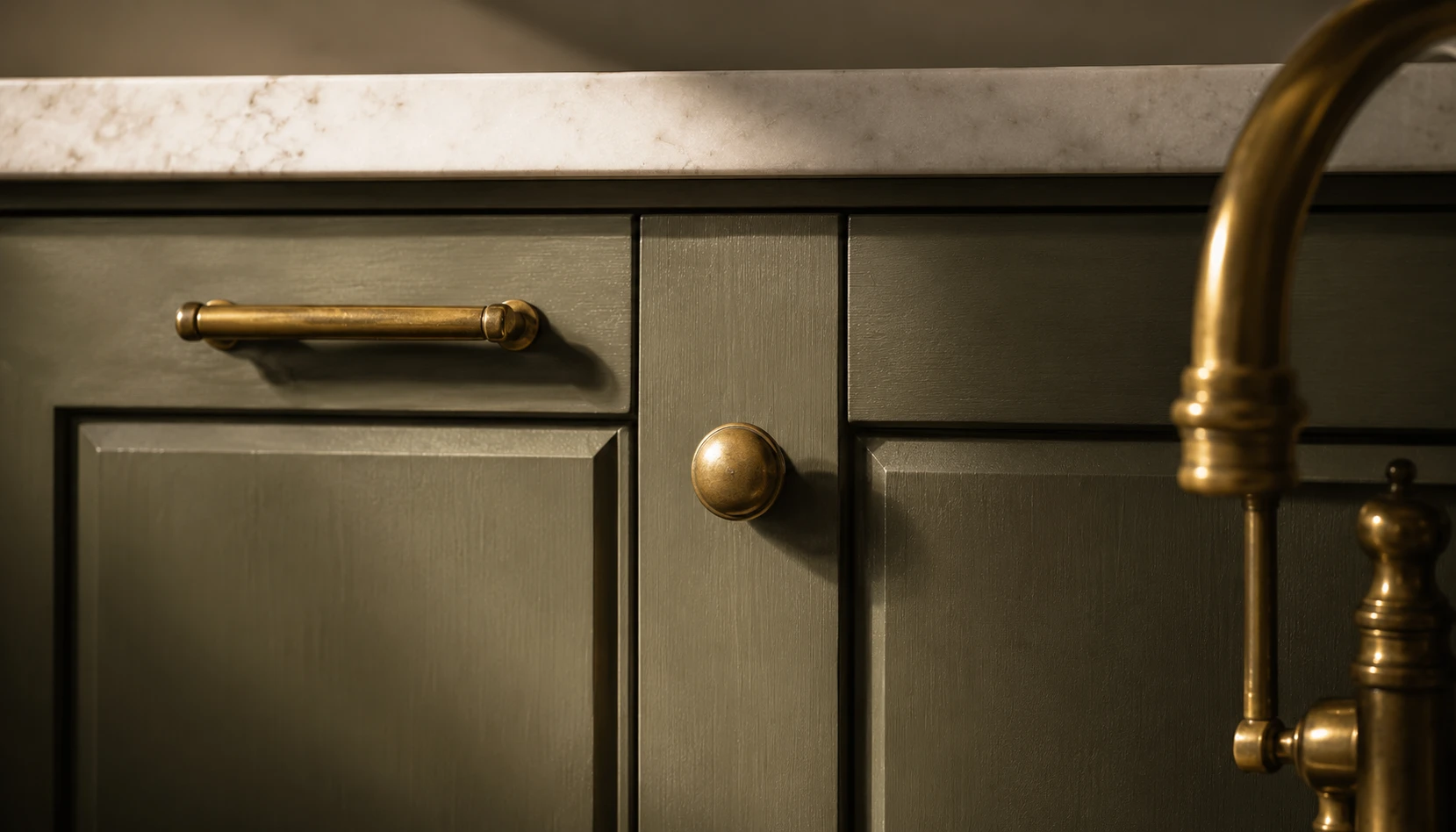
If you read just one section of this guide, make it this one. Olive green cabinetry paired with aged brass hardware is one of the most beautiful combinations available in 2026 kitchen design.
The warm gold of aged brass against the earthy depth of olive green creates a contrast that feels regal, organic, and timeless. Brass amplifies olive’s warmth, olive gives brass somewhere beautiful to shine, and together they create exactly the kind of grounded sophistication dominating high-end kitchen design.
How to use brass with olive:
Drawer pulls and cabinet knobs: The starting point. Aged brass round knobs or slim bar pulls in brass on olive cabinets is the formula. Every cabinet gets brass hardware.
Faucets and taps: A bridge-style or gooseneck tap in unlacquered brass that develops patina over time. Avoid polished brass which can look new and shiny. Aged brass with patina is the right finish.
Pendant lights: Two or three matching pendants over an island in aged brass with cream or unlined fabric shades. The brass catches both natural and warm artificial light beautifully against olive.
Open shelving brackets: If using open shelving in an olive kitchen, brass brackets supporting natural walnut shelves is the perfect detail.
Pot rails and hardware: A brass rail mounted to the wall holding kitchen tools. Functional and beautiful.
Avoid mixing metals. Pick brass and commit. Olive kitchens with mixed metals (brass plus chrome plus black) look chaotic. The rich olive needs metallic consistency.
Brass tone: Use AGED brass not polished brass. The warm patina is what makes the combination feel sophisticated rather than new. Look for “antique brass” or “unlacquered brass” specifically.
Olive Green and Walnut Wood — The Designer Combination
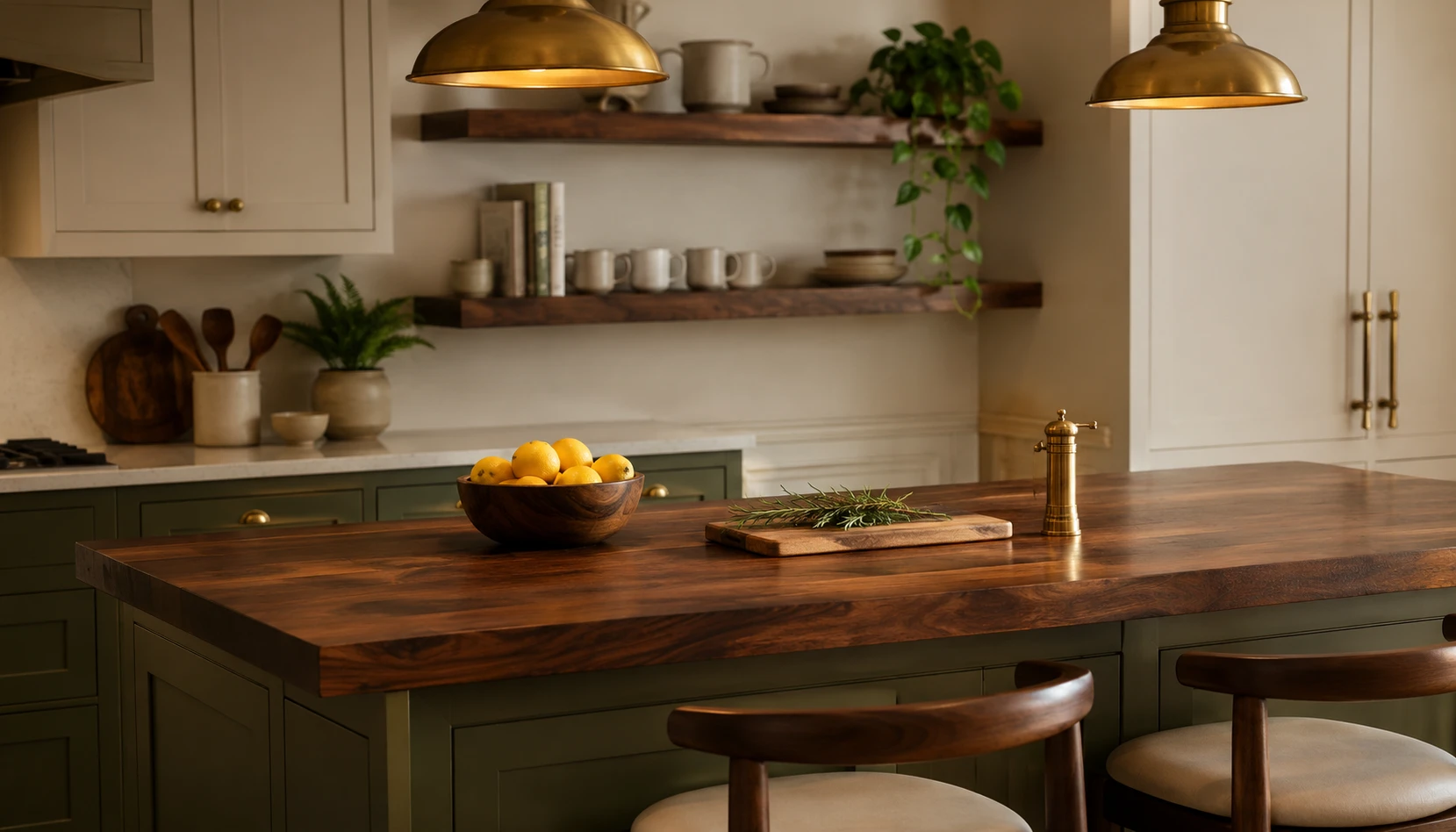
After brass, walnut is the second essential pairing for olive green kitchens. The warmth of walnut wood next to the earthy depth of olive is one of the most sophisticated combinations available in 2026 kitchen design.
How to bring walnut into an olive kitchen:
Walnut island top: A solid walnut butcher block top on an olive island looks incredible. The two materials share an inherent natural warmth that lifts the whole kitchen.
Walnut floating shelves: Two or three walnut floating shelves on a wall above olive cabinets, styled with neutral ceramics and a small plant.
Walnut bar stools: At an olive island, three walnut bar stools with natural leather seats create a complete designer moment.
Walnut accent wall: A vertical walnut slat wall or paneled section breaks up the olive and adds organic warmth.
Walnut flooring: If renovating, walnut floors with olive cabinets makes for a striking combination, though this is the most expensive approach.
Other warm wood options if walnut is unavailable:
- Honed teak (similar warmth, slightly lighter)
- White oak (lighter but works beautifully)
- Reclaimed wood (the variation pairs beautifully with olive’s organic quality)
- Smoked oak (darker than natural oak, complementary to olive)
Avoid: Orange-toned woods like older pine which clash with olive’s cool-warm balance. Grey-stained wood which fights with olive’s warmth.
Olive Green and Cream — Balanced Sophistication
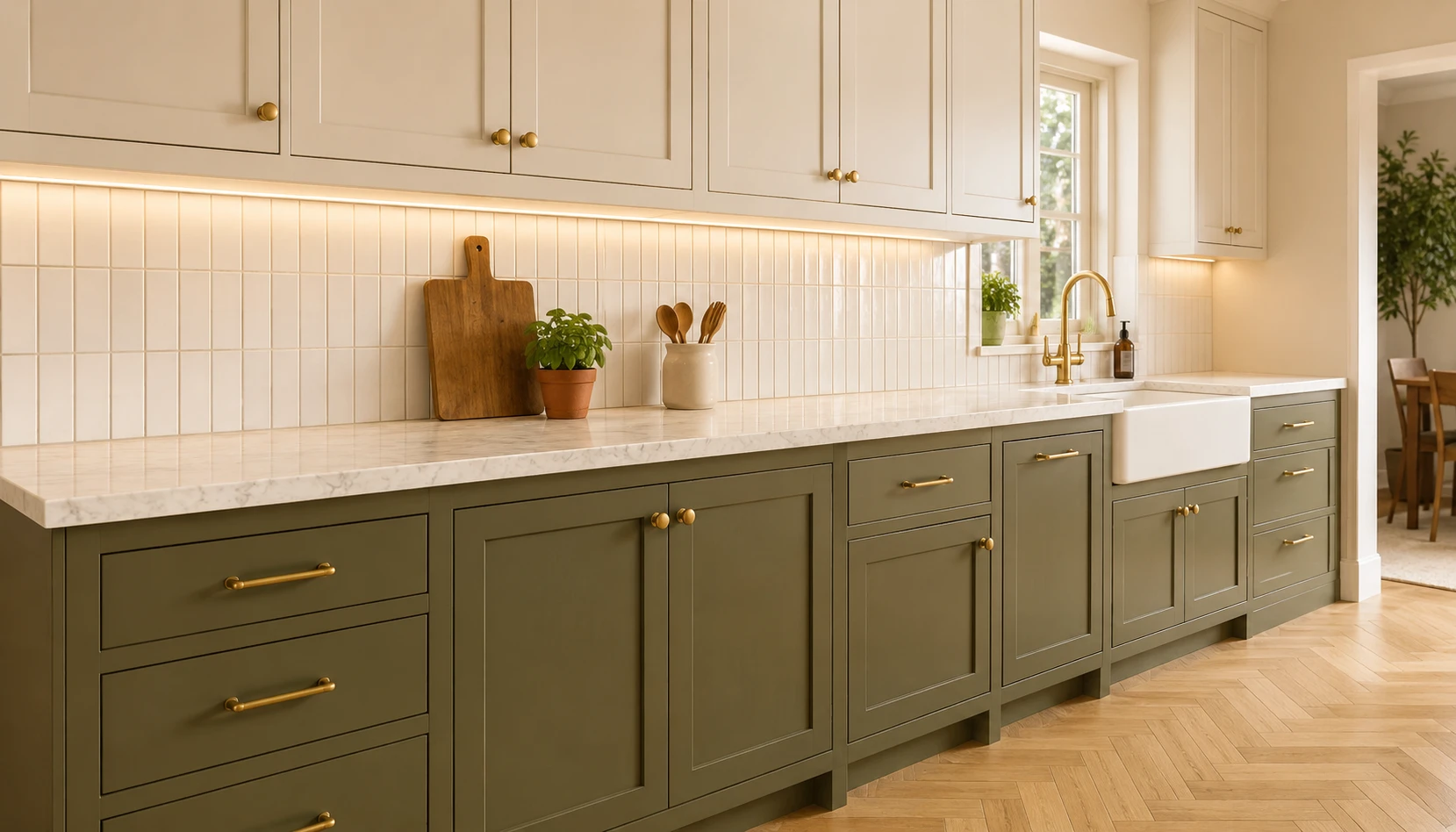
For homeowners who love olive green but want a brighter overall kitchen, the olive plus cream formula is the answer. Olive lower cabinets paired with cream upper cabinets creates beautiful balance: grounded at the bottom, light at the top.
How to execute olive and cream perfectly:
Cream upper cabinets, olive lowers: The classic formula. Both cabinets in shaker style for cohesion. Cream walls above the upper cabinets continuing to ceiling.
Cream walls everywhere: All walls in a warm cream-white. The olive cabinets are the only deep color in the room. This makes the olive sing.
Cream and olive island: A two-tone island, cream base with olive top, or olive base with cream waterfall counter. Two-tone islands have become a popular choice in 2026 kitchens.
Cream textiles: Cream linen kitchen towels, cream curtains if any, cream ceramic accessories. All textiles in cream prevent the room from feeling too dark.
Warm white versus stark white: Critical choice. Use WARM cream not bright white. Warm whites like Farrow and Ball Pointing or Benjamin Moore White Dove embrace olive. Stark bright whites fight with olive’s warmth and make the room feel cold.
Ceiling color: Paint the ceiling the same warm cream as the walls. Never paint a ceiling stark white in an olive kitchen; the contrast will feel harsh.
Olive Green and Terracotta — The Earthy Powerhouse Combo
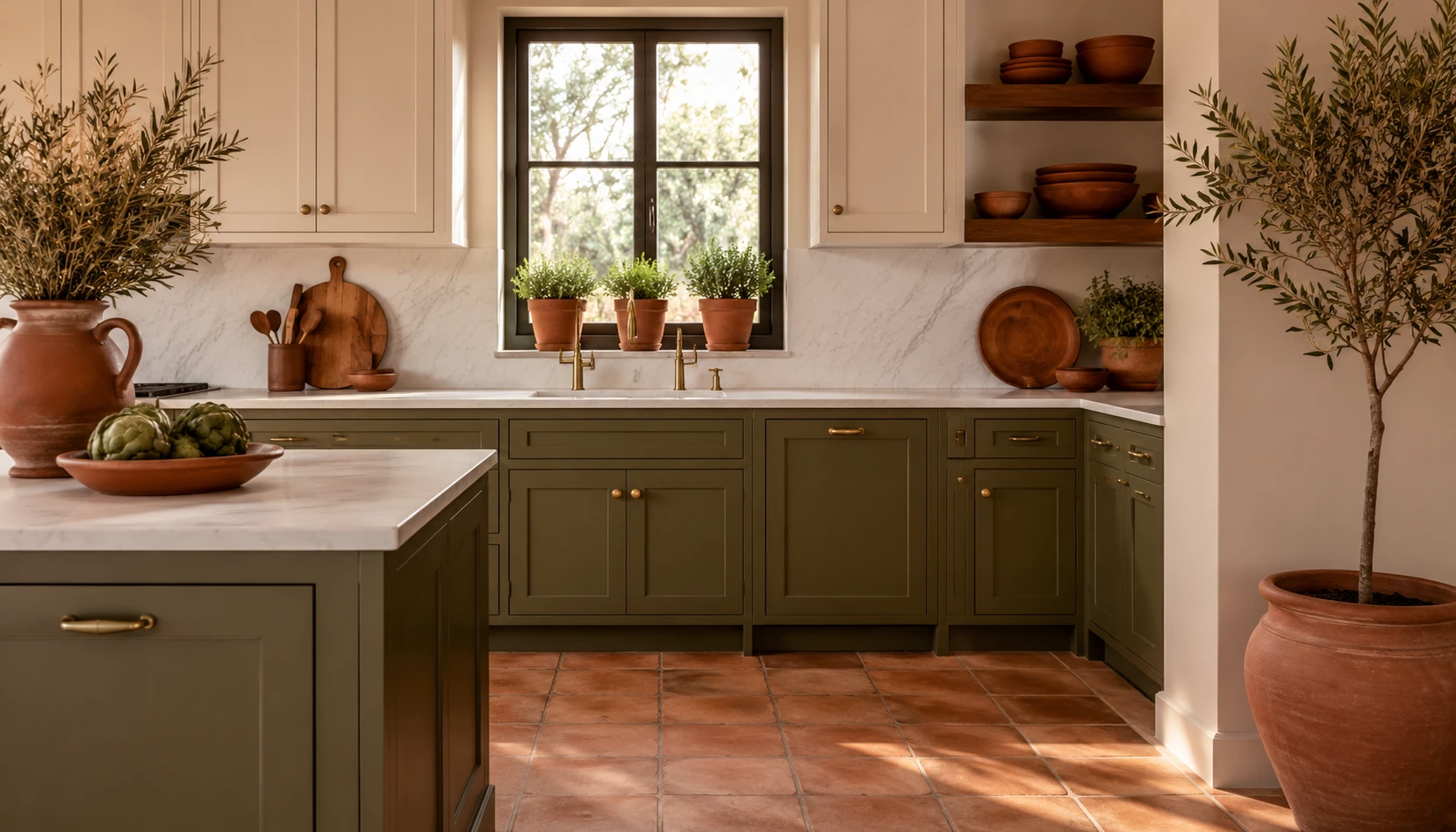
If you want to elevate an olive kitchen with an unmistakable 2026 design moment, terracotta is the answer. Both colors come from the earth, share organic warmth, and create a kitchen that feels deeply connected to nature.
For more on terracotta see our complete guide on terracotta as a design color. Olive plus terracotta is also a major trending bedroom combination.
How to bring terracotta into an olive kitchen:
Terracotta floor tiles: A terracotta tile floor with olive cabinets is a classic Mediterranean-meets-modern combination. The warm clay floor anchors the olive green beautifully.
Terracotta pots and plants: Group of terracotta pots holding fresh herbs on the windowsill, a large terracotta floor planter beside the island, terracotta plant pots on open shelves.
Terracotta backsplash tiles: Glazed terracotta zellige tiles as a backsplash provide a warm earthy texture against olive cabinets.
Terracotta dinnerware on display: Open shelves styled with terracotta plates, bowls, and serving pieces add the color naturally.
Terracotta vase or pottery: A statement terracotta vase on the counter or island adds the color in a single beautiful piece.
The shades that work:
- Olive green plus burnt terracotta (deep warm orange-brown)
- Olive green plus soft clay (lighter pink-terracotta)
- Olive green plus warm rust (deeper red-terracotta)
Avoid: Bright orange tones (too saturated for olive’s mutedness), or too many competing terracotta shades. Pick one terracotta tone and stick with it.
Best Countertop Pairings for Olive Green Cabinets
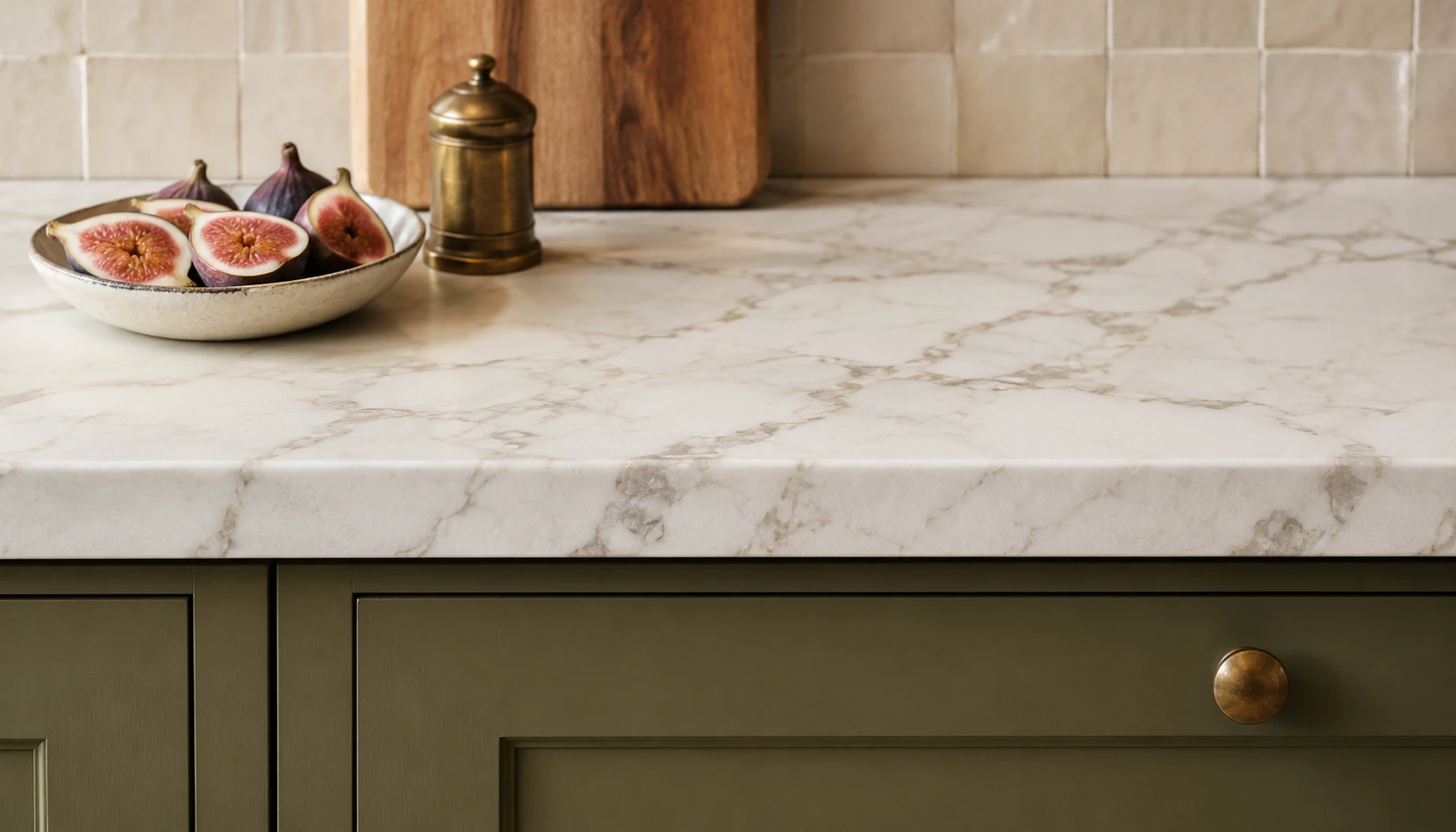
Counter material has massive impact on how olive green cabinets read. Get this wrong and even the most beautiful olive cabinets look off.
Best countertop options for olive kitchens:
Honed Calacatta marble (or marble-look quartz): The gold standard. Beautiful warm grey veining on white background pairs beautifully with olive.
Warm Carrara marble: Classic and forgiving. Slightly cooler than Calacatta but still beautiful.
White quartz with warm grey veining: A more durable alternative to marble at lower cost. Similar visual impact.
Honed white concrete: Matte modern texture that pairs beautifully with olive’s organic quality. Industrial-meets-luxe.
Cream travertine: Warm natural stone with subtle texture. Pairs beautifully with olive’s organic feel.
Walnut butcher block (for island only): A walnut butcher block island top with olive perimeter cabinets is a designer favourite combination.
Soapstone: Deep grey-black natural stone with subtle veining. Modern and sophisticated against olive.
Countertops to avoid:
Stark white quartz: Too cold against olive’s warmth. Pure black granite: Too dark; olive needs lighter counter contrast. Beige granite: Wrong undertone; fights olive’s depth. Highly polished marble: Olive kitchens look better with honed (matte) finish stone.
Edge profile: Choose a simple eased edge or honed mitred edge for modern looks. Avoid bullnose edges which feel dated against olive’s contemporary sophistication.
Backsplash Ideas for an Olive Green Kitchen
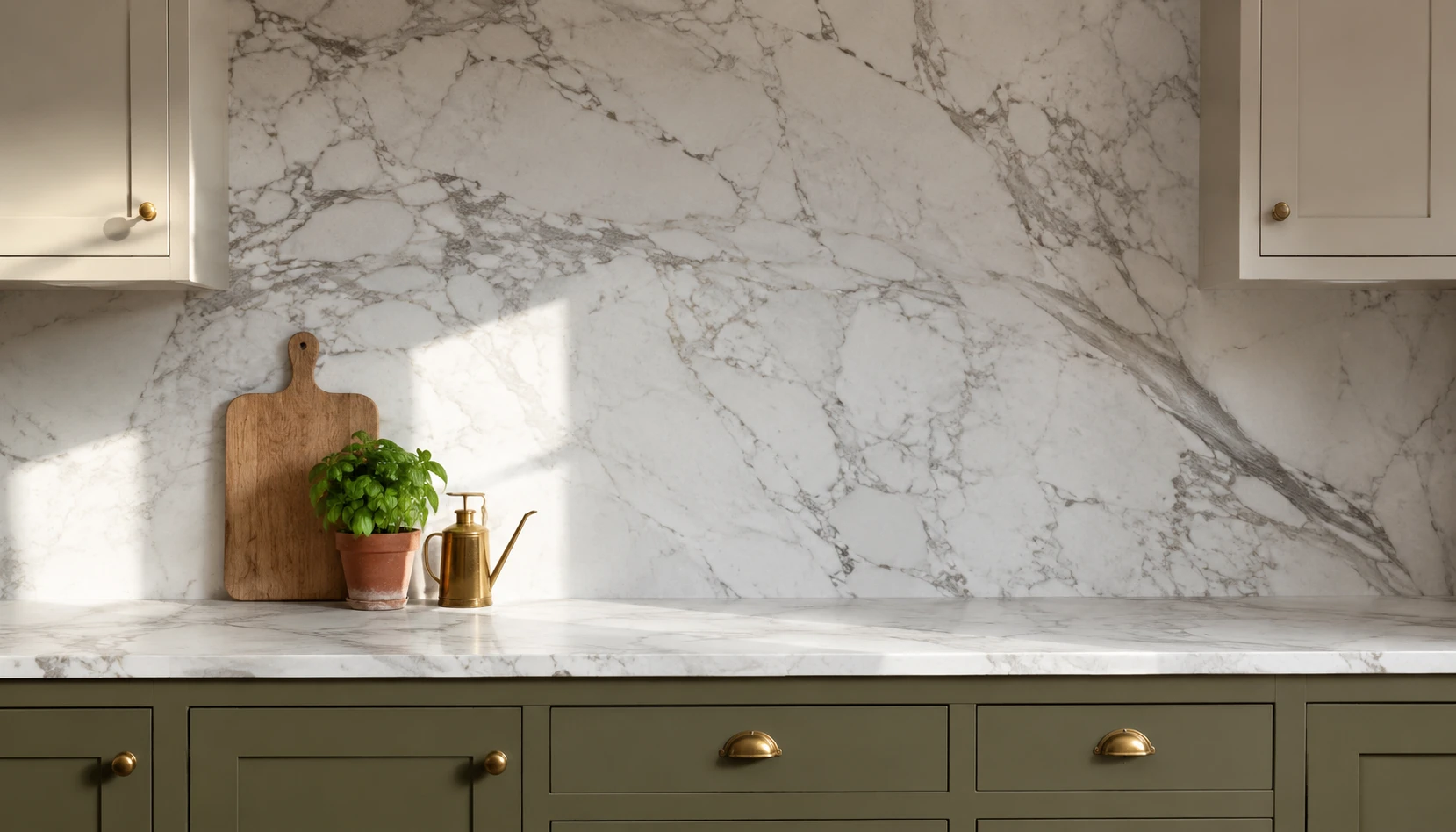
The backsplash in an olive kitchen is a real opportunity. Because olive cabinets are already a meaningful statement, the backsplash needs to complement rather than compete.
Best backsplash options for olive kitchens:
Marble slab backsplash: A continuous slab of white or warm-veined marble running from counter to upper cabinets, or all the way to the ceiling. The most luxurious option and creates a genuine feature wall.
Honed cream zellige tiles: Handmade Moroccan tiles in warm cream with a matte honed finish. The subtle surface variation adds beautiful texture that catches light differently on each tile. Works beautifully with olive’s depth.
Warm white subway tiles: Traditional subway tiles in warm white laid in classic horizontal brick pattern or vertical stack bond. The vertical stack pattern adds height to the kitchen.
Glazed terracotta tiles: For an earthy approach, terracotta zellige tiles create striking warm contrast against olive.
Cream limestone slab: Natural stone backsplash with warm cream tones. Subtle and beautiful.
Brass strip detail: A slim brass strip running horizontally along the backsplash at counter level adds a beautiful metallic accent.
Backsplash to avoid:
Busy patterned tiles: Compete with olive cabinets visually. Bright colored tiles: Pull attention away from olive’s beauty. Plain white tiles with stark white grout: Too plain; needs warm grout or pattern interest.
Lighting an Olive Green Kitchen
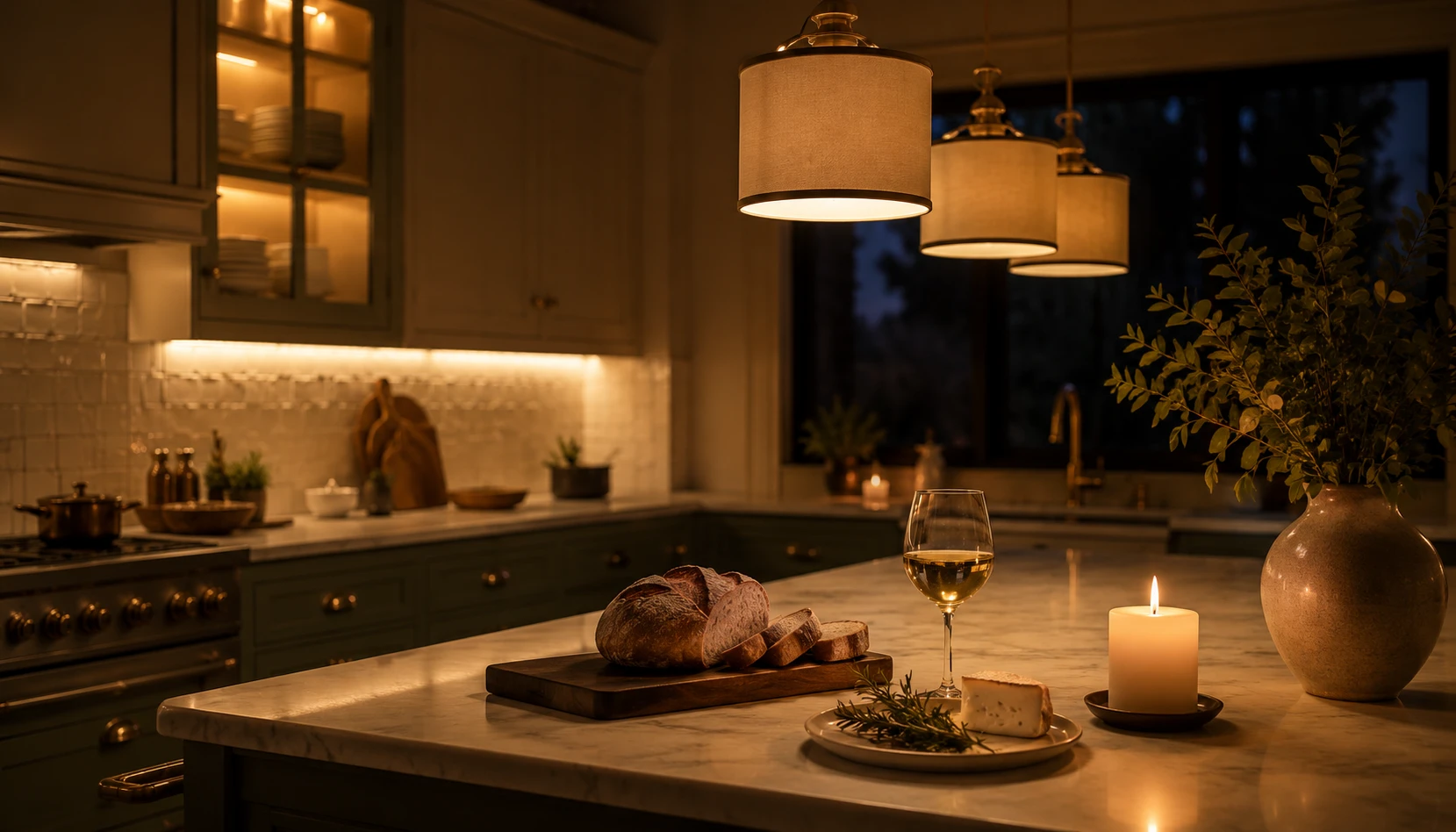
Lighting is what brings an olive green kitchen to life. The wrong lighting makes olive look dull and grey. The right lighting makes it glow with the warm depth it deserves.
The three lighting layers every olive kitchen needs:
Layer 1 — Pendant lights: Two or three matching pendants in aged brass with cream linen or unlined fabric shades, hung over an island or peninsula. Statement lighting. Warm bulbs (2700K) only.
Layer 2 — Under-cabinet LED strips: The single highest-impact lighting upgrade for any olive kitchen. Warm white LED strips under upper cabinets illuminate the counter, eliminate work shadows, and make the backsplash glow beautifully. The warm light against olive is spectacular.
Layer 3 — Inside cabinet lighting: Small LED puck lights inside glass-fronted upper cabinets make the kitchen feel deeper and more layered. Particularly beautiful at night.
Layer 4 — Accent lighting: A small lamp on a counter section, a candle at counter level, or even string lights tucked above cabinets. Small additional warm light sources create the cosy evening atmosphere olive kitchens are made for.
Critical bulb temperature: Use warm white bulbs in the 2700K-3000K range. Cool white or daylight bulbs make olive look flat, dingy, and tired. Warm bulbs make olive glow with the rich earthy depth it should have.
Dimmer switches: Essential in olive kitchens. Being able to lower light in the evening transforms the space into an intimate dining-and-cooking atmosphere.
Natural light: Olive kitchens with abundant natural light are stunning. If your kitchen is naturally dark, add a skylight if possible or invest in serious layered artificial lighting.
Small Olive Green Kitchen Tips
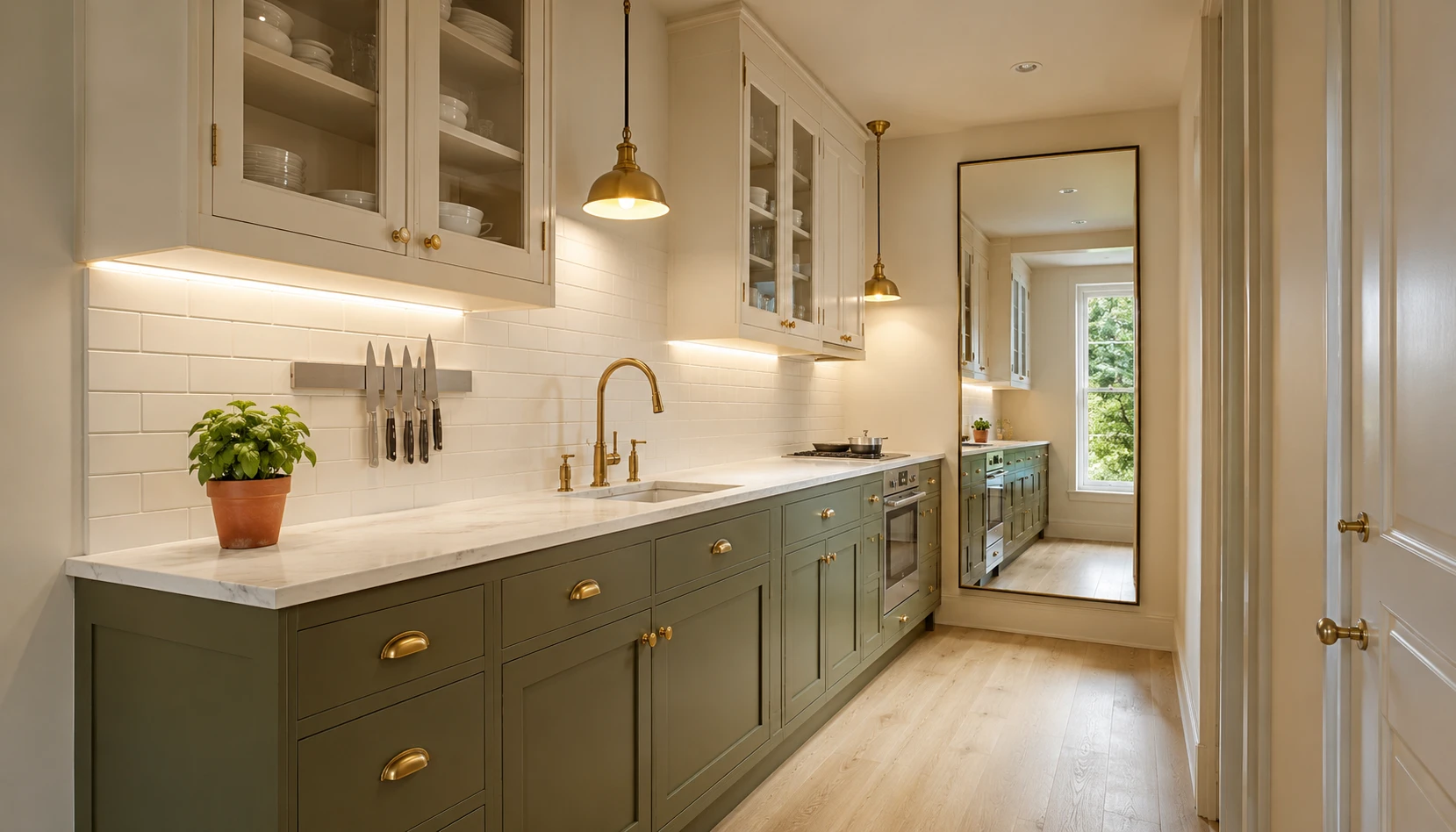
Small kitchens absolutely can use olive green successfully. In fact, the grounding quality that olive provides can make small kitchens feel more intentional and luxurious rather than smaller.
For more small kitchen design ideas see our complete guide to Small Kitchen Ideas 2026 for additional context.
Tips for small olive green kitchens:
Lower cabinets only: Don’t paint upper cabinets olive in a small kitchen. Keep uppers cream or white to prevent the space from feeling closed in.
Lighter walls and ceiling: Cream or warm white walls and ceiling are non-negotiable in small olive kitchens.
Maximise natural light: Keep windowsills clear. Use sheer or no window treatments. Add a mirror or reflective backsplash if possible.
Glass-fronted upper cabinets: Create visual depth and prevent the small space from feeling enclosed by solid surfaces.
Under-cabinet lighting is essential: Not optional in small olive kitchens. The warm LED glow makes the space feel larger and the olive more sophisticated.
Lighter countertop: White marble or quartz only. Dark countertops compress small olive kitchens.
Clear counters: Edit ruthlessly. Counter clutter overwhelms a small olive kitchen.
One statement, one accent: In a small olive kitchen the olive cabinets are the statement. Add one accent, brass hardware or walnut shelves, not both. Less is more in compact spaces.
Choose lighter olive shade: In small kitchens go with medium or lighter olive rather than deep olive. Save the dramatic deep shades for larger spaces with abundant natural light.
Olive Green Kitchen Mistakes to Avoid
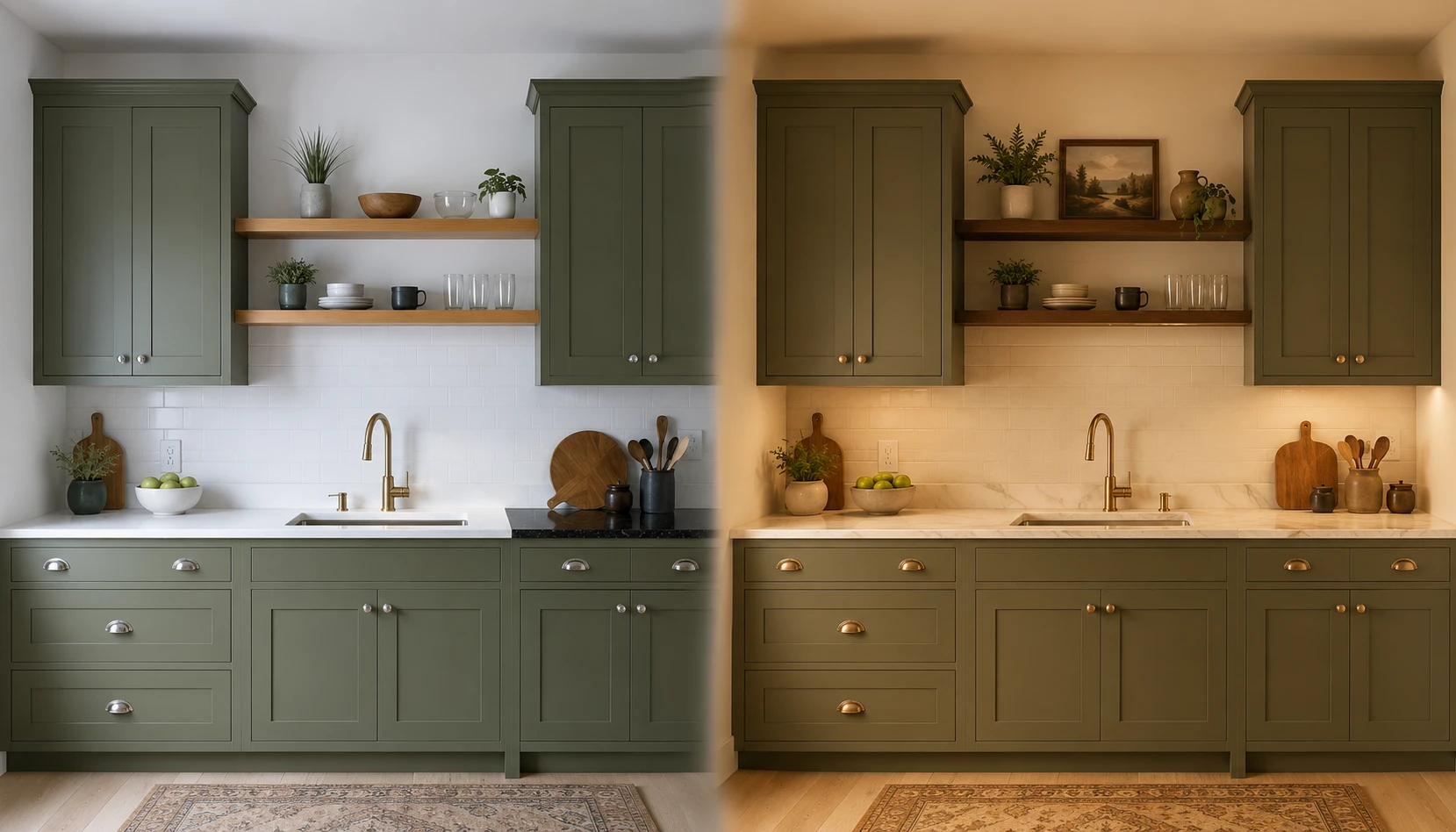
Final guidance: the most common mistakes that make olive green kitchens look wrong rather than beautiful.
Mistake 1: Cool white bulbs. The single most overlooked mistake. Cool LED light makes olive look flat and grey. Always use warm 2700-3000K bulbs.
Mistake 2: Wrong undertone neutrals. Pairing olive with cool grey, stark white, or beige with cool undertones fights with olive’s warmth. Use warm creams only.
Mistake 3: Wrong wood tones. Orange-toned oak, grey-stained wood, or yellow-toned pine all fight with olive. Stay with walnut, white oak, or smoked oak.
Mistake 4: Mixed metals. Olive kitchen with brass faucet AND chrome handles AND matte black pulls equals visual chaos. Pick one metal (almost always brass) and commit.
Mistake 5: Too dark of olive in a dark kitchen. A deep olive in a kitchen with limited natural light reads as muddy and depressing rather than atmospheric. Match the depth of olive to your light conditions.
Mistake 6: Black countertop with olive cabinets. Too dark. Olive cabinets need a lighter contrast counter to read as sophisticated rather than oppressive.
Mistake 7: Skipping under-cabinet lighting. This single addition transforms an olive kitchen. Without it, the space feels flat. With it, the space glows.
Mistake 8: Too many competing colors. Olive plus brass plus walnut plus cream is a complete palette. Adding more colors creates chaos. Edit ruthlessly.
Mistake 9: Wrong olive undertone. Yellow-heavy olive greens can look like avocado from the 1970s. Choose olive greens with grey or grounded undertones, not too yellow.
Mistake 10: Skipping the sample. Different olive greens read radically different in different light. Always sample the actual paint on actual cabinet doors in your actual kitchen before committing.
An olive green kitchen in 2026 is a confident design statement. It’s choosing grounded, earthy color over safe neutrals, personality and a connection to nature over blending in, and warmth and depth over playing it safe.
Start with one element. An olive island. Olive lower cabinets only. An olive accent on a butler’s pantry. See how it transforms the space. Then commit further or stay exactly there. Either way, you’ve already created something genuinely beautiful and timelessly current.
For more 2026 kitchen inspiration see our Small Kitchen Ideas 2026 guide and Deep Plum Kitchen Ideas for the perfect moody alternative. For matching bedroom inspiration see our Sage Green Bedroom Ideas, sage’s calming bedroom version of olive’s grounded kitchen energy.