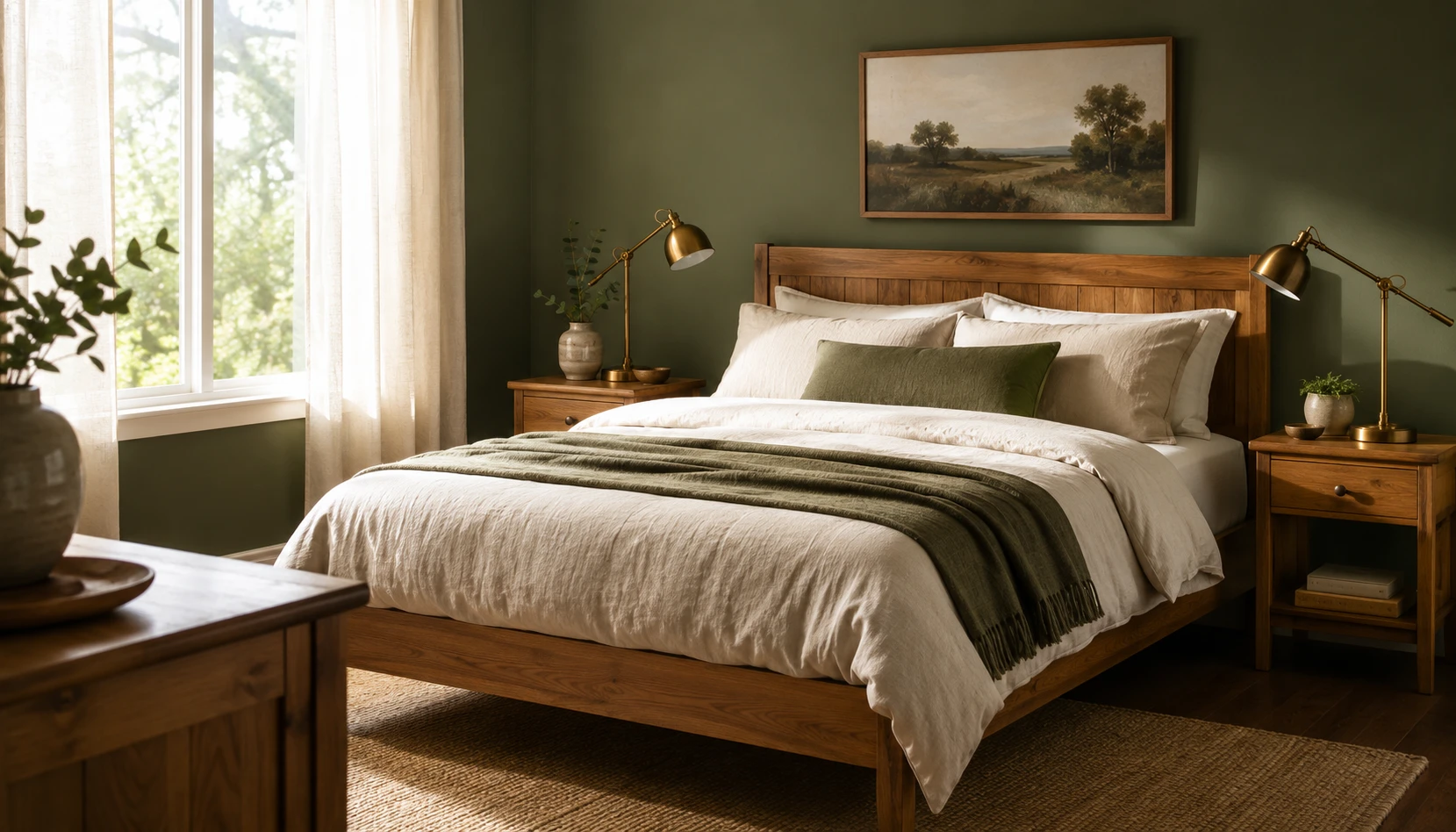
Olive green behaves differently in a bedroom than it does in a kitchen or living room. A bedroom needs the color to remain restful through long periods of use, so the shade, coverage, lighting, and surrounding materials require a calmer approach.
The difference is mood. A kitchen can handle olive leaning a bit moody and dramatic. A bedroom needs to feel like you can actually fall asleep in it, which means the same color has to get softer, warmer, and less saturated than you’d use two rooms over.
These 12 ideas are built around that distinction, using olive to make a bedroom feel grounded and calm instead of dark and closed in.
Why Olive Green Works in a Bedroom
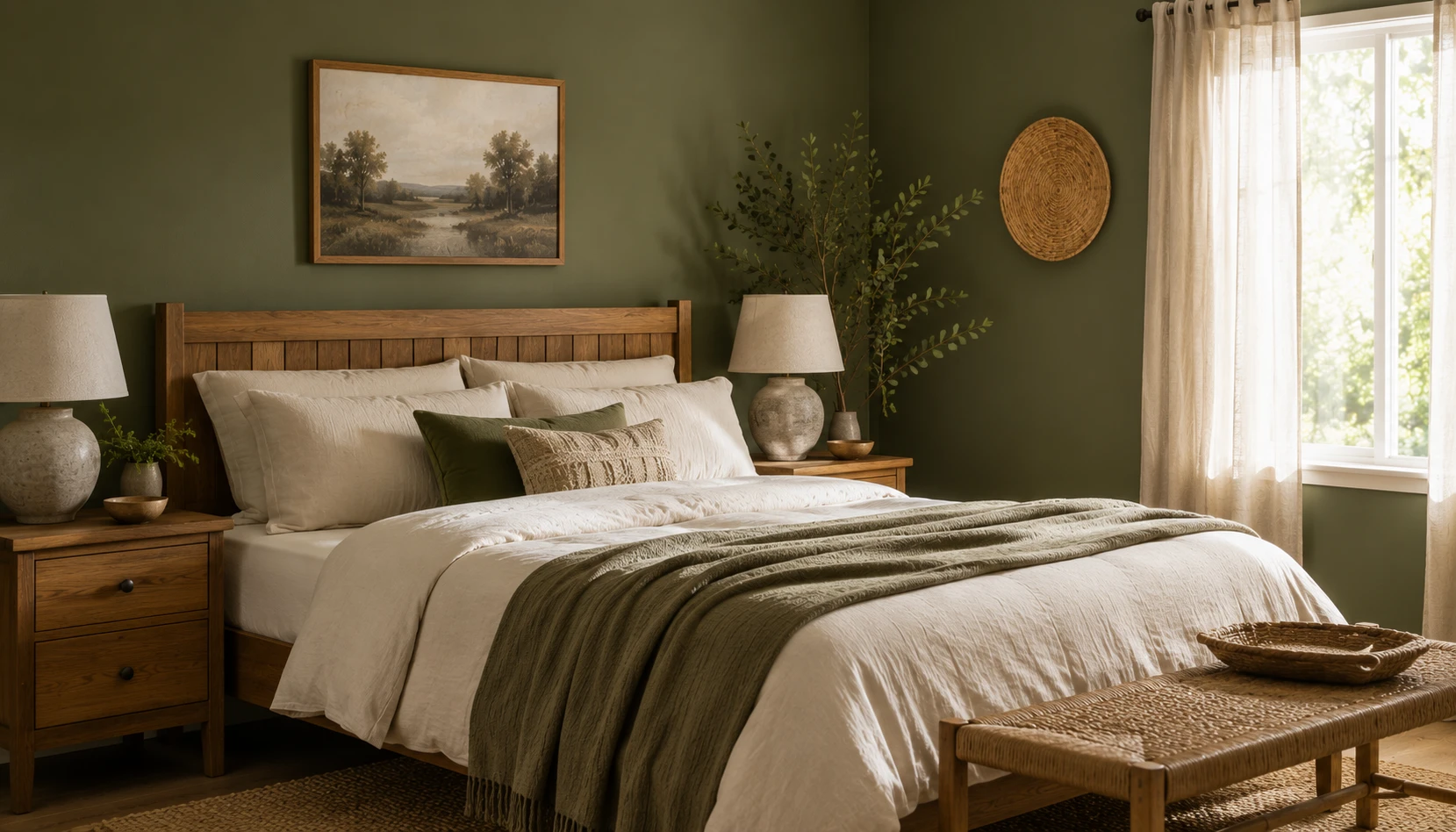
Green gets recommended for bedrooms more than almost any other color, and olive specifically earns its spot for a few real reasons, not just because it’s having a moment.
It reads as grounded rather than bright. Unlike a true green or an emerald, olive has enough brown and gray mixed into it that it never feels like it’s demanding attention. That matters in a room where the whole point is to relax, not be stimulated by the walls.
It photographs beautifully in both warm and cool light, which is part of why it’s done so well on Pinterest across every room it’s been used in on this site. And it pairs with nearly everything already in most people’s bedrooms, wood furniture, brass or black hardware, cream or white linens, without forcing you to replace anything just to make the wall color work.
Where it differs from kitchen and living room applications is intensity: in a bedroom, olive usually needs to lean calmer. This is where the color shows its more versatile side because it does not need to create the same drama that cabinetry can under kitchen pendant lighting.
Choosing the Right Shade of Olive
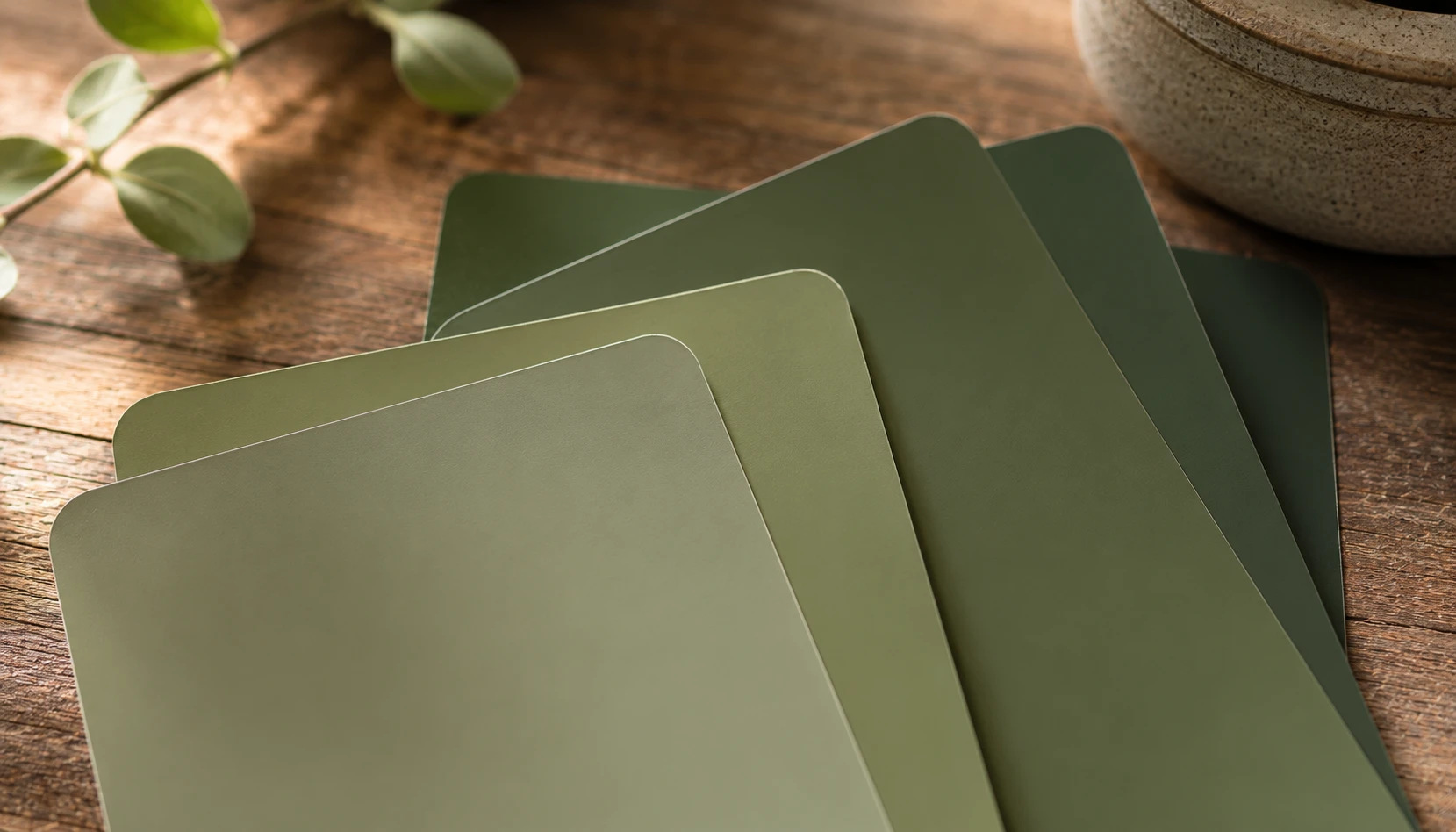
Not every olive is the same olive, and the shade you’d pick for a kitchen island isn’t necessarily the one you want on four bedroom walls.
Go a shade or two softer than you think for a full room. A deep, saturated olive that looks incredible on kitchen cabinetry can feel heavy across an entire bedroom, especially if the room doesn’t get much natural light. I learned this one the hard way with a sample pot that looked perfect on a swatch card and slightly oppressive by the time I’d painted a full wall.
Test it at night, not just during the day. A bedroom gets used in the evening more than almost any other room, so see how your shade looks under lamp light before committing, not just in daylight.
If you’re nervous about committing to a full room, sample two shades side by side, one a touch warmer, one a touch cooler, and live with both for a few days. The warmer one usually wins in a bedroom. Cooler olives can drift toward feeling institutional once the sun goes down, which is the last thing you want in the one room where you’re trying to unwind.
Pairing Olive with Wood Tones
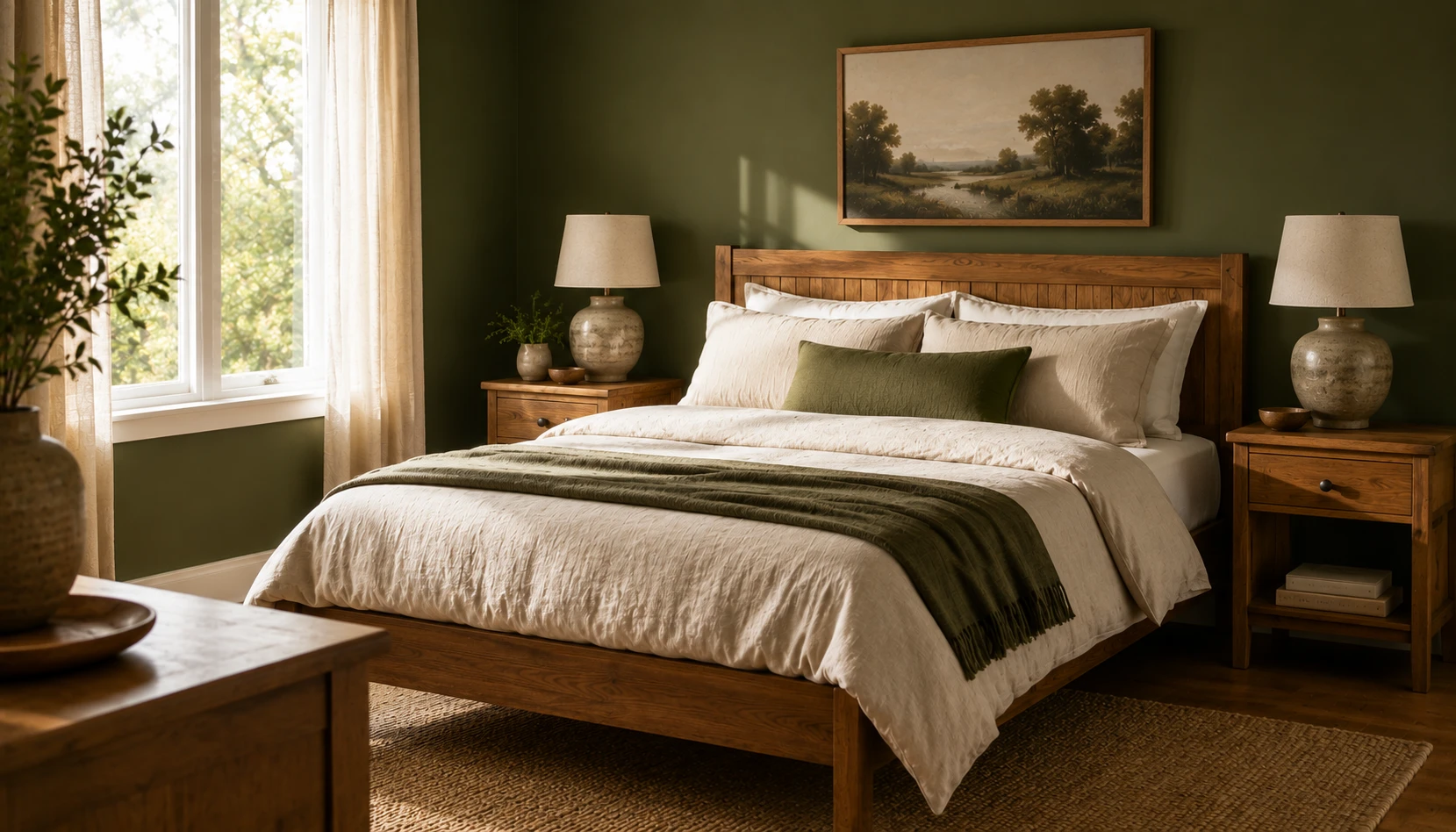
If there’s one pairing that makes or breaks an olive bedroom, it’s the wood tone you put against it.
Warm oak, walnut, and honey-toned woods are the safest and most reliable choice. They counteract any coolness in the olive and keep the whole room feeling grounded rather than cold. A gray-washed or heavily whitewashed wood, by contrast, tends to fight with olive rather than complement it, the two coolness levels stack instead of balancing each other out.
Rattan and cane furniture work here too, and honestly might be underused. A rattan headboard or a cane-front nightstand adds texture without adding another competing color, which matters in a room that’s already built around one dominant hue.
If your existing furniture is a cooler wood tone you’re not replacing, lean warmer with your olive shade to compensate, the same north-facing-room logic that applies to navy kitchens applies here too. Fighting coolness with more coolness rarely works.
Bedding and Textile Choices
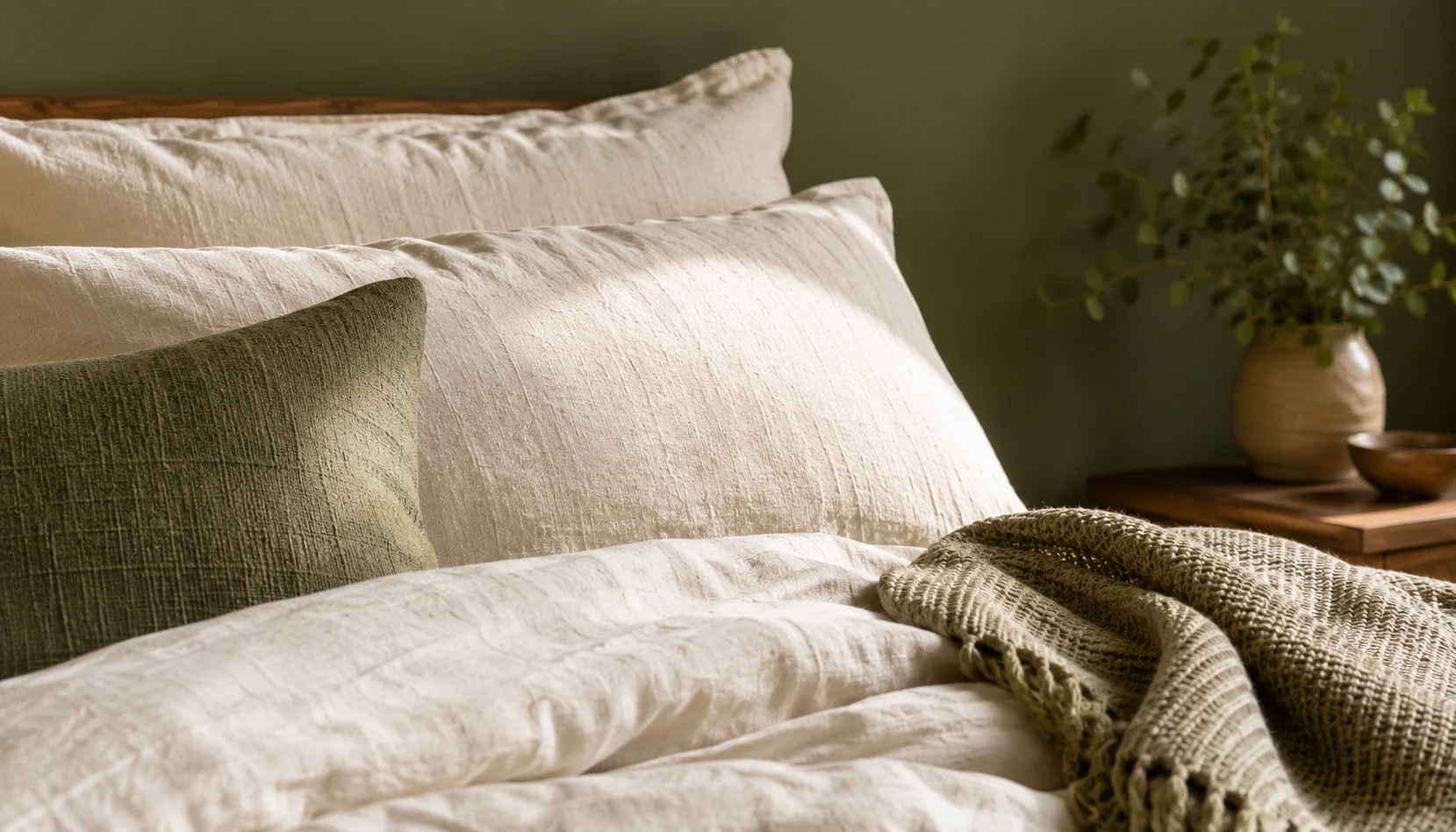
Bedding is where an olive bedroom either feels like a hotel or feels like home, and the difference comes down to texture more than color choice.
Cream and warm white linens are the most forgiving base, and they let the wall color stay the star of the room. Adding one more olive-toned throw or pillow on top of a cream base ties the room together without tipping it into monochrome. I’d stop at one or two olive textile pieces, more than that and the room starts competing with itself.
Texture matters as much as color here. A waffle-weave blanket, a boucle throw pillow, or a linen duvet cover all add depth that a flat cotton set doesn’t, and that texture is doing real work making the room feel intentional rather than just color-coordinated.
Avoid anything too glossy or slick in this room. A satin or high-sheen textile against a matte olive wall creates a strange contrast that undercuts the grounded, organic feeling the whole room is going for.
Metal Finishes and Hardware
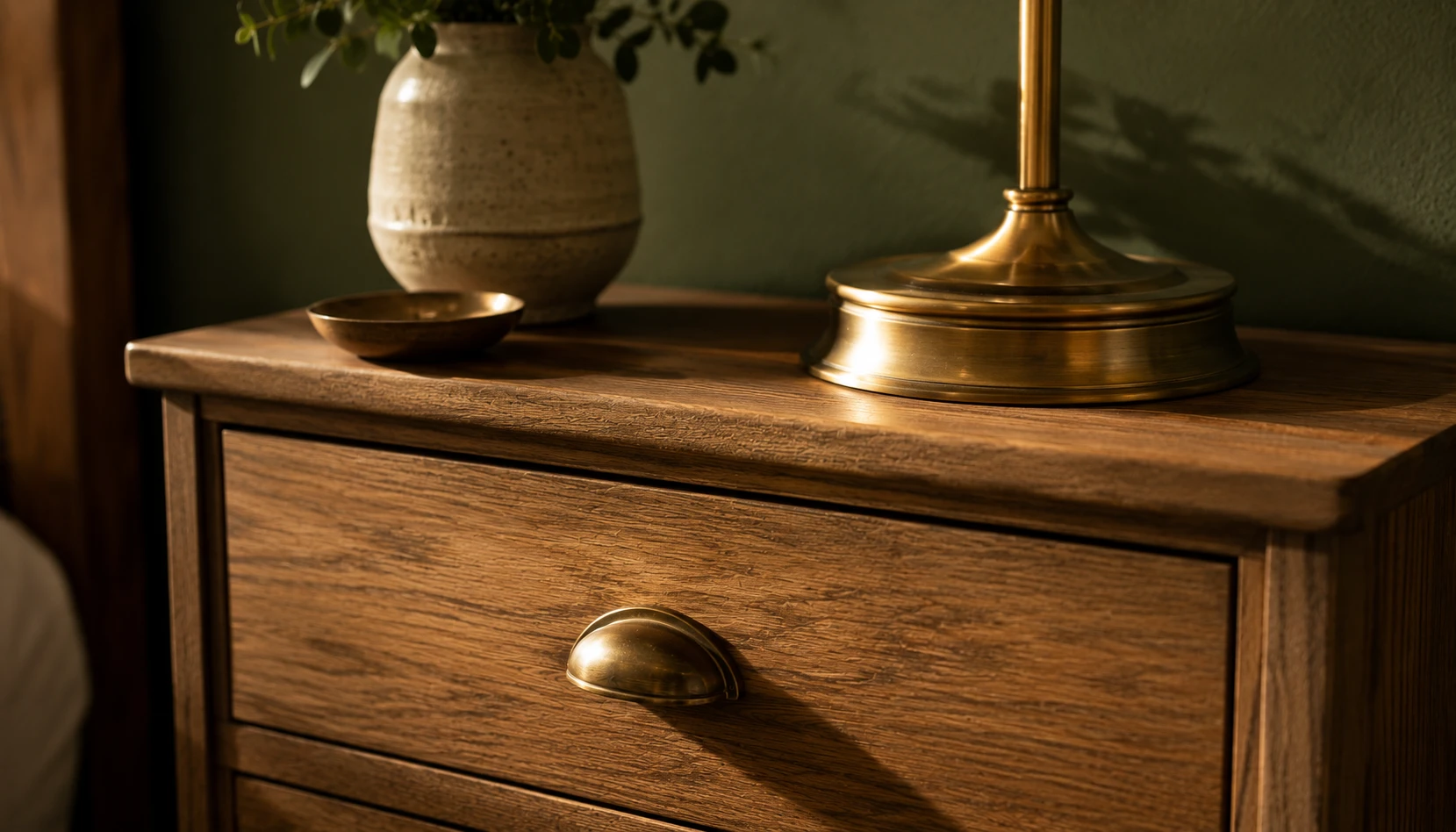
Cabinet pulls, lamp bases, curtain rods, the small metal details in a bedroom add up to more visual impact than their size suggests.
Warm brass or aged gold is the classic pairing, and for good reason, it echoes the same warmth that wood tones bring to the room. Matte black works too, and leans the room slightly more modern and a little more dramatic, which some people want in a bedroom and some genuinely don’t.
Whatever you land on, keep it consistent across the room. Mixing brass drawer pulls with a chrome lamp and black curtain rod hardware is a small inconsistency, but it’s the kind of thing that quietly keeps a room from looking finished even when everything else is right.
Aged or unlacquered brass is worth considering if you want warmth without shine, it develops a soft patina over time that actually gets better looking the longer you have it, unlike most finishes.
Lighting for an Olive Bedroom
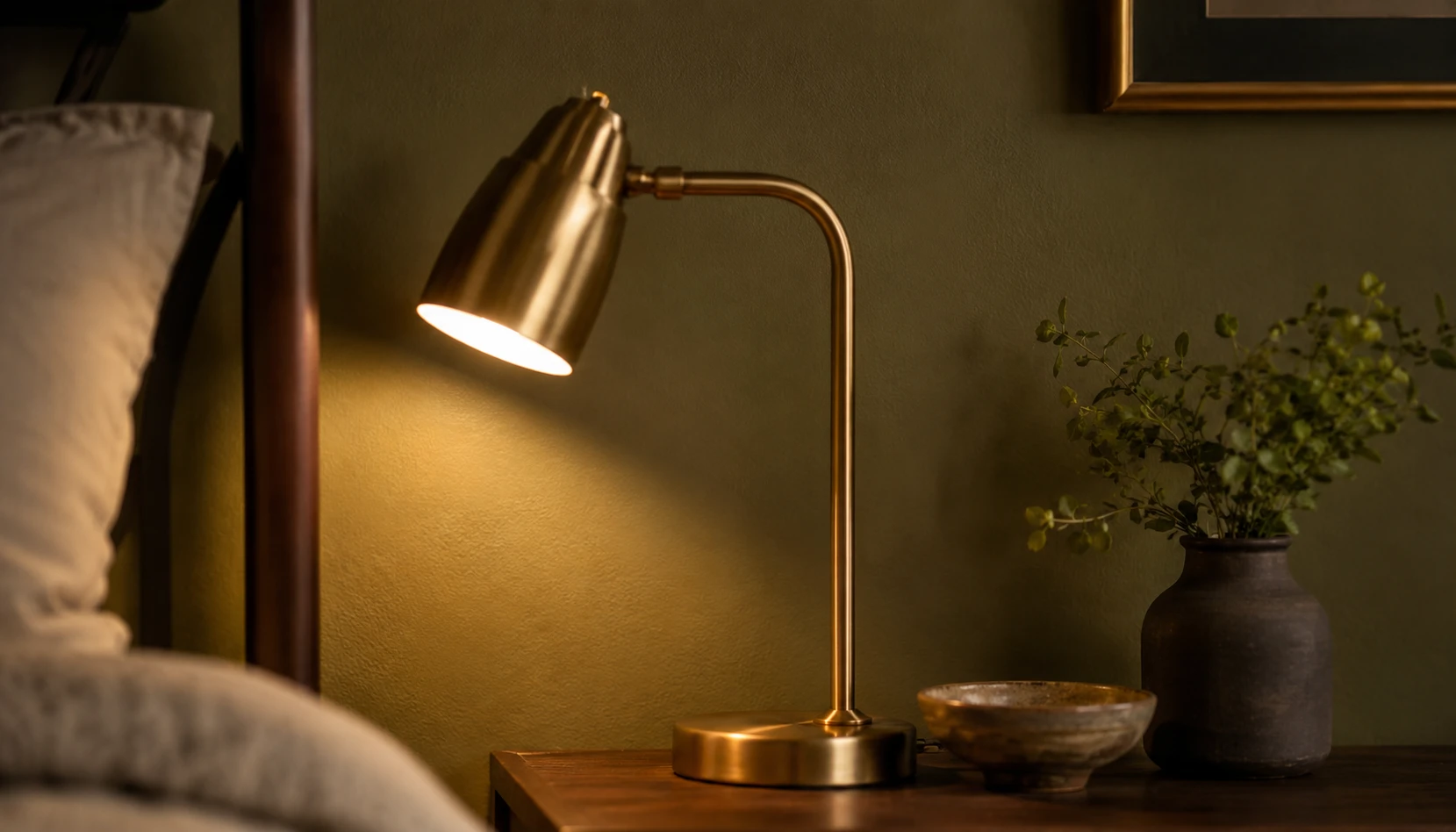
Olive absorbs more light than a pale neutral would, which changes the lighting math for the whole room.
A single overhead fixture almost never does this color justice. Add at least one warm bedside lamp per side of the bed, both for practical reading light and because that warm, low-level glow is what keeps olive from reading flat in the evening. Choose bulbs in the 2700K range specifically, anything cooler competes with the warmth you’re trying to build through wood and brass.
If the room allows for it, a dimmer on the main overhead fixture changes the whole feel between daytime and bedtime without needing to add fixtures. And if the room gets decent natural light during the day, make sure window treatments don’t block too much of it, olive needs that daylight boost as much as any dark color does.
Small Bedroom Considerations
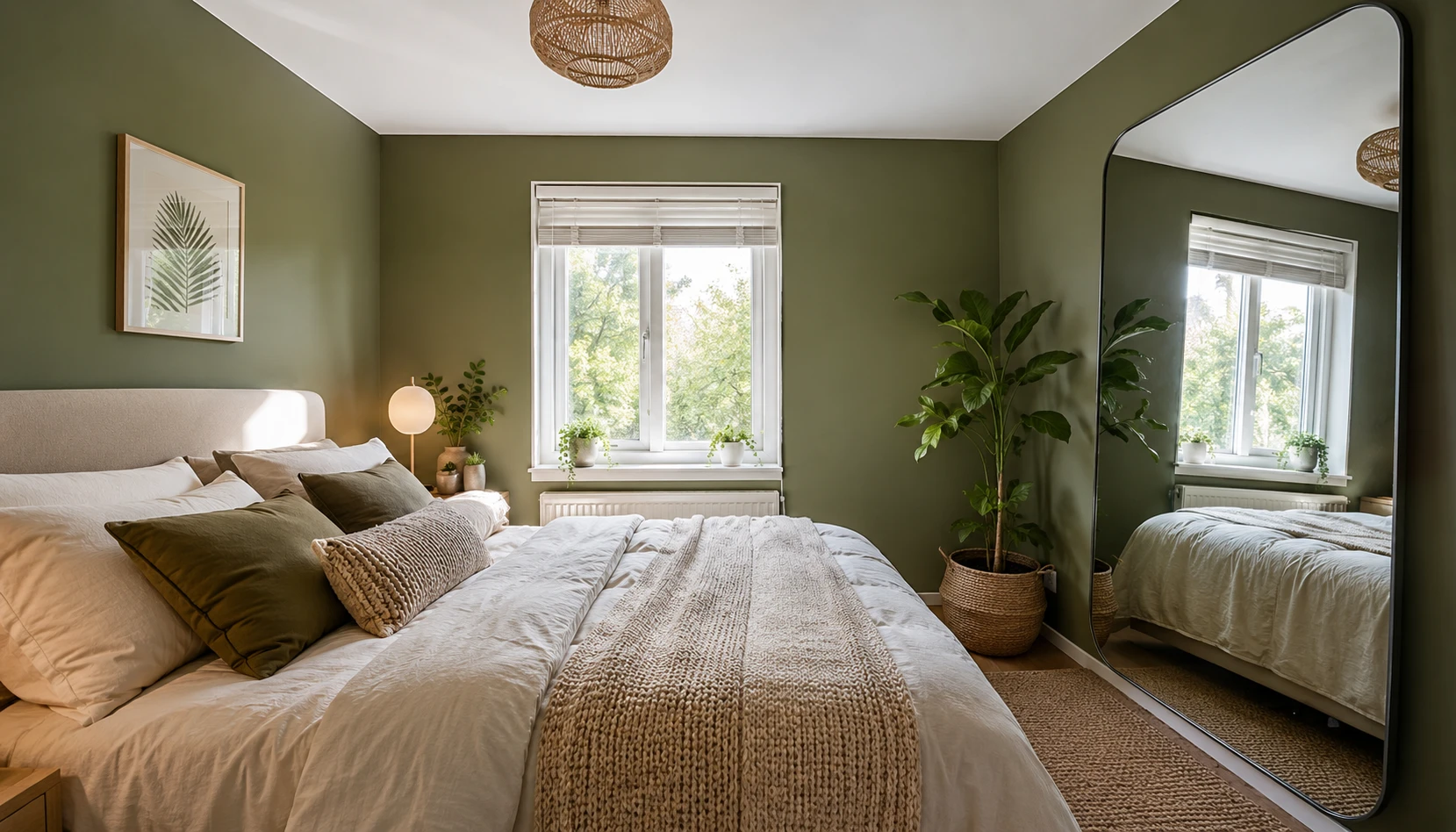
I get asked this a lot, and the honest answer is yes, a small bedroom can carry olive, but it changes a couple of decisions.
Keep the ceiling a soft white rather than carrying the olive up and over. In a small room, a colored ceiling on top of colored walls can genuinely make things feel lower and more closed in than they are. A large mirror does more work here than in a bigger room too, reflecting whatever light and depth exists back into a space that has less of both to spare.
If a full-room commitment feels risky in a small bedroom, olive on just the wall behind the headboard, with the rest of the room in a lighter neutral, gets you most of the visual payoff with less risk of the room feeling boxed in. This is genuinely one of the more common ways people ease into olive before going all in.
Accent Wall vs Full Room
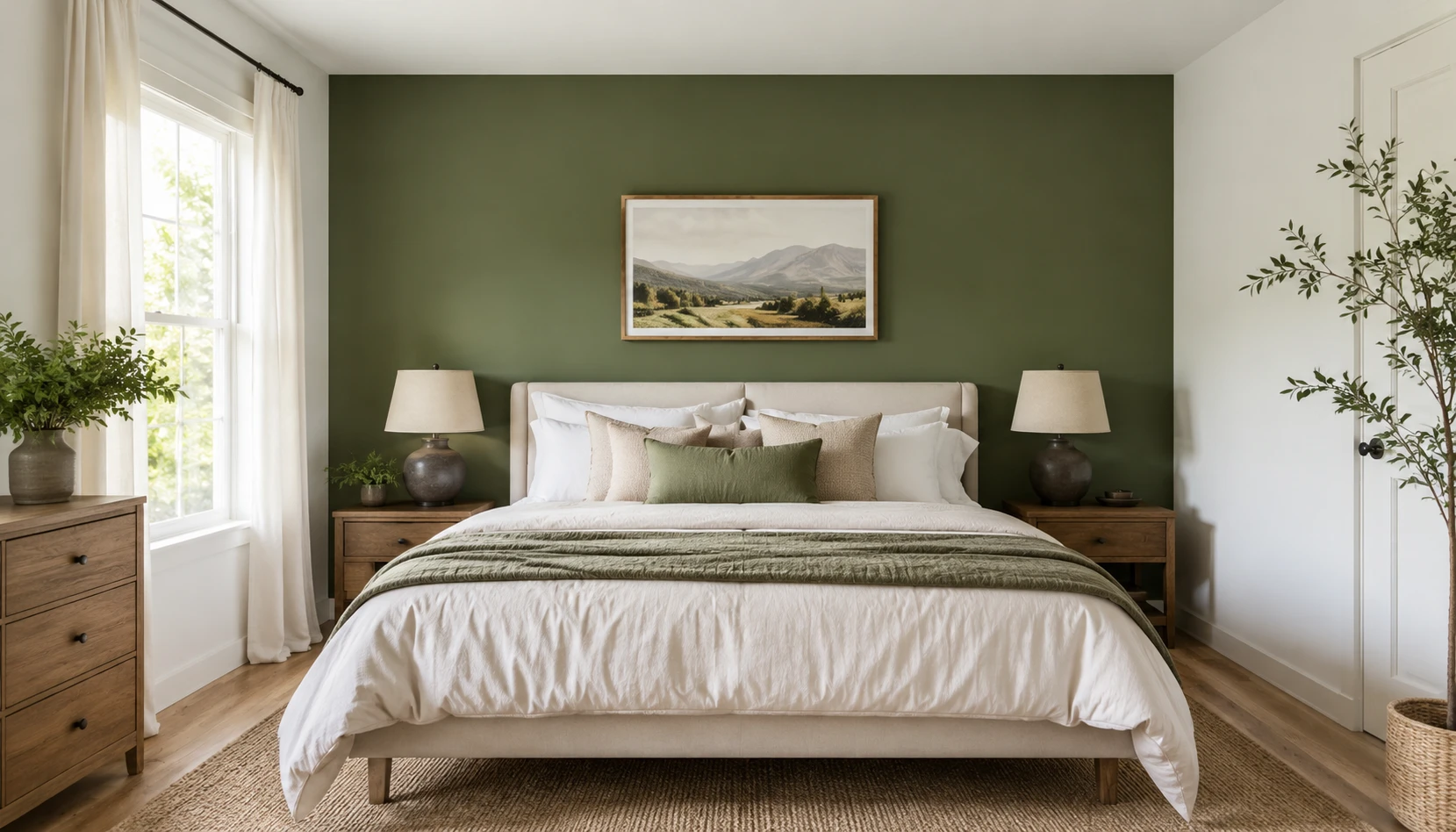
This is really a question of how confident you already feel about the color, and there’s no wrong answer.
An accent wall behind the bed is the most common starting point, and it’s genuinely a good one. It delivers real visual impact while keeping the rest of the room neutral and flexible if you want to change direction later. A full-room commitment feels completely different once you’re standing in it, more enveloping, more like a cocoon, which some people love and others find a bit much.
If you’re testing the waters, start with the accent wall. If you already know you enjoy living with olive in another room, a full room may be worth the commitment. There isn’t really a middle ground that works as well as either of these two extremes; painting two walls and leaving two white tends to look unfinished rather than intentional.
Pairing Olive with Other Colors
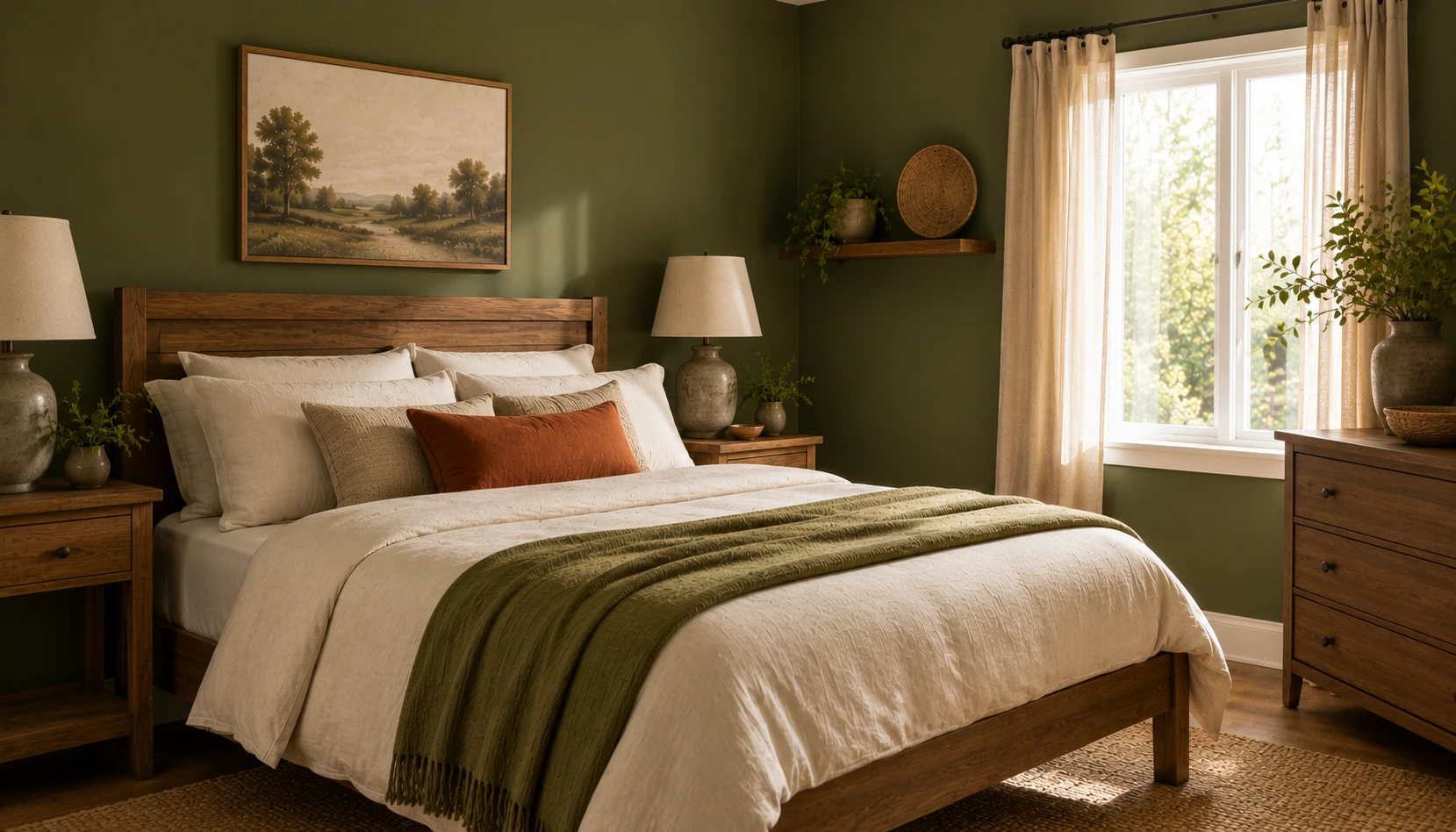
Olive doesn’t need to carry the whole room by itself, and honestly it looks better when it doesn’t.
Terracotta is my favorite pairing, it’s warm enough to match olive’s earthiness without competing with it for attention. Cream and warm white are the safest, most versatile base for everything else in the room. Chocolate brown works if you want the whole room to lean deeper and moodier rather than bright and airy.
What I’d genuinely avoid: cool grays or true blacks as a secondary color. Both read as colder than olive wants to sit next to, and they tend to pull the whole room’s temperature down in a way that fights against everything the wood and brass are doing.
Art and Decor Accents
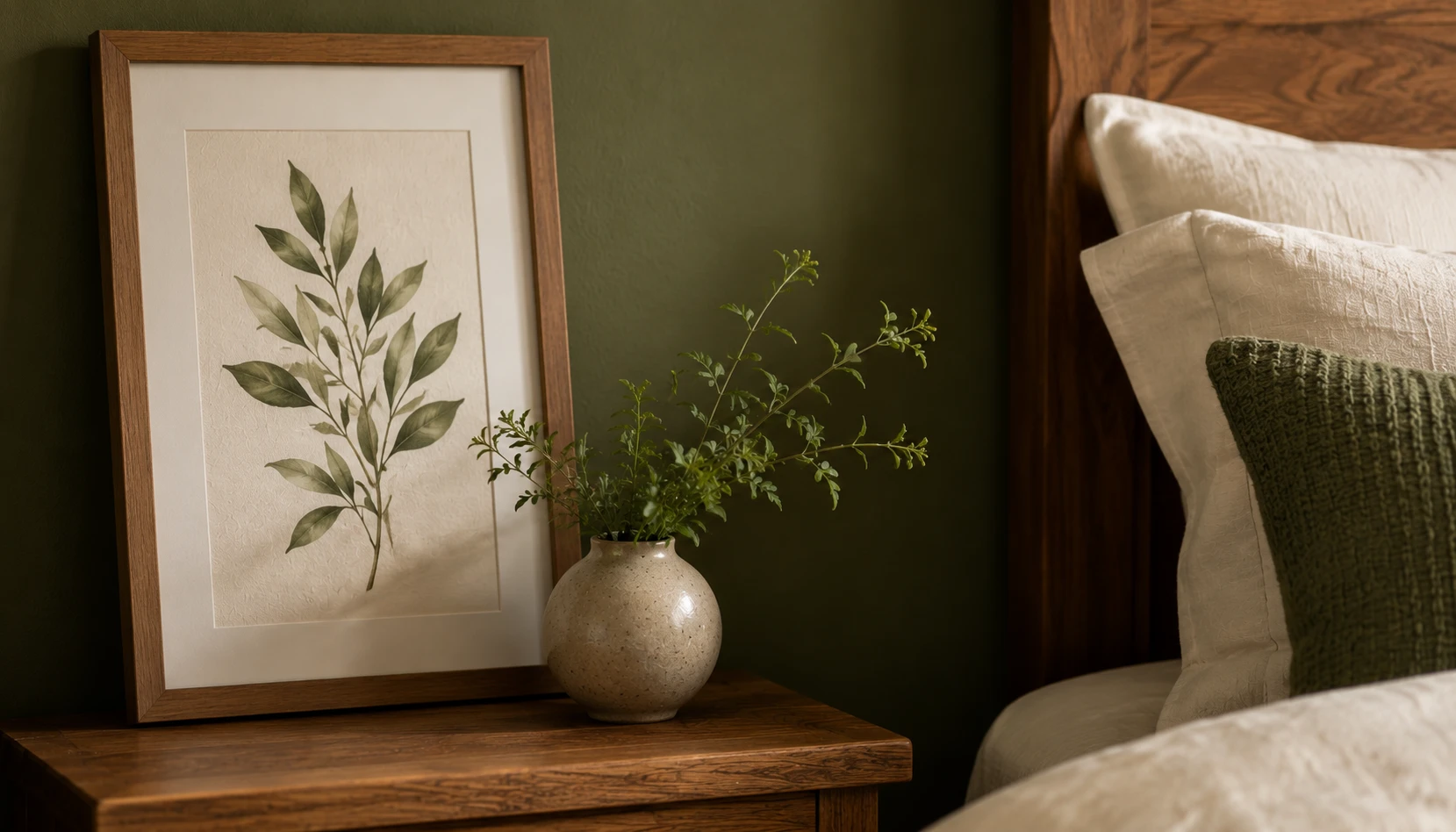
The room’s mostly done by this point, but a few finishing touches make the difference between painted and styled.
A framed botanical print or a piece with warm, earthy tones fits the room’s mood better than anything stark or graphic. One ceramic vase or ceramic lamp base on a nightstand adds a bit of texture without introducing a new color to manage. A woven wall hanging or a piece of natural fiber art works well too, it echoes the same organic feeling the wood and rattan are already building.
Keep decor to a handful of pieces rather than filling every surface. An olive bedroom’s whole appeal is that it feels calm, and cluttering it with too many small objects undoes a lot of that effect no matter how nice each individual piece is.
Keeping It Restful, Not Heavy
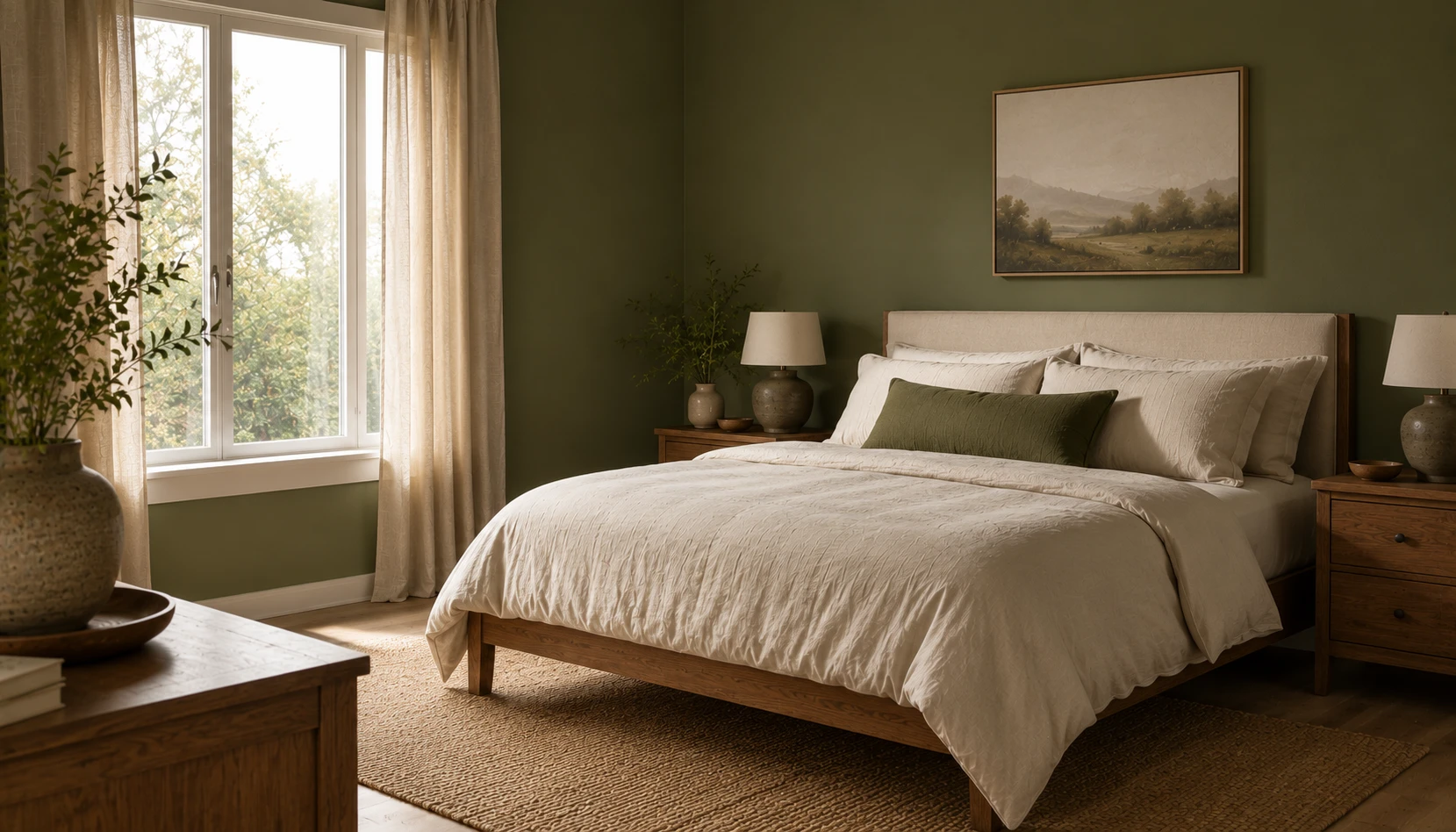
This is really the thread running through every idea above, and it’s worth naming directly.
Olive can tip from calming into heavy fast if too many of the choices in this guide lean the wrong direction at once, too dark a shade, too little light, too much clutter, not enough warm wood to balance it. Any one of those alone is fine. Stack three or four together and the room starts to feel like it’s closing in rather than settling you down.
If you’re ever unsure whether a choice is pushing the room toward heavy, the fix is almost always the same: add more warmth, more light, or more breathing room, in whatever combination the specific issue calls for. That one instinct solves most of the problems that come up with this color.
Common Olive Bedroom Mistakes
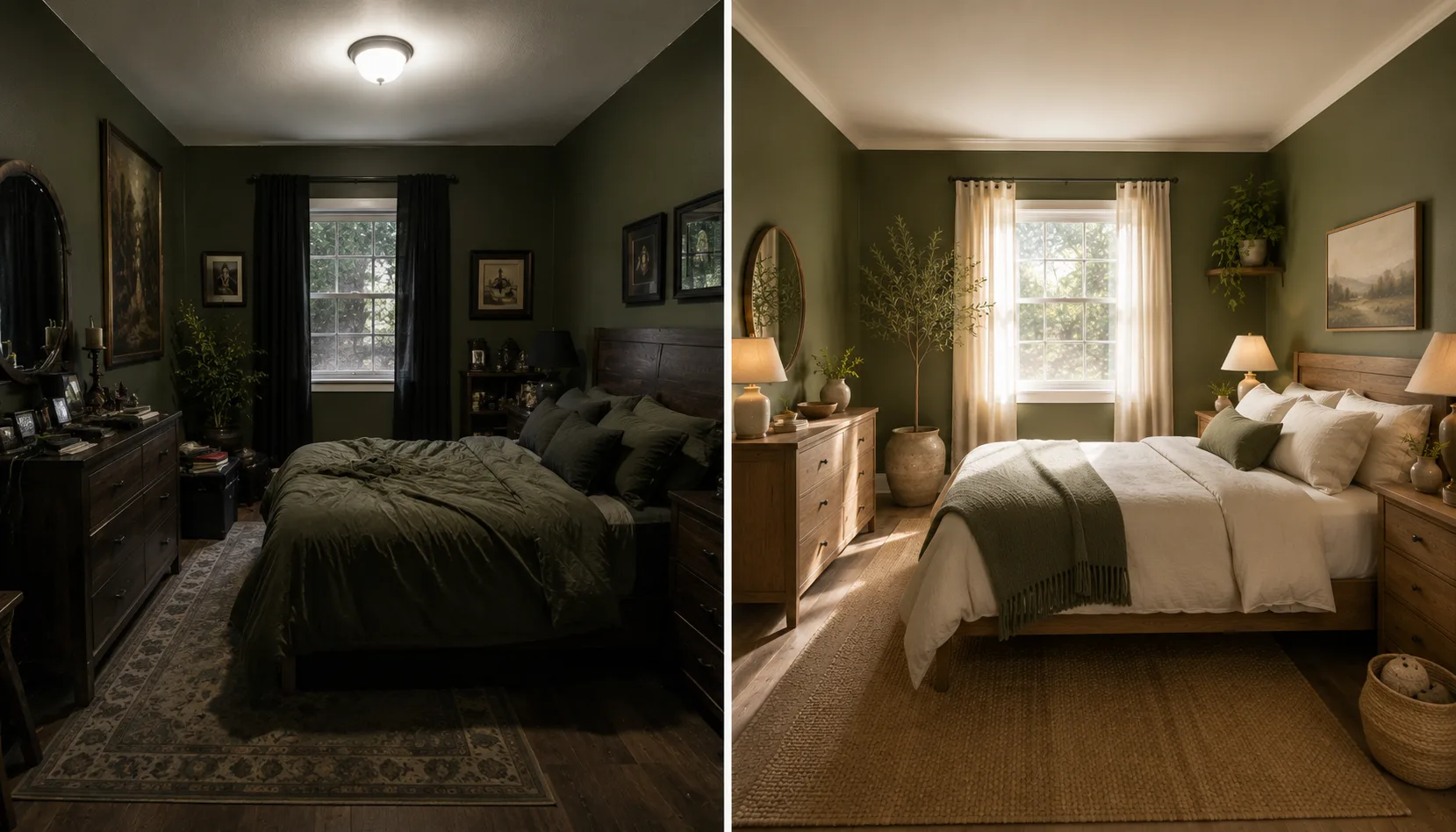
A handful of mistakes show up again and again with this color, and most were covered above, but they’re worth naming plainly in one place.
Going too dark a shade for a full room is the big one, what works on kitchen cabinetry rarely works on four bedroom walls. Relying on a single overhead light leaves the room feeling flatter and colder than the color deserves. Skipping warm wood or brass entirely, and pairing olive with cool grays or chrome instead, fights the color rather than supporting it.
Overdecorating a small olive bedroom with too many objects, or carrying the color onto the ceiling in a small room, both make a space feel smaller rather than more finished. And painting an accent wall in a shade that doesn’t match the rest of the room’s undertones creates a jarring seam rather than a considered design choice.
Olive green earns its place in a bedroom the same way it has in every other room on this site, it’s warm, grounded, and pairs with almost anything, as long as the shade and lighting get dialed in for how this specific room actually gets used. Start with a softer shade than you’d choose for a kitchen, add warm wood and brass, and layer in real lighting, and the rest tends to fall into place.
For the rest of the whole-house olive cluster, see our guides to Olive Green Kitchen Ideas and Olive Green Living Room Ideas, or for a different calming bedroom color entirely, see Sage Green Bedroom Ideas.