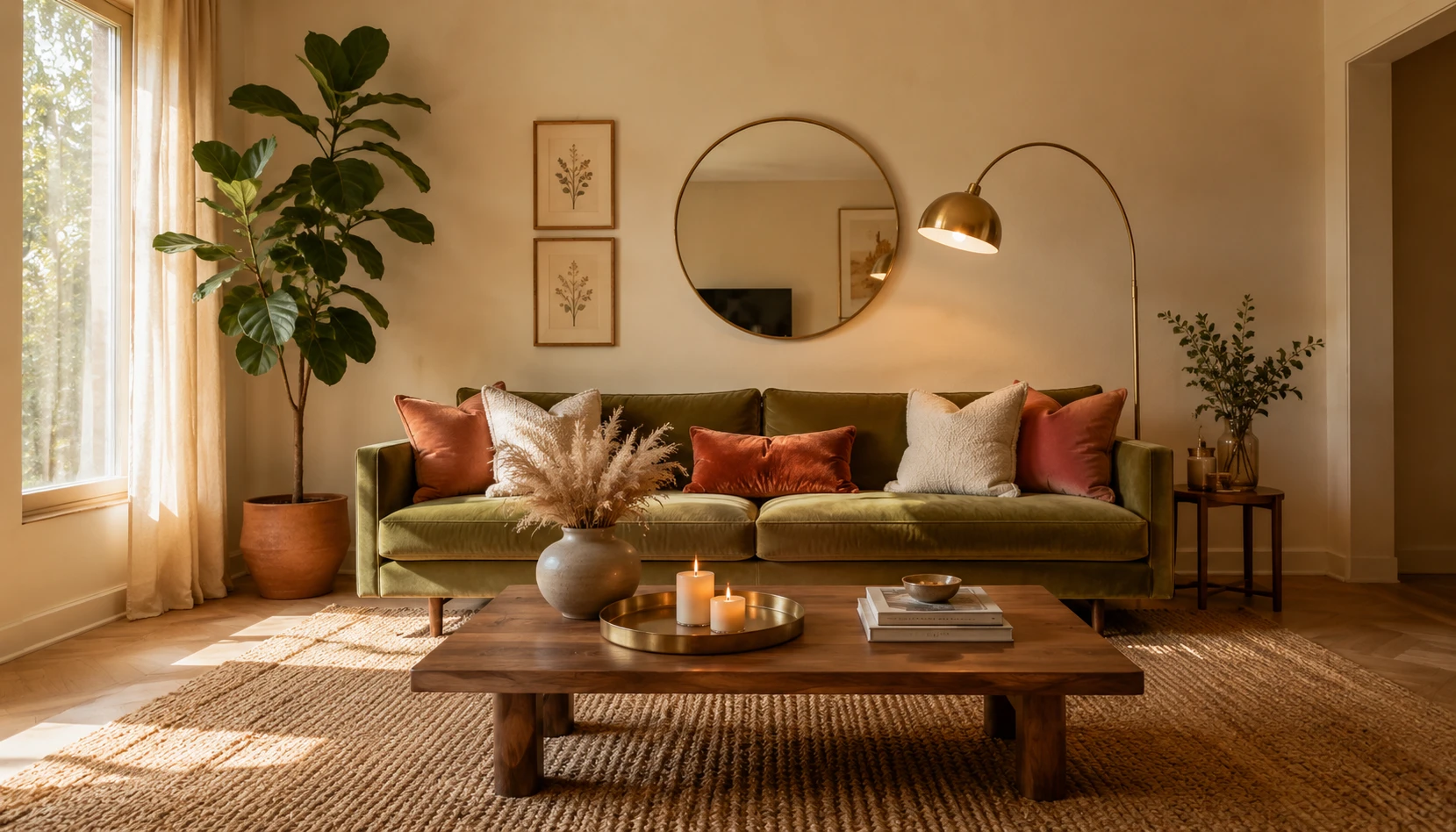
Olive green has quietly become one of the most sought-after colors in living room design. Not a loud trend that fades, but a grounded, sophisticated color that feels deeply connected to nature. In 2026, olive green represents a shift in how we think about luxury. No longer defined by excessive decoration or polished perfection, the new luxury is about how a room makes you feel. Calm, warm, grounded, and emotionally balanced.
The olive green living room sits at the heart of this movement. An olive green sofa anchors a space the way few other pieces can. It softens light, blends with natural textures, and creates a feeling of comfort that is hard to ignore. Olive green walls wrap a room in quiet warmth. Olive accents bring the organic luxury aesthetic into any space without commitment.
What makes olive green so special is its versatility. Often described as the new neutral, it works with both warm and cool tones, pairs beautifully with wood, stone, linen, and warm lighting, and adapts to changing decor trends. It can feel bold and dramatic in darker interiors or soft and calming in light-filled minimal spaces.
Here are 12 olive green living room ideas that show how this single color can transform an entire space into something warm, stylish, and effortlessly luxurious.
Why Olive Green Works So Well in Living Rooms
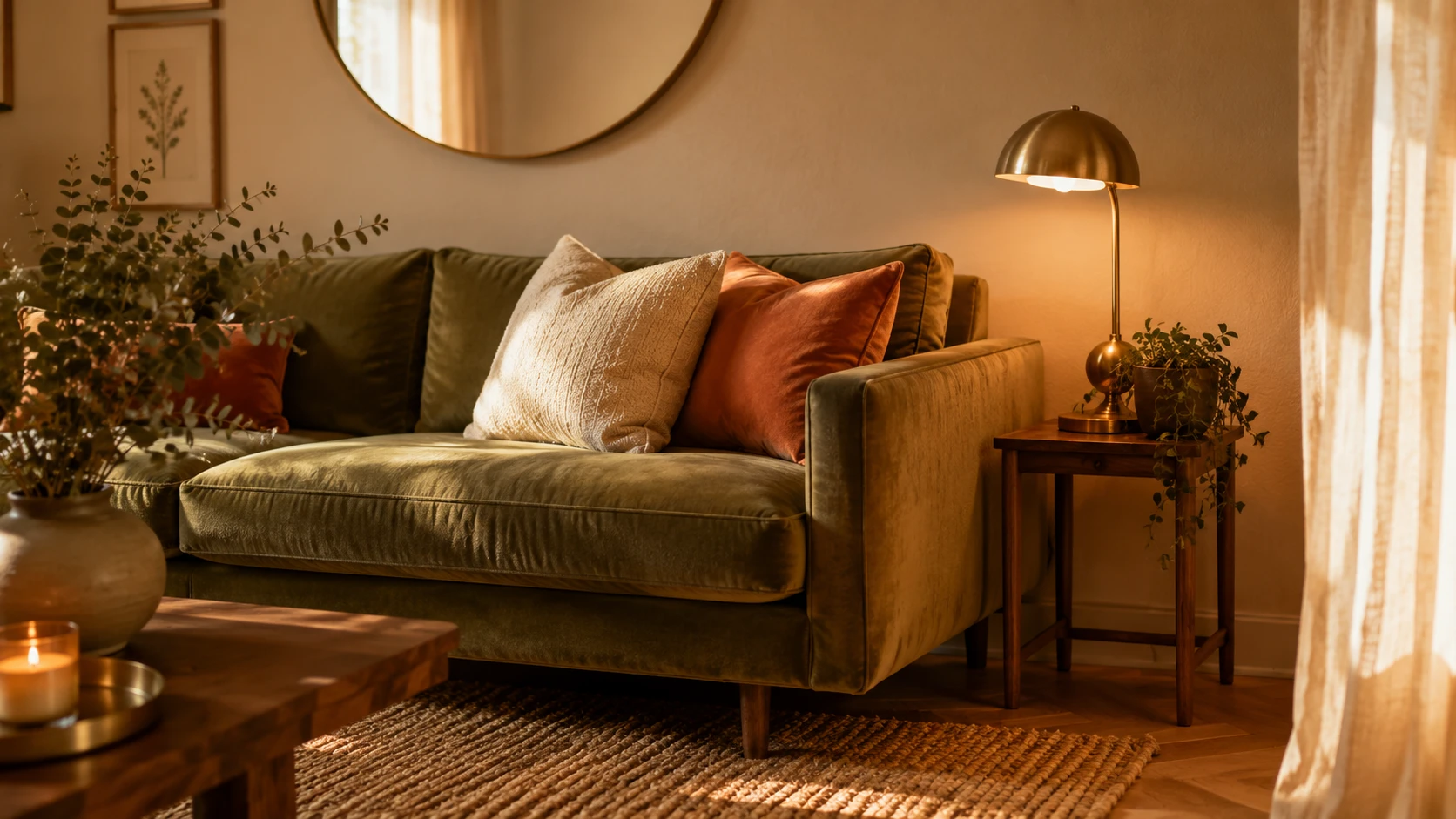
What makes olive green such a compelling choice for living rooms in 2026 comes down to a few things.
Olive green is grounding. Unlike brighter greens that energize, olive has an earthy, desaturated quality that calms a space. It connects a room to nature and creates an immediate sense of stability and warmth.
It functions as a neutral. Olive green pairs with an enormous range of colors. Warm neutrals, cool greys, terracotta, navy, mustard, blush, cream, and brass all work beautifully with it. This flexibility means an olive green living room can evolve over time.
It reads differently in different light. Olive green shifts beautifully throughout the day. In bright daylight it appears vibrant and fresh. As evening light warms, it deepens into a moody moss tone. This natural color shift adds depth that flat colors cannot achieve.
It suits the organic luxury trend. The defining aesthetic of 2026 is organic luxury. Warm earthy tones, natural materials, and grounded sophistication. Olive green is the perfect anchor color for this look, working seamlessly with linen, raw wood, stone, and dried botanicals.
Designers favor deeper greens now. The trend has shifted from lighter sage toward deeper, more grounded tones like olive, emerald, and forest green. These deeper greens feel more luxurious and intentional. Olive sits in the perfect middle ground, deep enough to feel rich but soft enough to remain calming.
It works at any scale. Olive green works as a full wall color, a statement sofa, accent chairs, or simply through cushions and throws. You can commit fully or test the waters with small accents.
Warmth, versatility, and grounded sophistication, that combination is why olive green has become the defining living room color of 2026. If you already love an olive kitchen, see our Olive Green Kitchen Ideas for continuity across your open-plan space.
The Olive Green Sofa: Your Living Room Anchor
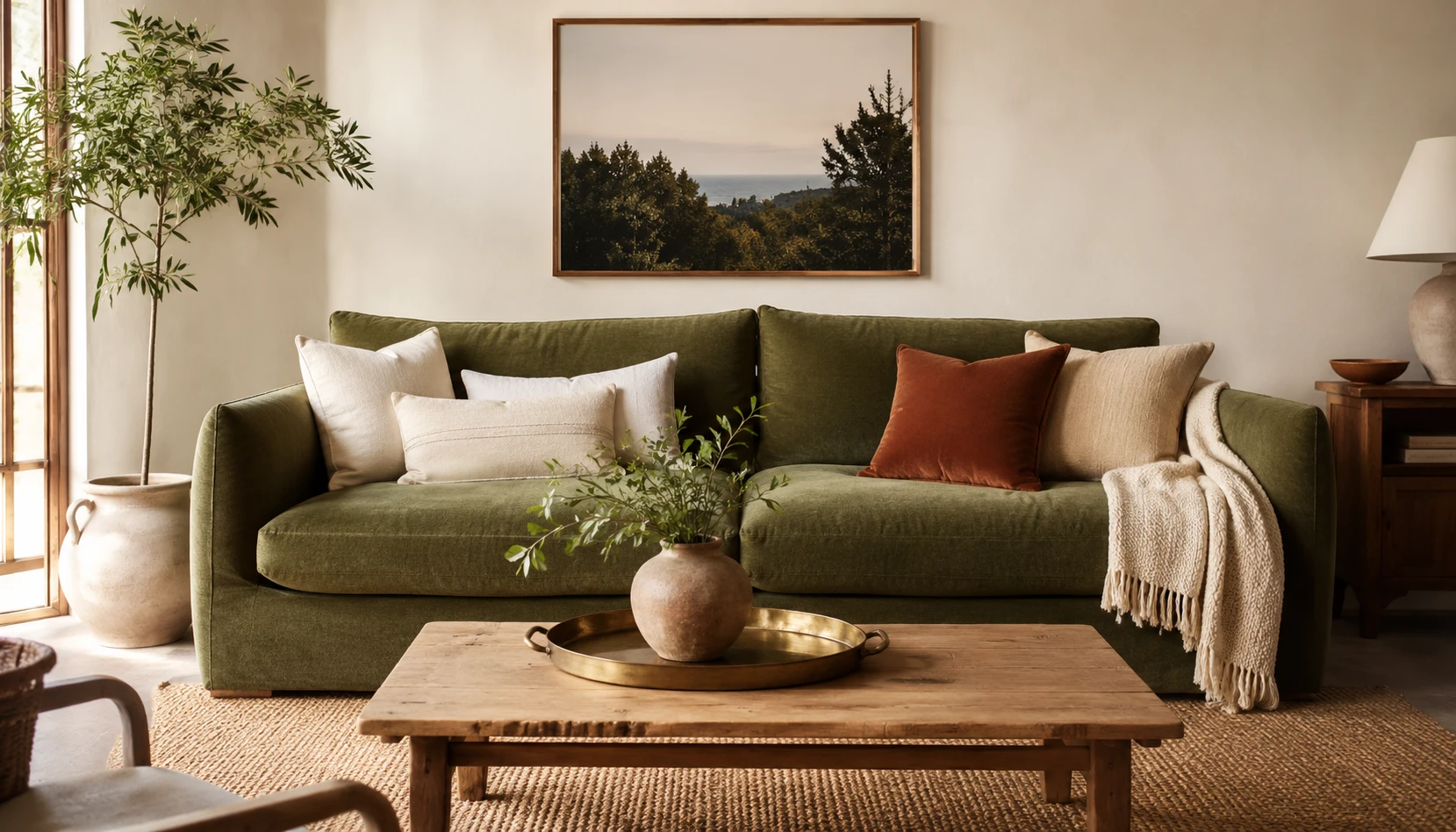
The olive green sofa is the centerpiece of this entire design movement. It has become the hero piece in countless contemporary homes, not because it is loud, but because it grounds a room in a way few pieces can.
Why an olive sofa works as an anchor:
The olive green sofa provides a strong but soft focal point. Unlike a bright statement sofa that demands attention, olive anchors the room while still feeling calm and inviting. It pulls the entire space together.
How to style an olive green sofa:
Against cream or greige walls, an olive sofa feels open, welcoming, and effortlessly elegant. This is the most popular and most flexible approach.
Surround the sofa with natural materials. A jute rug, a natural wood coffee table, woven baskets, and linen curtains all enhance the organic quality of the olive.
Add accent pillows in complementary tones. Terracotta, rust, cream, mustard, or blush cushions all work beautifully. Mix textures like velvet, boucle, and linen to add depth.
Layer in warm metals. Brass or gold accents through lighting, picture frames, and side tables enhance the warm undertones of olive green.
Fabric matters. An olive green velvet sofa creates a rich, jewel-like effect that transforms the entire room. A linen or boucle olive sofa feels more relaxed and organic. Choose based on the mood you want.
Placement tip. Float the olive sofa slightly away from the wall when space allows. This creates a defined seating zone and makes the sofa feel more intentional and architectural.
The olive green sofa is an investment piece that will define your living room for years. Its grounded warmth never goes out of style.
Olive Green Walls: Wrapping a Room in Warmth
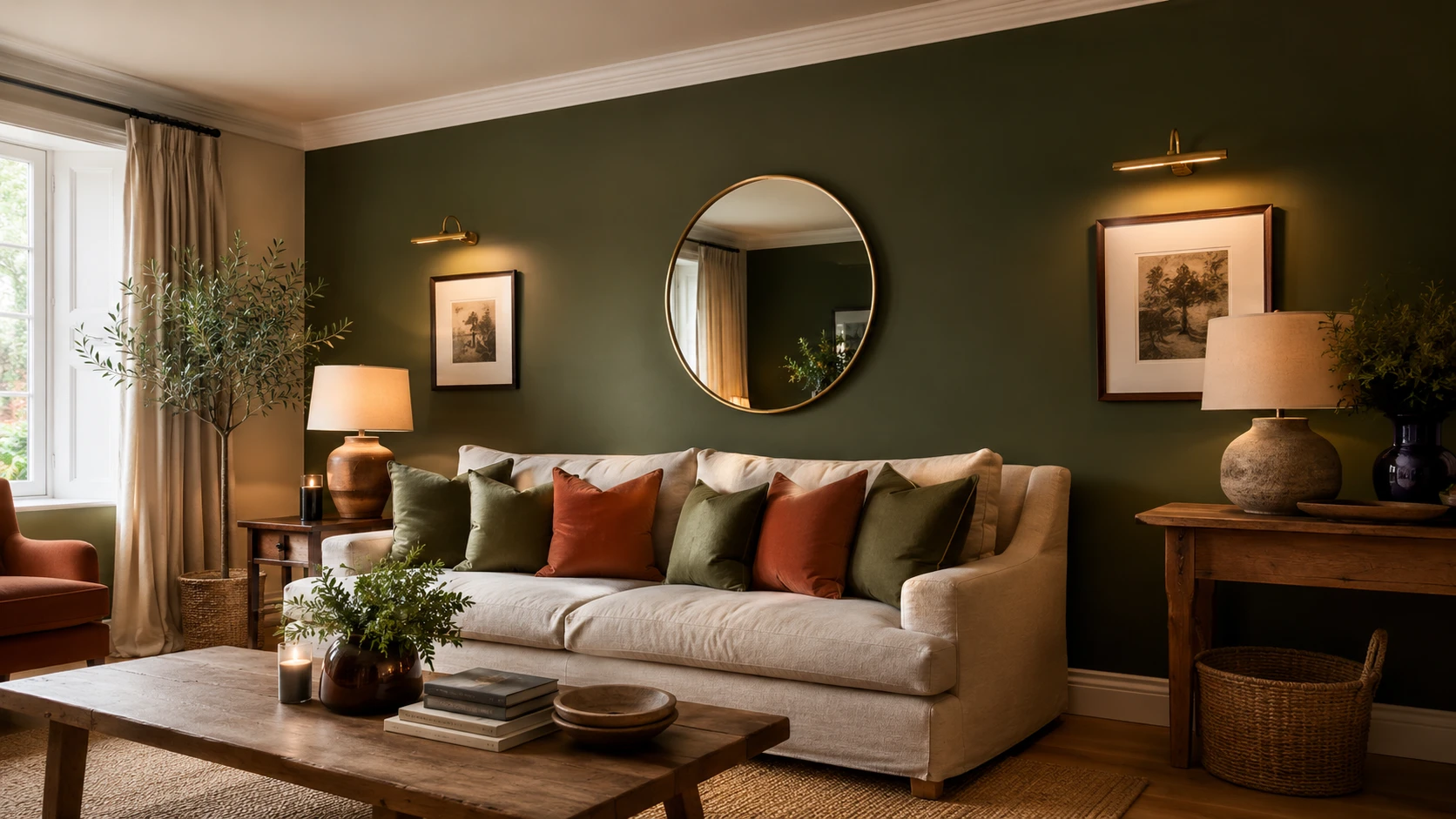
For those ready to commit fully, olive green walls create a transformative effect. They wrap a room in warmth and provide a sophisticated backdrop for everything else.
The accent wall approach. Paint the wall behind your sofa in a deep olive shade while keeping the other walls bright white or cream. Position neutral furniture in front, a beige or cream sofa, tan armchairs, a natural wood coffee table. The olive wall provides drama and warmth while the neutral furniture keeps the space balanced.
The full olive room. For a cocooning effect, paint all the walls olive green. This creates an intimate, gallery-like atmosphere. To prevent it feeling heavy, balance with cream upholstery, plenty of natural light, and warm lighting. Add crisp white cornicing or trim for definition.
Tone-on-tone sophistication. Paint your wall moldings and trim the exact same olive shade as the walls. This seamless technique provides a refined backdrop that lets a green sofa or artwork stand out as the hero.
Olive green with white contrast. Paint one wall deep olive while keeping others bright white. Add white trim, white curtains, and white accessories. The stark contrast creates visual impact while the olive brings essential warmth. Natural wood softens the transition.
Light matters with olive walls. Olive green can make a poorly lit room feel dark. Use warm-dim LED lighting at 2700K to complement natural light. Layer ambient floor lamps, table lamps, and accent lighting to keep the space glowing rather than gloomy.
Best olive green paint approach. Always sample on your actual wall and observe it in both morning and evening light. Olive shifts dramatically. What looks fresh and bright at noon can read deep and moody by evening. Choose a shade whose full range you love.
Olive green walls are a bold but rewarding choice. The warmth and sophistication they bring is unmatched by any neutral.
The 60-30-10 Color Rule for Olive Living Rooms
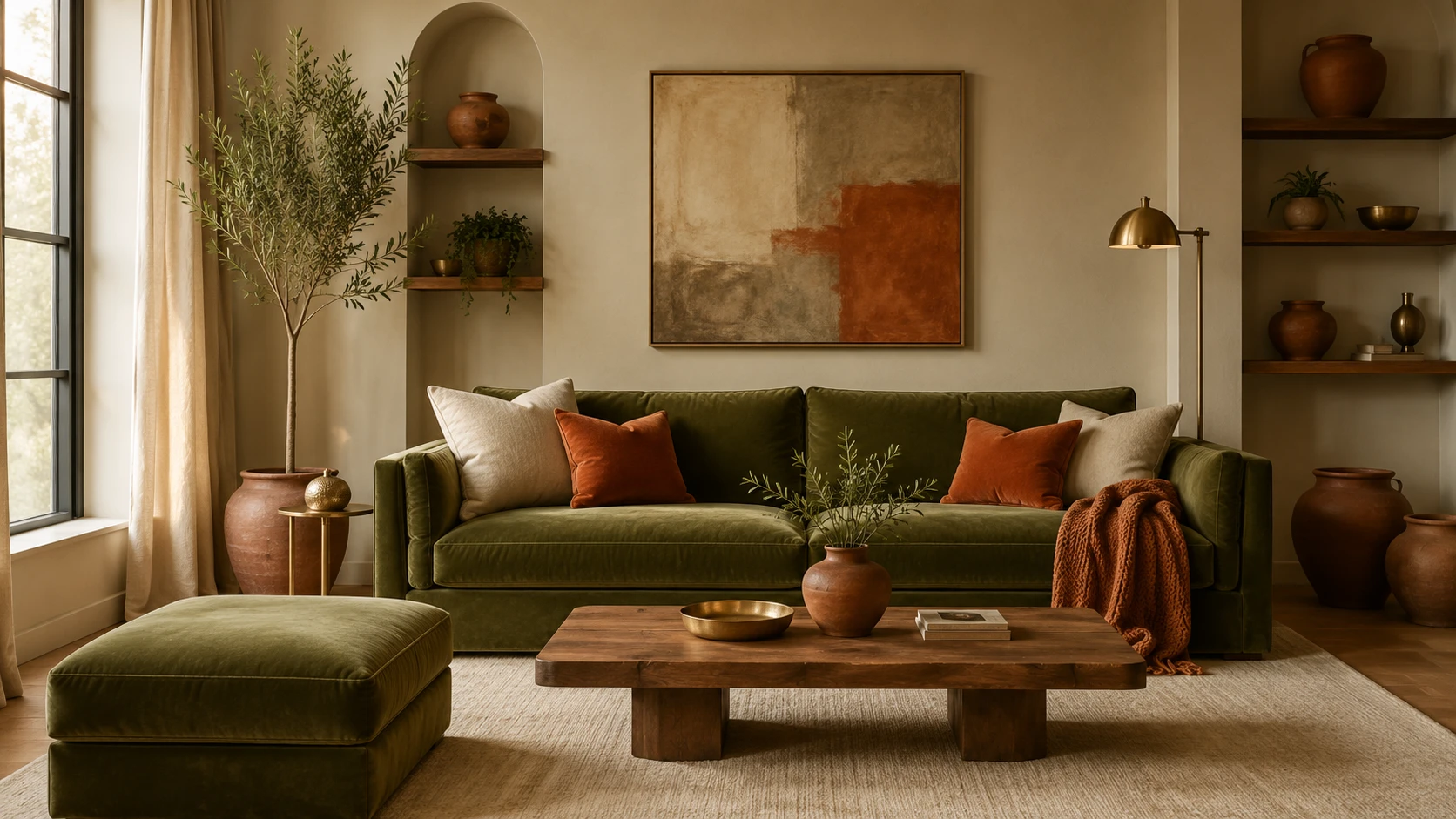
The secret to a beautifully balanced olive green living room is the 60-30-10 color rule. This designer formula prevents the space from feeling either overwhelming or unbalanced.
60 percent neutral base. Sixty percent of your room should be a warm neutral. Sand tones, cream, greige, or soft taupe on the walls and largest surfaces. This neutral foundation lets the olive shine without overwhelming the space.
30 percent olive green. Thirty percent should be your olive green, typically the primary furniture. The olive sofa, an olive accent wall, or a combination of olive seating pieces. This is your hero color, substantial enough to define the room.
10 percent accent color. The final ten percent is your accent pop. Burnt orange, rust, terracotta, mustard, or blush in cushions, artwork, throws, and small objects. This small dose of warm accent color brings the whole palette to life.
Why this works. The 60-30-10 ratio creates a balanced color story where every element has its place. The neutral base grounds the space, the olive provides the personality, and the accent color adds energy. Nothing fights for attention.
Example combination. Sixty percent warm sand walls and cream rug. Thirty percent olive green velvet sofa and olive ottoman. Ten percent burnt orange cushions, a rust throw blanket, and terracotta pottery. The result is a perfectly balanced, magazine-worthy olive living room.
Apply this rule and your olive green living room will always feel intentional and harmonious rather than chaotic or flat.
Olive Green and Terracotta: The Perfect Earthy Pairing
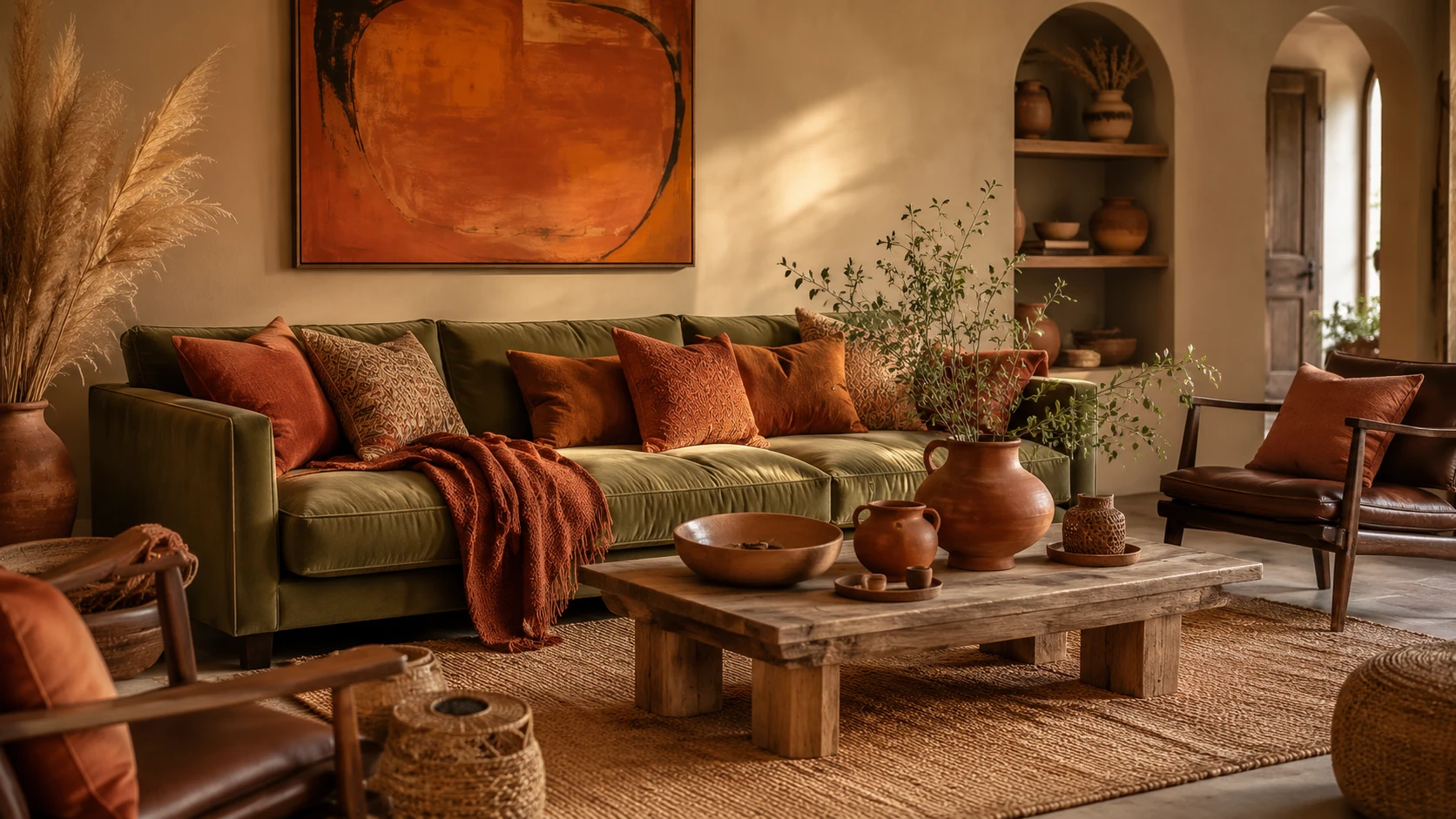
Olive green and terracotta is one of the most beloved color combinations in interior design, and for good reason. These two earthy tones share a natural warmth that creates an instantly cozy, grounded, and collected feeling.
Why olive and terracotta work together. Both colors come from nature. Olive from foliage, terracotta from clay and earth. Their shared earthy quality means they harmonize effortlessly. Terracotta brings warmth and energy while olive provides calm and grounding.
How to combine them:
Start with an olive green sofa or olive walls as your base. Then introduce terracotta through accent pillows, a rust-colored throw blanket, terracotta pottery, and burnt orange artwork.
Add natural materials to enhance the earthy palette. Jute rugs, woven baskets, rattan accents, and natural wood furniture all support the organic feeling.
Keep walls neutral if using an olive sofa, or use soft clay and warm neutral wall tones to bridge the two colors.
Terracotta accent ideas: Ceramic vases in terracotta tones. A terracotta and cream patterned rug. Rust velvet cushions. Burnt orange abstract art. Dried pampas grass in terracotta pots, the muted dried tones complement olive beautifully.
The dried botanical trick. Dried botanicals like pampas grass and eucalyptus have muted, desaturated tones that act as a perfect complement to olive green, making the olive appear more vibrant. See our DIY Dried Flower Arrangement Guide for arrangements that pair beautifully with olive living rooms.
This warm, earthy palette feels organic and collected rather than overly designed, exactly the relaxed, character-filled mood that defines the best olive green living rooms.
Olive Green and Cream Neutrals: Effortless Elegance
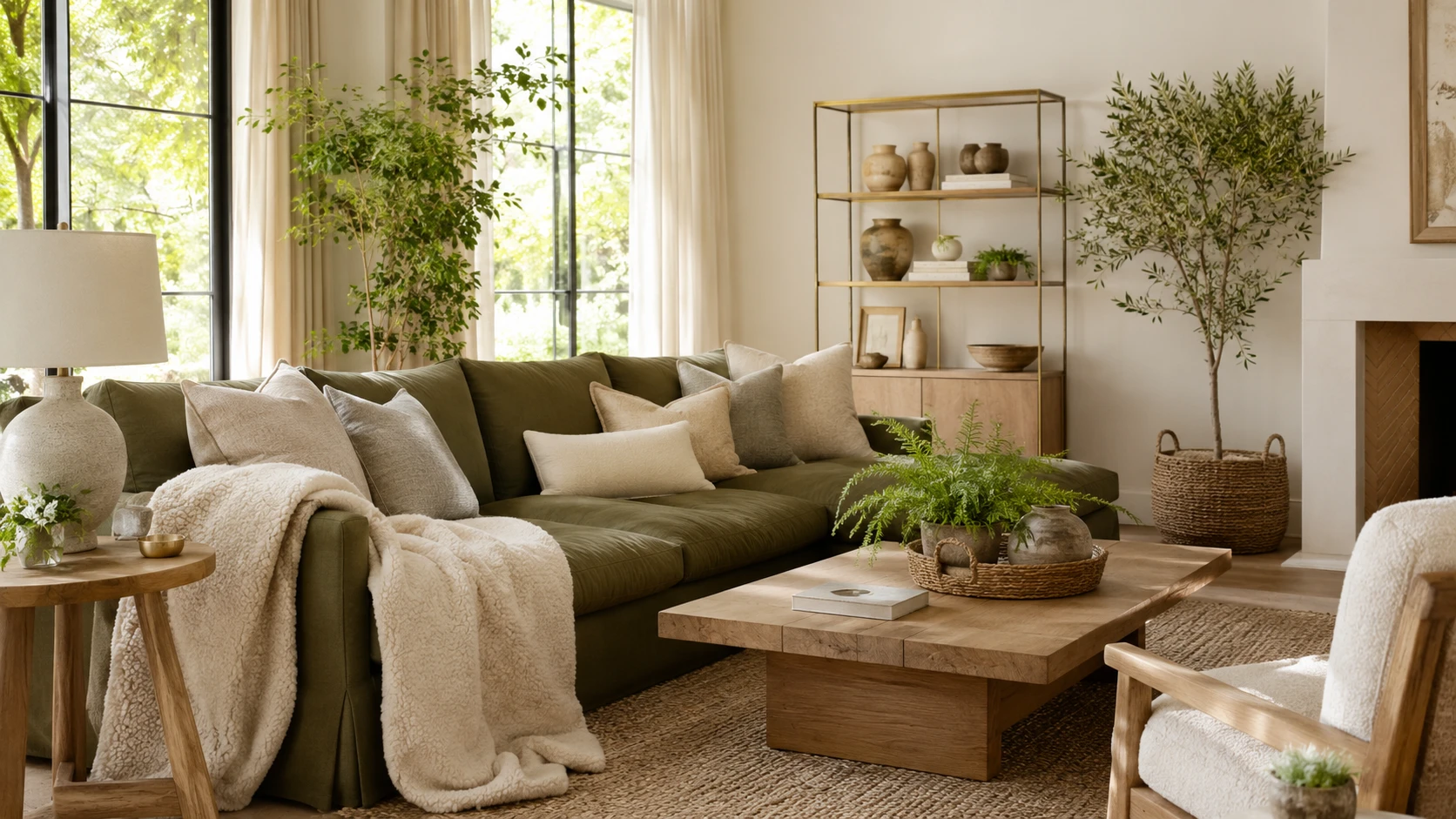
The pairing of olive green with cream and warm neutrals is timeless, calm, and effortlessly elegant. Warm neutrals soften olive green and make a living room feel open and welcoming rather than heavy.
The foundation. Cream or soft greige walls create a bright, airy backdrop. Against this, an olive green sofa or olive accents feel grounded but never dark. This combination works beautifully in bright, airy rooms and classic interiors alike.
Building the look:
Walls in cream or soft greige. An olive green sofa as the anchor. Accessories in light wood, woven textures, and neutral pillows. Finishing touches of wool rugs and subtle metallic accents.
Layering neutrals. The key to this look is layering different neutral textures. A cream boucle throw, linen cushions, a jute rug, natural wood furniture, and woven baskets. These varied textures prevent the neutral palette from feeling flat while letting the olive shine.
Why it works for everyday living. This botanical-inspired, tonal palette feels calm and layered. It works especially well in family rooms where softness and durability matter. The neutrals hide everyday wear while the olive adds enough personality to keep the space interesting.
Add greenery. Real plants enhance this palette beautifully. The living green of houseplants echoes the olive tones and reinforces the organic, nature-connected feeling. See our 12 Best Houseplants for Your Living Room for the perfect plants to complete this look.
This combination is the safest and most timeless way to use olive green. It will look beautiful for years and adapt easily as your style evolves.
Olive Green and Brass: Instant Sophistication
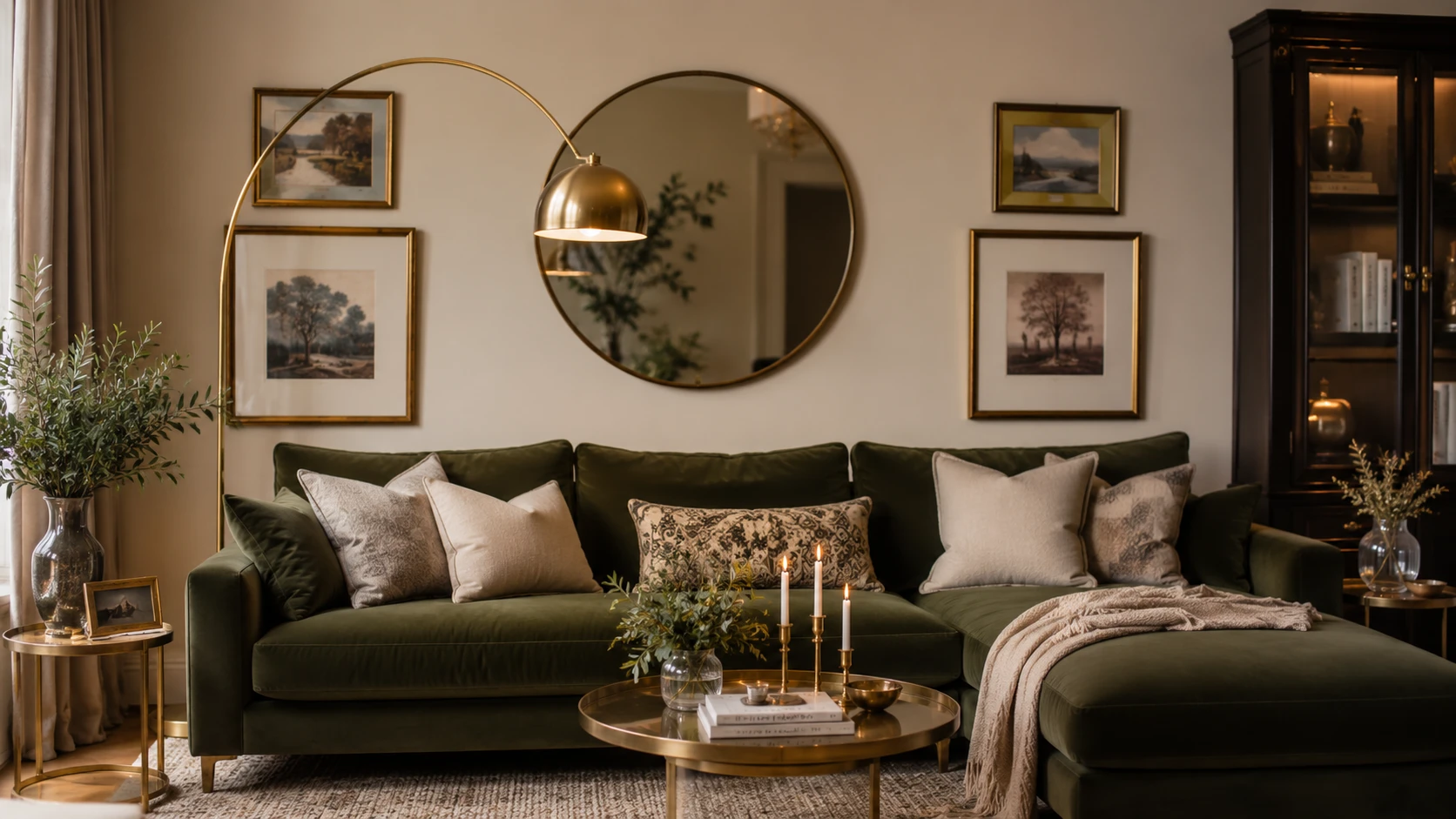
Adding brass and gold to an olive palette instantly makes a living room feel more sophisticated. The warm metal enhances olive green’s earthy warmth and adds a layer of refined luxury.
Why brass and olive work. Brass and olive both have warm undertones that complement each other naturally. The metallic shine of brass provides beautiful contrast against the matte, earthy olive, adding light and elegance.
Where to add brass:
Brass table lamps and floor lamps. Gold or brass picture frames. Brass coffee table legs or a brass-framed side table. Brass curtain rods. A large brass-framed mirror above the sofa. Brass candle holders and small decorative objects.
The transformation effect. Swapping steel or chrome fixtures for brass in an olive room makes an immediate difference. The cool metals fight olive’s warmth while brass enhances it. This single switch can transform the entire feeling of a space.
Best styles for olive and brass. This combination works beautifully in art deco, mid-century modern, and traditional interiors. The warm metal and grounded green together feel both vintage and timeless.
Use restraint. Brass adds warmth and luxury, but it can feel dated if overdone. Choose a few key brass pieces rather than covering every surface. A brass lamp, a brass mirror, and brass frames are enough to make a difference without overwhelming.
Aged brass over polished. Choose aged or antique brass with a warm patina rather than bright polished brass. The aged finish feels more sophisticated and intentional, and it pairs more naturally with olive’s muted quality.
Brass is the finishing touch that takes an olive green living room from beautiful to genuinely luxurious.
Olive Green Velvet: Rich Jewel-Like Luxury
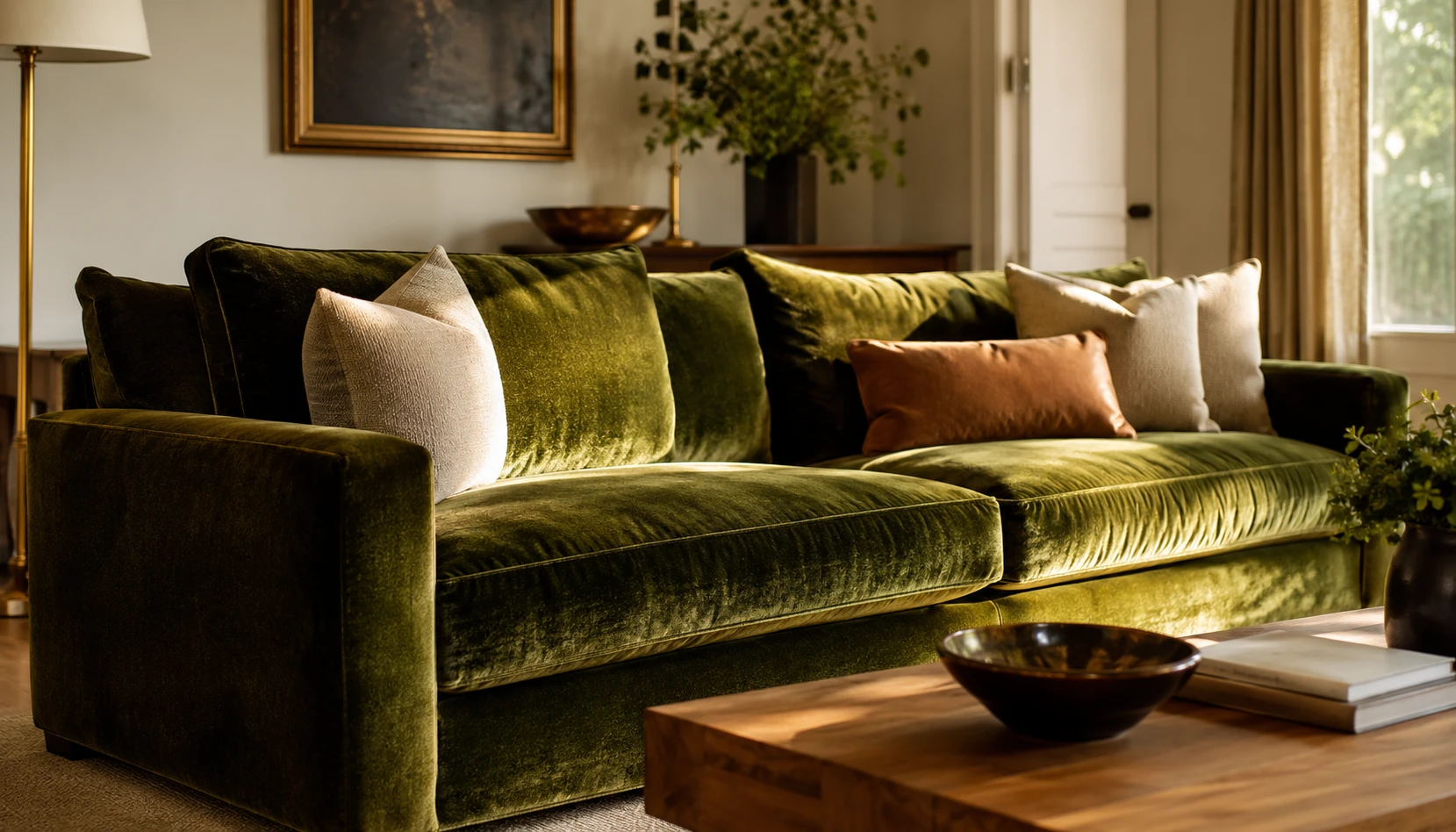
Nothing speaks of cozy luxury quite like olive green velvet. The texture transforms olive from a simple color into a rich, jewel-like statement that becomes the visual heart of a room.
Why velvet elevates olive. Velvet in olive green creates depth that flat fabrics cannot achieve. The pile catches and reflects light, making the color shift and shimmer as you move through the room. In daylight it reads vibrant, in evening light it deepens into a luxurious moss tone.
Styling an olive velvet sofa:
Choose a deep olive velvet sofa as your centerpiece. Surround it with cream or beige walls. Add complementary seating in neutral tones. Layer in gold or brass accents, cream throw pillows, and perhaps a camel-colored leather chair for contrast.
The light-catching effect. Position your olive velvet sofa where it catches natural light. The way velvet interacts with light is the entire point, creating beautiful tonal variation across the surface throughout the day.
Balance the richness. Olive velvet is luxurious, so balance it with simpler elements. Cream walls, natural wood, and minimal patterns let the velvet be the star without competing.
Practical note. Velvet is a higher-maintenance fabric, and darker olive tones may show lint or pet hair. Invest in a quality fabric protector to keep the lush look intact, and choose a velvet with a tighter weave if you have pets.
Velvet accents as an alternative. If a full velvet sofa feels like too much commitment, introduce olive velvet through cushions, an ottoman, or a single accent chair. Even small doses of olive velvet add that jewel-like richness.
An olive green velvet sofa is the ultimate expression of the organic luxury trend, grounded in nature yet undeniably luxurious.
Olive Green Accent Chairs: Color Without Commitment
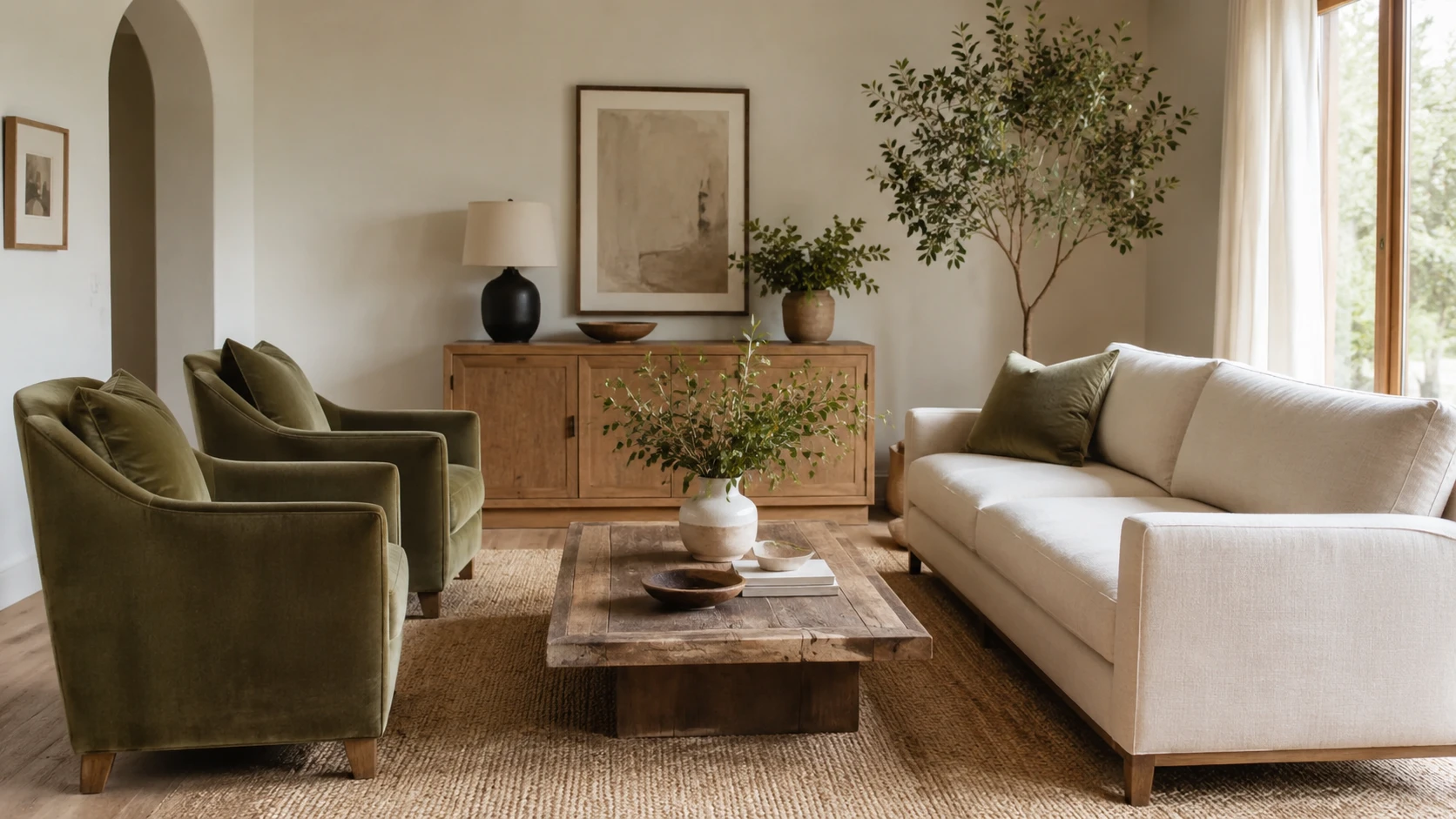
If a full olive sofa feels like too big a commitment, olive green accent chairs offer a flexible way to introduce this beautiful color. They provide pops of personality while keeping your main furniture neutral.
The two-chair approach. Choose two olive green accent chairs in velvet or linen. Position them across from a neutral sofa. Add an olive throw pillow on the sofa to tie everything together. Keep walls neutral in cream or light grey, add a jute or grey area rug, and include natural wood accents.
Why accent chairs work. The chairs provide all the warmth and personality of olive green while maintaining flexibility. If your style changes, swapping two chairs is far easier than replacing a sofa. This makes accent chairs perfect for those who like to evolve their decor.
Placement options. Flank a fireplace with two olive chairs. Create a reading nook with a single olive chair and a brass floor lamp. Position a pair across from the sofa to define a conversation area. Place one olive chair in a corner with a side table and plant.
Mixing materials. Olive velvet chairs feel rich and luxurious. Olive linen or boucle chairs feel relaxed and organic. Choose based on your overall living room mood.
Tying it together. The key to accent chairs is repetition. Echo the olive in at least one or two other places, a cushion, a throw, a piece of art, so the chairs feel intentional rather than random.
Accent chairs are the perfect entry point into olive green. They deliver the organic luxury look with maximum flexibility and minimal commitment.
Natural Wood and Texture: Completing the Organic Look
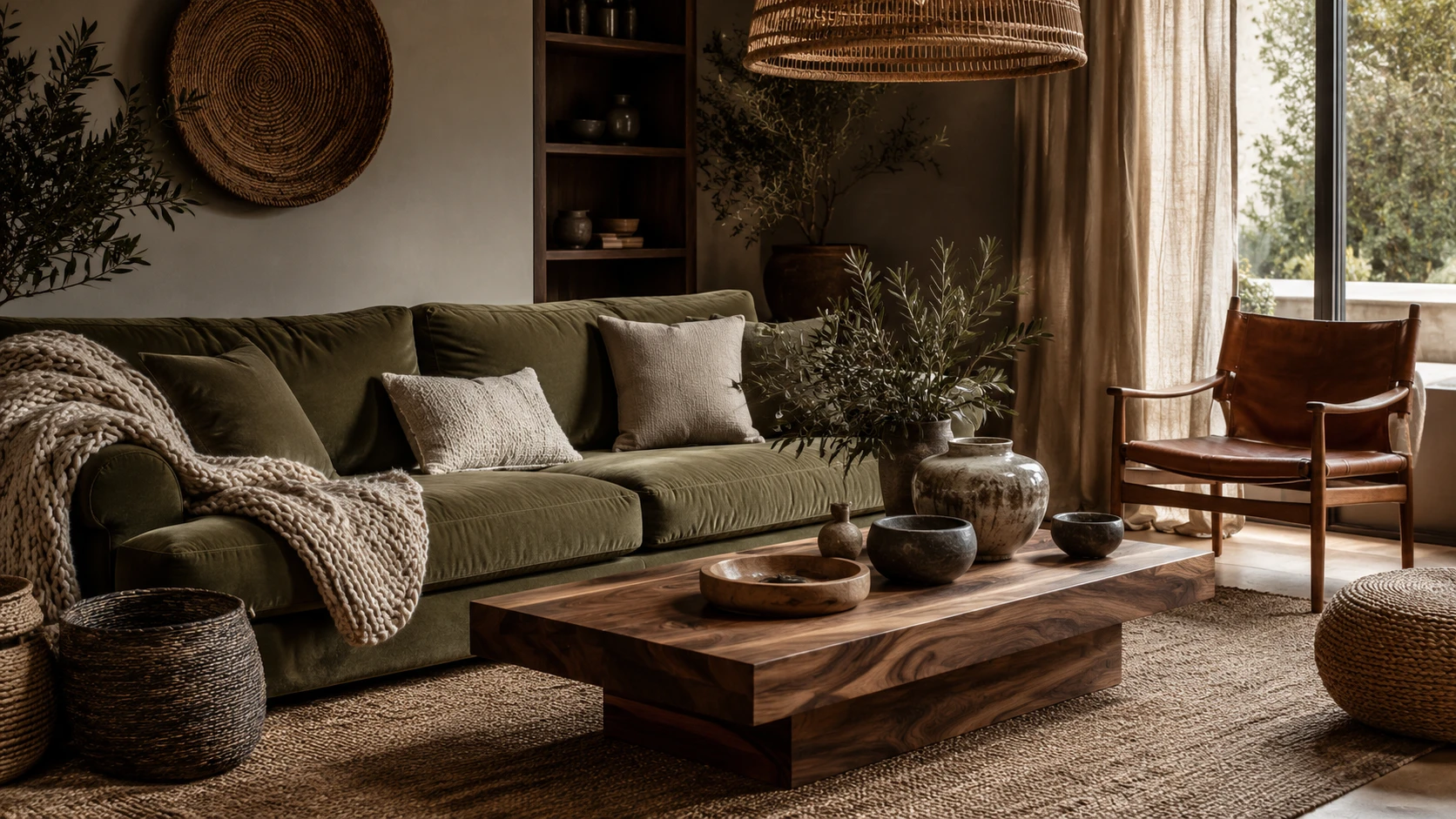
Olive green looks best paired with natural wood and layered textures. These organic materials connect olive to its nature-inspired roots and complete the organic luxury aesthetic.
Wood pairings with olive:
Light oak brings a serene, Nordic feel that keeps the space bright and airy. Walnut and darker woods create a classic, sophisticated, grounded look. Reclaimed and weathered wood adds rustic character and material honesty. Each wood tone changes the mood while harmonizing with olive’s earthy quality.
Mixing olive with oak or walnut brings a serene, nature-inspired feel that works especially well in urban apartments, connecting the space to a sense of calm outdoors.
Layering textures. Texture is just as important as color. Mix velvet, linen, leather, boucle, and wool to add depth and prevent olive green from feeling flat or heavy. A velvet sofa, a chunky knit throw, a leather chair, a jute rug, and linen curtains together create rich, layered warmth.
Natural texture elements:
A natural wood coffee table, ideally with visible grain. A jute or sisal area rug. Woven baskets for storage and warmth. Rattan accents and light fixtures. Stone or ceramic decorative objects. Linen curtains in cream or natural tones.
The material honesty principle. The 2026 organic luxury trend emphasizes material honesty, raw and weathered wood, natural stucco textures, and unpolished surfaces. These authentic materials make olive green feel even more grounded and intentional.
Bring in the outdoors. Layered rugs, pampas grass, dried botanicals, and real plants make an olive sofa feel like part of a high-end natural oasis. The connection to nature is the entire point of the olive green aesthetic.
Natural wood and texture are what take an olive green living room from a color scheme to a complete, immersive space.
Olive Green in Small Living Rooms
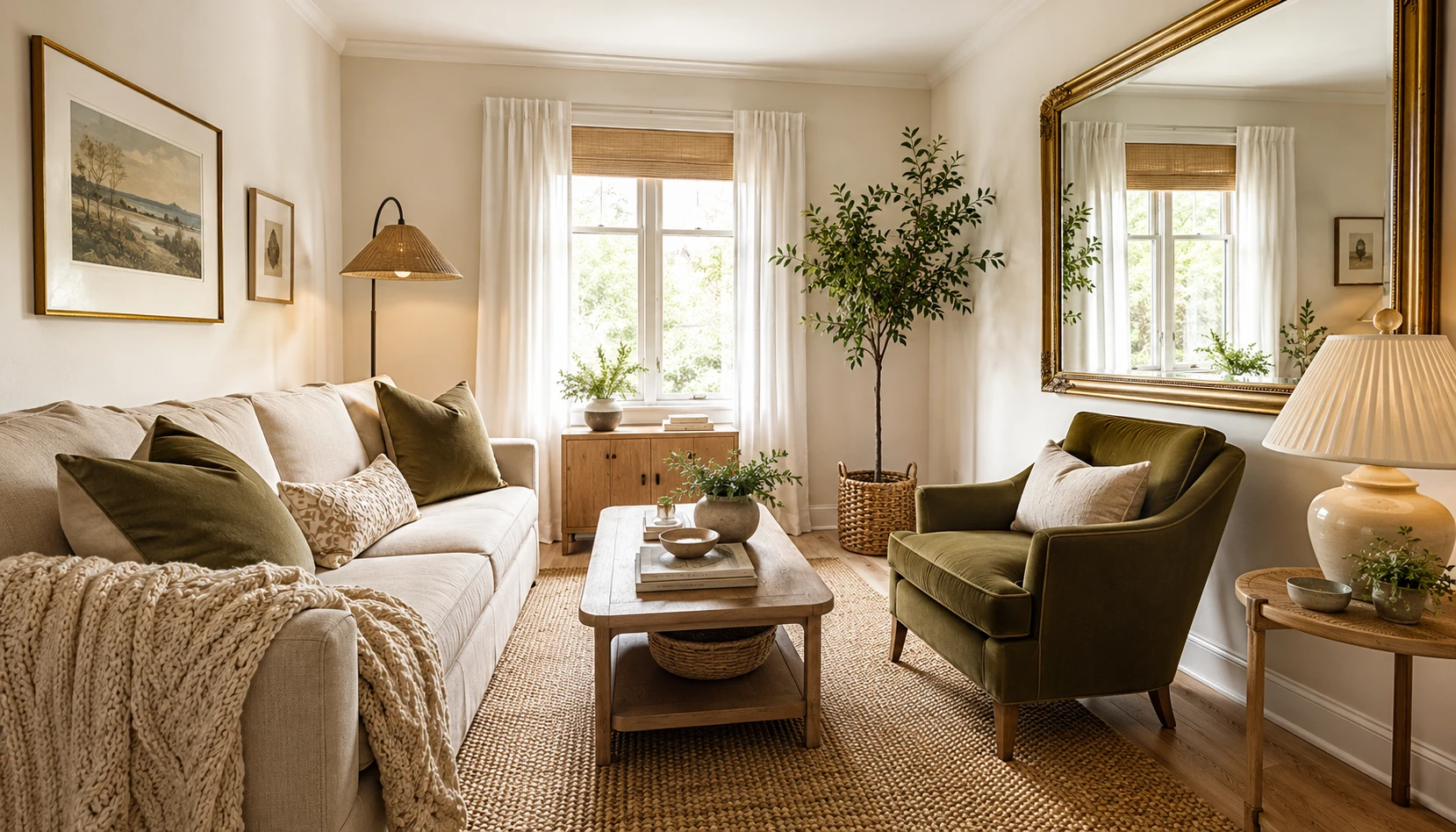
A common worry is that olive green will make a small living room feel dark or cramped. With the right approach, olive green actually adds depth and warmth to small spaces without overwhelming them.
Use olive as an accent in small rooms. Rather than painting all walls olive or choosing a large olive sofa, introduce olive through accent pieces. An olive accent chair, olive cushions, an olive throw, or a single olive accent wall. This adds the color’s warmth without darkening the space.
Balance with light. Pair olive green with light walls in cream or soft white. Add white trim, white curtains, and light wood furniture. The contrast keeps the room feeling open while olive adds essential warmth and depth.
Mirrors multiply light. Place a large mirror opposite a window to reflect natural light and create the illusion of more space. A brass-framed mirror does double duty, adding both light and a warm metallic accent that complements olive. See our Bright Small Living Room: 10 Ways to Make It Feel Bigger for more space-expanding techniques.
Lighter olive tints work best. In small spaces, choose a lighter, muted olive, almost a sage with grey undertones, rather than a deep dark olive. The lighter tint adds color without absorbing too much light.
Tonal olive for cohesion. A tonal approach, where olive appears in several places at a similar intensity, can make a small room feel unified and calm rather than busy. Stick to two or three shades and repeat them for cohesion.
Add reflective surfaces. Balance olive with reflective surfaces like glass, mirrors, brass, and glossy ceramics. These bounce light around the room and prevent olive from making the space feel heavy.
Olive green is versatile enough to work in any size living room. In small spaces, the key is balance, pairing it with light, reflection, and natural materials to keep the room feeling bright and open.
For more small space styling see our Room Decoration Ideas for Small Spaces.
The Complete Olive Green Color Palette
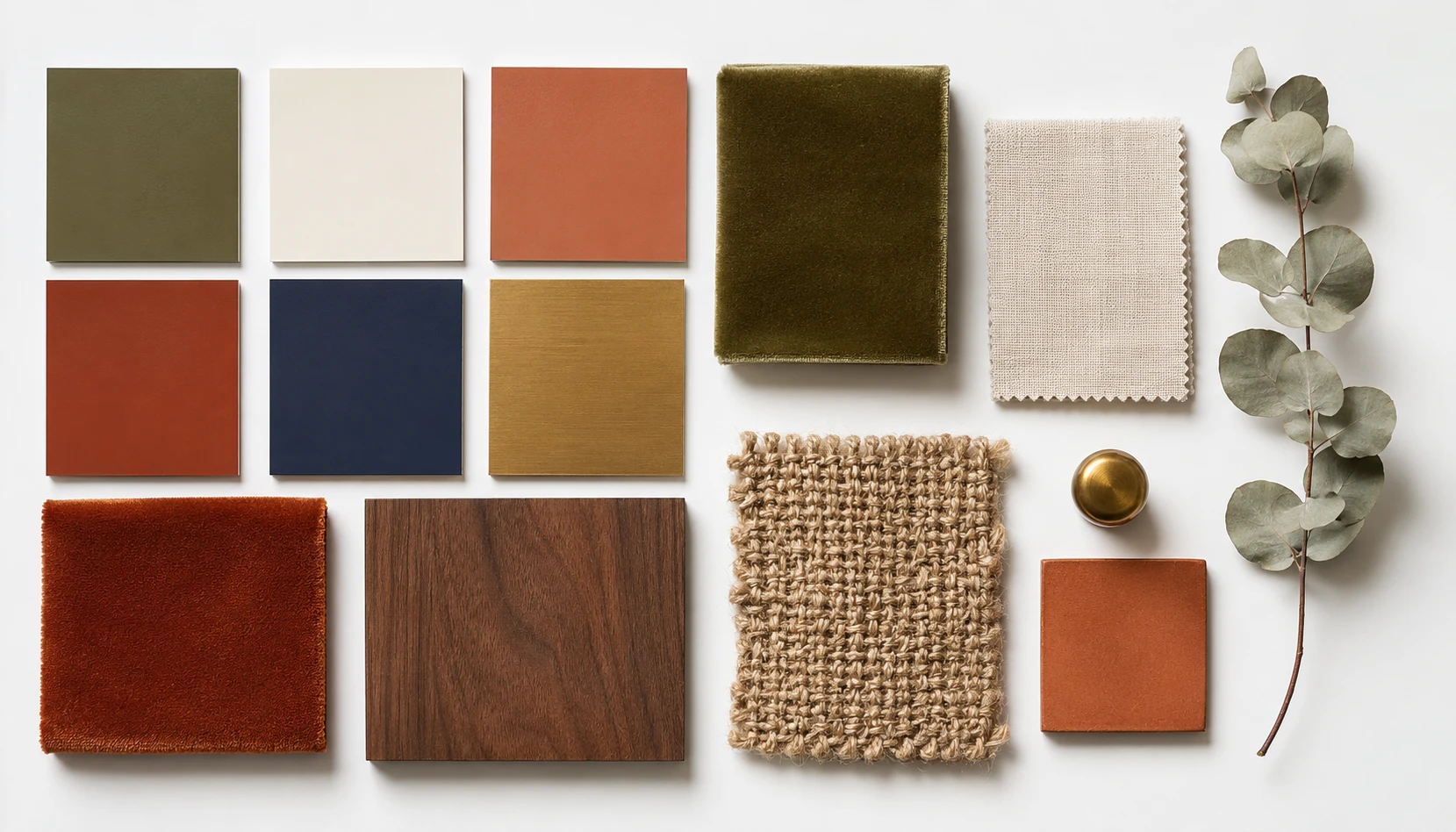
To pull together a beautiful olive green living room, it helps to understand the full palette of colors that work with olive. Here are the best pairings organized by mood.
Warm and earthy palette: Olive green, terracotta, rust, warm cream, natural wood, and brass. This is the most popular olive palette, cozy, grounded, and full of organic warmth.
Calm neutral palette: Olive green, cream, greige, taupe, light oak, and woven natural textures. Timeless, airy, and effortlessly elegant. The safest and most flexible choice.
Bold and sophisticated palette: Olive green, navy blue, brass, and cream. An unexpected combination that feels modern, confident, and grounded. Navy and olive together are striking.
Soft and romantic palette: Olive green, blush pink, cream, and gold. The blush softens the olive for a gentle, feminine, layered look.
Vintage and retro palette: Olive green, mustard yellow, dark wood, and graphic patterns. Perfect for mid-century modern spaces with character and warmth.
Moody and dramatic palette: Deep olive green, charcoal, aubergine plum, and brass. Rich and enveloping for those who want a bold, cocooning living room.
What colors go with olive green: The most reliable companions are warm neutrals like beige, cream, and greige, plus earthy accents like terracotta, rust, and mustard. For contrast, navy and blush both work beautifully. Brass and gold are the perfect metallic finishing touch.
Building your palette: Choose one base neutral, commit to olive as your hero, then pick one or two accent colors maximum. Too many accent colors will muddy the grounded, sophisticated feeling that makes olive green so special.
Olive green is more than a color trend. It reflects a real shift toward warmth, grounding, and organic luxury in how people are designing living spaces now. Whether you commit fully with an olive velvet sofa or olive walls, or simply test the waters with accent chairs and cushions, olive green brings a calming, sophisticated warmth that few colors can match.
Start with one element. An olive sofa, an accent wall, or a pair of olive chairs. Then build outward with warm neutrals, natural wood, earthy accents, and brass. The result is a living room that feels calm, grounded, and effortlessly luxurious.
For more color inspiration see our guides on Olive Green Kitchen Ideas, Sage Green Bedroom Ideas, and 12 Best Houseplants for Your Living Room to complete your organic luxury home.