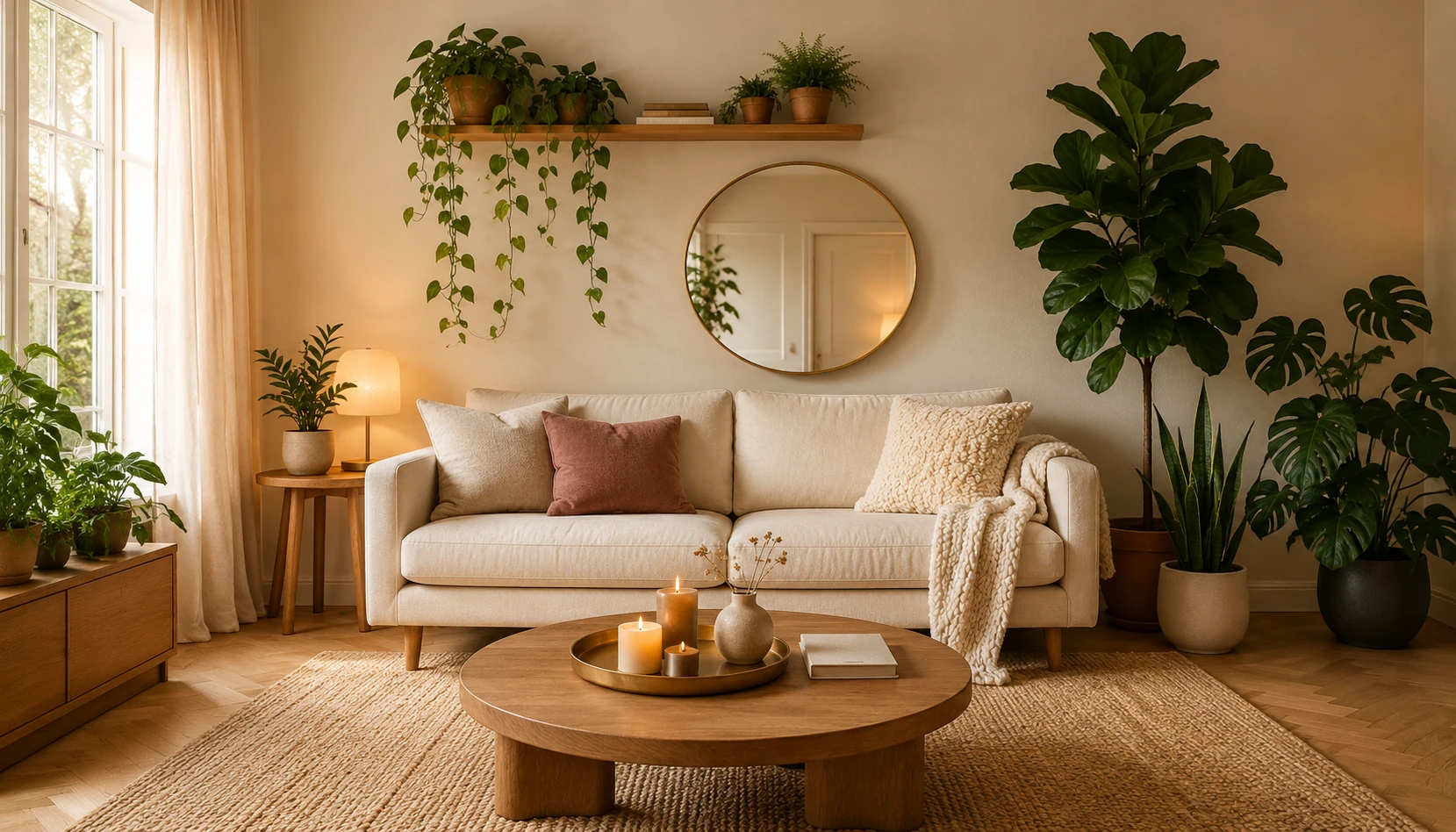
A living room without plants is a living room missing something essential. Beautiful textiles, perfect furniture, and curated art can only take a space so far. What transforms a styled room into a living one is real green, breathing, growing life.
In 2026, houseplants are no longer just decor accessories. They are a core design element of warm modern living rooms, valued equally for their visual impact and their genuine effect on mood, air quality, and the feeling of home. The best part: most of the plants people love in Pinterest living rooms are surprisingly easy to grow.
Here are 12 of the best houseplants for living rooms in 2026, with honest care tips, styling guidance, and exact placement advice. Whether you live in a bright corner apartment or a north-facing rental, there is a plant on this list that will thrive in your space.
Why Every Living Room Needs Plants
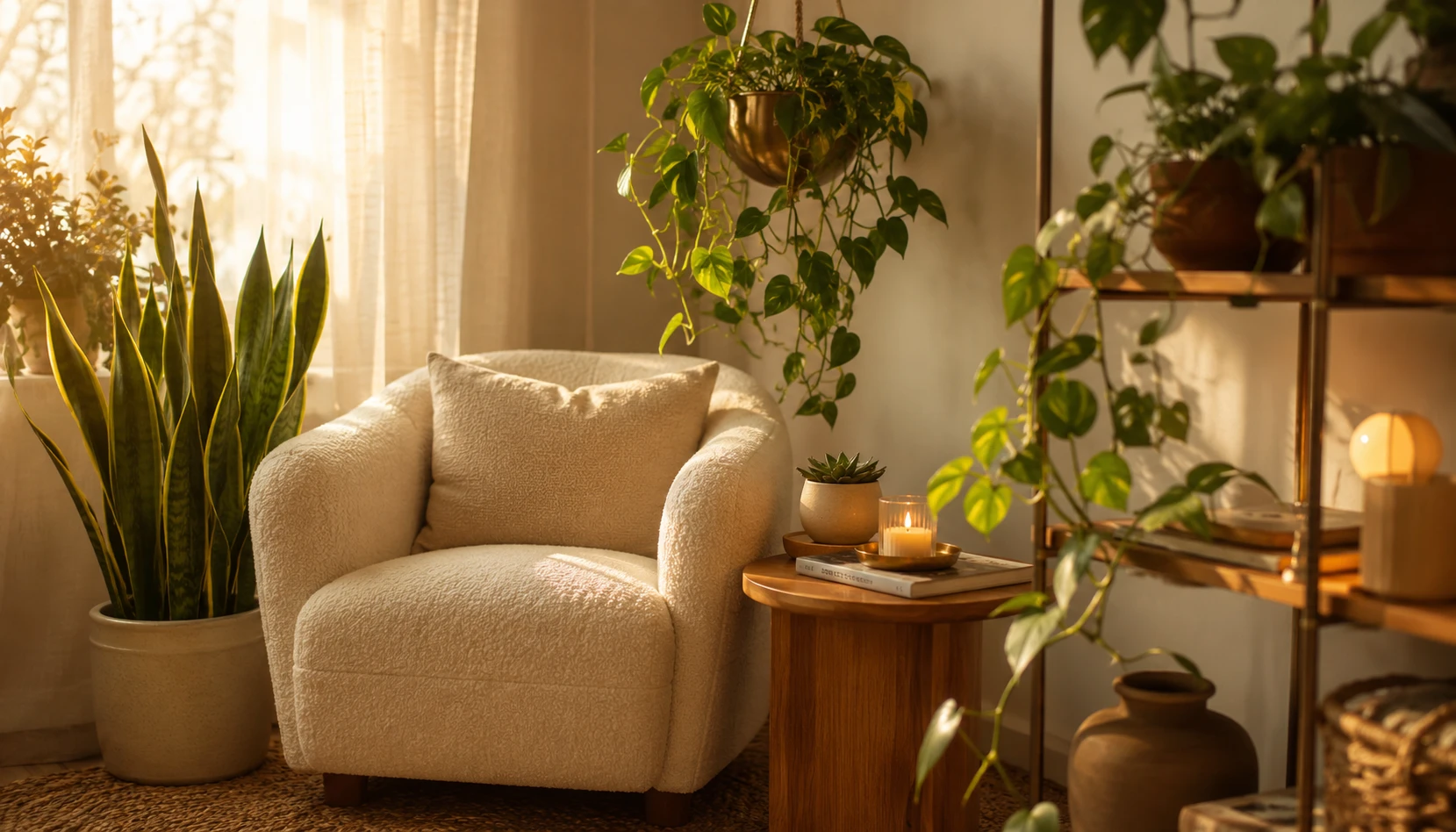
The reasons to add real plants to your living room go far beyond aesthetics:
They bring life to static spaces. Furniture sits still. Plants move, grow, and change with the seasons. Even one well-placed plant introduces dynamic energy that no accessory can provide.
They improve air quality. Common houseplants filter formaldehyde, benzene, and other indoor pollutants. A living room with several plants has measurably cleaner air than one without.
They reduce stress and anxiety. Indoor plants are associated with lower cortisol levels, reduced blood pressure, and improved mood in a fair amount of research. Your living room becomes a bit more of a sanctuary for it.
They photograph beautifully. Plants add the green texture and organic shapes that make spaces look professionally designed. The contrast of living green against neutral interiors is what makes high-end interiors photograph so well.
They are budget-friendly decor. A statement plant costs less than most decor pieces and grows in value as it matures. A small pothos that costs a few dollars can become an impressive trailing piece within a year.
They make rooms feel finished. A perfectly designed living room without plants tends to feel slightly incomplete. Real, living elements are usually what’s missing.
Now to the plants themselves. Each entry below includes the exact light needs, watering schedule, and styling tips for your living room.
Snake Plant (Sansevieria) — The Beginner Hero
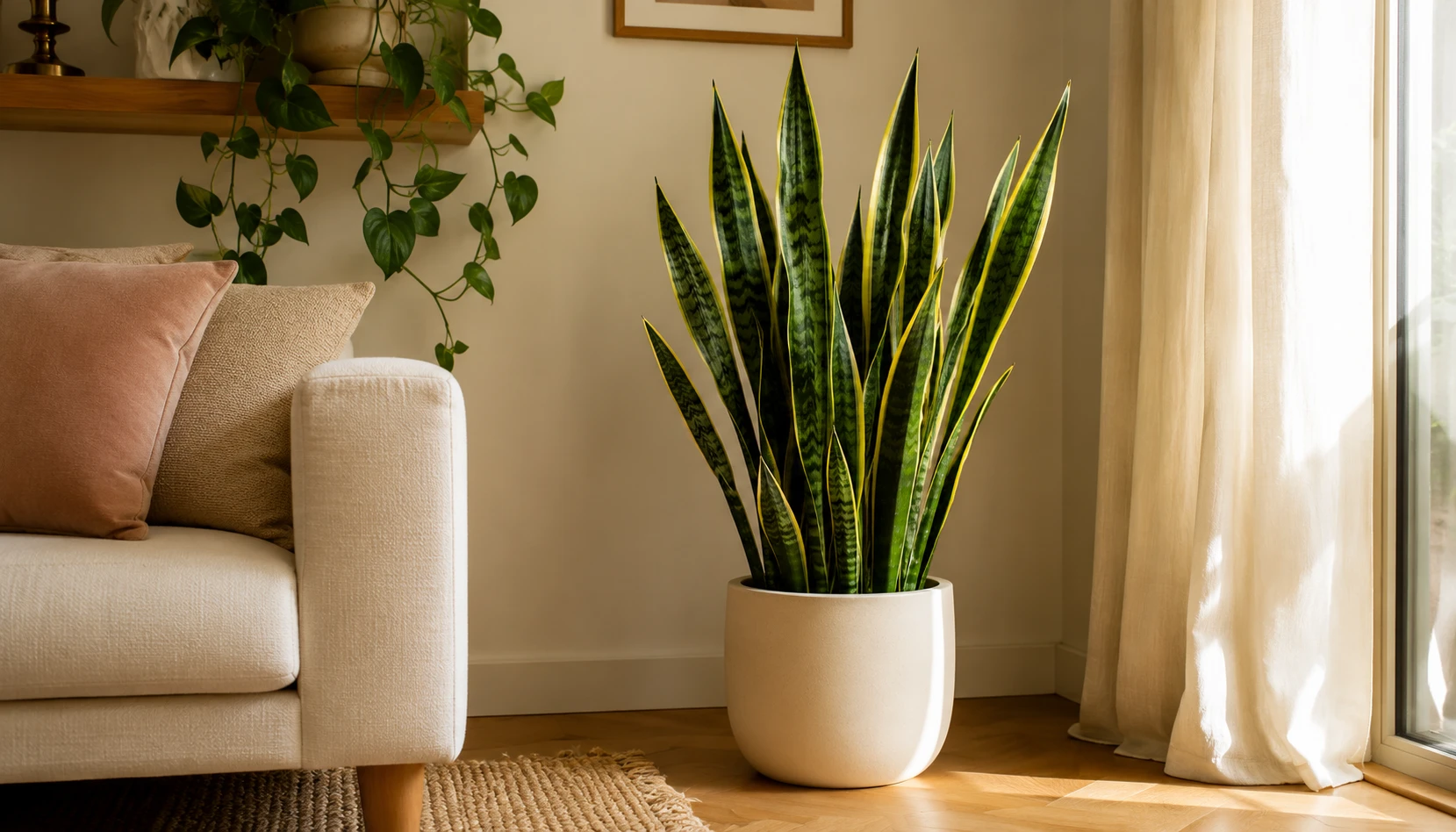
If you have killed houseplants before, start here. The snake plant is the single most forgiving plant available. It tolerates low light, infrequent watering, dry air, and neglect that would destroy most plants.
Light needs: Any. Truly any. Thrives in bright indirect light but survives in low-light corners that no other plant tolerates.
Watering: Every 2-3 weeks in summer. Every 4-6 weeks in winter. The most common way to kill a snake plant is overwatering. When in doubt, do not water.
Best living room placement: A tall corner where you need vertical interest. Beside a sofa. Next to a credenza. Anywhere the architectural sword-like leaves can stand prominently.
Styling tip: Use a matte ceramic pot in cream, terracotta, or black. The clean lines of the snake plant pair beautifully with simple modern pottery. Pots that are too small make the plant top-heavy. Choose a pot only slightly larger than the root ball.
Why it works in 2026 living rooms: The sculptural vertical lines complement modern furniture beautifully. Snake plants look intentional and designed rather than just leafy.
One warning: Mildly toxic to pets if eaten in large quantities. Keep away from determined cats or dogs.
Fiddle Leaf Fig (Ficus Lyrata) — The Pinterest Star
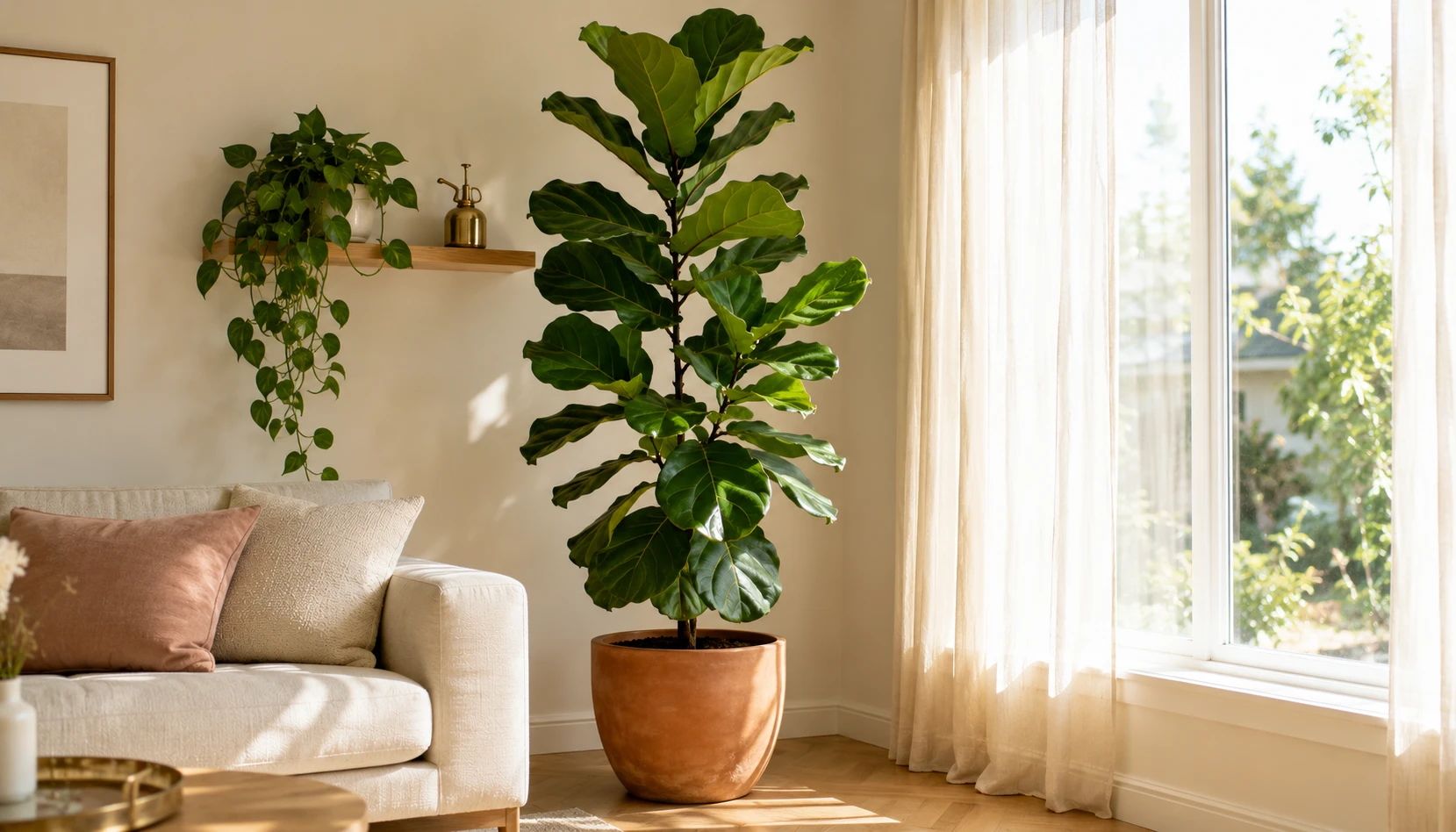
No plant has dominated interior design photography for the past five years like the fiddle leaf fig. Those large violin-shaped leaves on a tall woody stem are the most recognisable indoor plant in modern decor.
Light needs: Bright indirect light. NOT direct sun (burns the leaves). NOT low light (drops leaves). A spot near a south or west window, but a few feet back, is ideal.
Watering: Once a week typically. The top inch of soil should be dry before watering again. Inconsistent watering causes leaf drop.
Best living room placement: A bright corner that visually anchors the room. Beside a fireplace. Next to a large window. Tall enough to create vertical interest in a tall-ceilinged room.
Styling tip: A simple matte ceramic pot in cream or terracotta works best. Avoid trendy patterned pots that compete with the dramatic leaves. The plant IS the design statement.
Why it works in 2026 living rooms: The large architectural leaves provide visual weight that balances furniture. A 5-6 foot fiddle leaf fig fills empty corners perfectly.
One warning: Fiddle leaf figs hate being moved. Find one good spot and leave it there. Do not rotate weekly. Toxic to pets if eaten.
Pothos (Epipremnum) — The Trailing Champion
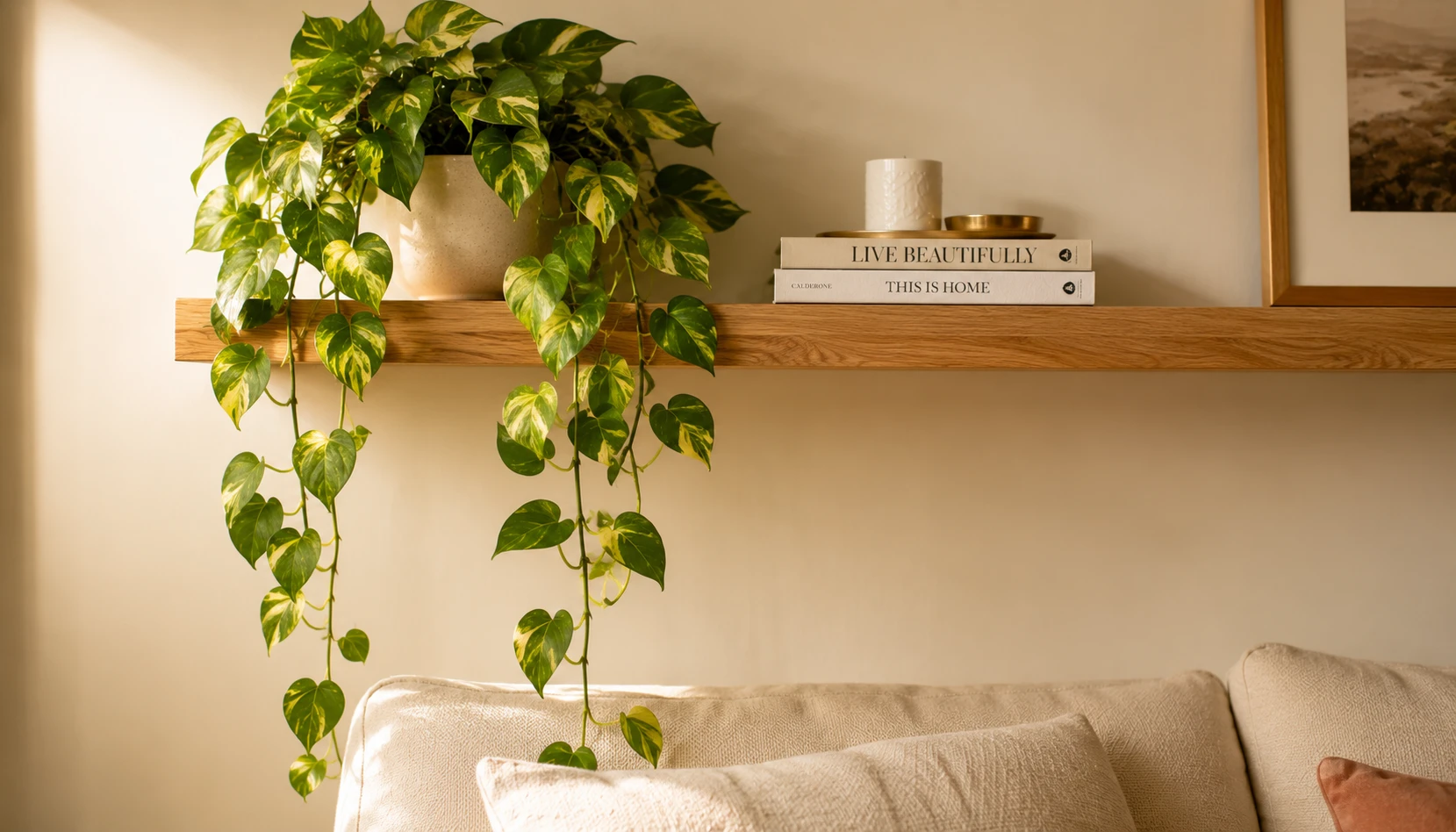
If your living room needs trailing greenery, pothos is the answer. The vines grow long and beautifully without much effort, draping from shelves and hanging baskets with naturally elegant movement.
Light needs: Bright indirect to low light. One of the few plants that genuinely tolerates dim corners.
Watering: Once a week. The leaves will droop slightly when thirsty (a helpful built-in alert).
Best living room placement: On floating shelves where the vines can trail down. On top of a tall bookcase. In a hanging basket near a window. Beside a mirror so the trailing leaves create a frame.
Styling tip: Let the vines grow long without trimming. A pothos with 3-4 foot trailing vines looks far more impressive than one trimmed short. Train the vines along the top of a shelf or down a wall.
Why it works in 2026 living rooms: The soft trailing form softens hard architectural lines. Pothos is the perfect counter to angular modern furniture.
Varieties to consider: Golden Pothos (yellow variegated), Marble Queen (white variegated), Neon Pothos (bright lime green), Cebu Blue (silvery blue tone). All grow identically.
One warning: Toxic to pets if eaten. Hang in places pets cannot reach.
Monstera Deliciosa — The Iconic Split Leaf
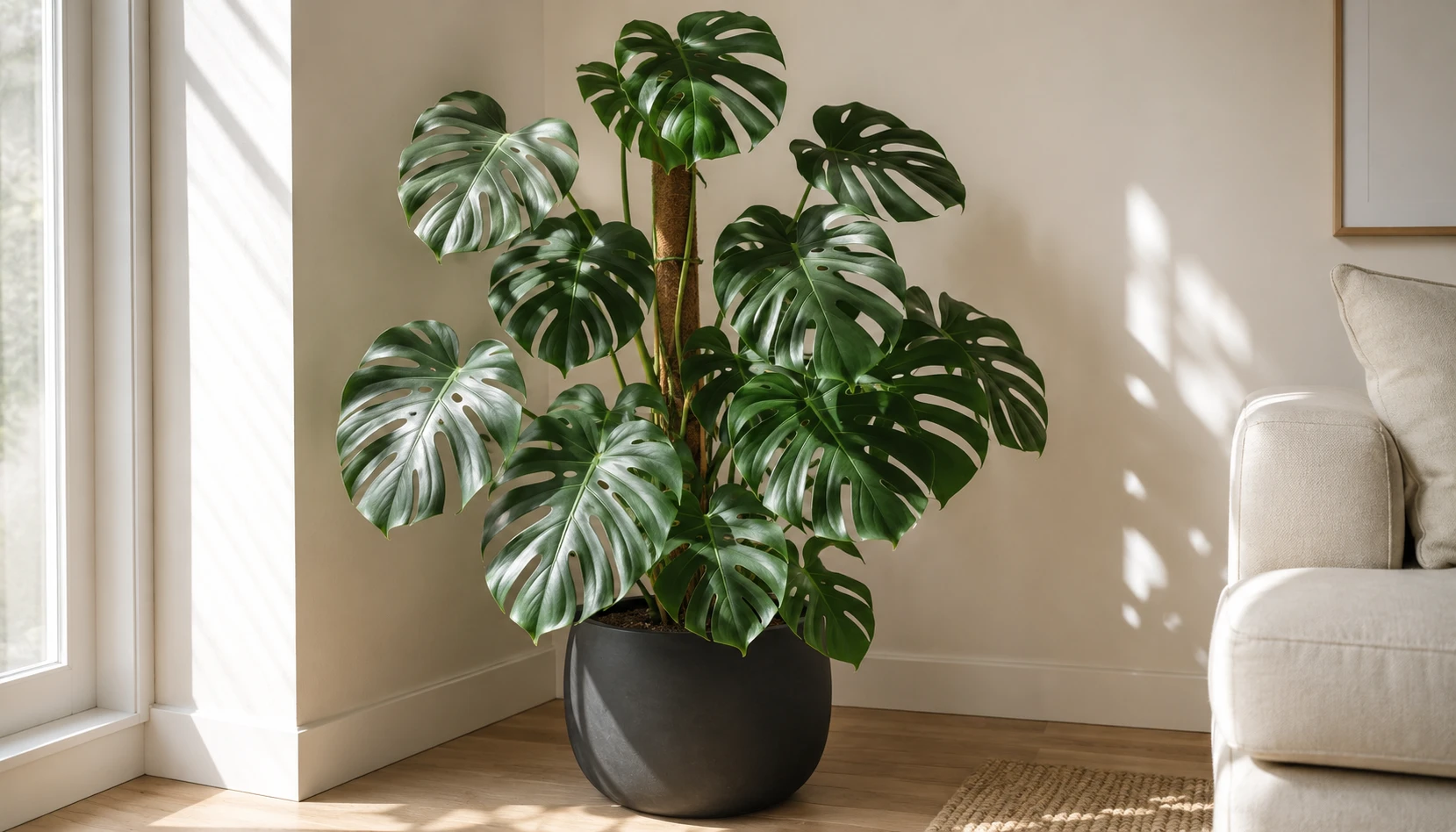
If the fiddle leaf had its decade, the monstera is having its moment now. The iconic split leaves (called fenestrations) create the most recognisable plant silhouette in modern interior design.
Light needs: Bright indirect light. Tolerates medium light but the iconic splits in the leaves only develop with adequate brightness.
Watering: Once a week, slightly less in winter. The top 2 inches of soil should be dry before watering.
Best living room placement: Beside a sofa as a side statement. In a bright corner. Next to floor-to-ceiling windows. They get LARGE so plan for space.
Styling tip: Provide a moss pole for support as the plant grows. Monsteras want to climb and look most beautiful with vertical support. A simple wooden pole works perfectly.
Why it works in 2026 living rooms: The graphic shape of split leaves photographs spectacularly. Each leaf is unique and architectural.
Growth note: A small monstera at the nursery will become a 5-foot statement piece within 2-3 years with proper care. Plan accordingly.
One warning: Toxic to pets if eaten. The large leaves can fall onto curious pets, so secure your moss pole well.
ZZ Plant (Zamioculcas Zamiifolia) — Darkest Corner Champion
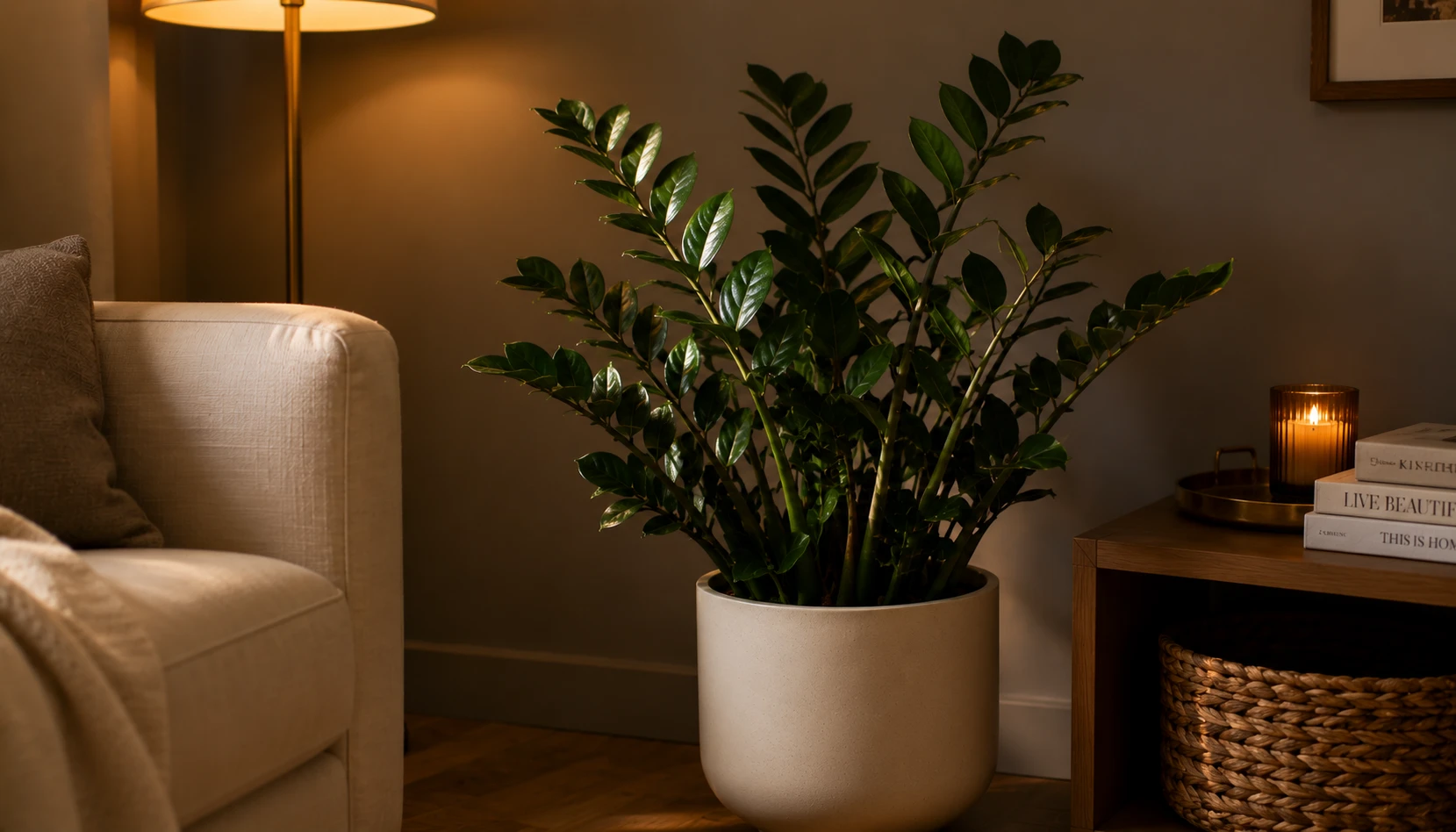
If you have a north-facing apartment or a living room with limited natural light, the ZZ plant is your answer. It thrives in conditions that would kill most houseplants.
Light needs: Low to bright indirect. The most low-light tolerant plant on this list along with the snake plant.
Watering: Every 2-3 weeks. The thick stems store water like a succulent. Underwatering is far safer than overwatering.
Best living room placement: Dark corners. Beside a TV media unit. In an alcove without windows. Anywhere that other plants would slowly die.
Styling tip: The glossy dark green leaves look striking in matte cream or terracotta pots. The contrast between the shiny leaves and matte pottery is beautiful.
Why it works in 2026 living rooms: Glossy leaves catch what little light exists making the plant visually pop in dim spaces. The architectural shape feels modern and intentional.
Growth note: ZZ plants grow slowly. Buy at the size you want rather than expecting rapid growth. A medium ZZ stays medium for years.
One warning: All parts toxic to pets if eaten. Wash hands after handling the sap.
Rubber Plant (Ficus Elastica) — Architectural Beauty
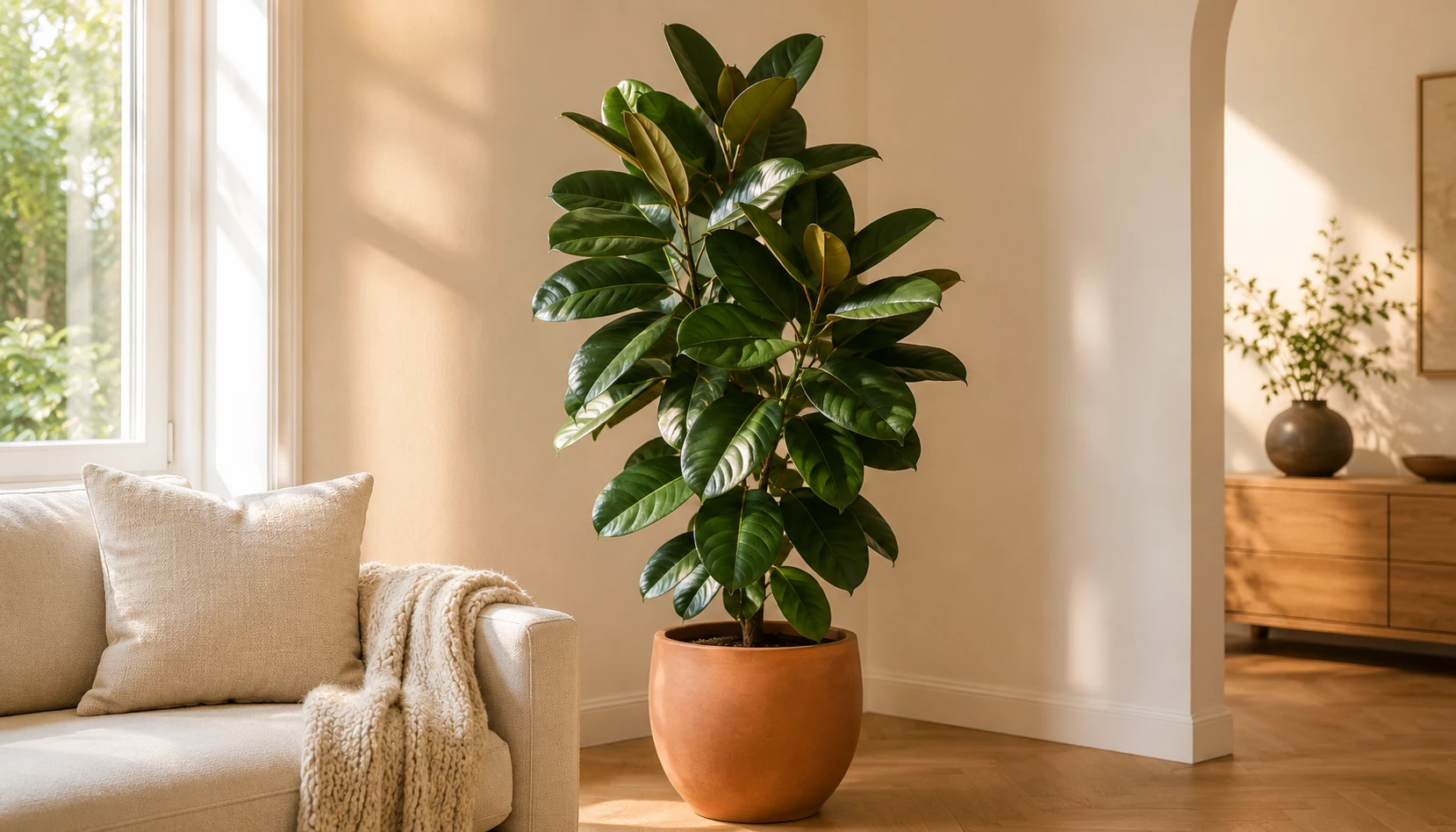
Looking for the visual impact of a fiddle leaf fig without the temperamental personality? The rubber plant delivers. Large glossy leaves on a sculptural form, but far more forgiving.
Light needs: Bright indirect to medium light. More flexible than the fiddle leaf fig.
Watering: Once a week typically. The top 2 inches of soil should be dry between waterings.
Best living room placement: Tall corner with bright indirect light. Beside a window where light filters through. Next to a sofa for a statement.
Styling tip: The thick glossy leaves photograph beautifully. A matte black pot creates striking contrast. A terracotta pot keeps the look warm.
Why it works in 2026 living rooms: The architectural quality with easier care than fiddle leaves. Burgundy and tineke (variegated) varieties add color variety.
Varieties to consider: Classic Robusta (dark green), Burgundy (deep red-burgundy leaves), Tineke (cream and green variegated).
Growth note: Rubber plants can reach 8 feet indoors. Choose carefully based on ceiling height.
One warning: Mildly toxic to pets. Sap can cause skin irritation, so wear gloves when pruning.
Bird of Paradise (Strelitzia) — Tropical Statement
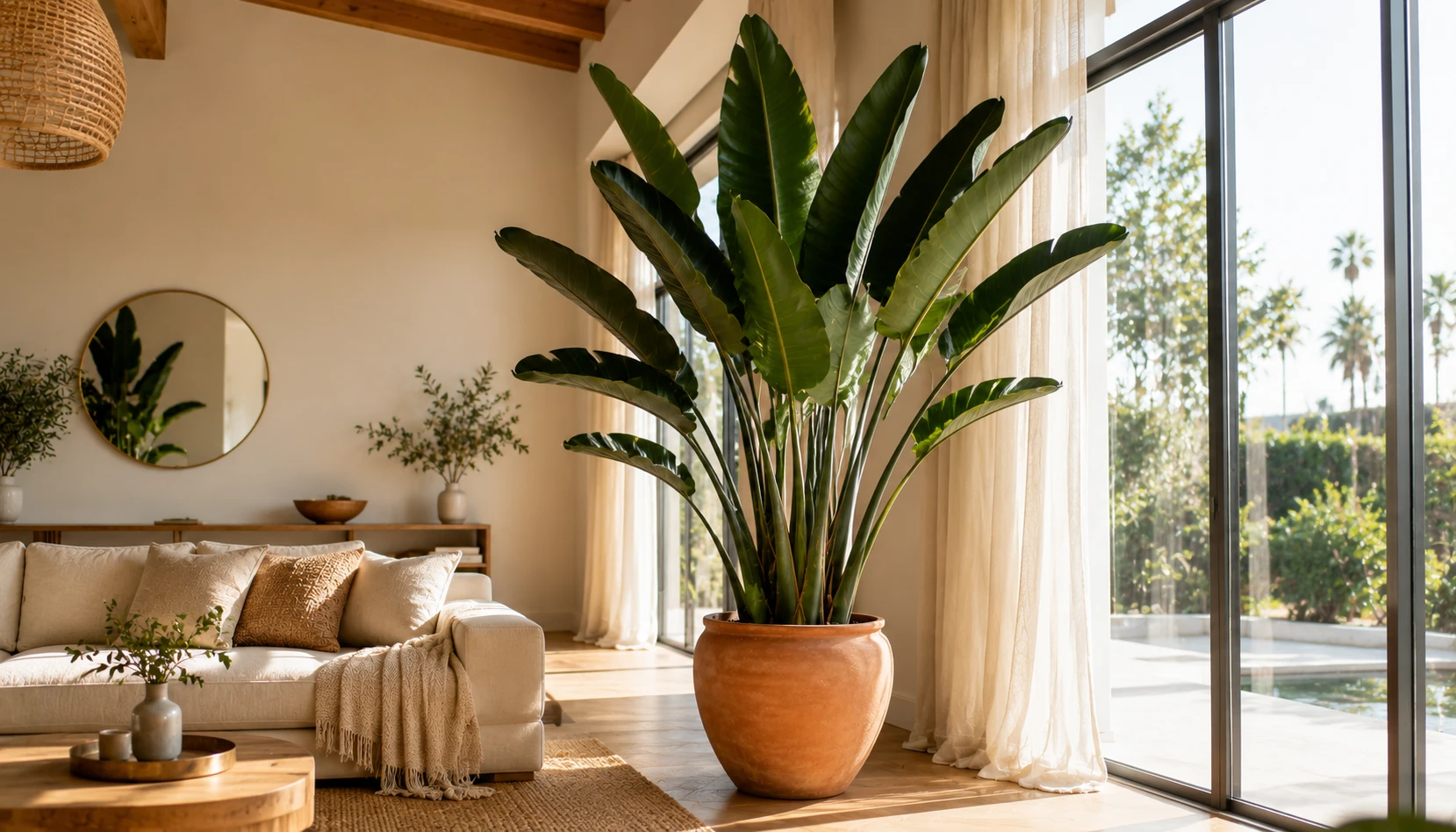
For larger living rooms with high ceilings and abundant natural light, bird of paradise creates the most dramatic visual statement of any indoor plant. Large paddle-shaped leaves on tall stems create a tropical sanctuary feel.
Light needs: Bright direct or indirect light. NEEDS bright light. Not suitable for low-light spaces.
Watering: Weekly during growing season, slightly less in winter. Thirstier than most plants on this list.
Best living room placement: Large bright corners. Beside floor-to-ceiling windows. In sunrooms or living rooms with skylights. Plan for size; these get TALL (6-8 feet indoors).
Styling tip: A large statement terracotta pot or fluted ceramic planter. The plant itself is the visual show so let it shine.
Why it works in 2026 living rooms: Brings tropical resort luxury to your home. Photographs spectacularly.
Growth note: Slow to mature but worth the wait. Younger plants are more affordable, but mature plants make a serious statement.
One warning: Toxic to pets if eaten. The leaves can rip easily in high-traffic areas, so keep away from pet tails and active spaces.
Peace Lily (Spathiphyllum) — Elegant and Easy
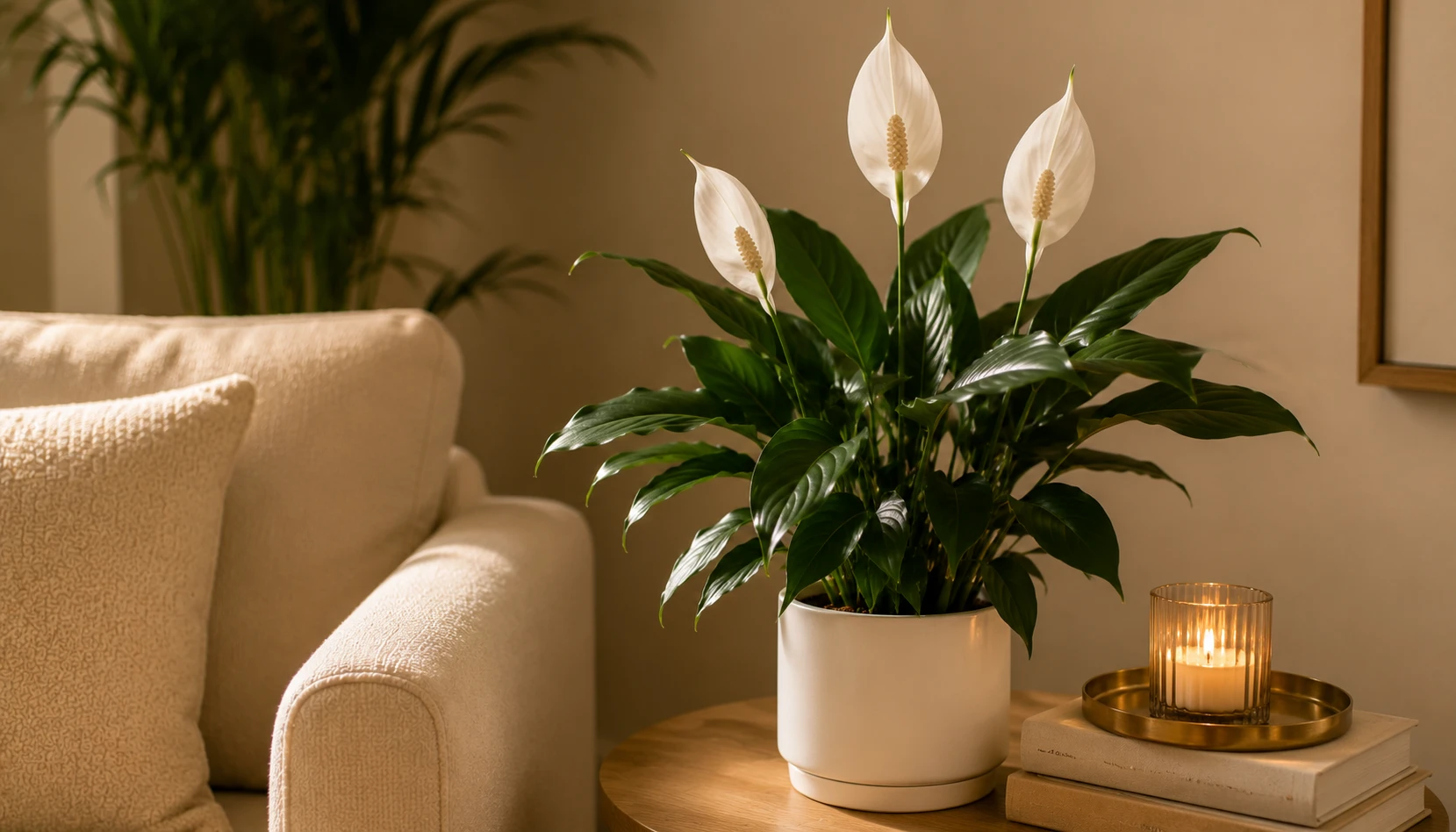
The peace lily is unusual on this list because it flowers indoors. Elegant white spathes appear several times per year against dark glossy leaves, creating a uniquely beautiful living plant.
Light needs: Medium to low indirect light. Direct sun burns the leaves. Surprisingly low-light tolerant.
Watering: Once a week. The plant dramatically droops when thirsty (helpful indicator) and bounces back within hours of watering.
Best living room placement: Medium-bright corner. Beside a bookshelf. On a side table. In smaller living rooms where massive plants would overwhelm.
Styling tip: A simple white or cream ceramic pot complements the white flowers. Avoid colored pots that compete with the blooms.
Why it works in 2026 living rooms: The flowering aspect provides changing visual interest. The dark leaves create elegant contrast against light interiors.
A safety note: Despite the name and elegant appearance, peace lilies are toxic to pets and humans if eaten. The flowers contain calcium oxalate crystals. Keep away from curious pets and children.
For genuinely pet-safe options: Consider Boston ferns, Calatheas, parlor palms, or Areca palms instead. All work beautifully in living rooms.
Best Plants for Small Living Rooms
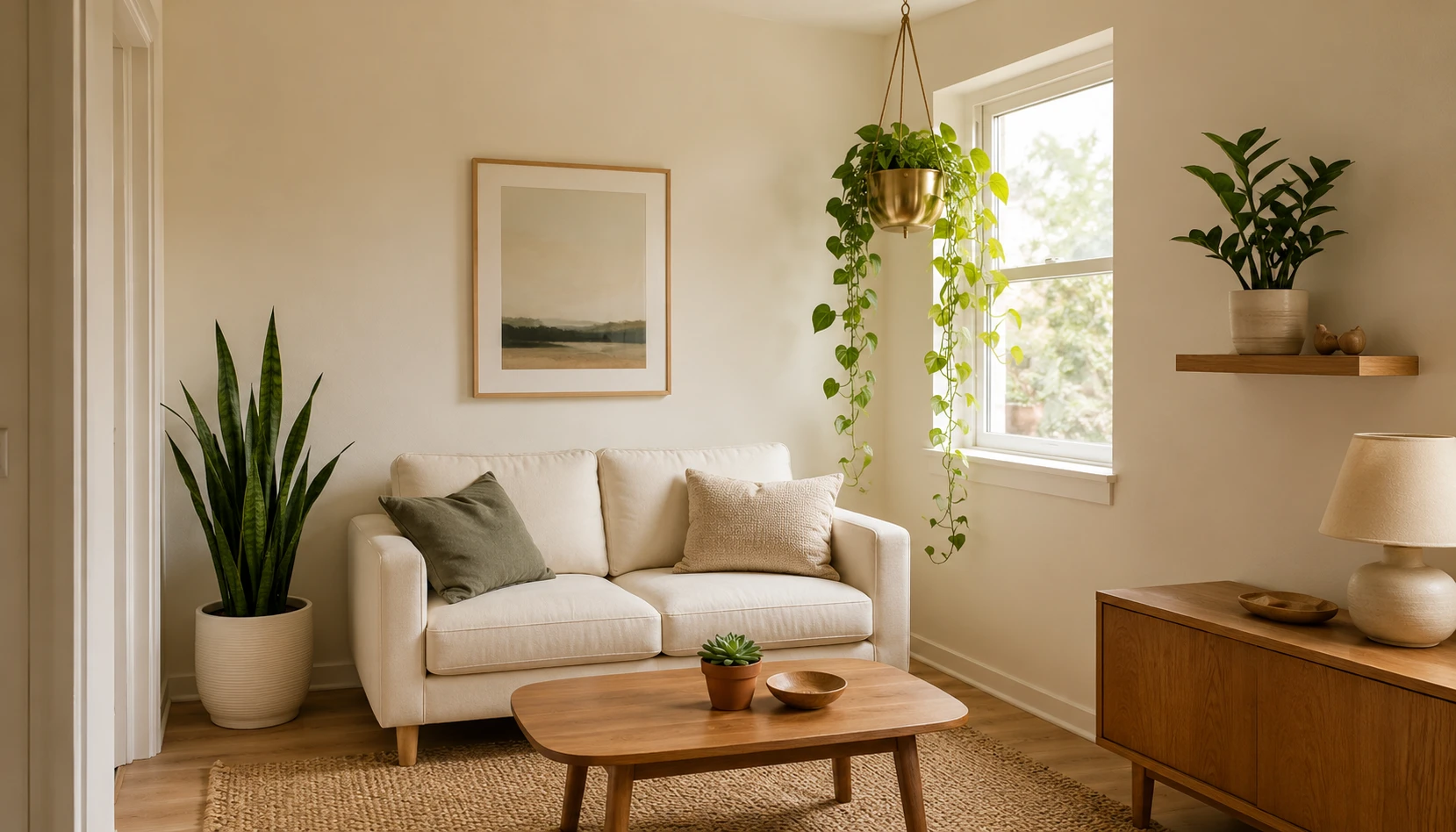
Small living rooms can absolutely benefit from plants. The trick is choosing the right plants and placing them strategically rather than crowding the space.
For more small living room ideas see our complete guide on Bright Small Living Room Tips for additional context.
Best plants for small living rooms:
Pothos in a hanging basket: uses vertical space rather than floor space. Cascading vines add depth without taking up floor area.
Small snake plant on a shelf: adds vertical architectural interest with minimal footprint. A 12-inch snake plant on a floating shelf adds presence without crowding.
Trailing pothos on top of a bookcase: combines functional storage with greenery. The vines soften hard furniture lines.
Small ZZ plant in a corner: tolerates low light common in small apartments. Stays compact for years.
Compact peace lily on a side table: provides flowering interest without taking up floor space.
Tips for plants in small living rooms:
- One statement plant works better than three medium plants in compact spaces
- Vertical placement (shelves, hanging) saves precious floor area
- Trailing plants from elevated spots use empty vertical space
- Match pot color to your decor palette for visual cohesion
- Resist the urge to add too many plants; restraint shows intentional design
How to Style Houseplants in Your Living Room
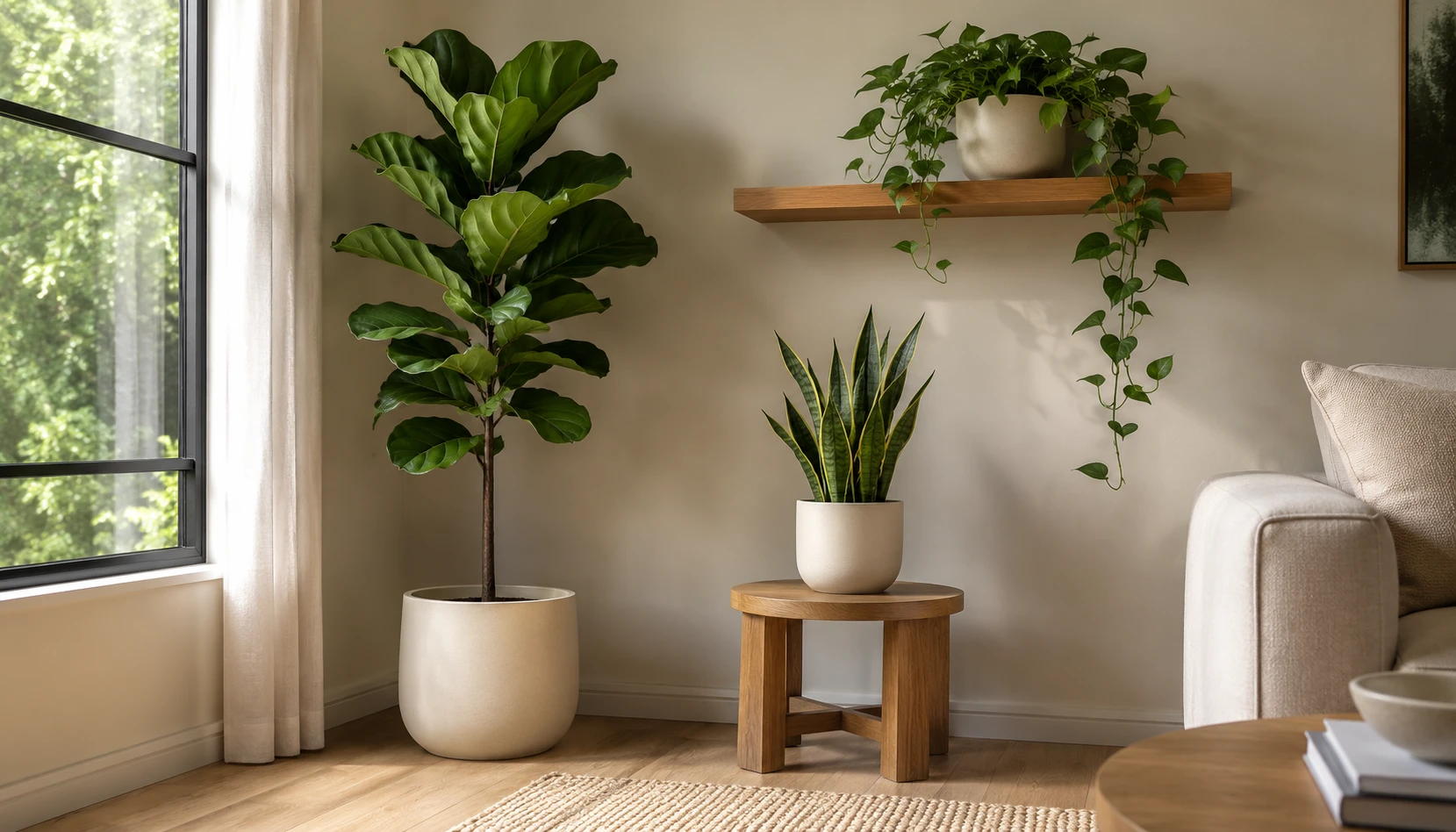
The same plants can look magazine-quality in one living room and chaotic in another. Here is what makes plant styling work:
Vary the heights. Group plants at different heights: one tall floor plant, one medium tabletop plant, one trailing plant from a shelf. The visual variety creates depth.
Use the rule of three. Group plants in threes rather than pairs. Three plants of varying sizes feel intentional. Two feel symmetrical and stiff.
Choose consistent pot colors. Pick a pot color palette and stick to it. Cream and terracotta. Black and natural. Avoid every pot being a different color.
Match pot to plant scale. Small plants in massive pots look lost. Large plants in tiny pots look top-heavy. The pot should be slightly larger than the plant root ball.
Use natural materials. Terracotta, ceramic, woven baskets, natural wood. Avoid plastic if possible.
Place plants near light sources. Plants need light to thrive AND look their best. A spotlight from a nearby lamp creates beautiful evening drama.
Edit ruthlessly. Three perfectly styled plants beat ten randomly placed ones. Less is more in plant styling.
Allow space around each plant. Plants need room to breathe visually. Crowding plants together creates visual noise.
Consider seasonal rotation. Move plants slightly with the seasons to find their best light. They will reward you with growth.
Common Living Room Plant Mistakes to Avoid
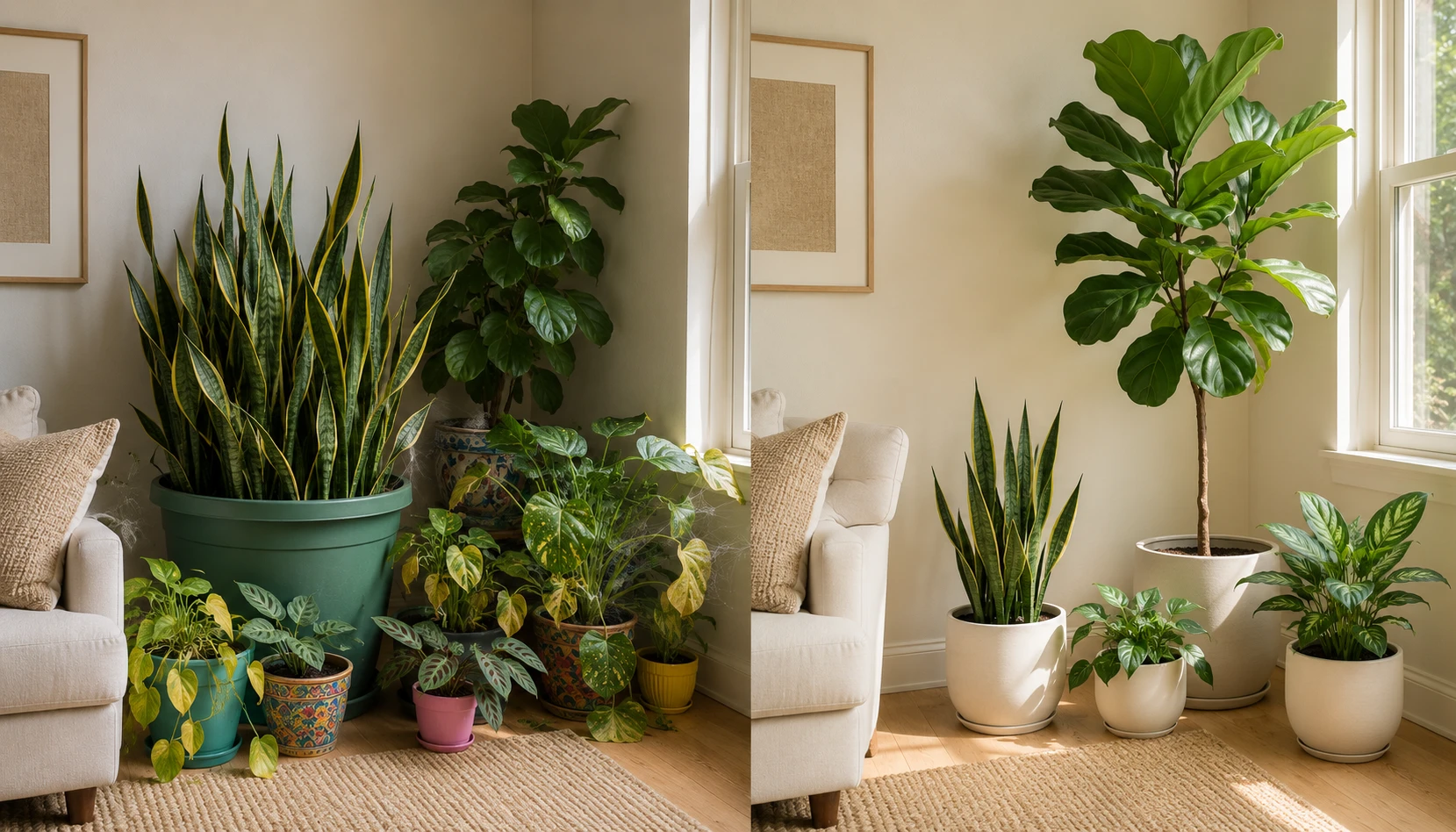
Final guidance: the most common mistakes that make living room plants struggle.
Mistake 1: Overwatering. The single most common plant killer. More plants die from too much water than too little. Always check soil before watering.
Mistake 2: Wrong light placement. A plant that needs bright light in a dark corner will slowly die. Match the plant to your actual light conditions.
Mistake 3: Buying plants for looks not lifestyle. A fiddle leaf fig is gorgeous but high-maintenance. If you travel or forget to water, choose a snake plant or ZZ plant instead.
Mistake 4: Pots without drainage. Decorative pots without drainage holes drown plants. Always use a pot with drainage, or place a smaller drainable pot inside a decorative one.
Mistake 5: Moving plants constantly. Plants establish to their location. Constant moving stresses them. Find the right spot and leave them.
Mistake 6: Ignoring humidity. Most houseplants come from humid environments. Indoor air, especially in winter with heating, is very dry. Group plants together to create humidity, mist regularly, or use a humidifier.
Mistake 7: Wrong pot size. Repotting into massive pots before the plant is ready causes root rot. Increase pot size gradually as the plant grows.
Mistake 8: Neglecting pest checks. Spider mites and mealybugs love indoor plants. Check leaves regularly. Catch problems early.
Mistake 9: Mixing too many plant styles. Five different types of plants in one corner creates visual chaos. Group similar plants for design impact.
Mistake 10: Skipping the trial period. Buy one plant first to see if you can keep it alive before investing in five. Build your plant knowledge gradually.
Plants are the easiest, most cost-effective way to take a living room from styled to genuinely alive. Start with one beginner-friendly choice, a snake plant or a pothos, and notice how much warmth and life it brings to your space. Then add another. Within a year you will have a living room that feels like a sanctuary.
For matching home decor ideas see our Bright Small Living Room Guide and Olive Green Kitchen Ideas to bring earthy 2026 design throughout your home.