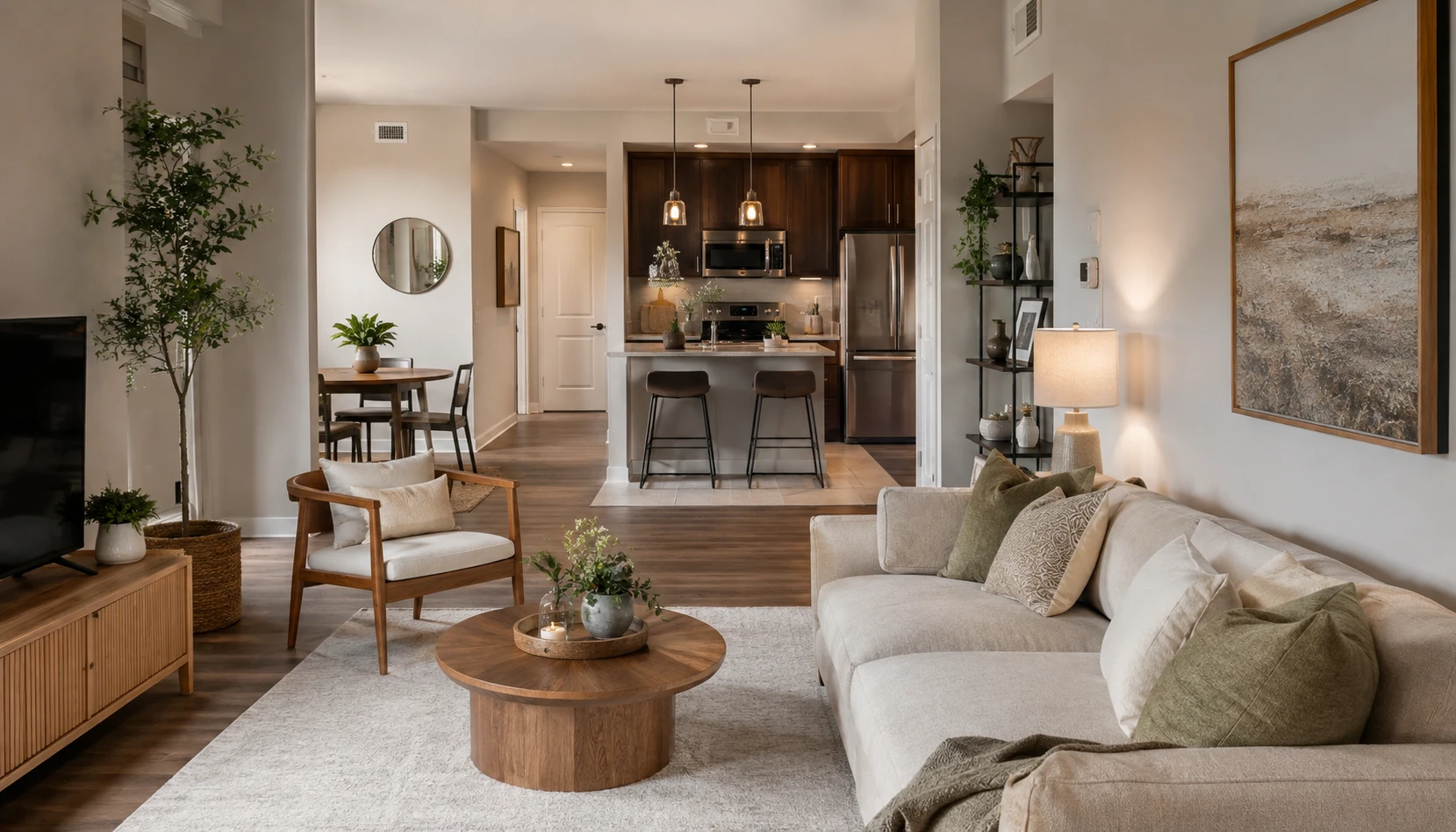
The hardest part of decorating a rental is not always the size. It is the feeling that the room belongs to the building more than it belongs to you.
The walls are whatever color was easiest to repaint. The ceiling light is usually too bright. The flooring, doors, and cabinets may not relate to the furniture you already own. Since those fixed finishes are not changing, it is easy to keep treating the whole apartment as temporary.
A rental starts feeling more like home when the parts you control begin working together. Lighting gets warmer. Curtains improve the windows. Rugs connect the furniture. Storage appears where clutter actually happens. Personal pieces show up without covering every wall.
Why Rental Rooms Feel Temporary
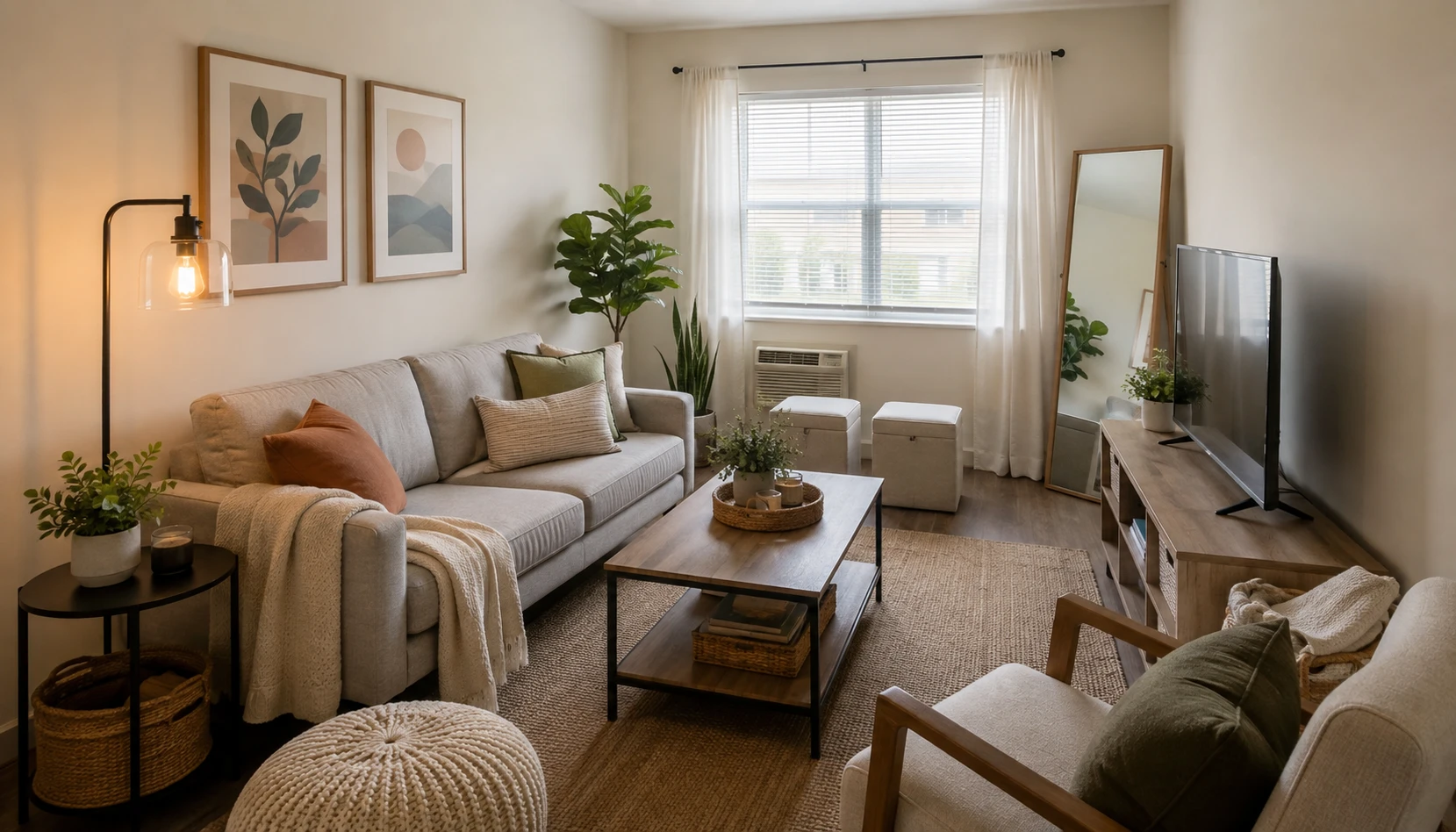
Rental rooms usually have three problems working together.
The lighting is flat. One ceiling fixture makes the room feel functional rather than comfortable.
The furniture floats. A small rug, short curtains, and artwork that is too small can make every piece feel separate.
The personal details are missing or overcompensating. Some renters never unpack fully. Others cover every surface because they are trying to add personality quickly.
The solution is not to hide every rental finish. It is to create a stronger layer over them using light, textiles, scale, and repetition.
Replace Harsh Light With Layers
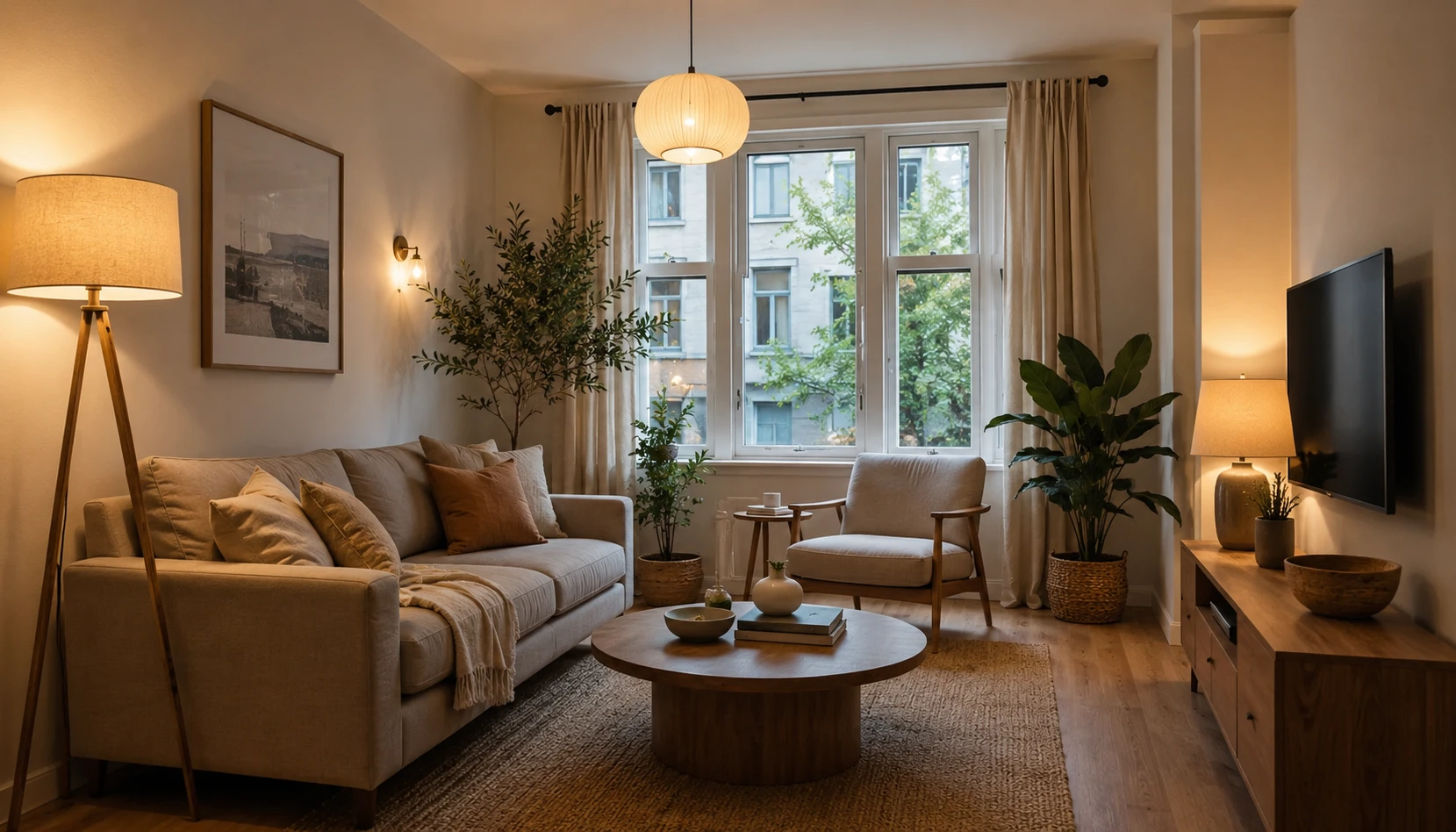
Add a floor lamp beside the sofa or reading chair, then a smaller lamp on a console, shelf, or bedside table. Use warm bulbs in the same general color temperature.
Plug-in sconces can work where floor space is limited, but check the mounting method and lease rules. Better light makes every other choice easier to judge.
Hang Full-Length Curtains
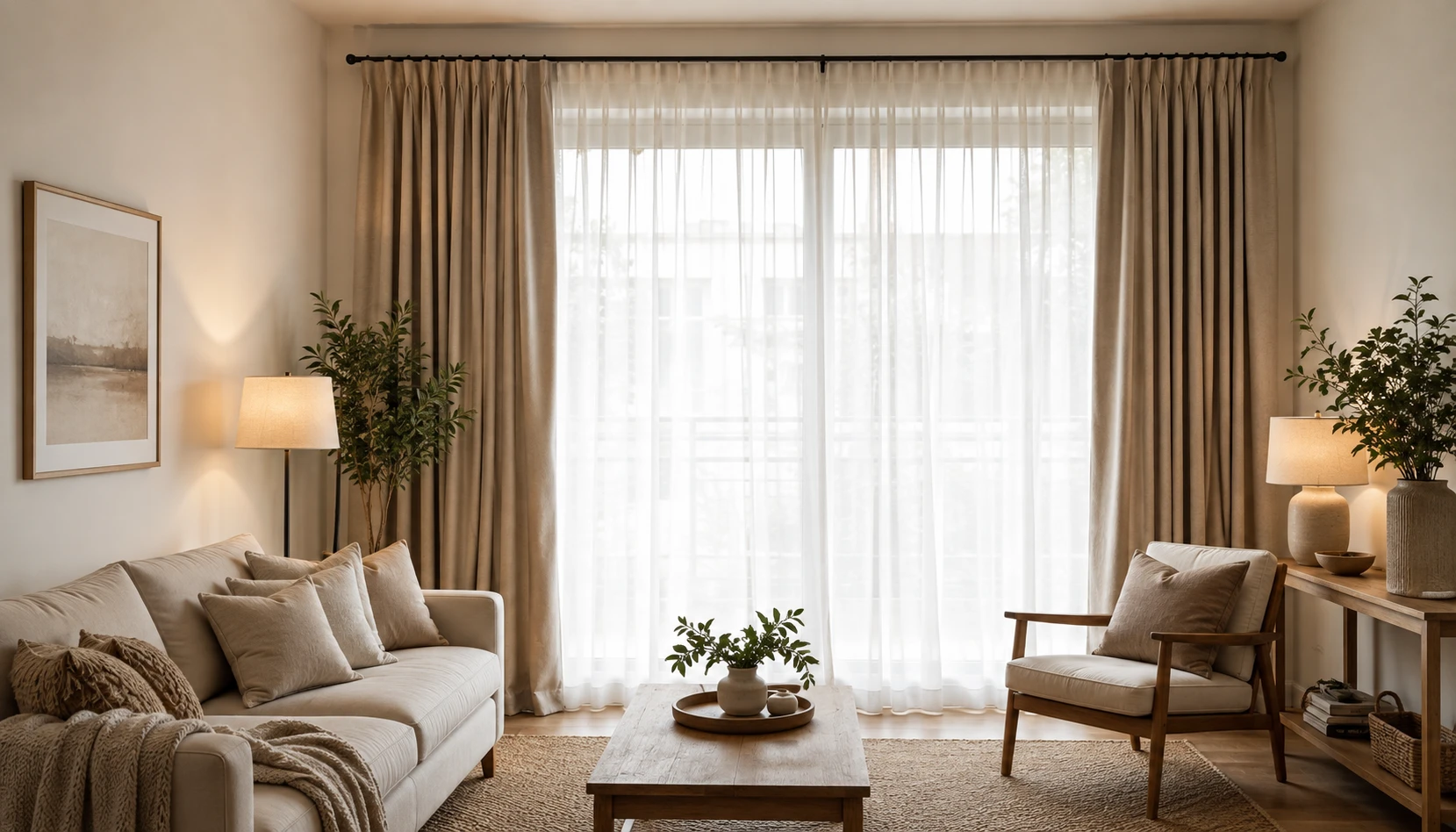
Use panels that reach close to the floor, and hang the rod above the frame if your lease and wall construction allow it. Extending the rod beyond the window lets more glass stay exposed.
If drilling is prohibited, a tension rod is safer. Do not use adhesive hardware beyond its rated weight.
Use a Rug That Connects the Furniture
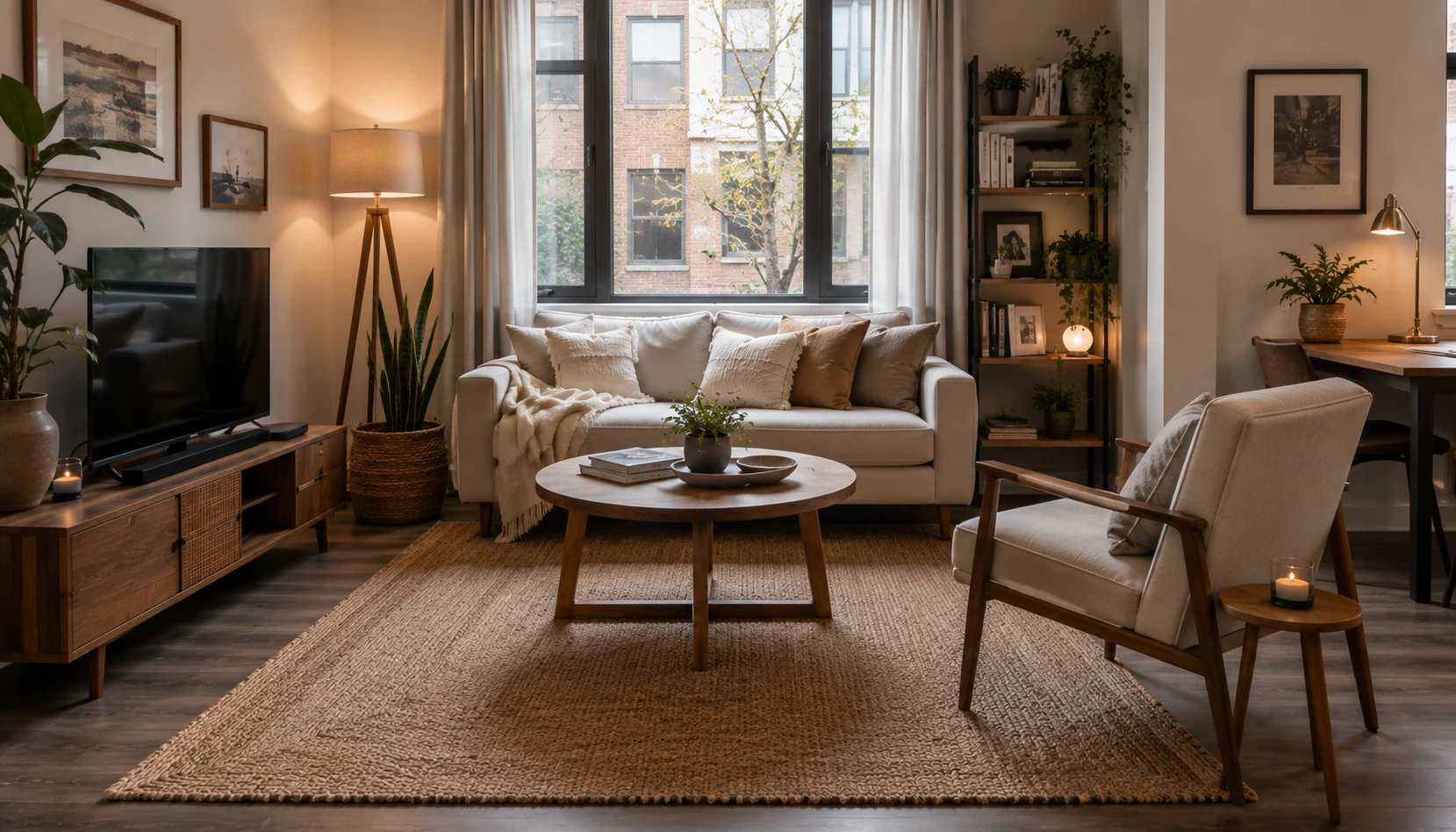
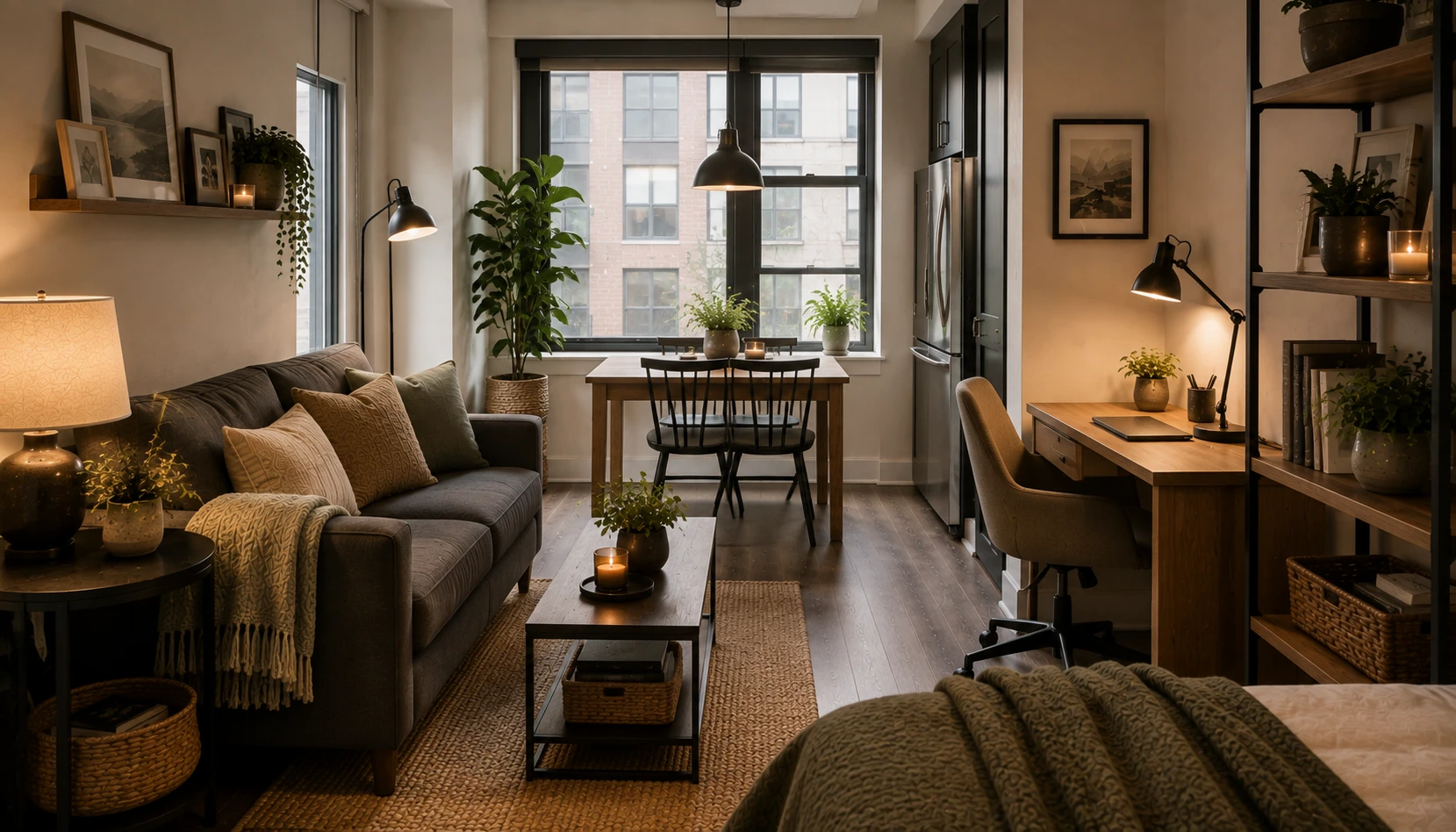
Choose a rug that allows at least the front legs of the sofa and chairs to sit on it. In open-plan apartments, the rug also defines the living area without adding a divider.
Mark the dimensions with painter’s tape before buying. This prevents a large return.
Carry One Palette Through the Apartment
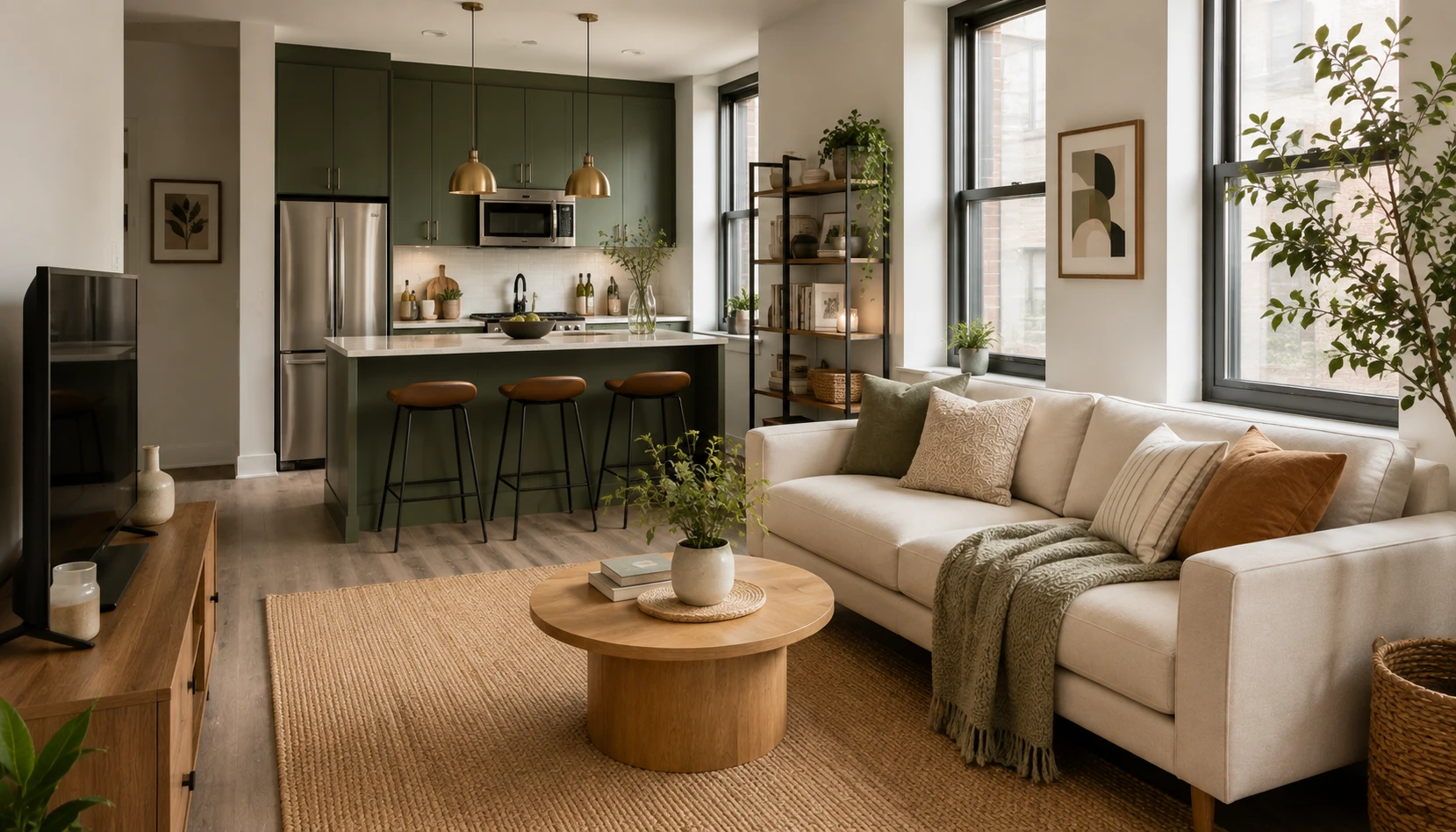
Choose one neutral base, one supporting color, and one wood or metal direction. Cream, sage, and warm wood are easy to carry from living room to bedroom. White, terracotta, and oak create a warmer result.
Repeat the color in different forms rather than buying matching sets.
Use Removable Wall Decor Carefully
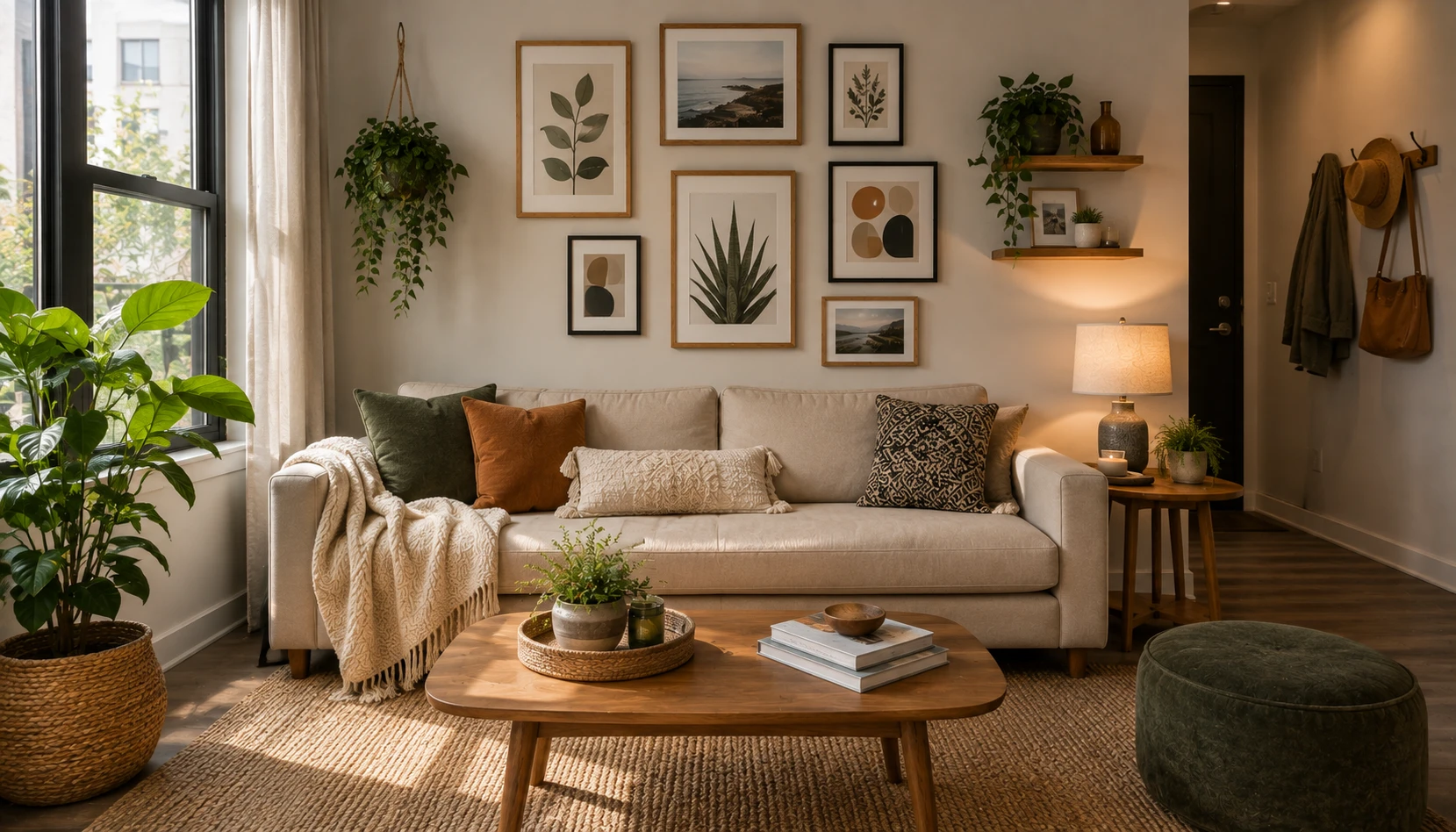
Removable does not mean risk-free on every wall. Paint age, texture, humidity, and adhesive quality affect whether a product comes off cleanly.
Test a hidden spot, use lightweight frames, stay below the weight limit, and follow the removal direction exactly.
Lean Art Where Hanging Is Awkward
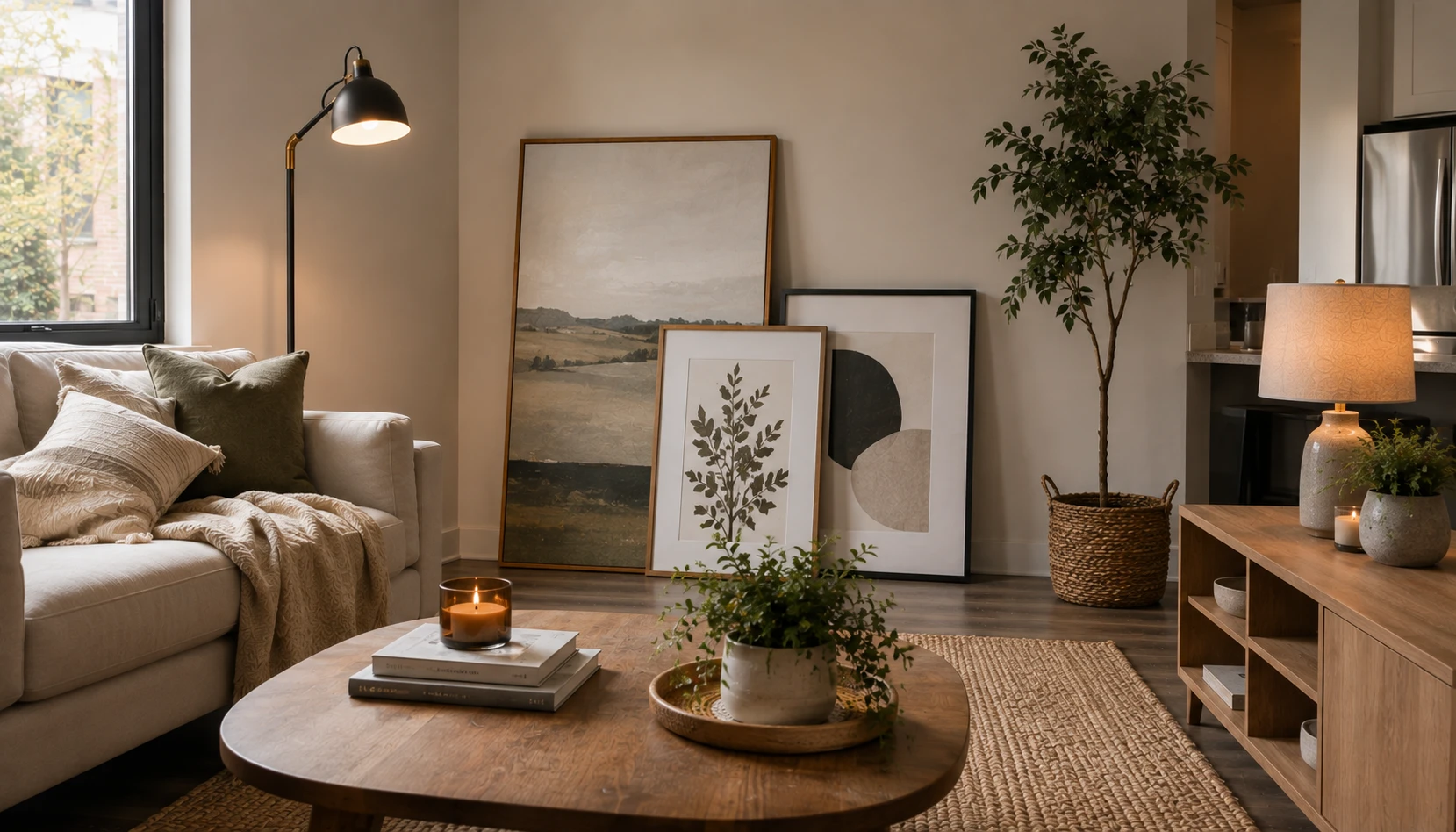
Leaning art works on a dresser, console, or deep bookcase. Choose one frame large enough to look intentional and secure it so it cannot slide or tip.
Keep the rest of the surface quiet. The point is to create a focal piece without drilling.
Add Color Through Textiles
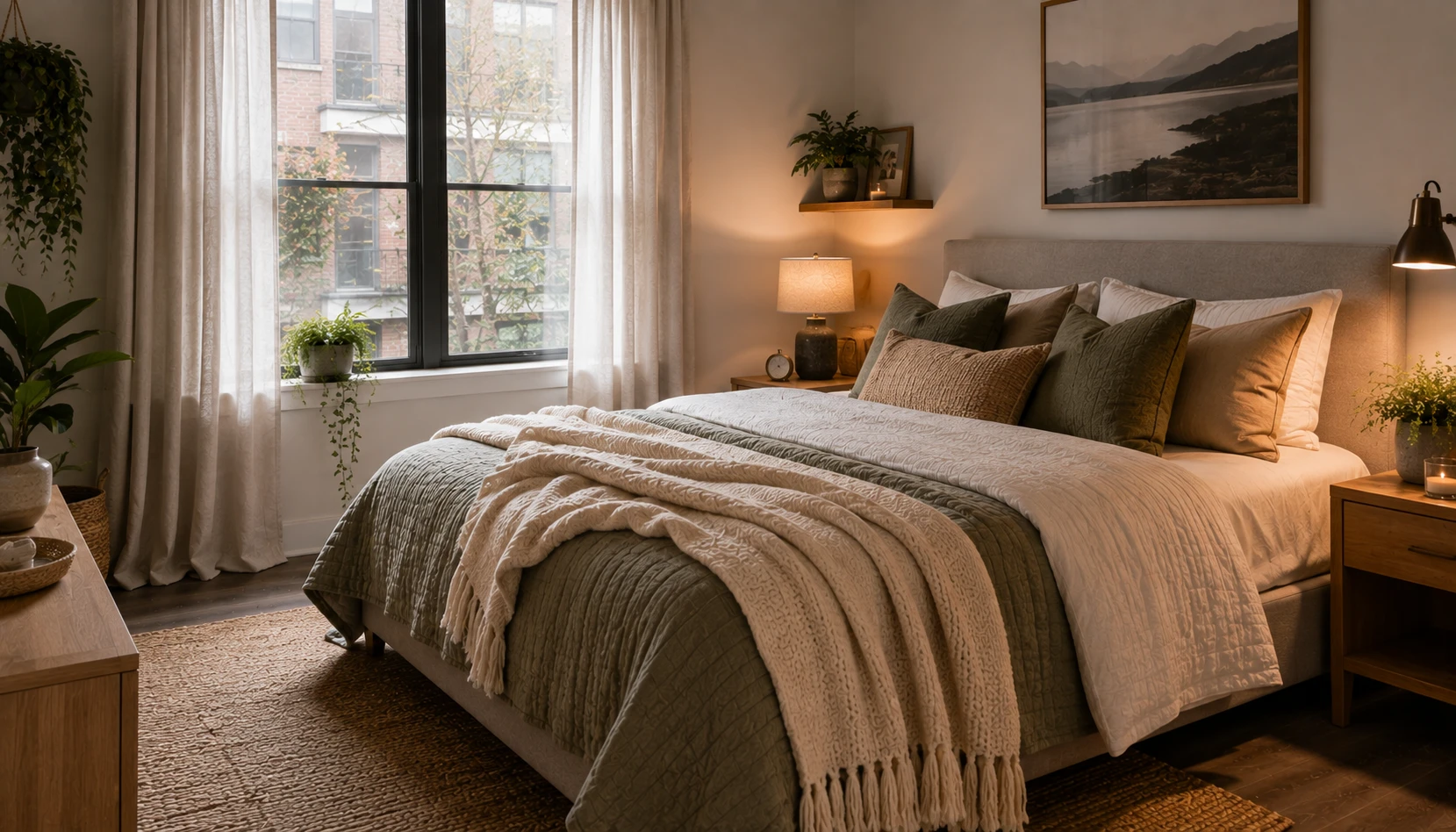
Pillow covers, throws, bedding, curtains, bath mats, and towels carry color without permanent change. Use washable covers and avoid creating a separate color story for every room.
The bed is the largest textile surface in most apartments, so solve that first. See Room Decoration Ideas for Small Spaces.
Use Plants to Soften Rental Finishes
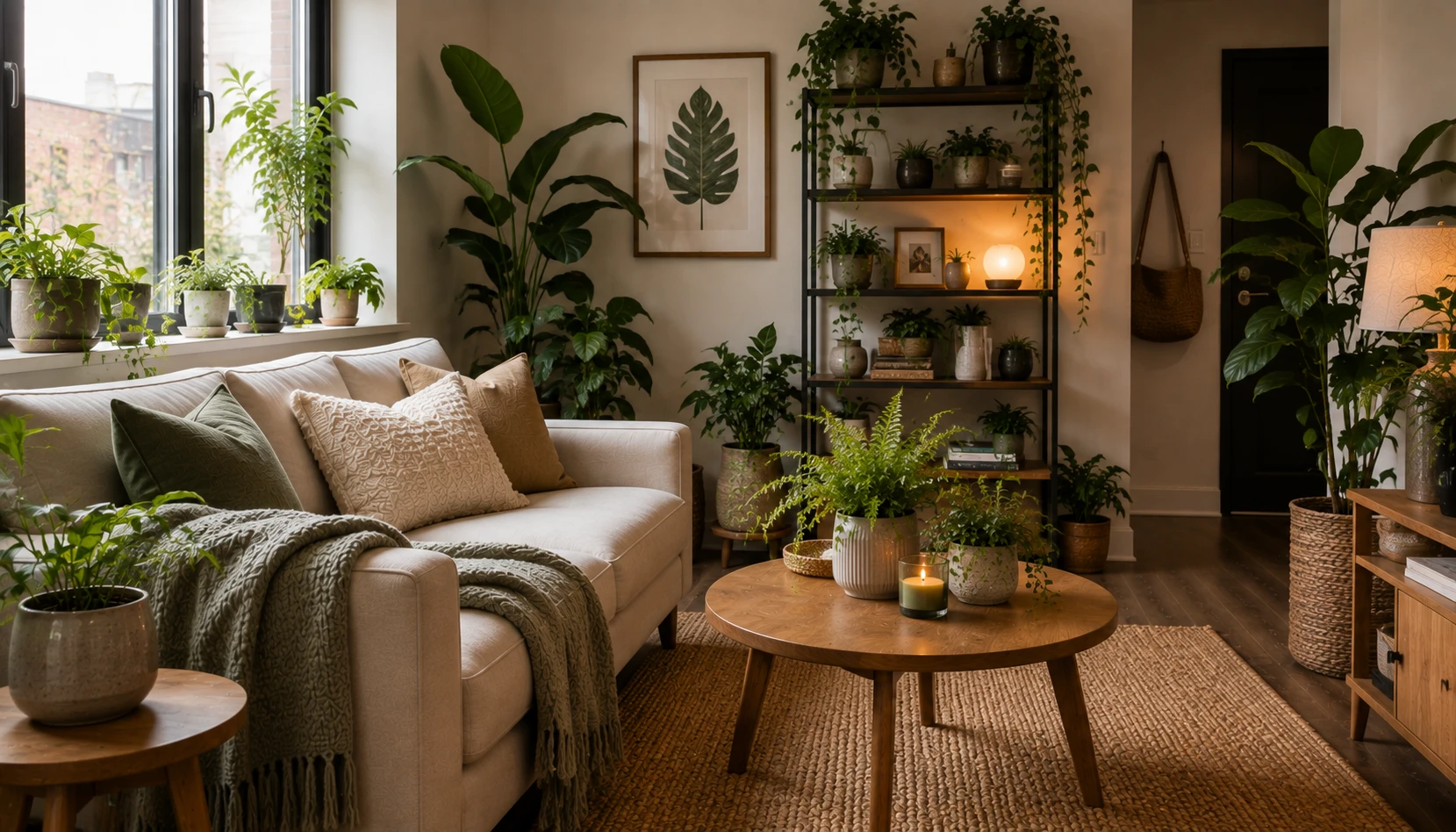
Rental interiors contain plenty of hard edges. Place a taller plant near a window, cabinet, or empty corner. Use a trailing plant only where it can receive the light and watering access it needs.
Choose plants for the apartment’s conditions. Best Houseplants for Your Living Room can help.
Create Storage Near the Problem
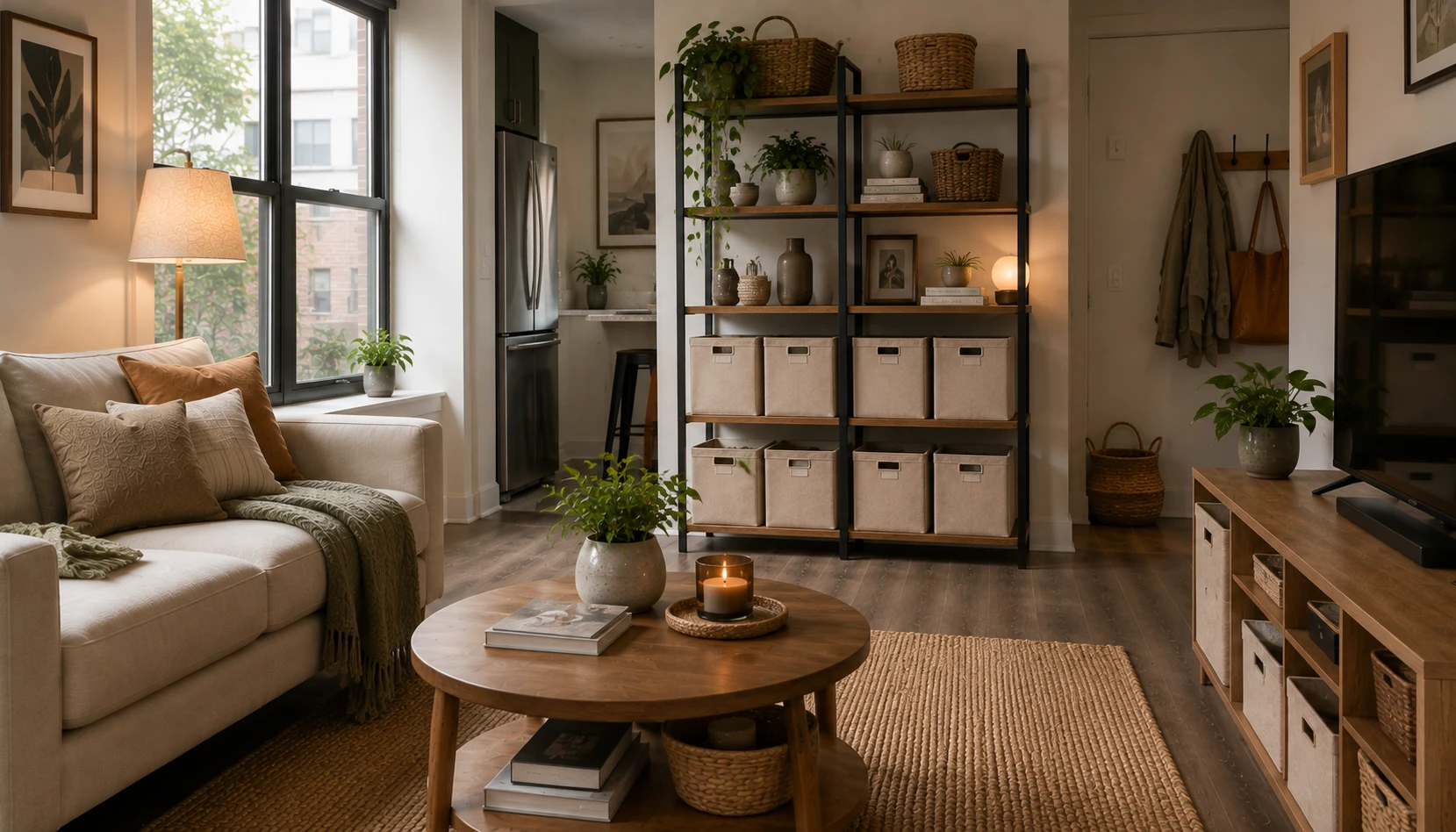
Shoes near the door need a basket there, not in a distant closet. Mail needs one tray where it is opened. Throws need a basket beside the sofa.
Freestanding shelves, over-door organizers, baskets, and narrow carts are useful because they can move with you.
Give the Living Room One Focus
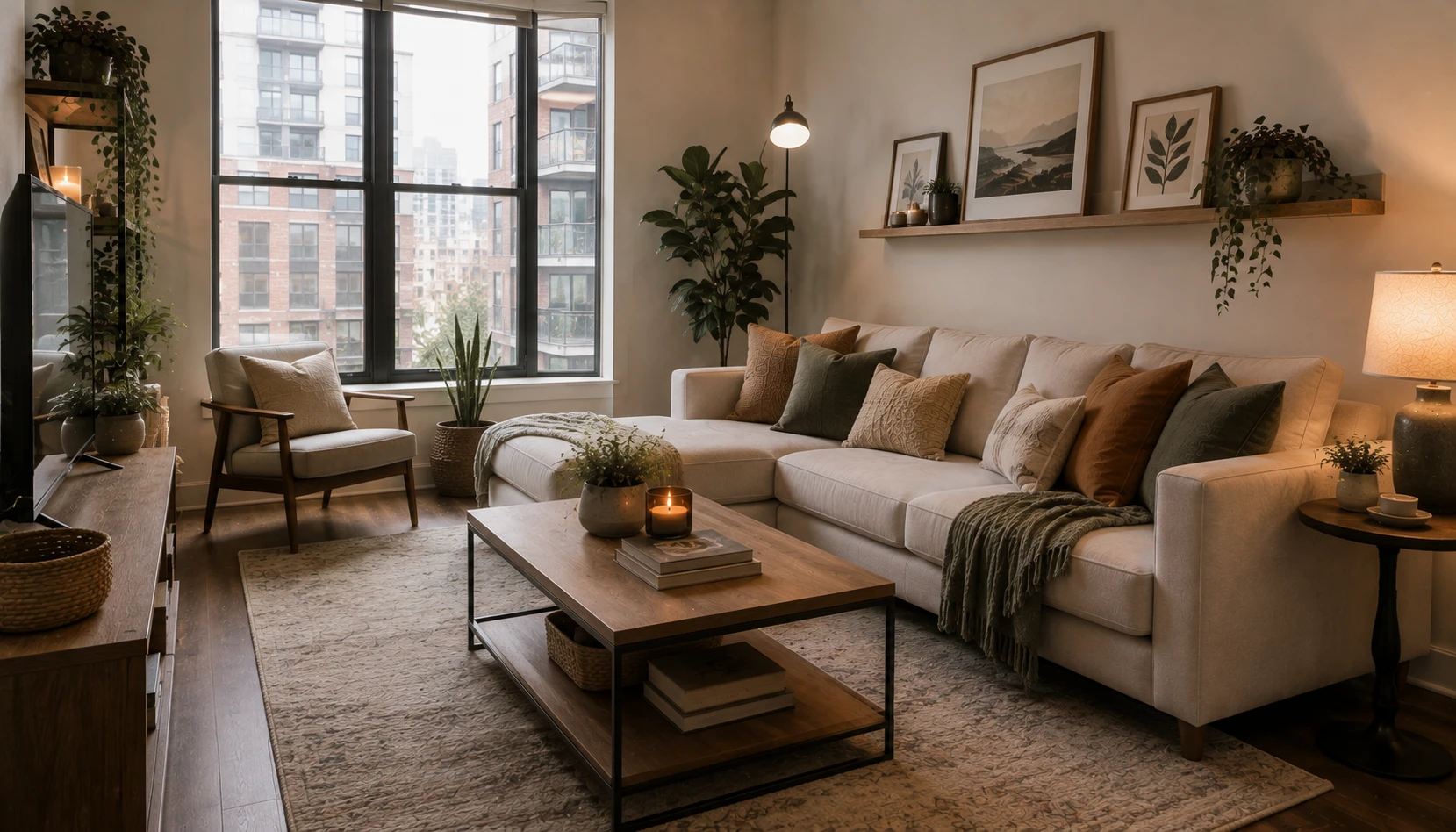
Choose one area to carry the room: the sofa wall, media wall, main window, or coffee table arrangement. If the sofa wall has large art, keep the television wall simpler.
For budget-conscious changes, see Small Living Room Ideas for Renters.
Make the Bed the Bedroom Anchor
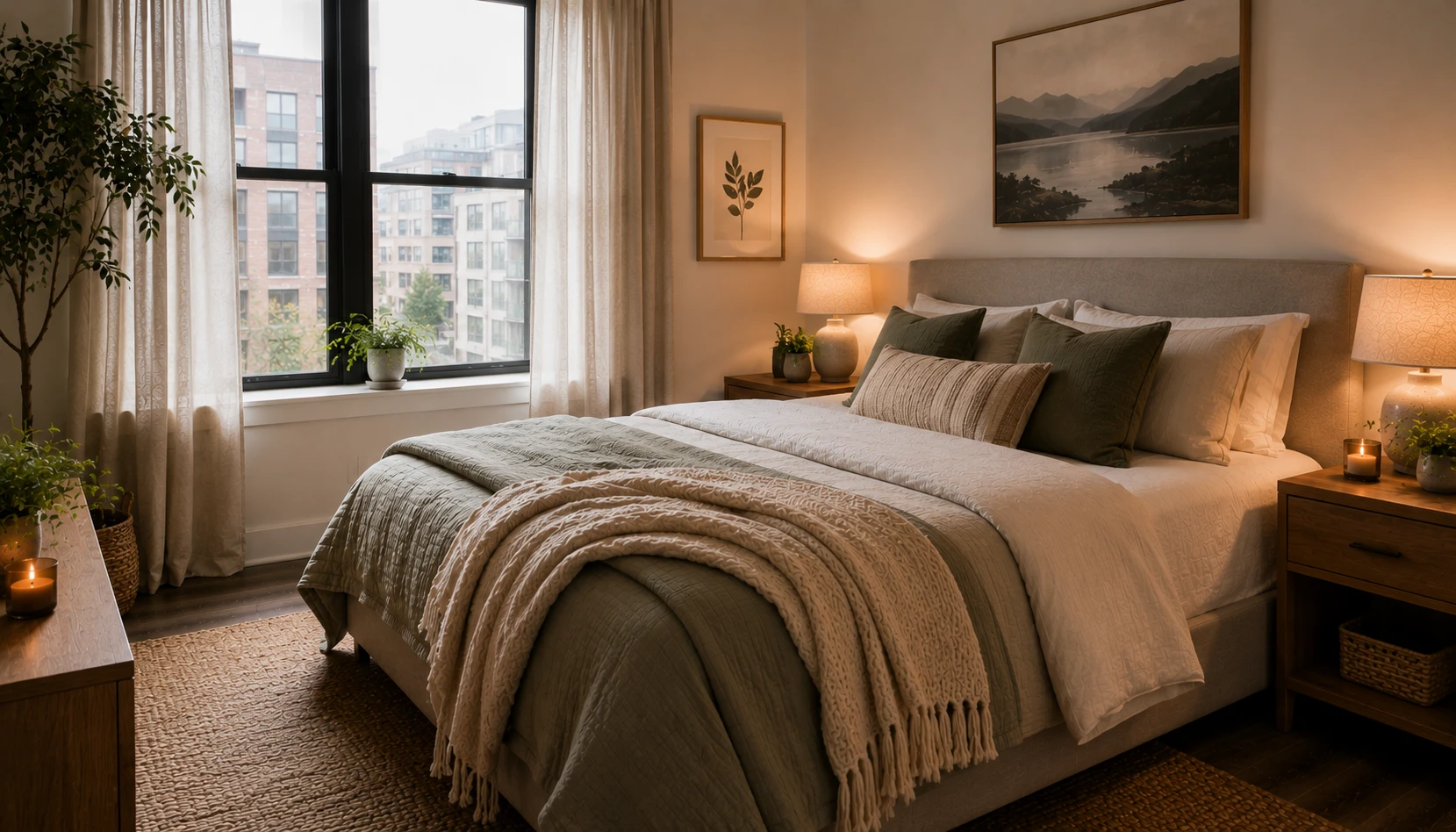
Use a simple bedding base, one folded throw, controlled pillows, and bedside light. Full-length curtains and a rug extending beyond the bed make the room feel more permanent.
If the walls cannot be painted, let the bedding carry the palette. See Bedroom Aesthetic Ideas.
Style One Useful Zone in the Kitchen or Bathroom
In the kitchen, group the oil, salt, and utensil container used daily on one tray. In the bathroom, coordinate towels, use one soap dispenser, and keep the vanity clear.
See Small Bathroom Ideas, Bathroom Decor Ideas on a Budget, and Small Kitchen Ideas.
Common Apartment Decorating Mistakes
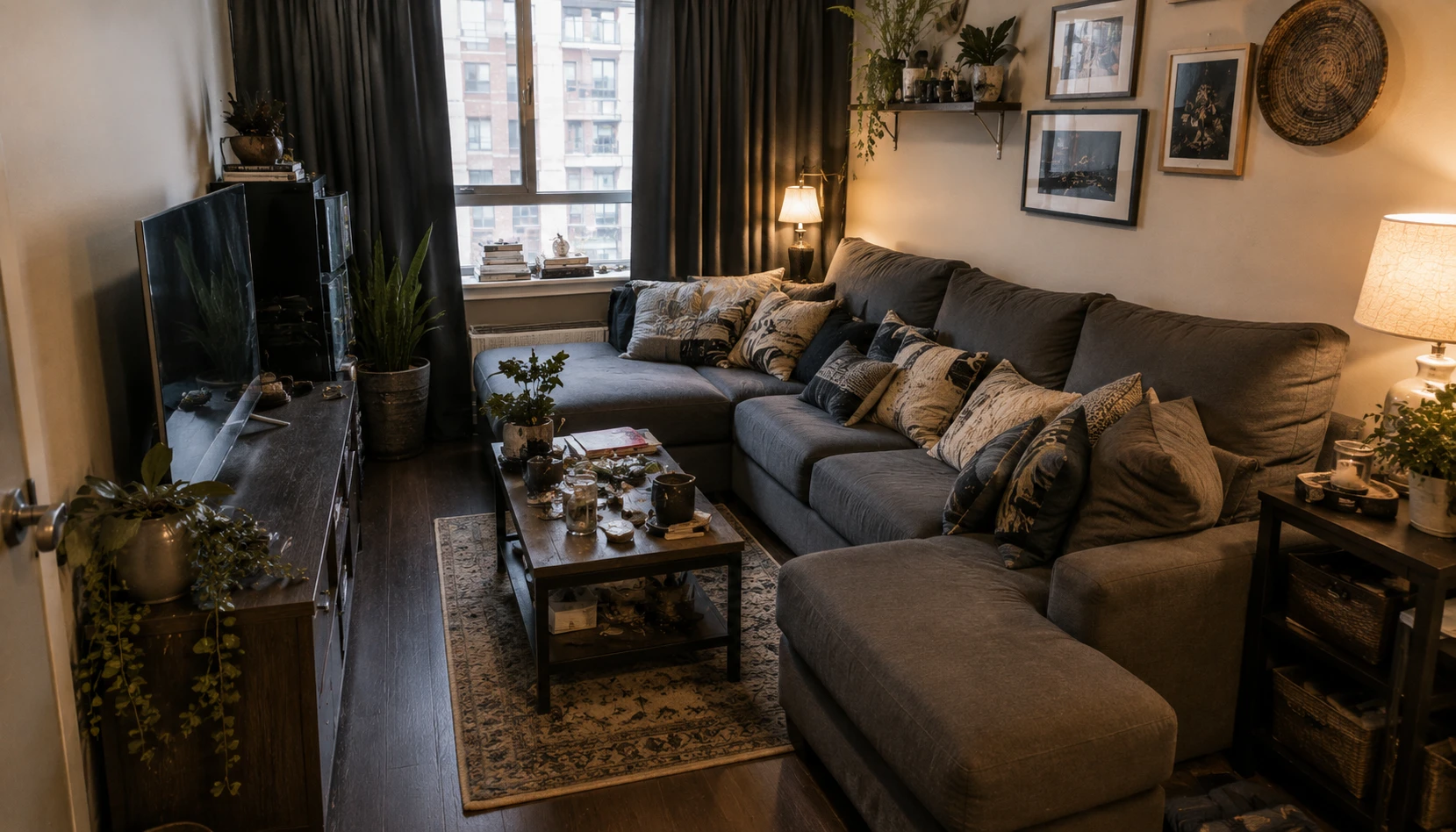
The most common mistake is trying to hide every rental feature at once. That leads to too many temporary products, too many small accessories, and not enough attention to bigger elements.
A tiny rug, short curtains, several unrelated colors, one harsh ceiling light, and every surface covered in decor will make a rental feel more fragmented. Buying furniture that only fits the current apartment can also become expensive after the next move.
Start with portable improvements that affect the whole room: lamps, curtains, rug scale, bedding, storage, and one shared palette. Add personal pieces slowly. A rental does not need to imitate a permanent house. It needs to support your routines and look as though you chose to live there.
For a whole-home approach to lighting, scale, color, and editing, read Home Inspiration Ideas next.