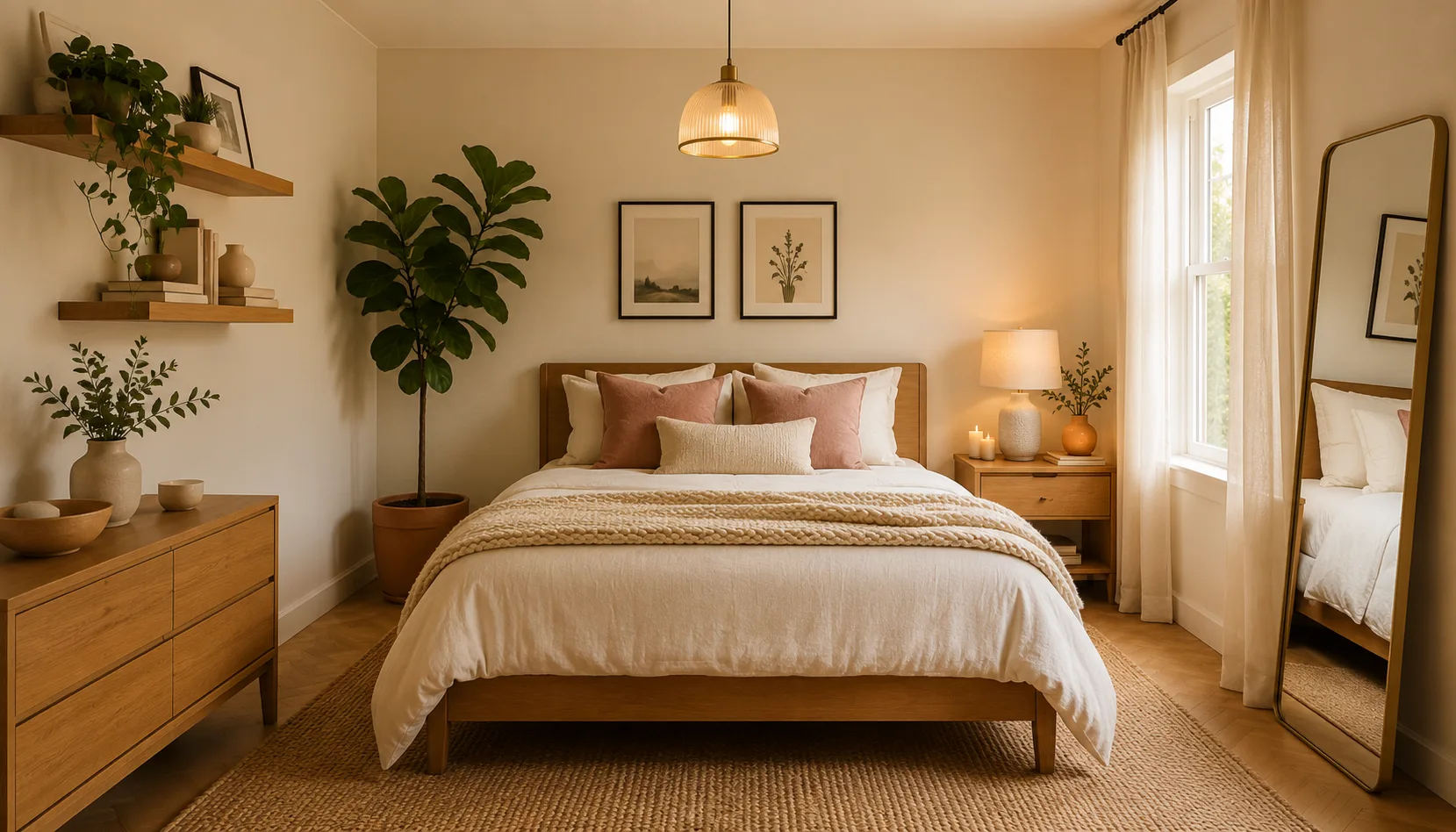
A small room is not a limitation. It is an opportunity. This is the fundamental truth that separates beautifully decorated small spaces from cramped, cluttered ones. The best small space decorators understand this. They do not try to make a small room feel larger by hiding and minimizing. Instead they maximize every inch with intention, personality, and thoughtful design.
In 2026, small space decoration has exploded as a design category. Search interest in room decoration ideas has grown noticeably on Pinterest this year. Small apartments, tiny bedrooms, and compact living spaces are no longer apologized for. They are celebrated as canvases for highly intentional, deeply personal design.
The constraint of limited square footage forces you to make meaningful choices. Every object must earn its place. Every color must work with the others. Every piece of furniture must serve a purpose and create beauty simultaneously. This pressure produces rooms with more personality, more intention, and more genuine beauty than many larger spaces.
Here are 12 proven room decoration ideas for small spaces that will transform your tiny bedroom, compact apartment, or minimal corner into a room that feels beautiful, personal, and genuinely large.
Why Small Space Decoration is Actually a Design Superpower
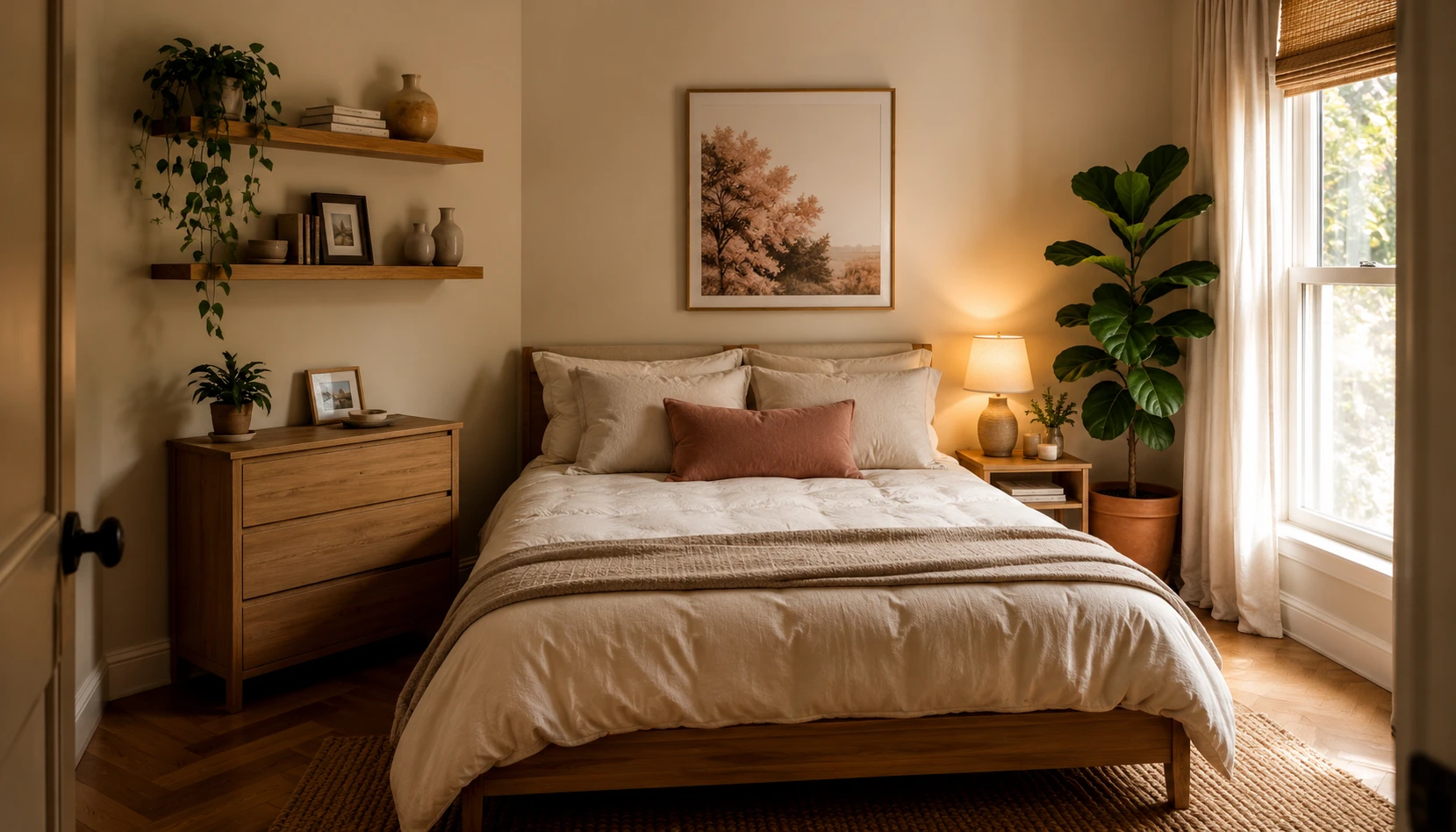
Small spaces are not a problem to solve. They’re an advantage to embrace, and it helps to understand why before getting into specific ideas.
Small spaces force intention. You cannot casually decorate a small room. Every object, every color, every piece of furniture must be deliberate. This intentionality naturally produces rooms with more personality and coherence than spaces where decoration happens without constraint.
Small spaces amplify personal style. In a large room you can hide behind generic furniture and neutral colors. A small room exposes everything. Your taste, your personality, your aesthetic preferences become visible immediately. This transparency forces authenticity.
Small spaces demand efficiency. Decoration in small spaces must work harder. One plant does more visual work in a tiny bedroom than three plants in a large room. One mirror reflects more light and creates more visual expansion. This efficiency produces elegant, refined results.
Small spaces cost less to decorate. You need fewer objects, less paint, smaller furniture. The money you save on decoration can be invested in quality pieces that will define the space for years.
Small spaces feel cozier. There is something inherently comforting about a well-decorated small room. The closeness of the walls, the intimacy of the scale, the sense of a complete world contained in a small footprint. Humans actually prefer this feeling when the space is designed well.
Small spaces photograph beautifully. On Instagram and Pinterest, small beautifully decorated rooms stop scrolls. They feel achievable. They inspire. Large generic rooms do not have the same impact.
The rooms that get saved, shared, and remembered are not the largest. They are the most intentional.
The Maximal Minimalism Approach
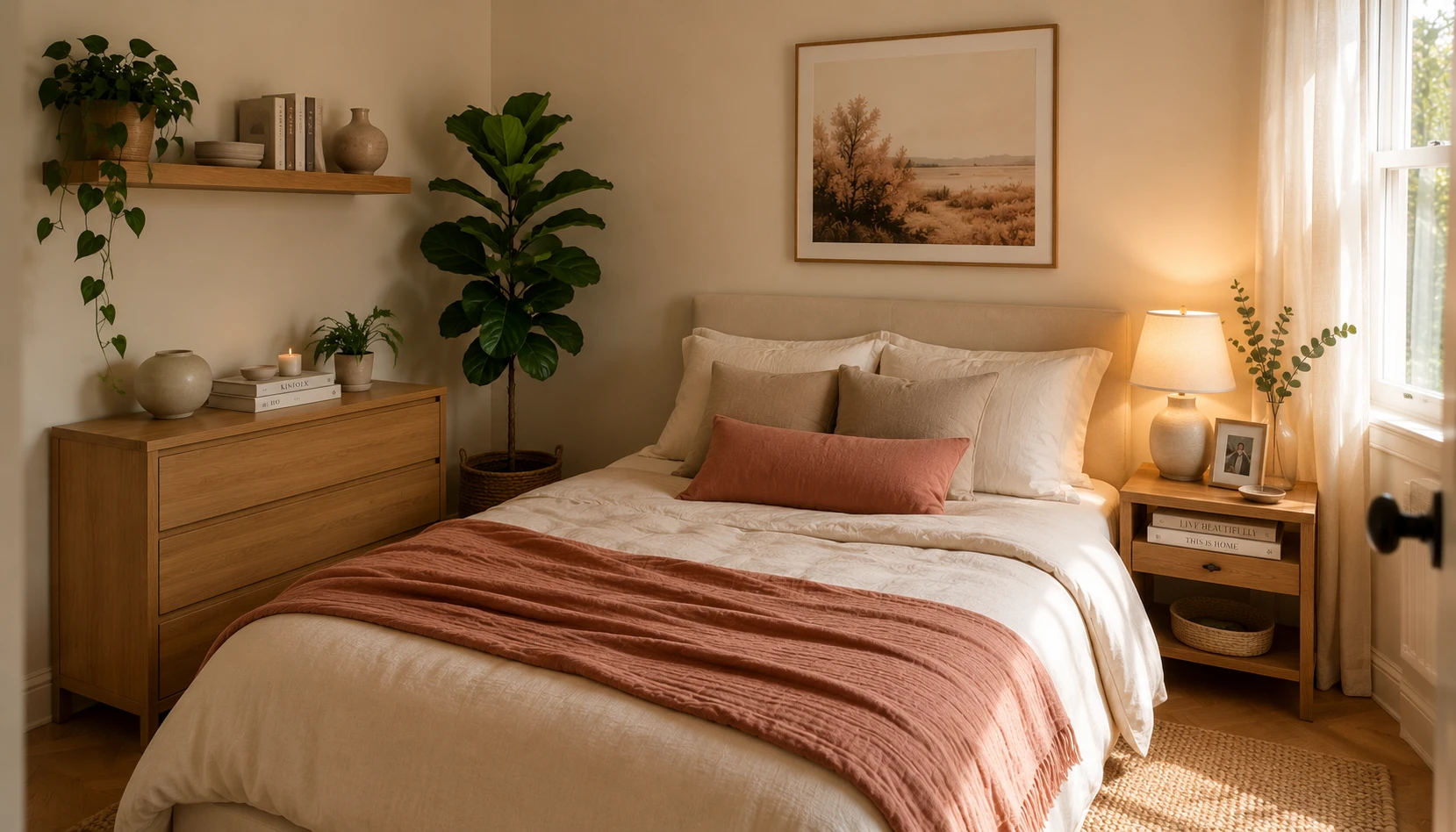
The best approach to small space decoration is what designers call maximal minimalism. Not pure minimalism which can feel cold and empty. Not maximalism which can feel overwhelming. Instead a careful balance where every object is chosen with intention but the room still feels warm, lived-in, and full of personality.
The rules of maximal minimalism for small spaces:
Every object must serve two purposes. A side table that holds a lamp and provides storage underneath. A bookshelf that holds books and displays objects. A plant that adds color and filters air. Nothing is purely decorative taking up space without function.
Each color takes up visual real estate. In a small room one additional color is more noticeable than in a large room. Choose your color palette carefully. Too many colors makes the space feel chaotic. The right palette makes it feel intentional and cohesive.
Negative space is as important as objects. Do not fill every surface and every wall. Breathing room is essential. Walls should have some clear uncluttered space. Surfaces should have empty areas. The empty space makes the decorated areas more impactful.
Quality over quantity always. One beautiful object beats five mediocre ones. One excellent piece of art beats a gallery wall of okay prints. In small spaces quality becomes even more important because every object is visible.
Personal touches make small spaces feel like home. Do not hide the things that matter to you. Your favorite book, a meaningful photograph, a handmade item. These personal touches in small spaces create immediate warmth and authenticity.
Layering creates depth without clutter. Multiple thin layers of decoration (textiles, plants, small objects, art) create visual richness without the weight of bulky furniture or excessive clutter.
This philosophy transforms small room decoration from something to be endured into something to be celebrated.
Vertical Styling: The Secret Weapon for Small Spaces
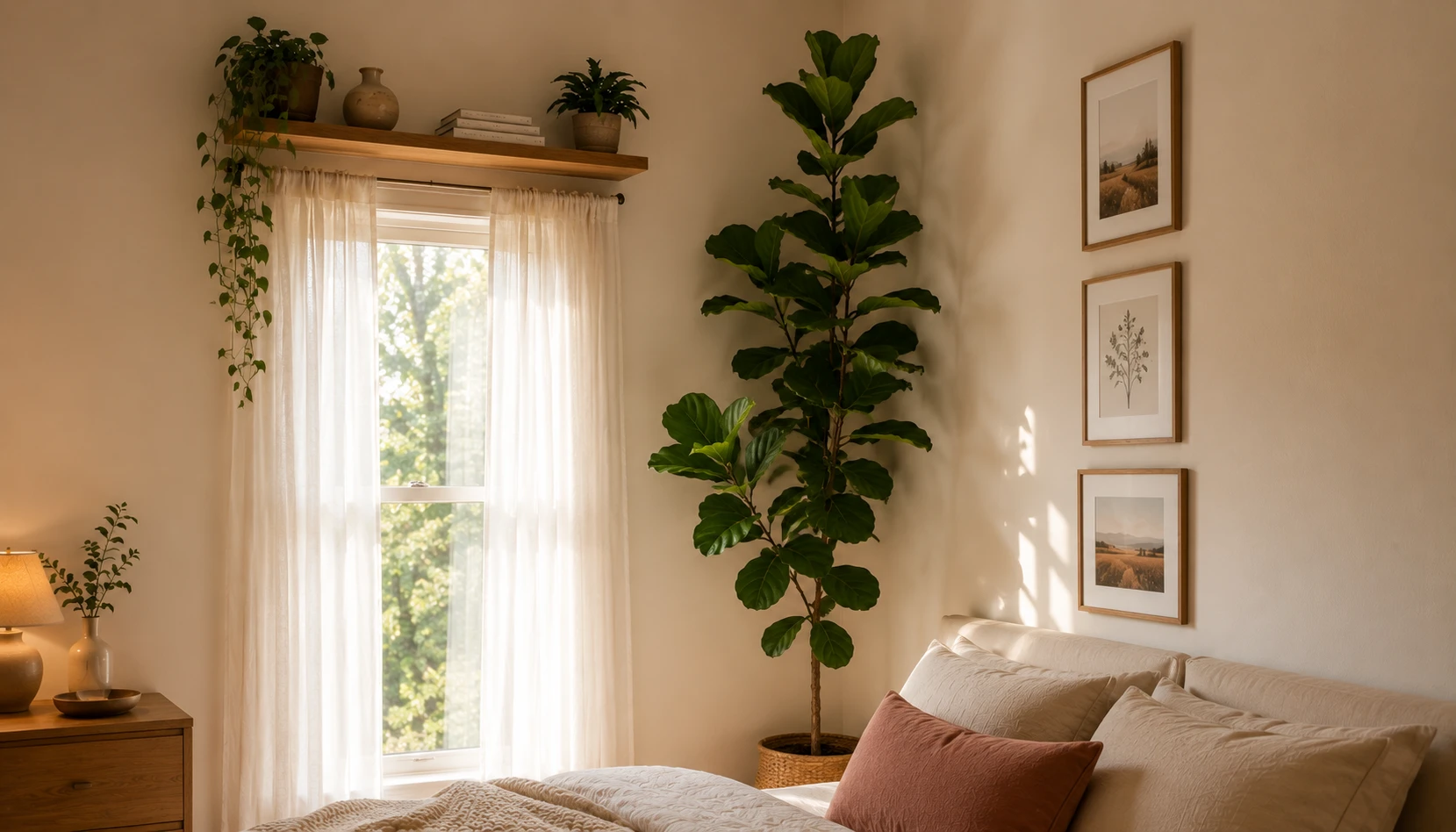
The single most effective decoration technique for small spaces is vertical styling. Instead of spreading decoration horizontally across the floor, direct it upward along the walls.
Floating shelves. Install two or three floating shelves at different heights on a wall. Style them with books, small plants, objects, art. This draws the eye upward making ceilings feel higher and creates visual interest without using any floor space.
Tall plants. A single tall plant in a corner draws the eye upward and makes the room feel more spacious. The vertical line of the plant stem and the height it reaches creates the visual impression of a larger room.
Wall-mounted storage. Floating shelves, pegboards, wall-mounted baskets. All storage that moves up the walls instead of consuming floor space keeps small rooms feeling open.
Vertical wall art. A tall narrow framed print or series of frames arranged vertically on a wall creates height and draws the eye upward.
Ceiling-height curtains. Hang curtains from ceiling to floor rather than from the window frame. This creates the impression that the ceiling is higher than it actually is.
Wall-mounted lighting. Brass wall sconces, hanging pendant lights, wall-mounted shelves with lighting. All vertical lighting sources rather than floor lamps.
Tall narrow furniture. Instead of a wide low dresser, choose a tall narrow one. Instead of a squat bookcase, choose a tall slim one. The vertical orientation makes the room feel larger.
The principle is simple but powerful. Small rooms need to go UP not OUT. Train your eye and your decoration style to move vertically and your small space will feel dramatically larger while maintaining all the warmth and personality that makes it special.
For more on small living rooms see our complete guide on Bright Small Living Room: 10 Ways to Make It Feel Bigger.
Layered Lighting: The Most Impactful Small Space Decoration
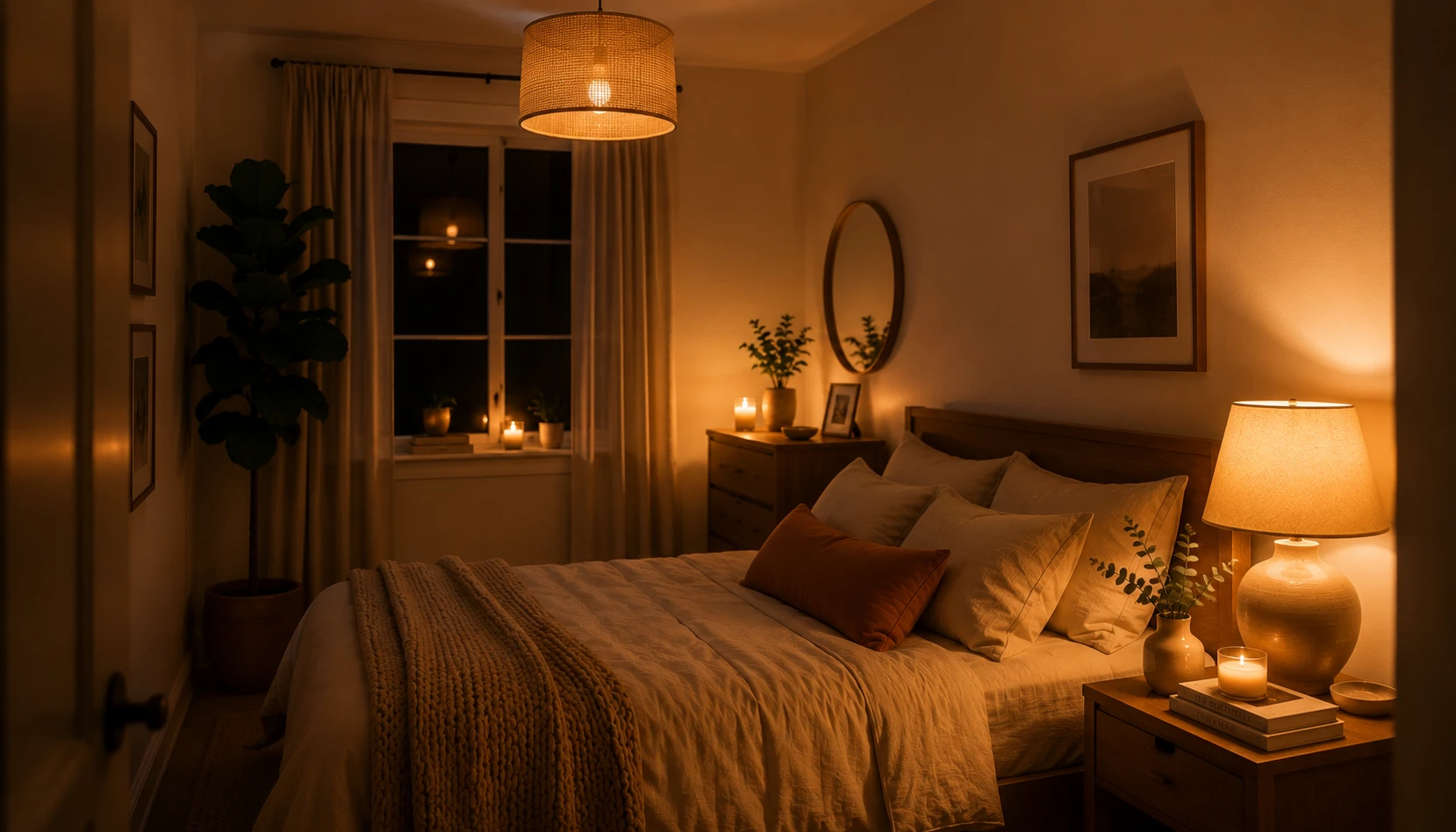
If you can only implement one room decoration idea from this guide, make it layered lighting. Nothing transforms a small space more dramatically than multiple light sources at different heights creating warm ambient light.
Layer 1 — Ambient overhead light. A ceiling fixture or statement pendant light that illuminates the entire room. In small spaces this should be warm white (2700K) never cool white which makes small rooms feel cold.
Layer 2 — Task lighting. A bedside lamp, a desk lamp, a reading light. This functional layer also adds warm glow at mid-height drawing the eye around the room.
Layer 3 — Accent lighting. Candles at counter level, string lights tucked above shelves, LED strips under floating shelves. This intimate layer at various heights creates beautiful visual depth.
Bonus — Dimmer switches. Essential in small rooms. Being able to lower the light in the evening transforms the space from bright and functional to cozy and intimate.
The magic happens in the interaction. Three warm light sources at different heights create pools of light that make the space feel larger and more dimensional than a single bright overhead light. The warm color temperature (2700-3000K) is critical. Cool white light makes small rooms feel cold and cramped. Warm light makes them feel cozy and intentional.
Invest in quality lighting before investing in furniture. Lighting is the cheapest decoration that creates the biggest impact.
Color Strategy for Small Room Decoration
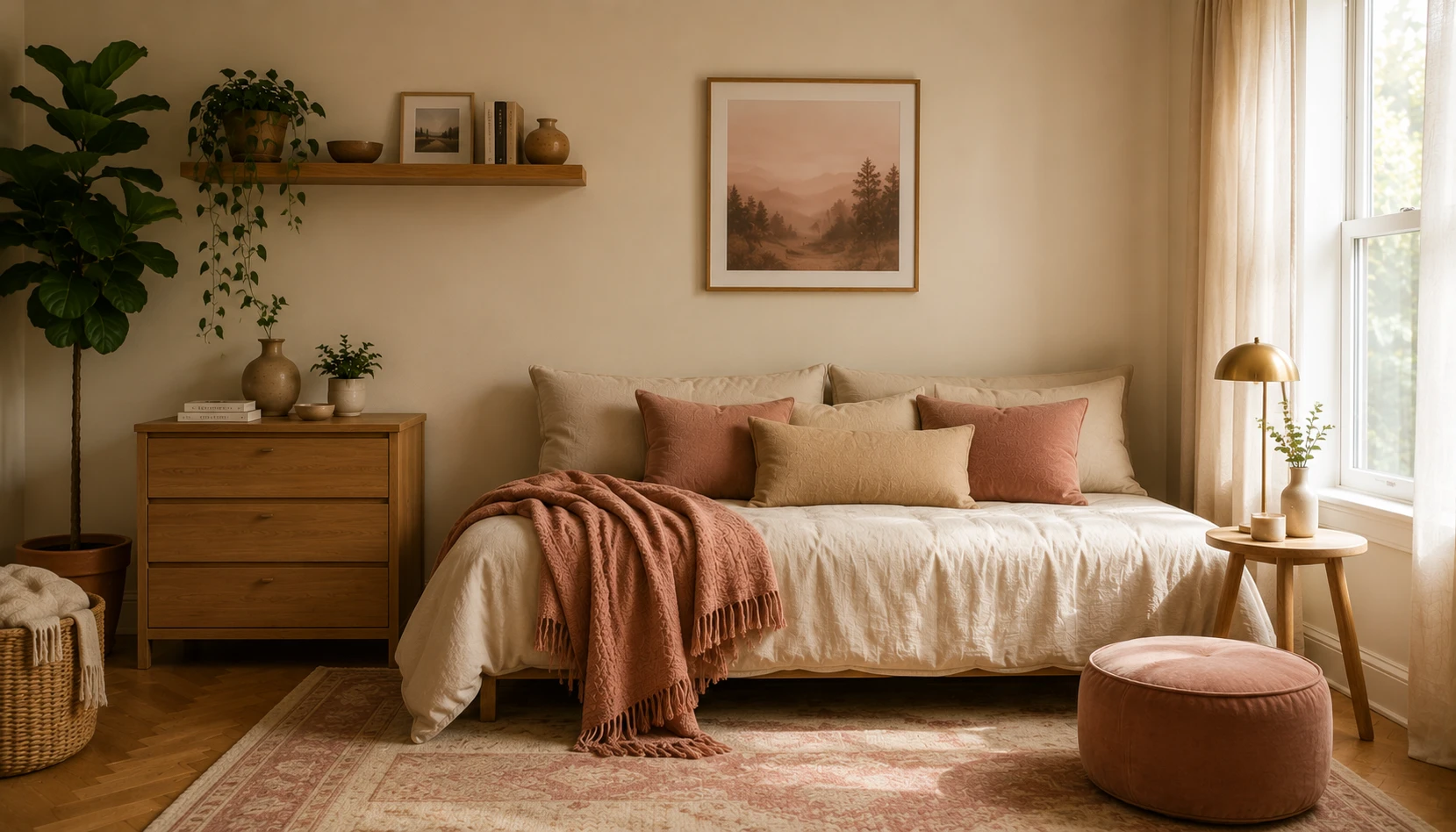
Color choice has exponential impact in small spaces. One additional color that might be unnoticeable in a large room becomes a dominant visual element in a small room. Choose deliberately.
The 60-30-10 rule for small spaces. Sixty percent neutral base color (walls, large furniture, bedding). Thirty percent secondary color (accents, medium-sized objects). Ten percent accent color (pillows, art, plants). This ratio keeps small spaces feeling cohesive rather than chaotic.
Warm vs cool undertones matter more. In small spaces, ensure your neutrals all have the same undertone direction. Warm whites paired with cool greys creates visual tension. All warm neutrals or all cool neutrals feels intentional.
One statement color works better than many. Instead of introducing green, terracotta, and dusty pink as equal players, choose one to dominate. One dusty pink accent throughout the room creates cohesion. Multiple competing colors creates visual noise.
Light walls expand, dark walls contract. Cream or soft white walls make small rooms feel larger. Deep jewel tones on walls in small spaces feel cozy but decidedly smaller. If using deep color, use it sparingly as an accent wall only.
Monochromatic depth is your friend. Using different shades of the same color throughout a small room creates visual interest while maintaining cohesion. Different creams, beiges, and warm whites together feel sophisticated.
The floor anchors the palette. Light floors make rooms feel larger. Oak herringbone or light tile expands small spaces. Dark flooring grounds a room but contracts it visually. Choose your floor color strategically.
Objects tell the color story. Let your plants, art, textiles, and small objects carry your color story. Walls should stay relatively neutral allowing these smaller elements to define the palette.
For more on color in specific room types see our guides on Sage Green Bedroom Ideas and Olive Green Living Room Ideas.
Furniture Arrangement: Float, Do Not Push
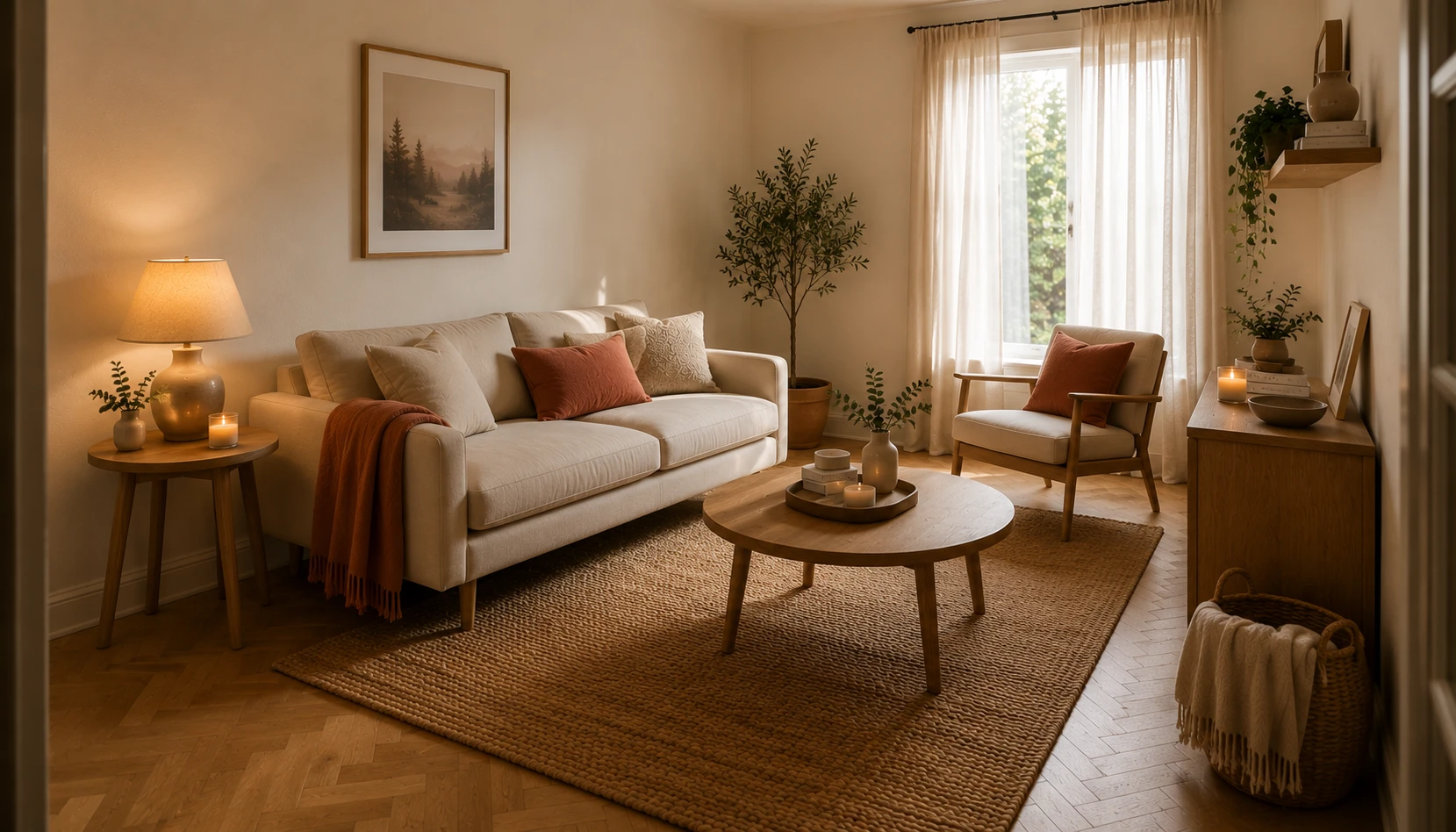
The most counterintuitive small space decoration principle is also the most powerful. Do not push all furniture against the walls. Float it away from walls into the room.
Floating furniture seems wasteful but actually creates space. When you push a sofa against the wall you lose the floor space behind it visually and physically. When you float the sofa 20cm from the wall you create a defined zone and the room feels more intentional and actually more spacious.
Define zones through floating. A sofa floated away from the wall with a coffee table in front defines a distinct living zone. A bed floated with a small nightstand beside it defines the sleeping zone. These clear visual zones make small spaces feel more organized and larger.
Visible legs make furniture feel lighter. Choose furniture with visible legs or feet rather than solid bases. A sofa on slim legs appears lighter and takes up less visual weight than a sofa with a solid base. Same physical space but lighter visual impact.
Open shelving instead of closed furniture. A bookcase with open shelves takes up less visual space than a dresser with closed doors. Your eye can see through to the wall beyond making the space feel less enclosed.
One statement piece beats three small ones. One beautiful sofa floated in the room has more impact than three small chairs pushed against walls. Commit to larger fewer pieces rather than many smaller ones.
Measure twice before placing. In a small room even 10cm makes a visible difference. Measure your furniture and your space carefully before committing to placement.
For more on this principle see our Small Kitchen Ideas 2026 which applies the same floating principle to food preparation spaces.
Plants and Botanicals: Life in Small Spaces
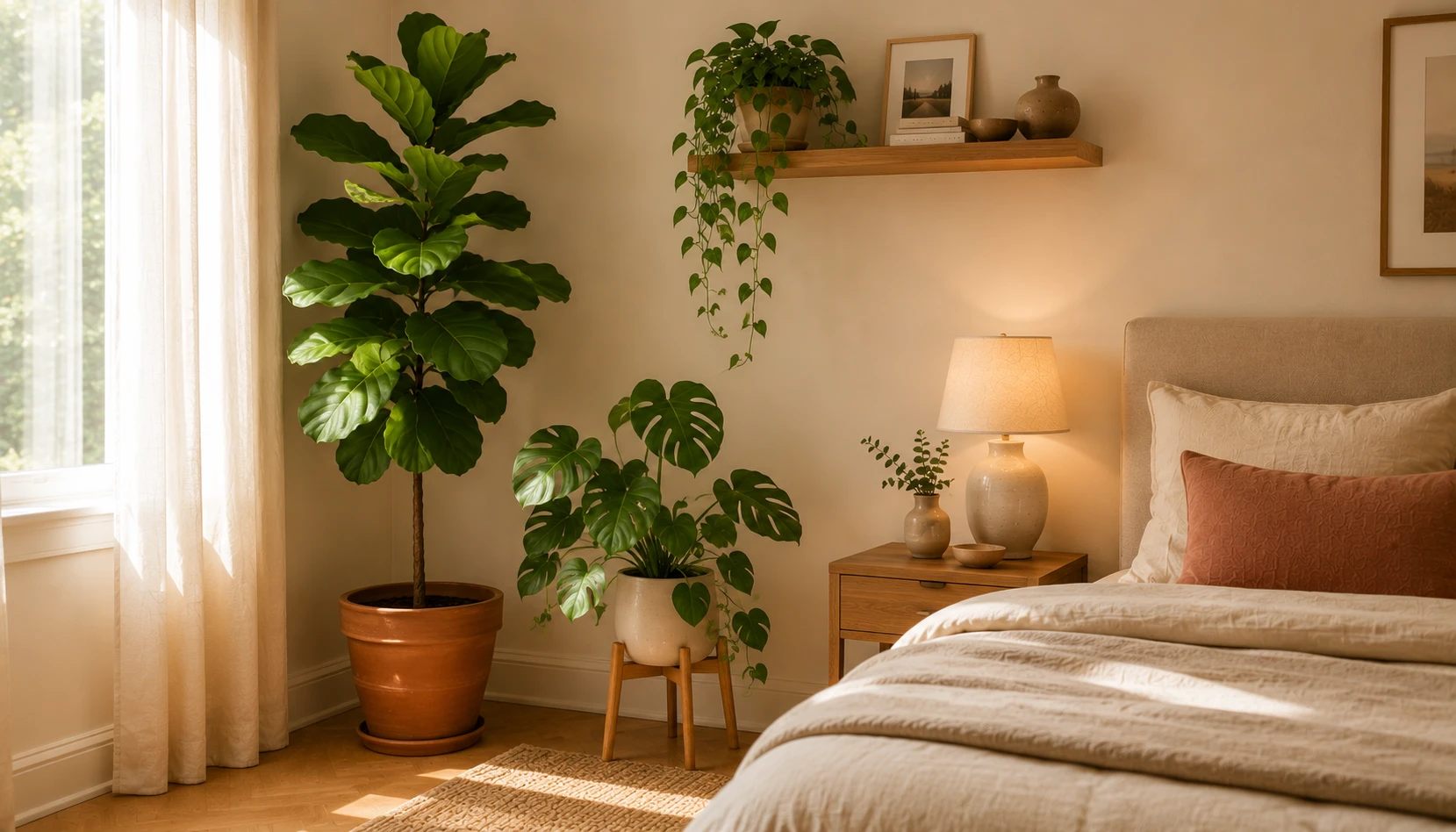
Plants are the most impactful room decoration element for small spaces. Living green color, air purification, visual interest, and immediate warmth. One plant in a small room has exponentially more impact than the same plant in a large room.
One tall plant in a corner. A fiddle leaf fig or bird of paradise in one corner of a small room becomes the focal point and creates the visual impression of a larger space. The vertical line draws the eye upward.
Trailing plants on high shelves. A pothos cascading down from a floating shelf adds lush beauty without consuming any floor space. The trailing vines create movement and life.
Small plants on surfaces. A compact succulent or small pothos on a nightstand, desk, or shelf adds organic color without crowding. Three small plants at different heights is better than one large one in a small room.
Dried botanicals as art. For small space decoration that requires zero maintenance, dried flower arrangements on walls or shelves provide color, texture, and visual interest. See our complete guide on DIY Dried Flower Arrangements.
The plant stand trick. A slim plant stand in one corner is a decoration element itself while raising a medium plant to mid-height adding vertical interest without floor clutter.
Grouped but not crowded. Three plants of different heights creating an arrangement is more impactful than single plants scattered around. Group them but leave breathing room between each.
Green walls effect. Multiple plants at varying heights and locations around the small room create the impression of a green wall without the actual installation. The cumulative effect is lush and alive.
For a comprehensive small space plants guide see our 12 Best Houseplants for Your Living Room.
Mirrors and Reflection: Visual Space Multiplication
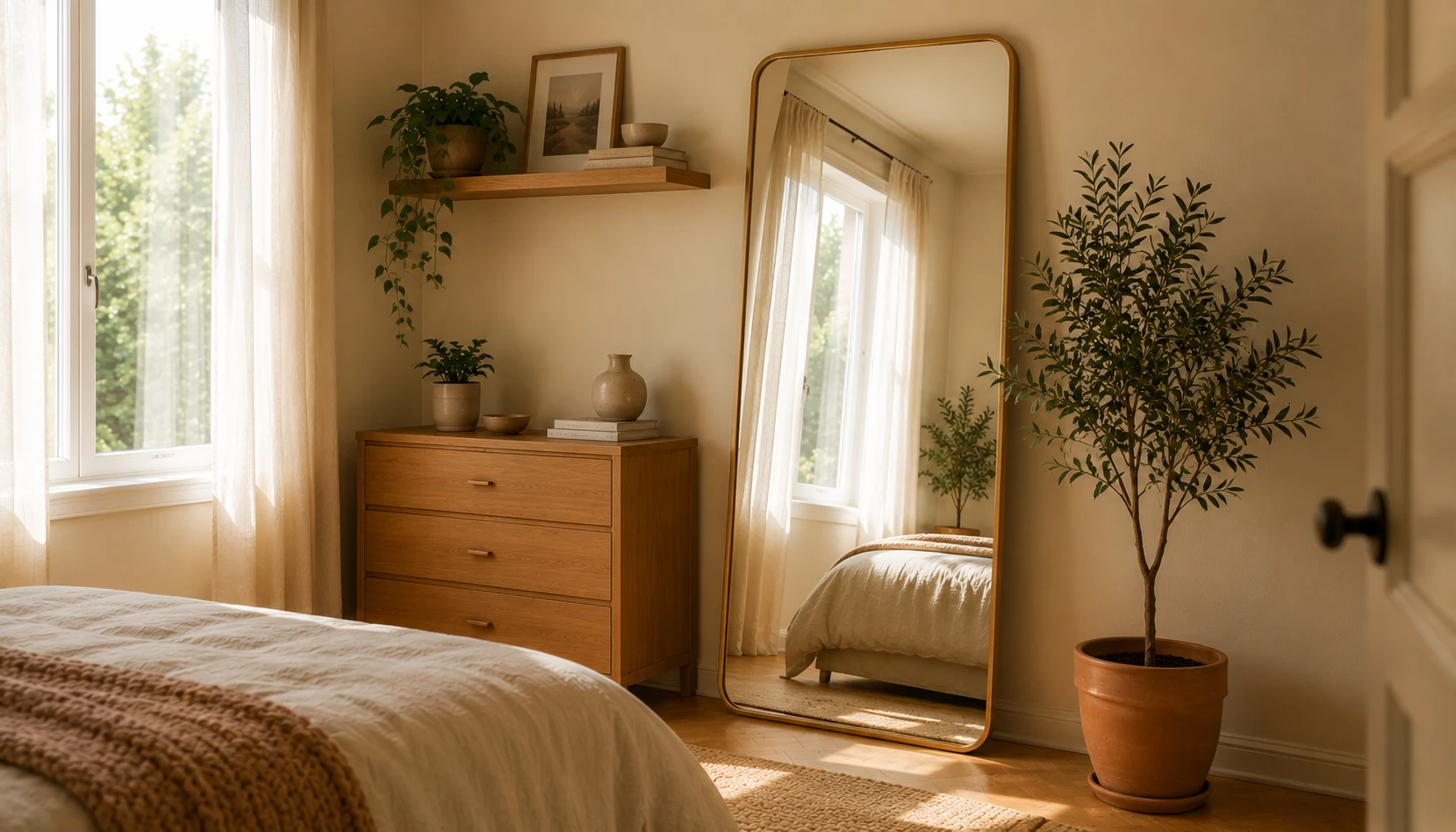
Mirrors are the oldest small space decoration trick and it works. A well-placed mirror reflects light creating the impression of more space while actually increasing the amount of light in the room.
Large floor mirror opposite a window. The single most impactful mirror placement. A tall floor mirror in a brass frame leaning against a wall opposite a window reflects the window and natural light back into the room making it feel twice as large and twice as bright.
Round mirror above furniture. A large round brass-framed mirror hung above a sofa or desk creates a beautiful focal point while reflecting light and making the wall behind it feel deeper.
Mirrored shelf. A floating shelf with a mirrored surface top reflects light and creates the illusion of depth while providing functional storage.
Grouped mirrors arrangement. Multiple mirrors of different sizes hung on one wall create visual interest while collectively reflecting light and space.
Avoid direct mirror-to-mirror placement. Two mirrors reflecting each other create infinite reflection effects that can feel disorienting in a small space.
Choose frames carefully. An ornate mirrored frame is a design element itself. A simple brass frame feels modern. A whitewashed wooden frame feels rustic. The frame defines the aesthetic as much as the mirror function.
Placement matters. Mirrors work best opposite or angled toward natural light sources. A mirror in a dark corner reflects darkness and serves little purpose.
Mirrors are inexpensive, dramatic, and immediately impactful. This is the single decoration investment that returns maximum impact per dollar in small spaces.
Personal Touches: Making Small Spaces Feel Like Home
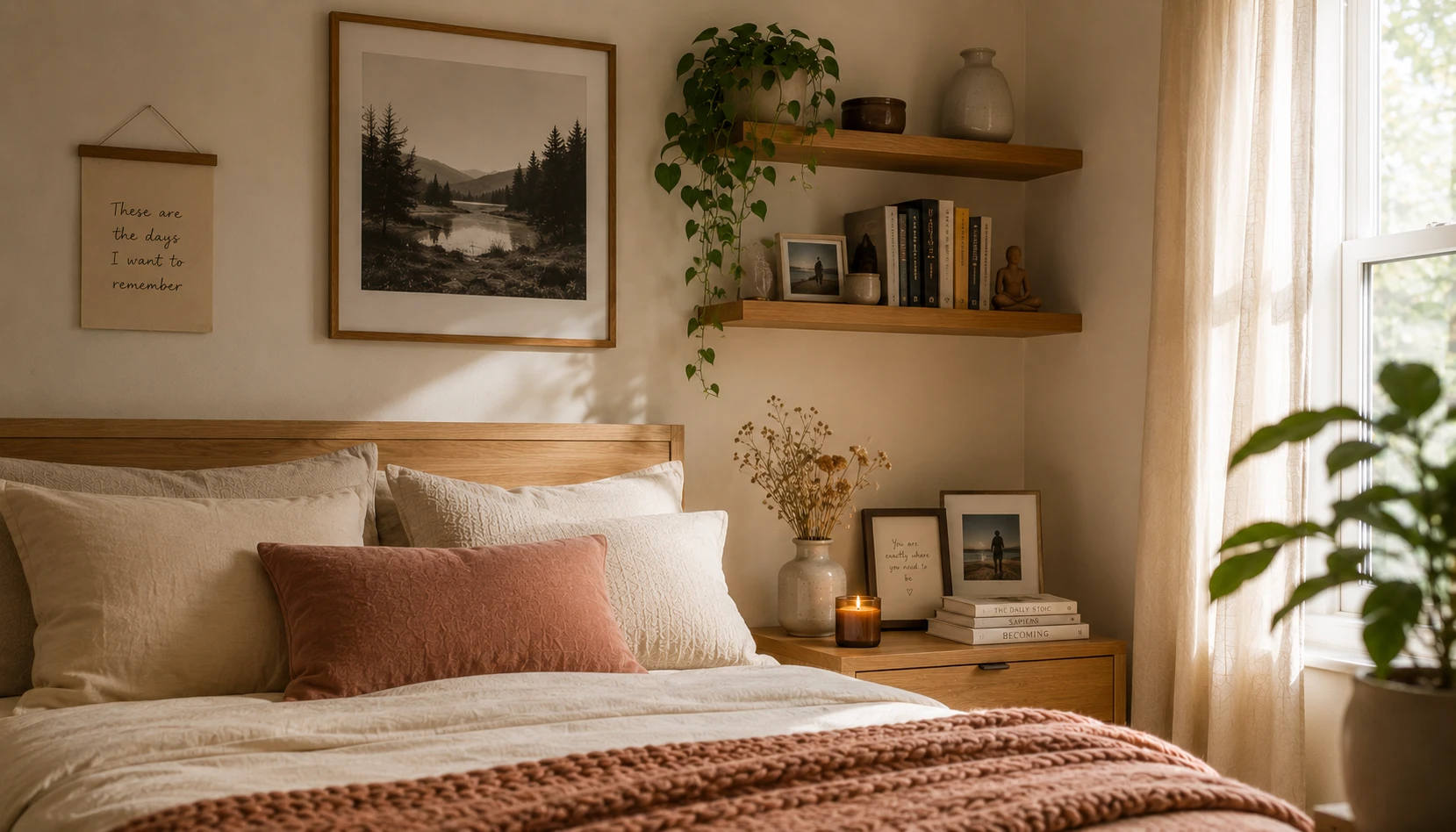
The most important room decoration element is often overlooked. Personal touches. The objects, photographs, and items that tell your story and make the space genuinely yours.
Display meaningful objects. Your favorite book on a shelf. A meaningful photograph on the nightstand. A handmade item from someone you love. These personal touches create immediate warmth that generic decoration cannot match.
Arrange objects with intention. Do not hide your favorite things. Display them on shelves, hang them on walls, place them on tables where they are visible. In small spaces personal objects become part of the decoration.
Create small collections. A collection of ceramic vases. A stack of favorite books. A series of photographs. Collections tell stories and add authenticity to small spaces.
Rotate seasonal elements. Change small decorative objects with seasons. Fresh flowers in spring. Dried grasses in autumn. This keeps the space feeling alive and evolving without major changes.
Include evidence of hobbies and interests. Paint supplies visible on a shelf. A musical instrument in a corner. A sewing basket styled on a low table. Evidence of your actual life and interests makes the space feel genuinely yours.
Handmade feels better than purchased. A simple framed drawing beats an expensive generic print. Hand-lettered wall art beats a mass-produced sign. Handmade elements immediately add authenticity.
Display items you use daily. A beautiful mug collection. A stack of favorite books. A tray of everyday objects styled intentionally. Use the fact that everything is visible in a small room to your advantage by making everything visible beautiful.
The best decorated small spaces are the ones where you can see the person living there. Display your life unapologetically.
Budget-Friendly Small Space Decoration Ideas
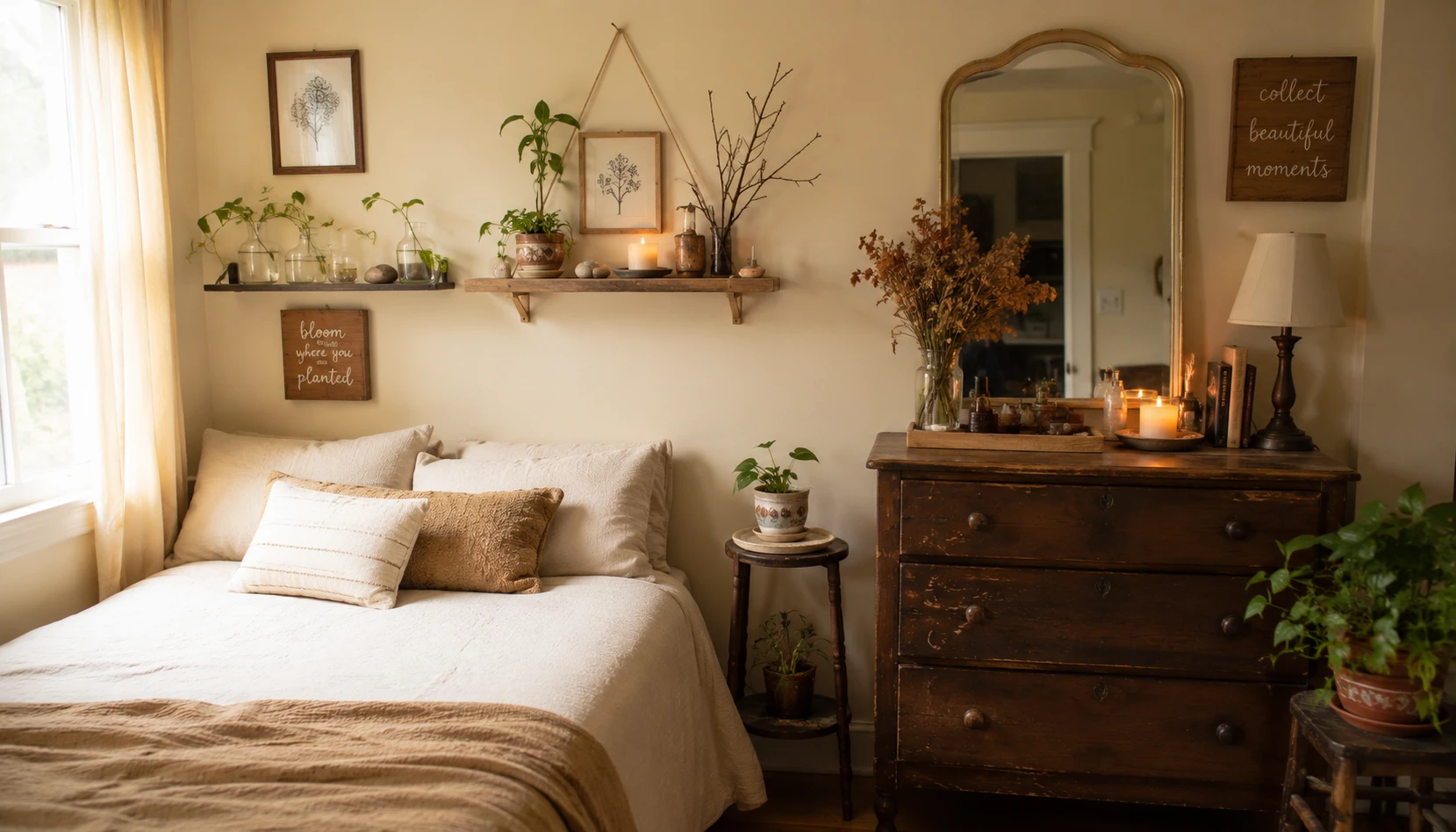
Small space decoration on a budget is actually easier than large space decoration because you need fewer items.
Thrift stores and secondhand. Small spaces allow you to curate your furniture from many sources. One beautiful thrifted dresser. A mirror from a secondhand shop. A bookcase from a yard sale. The eclectic mix feels intentional in small rooms.
Paint is your cheapest transformation. A fresh coat of warm cream or soft color on walls costs under one hundred dollars and completely transforms the space. This is the best budget investment available.
DIY wall art. Frame prints from free sources online. Create your own abstract art with watercolor. Hand letter a favorite quote on a board. DIY art is often more meaningful and always more personal than purchased art.
Plants from cuttings. Propagate plants from friends. Start new plants from kitchen scraps. Growing your own plants costs nearly nothing while providing the biggest visual impact.
Rearrange existing furniture. Before purchasing anything new, rearrange what you have. New furniture arrangement creates an entirely different space at zero cost.
Thrift textiles. Secondhand linen, vintage blankets, thrifted curtains. Textiles from thrift stores cost fractions of retail while adding immediate warmth and color.
DIY projects. Simple projects like painting terracotta pots, creating dried flower arrangements, or making macrame plant hangers are inexpensive and deeply personal. See our DIY Home Decor Under Twenty Dollars guide.
Candlelight is free atmosphere. Candles cost a few dollars and create more atmosphere than any decoration element. Invest in candles.
Use natural elements. Branches, stones, dried leaves, fallen wood. Free natural elements styled in a jar or vase create beautiful organic decoration.
The best small space decorators understand that intention and thoughtfulness matter infinitely more than budget. A small room decorated with intention on a zero budget beats a large room decorated with expensive generic furniture.
Common Small Space Decoration Mistakes
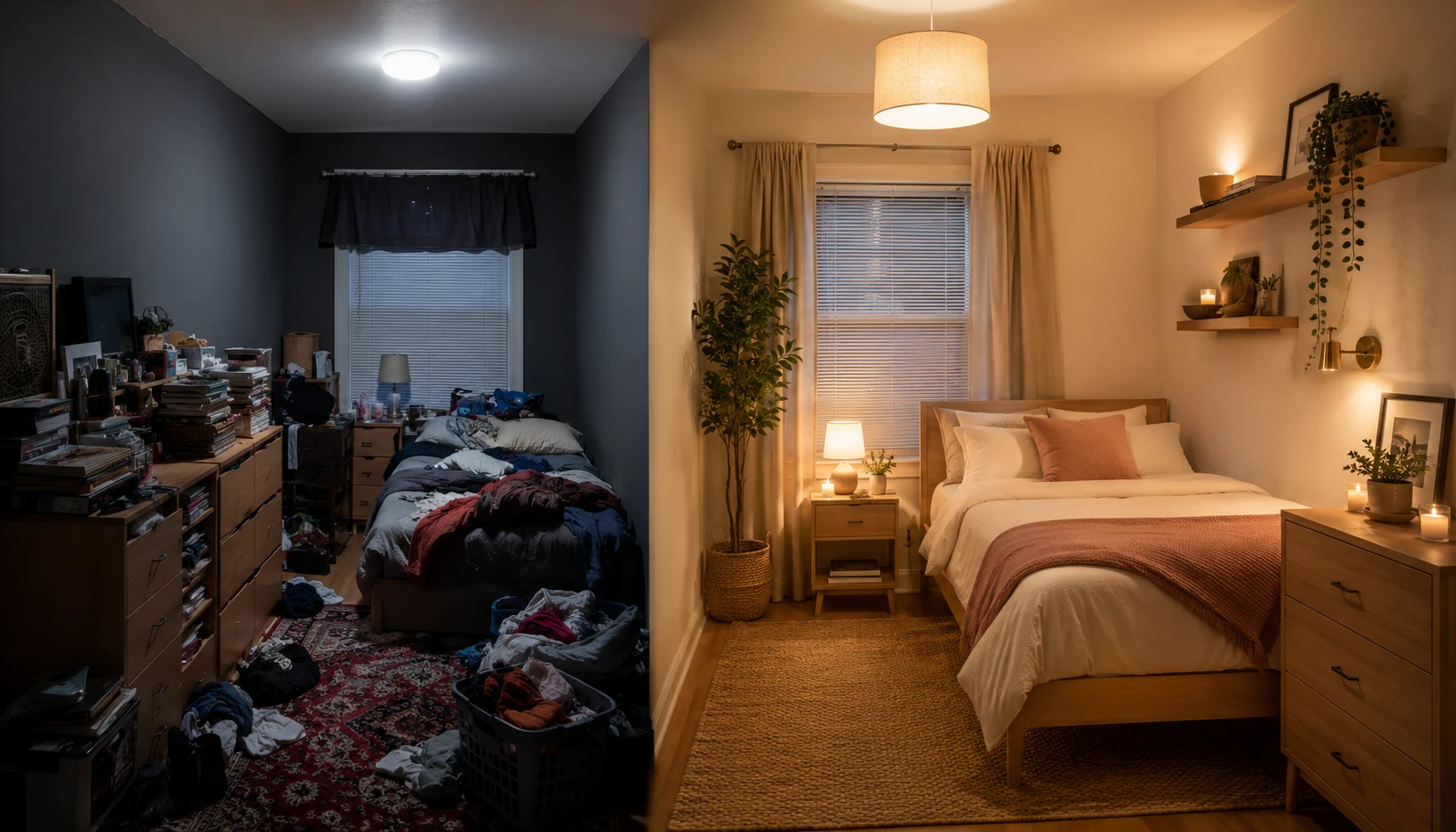
Even experienced decorators make these mistakes in small spaces. Awareness prevents them.
Mistake 1: Pushing all furniture against walls. This makes small spaces feel smaller and wastes the opportunity to create defined zones. Float furniture away from walls instead.
Mistake 2: Too many colors competing. A small room with green walls, blue accents, pink textiles, yellow art, and orange pillows feels chaotic. Limit your palette to three colors maximum.
Mistake 3: Overhead lighting only. A single bright overhead light makes small spaces feel flat and institutional. Layer three light sources at different heights instead.
Mistake 4: Small furniture scattered everywhere. Multiple small side tables, small chairs, tiny bookcases scattered around makes a small room feel cluttered. Fewer larger pieces create more impact.
Mistake 5: Nothing on the walls. Bare walls make small rooms feel empty and smaller. Fill walls thoughtfully with mirrors, art, floating shelves, and plants.
Mistake 6: Afraid to use dark colors. One jewel-tone accent wall or one dark furniture piece actually makes a small room feel more sophisticated and larger through contrast.
Mistake 7: Every surface filled with objects. Surfaces should have about seventy percent empty space and thirty percent objects. Crowded surfaces make small rooms feel cluttered.
Mistake 8: Generic decoration with no personality. The biggest mistake. A perfectly decorated small room with no personal touches feels like a hotel. Small spaces need personality to feel like home.
Mistake 9: Too much window treatment. Heavy drapes or shutters close in small windows. Sheer curtains or minimal treatment keeps them feeling open.
Mistake 10: Ignoring vertical space. Small rooms should go UP. Floating shelves, tall plants, wall-mounted storage. Train your eye to see vertical opportunities.
Small space decoration is not about making the space feel larger. It’s about making the space feel like exactly what it is: intentional, personal, and thoughtfully designed.
The constraint of limited square footage forces you to make meaningful choices. Each decision carries weight. The result is spaces with more character, more intention, and more genuine beauty than many larger rooms.
Start with one element. Lighting. Then add one more. A tall plant. Then mirrors. Each element builds on the others creating a small space that feels genuinely alive and authentically yours.
For more small space inspiration see our guides on Apartment Room Ideas, Small Kitchen Ideas 2026, Bright Small Living Room: 10 Ways to Make It Feel Bigger, and Small Living Room Ideas for Renters Under Two Hundred. For a broader room-by-room approach, explore our Home Inspiration Ideas.