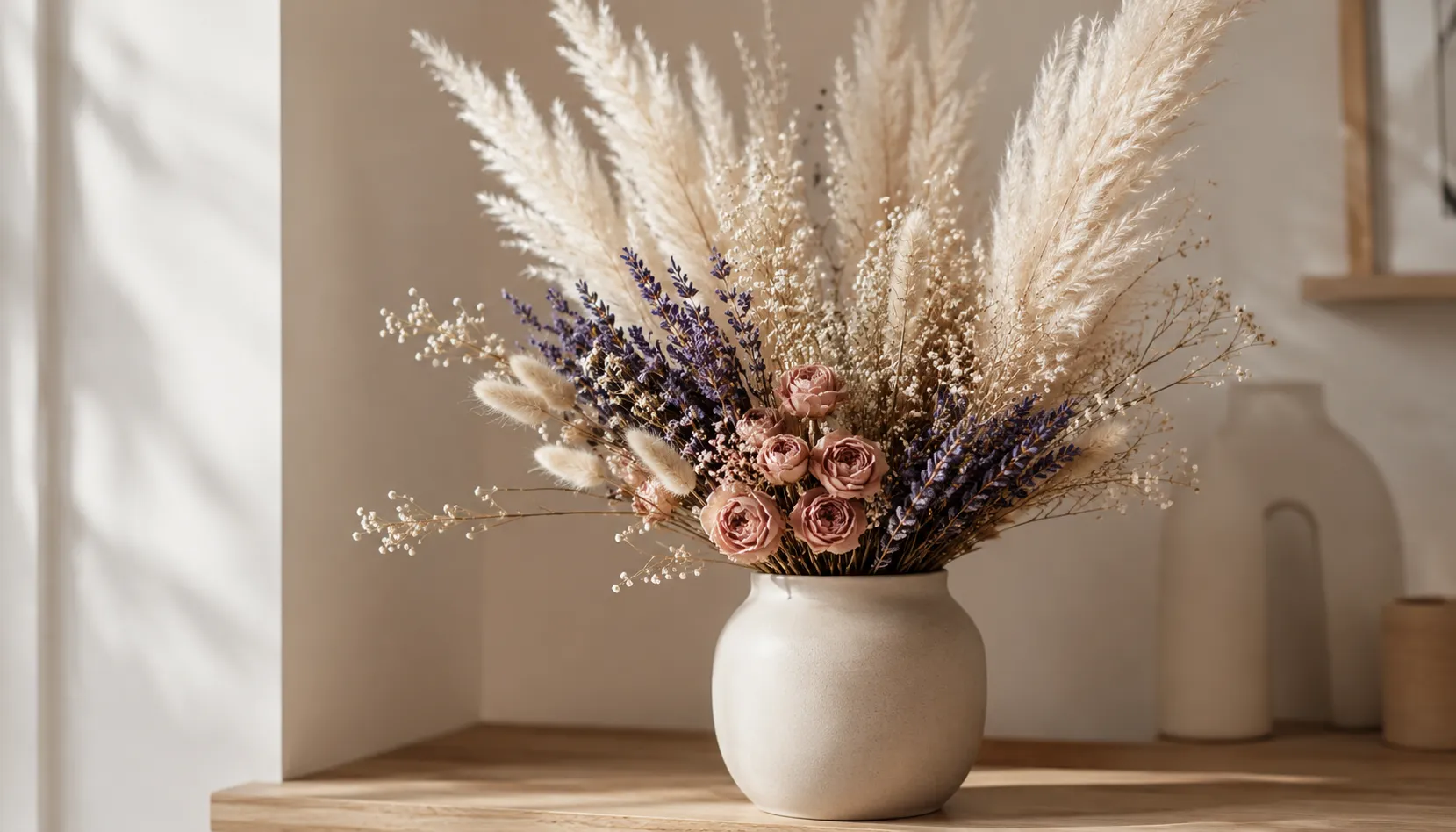
There’s something quietly magical about dried flowers. Unlike fresh bouquets that demand water, warmth, and constant attention before wilting in a week, dried flowers simply exist: beautifully, effortlessly, for years.
If you’ve been scrolling Pinterest and wondering how people create those gorgeous, earthy arrangements with pampas grass, preserved roses, and wheat stems, you’re in the right place. This guide walks you through everything, from picking the right flowers to arranging them like a pro, even if you’ve never done anything like this before.
Why Dried Flowers Are Worth Making
Before getting into the how, it’s worth talking about why dried flower arrangements deserve a place in your home.
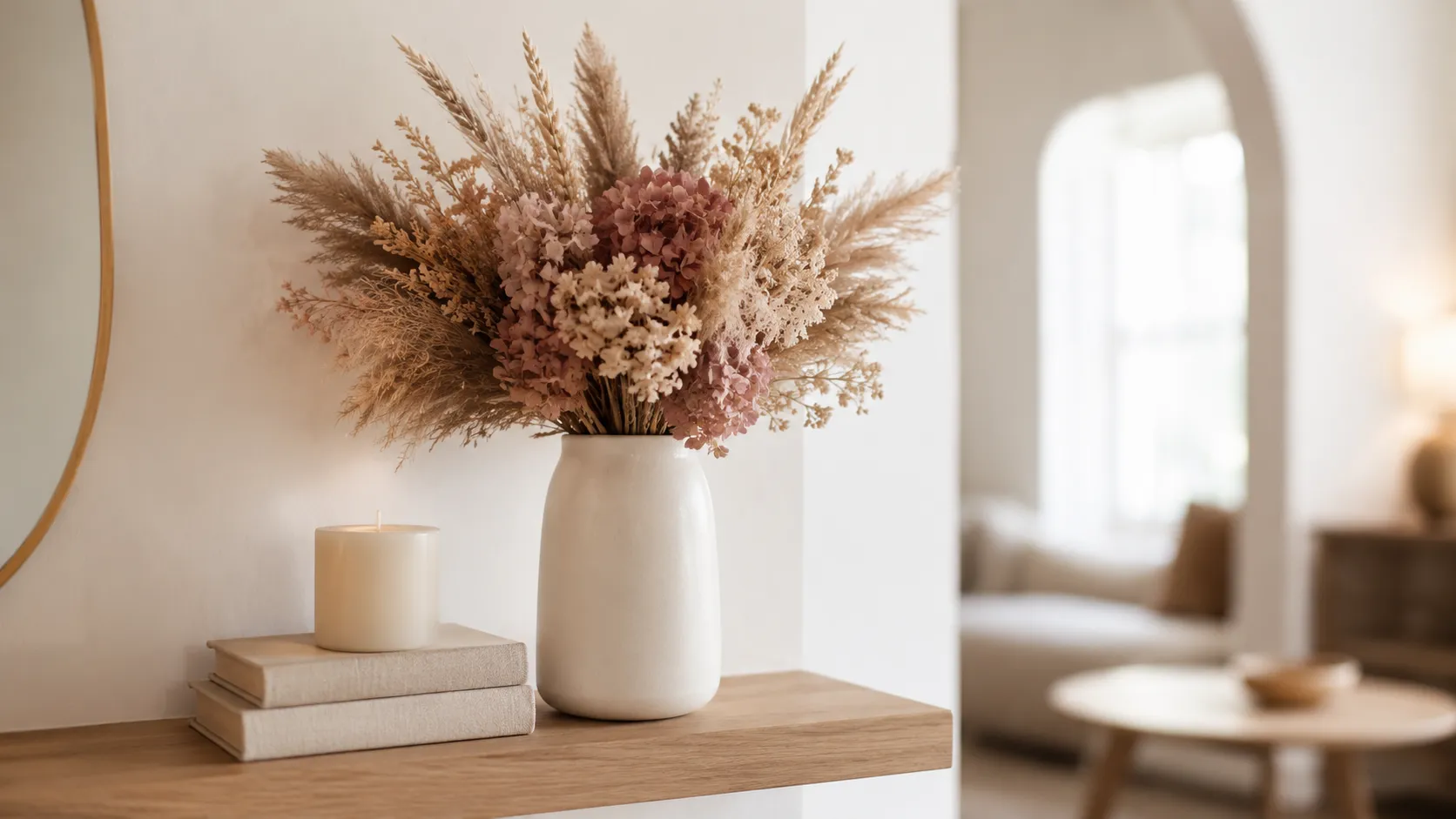
They last for years. A well-dried arrangement can look beautiful for two to three years. That’s dramatically longer than the lifespan of a fresh bouquet.
Zero maintenance. No watering, no wilting, no mess. Just beauty.
Budget friendly. You can dry flowers from your garden, a farmers market, or even a grocery store bouquet, for next to nothing.
Endlessly customisable. Mix textures, colours, and shapes however you like. No two arrangements are ever the same.
Deeply on trend. The cottagecore, boho, and Scandinavian decor movements have all embraced dried florals. They’re timeless but feel very current.
If you love this look, our guide to eucalyptus home decor ideas shows another beautifully low-maintenance botanical to dry and display.
Best Flowers to Dry at Home
Not all flowers dry equally well. Some shrivel into nothing. Others turn an ugly brown. But the right varieties hold their shape, colour, and texture beautifully.
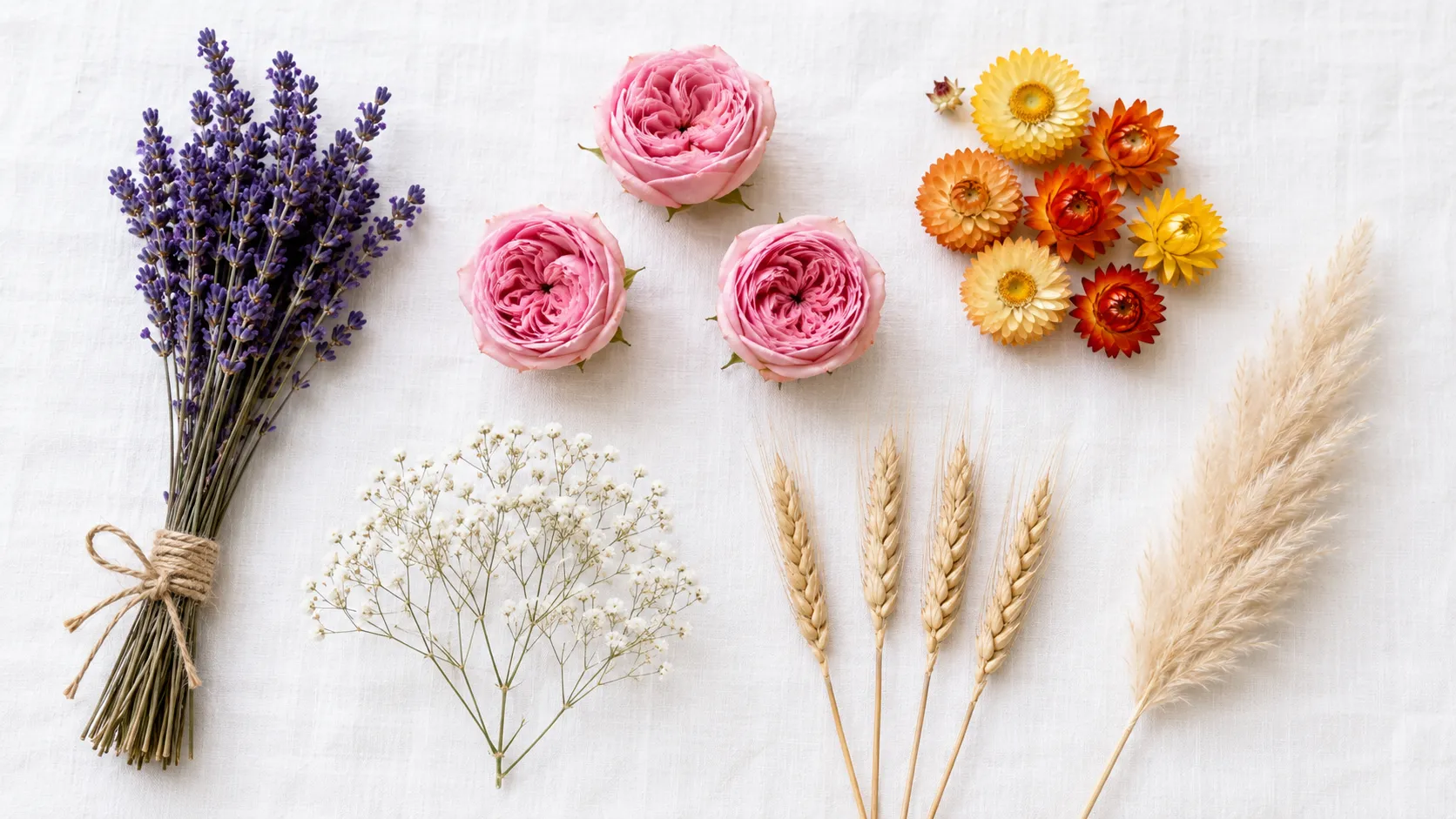
Lavender: dries perfectly every time. Holds its purple colour and fragrance for months. A beginner’s best friend.
Roses: a classic choice. Dry them just before peak bloom for the best results. Deep red roses fade to a beautiful dusty burgundy.
Strawflowers (Helichrysum): these were practically made for drying. Paper-like petals that hold shape and colour well.
Statice: tiny purple and white clusters that add texture. Dries naturally without any effort.
Baby’s Breath (Gypsophila): delicate white clouds that add softness to any arrangement.
Pampas Grass: the statement piece. Dramatic, fluffy plumes that add height and movement.
Wheat & Grasses: earthy, neutral, and versatile. Available from farmers markets or craft stores.
Hydrangeas: take a bit more care but dry into muted, dusty versions of their original colours.
What to avoid: Succulents, tulips, orchids, and anything with very fleshy petals or thick stems. They tend to rot rather than dry.
How to Dry Flowers: 3 Easy Methods
There are three main ways to dry flowers at home. Each has different strengths depending on the flower and how much time you have.
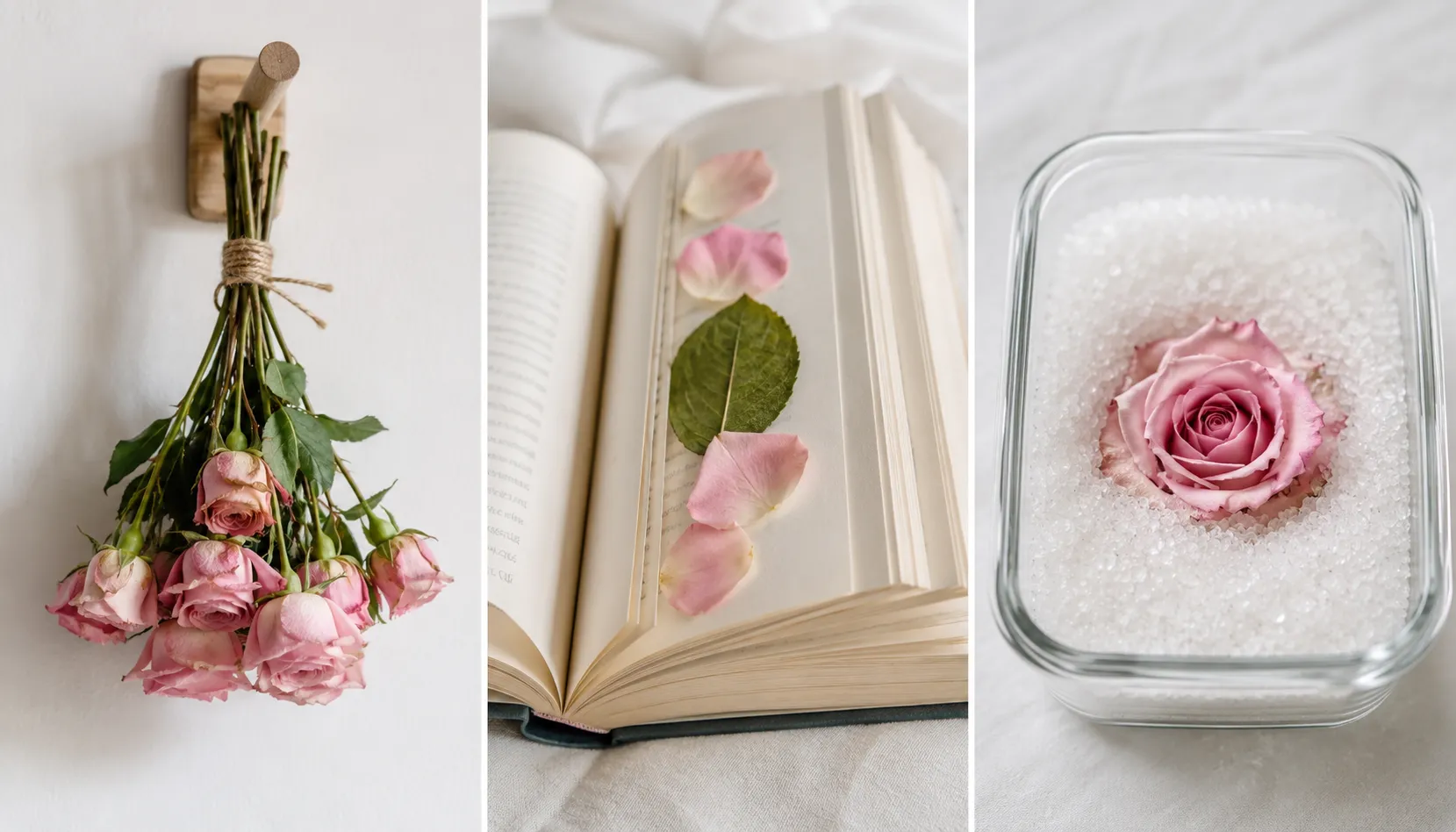
Method 1: Air Drying (Hanging) — Easiest
Best for: Lavender, roses, statice, strawflowers, pampas grass, wheat
- Cut stems at an angle, leaving at least 20cm of stem
- Remove lower leaves (they’ll rot if left on)
- Bundle 5–10 stems together loosely with a rubber band
- Hang upside down in a warm, dry, dark place (a wardrobe, spare room, or garage works well)
- Leave for 2–4 weeks
Why upside down? Gravity pulls moisture down and out while keeping petals in their natural open position.
Method 2: Pressing — For Flat Flowers
Best for: Pansies, daisies, ferns, single-petalled flowers, leaves
- Place flowers between two sheets of parchment paper
- Put inside a heavy book
- Add more books on top for extra weight
- Wait 2–4 weeks
Use for: framed art, cards, resin jewellery, or pressed flower bookmarks.
Method 3: Silica Gel — Best Colour Preservation
Best for: Roses, peonies, dahlias, any flower you want to preserve as close to fresh as possible
- Pour a layer of silica gel crystals into an airtight container
- Place flowers face-up in the crystals
- Gently pour more silica gel over and around the flowers until fully covered
- Seal the container and leave for 2–7 days
- Carefully remove and brush off excess crystals with a soft brush
Silica gel is available from craft stores and online for about $8 to $12. It’s reusable; just dry it in the oven and use again.
Colour results: Silica gel preserves colour far better than air drying. Roses come out looking almost fresh.
Drying Timeline & Preparation Tips
Getting the timing right makes a big difference in the final result.
When to pick/buy:
- Pick flowers from the garden in the morning after dew has dried but before the heat of the day
- For shop-bought flowers, use them a day or two after purchase, not past their prime, not too fresh
- Pick roses when the bud has just started to open (not fully open)
Drying times at a glance:
| Flower | Air Drying | Silica Gel |
|---|---|---|
| Lavender | 2–3 weeks | N/A |
| Roses | 3–4 weeks | 3–5 days |
| Strawflowers | 1–2 weeks | N/A |
| Hydrangeas | 3–4 weeks | 5–7 days |
| Pampas Grass | 1–2 weeks | N/A |
| Wheat | 1–2 weeks | N/A |
Signs they’re ready: Stems feel brittle when bent. Petals feel papery. No moisture remains.
Humidity matters: Avoid drying flowers in a bathroom or kitchen. High humidity slows drying and encourages mould. A warm, dark, well-ventilated room is ideal.
Arranging Basics: Colour, Texture & Height
Once your flowers are dried, the arranging begins. A few simple principles make the difference between a random handful of stems and an arrangement that looks intentional and beautiful.
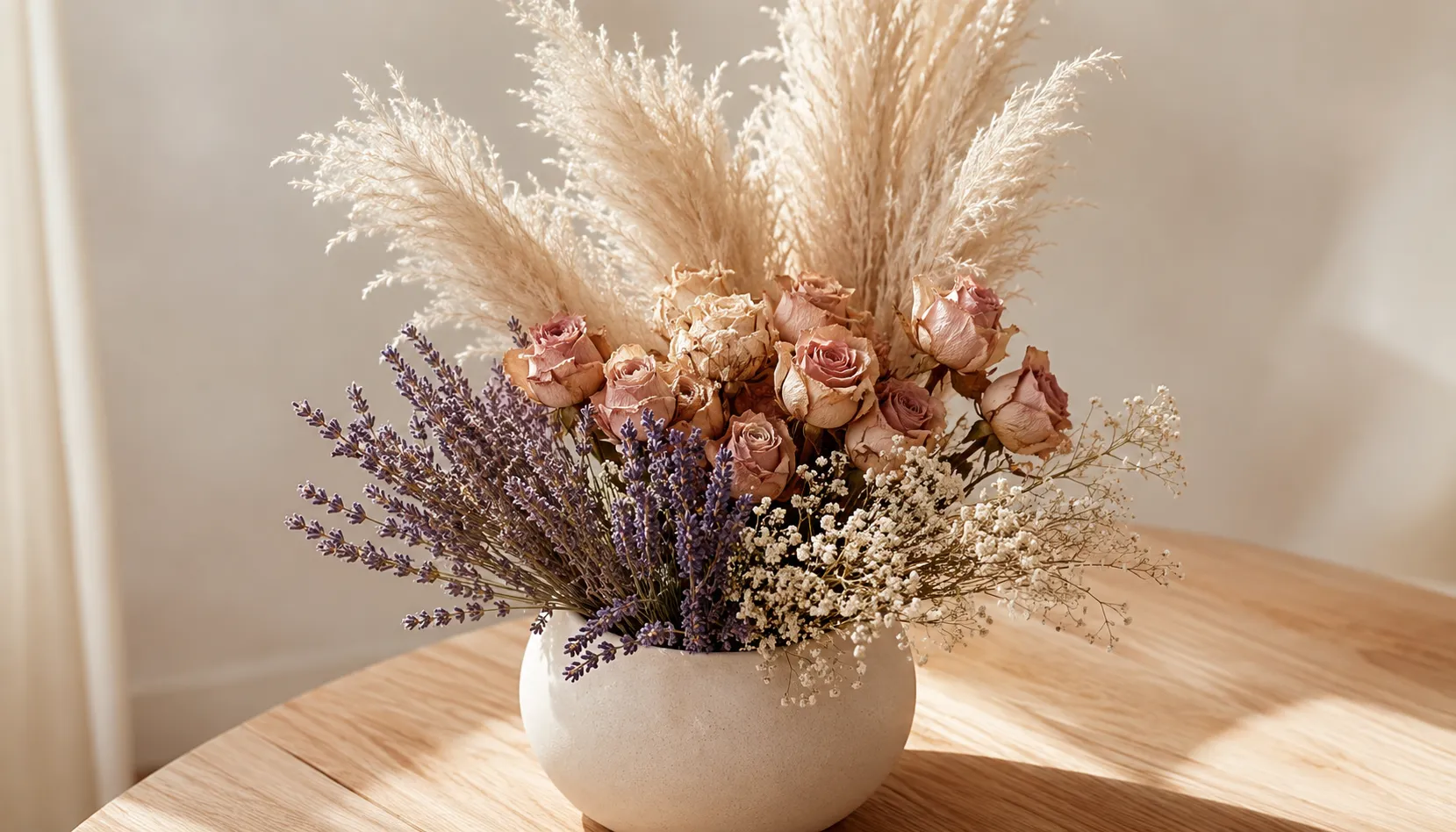
Colour palette: Stick to three or four colours maximum. For a classic, neutral look try: cream, dusty pink, sage green, and wheat tones. For bolder arrangements: terracotta, burgundy, mustard, and dark green. For a bedroom that pairs beautifully with this warm palette, see our white and terracotta bedroom ideas.
Three layers of height:
- Back/tall: Pampas grass, wheat, tall dried grasses
- Middle: Roses, hydrangeas, larger blooms
- Front/low: Strawflowers, lavender, baby’s breath
Texture contrast: Mix fluffy (pampas, baby’s breath) with structured (roses, statice) with linear (grasses, wheat stems). Contrast makes arrangements interesting.
Odd numbers: Group flowers in 3s, 5s, or 7s. Odd numbers look more natural than even groupings.
Negative space: Don’t overfill. Empty space between stems lets the arrangement breathe and each flower be seen.
The 2/3 rule: Your arrangement should be roughly 2/3 the height of the vase. So a 30cm vase suits an arrangement about 20cm tall above the rim.
Step-by-Step Arrangement Tutorial
Here’s how to put together a classic, Pinterest-worthy dried flower arrangement from scratch.
What you’ll need:
- 1 vase or container (15–25cm tall)
- 3–5 stems pampas grass or dried grasses
- 5–7 dried roses or peonies
- 5–7 stems lavender or statice
- 3–5 stems baby’s breath
- Floral scissors or sharp kitchen scissors
- Floral foam or sand (optional, to stabilise stems)
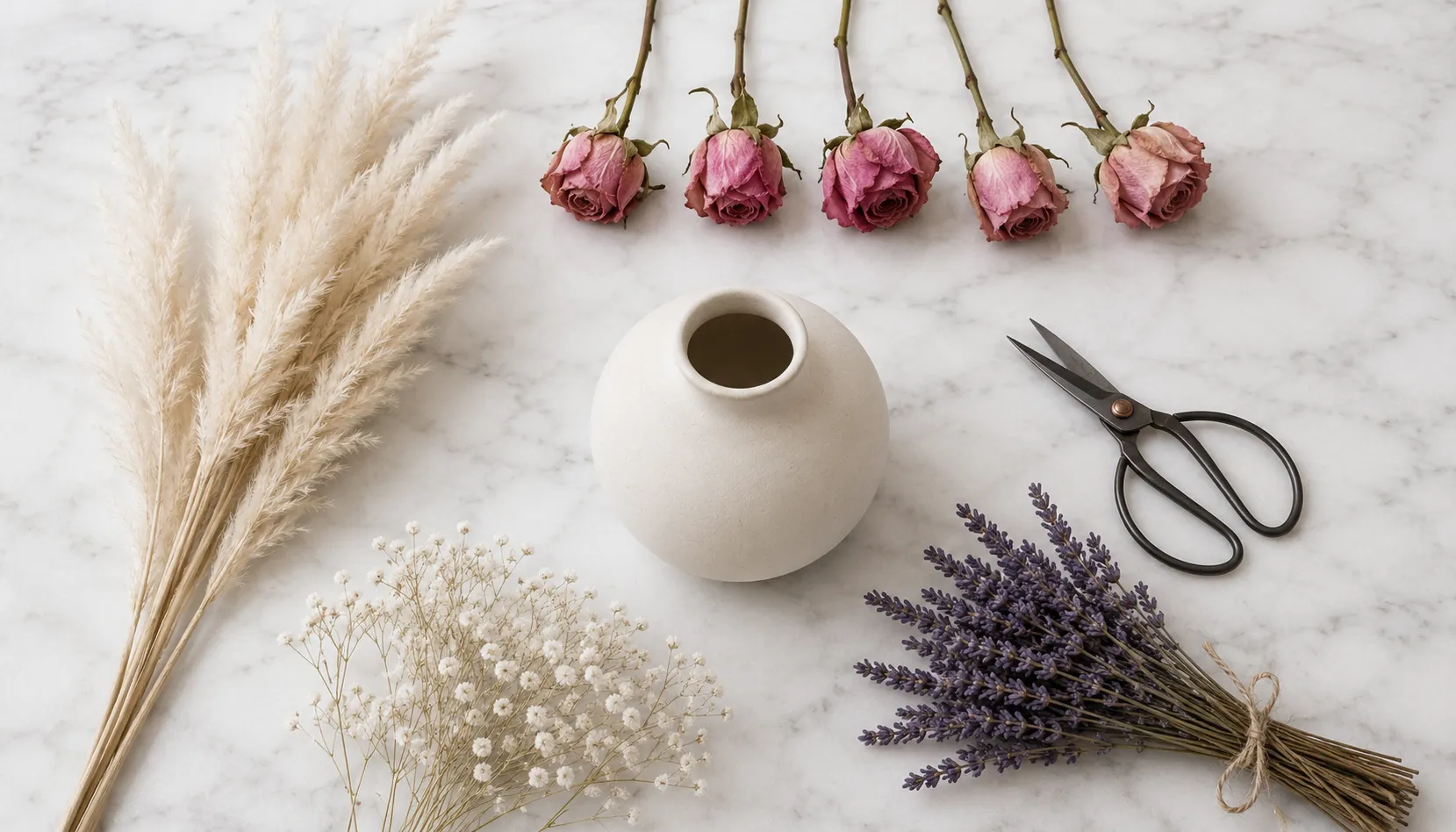
Step 1 — Prepare your vase If stems feel loose, fill the vase 1/3 full with dry sand or use a ball of chicken wire to hold stems in place. For narrow-necked vases, you often don’t need anything extra.
Step 2 — Add your tallest stems first Place 3 pampas grass or grass stems at the back and sides. These create the shape and silhouette of your arrangement. Vary heights slightly; not all exactly the same length.
Step 3 — Add your focal flowers Cut rose stems at an angle and place them in the centre and slightly forward. These are your statement pieces. Aim for an asymmetric cluster; not all in a straight line.
Step 4 — Fill with medium flowers Add lavender or statice around the roses, tucking stems in between. These filler flowers tie everything together.
Step 5 — Add delicate accents Place baby’s breath or smaller flowers at the front and in any gaps. These soften the edges and add a light, airy feel.
Step 6 — Step back and adjust Look at the arrangement from across the room. Rotate the vase. Check for any obvious gaps or stems that look out of place. Adjust until it feels balanced and natural.
Step 7 — Final trim Any stems that look too long or stick out awkwardly? Trim them. A clean, intentional silhouette makes all the difference.
Vase & Container Options
The container is part of the design. Here’s what works beautifully with dried flowers:
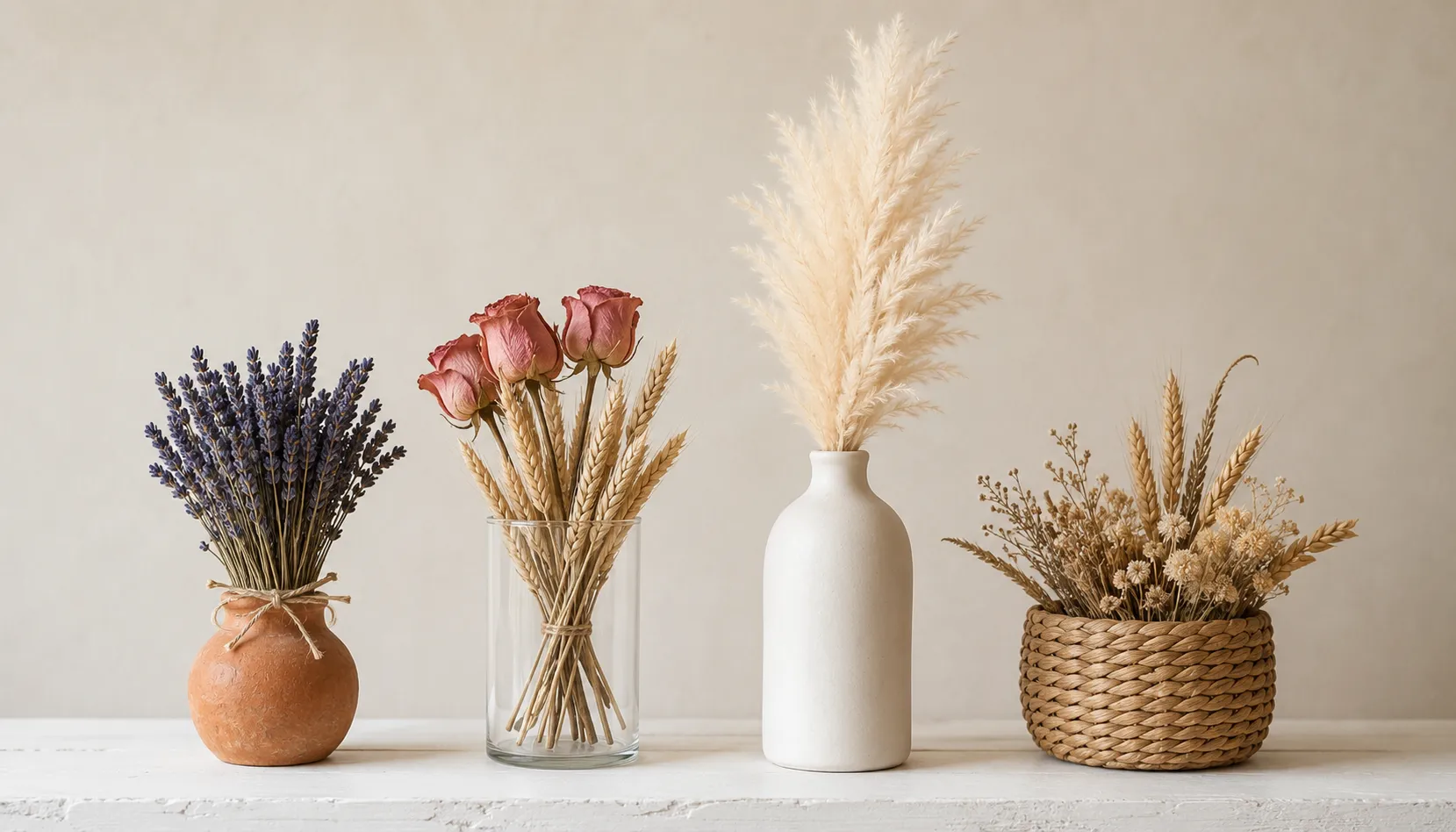
Terracotta pots: earthy and warm. Perfect for boho and cottagecore styles. The texture complements dried flowers naturally. If you enjoy handmade containers, our guide to air dry clay home decor shows how to make your own small vases for arrangements like these.
Glass vases: simple and clean. A wide-mouthed glass vase lets stems spread naturally for an effortless look.
Ceramic vases: matte white or cream ceramics look elegant with dried flowers. A classic combination.
Rattan or woven baskets: adds another layer of natural texture. Especially good with pampas grass and wheat.
Vintage bottles: an old wine bottle or medicine bottle makes a beautiful single-stem display. Simple and striking.
Tip: Charity shops and thrift stores are goldmines for interesting vases and containers at a fraction of retail price.
Care & Display Tips
Dried flowers are low maintenance, but a few simple habits will keep them looking their best for years.
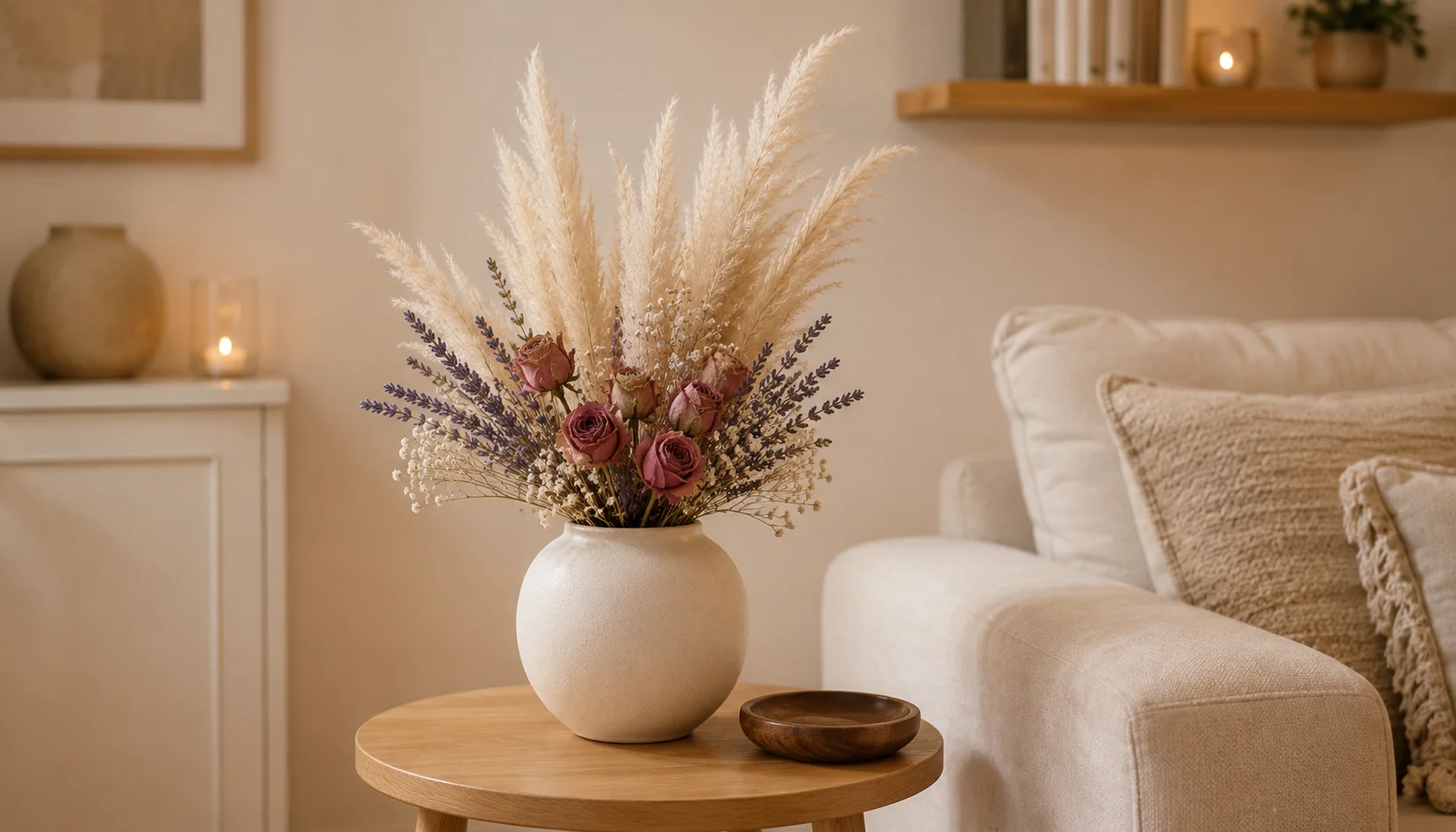
Keep away from direct sunlight. UV light fades colours quickly. A bright room is fine, but avoid a windowsill where sun hits the flowers directly.
Avoid humidity. Bathrooms and kitchens with steam are not ideal spots. Moisture can cause dried flowers to reabsorb water and become limp or mouldy.
Dust gently. Use a hairdryer on the lowest, coolest setting held 30cm away to blow dust off. Alternatively, use a soft paintbrush. Never use water.
Handle carefully. Dried flowers become brittle over time. Move arrangements gently and avoid knocking them.
Refresh when needed. If a flower breaks or loses its shape, simply remove it and replace with a new dried stem. Arrangements can be updated and refreshed rather than completely replaced.
Spray with hairspray (optional). A very light mist of hairspray helps preserve delicate flowers like baby’s breath and pampas grass, preventing shedding.
Lifespan: With proper care, most dried flower arrangements last one to three years. Lavender and grasses tend to last longest. Roses and hydrangeas may start to fade after twelve to eighteen months.
Dried flower arranging is one of those crafts that looks impressive but is genuinely accessible for complete beginners. The materials are affordable, the process is meditative, and the results are lasting.
Start with something simple: a handful of lavender tied with twine and placed in a terracotta pot. Then experiment. Layer in roses. Add some pampas grass. See what you love. The best arrangement is the one that feels like you.
Looking for more handmade, budget-friendly decor projects? See our guides to DIY home decor under $20 and decorative plate wall ideas.