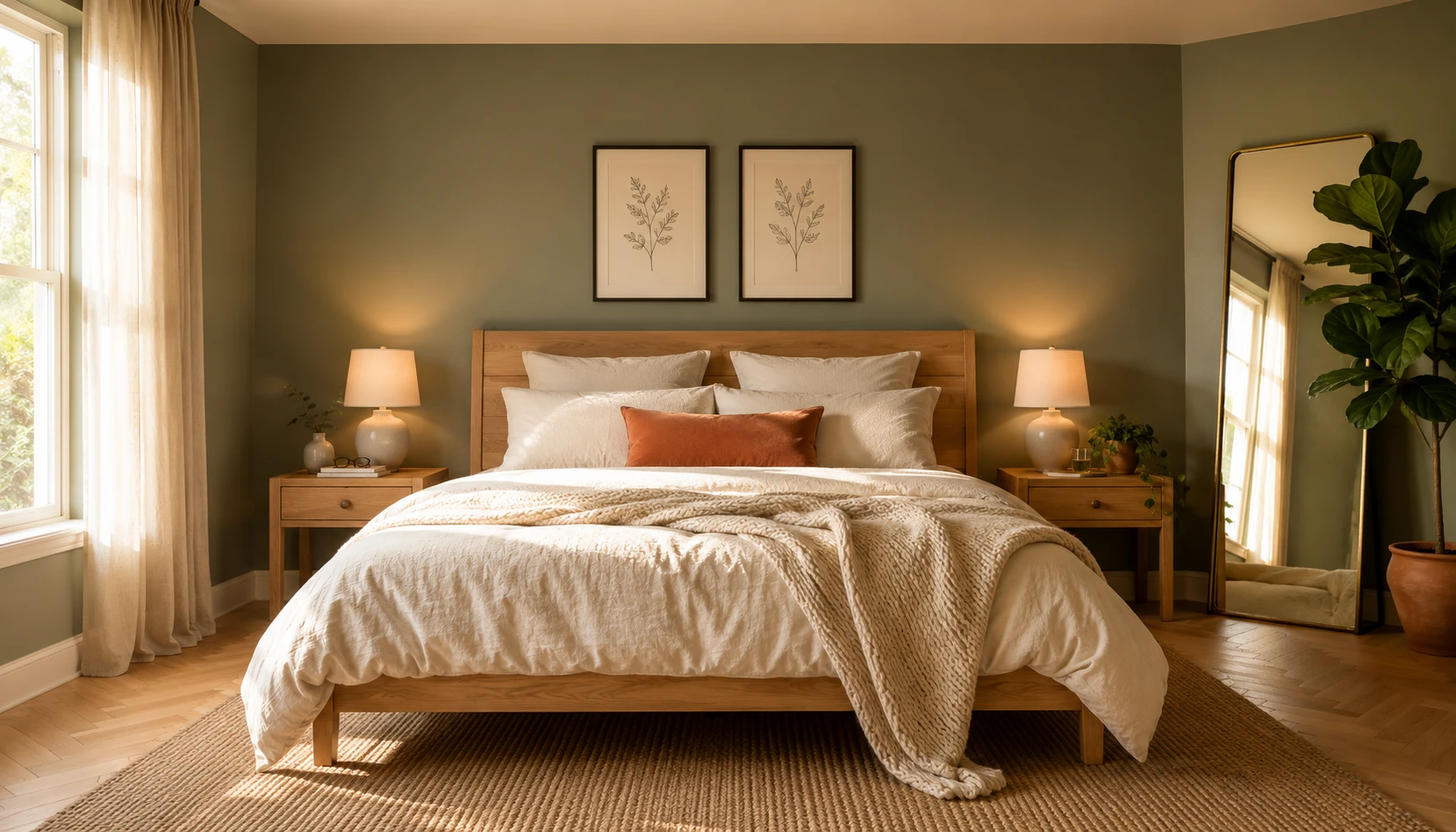
If one colour is shaping bedrooms in 2026, it’s sage green. Soft and grounding, it’s become the bedroom colour of the year, pushing out the cool greys and stark whites that dominated the last decade.
The appeal makes sense once you live with it. Sage sits between neutral and statement: calm enough to support sleep, distinct enough to look intentional, and it works with almost any furniture you already own. It can turn an ordinary bedroom into somewhere that actually feels restful.
This guide covers 12 ways to use sage green in a bedroom: the paint shades worth choosing, colour pairings that hold up over time, the textiles and finishes that bring it to life, and the small details that separate a good sage bedroom from a flat one.
Why Sage Green Has Become THE Bedroom Colour
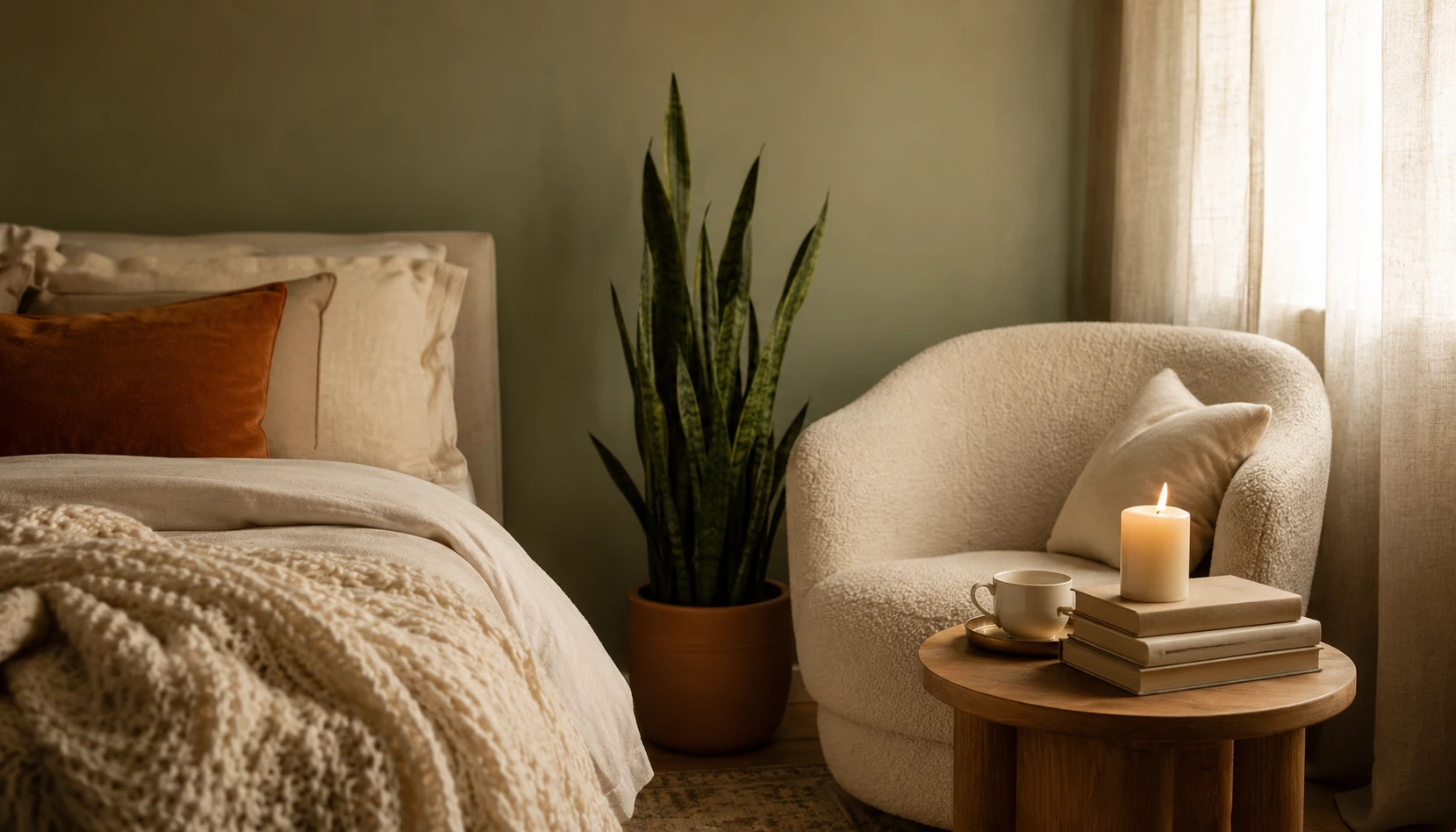
Sage green is grounded and reassuring. It has a timeless quality that makes bedrooms feel less like a room you sleep in and more like somewhere you actually want to slow down. That’s a big part of why it’s everywhere on Pinterest and Instagram right now, and why interior designers keep reaching for it.
Why bedrooms specifically:
Connection to nature. Sage green reads as earthy and natural in a way that feels stable rather than trendy. In a room meant for rest, that grounding quality is exactly what most people are after.
Calming for sleep. Cool blues used to be the go-to for a calm bedroom, but they can feel sterile or cold. Sage gives you the same restful quality with warmth, so the room feels inviting instead of clinical.
Versatile pairing. Sage works with cream, white, terracotta, brass, natural wood, black, and almost every traditional bedding colour. You don’t need to replace furniture you already own to bring it in.
Sophisticated without being bold. Sage is bold enough to look intentional but soft enough that it never feels like too much. It makes a bedroom look put together without looking like it tried too hard.
Timeless. Unlike fast-moving colour trends, sage green has a quietly classic quality. Sage bedrooms from 2026 will still look beautiful in 2036.
If you love this palette, see how it translates into our sage green bathroom ideas for a coordinated home.
Best Sage Green Paint Shades for Bedrooms
Not all sage greens are the same. The colour runs from cool grey-green to warm yellow-green, and picking the right tone for your room matters more than people expect.
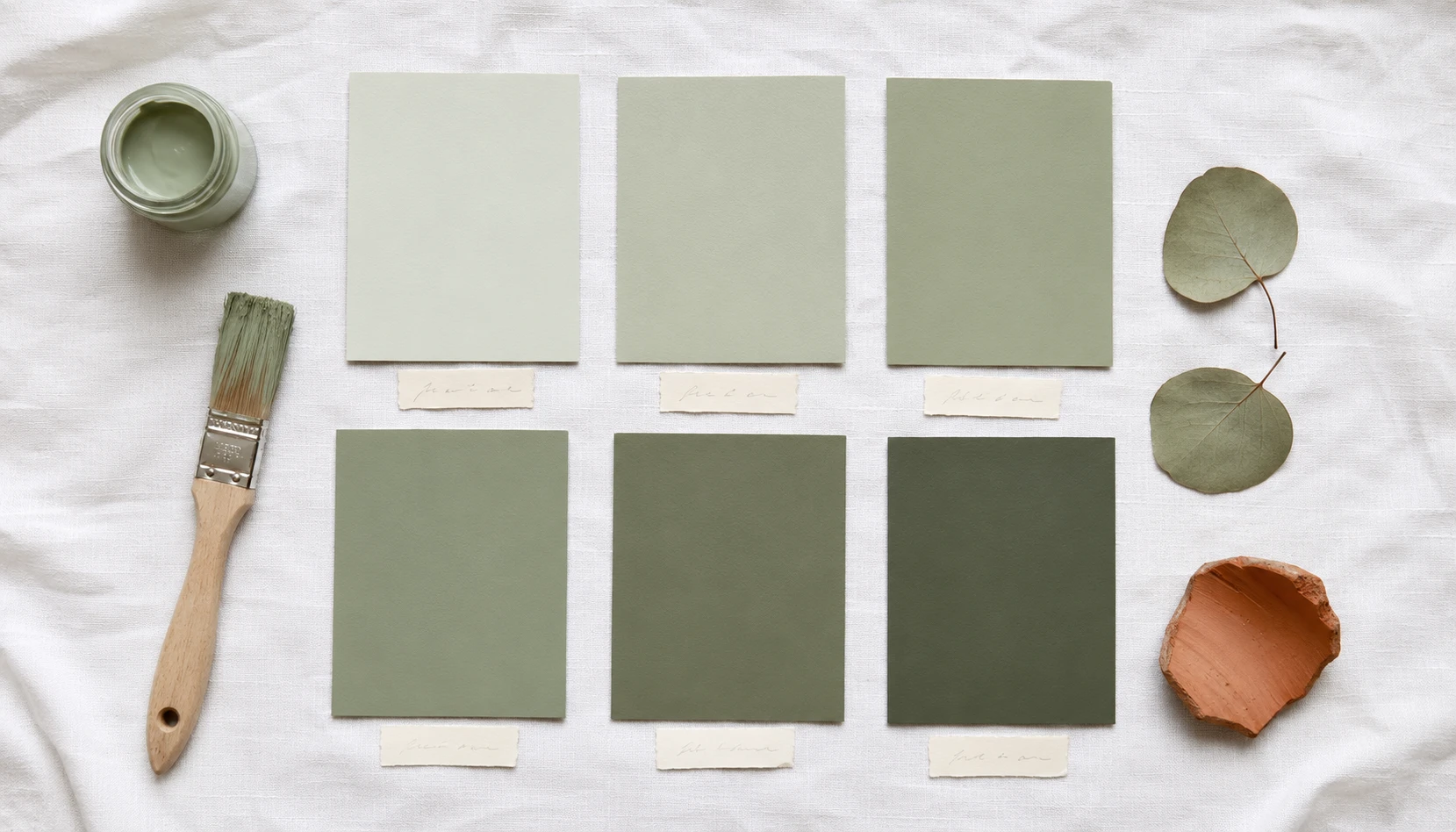
Best sage green paint shades for 2026:
Farrow & Ball Pigeon: A grey-leaning sage with sophisticated depth. Works beautifully in well-lit bedrooms with plenty of natural daylight. Slightly cooler than other sages.
Farrow & Ball Mizzle: Warmer, softer sage with a slight grey undertone. One of the most popular sage bedroom paints, and forgiving across most light conditions.
Edward Bulmer Tea Green: A deeper richer sage that adds drama without becoming heavy. Excellent for bedrooms wanting more colour commitment.
Benjamin Moore Silken Pine: An ultra-soothing sage with green undertones. Gives bedrooms an inherent serenity. Great for north-facing rooms that need warmth.
Sherwin-Williams Sage Green Light: A lighter softer sage perfect for smaller bedrooms or rooms with limited natural light.
Little Greene Boxington: A characterful sage with depth and warmth. Slightly more saturated than typical sage greens.
How to choose for your bedroom:
Lots of natural light (south-facing): Choose a deeper, richer sage since the strong natural light will lighten it considerably. Pigeon, Tea Green, or Boxington work well.
Limited natural light (north-facing): Choose a warmer lighter sage with yellow undertones to prevent the room feeling cold. Mizzle or Silken Pine are excellent.
Mixed light conditions: A mid-tone warm sage like Mizzle or Sage Green Light works in any light condition.
Always test before committing. Buy sample pots and paint large A4-sized squares on your bedroom wall. Live with them for 48 hours and watch how they look at different times of day. You’ll usually know within a day or two which one is right.
Painting Walls — Full Room vs Accent Wall
You don’t have to paint every wall to create a sage green bedroom. The right approach depends on your room size and personal style.
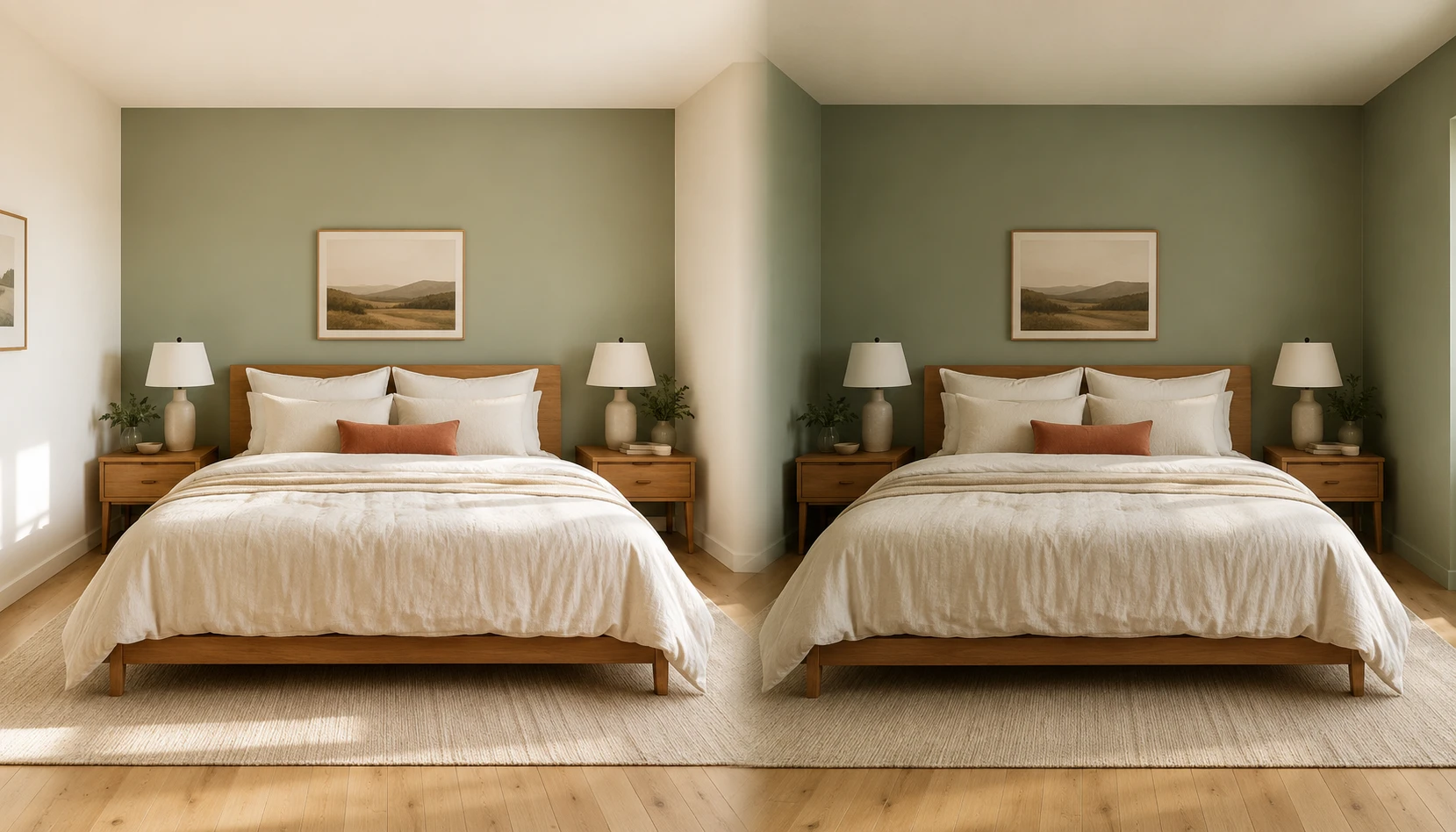
Option 1 — Full Room Sage:
Paint every wall in sage green for a fully immersive calming experience. This works best in:
- Bedrooms with good natural light
- Spaces where you want maximum impact
- Rooms where the bed is the only major furniture piece (uncluttered visual)
The colour drenching technique takes sage all the way up the walls, onto the ceiling, and even over the trim. It’s become popular in 2026 because it removes the harsh transitions between wall and ceiling and creates a cocoon effect that’s genuinely restful to sleep in.
Option 2 — Accent Wall:
Paint only the wall behind the bed in sage, leaving other walls in warm cream or white. This works best in:
- Smaller bedrooms where full sage might feel overwhelming
- North-facing bedrooms needing extra light reflection
- Rentals where minimal painting is preferred
- Spaces where you want sage as a statement, not a wash
The headboard wall approach: The wall behind the bed becomes the sage green backdrop, with the bed and bedding layered against it. It’s probably the easiest sage bedroom design to pull off, which is why so many people start here.
Option 3 — Half Wall:
Paint the lower two-thirds of walls in sage green with the upper third and ceiling in warm cream. This adds dimension and visual interest while still being relatively easy to execute. Trim or chair rail divides the two sections cleanly.
Bedding and Textiles That Bring Sage to Life
The bedding you pair with sage green walls dramatically affects the overall feeling of the room. The right textiles enhance the calming quality of sage; the wrong ones flatten it.
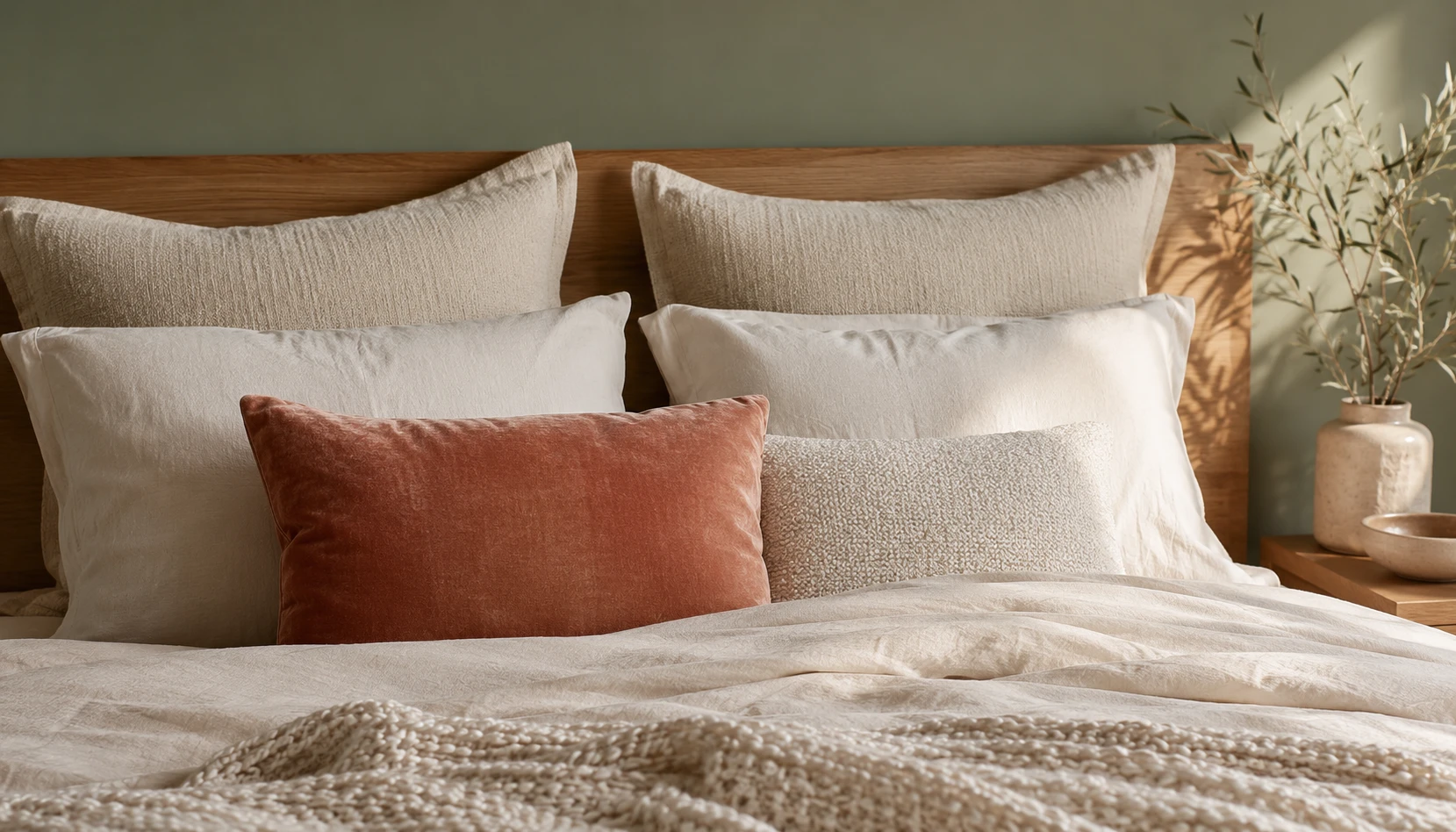
Best bedding combinations for sage green bedrooms:
Cream linen (the classic): Soft cream linen against sage green walls is the combination that tends to age best. The wrinkles in linen add texture that suits sage’s slightly imperfect, earthy quality.
Warm white cotton: A cleaner crisper alternative to cream. Slightly cooler tone that emphasises the green in sage.
Oat and natural taupe: Slightly deeper than cream but still neutral. Adds warmth and depth without competing with the wall colour.
Blush pink accents: A small blush velvet or linen cushion against cream linen bedding adds soft contrast without overpowering the sage.
Textile materials that work:
Linen is the natural partner for sage: textured, slightly imperfect weave, and it ages well. Cotton sateen has a slightly more polished finish, more refined than linen. Chunky knit throws add warmth and texture. Velvet accent cushions, small pieces in cream or blush, add a bit of contrast. Wool blankets are natural, warm, and good for cooler months.
Avoid in a sage bedroom:
- Pure brilliant white (too cold, competes with sage)
- Bright primary colours (clashes)
- Grey bedding (washes out the sage)
- Synthetic shiny fabrics (looks cheap against natural sage)
Wood Tones That Pair Beautifully With Sage
Wood is sage green’s natural partner. Most wood tones work with sage, though each one sets a different mood.
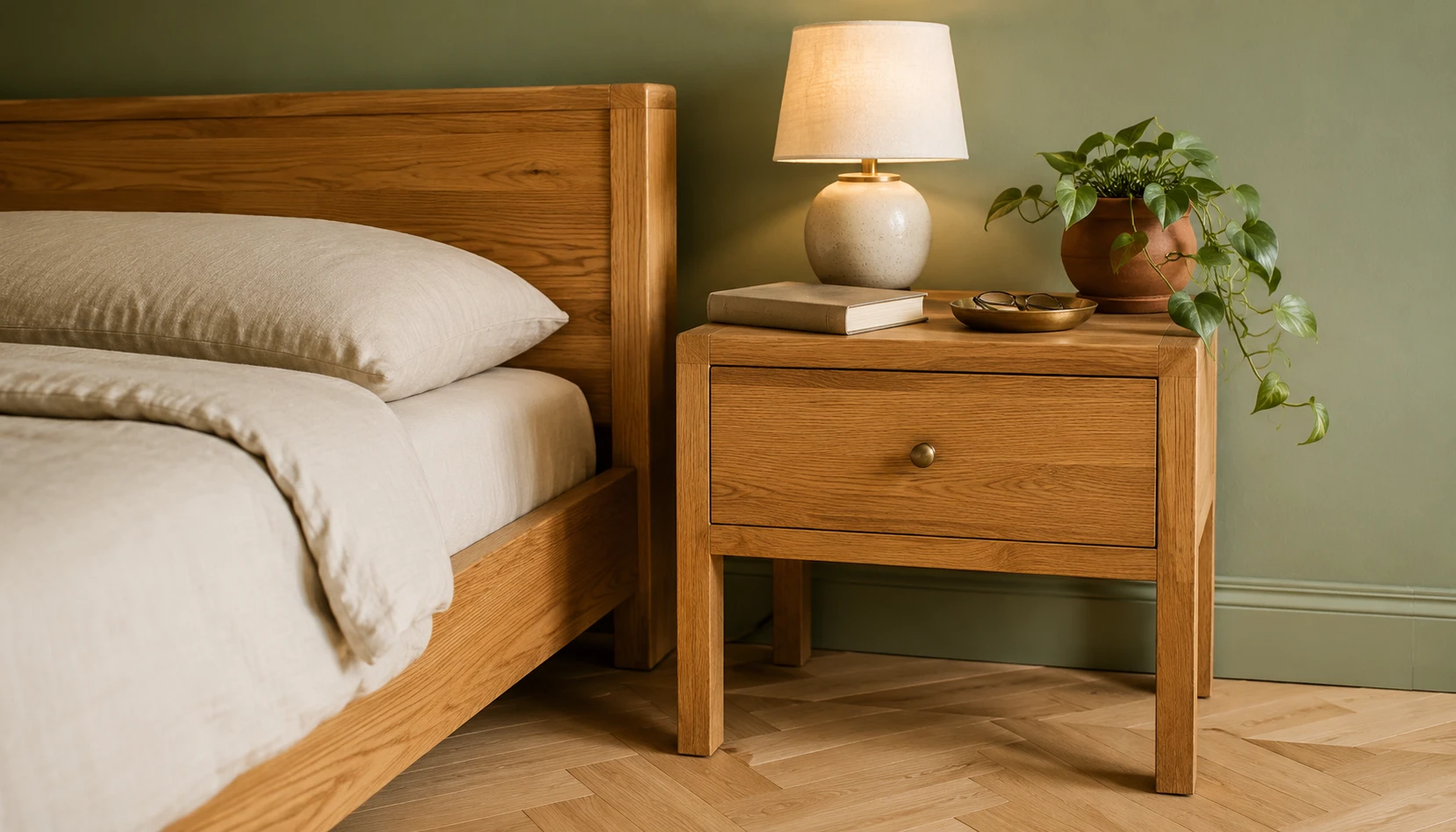
Best wood tones for a sage green bedroom:
Light oak (most popular): Warm honey-golden oak is the most natural pairing for sage. The wood’s warmth balances the slight coolness of sage and creates the calm-yet-warm bedroom feeling sage is known for.
Natural ash: Slightly cooler and lighter than oak. Creates a more Scandinavian aesthetic. Works particularly well with cooler sage shades.
Reclaimed pine: Rustic warm pine with visible knots and grain adds character and an organic farmhouse quality. Beautiful with sage when you want a slightly more relaxed feeling.
Walnut (for contrast): Darker, richer walnut creates dramatic contrast against sage walls. It’s less common, but it looks great when done well, particularly on headboards and other statement pieces.
Where to use wood in a sage bedroom:
- Bed frame (oak or ash for most bedrooms)
- Bedside tables (matching the bed frame)
- Floor (oak herringbone is exceptional)
- Open shelves and floating shelves
- Window frames (if you can choose them)
The hierarchy rule: Pick one primary wood tone and stick with it for the major pieces (bed, bedside tables). Smaller wooden accessories can vary a little, but keep them in the same family. Mixing dramatically different wood colours in a small bedroom just looks chaotic.
Hardware and Metal Finishes for Sage Bedrooms
Small metal details (drawer handles, light fittings, picture frames) matter more than you’d think in a sage green bedroom. Getting the finish right changes the whole feel of the room.
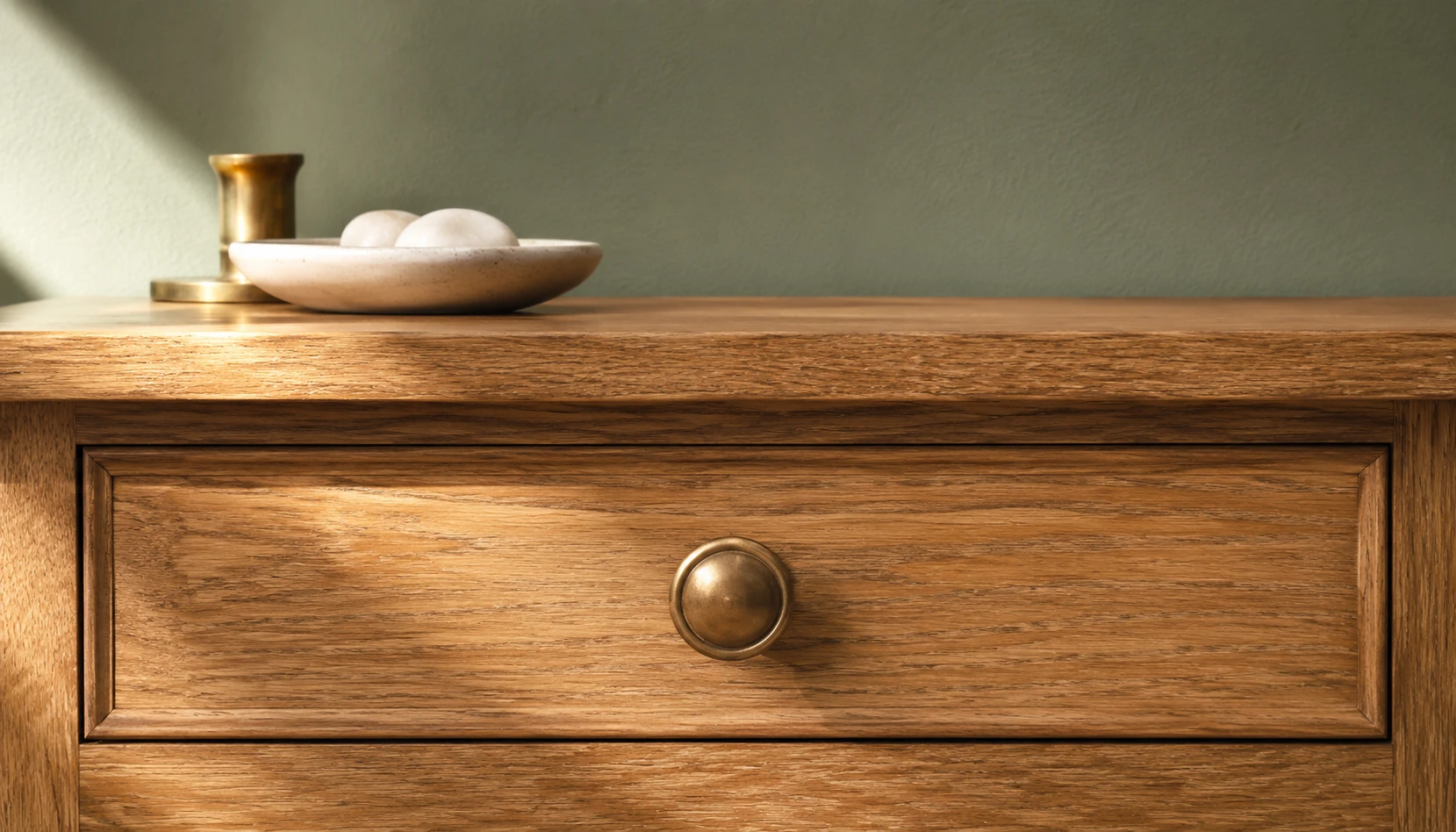
Best metal finishes for sage green bedrooms:
Aged brass (top recommendation): The warm golden tone of aged brass is the natural complement to sage green’s earthy quality. Drawer pulls, picture frames, lamp bases, and light fittings in aged brass dramatically elevate a sage bedroom.
Brushed gold: Slightly more modern than aged brass. Works well in contemporary sage bedrooms with cleaner lines.
Matte black: For modern, dramatic sage bedrooms. Creates strong contrast, but use it sparingly since too much black can overwhelm sage’s gentleness.
Bronze: Warm rich and slightly darker than brass. Works beautifully in more traditional bedroom styles.
Where to apply:
- Drawer pulls on bedside tables (smallest investment, biggest impact)
- Light fittings (ceiling pendant + table lamp bases)
- Picture frames on the wall
- Curtain rods
- Decorative tray or small dish on dresser
- Bedroom door handle (often overlooked)
Avoid:
- Chrome (too cold)
- Polished silver (clashes with sage)
- Mixing too many different metal finishes (stick to one or maximum two coordinating metals)
Lighting Your Sage Green Bedroom
Sage green requires warm lighting to look its best. Cool or harsh lighting flattens sage and makes it look grey or sickly.
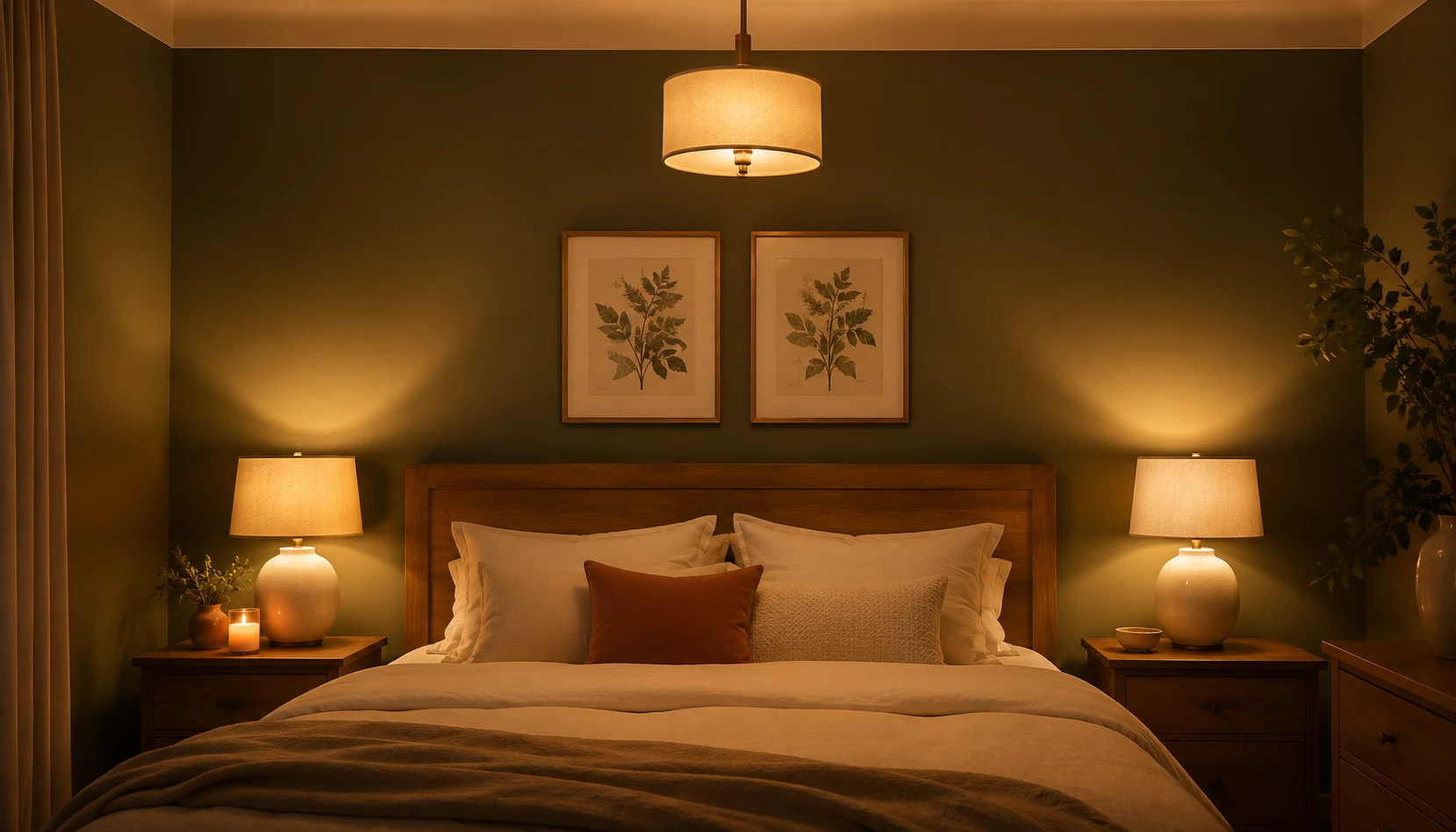
The lighting rules for sage bedrooms:
Always warm bulbs (2700-3000K): This is non-negotiable. Warm white bulbs make sage glow beautifully. Cool white bulbs make it look depressing.
Layer three light sources:
- Layer 1 (ambient): Ceiling pendant or flush mount
- Layer 2 (task): Bedside lamps (one each side)
- Layer 3 (accent): String lights, candles, or wall sconces
Best bedside lamp choices:
Ceramic table lamps in cream or warm white with linen drum shades. The cream base picks up the warm tones in sage perfectly.
Brass or aged gold table lamps with neutral fabric shades. The brass picks up the metallic theme of your hardware.
Plug-in wall sconces beside the bed if your bedside tables are small. Free up surface space and add architectural interest.
Dimmable everything: Being able to lower the lights in the evening is what turns a sage bedroom from an ordinary room into somewhere you actually want to wind down. Install dimmer switches on bedside lamps and ceiling lights.
Natural light considerations: Sage looks dramatically different at different times of day. South-facing rooms see sage’s warmer side in morning light, cooler tones in afternoon. Observe your room across a full day before committing to bedding and accessory choices.
Sage Green + Terracotta — The Hottest Combo of 2026
Sage green might be the bedroom colour of 2026, but sage paired with terracotta is the combination people keep coming back to. It’s been everywhere on Pinterest this year, and for good reason.
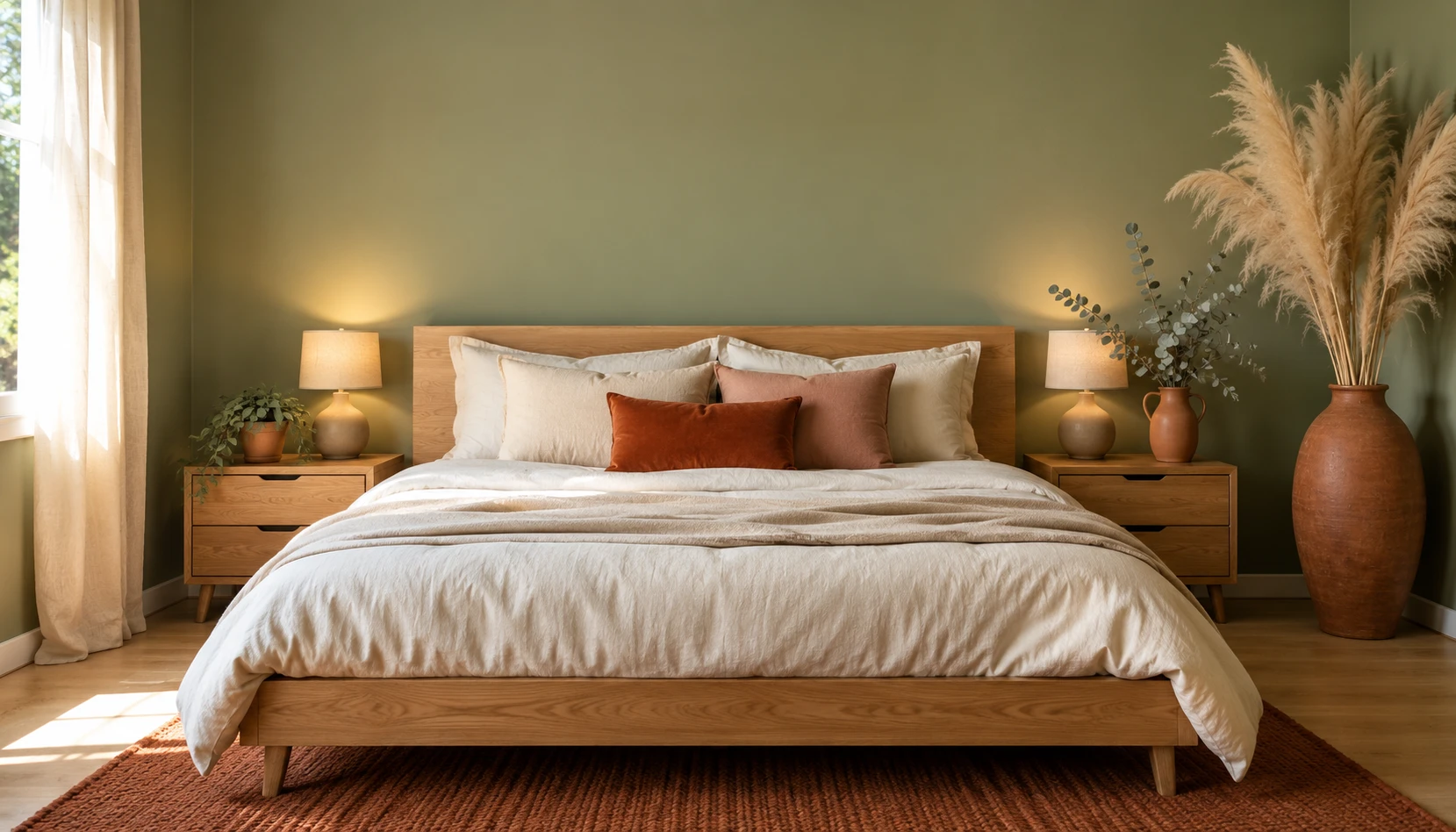
Why this combination works so well:
Sage sits on the cooler side of the earthy palette. Terracotta sits firmly in warm orange territory. Put together, they balance each other out: sage takes the edge off terracotta’s warmth, and terracotta takes the edge off sage’s coolness. The result is a bedroom that feels both warm and calm at once.
How to combine them:
80/20 rule: Sage as the dominant colour (80%): walls, bedding base, larger furniture. Terracotta as the accent (20%): cushions, pottery, artwork, throws.
Where to place terracotta in a sage bedroom:
- One terracotta accent cushion on the bed
- A small terracotta pot on the dresser with a small trailing plant
- A terracotta ceramic vase with dried pampas
- A terracotta-coloured ceramic dish for jewelry
- A small terracotta tray on the bedside table
Pair with these supporting neutrals:
- Cream linen bedding (ties everything together)
- Natural light oak furniture
- Aged brass hardware
- Jute or wool rug
If you’re interested in a fully terracotta-focused bedroom, our complete White and Terracotta Bedroom Guide covers the pairing in detail.
Sage Green + Cream — The Timeless Classic
If terracotta feels too bold, the classic pairing of sage and cream is endlessly elegant and never goes out of style.
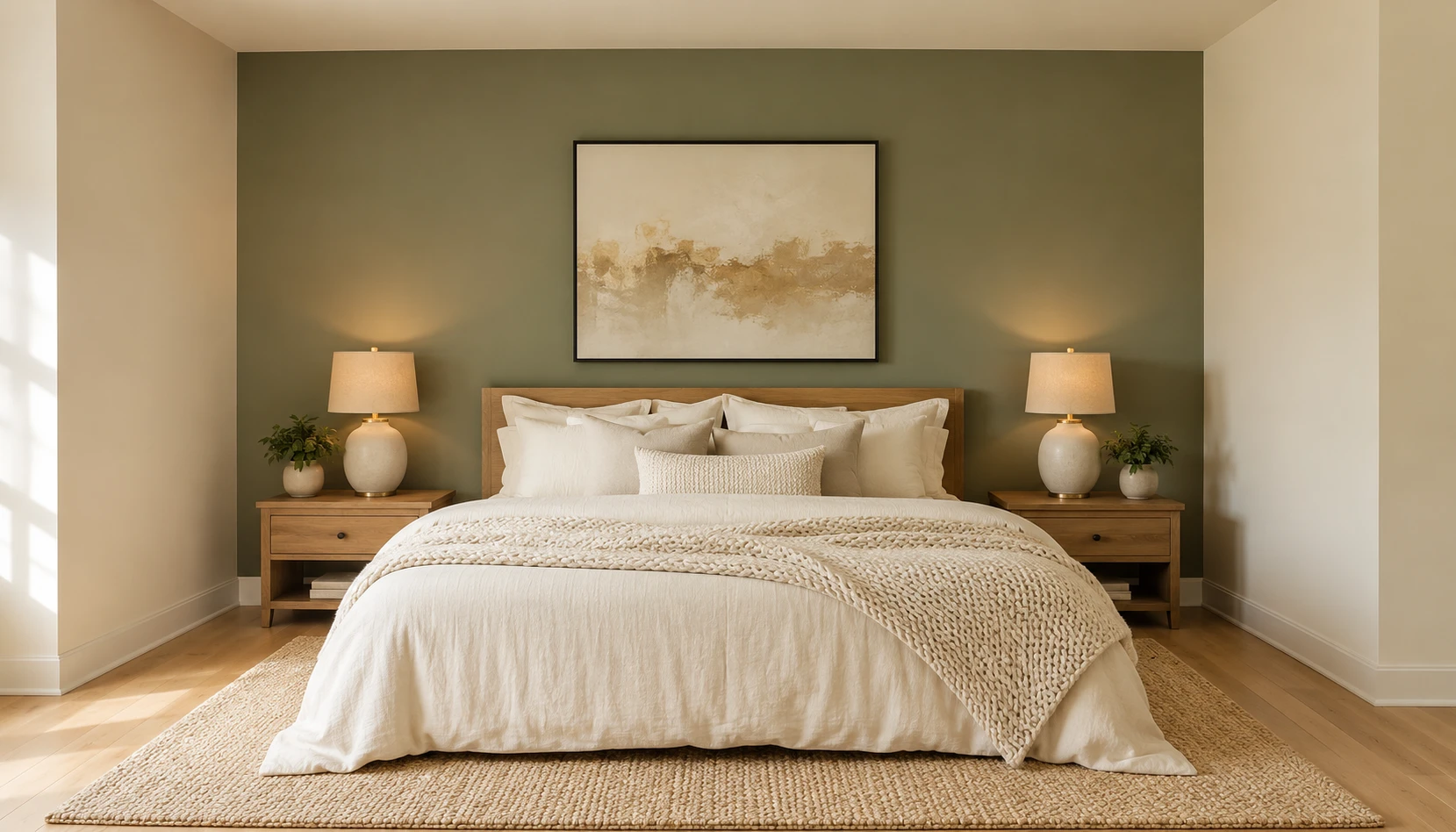
The complete sage and cream formula:
Walls: Soft sage green (full room or accent wall) Ceiling: Warm cream (or extend sage with colour drenching) Floor: Light oak wood or natural wool rug Bed frame: Light oak or natural ash Bedding: Cream linen duvet cover and pillows Throw: Chunky cream knit blanket Cushions: Layer 4-5 cream pillows of varying textures Curtains: Sheer cream linen panels hung ceiling-height Hardware: Aged brass Lamps: Cream ceramic with linen shades
Why it works:
Cream and sage share warm undertones, so they don’t fight each other. The neutral cream lets the sage walls do the work without competing for attention. It’s a gentle, quietly classic combination that suits a modern apartment just as well as a country cottage.
Add interest through texture, not colour:
In a sage and cream bedroom, since both colours are quiet, the texture must work harder. Layer different cream textures:
- Smooth cotton sheets
- Wrinkled linen duvet
- Chunky knit throw
- Boucle accent cushion
- Velvet pillow
- Wool blanket folded at the foot
Each texture catches the light differently, which is how you get visual interest out of what is technically one colour family.
Sage Green + Black — Modern Sophisticated Edge
For a more contemporary look with edge, sage green paired with black creates a sophisticated modern bedroom that feels both calm and intentional.
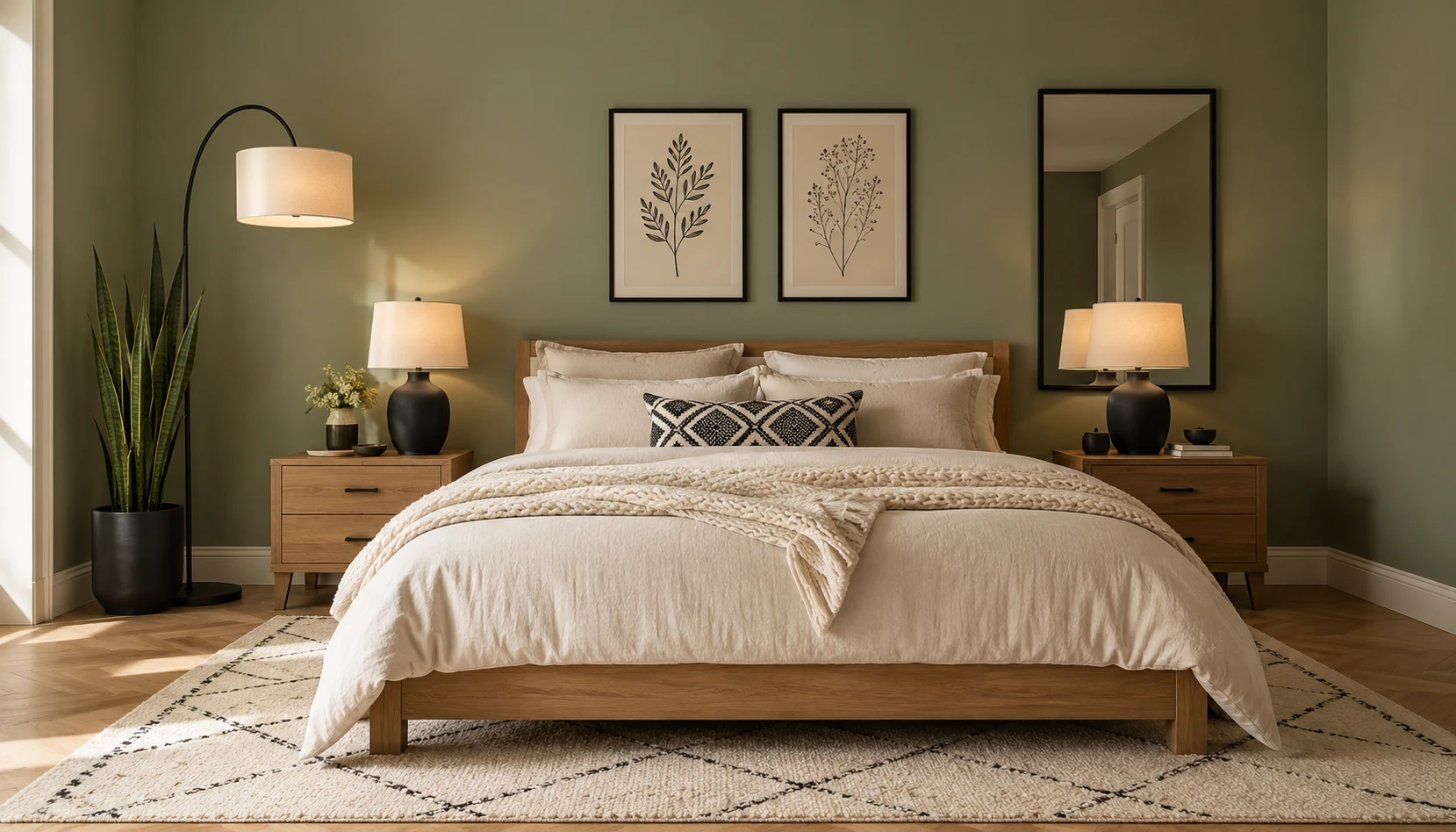
Where to add black to a sage bedroom:
Bed frame: A matte black metal bed frame or black-stained wood headboard provides architectural anchoring without overwhelming the gentle sage.
Lamp shades: Black drum shades on lamp bases (with brass or cream bases) add modern sophistication.
Picture frames: Thin black frames on the wall create clean modern gallery moments.
Light fittings: A matte black ceiling pendant or sconces adds intentional modern detail.
Small accents only: Black ceramic vase, black candle holder, black book stack. Used sparingly black becomes punctuation rather than dominance.
The proportions:
In a sage and black bedroom, keep black to less than 15% of the visible surfaces. Otherwise the black overwhelms the calming quality of sage and the room loses its sanctuary feeling.
Pairs beautifully with:
- Cream bedding (softens the contrast)
- Natural oak floor (warmth balance)
- A single warm brass accent (bridges the cool sage and stark black)
Works best for:
- Modern apartments
- Smaller bedrooms (the contrast creates definition)
- Bedrooms with strong natural light
- Anyone who finds traditional sage bedrooms too soft
Small Sage Green Bedrooms — Special Considerations
Small bedrooms can use sage green too. It just takes a few adjustments so the colour opens the space up instead of shrinking it.
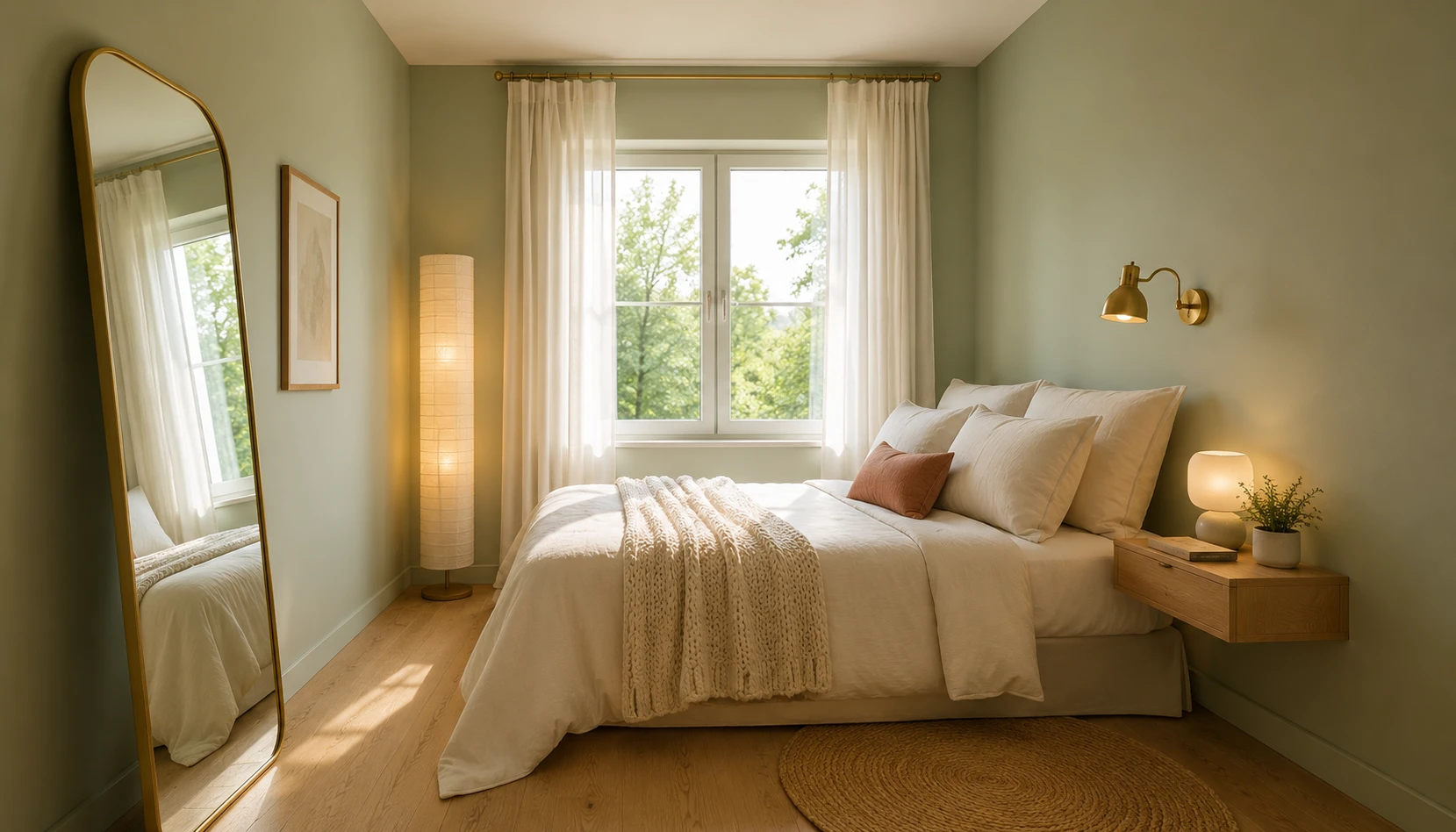
Rules for small sage bedrooms:
Choose a lighter sage: Pigeon and Tea Green can feel heavy in small rooms. Choose Mizzle, Silken Pine, or Sage Green Light instead, since lighter shades expand the space visually.
Use sage as accent, not full room: Paint only the wall behind the bed in sage. Keep other walls in warm cream. This adds the colour story without darkening the small space.
Maximise natural light: Ceiling-height sheer curtains hung wide. Keep windowsills completely clear.
Add a mirror: A large mirror opposite the window doubles the natural light and visually expands the sage walls.
Cream everywhere else: Bedding, lampshades, side tables, rugs: keep secondary surfaces light cream to reflect light.
One statement piece only: A small bedroom can support one major sage element. Choose sage walls, a sage headboard, or a sage rug, not all three.
Furniture with legs: Bed frames and bedside tables with visible legs (rather than floor-skimming) show the floor beneath, creating visual breathing room.
Avoid:
- Heavy dark sage in tiny rooms
- Sage ceiling in small rooms (overwhelming)
- Cluttered surfaces (kills the calm)
- Multiple competing accent colours
Sage Green Bedroom Mistakes to Avoid
Knowing what not to do is often more useful than knowing what to do. Here are the mistakes that most often keep a sage green bedroom from looking as good as it could.
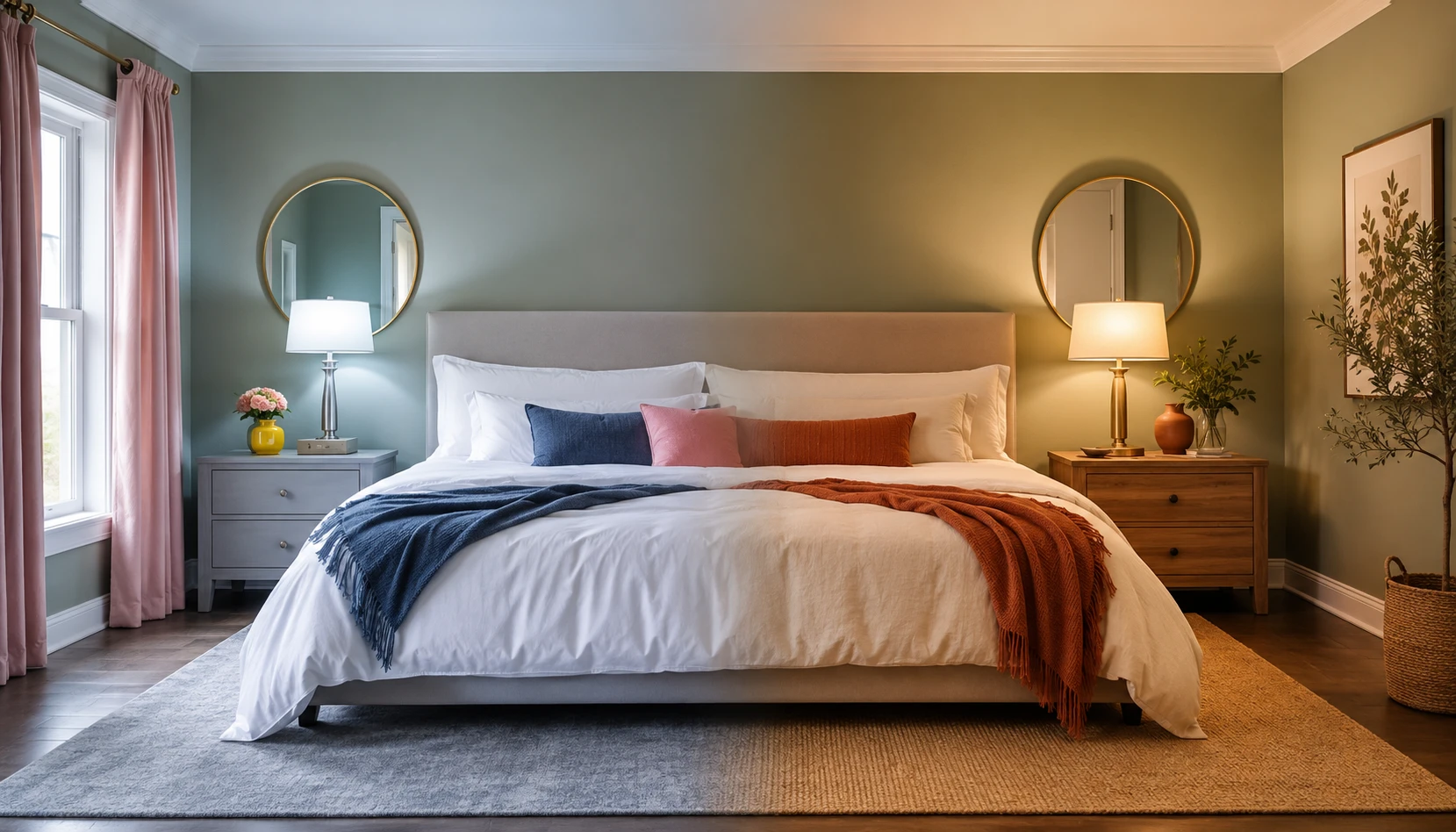
Mistake 1 — Wrong sage shade for your light: Choosing a cool grey sage for a north-facing room makes it feel cold and depressing. Always test paint shades in YOUR specific room before committing.
Mistake 2 — Cool white bulbs: Modern LED bulbs often come in cool white by default. In a sage bedroom that’s a real problem: the sage looks grey, sickly, or washed out. Always use 2700-3000K warm white bulbs.
Mistake 3 — Grey bedding: Grey and sage are both cool-toned which sounds compatible but actually creates a flat dull bedroom. The neutrals fight each other rather than supporting each other.
Mistake 4 — Mixing too many wood tones: A dark walnut headboard with light oak floor and orange-toned pine bedside tables creates visual chaos. Stick to one or maximum two coordinating wood tones.
Mistake 5 — Cluttered surfaces: Sage’s calming quality only emerges in a tidy minimal bedroom. Surfaces overflowing with objects negate the sage benefit entirely.
Mistake 6 — Wrong metal finishes: Chrome and polished silver clash with sage green. Stick to aged brass, gold, bronze, or matte black for hardware and fittings.
Mistake 7 — Skipping textures: A sage bedroom with flat painted surfaces and smooth fabrics looks one-dimensional. Layer different textures (linen, knit, wool, velvet) to add depth.
Mistake 8 — Pure white bedding: Stark white competes with sage rather than supporting it. Choose cream, oat, or warm white instead.
Mistake 9 — Too many accent colours: Sage works beautifully with ONE additional accent (terracotta OR blush OR black). Trying to combine sage with multiple accent colours creates a confused look.
Mistake 10 — Forgetting plants: A sage green bedroom without a living plant looks one-dimensional. Add one small live plant (a snake plant, pothos, or peace lily) to bridge the painted sage with actual green. For more easy-care plant recommendations, see our guide to the best houseplants for your living room.
A good sage green bedroom in 2026 isn’t really about following a checklist. It comes down to giving sage what it wants: warmth, calm, some texture, and just enough contrast that it feels intentional rather than accidental.
Start with the paint shade that suits your light, then layer in cream linens and natural textures. Add aged brass for a bit of metallic glow, bring in one accent colour you actually love, and light the whole thing warmly.
Get it right and a sage green bedroom stops feeling like just a room. It becomes the place you actually look forward to going at the end of the day.
For another warm, calming bedroom color trend, see our butter yellow bedroom ideas.