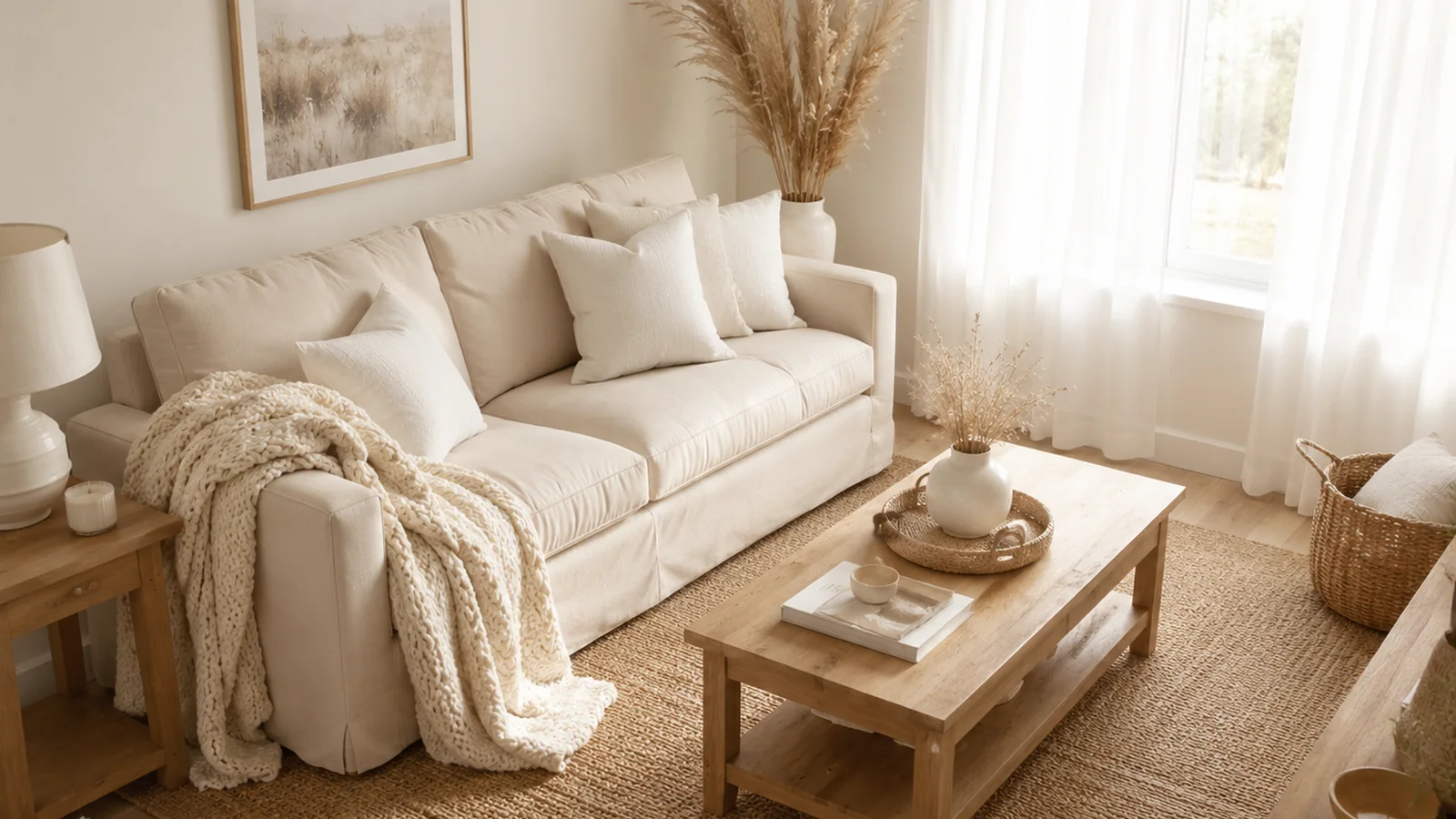
Minimalism is everywhere right now, and for good reason. A clutter-free, intentional living room feels like a breath of fresh air in a world full of noise. But here’s the trap most people fall into: they strip everything away and end up with a room that feels cold, sterile, and frankly, kind of sad.
The good news? Warm minimalism is absolutely a thing. And once you understand the principles, you can create a living room that feels both calm and cosy.
Start With a Light, Monochromatic Colour Palette
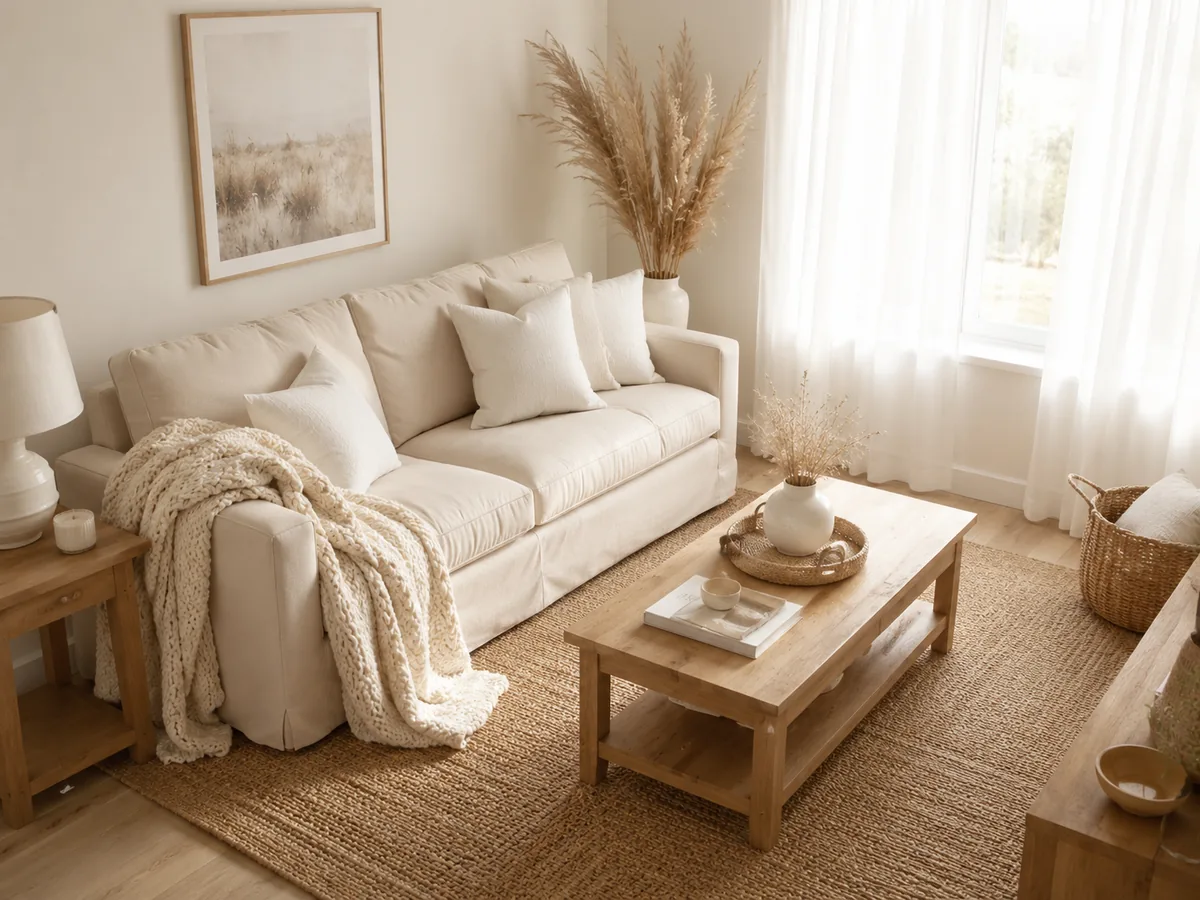
The foundation of any warm minimalist room is colour. Forget stark white: the magic happens in warm neutrals like cream, oat, blush, sand, and warm greige.
A monochromatic palette doesn’t mean boring. It means layering different shades of the same warm family so the eye moves around the room without jarring contrasts pulling your attention.
What to do:
- Paint walls in warm white (think Farrow & Ball’s Pointing or Dulux Natural Hessian)
- Choose a sofa in a slightly darker shade: oat, camel, or warm grey
- Add cushions and throws in the same tone but different textures (linen, bouclé, wool)
- Use wood accents to ground the palette and prevent it looking too flat
If your living room is on the smaller side, pair this palette with these bright small living room ideas for even more ways to make it feel bigger.
Choose Multifunctional Furniture
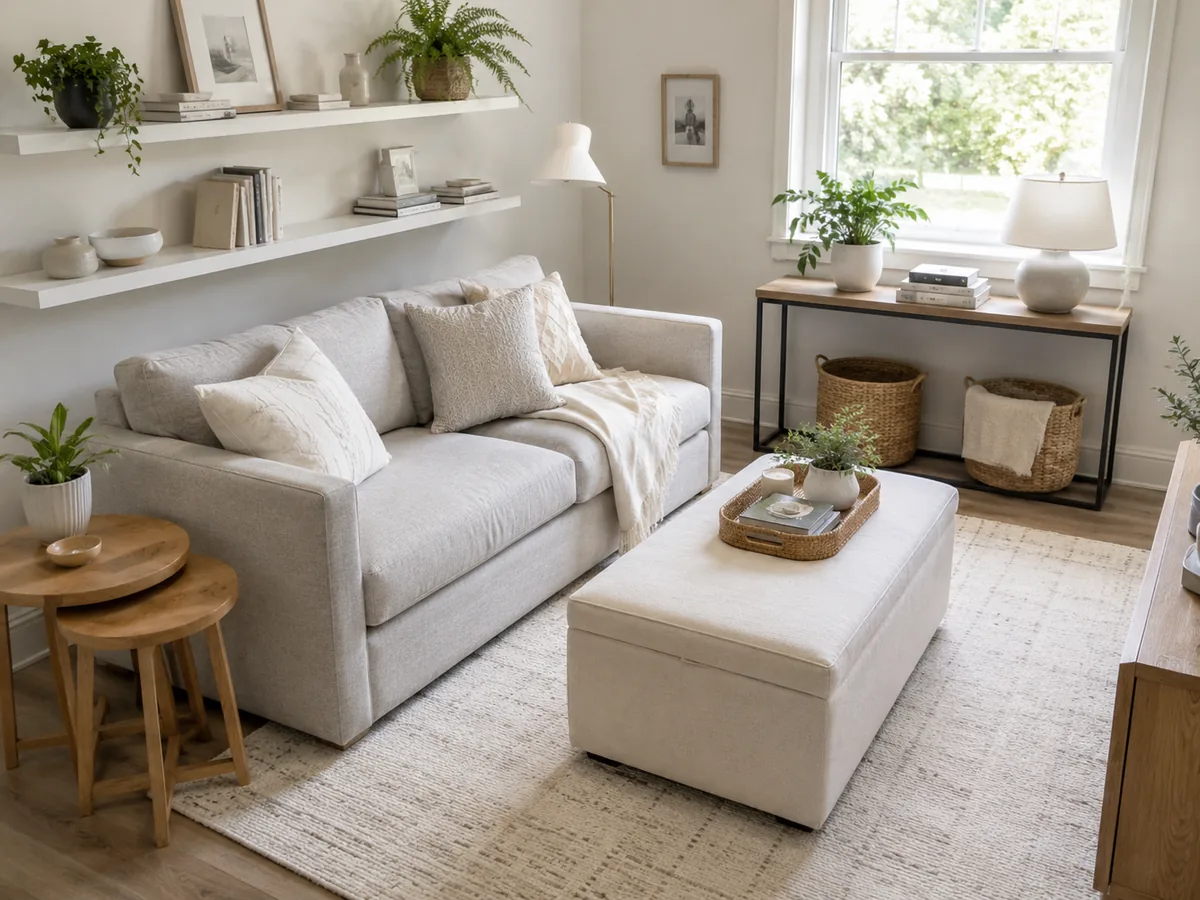
In a minimalist room, every piece needs to earn its place. That doesn’t mean buying less furniture, it means buying smarter furniture.
The goal is maximum function with minimal footprint.
What to look for:
- Ottomans with hidden storage (perfect for throws and books)
- Coffee tables with lower shelves or drawers
- Nesting side tables that tuck away when not in use
- Sofas with built-in chaise or storage underneath
- Sideboards that double as media consoles
The less floor space covered, the larger the room feels. Legs on furniture (rather than skirts to the floor) is a minimalist trick that creates visual breathing room instantly.
Create Clear Furniture Flow & Zones
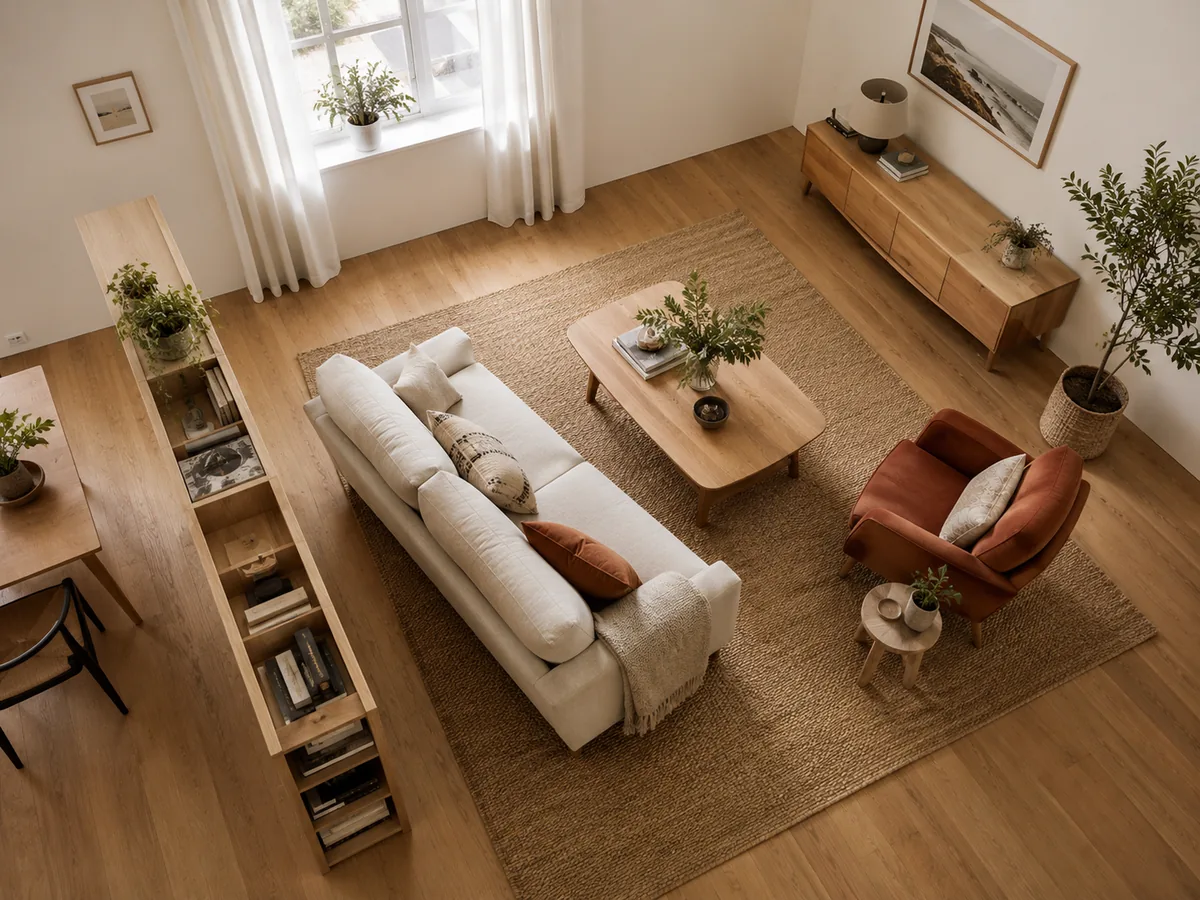
One of the most underrated aspects of minimalist design is spatial planning. Even with a small room, how you arrange furniture determines whether the space feels open or cramped.
The golden rule: leave a clear path of at least 80cm (30 inches) between pieces.
Zoning tricks:
- Float your sofa away from the wall slightly; rooms instantly feel larger
- Use a rug to anchor the seating zone and define the space
- Keep a visual “breathing” gap between the TV unit and any other furniture
- Avoid pushing everything against the walls (counterintuitively, this makes rooms feel smaller)
Layer Your Lighting
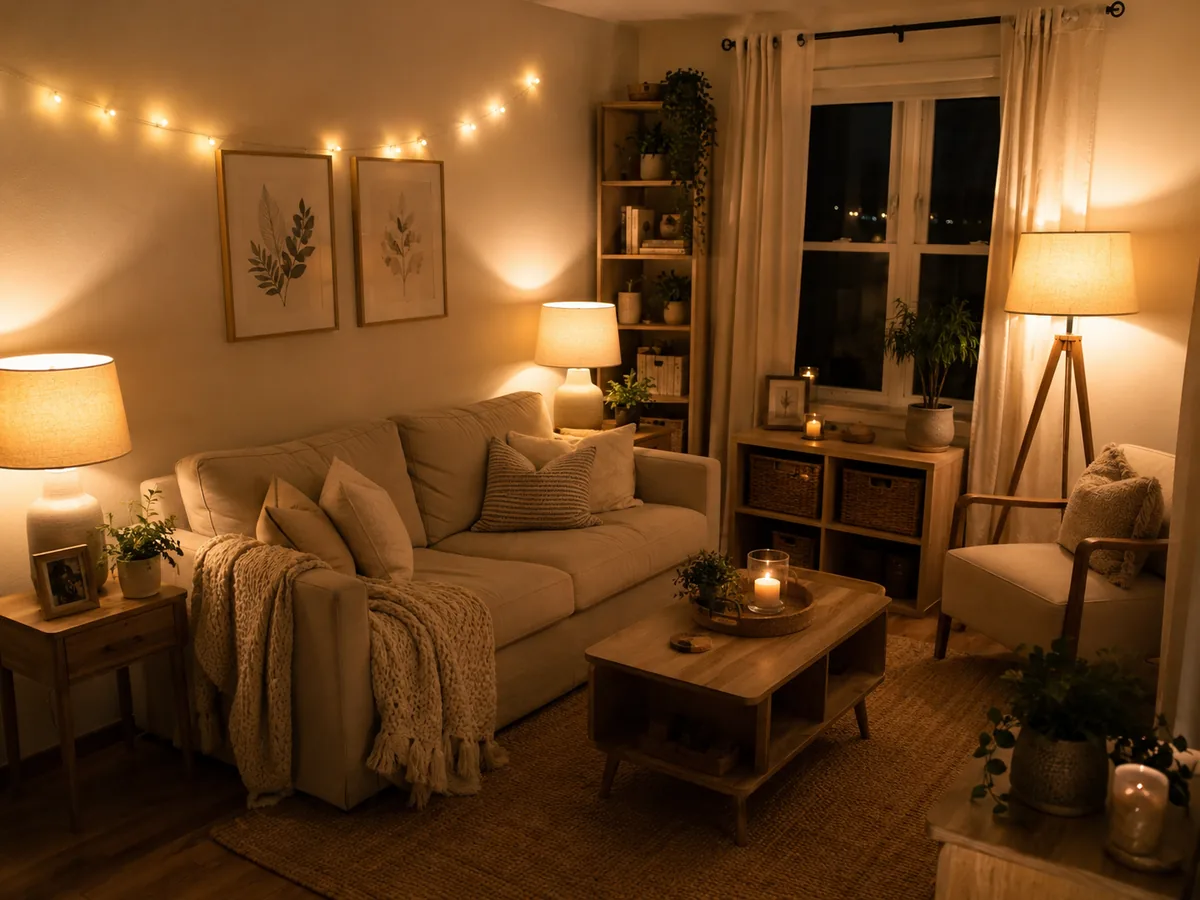
Overhead lighting alone is the enemy of warmth. A single ceiling light makes a room feel like an office or a hospital. Warmth comes from layers: different light sources at different heights, all working together.
The three-layer rule:
- Ambient: your main ceiling light (keep it dim-able)
- Task: a floor lamp beside the sofa for reading
- Accent: table lamps, candles, or LED strips behind a TV or under shelves
Choose bulbs in the 2700K to 3000K range (warm white). Avoid cool daylight bulbs in living rooms.
Go Vertical With Storage & Display
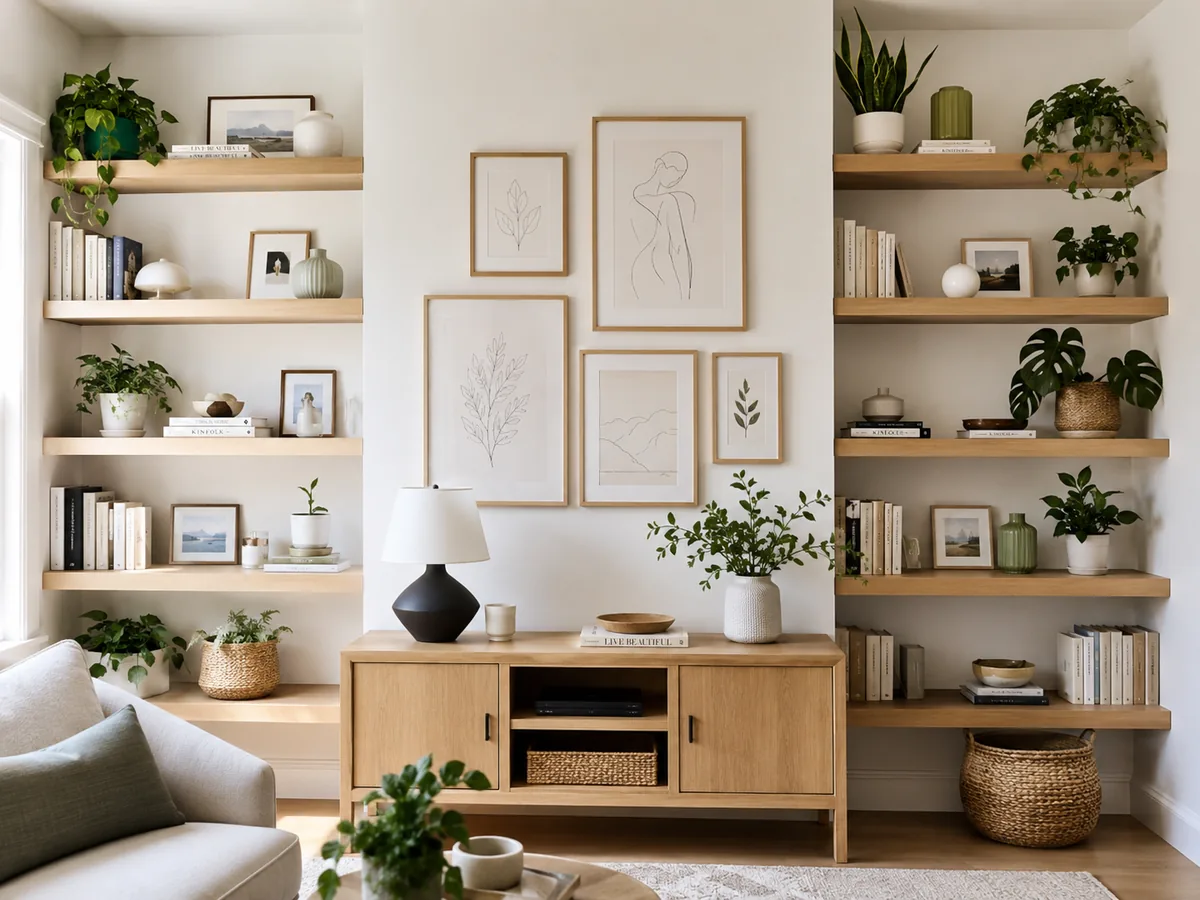
In minimalism, what you don’t see matters as much as what you do. The key is hiding the majority of your possessions while displaying a small, curated selection.
Going vertical (built-in shelving from floor to ceiling, tall bookcases, wall-mounted units) maximises storage without eating floor space.
Display rules:
- The rule of three: group objects in odd numbers
- Vary height: tall, medium, and low items together
- Leave empty space deliberately; negative space is part of the design
- One plant per shelf maximum
For plant recommendations that work well on open shelving, see our guide to the best houseplants for your living room.
Use Mirrors to Multiply Light & Space
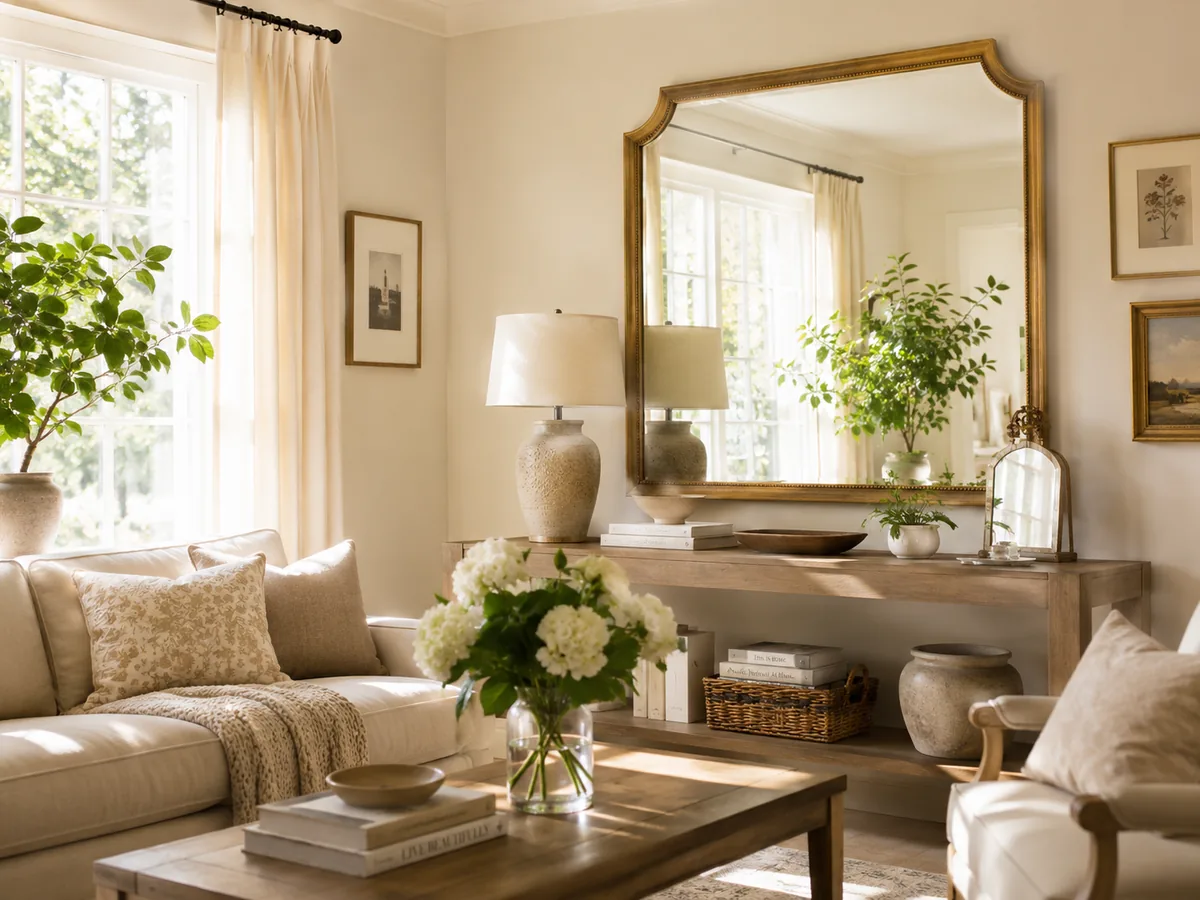
Mirrors are a minimalist’s secret weapon. They reflect light, create the illusion of depth, and add visual interest without clutter.
How to use them:
- A large floor mirror leaning against a wall is the single most effective way to make a small room feel twice the size
- Position mirrors opposite or at 90° to windows to bounce natural light around
- A round mirror above the sofa softens a room that feels too angular
- Mirrored furniture (side tables, dressers) catches light without being overwhelming
These same tricks are covered in more depth in our guide to small space decoration ideas.
Display Only What’s Intentional
This is where minimalism gets personal. Once you’ve sorted the structure, furniture, and lighting, the final step is curation: being deliberate about every single object on display.
The minimalist mantra: if it doesn’t spark joy or serve a purpose, it doesn’t belong in the room.
A simple edit process:
- Remove everything from surfaces and shelves
- Only bring back what you genuinely love or use
- Group similar items together
- Add one natural element: a plant, a branch, a stone
- Step back. Does it feel calm? If not, remove one more thing.
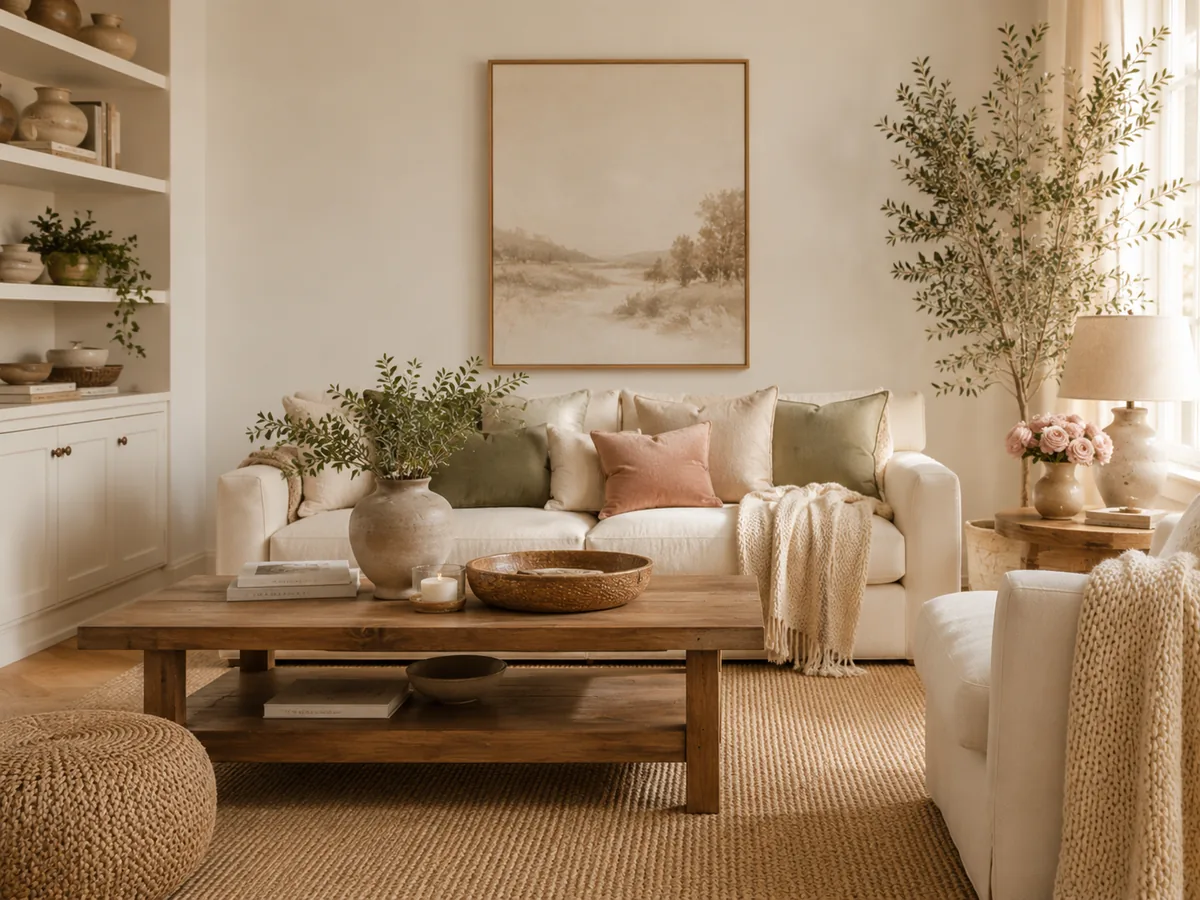
Minimalism isn’t about deprivation. It’s about making room for what actually matters. A warm, calm, well-curated living room is one of the more restorative spaces you can create, and you don’t need to spend a fortune to get there. You just need to be intentional.
If you’re ready to bring in more color while keeping that same grounded warmth, explore our olive green living room ideas next.
Start with one corner, or even just one shelf. Buy one quality piece instead of three cheap ones, and let the room grow slowly instead of all at once.