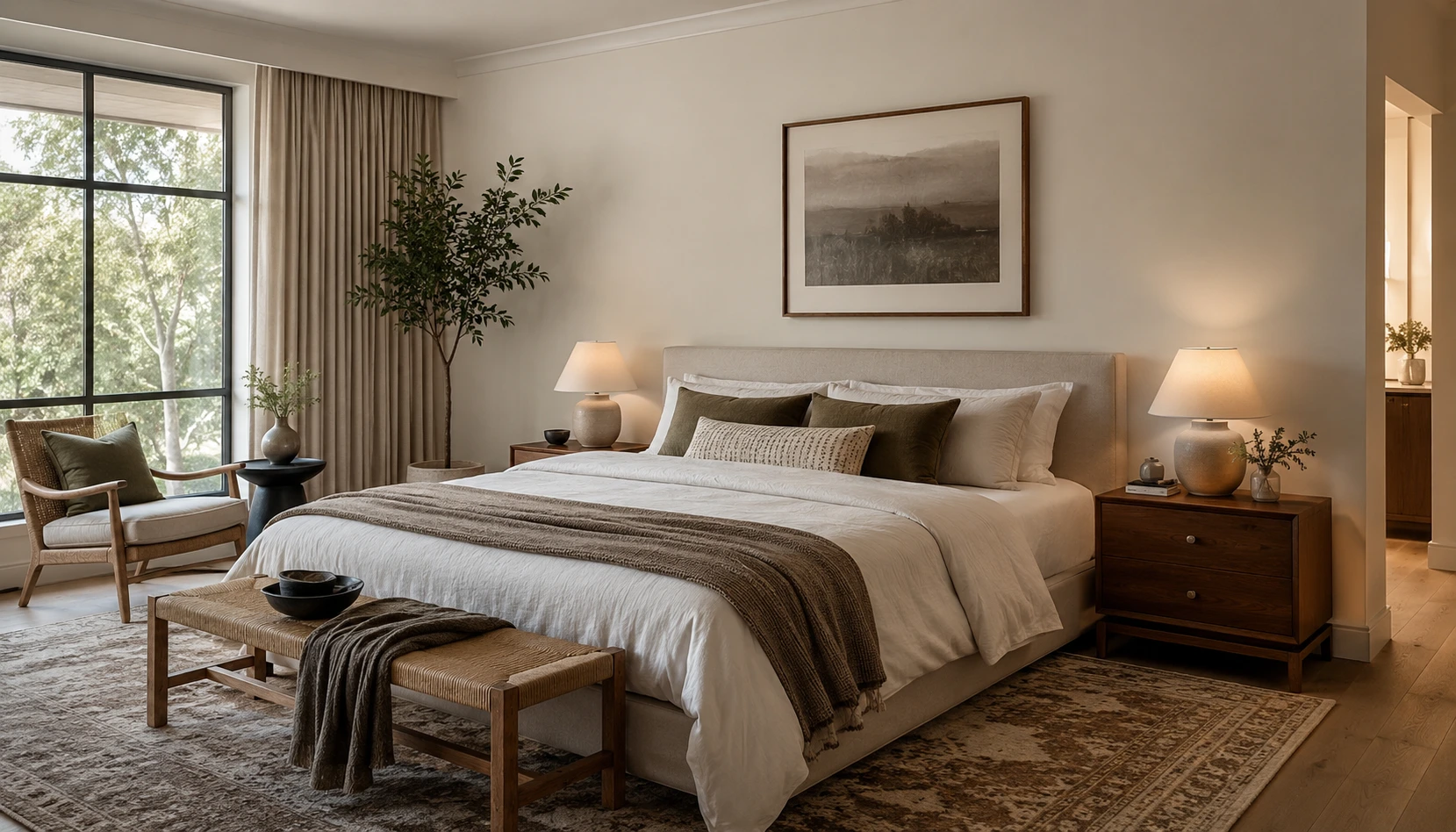
A bedroom can have good furniture, decent bedding, and a perfectly fine paint color and still feel as though it never came together. Nothing may be obviously wrong, but the individual pieces can look as though they are having separate conversations.
That is usually what people are trying to solve when they search for bedroom aesthetic ideas. They are not only looking for a pretty room. They want a clear direction: a palette that makes sense, lighting that feels right at night, and enough personality that the room does not look copied from a product page.
The twelve ideas below are less about buying a complete new bedroom and more about choosing a mood, then repeating it carefully. Some are color-led. Some rely more on texture, art, or lighting. All can be adjusted for the furniture and square footage you already have.
What Makes a Bedroom Feel Cohesive
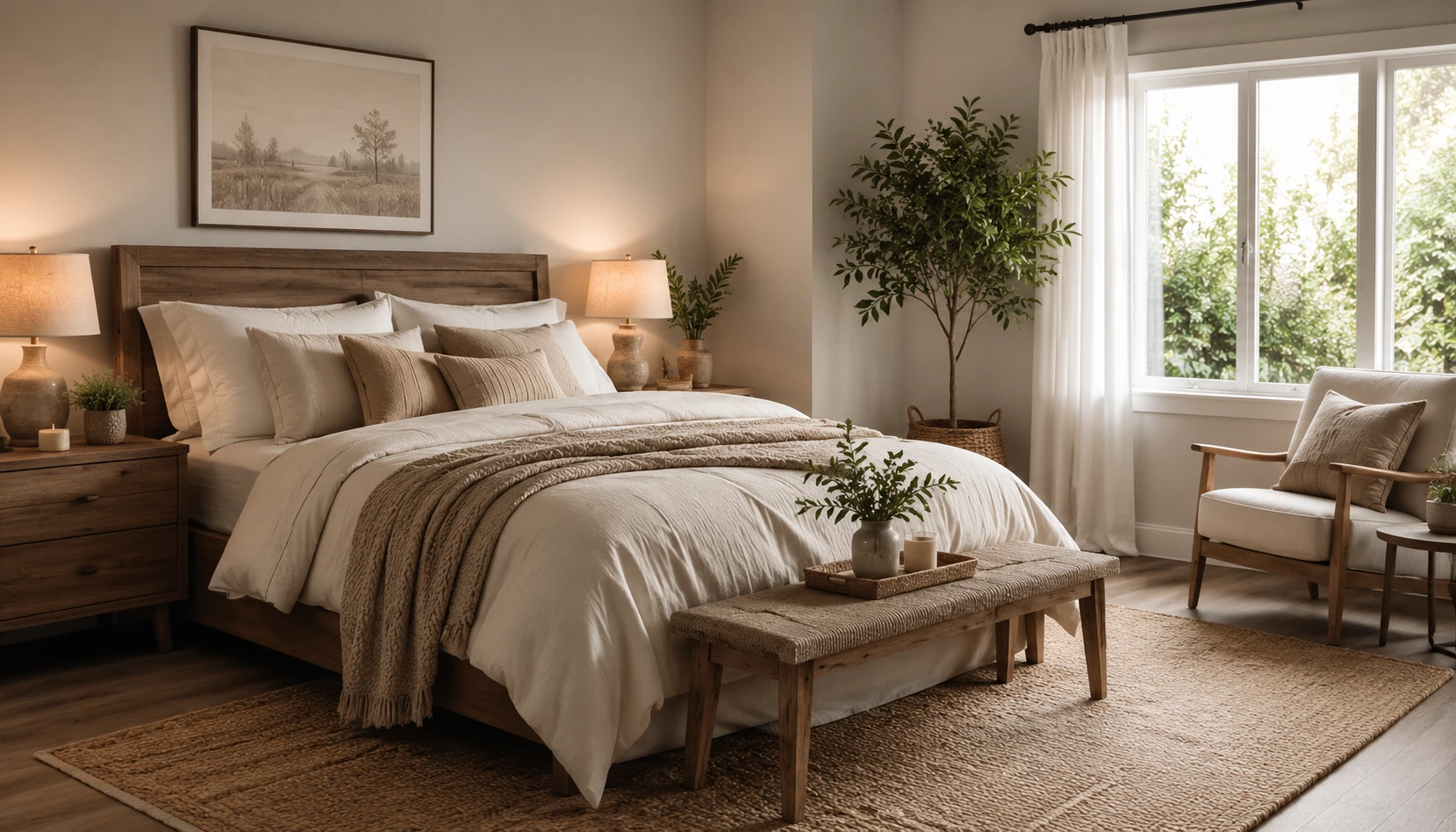
A cohesive bedroom usually has fewer ideas in it than an unfinished one.
Choose one mood before choosing individual objects. Calm, warm, collected, polished, moody, or bright are useful starting points. Two inspiration photos can both look beautiful while using completely different wood tones, wall colors, and levels of visual clutter.
Limit the main palette to three parts. One dominant neutral, one supporting color, and one darker or warmer accent is enough for most bedrooms.
Repeat materials, not just colors. If you use warm oak on the bed, let a similar tone appear in a frame, stool, or bedside table. If the bedding is linen, repeat that relaxed texture in the curtains or lampshade.
Judge the room at night. A bedroom can look excellent in midday sun and surprisingly flat under one ceiling fixture. Since this is the room you use most after dark, bedside lighting belongs in the plan from the beginning.
Soft Sage and Cream
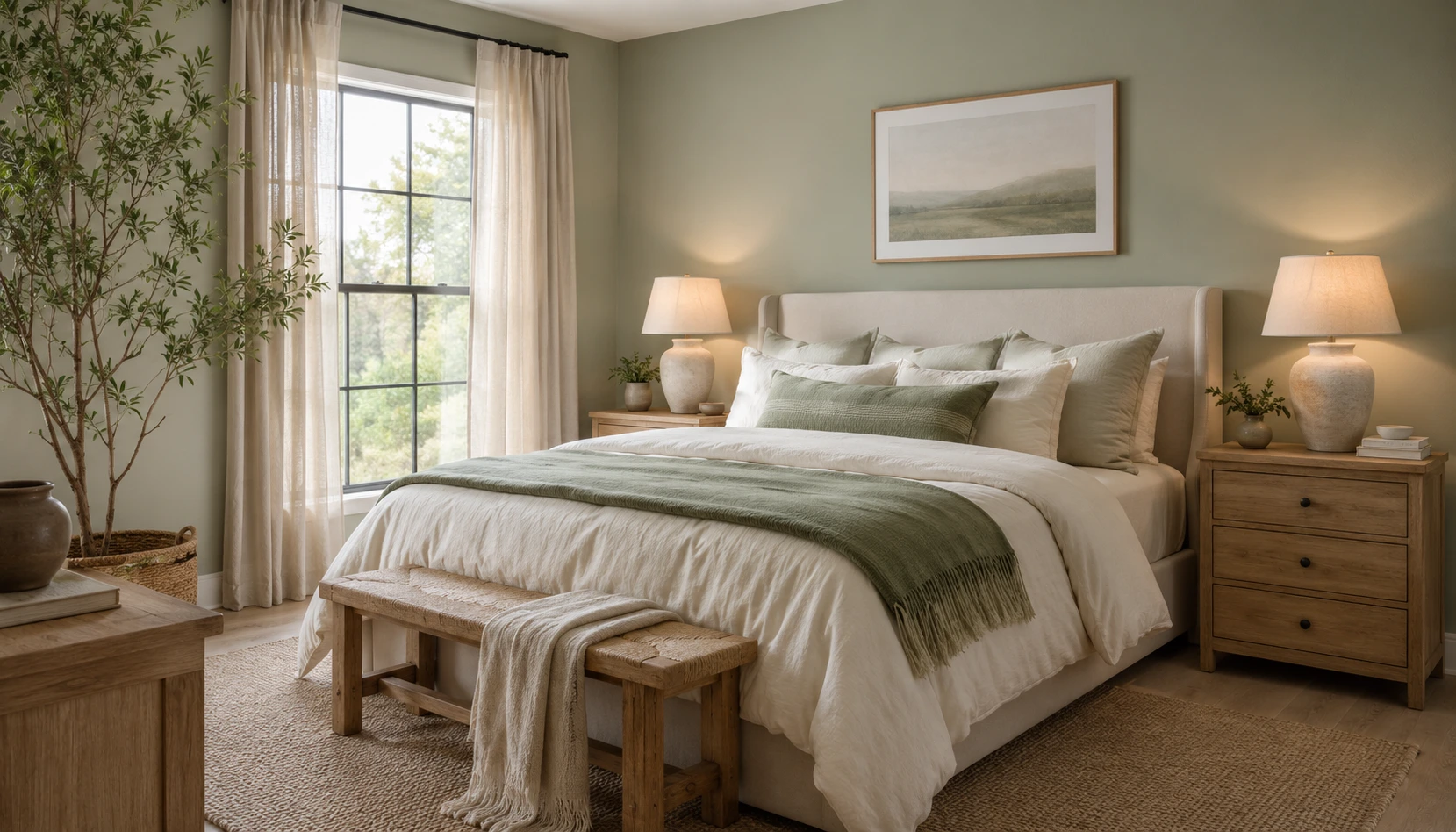
Soft sage brings real color without making a bedroom feel busy. Use cream for the largest soft surfaces, especially bedding and curtains, then bring sage into the walls, headboard, throw, or a pair of pillows. Natural oak, cane, and warm brass keep the green from drifting cool.
The mistake is using too many different greens. One muted sage supported by cream looks intentional. Four green tones spread across the room can look accidental. For a full breakdown, see Sage Green Bedroom Ideas.
Butter Yellow and Warm White
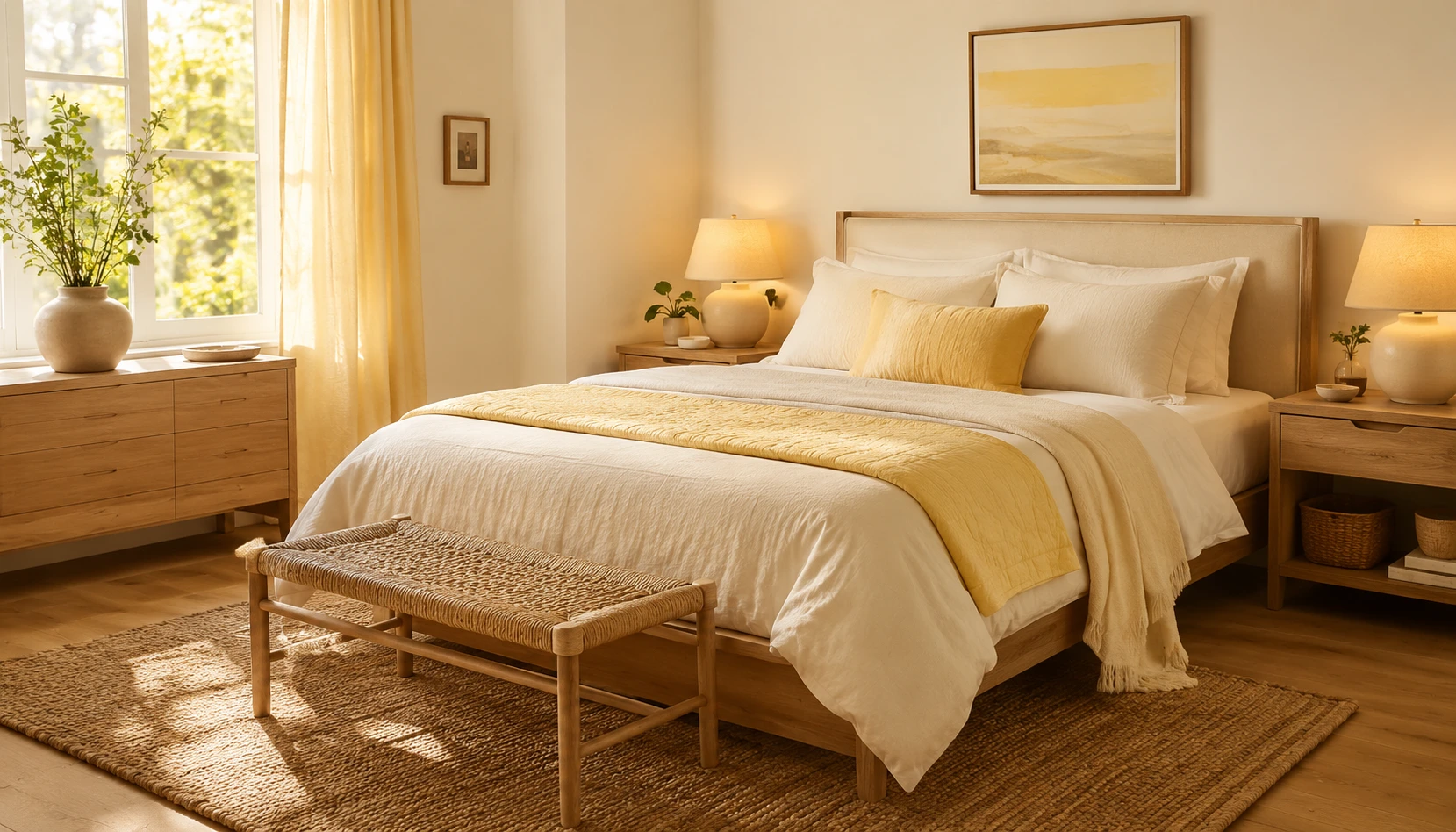
Butter yellow gives a bedroom warmth without the heaviness of a darker earthy color. Look for yellow with cream or beige in it rather than anything sharp or lemony.
Warm white bedding, pale oak furniture, and one caramel detail help the palette feel settled. Keep patterns quiet so the color remains the main feature. See Butter Yellow Bedroom Ideas for paint, bedding, and lighting advice.
White and Terracotta
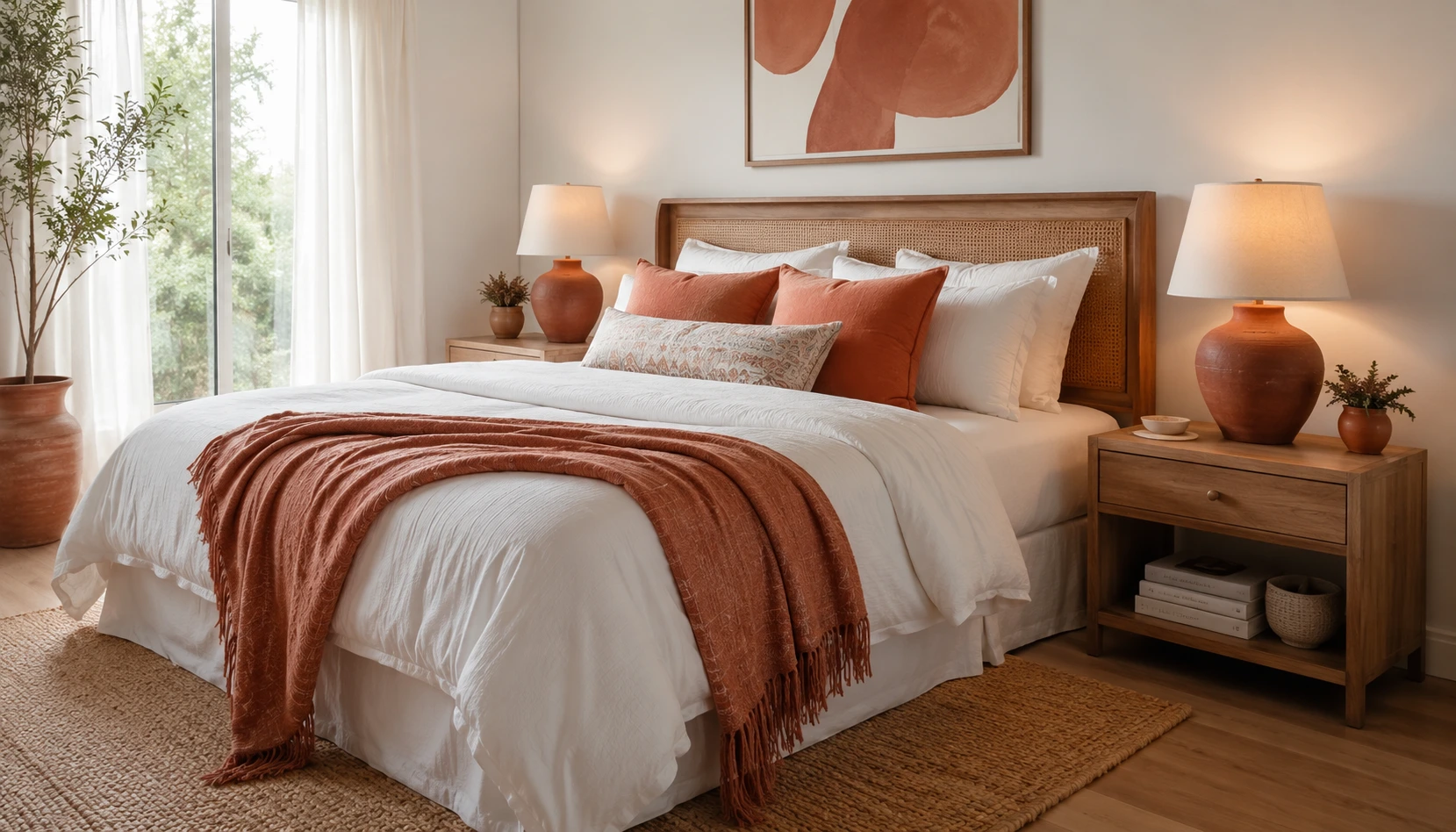
An all-white bedroom often needs one grounded color to stop it feeling temporary. Terracotta does that without taking over. Use it in two or three places: a throw, one pillow, a ceramic lamp base, or a framed print.
Avoid filling the room with orange accessories. Terracotta works because it is earthy and muted. White and Terracotta Bedroom Ideas goes deeper into this palette.
Olive and Oat
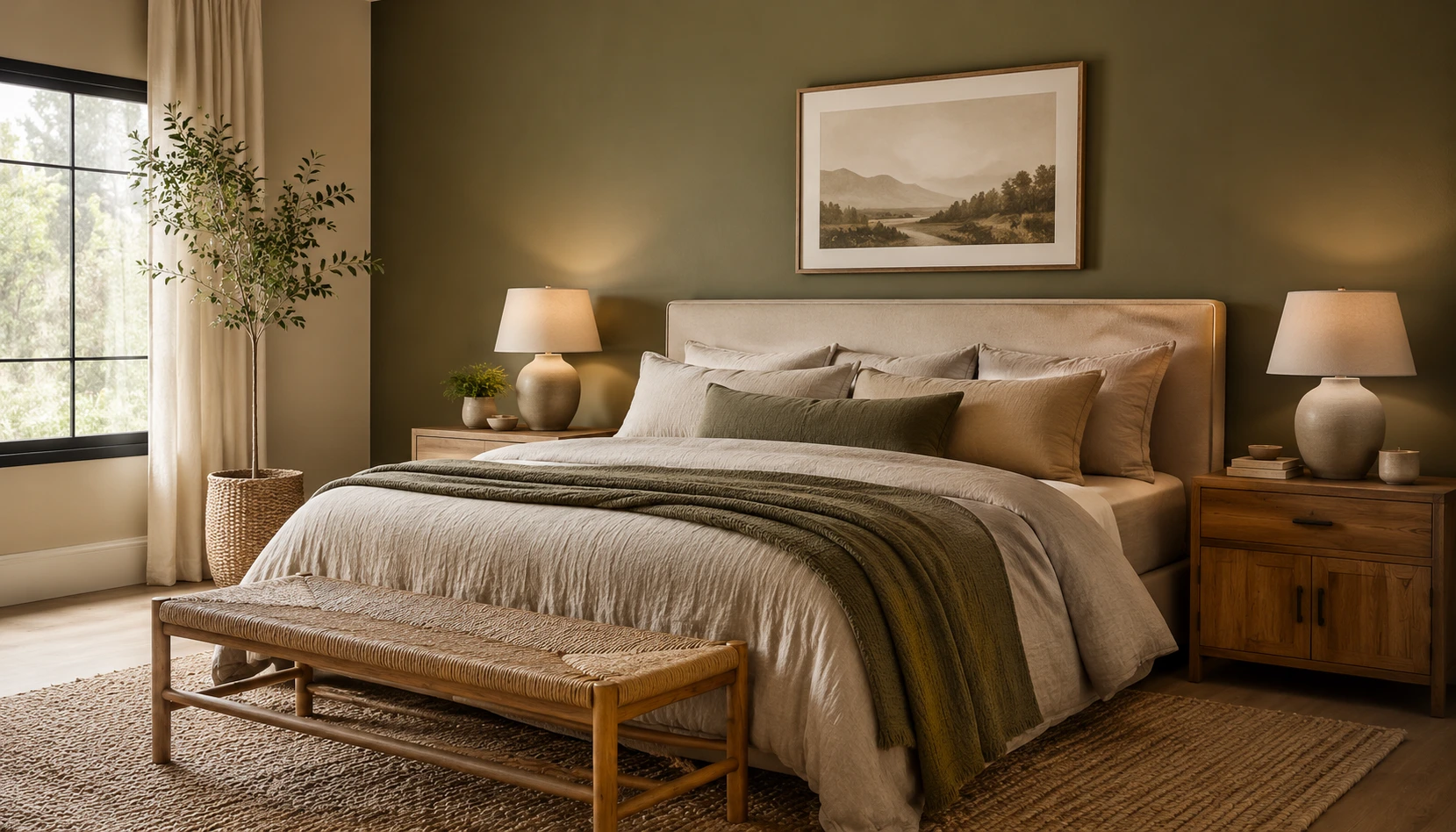
Olive is deeper and more grounded than sage, so it suits a bedroom that should feel settled rather than airy. Oat, cream, camel, and linen tones balance the darker green. Walnut or honey-toned wood adds warmth.
In a small or dim room, use olive behind the bed and keep the other walls light. Olive Green Bedroom Ideas covers shade choice and small-room adjustments.
Warm Minimal
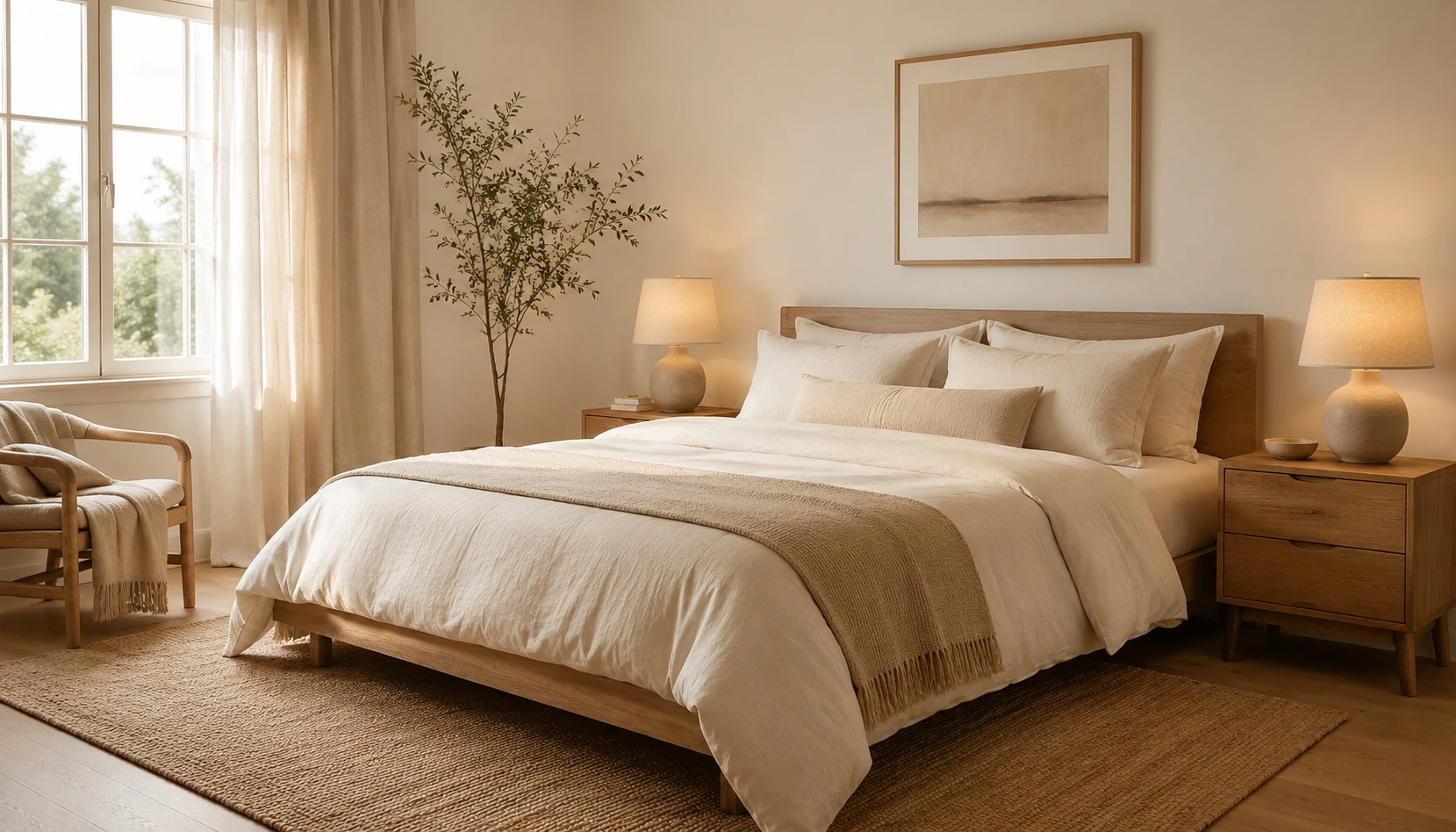
Warm minimal works when you like quiet rooms but do not want the bedroom to feel cold. Keep the palette close to beige, oatmeal, cream, and light wood. Texture does the work: linen bedding, a wool rug, a paper shade, and a little variation in the neutrals.
Choose fewer pieces, but make sure they are large enough. One properly scaled artwork looks better than six tiny frames.
Cozy Vintage
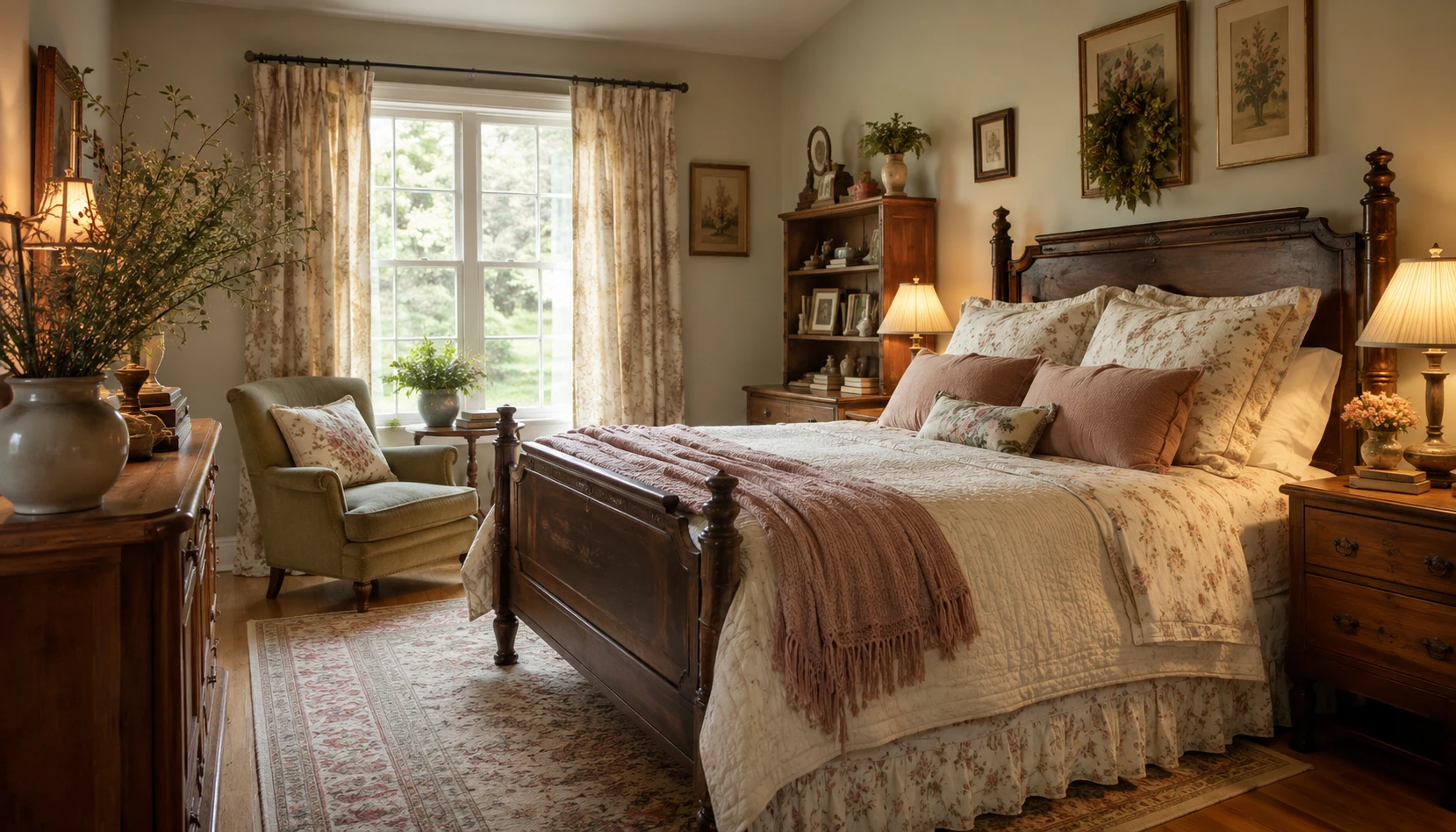
A cozy vintage bedroom should feel collected, not themed. Start with one piece that has age or character: a wood bedside table, quilt, old frame, pleated lamp, or small dresser. Build around it with simpler pieces.
If the quilt has a visible pattern, keep the curtains quiet. If the wallpaper is the feature, use plain bedding. The goal is not to recreate another decade exactly.
Quiet Luxury
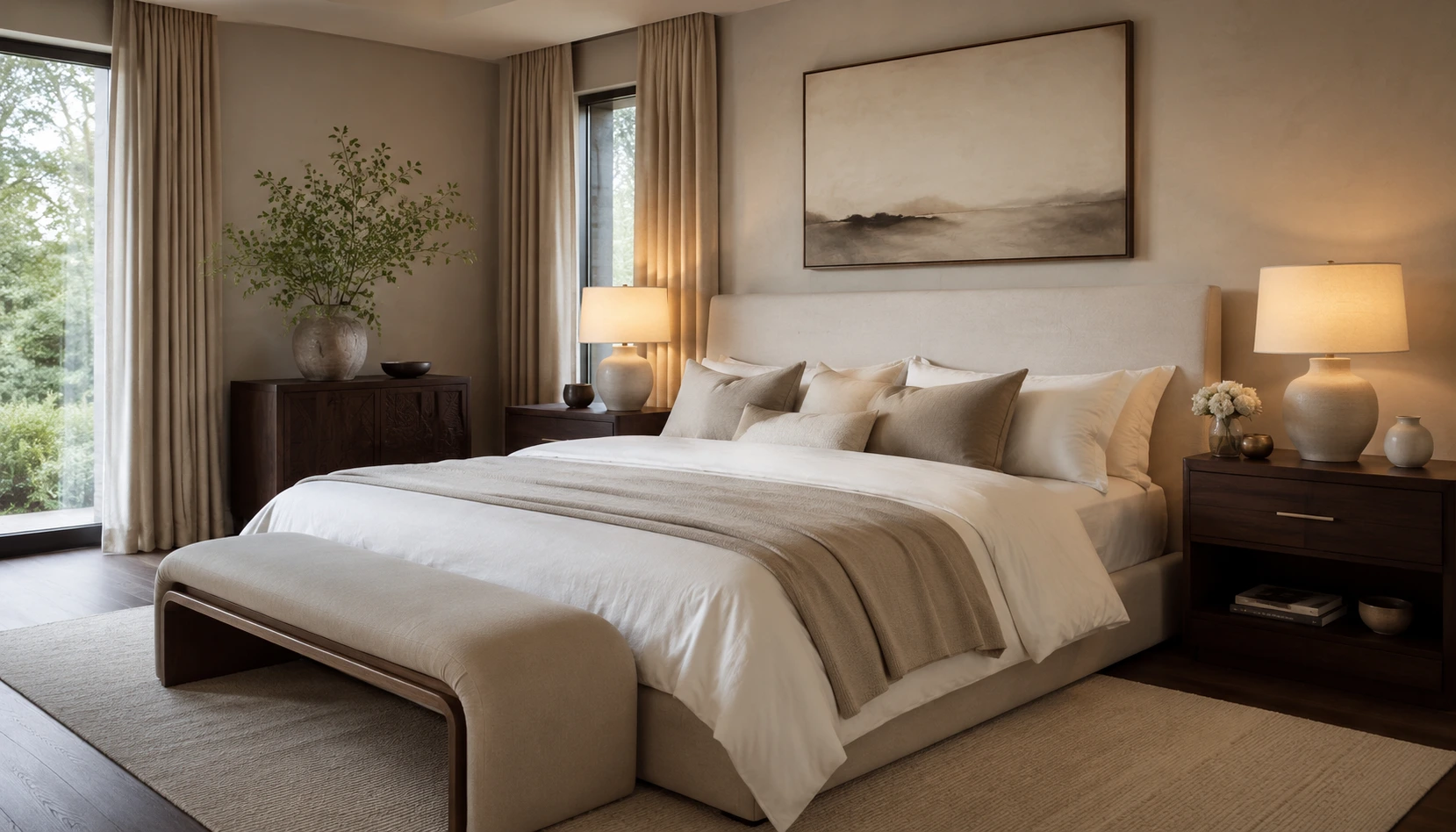
Quiet luxury is mostly good scale, good fabric, and careful editing. An upholstered headboard, generous curtains, layered bedding, and matching bedside lamps create most of the effect.
Keep finishes consistent. Cables, crowded bedside tables, and too many small cushions interrupt the calm faster than a modest budget ever will.
Moody and Soft
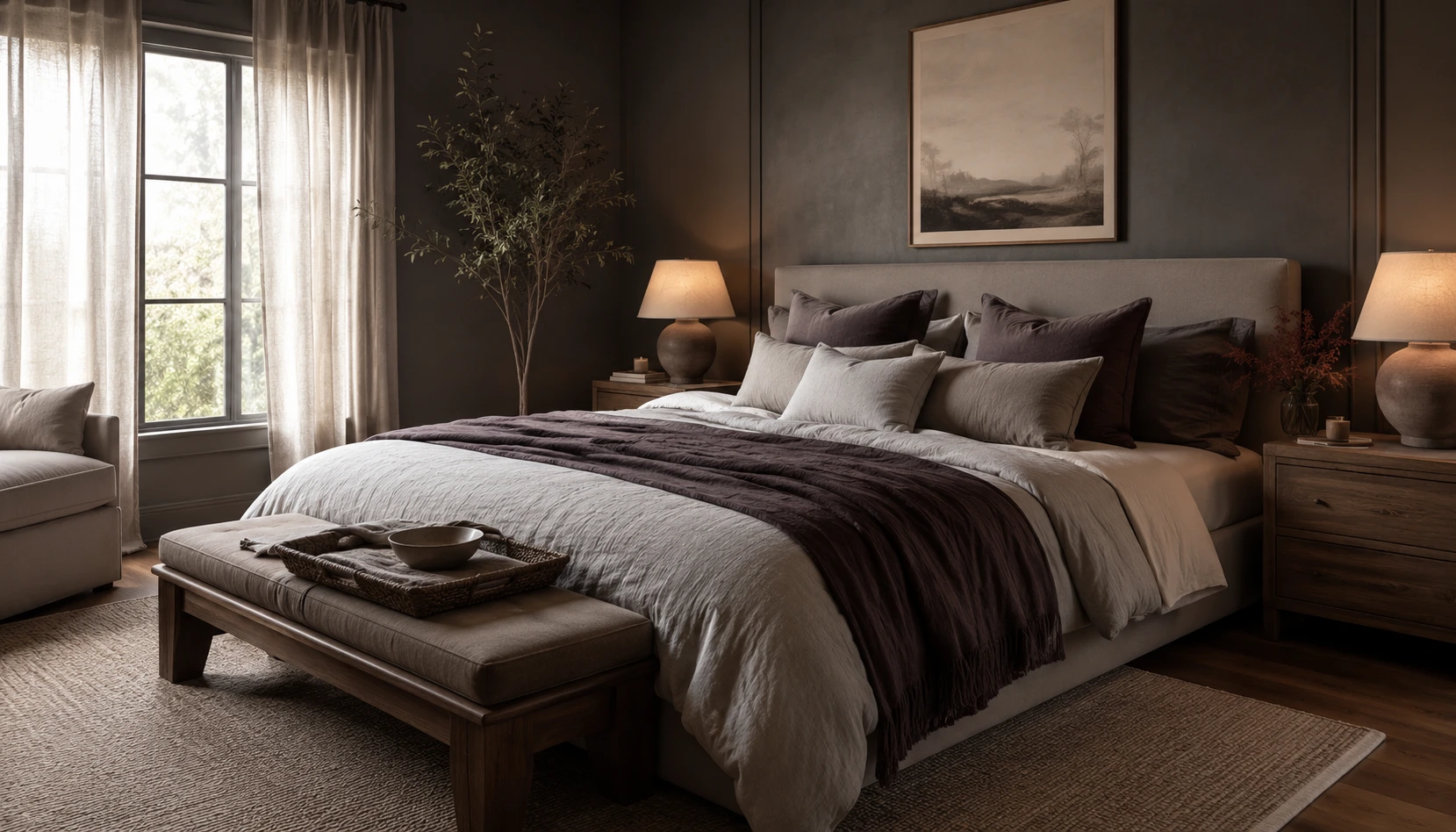
A moody bedroom does not have to be black or cave-like. Muted plum, mushroom brown, charcoal, deep olive, and smoky navy create depth. Balance them with pale bedding, warm wood, and more than one light source.
Test dark paint under your actual evening lamps. Some colors become much cooler or flatter after sunset.
Hotel Neutral
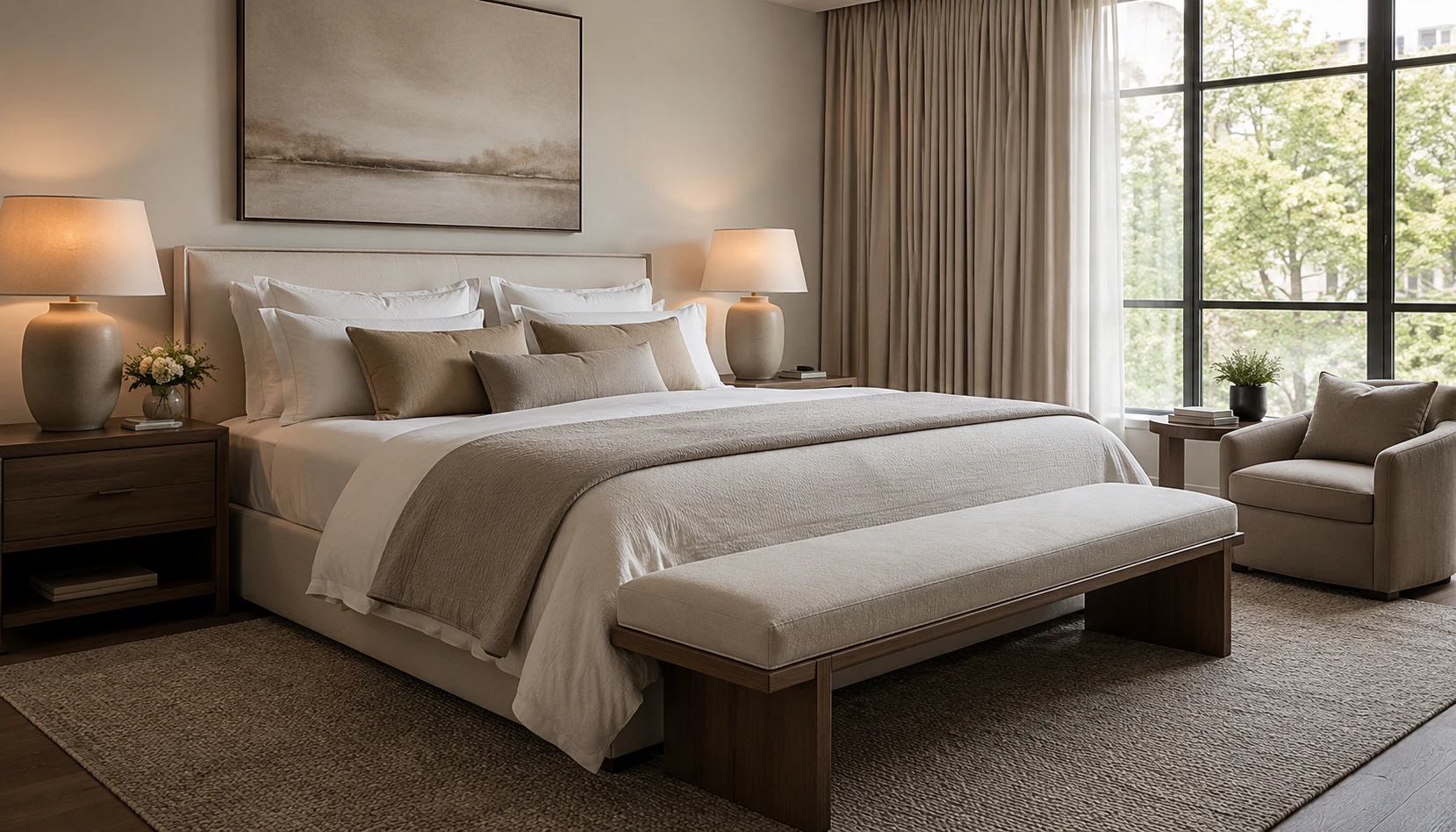
A hotel-inspired bedroom works when you want the room to feel orderly and easy to reset. Use white or cream bedding, a padded headboard, two practical lights, and one bench or stool if the room can carry it.
One duvet, two sleeping pillows, two shams, and one smaller cushion usually look better than a bed buried under decorative pillows.
Black and Oat Contrast
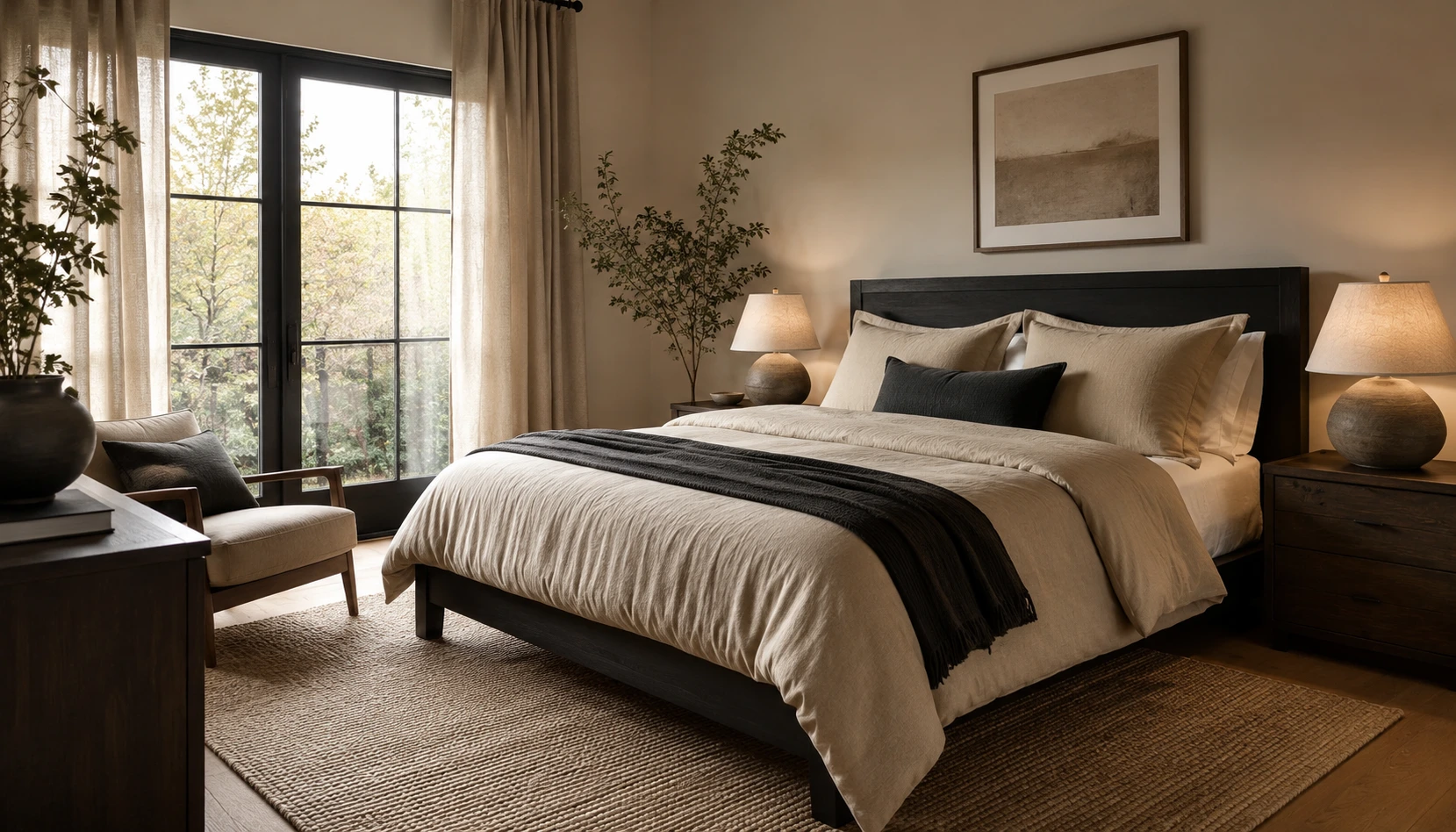
A pale room sometimes needs contrast more than another color. Black picture frames, lamp bases, or one bedside table can give oat and cream a clearer edge.
Keep black pieces slim or isolated so they act like punctuation. Warm oak and textured fabric stop the contrast feeling severe.
Art-Led Bedroom
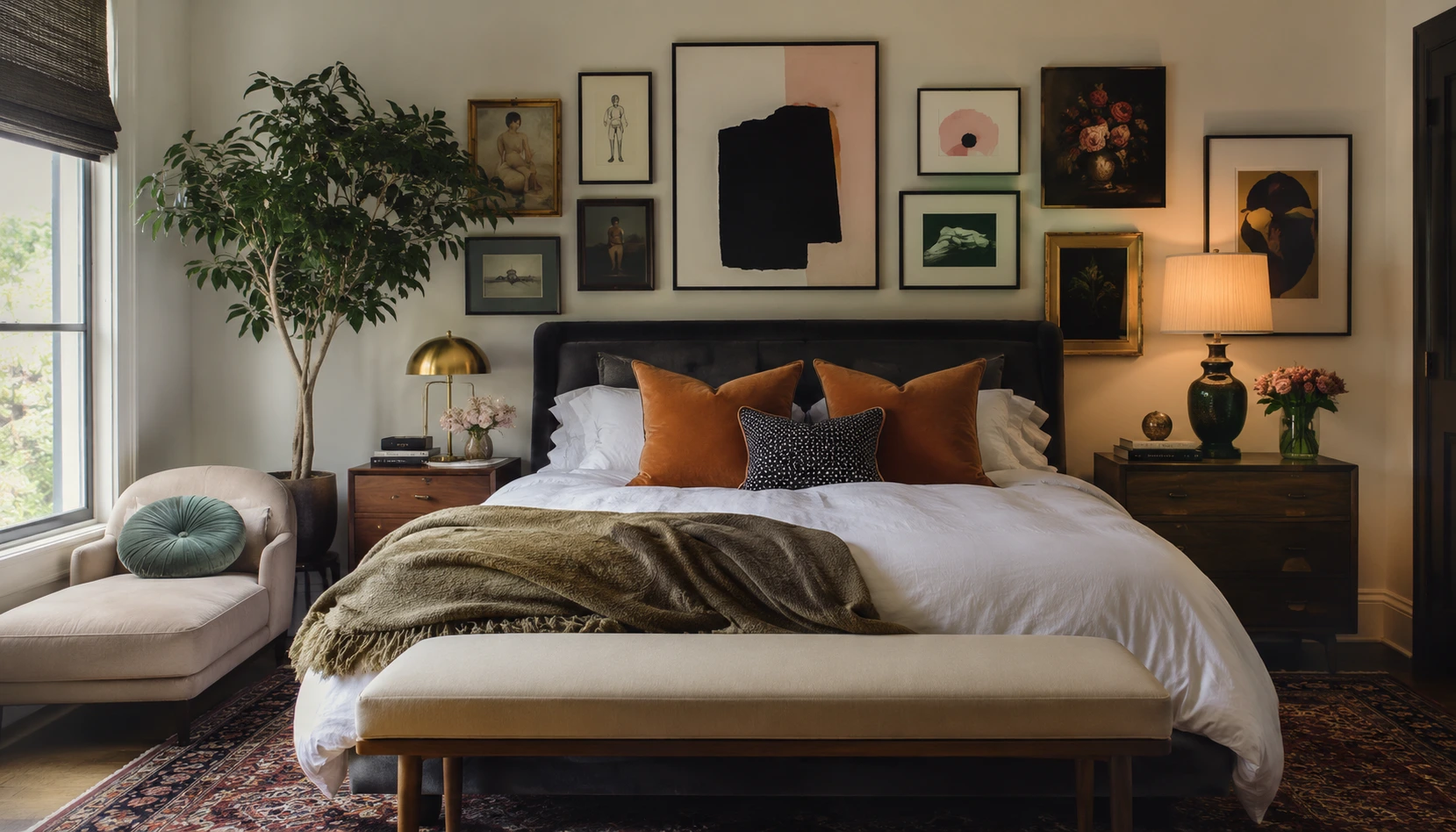
An art-led bedroom is useful when you want personality but do not want patterned bedding or a strong wall color. Choose one large piece over the bed or a pair that reads as one composition.
Pull one quieter color from the art into a throw, pillow, or lamp. Do not surround strong artwork with several unrelated pieces.
Small-Room Aesthetic
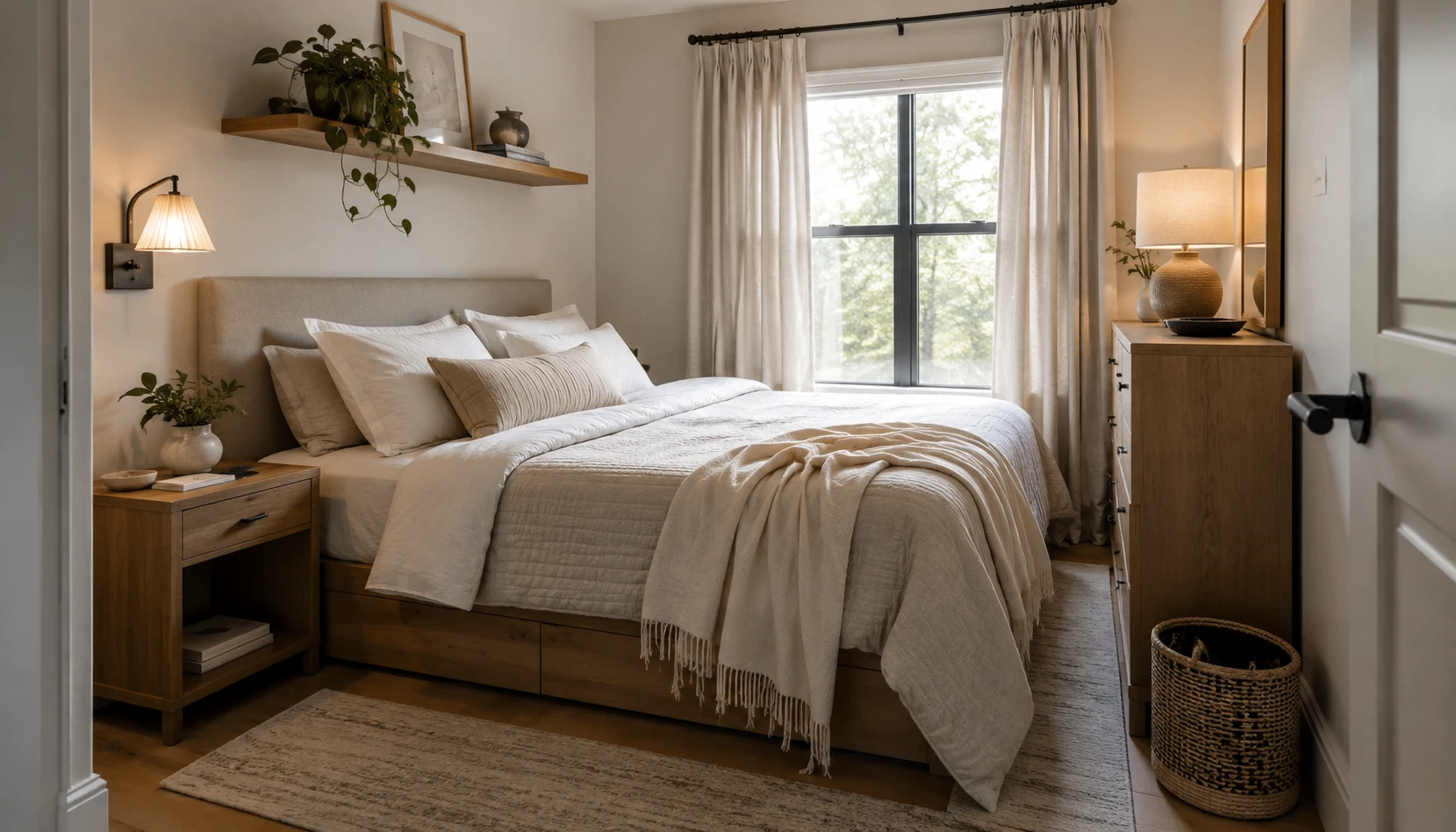
A small bedroom can have a strong aesthetic, but it has less tolerance for clutter and poor scale. Use full-length curtains, one larger artwork, a rug that extends beyond the bed, and compact bedside lighting.
A smaller number of properly sized pieces usually makes the room look larger than several undersized items pushed around the edges. See Room Decoration Ideas for Small Spaces.
How to Choose Your Bedroom Aesthetic
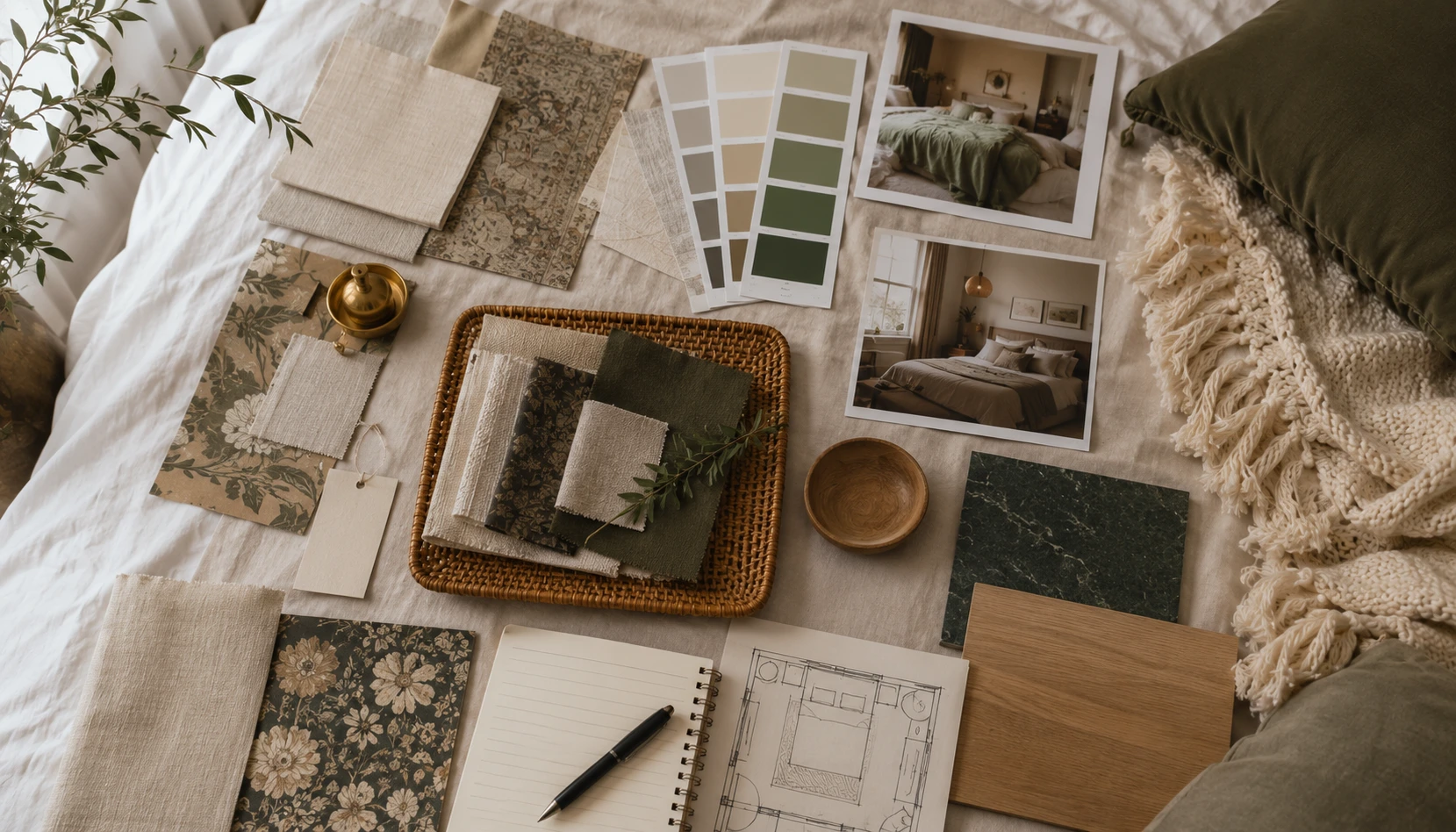
Start with the part of the room you are least likely to replace: the flooring, bed frame, dresser, or amount of natural light. Your aesthetic has to work with that reality.
Start with color if the wall or bedding shade is what excites you most.
Start with texture if you prefer neutral rooms but still want depth.
Start with one collected piece if you want a vintage or personal room.
Start with lighting if the bedroom feels acceptable during the day but unpleasant at night.
Do not buy the finishing pieces first. Lamps, art, and cushions are easier to choose once the main palette and furniture direction are settled. The best bedroom aesthetic is the one that still feels right after the trend has moved on and the room has been lived in for a few ordinary weeks.