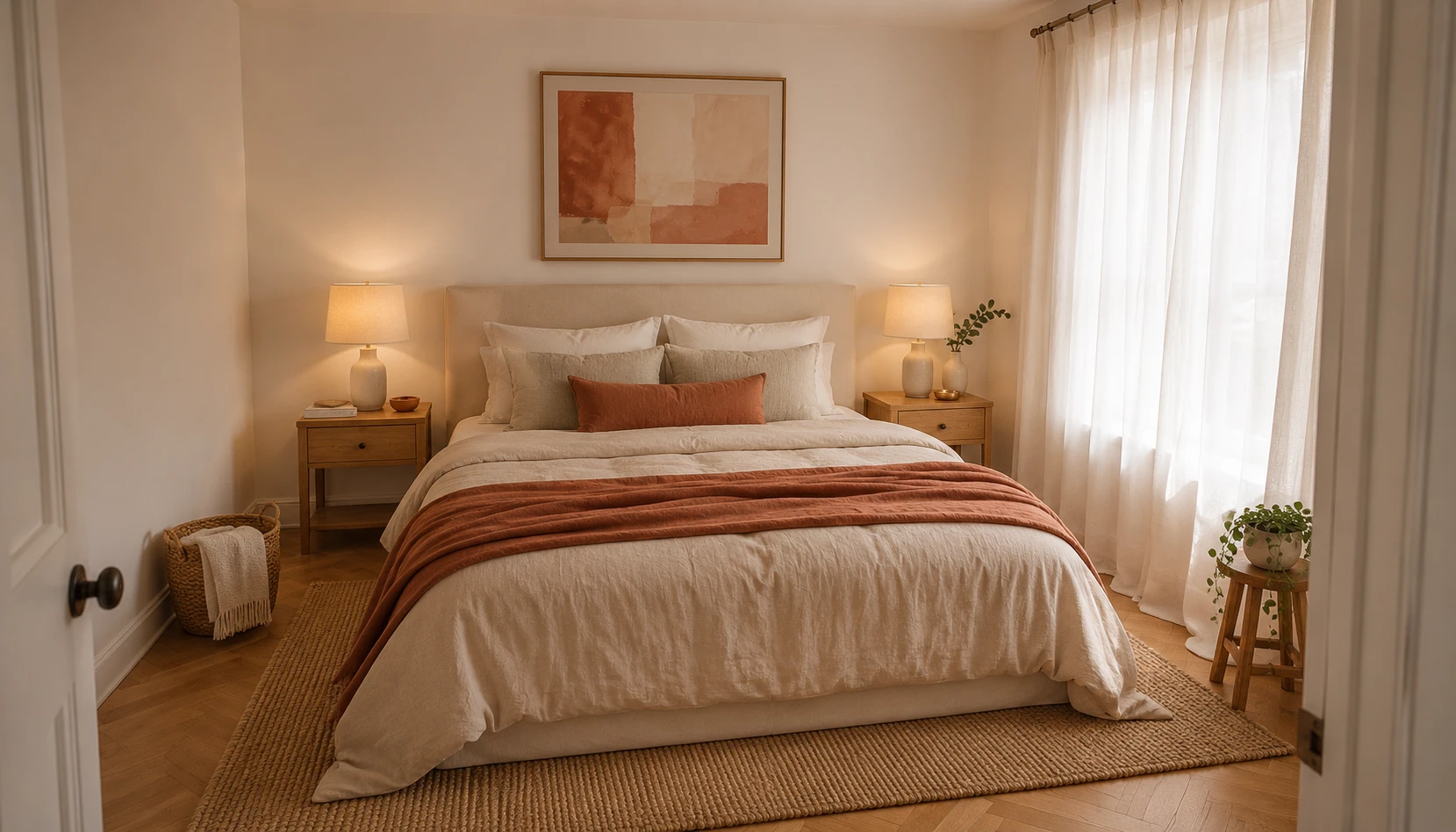
White and terracotta is one of the easiest colour pairings to get right in a bedroom. White keeps things bright and easy to live with. Terracotta brings the depth and warmth that stops a room from feeling like a hotel.
It works in almost any bedroom: small apartments, rentals, guest rooms, even a plain neutral room that needs a bit more character. You do not have to paint the whole room orange or swap out the furniture. A few terracotta accents, placed well, do most of the work.
Balance is what makes it work. Too much white and the room feels flat and a little cold. Too much terracotta and it starts to feel heavy, or like a theme rather than a home. Add cream, oat, warm wood, and linen in between the two, and the room settles into something calm and a little expensive looking.
The room stays bright. The bed stays soft. The palette is neutral enough that you will not get tired of it in six months. Terracotta is just the extra layer that makes it look considered instead of accidental.
Why White and Terracotta Works So Well in Bedrooms
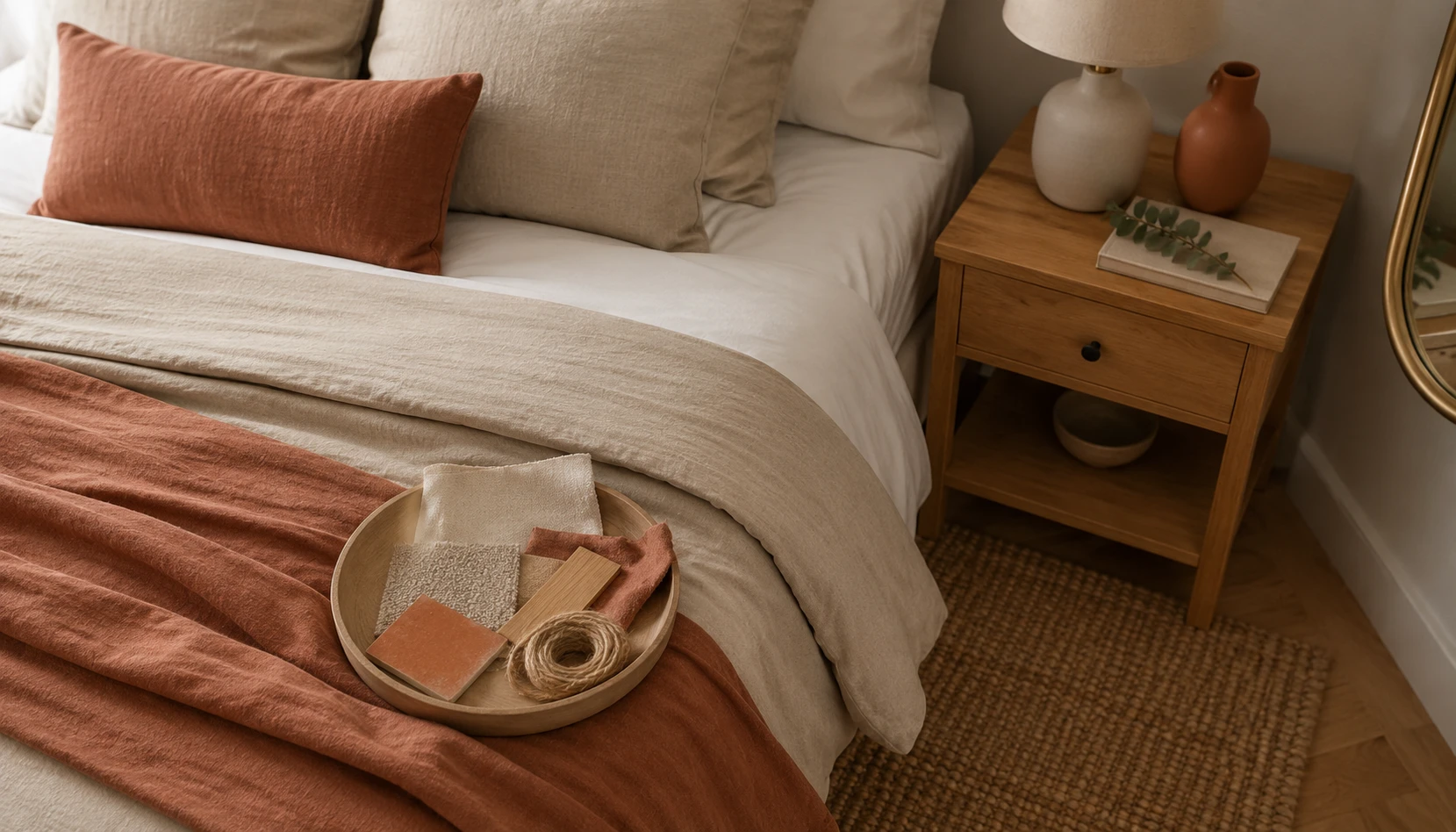
A bedroom needs to feel calm before anything else. This is where white and terracotta works beautifully.
White creates breathing room. It bounces light around and makes small bedrooms feel bigger than they are. The tradeoff is that pure white, especially in a room without much sun, can end up looking a little cold and unfinished rather than peaceful.
Terracotta adds emotional warmth. It looks like unglazed clay rather than a sunset filter, which is closer to the truth of where the colour actually comes from. That keeps a bedroom feeling grounded instead of sterile, and in a muted shade, it stays relaxed even as the strongest colour in the room.
Together, they feel balanced. White keeps terracotta from getting too strong, and terracotta keeps white from going flat. The contrast stays gentle instead of harsh, so the room gets structure but never turns busy.
This combination works especially well because both colours have a natural, earthy quality. White feels like linen, plaster, cotton, and soft daylight. Terracotta feels like clay, ceramic, dried flowers, and warm desert tones. When you put them together, the bedroom feels connected to natural materials rather than artificial decoration.
That is why this palette suits warm minimalist bedrooms, earthy bedrooms, boho bedrooms, Mediterranean-inspired spaces, and modern neutral interiors. It can look relaxed or polished depending on how you style it.
The goal is not to make the room look orange. The goal is to make the room feel warmer, softer, and more intentional.
Start With a Warm White Base
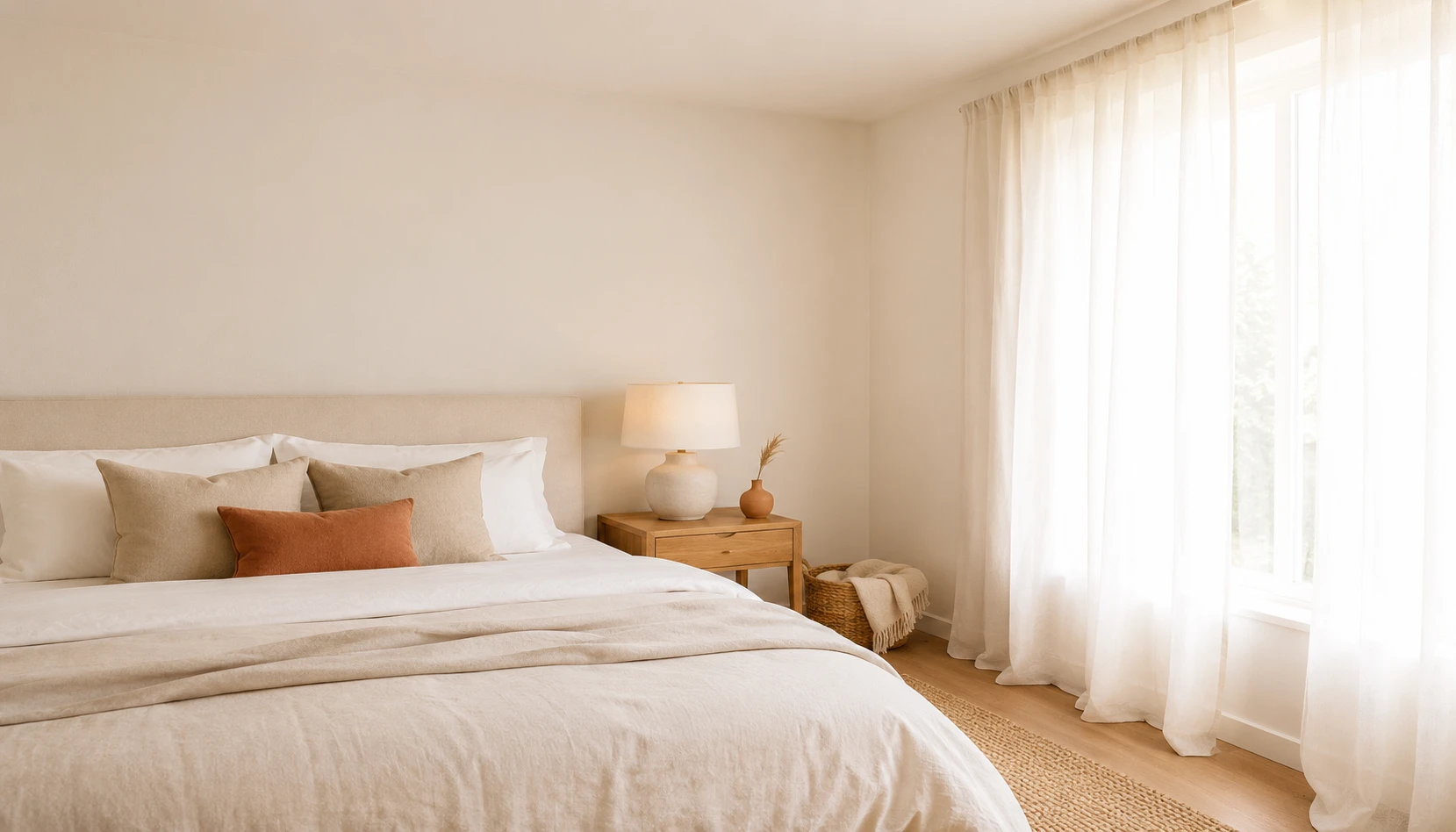
The first step is choosing the right white. This matters more than most people think.
A bright blue-white can make terracotta look harsh and almost too orange. A warm white or soft cream makes the same terracotta shade look calm, earthy, and sophisticated. In bedrooms, warm white is almost always easier to live with than stark white because it feels softer in the morning and much more comforting at night.
Best white tones for a terracotta bedroom:
Warm white: Good for walls, ceilings, wardrobes, and large bedding pieces, since it keeps the room bright without going stark.
Cream: A touch richer than white, and a good pick if your bedroom gets cool natural light. It also sits well next to aged brass, oak, jute, and linen.
Oat white: A warm off-white with a slight beige undertone. It is one of the fastest ways to make a bedroom look expensive, since it reads quiet and layered instead of yellow.
Soft ivory: Good for curtains, lampshades, and textured bedding, especially in a room with warm wood furniture.
Avoid brilliant white if the rest of the room is warm. It can create too much contrast against terracotta, wood, jute, and brass. A softer white allows everything to blend together naturally.
If you are renting and cannot paint, use the warm white base through bedding, curtains, rugs, lampshades, and large fabric pieces. A warm white duvet, cream curtains, and an oat rug can shift the room even if the wall colour stays exactly the same. If you’d rather lean into a warmer, sunnier palette altogether, see our butter yellow bedroom ideas.
The easiest formula is simple: keep the largest surfaces light, then let terracotta appear in smaller, richer moments. That way the bedroom still feels open, but it has warmth and personality.
Choose the Right Terracotta Shade
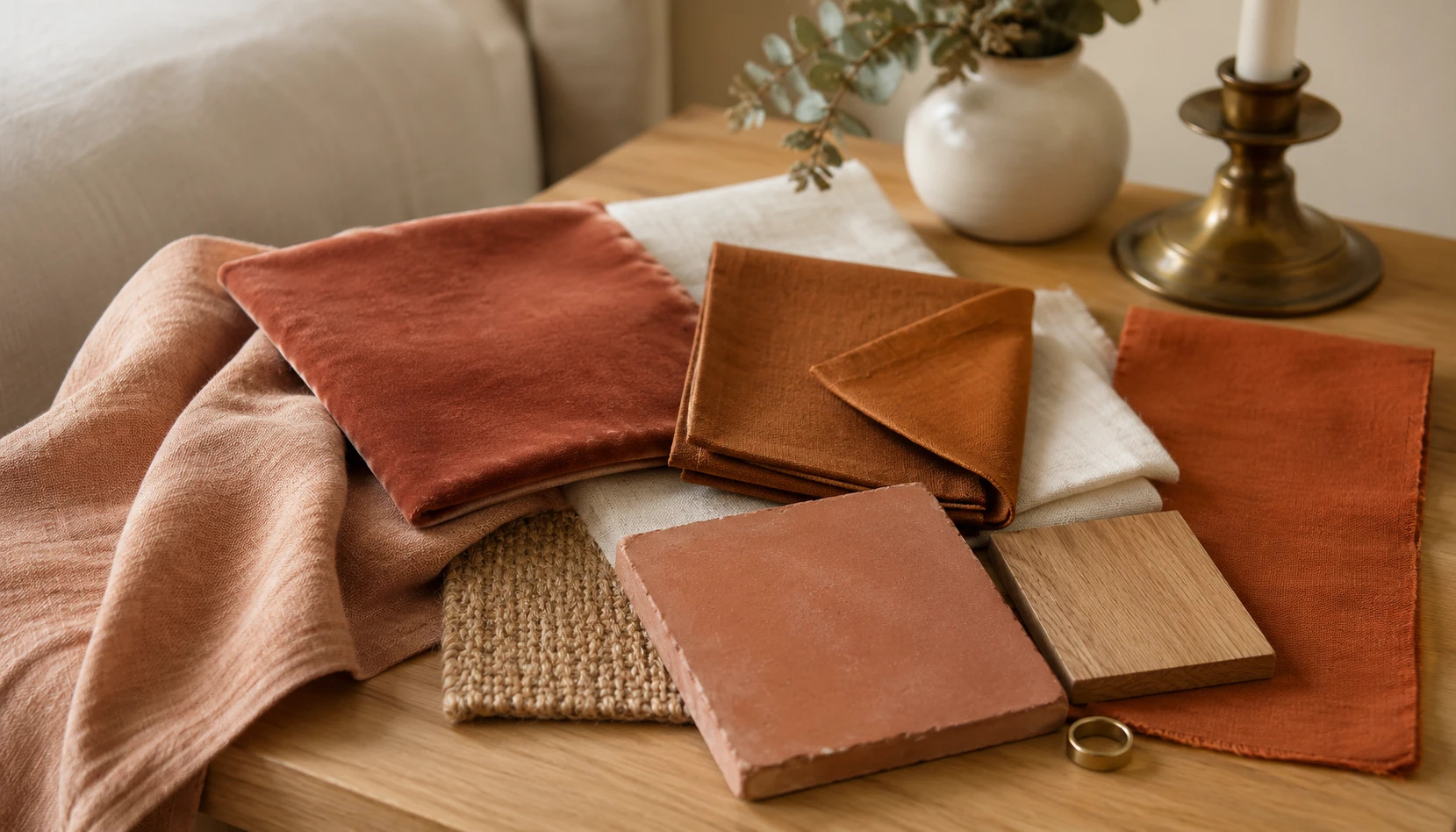
Terracotta can mean many different things. Some shades are soft and dusty. Others are bright, orange, and intense. For a bedroom, the softer versions usually work best.
The most beautiful terracotta bedroom shades are the ones that feel aged, muted, and natural. Think of handmade clay pots, faded brick, cinnamon, dried rose petals, and warm earth. These shades feel calm because they are not too saturated.
Use these shades:
Soft clay: The safest, calmest terracotta tone, and the one to reach for with cream walls and oak furniture if you want warmth without losing the minimal feel.
Dusty rust: Deeper and a bit more dramatic, so it works best in small doses, cushions, throws, artwork, or one accent wall, paired with oat, ivory, or chocolate brown.
Cinnamon: Warm and brown based, which suits a cosy bedroom better than a bright one. It reads less orange than classic terracotta, so it feels more grown up.
Faded brick: A pinker take on terracotta that works well with dusty rose, ivory, and brass, good if you want a softer feel without tipping into pastel.
Muted burnt orange: Fine in small accents, but easy to overdo, so keep it to one or two spots.
The shade you choose will decide the entire mood of the bedroom. A pale clay tone feels calm and airy. A rust tone feels cosy and autumnal. A brick tone feels romantic and vintage. A cinnamon tone feels rich and grounded.
The key is to choose a terracotta that looks like natural clay, not a bright pumpkin orange. If the colour feels like pottery, earth, or dried flowers, it will usually work beautifully in a bedroom. For the cooler, greener take on this same warmth, see our sage green bedroom ideas.
Add Terracotta Through Bedding First
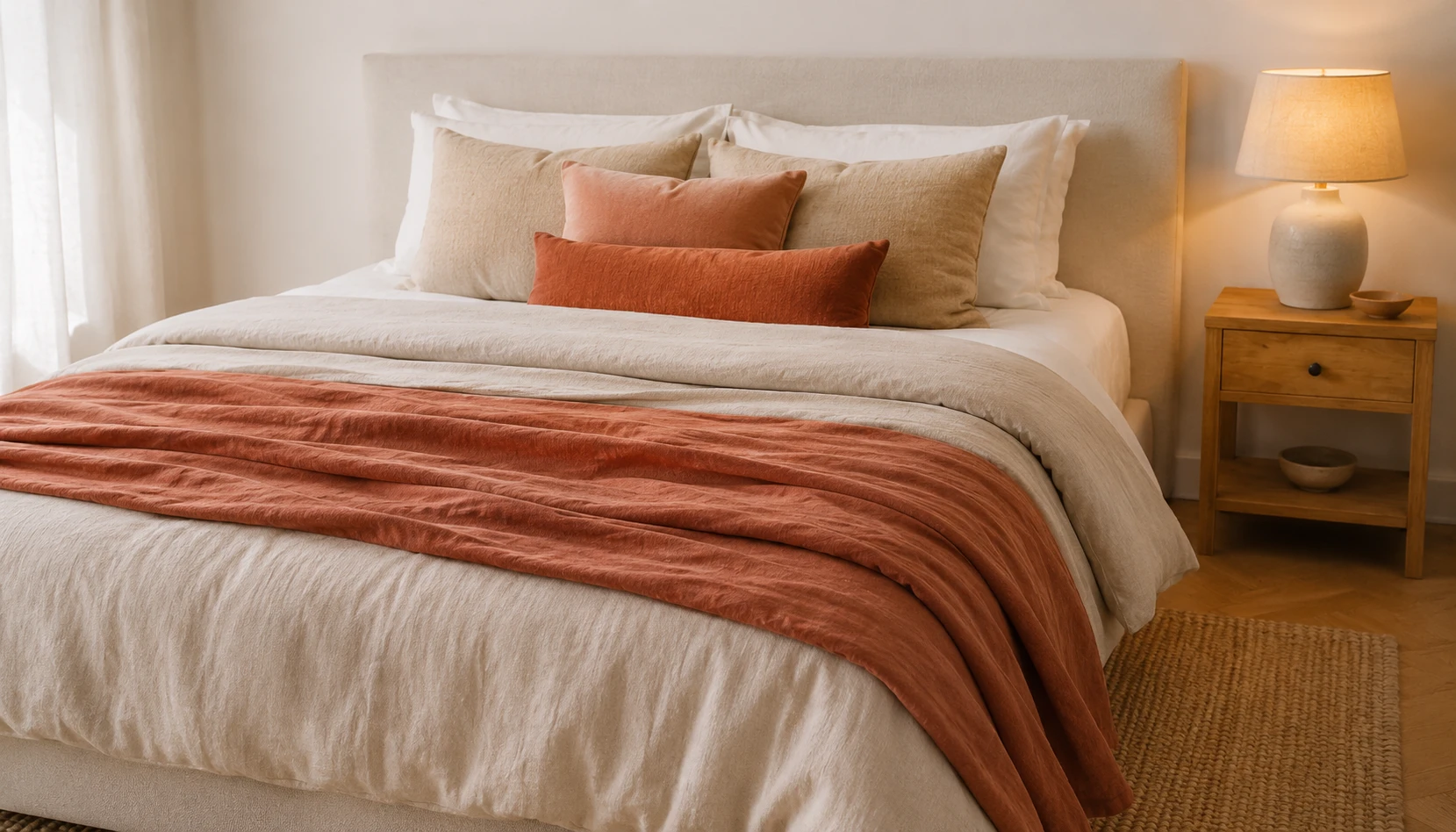
If you are not sure where to begin, start with the bed. In most bedrooms, the bed is the largest visual surface. Changing the bedding changes the whole room immediately.
You do not need a full terracotta duvet set. In fact, a fully terracotta bed can sometimes feel too heavy in a small room. The most balanced approach is to keep the main bedding light and add terracotta as a layer.
Easy bedding formula:
Start with warm white or cream sheets.
Add a cream, oat, or ivory duvet cover.
Layer a terracotta quilt, throw, or blanket across the lower third of the bed.
Finish with two terracotta cushions or one long lumbar cushion.
This gives you the warmth of terracotta while keeping the bedroom bright and calm. The white and cream layers do most of the visual work, while terracotta becomes the accent that makes the bed feel styled.
Linen works especially well because it naturally softens strong colours. A terracotta linen throw looks more relaxed and expensive than a shiny synthetic fabric in the same shade. Cotton, gauze, waffle, and washed velvet can also work if the tones are muted.
For a softer look, mix terracotta with dusty rose. For a more grounded look, mix it with chocolate brown or warm taupe. For a fresher look, add a small touch of sage green or eucalyptus.
The biggest mistake is adding too many competing bedding colours at once. If the bed already has terracotta, cream, oat, and wood nearby, it does not need navy, grey, black, pink, and yellow as well. Keep the bedding palette tight and let texture create the interest.
Try a Soft Clay Accent Wall
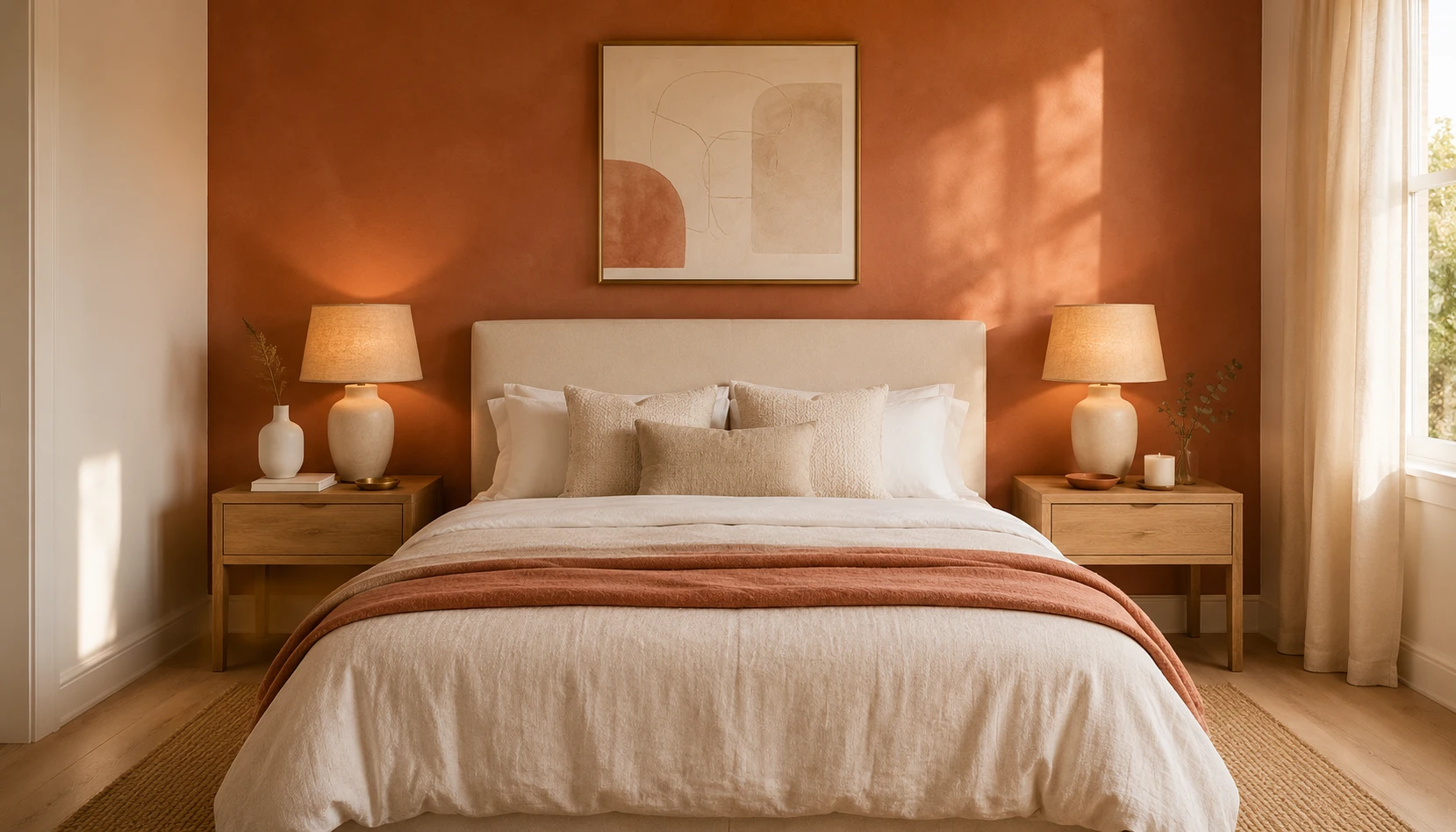
A terracotta accent wall can look beautiful, but only if the shade is soft enough.
The best place for a clay or terracotta wall is behind the bed. This frames the sleeping area, makes the bed feel more intentional, and creates a natural focal point without needing much wall decor. Because the bed sits in front of it, the colour is softened by pillows, bedding, and fabric layers.
How to make a terracotta wall feel modern:
Choose a muted clay shade rather than bright orange.
Keep the other walls warm white or cream.
Use white, oat, or beige bedding to soften the wall.
Add brass, oak, or woven textures for warmth.
Avoid too much black unless you want a higher contrast look.
If you are renting, use peel-and-stick wallpaper or a removable wall mural in a soft clay limewash effect. A subtle plaster, linen, or limewash texture can look more expensive than a flat block of colour. It also photographs beautifully for Pinterest because the surface has depth even when the room is simple.
A terracotta accent wall is strongest when it feels like part of the architecture, not like a random coloured panel. Keep the edges clean, center the bed properly, and avoid filling the wall with too many frames.
The mistake to avoid is adding a strong terracotta wall and then repeating the same intense shade everywhere else. Let the wall be the main terracotta moment. Everything else can be quieter.
Layer Cream, Oat, and Rust Textures
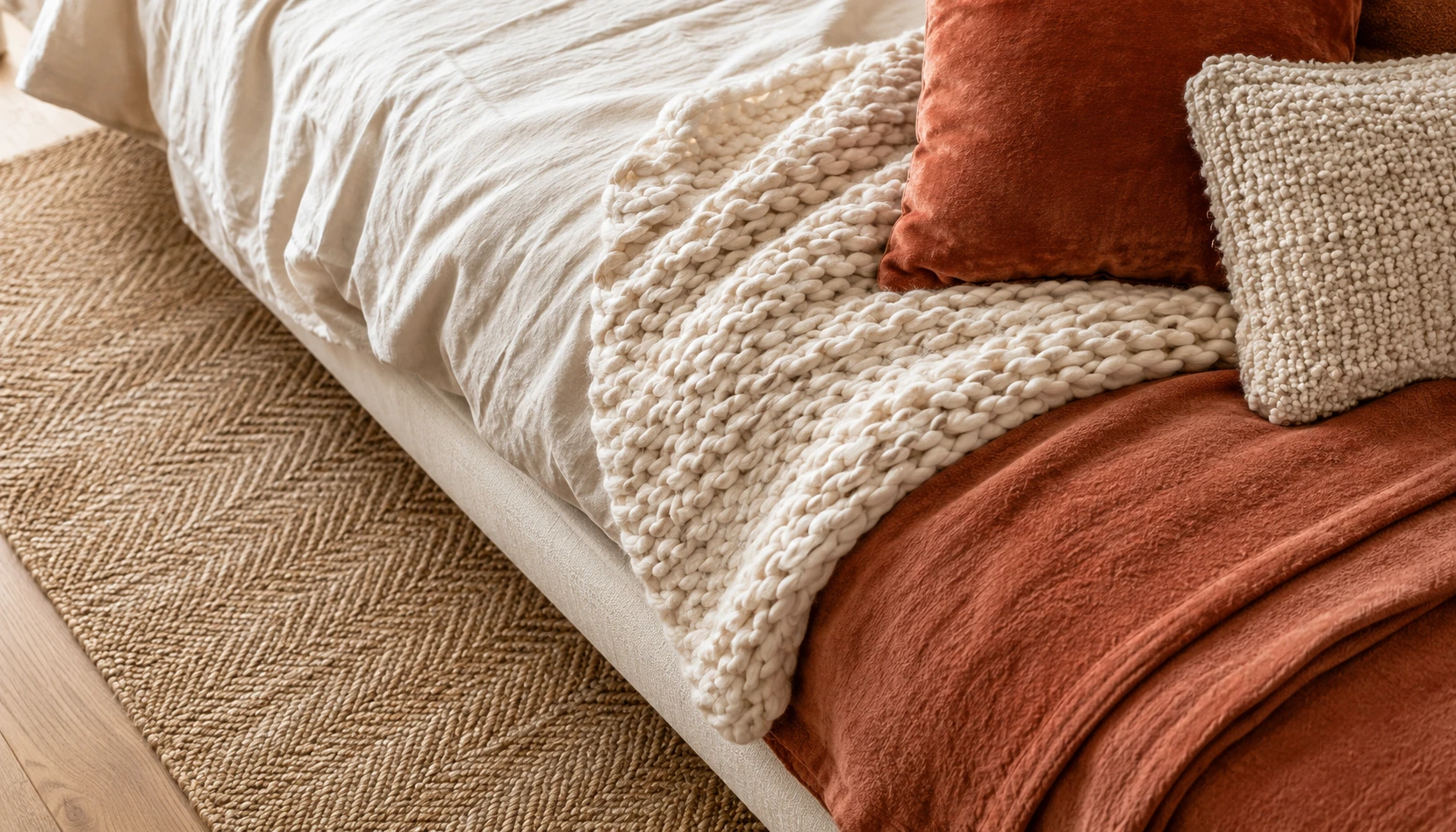
A white and terracotta bedroom can look flat if every surface is smooth. Texture is what gives the palette depth.
This is especially important because the colour palette is simple. When you use fewer colours, every texture matters more. A cream room with linen, boucle, jute, cane, and chunky knit will always look more expensive than a cream room with only flat cotton and shiny furniture.
Best textures for this palette:
Linen: Works well for duvet covers, curtains, cushion covers, and throws, and it softens terracotta more than any other fabric here.
Boucle: A cream boucle cushion, bench, or accent chair adds softness while keeping the room visually calm.
Chunky knit: A cream or oat knit throw at the foot of the bed adds the cosy, layered look instantly.
Jute: A jute rug or woven basket adds texture underfoot and sits naturally next to terracotta.
Cotton muslin: Soft and casual, good for a relaxed, lived-in bedding layer.
Rattan or cane: Shows up well on headboards, bedside tables, chairs, pendant shades, or storage baskets.
The room should feel touchable. The more natural the textures feel, the more expensive the bedroom looks. This is why terracotta works so well with woven shades, linen curtains, oak furniture, and clay ceramics.
A good rule: for every terracotta piece, add at least one cream or oat texture nearby. If you place a terracotta cushion on the bed, pair it with cream boucle or oat linen. If you use a clay vase on the bedside table, place it beside a cream lampshade or natural wood tray. This keeps the warmth controlled and balanced.
Add Warm Wood Furniture
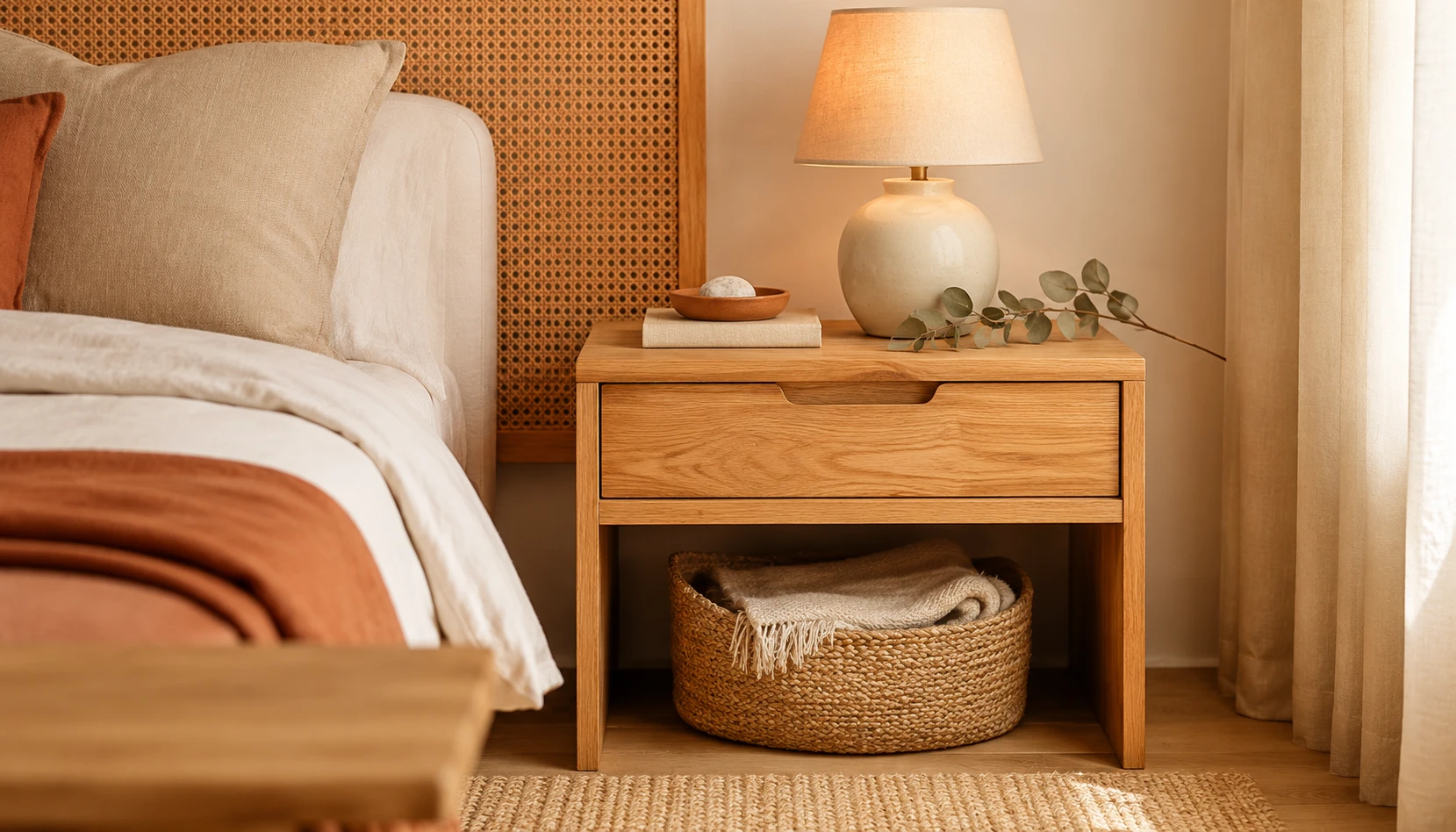
Terracotta is an earthy colour, so it works best with earthy materials. Warm wood is the easiest furniture choice for this palette.
Light oak, honey wood, cane, rattan, and natural pine all pair beautifully with white and terracotta. They make the room feel relaxed, organic, and calm. Wood also prevents the palette from feeling too flat because it introduces natural grain, warmth, and quiet variation.
Where to add wood:
A light oak bedside table.
A cane or rattan headboard.
A wooden bench at the end of the bed.
A simple oak picture frame.
A woven pendant or rattan lampshade.
A small wooden stool used as a plant stand.
A natural wood tray on the bedside table.
Try to avoid furniture that is too cool-toned or grey-washed. Grey wood can make terracotta look disconnected. Warm wood keeps the palette cohesive because both materials feel earthy.
If your existing furniture is dark, you do not necessarily need to replace it. Soften dark furniture with cream bedding, white lampshades, lighter woven accessories, and a warm rug. The surrounding layers can make darker pieces feel intentional instead of heavy.
For a more modern bedroom, choose simple oak furniture with clean lines. For a more rustic bedroom, choose reclaimed wood, cane, and handmade ceramic details. For a softer romantic bedroom, choose pale wood, brass, and dusty rose accents.
Balance Terracotta With Sage or Olive Green
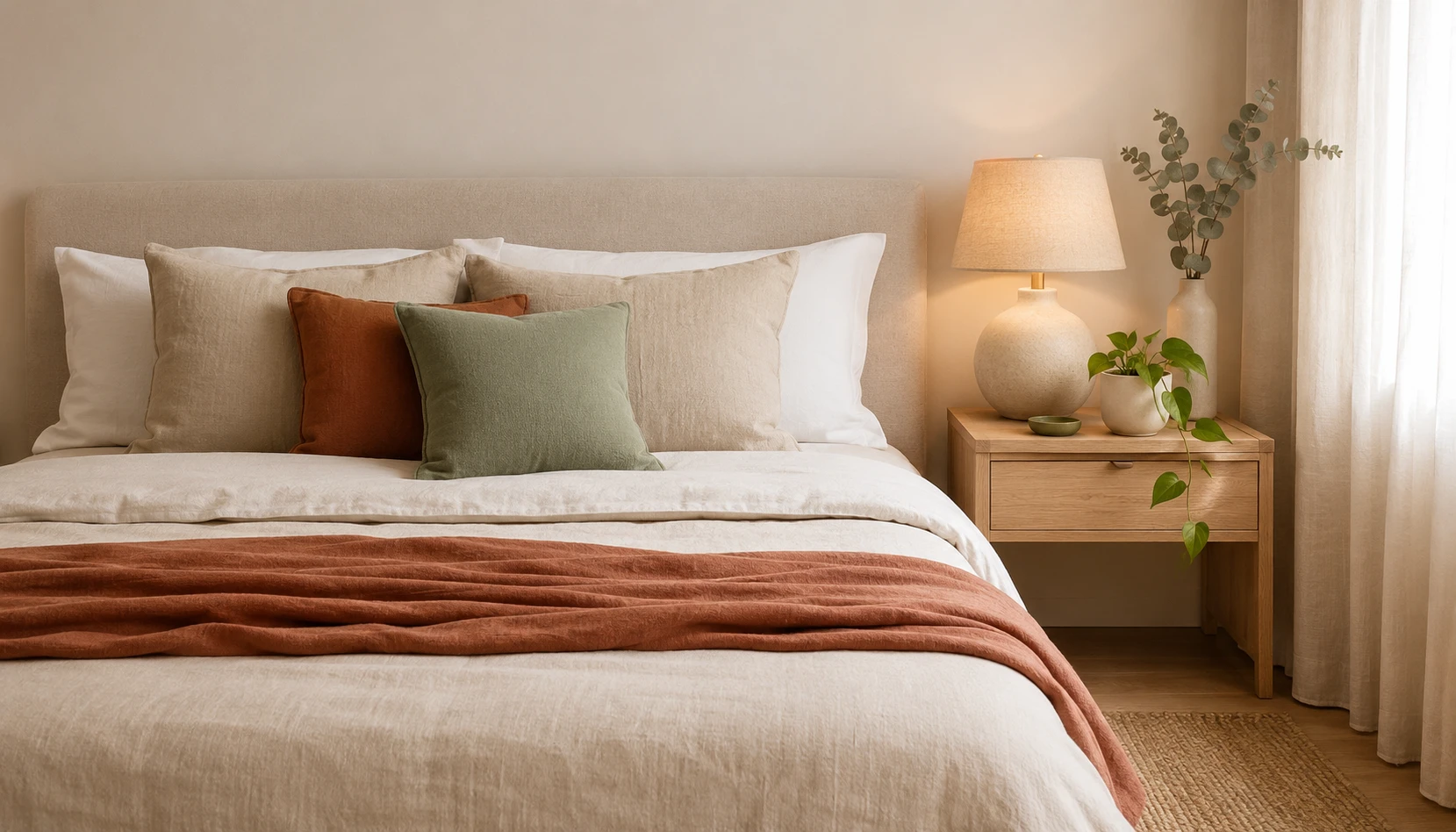
White and terracotta is already beautiful, but adding a small amount of green makes the room feel more alive.
Sage, olive, eucalyptus, and muted green tones work especially well because they are natural rather than bright. They calm the warmth of terracotta and add freshness to the bedroom. This is especially helpful if your room starts to feel too warm or too beige.
Easy ways to add green:
A small olive green cushion.
A sage throw folded at the end of the bed.
A eucalyptus stem in a bedside vase.
A trailing pothos plant on a shelf.
A small framed botanical print.
A muted green lampshade or ceramic pot.
A tiny plant on a wooden stool.
Use green as an accent, not the main colour. In a white and terracotta bedroom, green should feel like a fresh detail rather than a competing palette.
The best ratio is simple: mostly white and cream, a clear amount of terracotta, and just a small touch of green. A plant, one cushion, or a vase with eucalyptus is usually enough.
Avoid bright emerald, neon green, or very blue-green tones if you want the room to stay warm. Soft sage and olive work better because they still feel earthy. They sit naturally beside terracotta, jute, oak, and cream without stealing attention. For ideas on creating your own dried arrangements like these, see our DIY dried flower arrangement guide.
Choose Warm Lighting, Not Cool Lighting
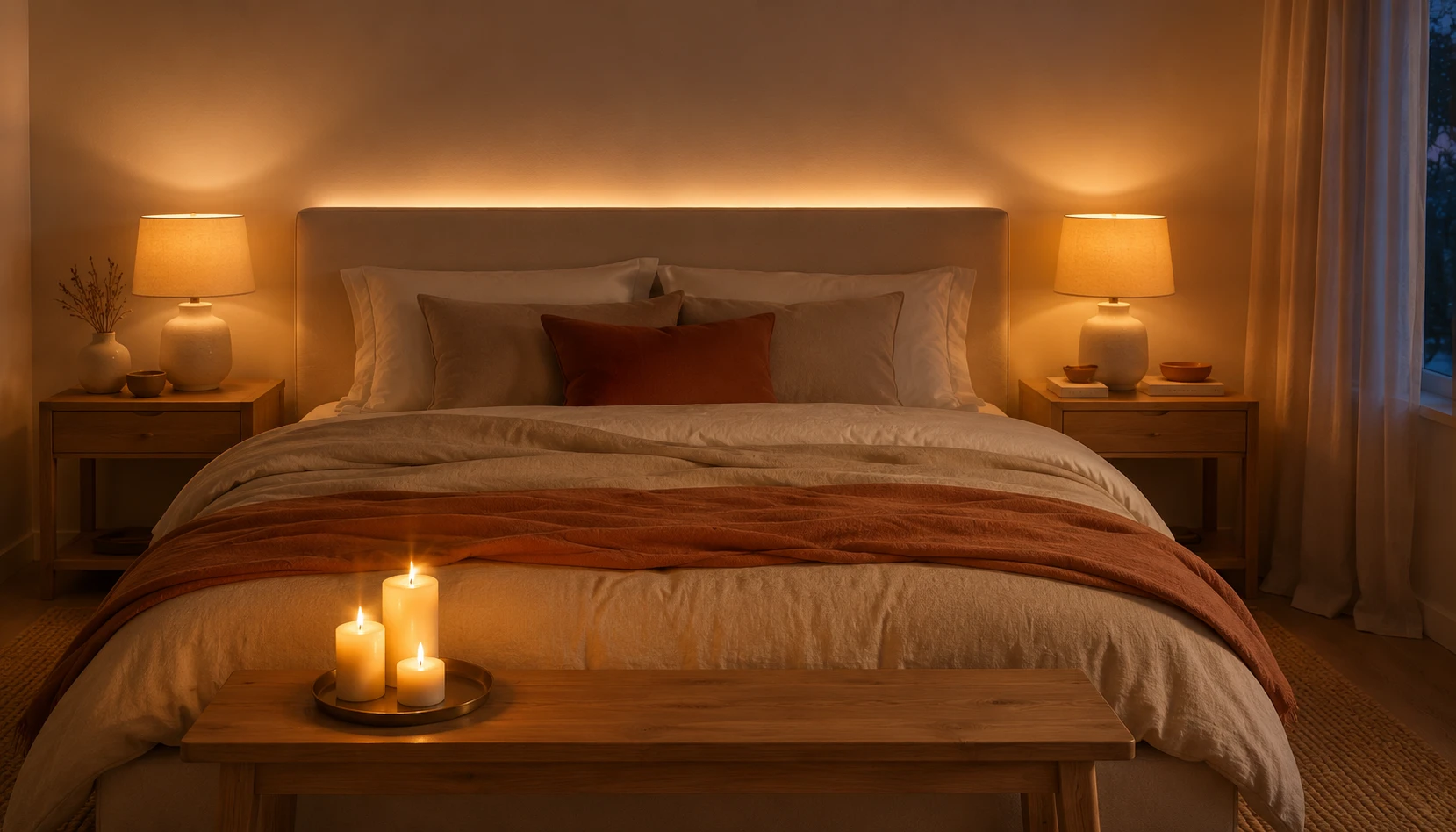
Lighting can completely change how terracotta looks.
Under cool white bulbs, terracotta can look harsh, dull, or overly orange. Under warm bulbs, it becomes soft, rich, and glowing. This is why lighting is not an afterthought in a white and terracotta bedroom. It is part of the palette.
For bedrooms, warm lighting is almost always the better choice.
Bedroom lighting formula:
Use warm white bulbs around 2700K to 3000K.
Add two bedside lamps for soft evening symmetry.
Use a fabric lampshade in cream, oat, or warm white.
Add one low accent light, such as a candle, small table lamp, or LED strip behind a headboard.
Avoid relying only on one overhead light.
Layered lighting is what makes a bedroom feel expensive at night. A white and terracotta room should glow softly, not feel brightly lit like a workspace. The room should have small pools of light rather than one flat source from the ceiling.
Brass lamps, ceramic lamp bases, linen shades, and warm wood bases all work beautifully with this palette. They add warmth even before the light is switched on.
If the bedroom feels cold at night, the problem may not be the decor. It may be the bulb temperature. Switching from cool white bulbs to warm white bulbs can make cream walls, terracotta fabric, oak furniture, and brass details look dramatically better.
Style the Bedside Table Simply
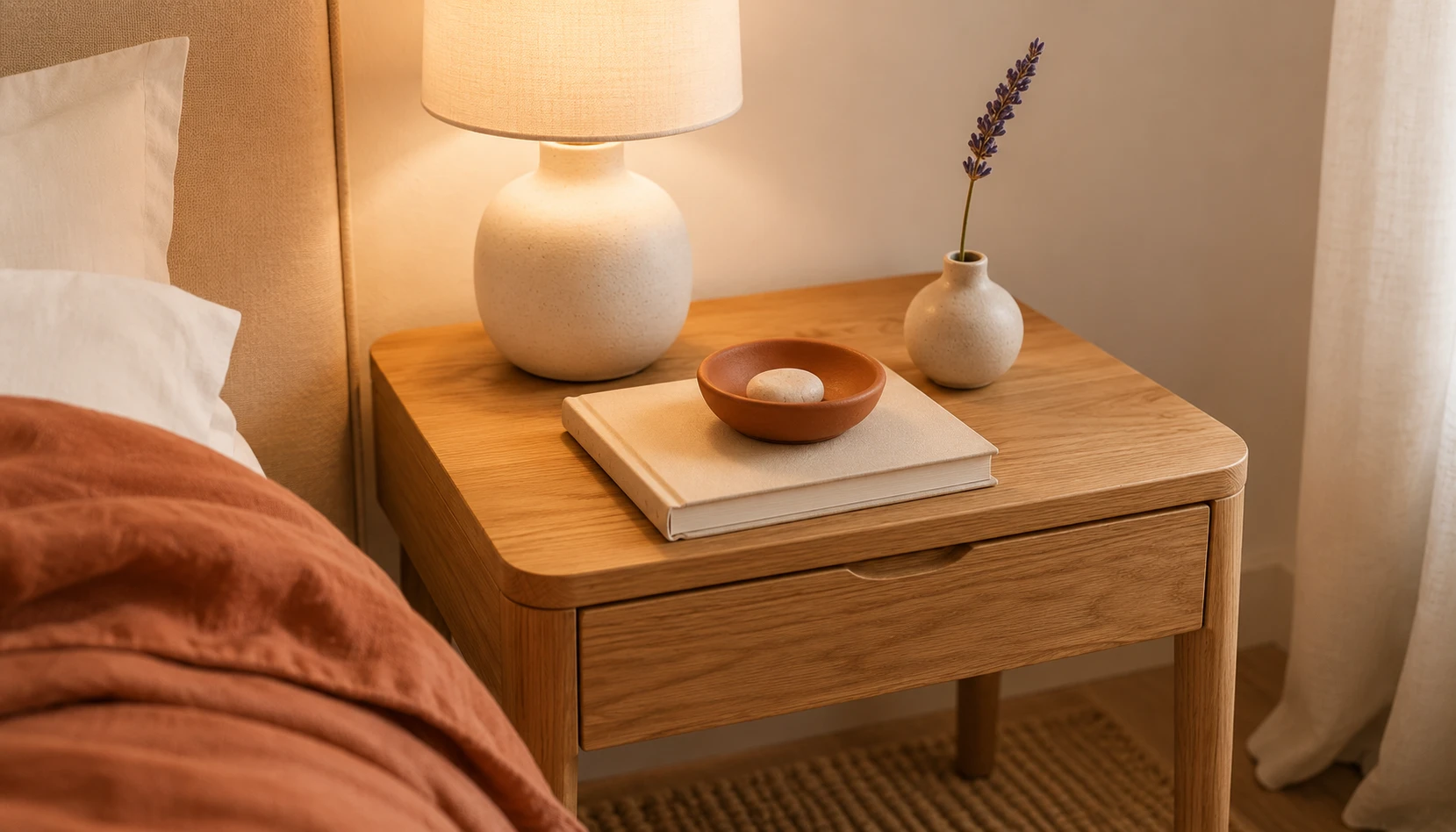
A bedside table can either support the calm feeling of the bedroom or ruin it with clutter. In a white and terracotta bedroom, keep bedside styling simple and intentional.
You only need a few pieces.
Simple bedside formula:
One warm lamp.
One small book.
One ceramic vase or dish.
One natural element, such as dried flowers, eucalyptus, or a small plant.
One practical item hidden in a drawer or basket.
Terracotta works beautifully in small bedside objects. A clay vase, ceramic dish, small lamp base, or warm rust candle holder is enough to repeat the colour without overwhelming the room.
If your bedside table is small, use vertical styling. A taller lamp, a narrow vase, and one small dish will look better than several short objects spread across the surface. Height variation makes the table feel styled instead of crowded.
The goal is calm, not emptiness. The table should look useful, but not busy. A bedroom still needs to function. You may need a phone charger, lip balm, glasses, or a sleep mask. The trick is to hide practical items in a drawer, small box, or woven basket so the visible surface stays peaceful.
A white and terracotta bedroom looks best when every small object belongs to the palette. Choose a cream lamp, oak table, clay dish, brass detail, or small plant. Avoid random plastic objects, bright colours, and too many small decorative pieces.
Keep the Room Calm and Edited
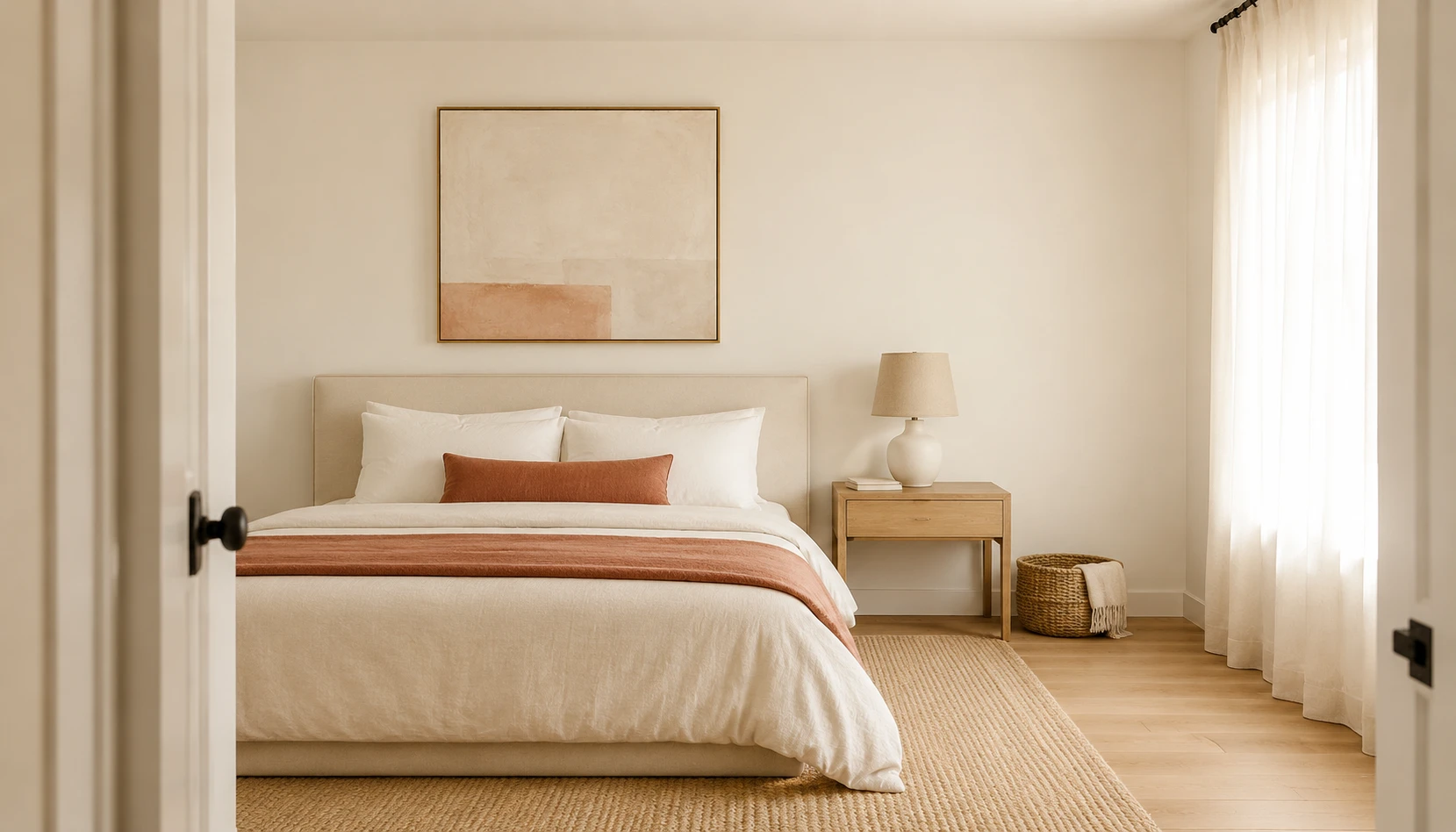
The easiest way to make a white and terracotta bedroom look expensive is to edit it.
This palette is strongest when it feels calm. Too many small decor pieces, too many patterns, or too many shades of orange can make the room feel messy quickly. The beauty of white and terracotta is that it does not need much to work. It needs good materials, soft light, and enough empty space.
What to keep:
One strong terracotta moment.
Two or three soft neutral textures.
Warm wood furniture.
One or two natural details.
Soft lighting.
A little empty space.
What to remove:
Too many cushions.
Bright orange accessories.
Cold grey furniture.
Busy wall art.
Cluttered bedside tables.
Random colours that do not belong to the palette.
A beautiful bedroom does not need to be full. It needs to feel considered. The expensive look usually comes from restraint. A simple bed with beautiful linen, one terracotta throw, warm wood furniture, and good lighting often looks better than a room filled with decorative items.
If you are starting from scratch, begin with the bedding. Add one terracotta layer, one warm wood detail, and one soft lamp. Live with that for a few days before adding anything else. This prevents the room from becoming overdecorated too quickly.
White and terracotta works because it feels warm, simple, and restful. Let that be the whole point.
The Easiest Way to Try White and Terracotta
A white and terracotta bedroom does not need a full renovation. Start with the soft pieces first.
Change the bedding, add one clay-coloured throw, and bring in a warmer lamp. A wooden bedside table or a woven basket helps too. Then decide if the room needs something bigger, an accent wall or a piece of art in the same tones.
The best version of this palette usually is not the boldest one. It is the one that still feels easy to fall asleep in.
If your bedroom feels cold or unfinished right now, this combination is one of the more forgiving ways to fix it, and it still keeps the calm, restful quality a bedroom actually needs.
Start small if you are not sure. A terracotta cushion, cream linen bedding, and a warmer bulb in the bedside lamp will shift the whole room. Once that feels right, add texture and wood at your own pace.
A bedroom that has been decorated is not the same as one that feels settled. White and terracotta gets you there in a simple way: it brings brightness and warmth into the same room without forcing you to choose between them.
For more small bedroom styling tricks that pair well with this palette, see our guide to room decoration ideas for small spaces.