
I underestimated dorm bedding the first time I helped shop for a small college room. We spent too much time comparing colors and not enough time checking the mattress size, how often the comforter could be washed, or where all the decorative pillows were supposed to go at night.
A dorm bed is not used like a normal bed. It becomes a sofa, study spot, phone-charging station, and the largest visible object in the room. That changes what good bedding looks like. It needs to be comfortable, easy to clean, and simple enough to reset without turning the room into a daily project.
Why the Bed Matters

In most dorm rooms, the bed occupies more visual space than the desk, wardrobe, or any decorative wall.
It has to work during the day. If friends sit on it or you study against the wall, the setup needs enough support to feel like a seat.
It has to be easy to wash. Dorm laundry is rarely convenient. Anything that needs special cleaning becomes annoying quickly.
It has to hold up to repetition. The bed will be made, unmade, sat on, and rearranged constantly. A complicated display will not stay complicated for long.
Measure Before Buying Anything
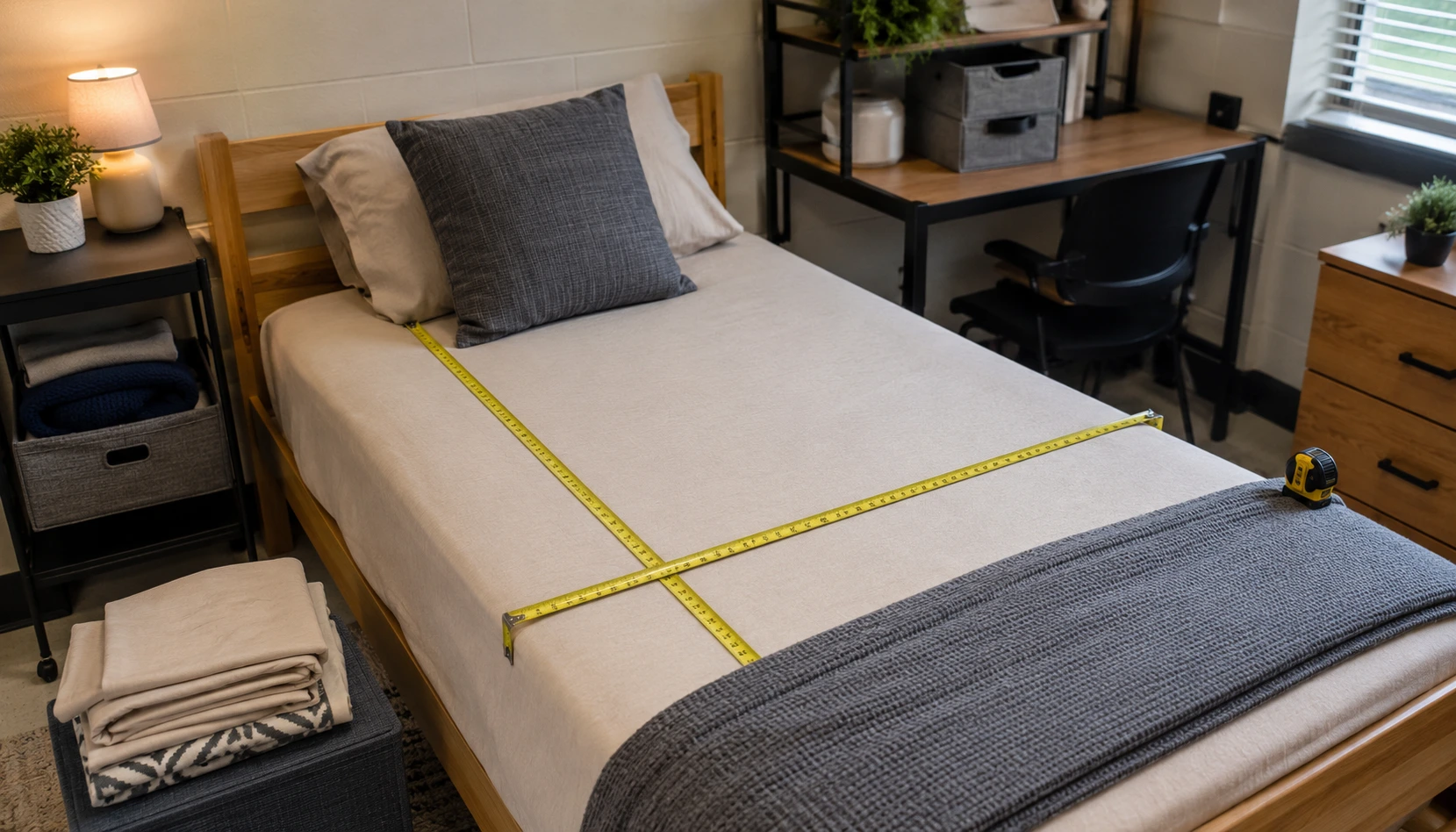
Confirm the mattress size with the college before buying a full set. Many dorms use Twin XL, but not all do. Check mattress dimensions, mattress depth after adding a topper, and underbed clearance.
This is the least exciting part of dorm shopping and the part that prevents the most expensive mistakes.
Fix the Mattress First
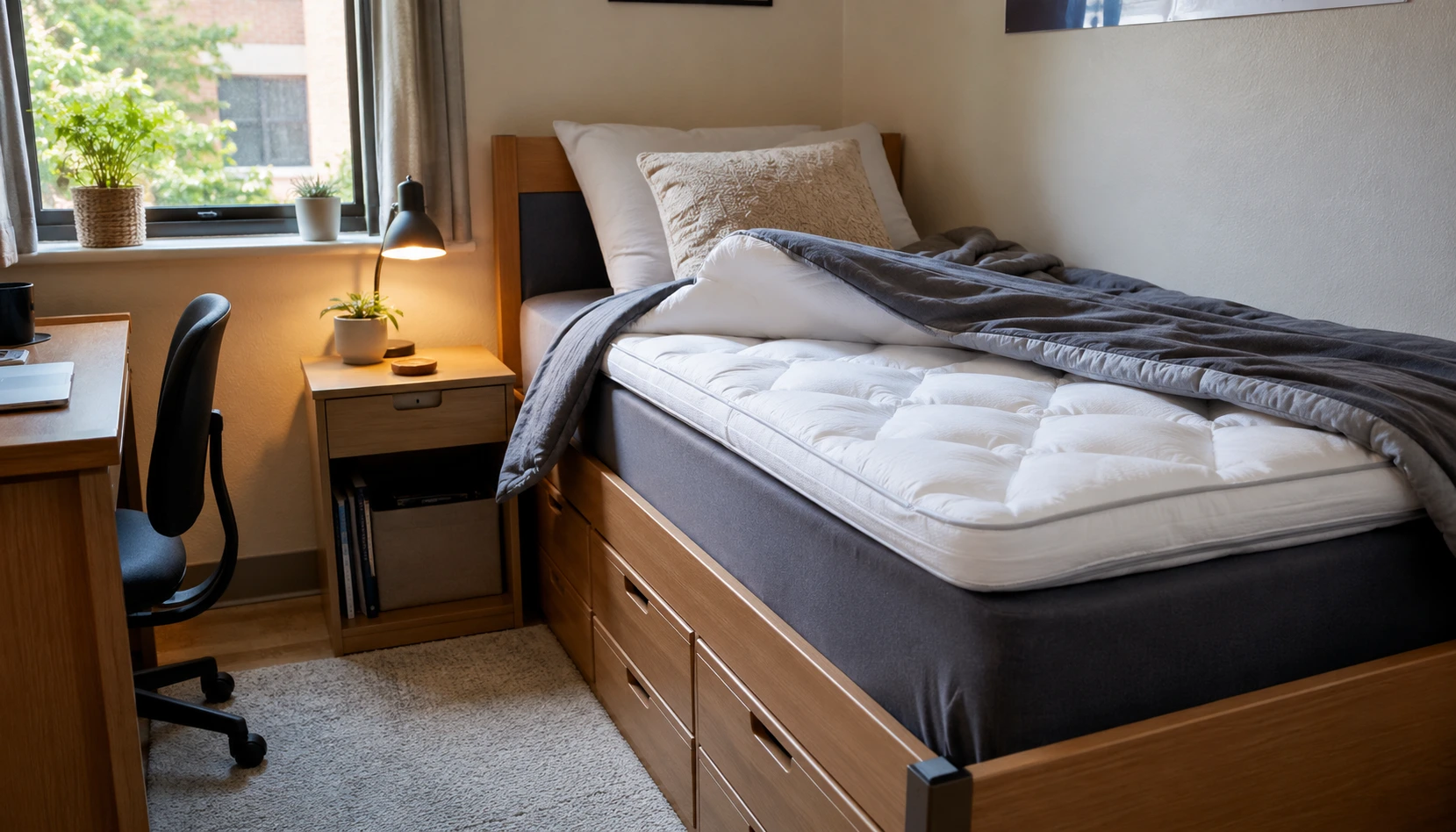
If the provided mattress feels hard or thin, a topper is the first place to spend money. Two to three inches is enough for most people. A very thick topper can make the bed difficult to climb into and cause fitted sheets to slip.
Use a washable mattress protector over it. A pretty comforter cannot compensate for an uncomfortable mattress.
Choose Sheets You Can Wash Easily
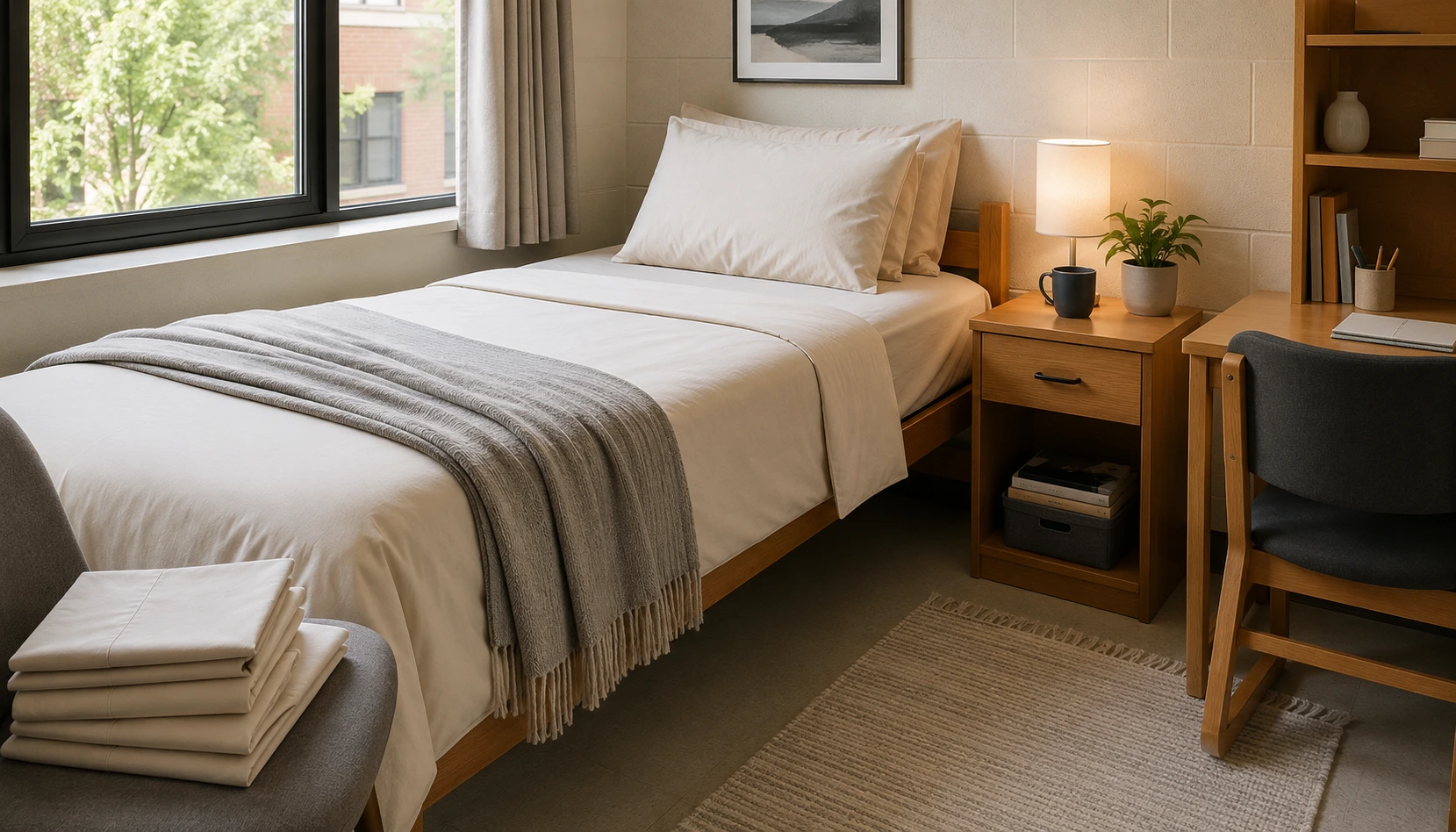
Choose sheets for comfort and laundry reality. Cotton percale feels crisp, sateen feels smoother and warmer, and microfiber dries quickly but can sleep warmer.
Two sets are enough for most students: one on the bed and one ready for laundry day. Cream, pale gray, soft blue, and muted green are more forgiving than bright white.
Use a Practical Comforter
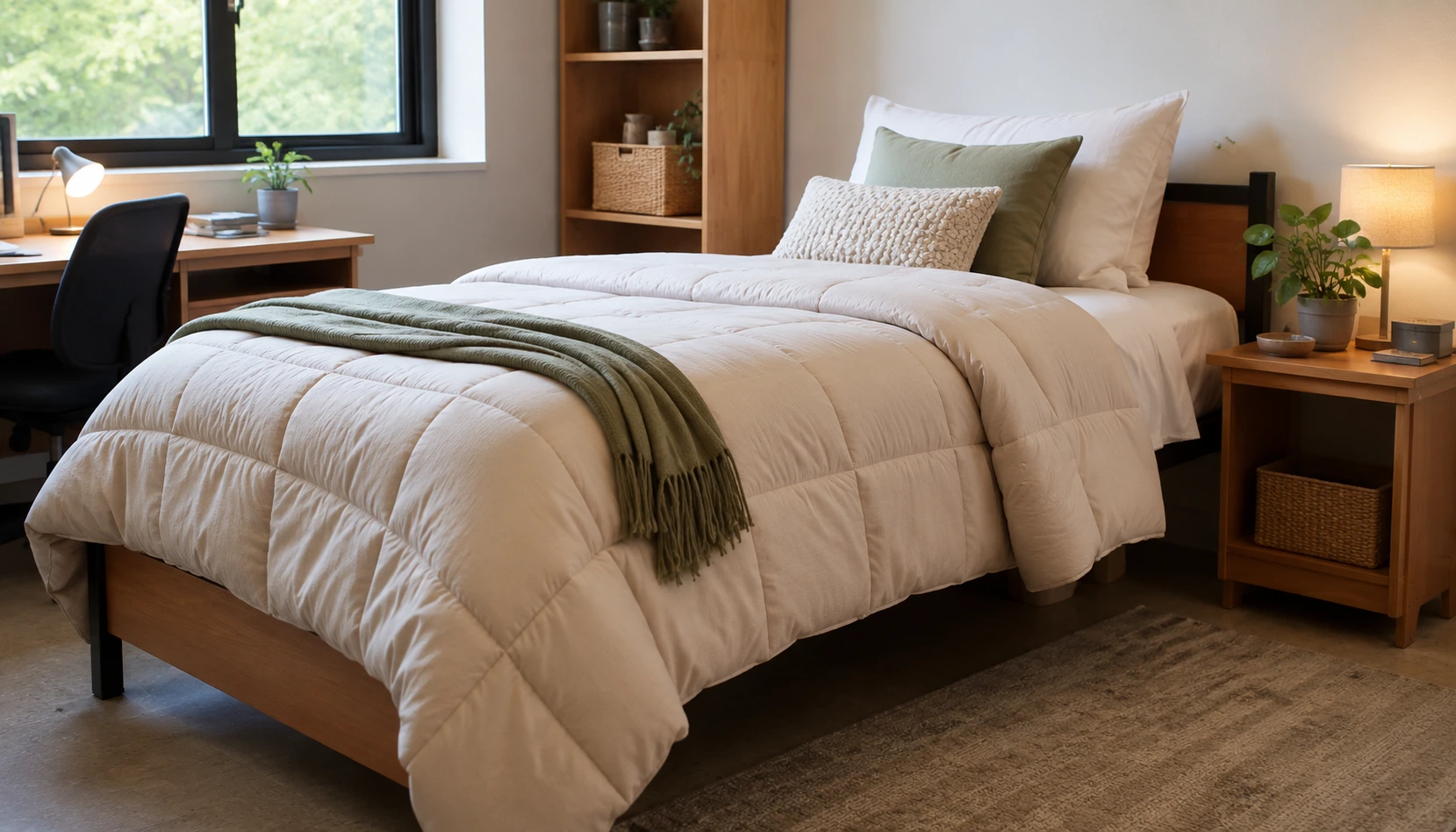
The best dorm comforter is warm enough, easy to wash, and not so bulky that it fills an entire laundry machine. A duvet cover can be easier to wash and lets you change the look later.
Choose medium weight unless you know the dorm runs cold. A separate blanket is more flexible than one very heavy comforter.
Add One Useful Blanket
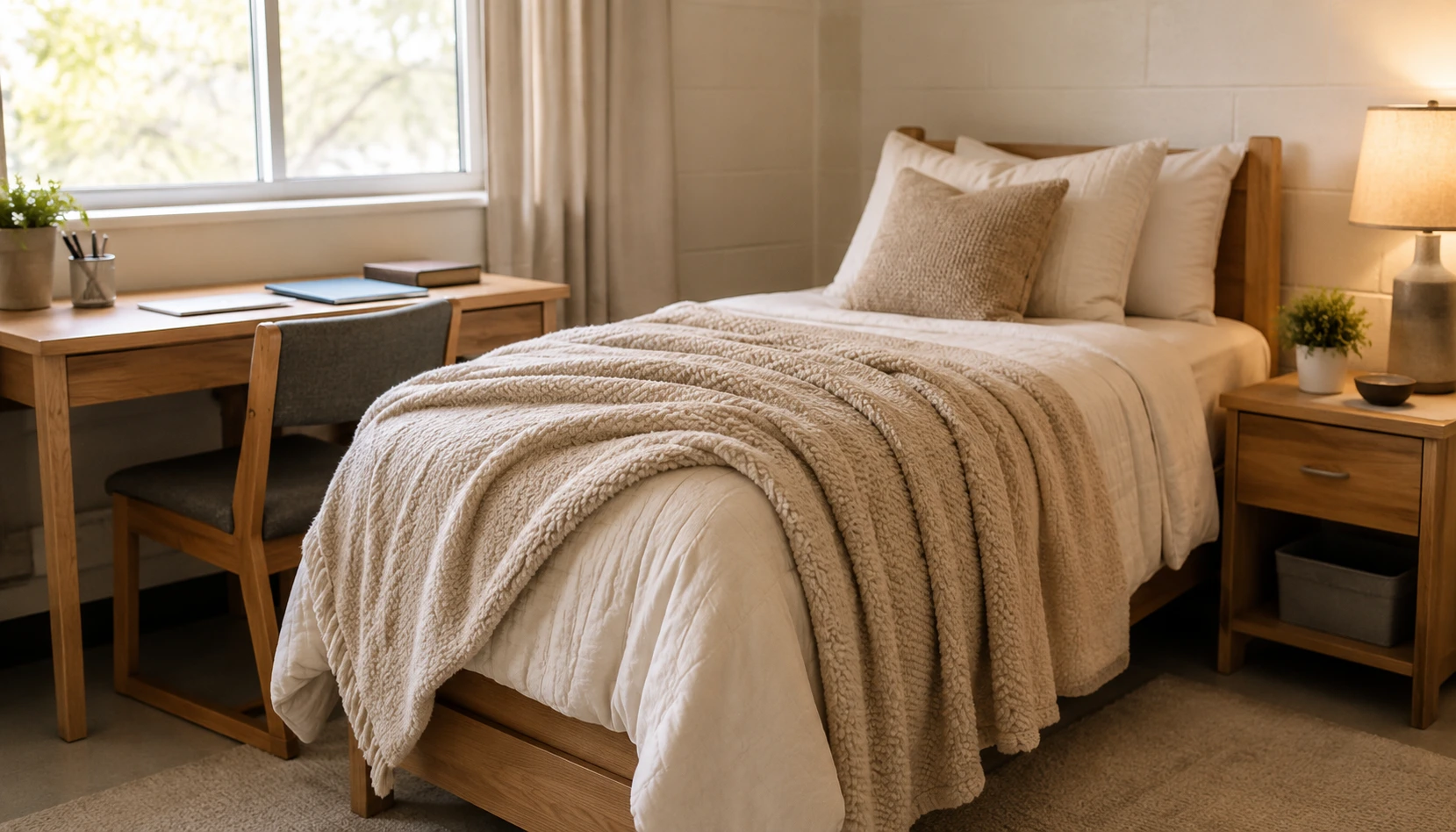
One throw or lightweight blanket across the foot of the bed is enough. It adds warmth, protects the comforter when someone sits down, and introduces color or texture.
Avoid stacking multiple throws for the photo. In a small room, extra fabric quickly becomes extra laundry.
Keep the Pillow Count Under Control
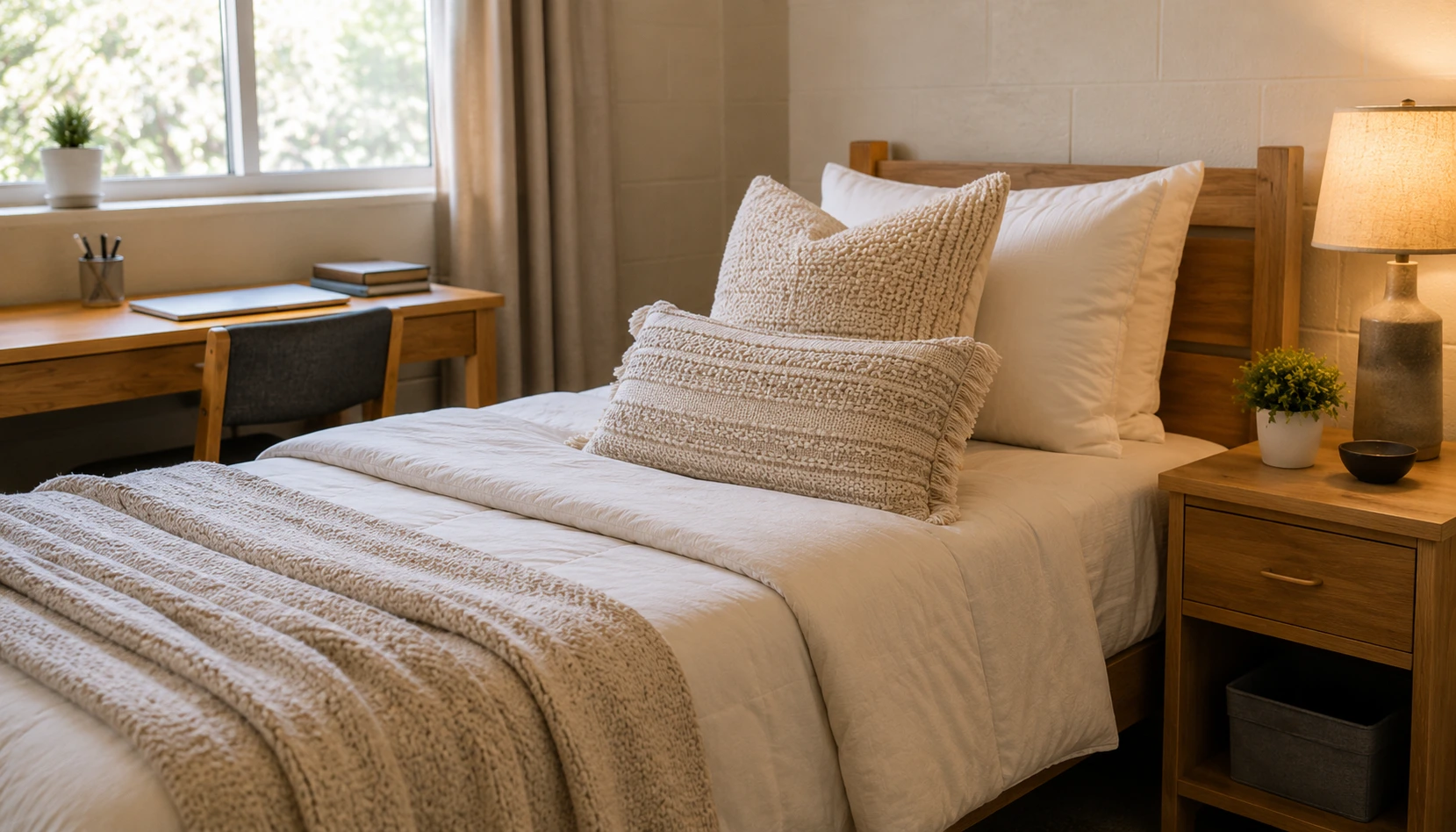
Two sleeping pillows, one or two shams, and one smaller accent pillow are usually enough. The bed looks finished, but you do not have to throw a mountain of cushions on the floor every night.
Choose removable covers where possible. They are easier to wash and change.
Use a Long Back Pillow
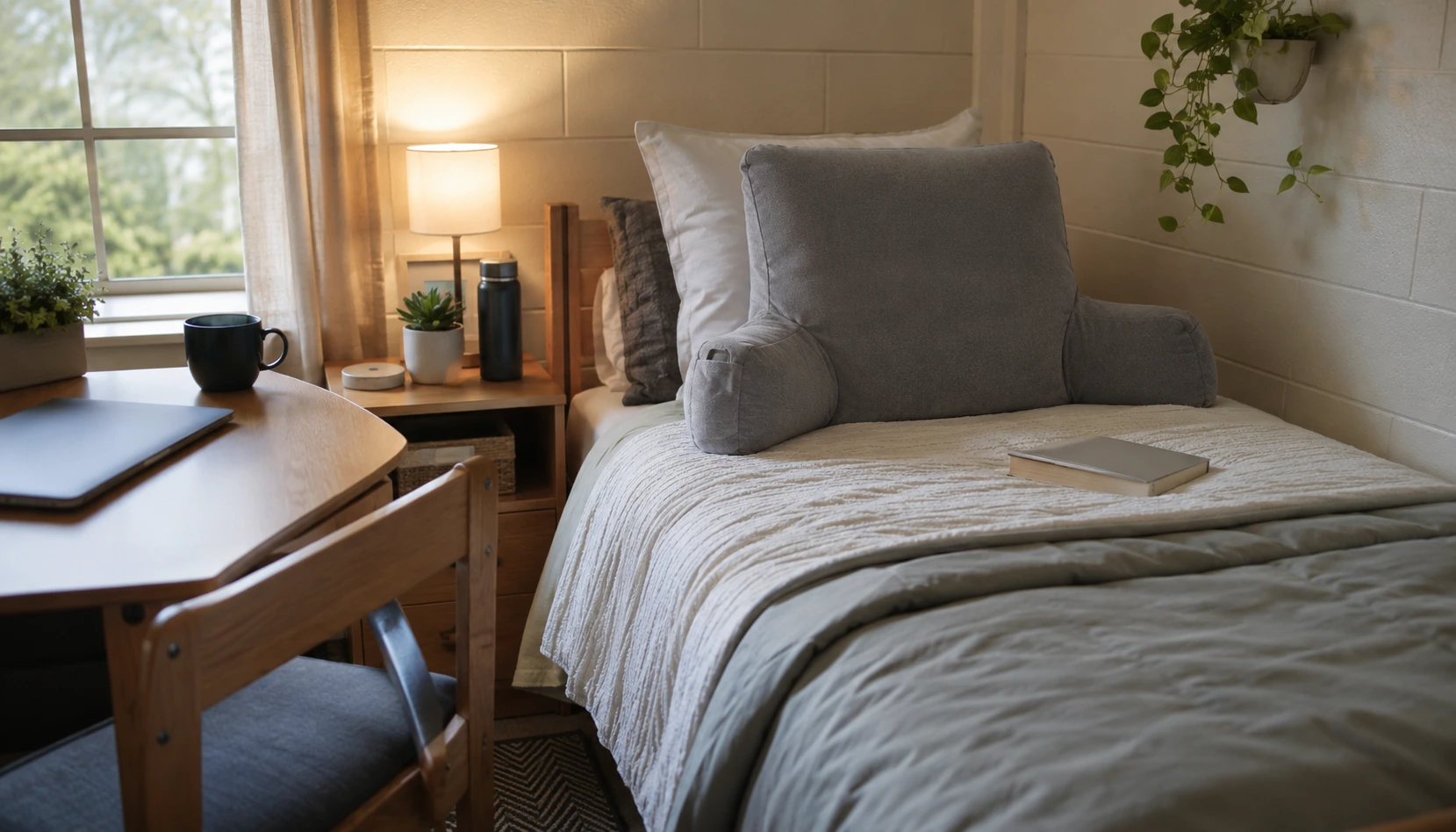
If the bed sits against a wall, one long lumbar or backrest pillow is more useful than several small cushions. It turns the bed into a better seat for reading or studying.
Look for a removable cover and enough firmness that it does not collapse after a week.
Choose One Clear Color Palette
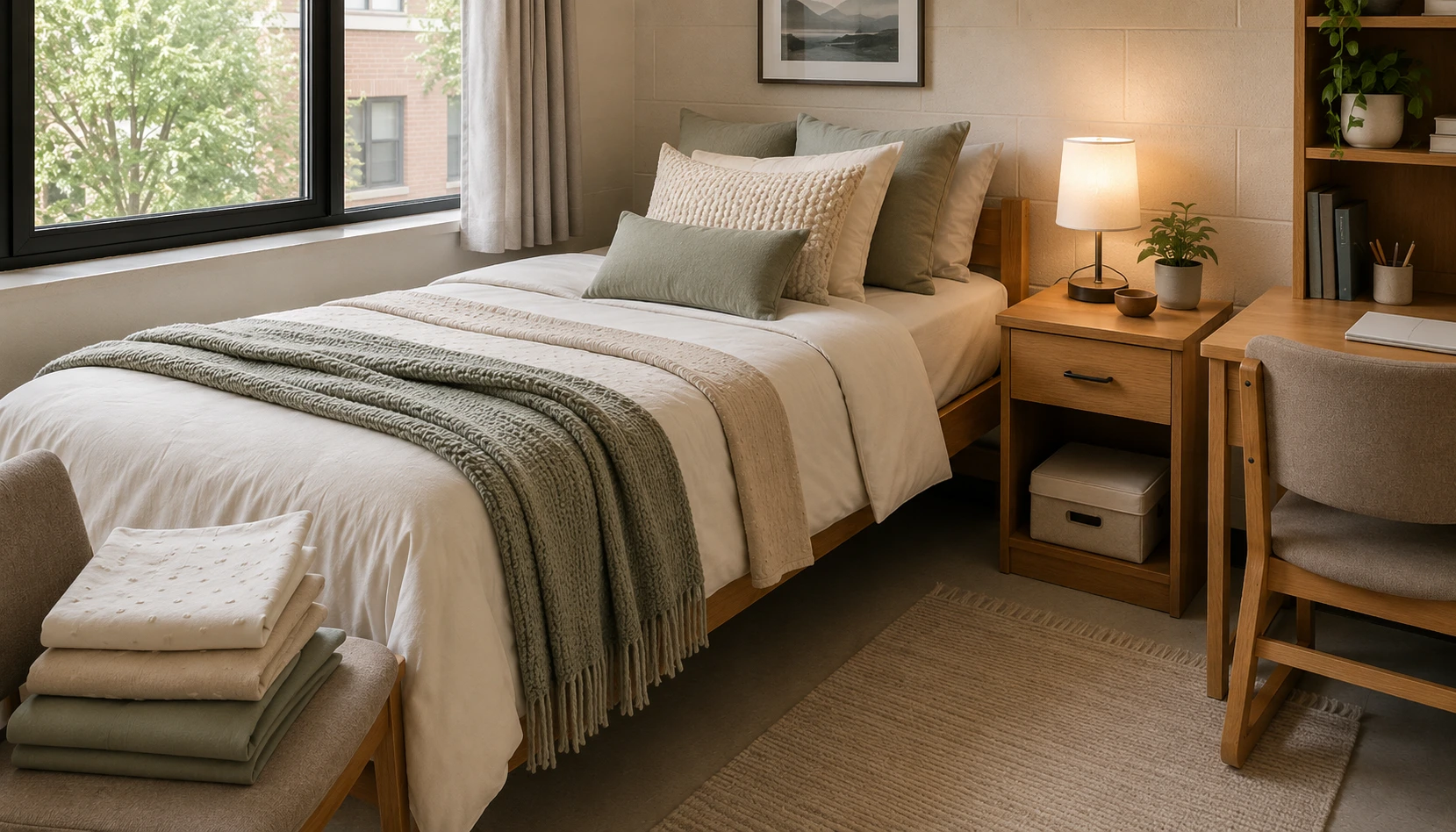
A clear bedding palette helps calm mismatched floors, walls, and furniture. Try cream with sage and warm wood, soft blue with white and tan, blush with oat and brown, or terracotta with white and natural wood.
Repeat the main color once in a pillow, rug, or print. For a green version, see Sage Green Bedroom Ideas.
Add Bedside Storage
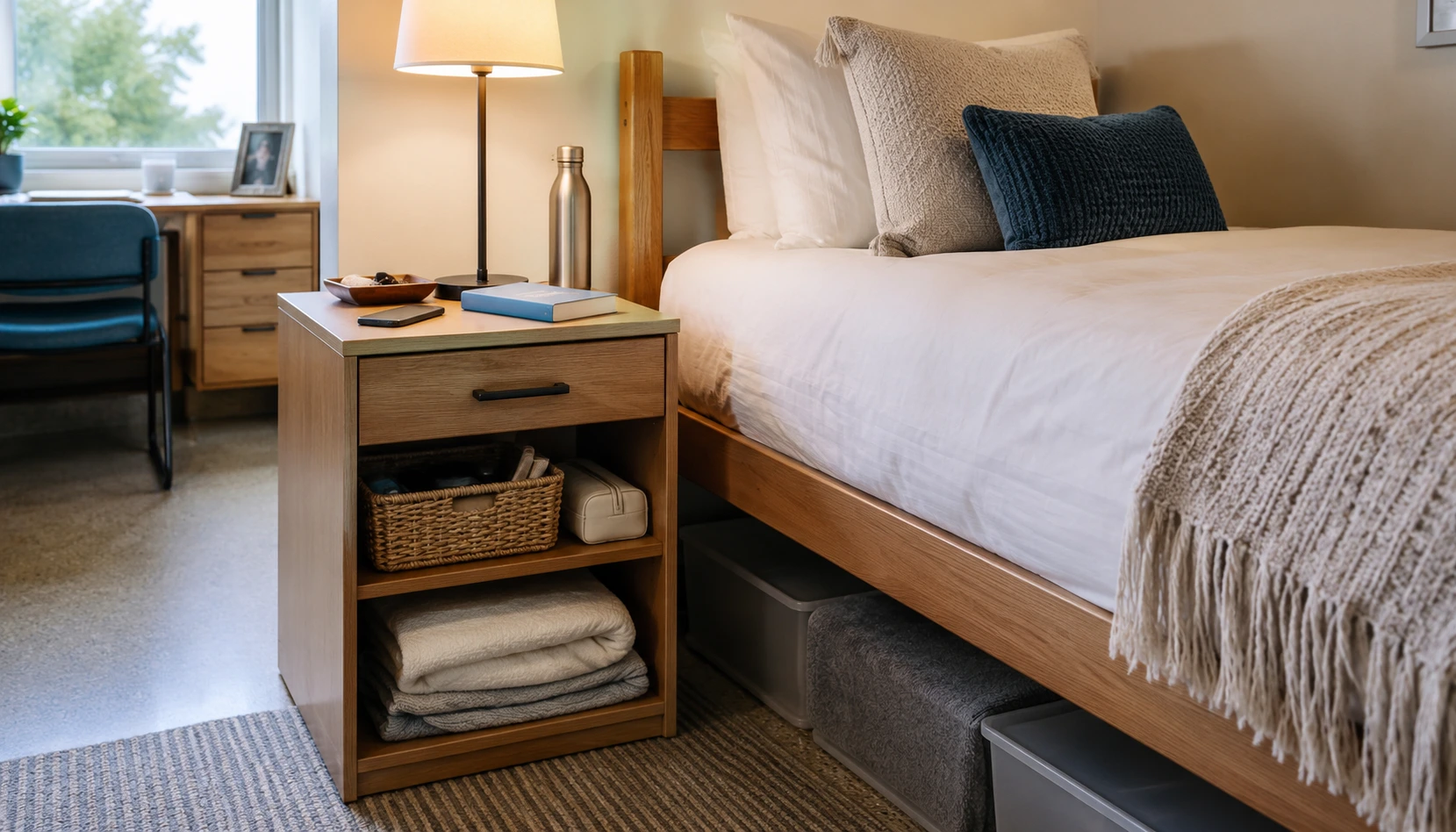
A bedside caddy keeps a phone, charger, glasses, book, and water bottle off the bed. Choose one with reinforced pockets so heavier items do not drag it out of shape.
A narrow rolling cart can work if the layout allows, but measure the walkway and wardrobe swing first.
Improve the Lighting

A dorm ceiling light is rarely enough for reading and usually too harsh for winding down. A clip-on lamp, approved plug-in sconce, or compact desk lamp gives the bed a practical second light source.
Use a warm bulb around 2700K to 3000K and check residence rules before adding adhesive fixtures or decorative lights.
Organize Underbed Storage
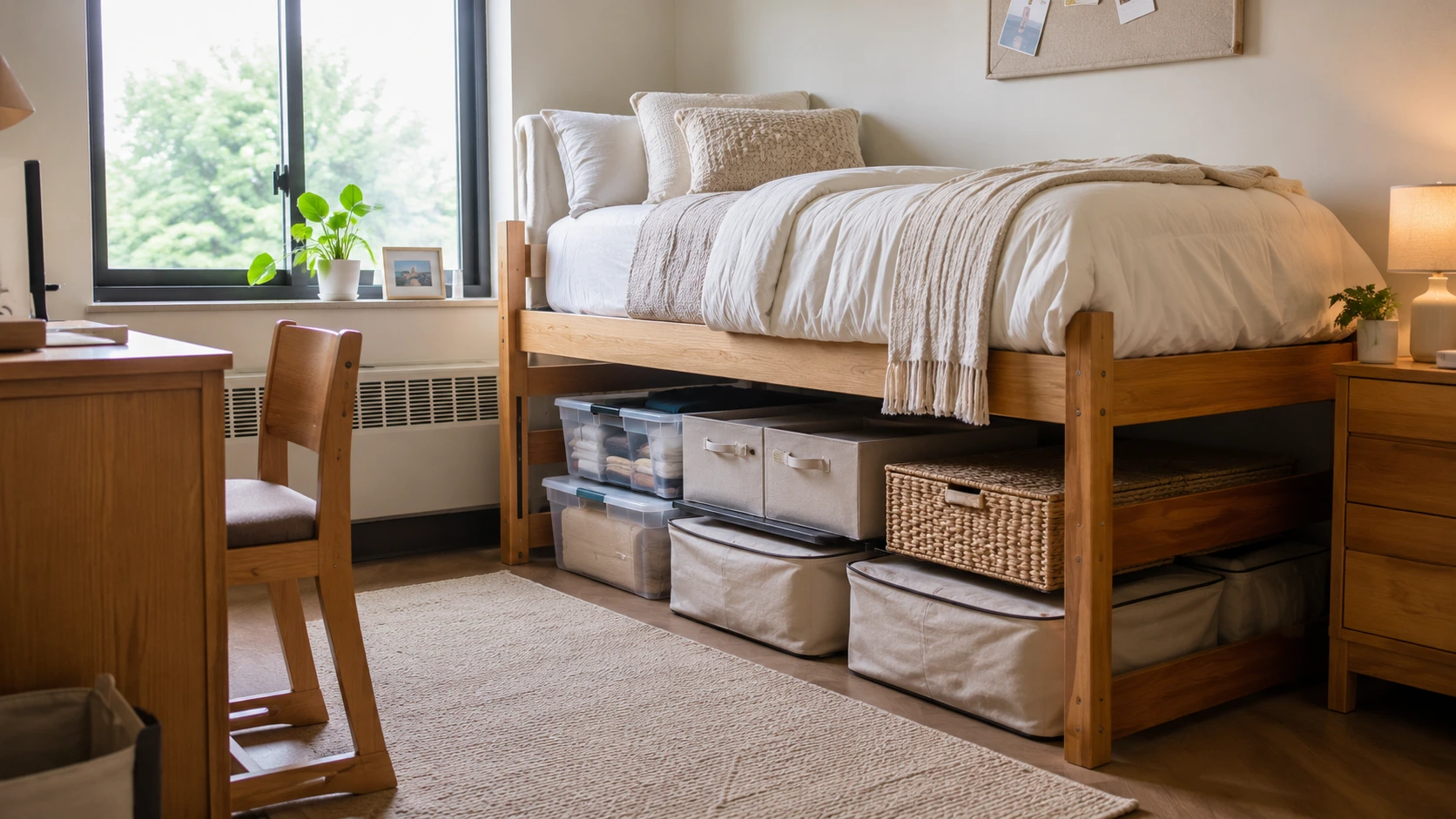
Use matching lidded bins or drawers sized to the final bed clearance. Store less-used items toward the back and everyday items where they can be reached easily.
A bed skirt can hide storage, but better bins are usually more useful. For more compact-room storage, see Room Decoration Ideas for Small Spaces.
Personalize the Wall Without Overfilling It

One medium print, a small photo strip, or a fabric pinboard gives the bed a focal point. Keep enough open wall around the arrangement that it reads clearly from the doorway.
Use only hanging methods allowed by the residence and stay within the stated weight limit.
Common Dorm Bedding Mistakes
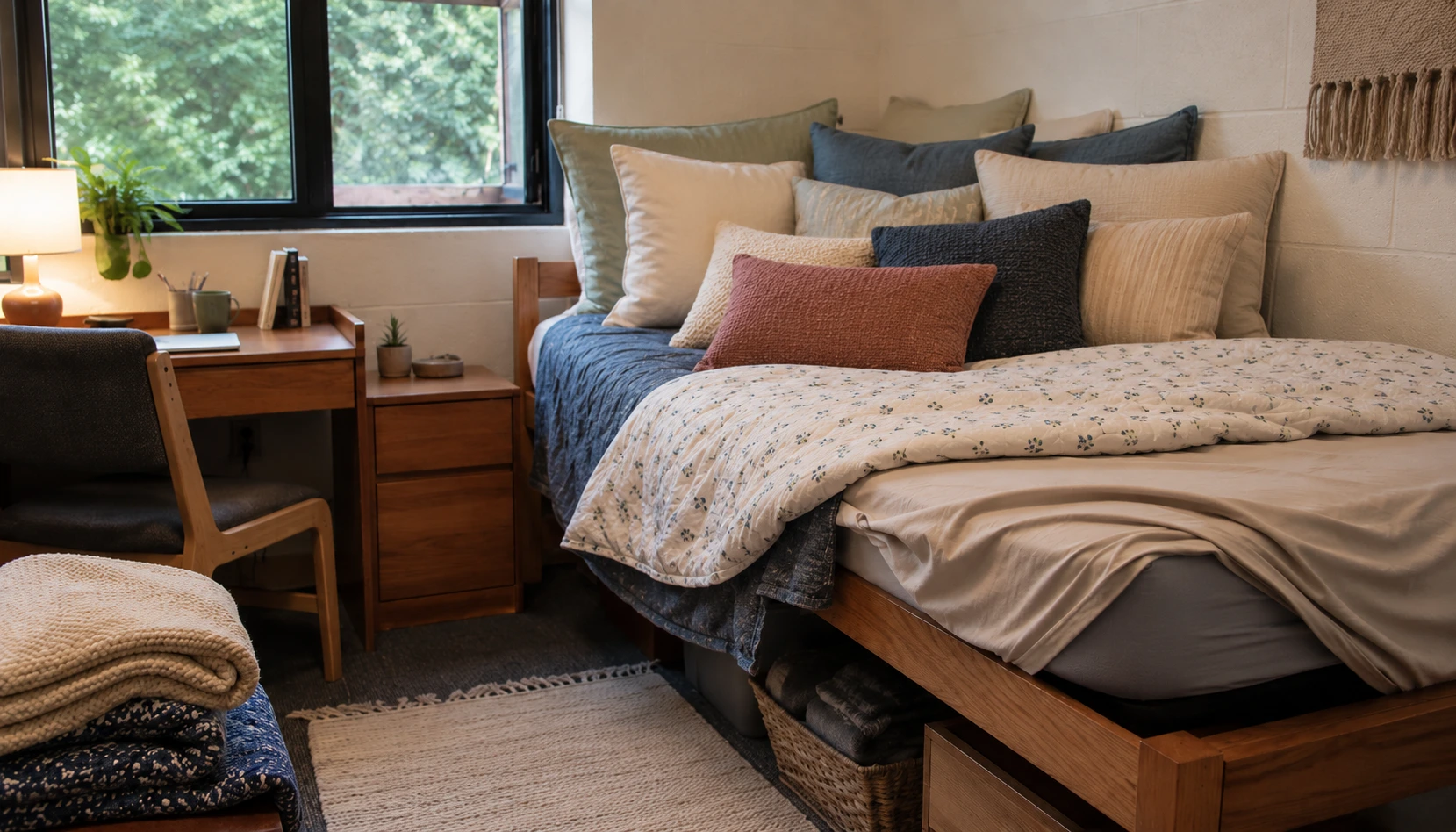
The most common mistake is buying a complete look before confirming the mattress and room dimensions. The second is building a bed that takes ten minutes to clear every night.
Too many pillows, delicate fabric, a comforter that will not fit in the laundry machine, and storage bins that are half an inch too tall all create avoidable problems.
Start with the topper, sheets, and one washable main layer. Add a useful blanket, controlled pillow setup, bedside storage, and better light. Only then decide whether the bed needs another decorative detail. A dorm room is temporary, but the sleep and routines inside it are real.