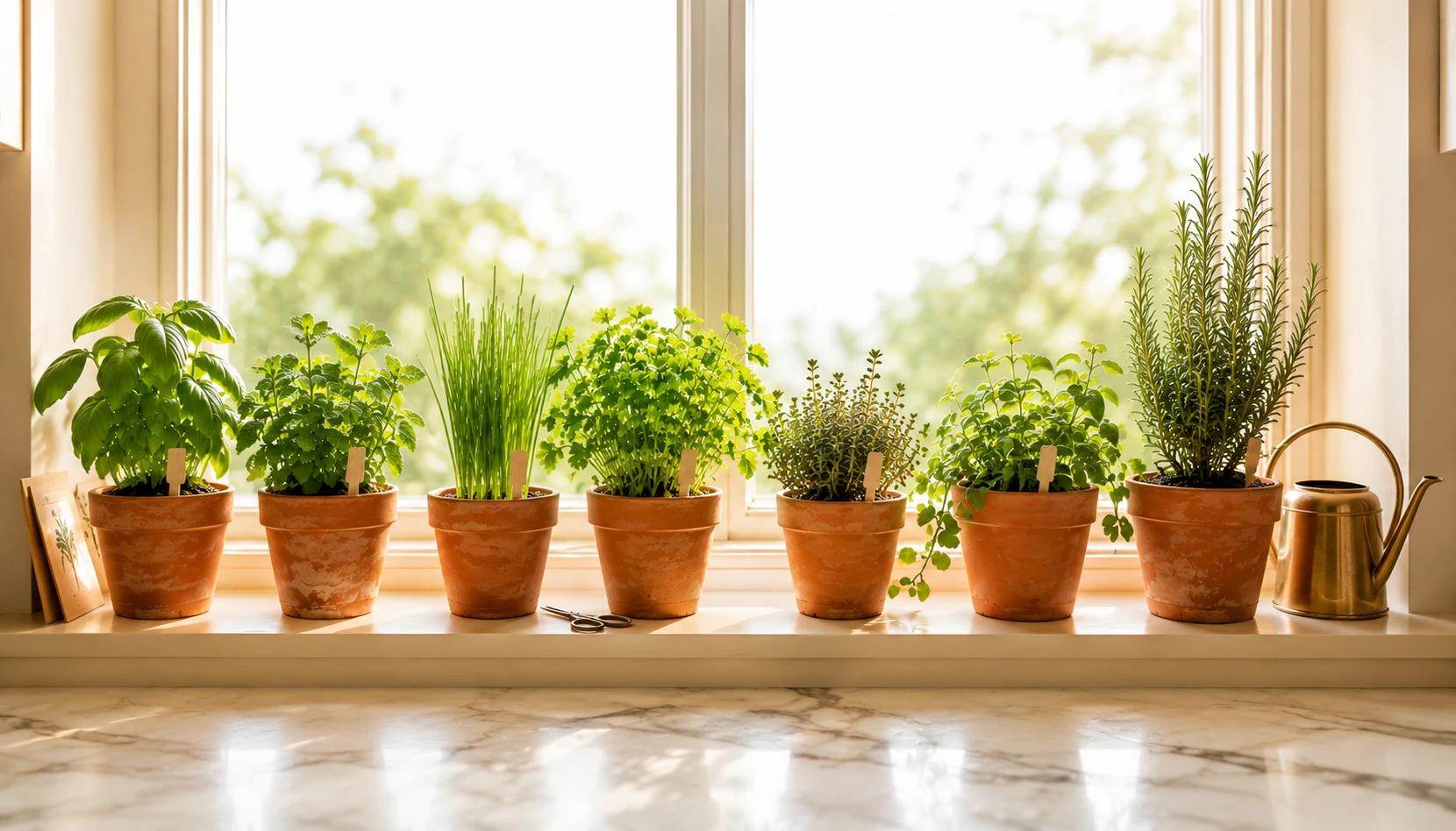
There’s a particular kind of satisfaction that comes from walking to your kitchen window, pinching off a few fresh basil leaves, and adding them to your dinner. No grocery store trip. No wilted plastic-wrapped bunches. Just fresh herbs, growing quietly on your windowsill, always ready when you need them.
The best part? You don’t need a garden, a balcony, outdoor space, or even a particularly large apartment. A single south-facing windowsill (or even a moderately bright east-facing one) is all the space you need to create a thriving apartment herb garden that produces fresh herbs year-round.
This complete guide covers everything: which herbs actually thrive indoors, how to set up your windowsill garden for success, and how to keep it producing continuously through every season.
Why Windowsill Herb Gardens Work So Well in Apartments
The windowsill herb garden is one of the most underrated ideas in apartment living. Here’s why it works so reliably:
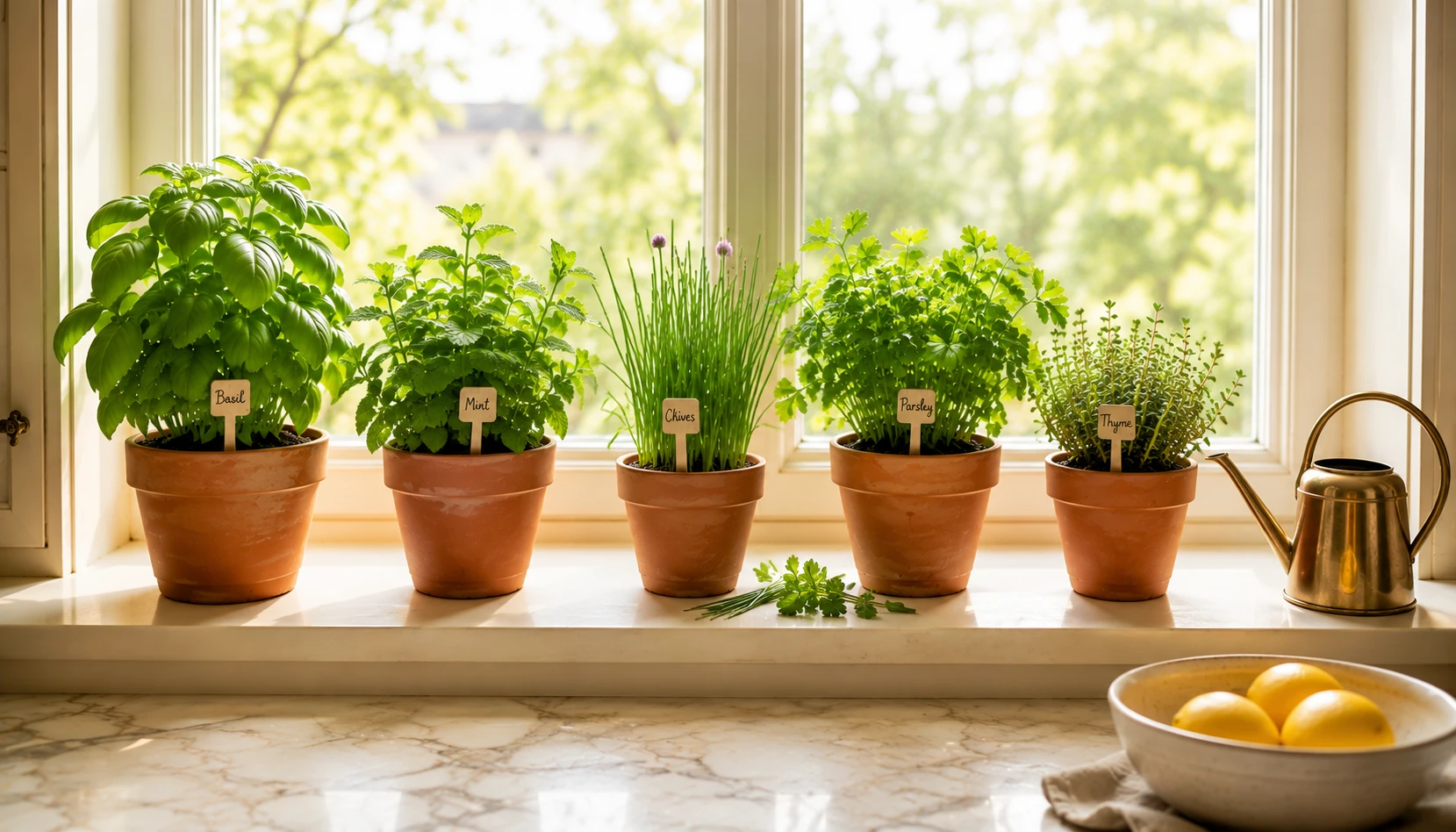
Natural light concentration. Windows concentrate light exactly where your plants are. A south-facing kitchen window in an apartment can deliver as much usable light as a partially shaded garden spot.
Controlled environment. Apartments maintain consistent temperatures: no frost, no extreme heat, no sudden temperature drops. Most culinary herbs are actually happier in stable indoor conditions than they are outdoors in fluctuating weather.
Accessibility. Herbs on your kitchen windowsill are in the most useful possible location. You cook, you reach, you harvest. This proximity also means you notice problems early (pests, overwatering, nutrient deficiency) before they become serious.
Space efficiency. A 90cm windowsill can comfortably hold 6-8 herb plants. That’s a complete culinary herb collection (basil, parsley, thyme, mint, chives, rosemary, sage, and oregano) in less than one square metre of space.
Cost savings. Fresh herbs at the supermarket cost $3-4 per bunch and last a week. A windowsill herb garden costs $20-30 to set up and produces herbs continuously for months. The savings are significant for anyone who cooks regularly.
Light Requirements for an Indoor Herb Garden
Light is the single most important factor in apartment herb gardening. Get this right and everything else becomes much easier.
Window Orientation Guide
South-facing windows (ideal): 6-8 hours of direct sun daily. Grows any herb successfully. Best for basil, rosemary, thyme, and oregano which are sun-hungry Mediterranean herbs.
East-facing windows (good): 4-6 hours of morning sun. Slightly cooler and less intense than south. Great for parsley, chives, mint, and cilantro which prefer moderate light.
West-facing windows (good): 4-6 hours of afternoon sun. Warmer and more intense than east. Works well for most culinary herbs.
North-facing windows (challenging): Less than 3 hours of indirect light. Most herbs will struggle. If this is your only option, invest in a grow light.
When to Use a Grow Light
A simple LED grow light ($20-45) positioned 15cm above your plants solves low-light problems completely. Look for:
- Full spectrum LED (not just purple/blue)
- At least 20W for a standard windowsill
- Timer function so you don’t have to remember to turn it on
Run grow lights for 14-16 hours daily in low-light situations. This fully compensates for limited natural light and allows year-round growing regardless of window orientation.
Light Warning Signs
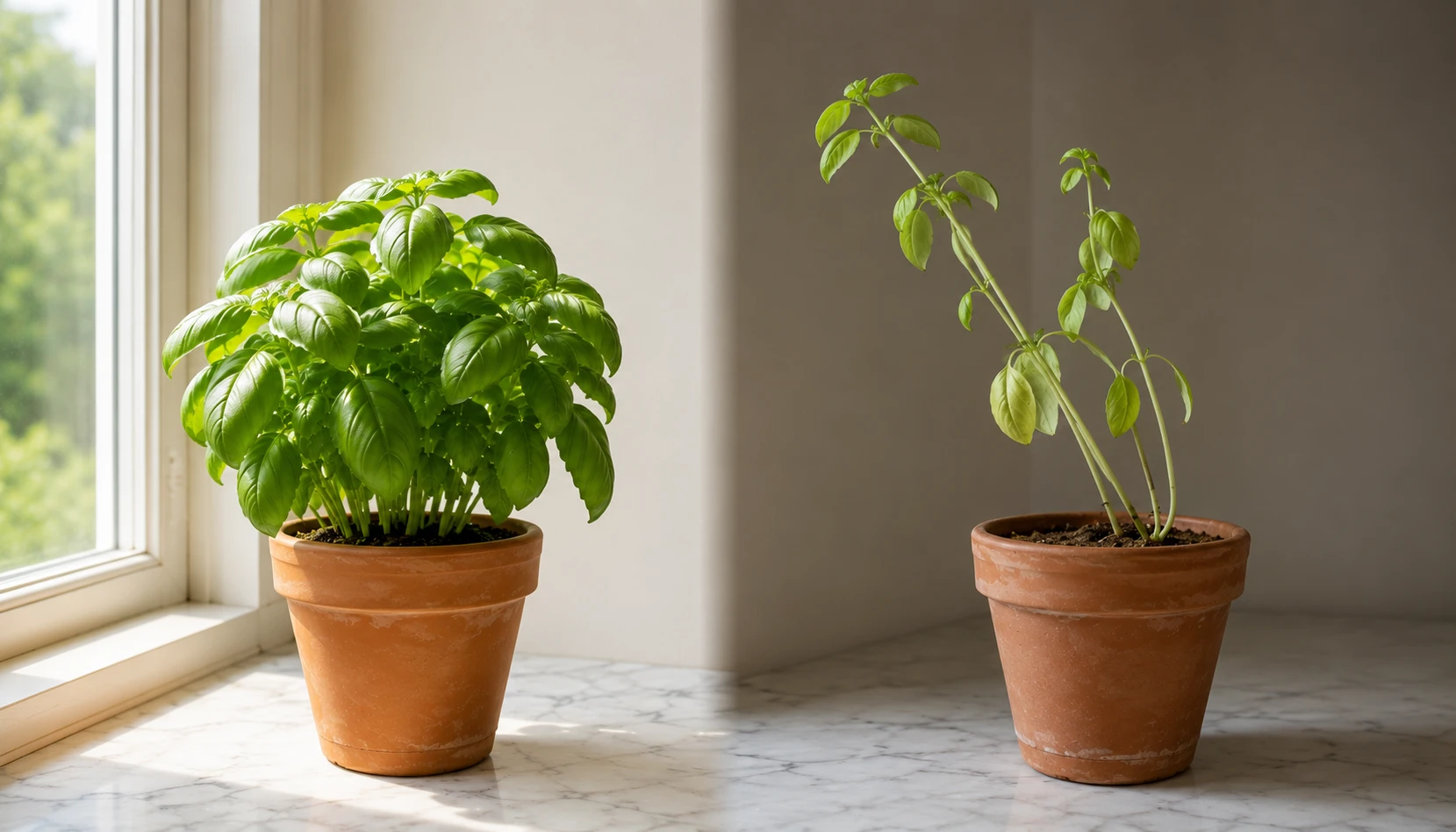
Too little light: Leggy, tall, weak stems reaching toward the window. Pale, undersized leaves. Slow growth. Solution: Move closer to window or add grow light.
Too much light (rare indoors): Scorched, bleached patches on leaves. Usually only an issue in very hot south-facing windows in summer. Solution: Sheer curtain to diffuse midday sun.
Best Herbs for an Apartment Herb Garden
Not all herbs are equally suited to indoor growing. These are the best performers for a small space herb garden:
Tier 1 — Easiest (Start Here)
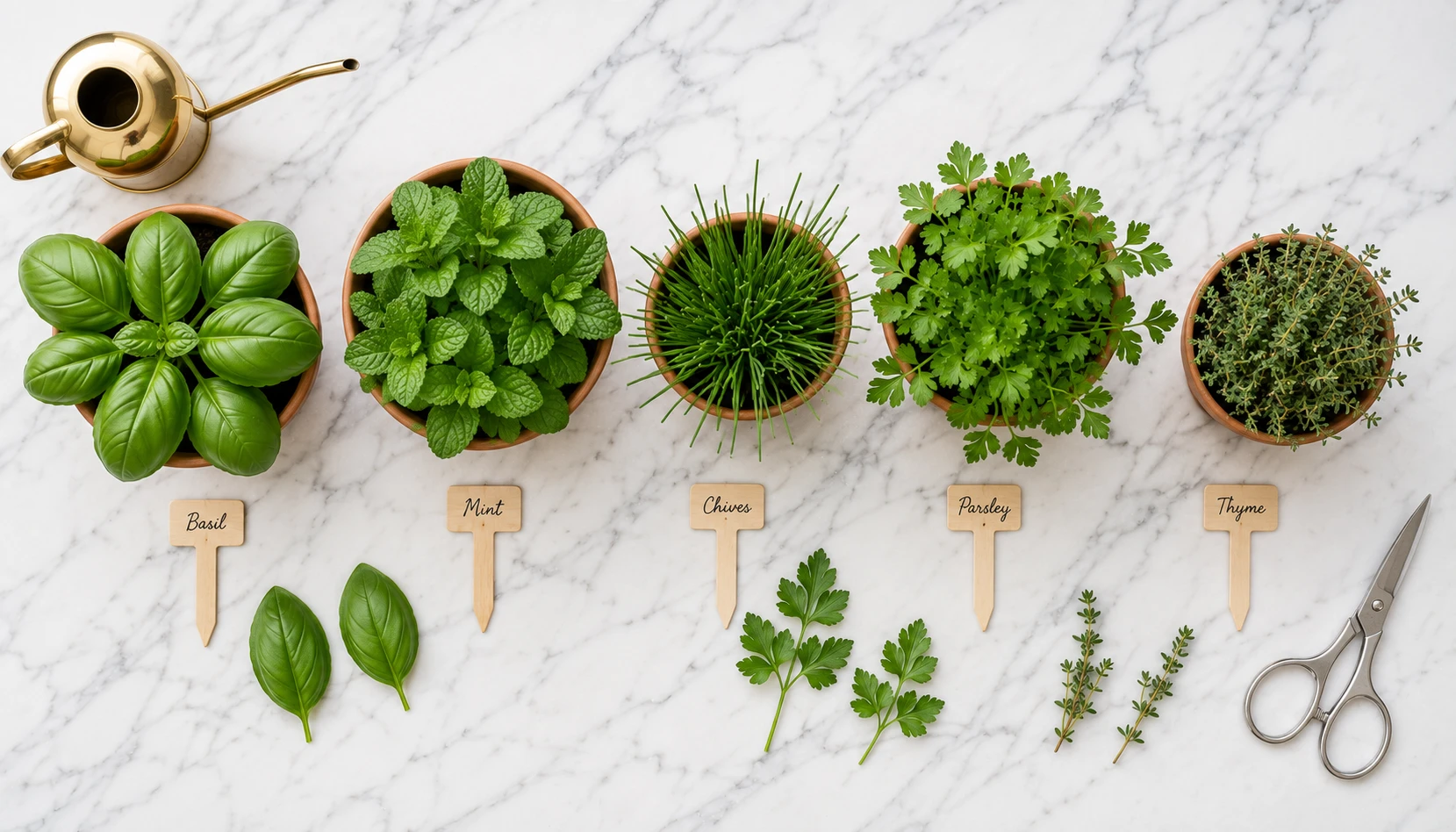
Basil: The most rewarding windowsill herb. Grows fast, produces abundantly, and the kitchen uses are endless. Needs the most light of all herbs; a south-facing window is essential. Full growing guide in our How to Grow Basil at Home post.
Chives: Almost indestructible. Tolerates lower light better than most herbs. Grow in a cluster and snip as needed; they regrow from the base like a haircut. Perfect for eggs, potatoes, salads, and soups.
Mint: Incredibly easy and fast-growing. The one downside: mint spreads aggressively, so always keep it in its own separate pot, never mixed with other herbs. Great varieties: spearmint, peppermint, apple mint, chocolate mint.
Parsley: Takes a few weeks to establish but then produces continuously for months. Tolerates east-facing windows well. Flat-leaf (Italian) parsley has more flavour than curly; both grow equally well indoors.
Tier 2 — Easy with Good Light
Thyme: A compact, woody herb that thrives in dry, bright conditions. Perfect for south-facing windows. Very low water needs; it actually prefers to dry out between waterings. Excellent for roasting, soups, and Mediterranean cooking.
Oregano: Similar conditions to thyme. Grows as a spreading bush. Pinch regularly to keep it compact. Essential for Italian and Greek cooking.
Rosemary: Needs the most light and the best drainage. A south-facing window is essential. Grows slowly but lives for years when well cared for. Woody stems, needle-like leaves, beautiful as a plant even when not harvesting.
Tier 3 — Slightly More Challenging
Cilantro (Coriander): Bolts (goes to seed) quickly in warm conditions. Succession planting (sowing new seeds every 3-4 weeks) keeps a continuous supply. Prefers cooler, bright spots.
Dill: Grows tall (use a deeper pot). Bolts quickly like cilantro. Best grown in short successions.
Lemongrass: Needs consistent warmth and light but grows vigorously once established. A single plant provides lemongrass for months of cooking.
My Recommended Starter Collection:
For a complete apartment kitchen herb garden, start with these five:
1. Basil (south window)
2. Chives (any window)
3. Mint (any window, own pot)
4. Parsley (east or south window)
5. Thyme (south window)
This combination covers Italian, Asian, Mediterranean, and everyday cooking, all from one windowsill.
Container Selection for Small Space Herb Gardening
The right container makes a significant difference in how well your herbs grow, and in how good your windowsill looks.
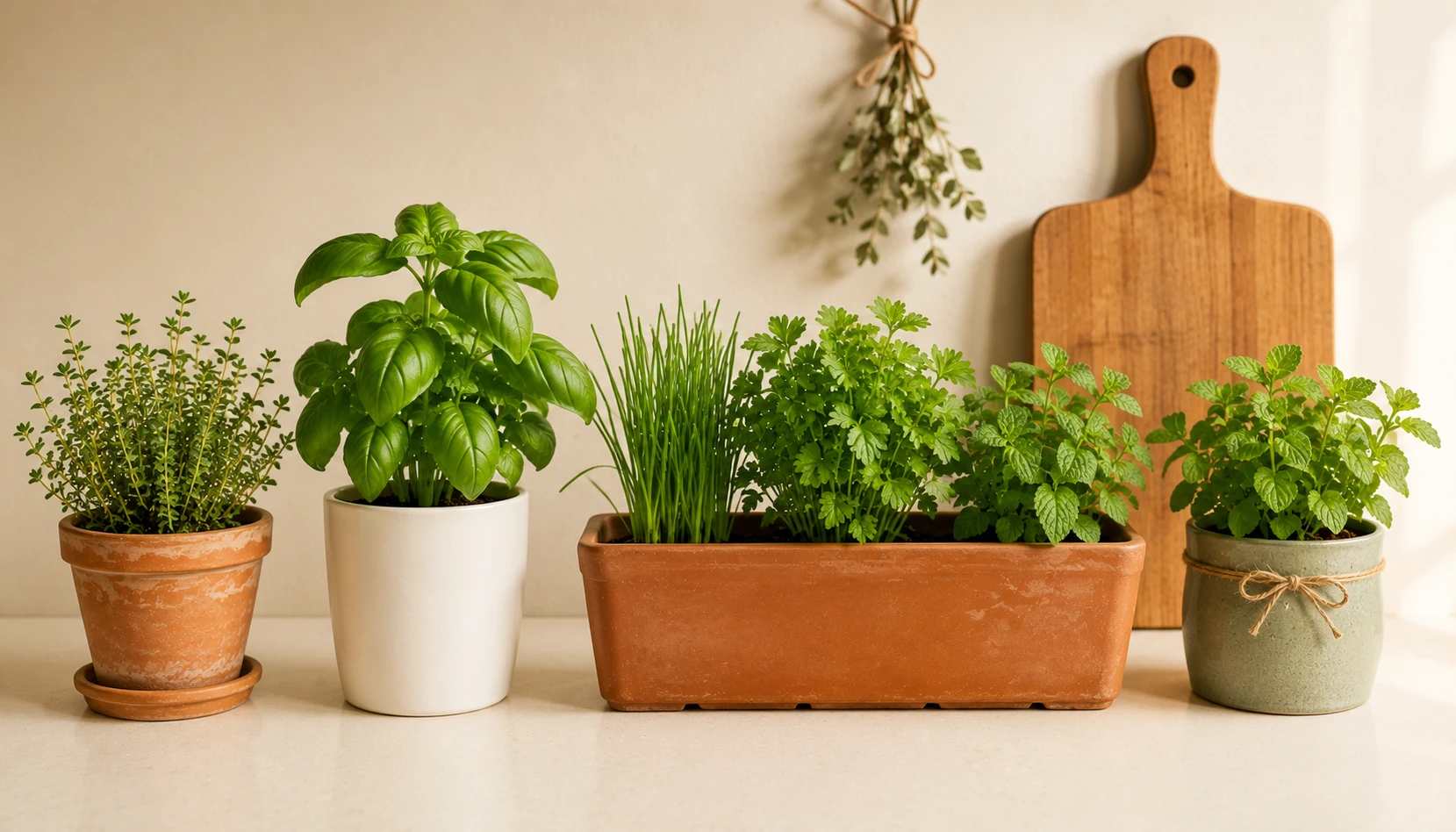
Individual Pots vs Window Boxes
Individual pots (recommended): Each herb gets exactly the conditions it needs. You can water thyme less while watering basil more. Easier to move, rearrange, or replace one plant without disturbing others. More flexibility overall.
Window boxes: Look beautiful and maximise space. Work well for herbs with similar water requirements (parsley, chives, and mint work well together; thyme, oregano, and rosemary work well together). Never mix drought-tolerant herbs with moisture-loving ones in the same box.
Best Container Materials
Terracotta (top recommendation): Breathable clay allows air and moisture exchange through the pot walls. Prevents overwatering by allowing soil to dry evenly. Looks beautiful on a windowsill. Gets heavier when wet, which is a good stability indicator. If you want to personalize your pots even further, see our guide to painted terracotta pot projects for an easy weekend craft.
Ceramic: Glazed ceramic retains moisture longer than terracotta. Good for moisture-loving herbs like basil and mint. Beautiful options available at every price point.
Plastic: Lightweight and affordable. Retains moisture well, which is good for thirsty herbs, but be cautious with drought-tolerant ones. Less attractive but very functional.
Size Guidelines
| Herb | Minimum Pot Size |
|---|---|
| Basil | 15cm diameter |
| Mint | 20cm diameter (spreads) |
| Chives | 15cm diameter |
| Parsley | 15cm diameter |
| Thyme | 12cm diameter |
| Rosemary | 20cm diameter |
| Cilantro | 15cm diameter, 20cm deep |
The drainage rule: Every pot must have drainage holes. No exceptions. Herbs sitting in waterlogged soil develop root rot within days. If you love a pot without holes, use it as a decorative outer sleeve with a plain pot with drainage inside.
Soil for Container Herb Gardens
Use quality potting mix, not garden soil. Garden soil compacts in containers, prevents drainage, and harbours pests.
For most herbs: standard potting mix works well. For Mediterranean herbs (thyme, rosemary, oregano): mix potting soil 50/50 with perlite or coarse sand for extra drainage. For mint and basil: standard potting mix, kept consistently moist.
Watering Your Apartment Herb Garden Correctly
Overwatering is the most common cause of herb death in apartment gardens. Indoor plants need far less water than people think.
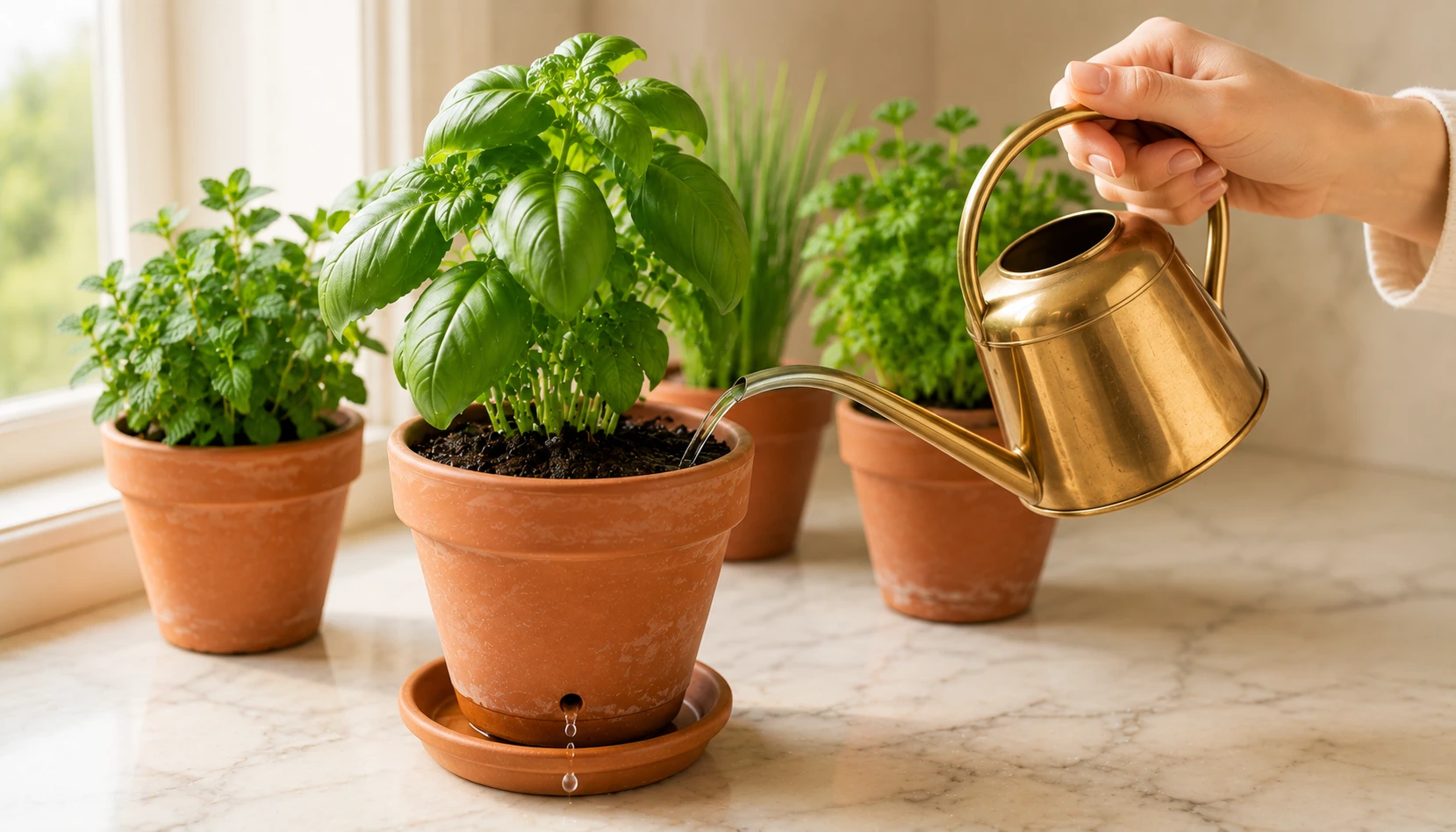
The Finger Test — Always Use This
Before watering any herb, push your finger 2cm into the soil. If it feels moist, wait. If it feels dry, water thoroughly.
Moisture-loving herbs (basil, mint, parsley, cilantro): Water when top 1cm is dry. Never let these completely dry out.
Drought-tolerant herbs (thyme, rosemary, oregano, sage): Water when top 3-4cm is completely dry. These actively prefer drying out between waterings.
How to Water Properly
Water deeply until water flows freely from drainage holes. This ensures the entire root zone gets moisture, not just the surface. Then stop. Don’t water again until the soil test says it’s time.
Avoid light, frequent splashes of water; this promotes shallow roots and surface moisture that encourages fungal problems.
Apartment-Specific Watering Challenges
Heated air in winter: Central heating dries soil faster than you expect. Check plants more frequently in winter.
Air conditioning in summer: Creates dry conditions similar to winter heating. Monitor soil moisture rather than following a schedule.
The saucer problem: Saucers under pots catch drainage, which matters for windowsills. But if water sits in the saucer for more than 30 minutes, the roots sit in water and rot. Empty saucers after watering.
Managing Humidity in Dry Apartments
Apartments, especially those with central heating or air conditioning, often have very low humidity. Most culinary herbs cope with this well, but a few simple adjustments help.
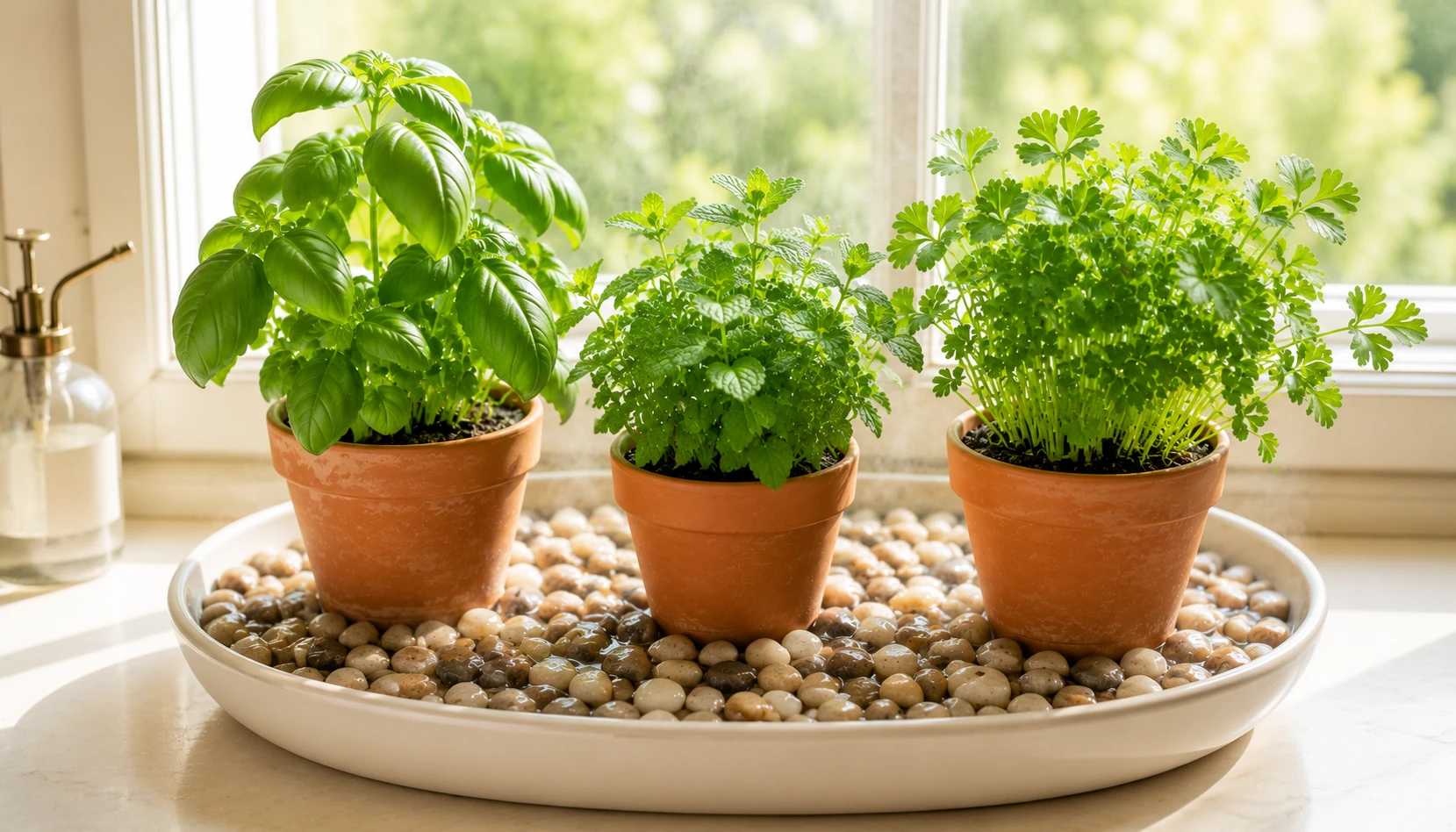
Pebble tray method: Fill a tray or saucer with pebbles. Add water to just below the top of the pebbles. Place herb pots on top (the pots should not sit in the water). As the water evaporates, it creates a microclimate of higher humidity around your plants. Top up the water every few days.
Grouping plants: Plants grouped together create a shared humidity zone through transpiration. A cluster of 5-6 herb pots on a windowsill generates noticeably higher local humidity than individual pots spread around a room.
Occasional misting: A light mist of water on herb leaves once or twice weekly helps in very dry conditions. Avoid misting in the evening; leaves that stay wet overnight are more susceptible to fungal problems. Mist in the morning so leaves dry during the day.
Which herbs are most sensitive to low humidity: Basil and mint prefer higher humidity. Thyme, rosemary, and oregano actually prefer dry air, since these Mediterranean herbs evolved in dry climates.
Seasonal Considerations for Indoor Herb Gardening
One of the biggest advantages of an apartment herb garden is the ability to grow year-round, though each season requires slight adjustments.
Spring: The easiest season for indoor herbs. Increasing daylight, moderate temperatures. Ideal for starting new plants from seed. Most herbs will grow vigorously.
Summer: Maximum natural light, great for sun-loving herbs. Watch for overheating in south-facing windows. If leaves look scorched or bleached, add a sheer curtain. Water more frequently as soil dries faster.
Autumn: Light begins decreasing. Most herbs slow their growth but continue producing. A good time to pot up and bring in any herbs you had outdoors over summer.
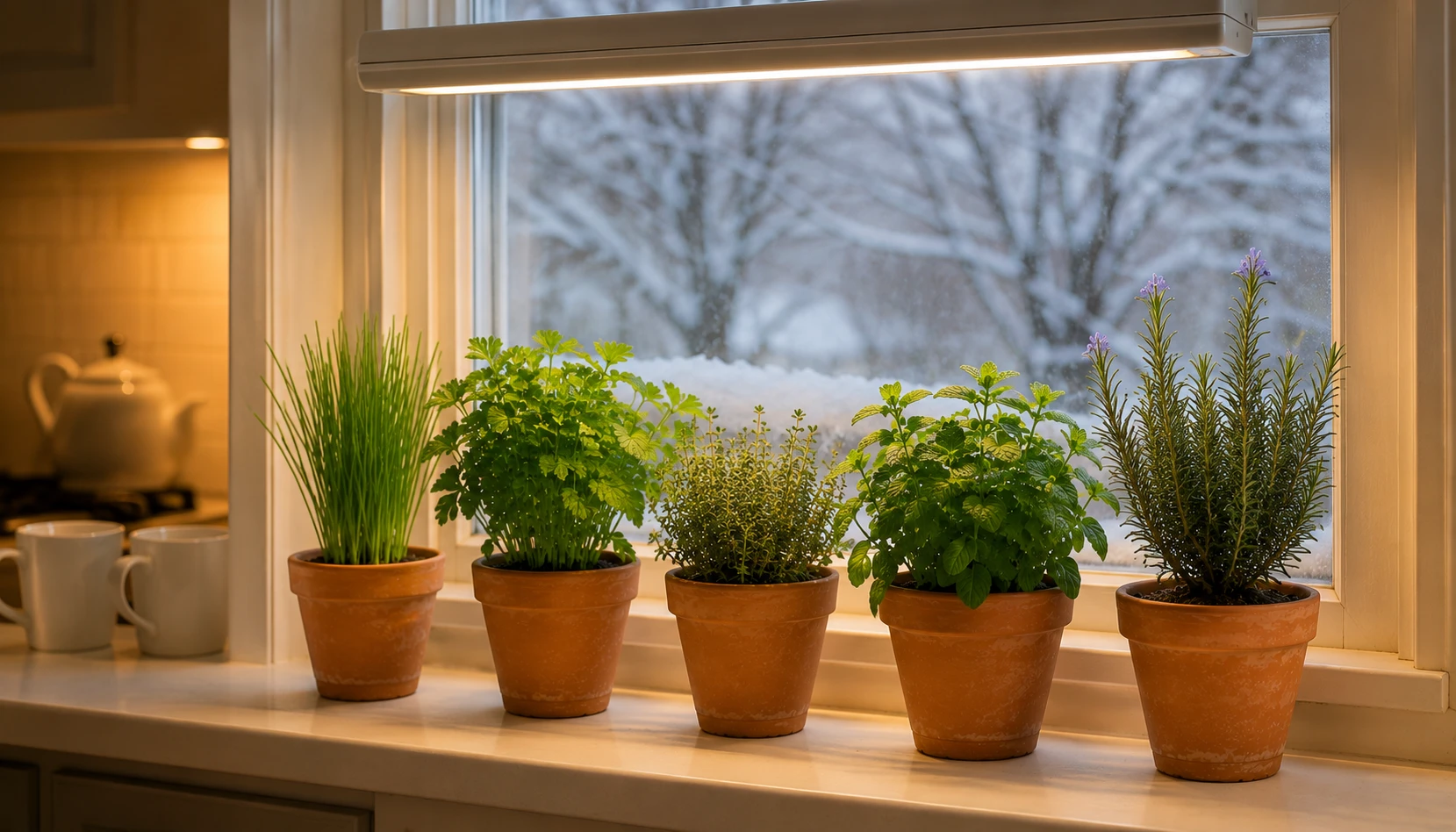
Winter: The most challenging season. Days are short and light is limited. Solutions:
- Move pots as close to windows as possible
- Add a grow light (14-16 hours daily)
- Reduce watering (plants are in slower growth mode)
- Keep pots away from cold draughts near window glass
- Focus on cold-tolerant herbs: chives, parsley, thyme
- Consider basil a summer herb and replace in spring
Pest Management for Indoor Apartment Herbs
Indoor herbs are generally less pest-prone than outdoor plants, but a few pests do find their way inside.
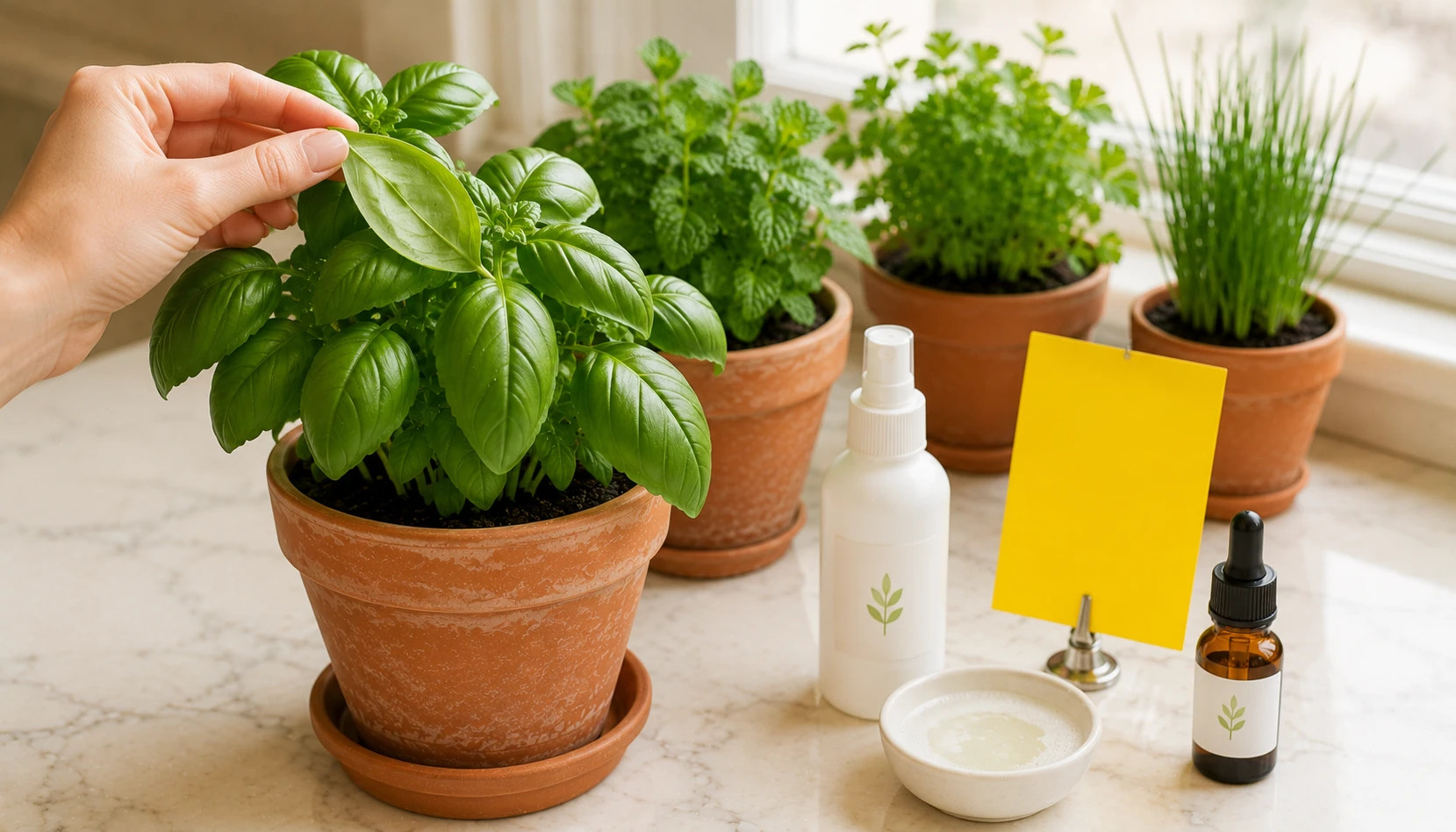
Aphids: Tiny green or black insects clustering on new growth and stem tips. Treatment: Wipe off with a damp cloth, then spray with diluted dish soap solution (1 tsp soap per litre of water). Repeat weekly until gone.
Spider mites: Tiny dots on leaves, fine webbing between stems. Caused by hot, dry conditions. Treatment: Increase humidity, spray leaves with water, apply neem oil solution if persistent.
Fungus gnats: Small flies around soil. Larvae damage roots. Caused by consistently moist topsoil. Treatment: Allow soil surface to dry between waterings. Yellow sticky traps catch adults. Hydrogen peroxide soil drench (1 part 3% peroxide to 4 parts water) kills larvae.
Whitefly: White moth-like insects that fly up when plants are disturbed. Treatment: Yellow sticky traps, neem oil spray, remove heavily infested leaves.
Prevention is always easier than treatment:
- Check new plants carefully before bringing them home
- Inspect leaf undersides weekly
- Keep good airflow around plants
- Avoid overwatering (moist soil attracts fungus gnats)
- Quarantine any new plant for a week before placing near existing herbs
Harvesting and Maintenance for Continuous Production
How you harvest your herbs directly determines how much they produce. The right technique keeps plants bushy, productive, and growing continuously.
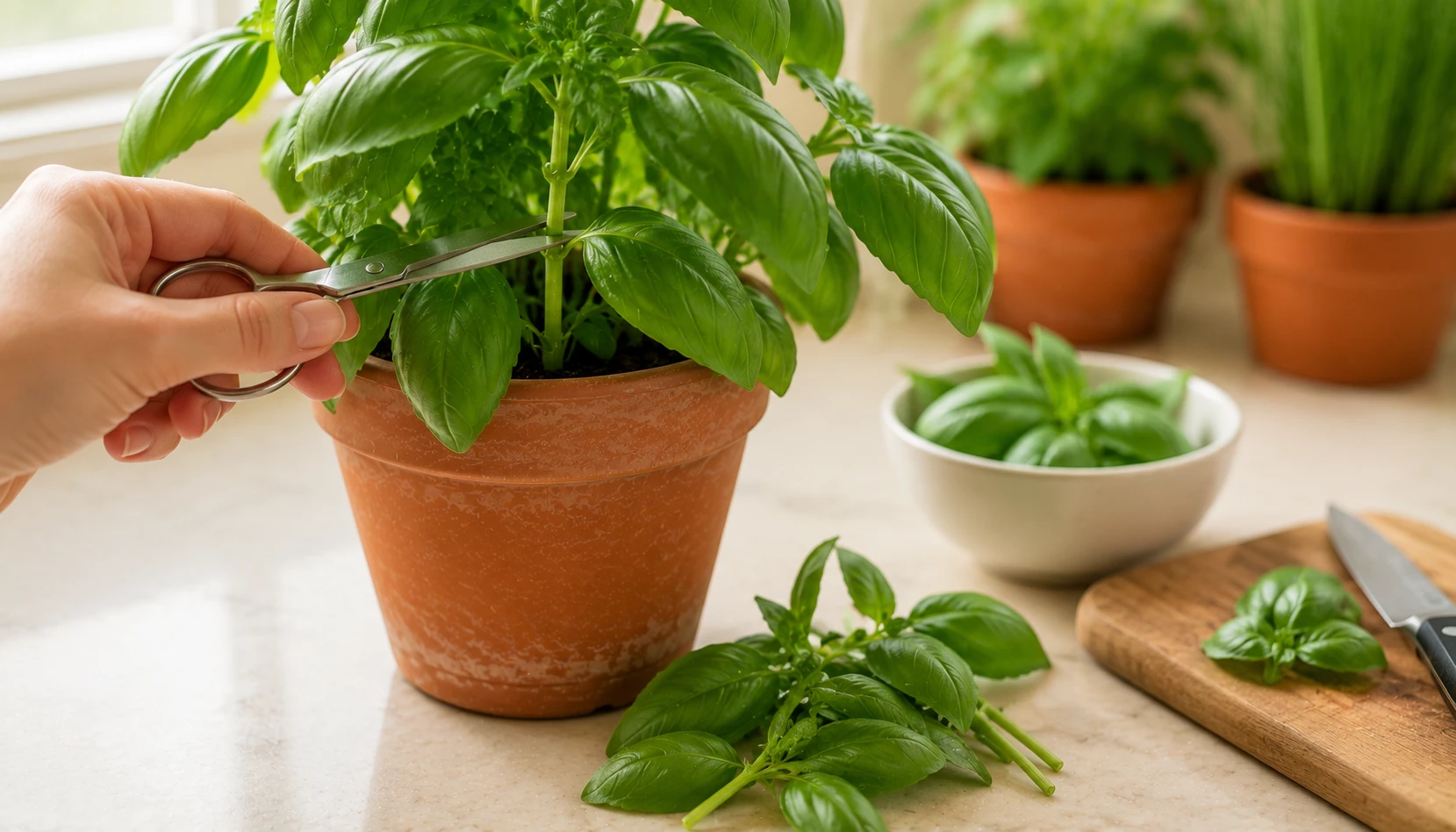
The universal harvesting rule: Always cut just above a leaf node (where leaves branch out from the stem). This encourages the plant to produce two new stems from that point, making it bushier and more productive with each harvest.
Never harvest more than 1/3 of any plant at one time. Taking too much stresses the plant and slows recovery.
Harvest regularly. This is counterintuitive, but harvesting frequently actually encourages more growth. A herb that’s never harvested becomes woody, tall, and less productive.
Herb-Specific Harvesting Tips
Basil: Pinch from the very top. Remove flower buds immediately when you see them; once basil flowers, the leaves become bitter. Harvest every 3-4 days for maximum yield.
Mint: Cut stems down to 5cm above soil level when plants get leggy. They’ll regrow fully within 2 weeks. One of the most forgiving harvesting situations.
Chives: Snip with scissors from the top, leaving 5cm at the base. They regrow from the bottom like grass. Can be completely cut back every 4-6 weeks.
Parsley: Always harvest outer stems first, leaving inner stems to continue growing. This extends the plant’s productive life significantly.
Thyme and Oregano: Harvest young, soft stem tips. Avoid cutting into woody older growth; it won’t regrow. Regular harvesting keeps growth soft and productive.
Rosemary: Only harvest soft green tips. Never cut into brown woody stems. Go easy; rosemary grows slowly.
Feeding Your Herb Garden
Container herbs need regular feeding because nutrients leach out of pots with watering. Feed every 2-3 weeks during the growing season (spring through autumn) with a balanced liquid fertiliser diluted to half strength. Reduce feeding in winter when growth slows.
Styling Your Apartment Herb Garden
A well-styled windowsill herb garden is genuinely beautiful, not just functional. Here’s how to make yours look as good as it performs.
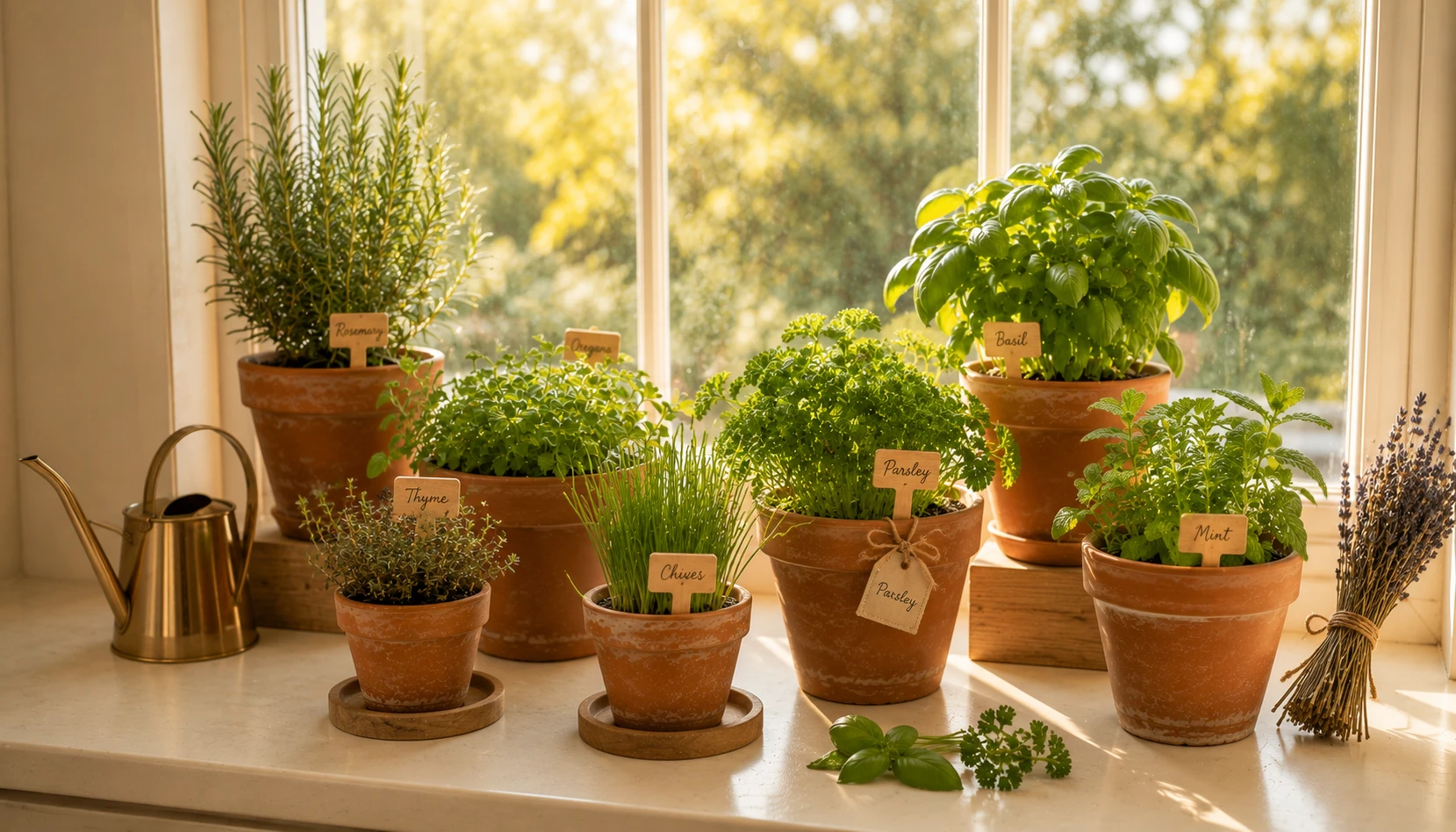
Cohesive container style: Choose one pot style and stick to it. All terracotta, all white ceramic, or all the same shape in different sizes looks intentional and beautiful. Mixing random containers looks cluttered.
Vary heights: Use pot risers, small wooden blocks, or stacked books to create different heights across your windowsill. Taller plants at the back, shorter at the front.
Add wooden herb labels: Simple wooden stake labels with herb names written in a fine marker add a cottage garden charm. Available from garden centres for almost nothing, or make your own from craft sticks.
The rule of odd numbers: Group herbs in threes, fives, or sevens. Odd numbers look more natural and visually pleasing than even groupings.
Negative space: Don’t crowd every centimetre. Leave some breathing room between pots. A slightly sparse windowsill looks more styled than one crammed with plants.
Colour coordination: Terracotta pots with varying shades of green herbs is a classic, timeless combination. If you want to add interest, one pot painted in a complementary colour (sage green, matte white, or dusty rose) adds character without chaos.
Seasonal accessories: A small dried lavender bundle tied with twine beside the pots, or a small linen tag tied to a pot with the herb name: small details like these turn a functional herb garden into a genuine home decor feature.
For more ways to make a compact kitchen feel bigger and more beautiful, see our guide to small kitchen ideas.
An apartment herb garden on your windowsill is one of those rare home projects that genuinely improves your daily life in a tangible way. Better food, less waste, a living green element in your kitchen, and the quiet satisfaction of growing something yourself.
Start with three herbs (basil, chives, and mint) positioned on your best window. See how they do for four weeks. Then add more. Before long you’ll have a complete kitchen herb collection that costs almost nothing to maintain and gives back every single time you cook.
For more small-space styling ideas beyond the kitchen, see our guide to room decoration ideas for small spaces.