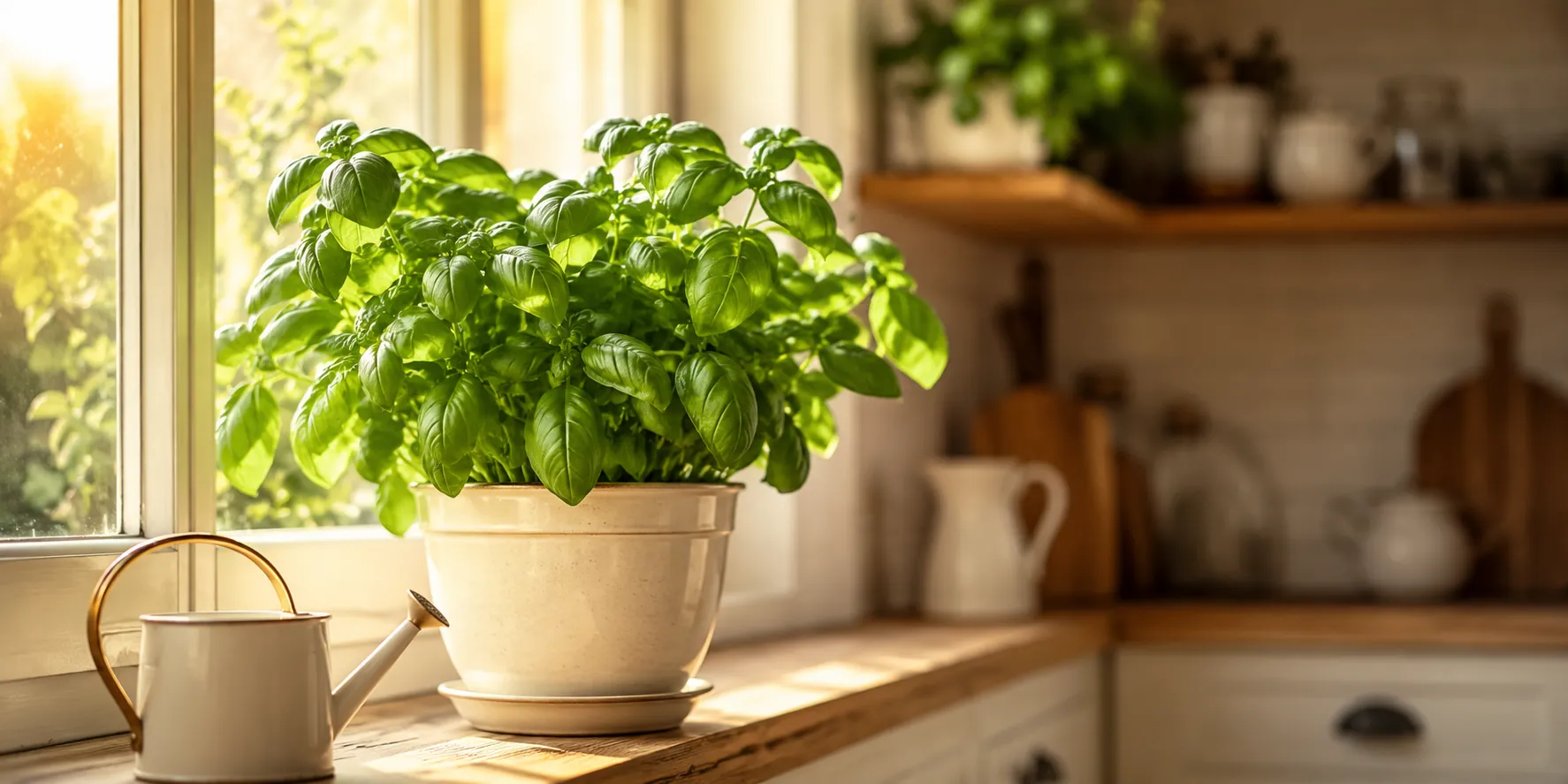
Fresh basil is one of the most rewarding herbs to grow at home, and honestly, it’s almost impossible to mess up once you know the basics. If you’ve ever walked past a grocery store basil plant wilting on the shelf (costing $3-4 for a tiny bunch), you already know why growing your own makes perfect sense.
Here’s the thing: growing basil at home is easier than you think. Whether you have a sunny windowsill, a small apartment balcony, or just a corner of your kitchen counter that gets decent light, you can grow fresh basil year-round.
Why Grow Basil at Home?
Growing basil at home is actually worth your time and effort for a few solid reasons.
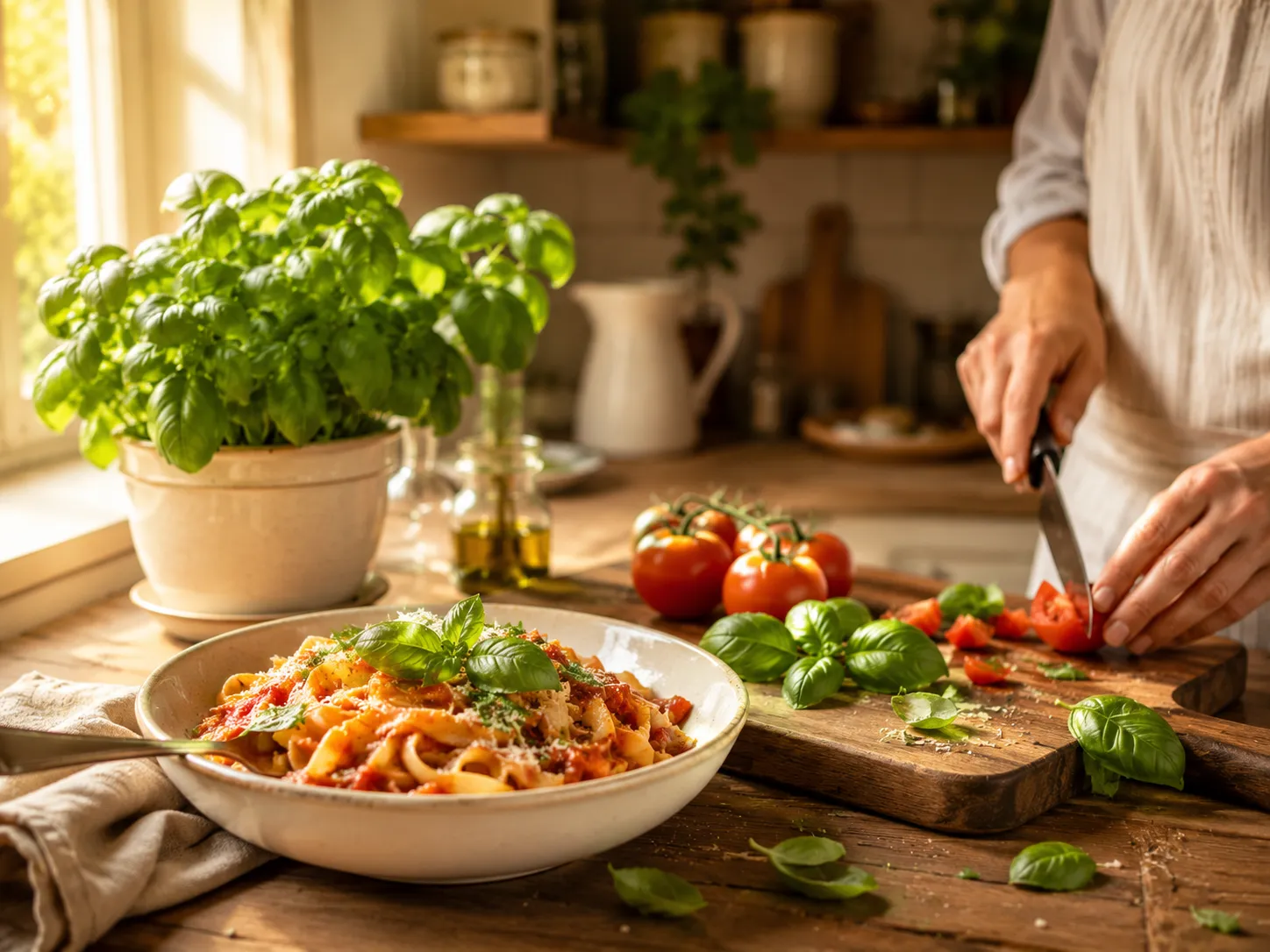
Fresh basil year-round: store-bought basil wilts in days. Your homegrown basil stays fresh for weeks, ready to harvest whenever you need it.
Save money: a pack of seeds costs $3-4 and produces dozens of plants. One plant pays for itself in about two harvests compared to buying fresh bunches.
Better flavour: homegrown basil tastes noticeably better than store-bought. The aroma alone will convince you.
It’s therapeutic: there’s something peaceful about pinching off basil leaves for dinner, knowing you grew them yourself.
Space-efficient: a single basil plant thrives in a 6-inch pot on a windowsill. Perfect for apartments and small spaces. Basil is just one part of a full windowsill setup. See our complete guide to building an apartment herb garden for pairing it with other herbs.
Types of Basil to Grow at Home
Not all basil is the same. Let’s talk about the different varieties so you can pick what works for you.
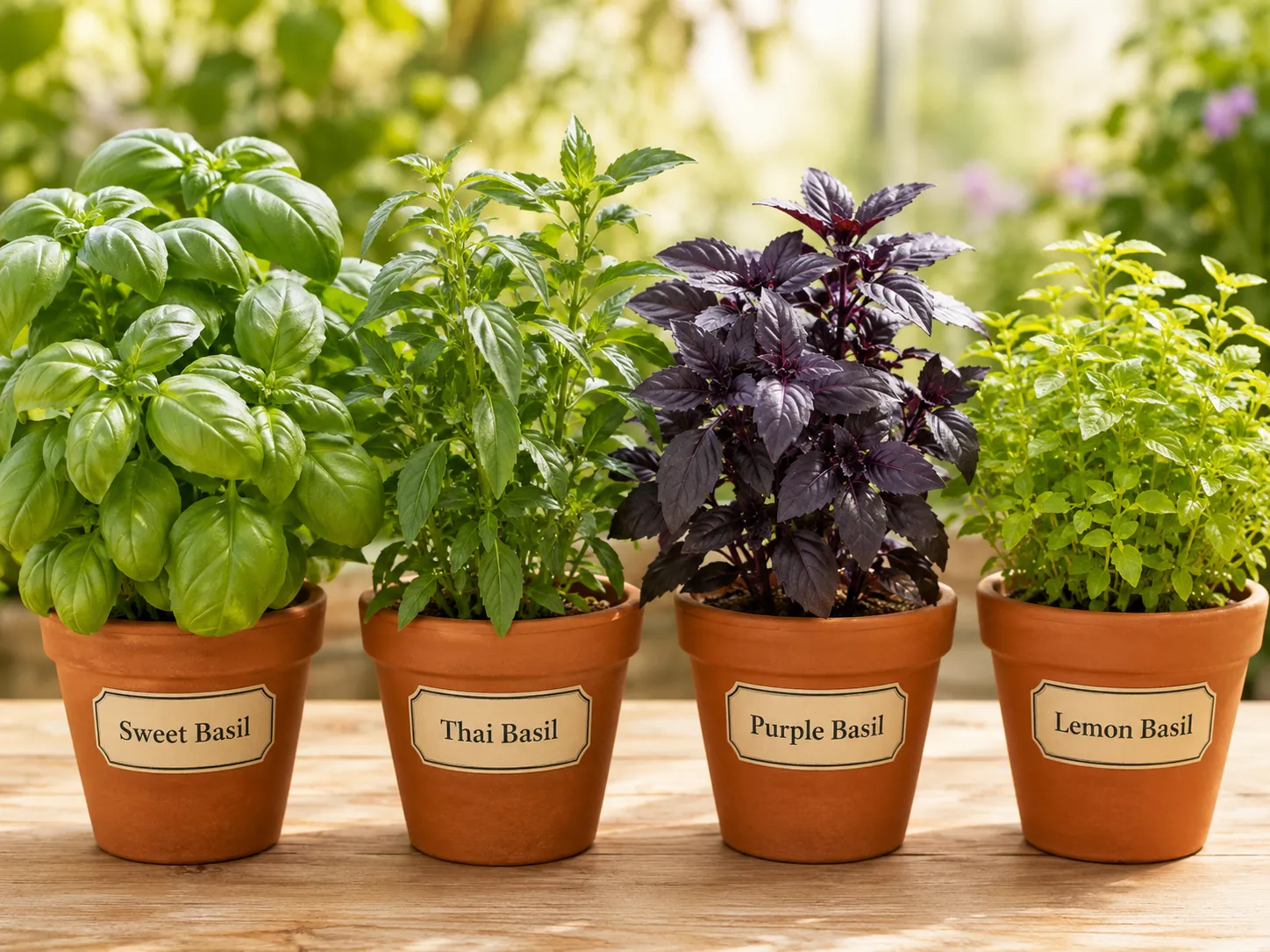
Sweet/Italian Basil: the classic. Large, tender leaves with a sweet, peppery flavour. Easiest for beginners. Perfect for pesto, pasta, and caprese.
Thai Basil: slightly liquorice-like with hints of anise. Smaller, pointed leaves. Great for curries and stir-fries.
Purple Basil: beautiful dark purple leaves, slightly spicier. Ornamental and delicious.
Lemon Basil: bright citrusy flavour, perfect for teas and desserts.
My recommendation? Start with sweet basil. It’s the most forgiving, grows fastest, and you’ll use it in everything.
Best Containers & Soil for Basil
Container size: At least 6 inches wide and 6 inches deep. Drainage holes are non-negotiable; without them, your basil will rot.
Material: Terracotta is ideal (breathable, dries evenly). Plastic and ceramic both work fine. If you’d like to personalize your containers, see our guide to painted terracotta pot projects for an easy weekend craft.
Soil: Use potting mix, not garden soil. Garden soil is too dense for containers. Look for a quality potting mix or make your own: 50% potting soil + 30% peat moss + 20% perlite.
Cost breakdown:
- Pot (6-8”): $3-8
- Potting soil: $4-6
- Basil seeds: $3-4
- Total: $10-18, produces herbs for months
How to Plant Basil from Seeds
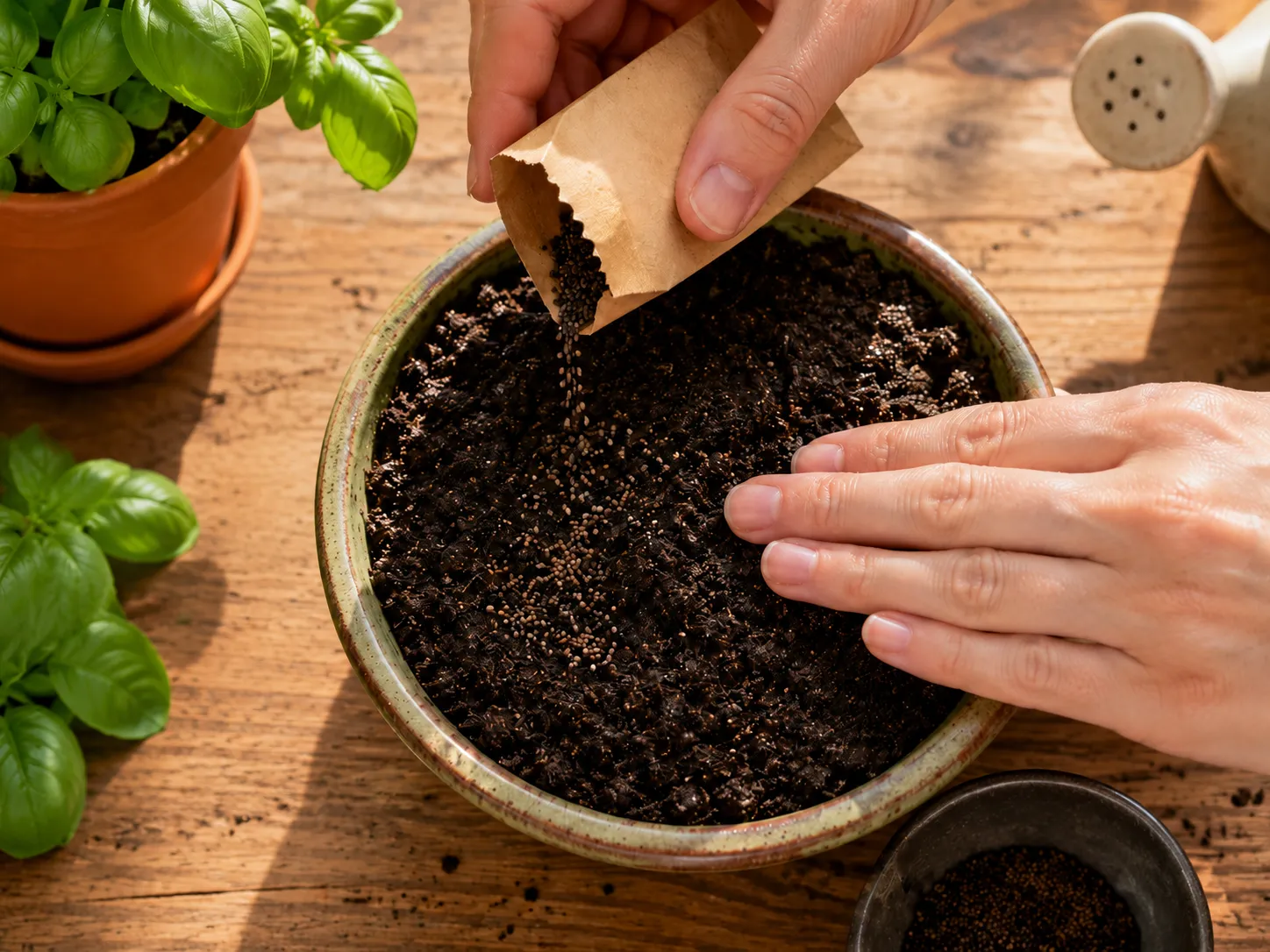
- Fill your pot with moistened potting soil
- Sprinkle basil seeds on top; they’re tiny, so a light sprinkle is enough
- Press them gently into the soil (don’t bury them; they need light to germinate)
- Mist the soil lightly to keep it moist
- Cover with a clear plastic bag to create humidity
- Place in a warm spot (not necessarily sunny yet)
Germination: 5-10 days. Once you see green sprouts, remove the plastic and move to a bright spot.
Thinning: Once seedlings have 2-3 sets of true leaves, thin them out. Keep the strongest seedlings and remove the rest (or transplant to separate pots).
Alternatively, buy a seedling from a garden centre and skip the seed-starting process entirely.
Light Requirements: The Most Important Factor
Here’s the reality: basil needs a lot of light.
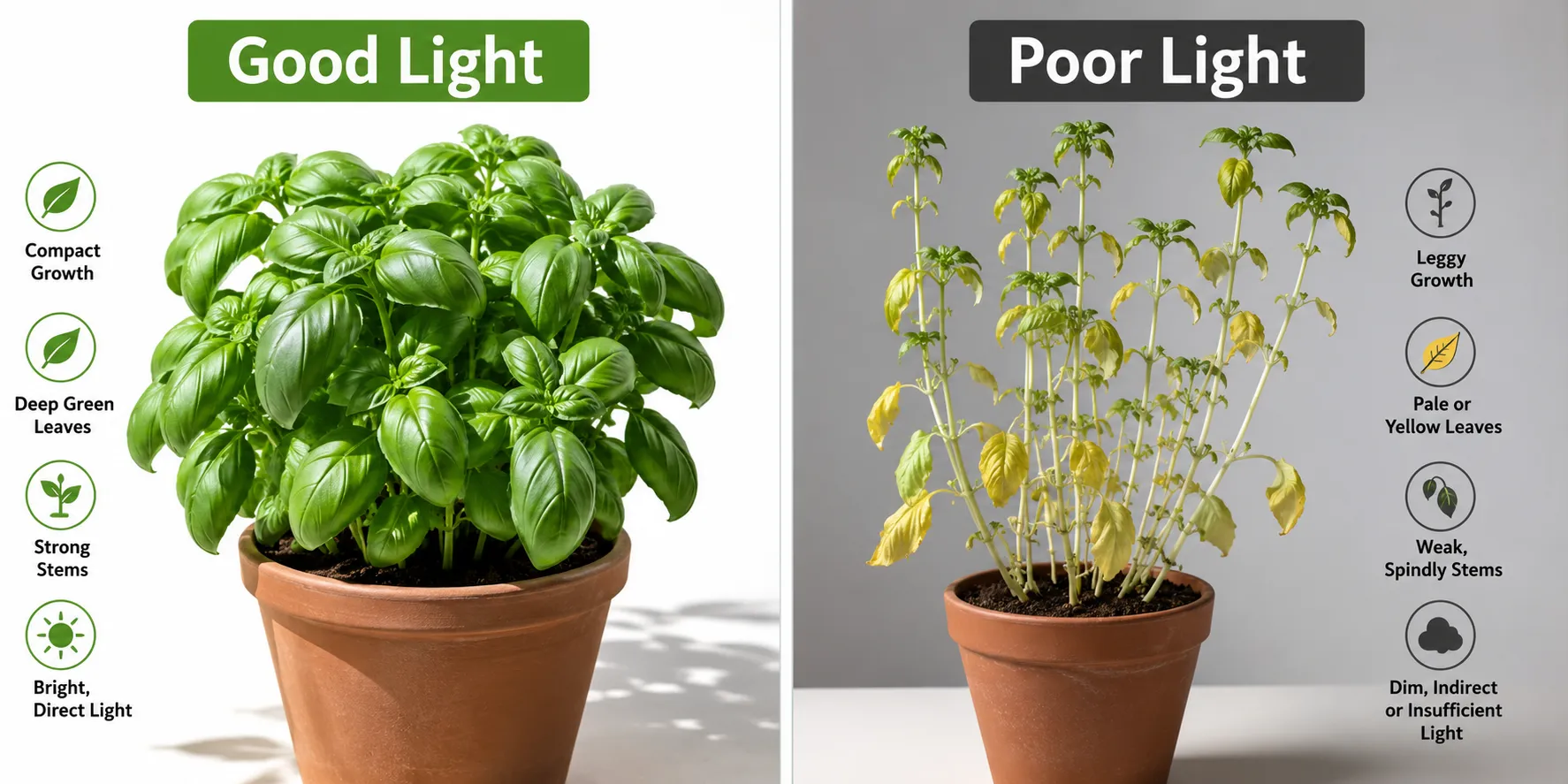
Ideal: 6-8 hours of direct sunlight daily.
Best window: South-facing (gets most direct light). East or west works. North-facing likely won’t be enough.
Signs of too little light: Pale colour, leggy/tall and spindly growth, slow leaf production.
Winter: Consider a grow light. A simple LED grow light ($20-40) positioned 6 inches above the plant solves this completely.
Watering & Care: The Simple Rules
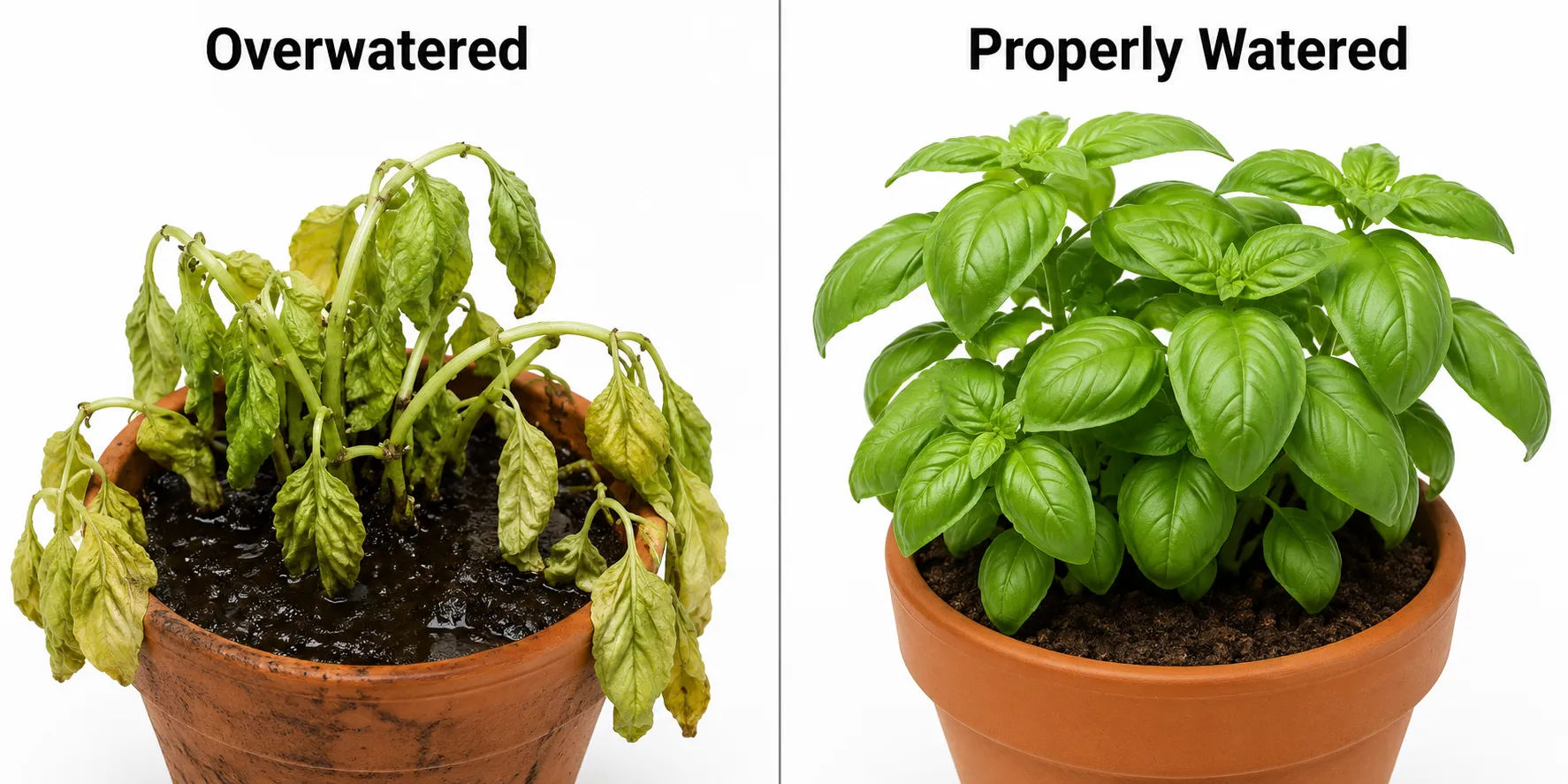
Watering: Check soil daily with your finger. Water when the top inch feels dry. In summer you might water daily; in winter, every 2-3 days.
The #1 mistake: Overwatering. More basil plants die from too much water than anything else. Soggy soil = root rot.
Temperature: Keep between 65-75°F (18-24°C). Never below 50°F (10°C).
Feeding: Every 2-3 weeks, feed with a balanced liquid fertiliser (10-10-10). This keeps it producing leaves continuously.
Air circulation: Good airflow prevents fungal issues. A spot near an open window (without cold drafts) is ideal.
Harvesting Basil: When & How
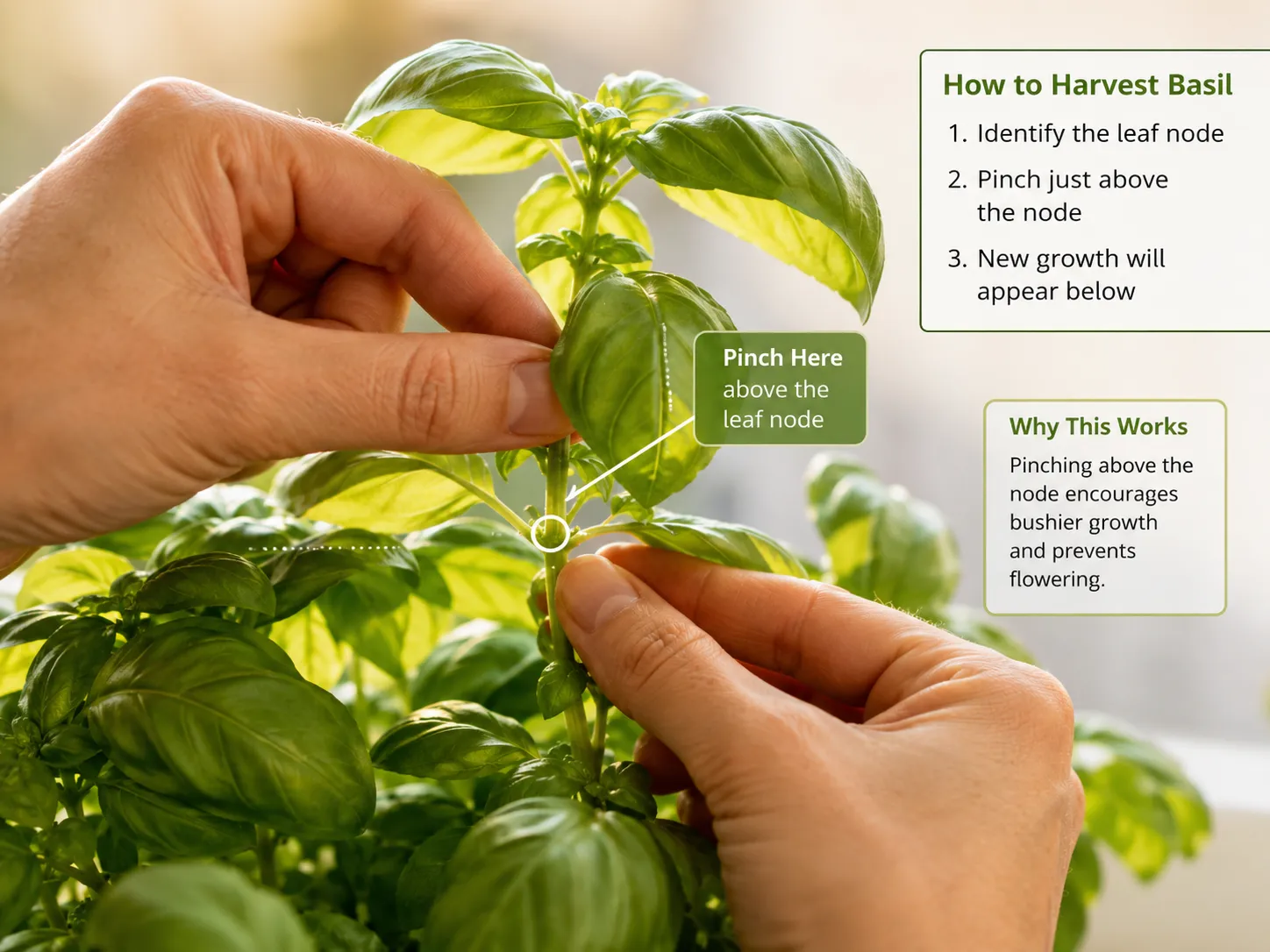
When to start: Wait until the plant is 6-8 weeks old with multiple leaf sets and at least 6 inches tall.
How to harvest: Pinch just above a node (where leaves branch out from the stem). This encourages the plant to branch and become bushier instead of growing tall and spindly.
Never take more than 1/3 of the plant at once.
Preventing bolting (flowering): Once basil flowers, leaves become bitter. Pinch off any flower buds immediately. Regular harvesting naturally prevents flowering.
Preserving:
- Refrigerator: Stems in a glass of water, loosely covered; lasts 1-2 weeks
- Freezing: Blend with olive oil, freeze in ice cube trays
- Drying: Hang in bundles or use a dehydrator (flavour diminishes but works)
Common Basil Problems & Solutions
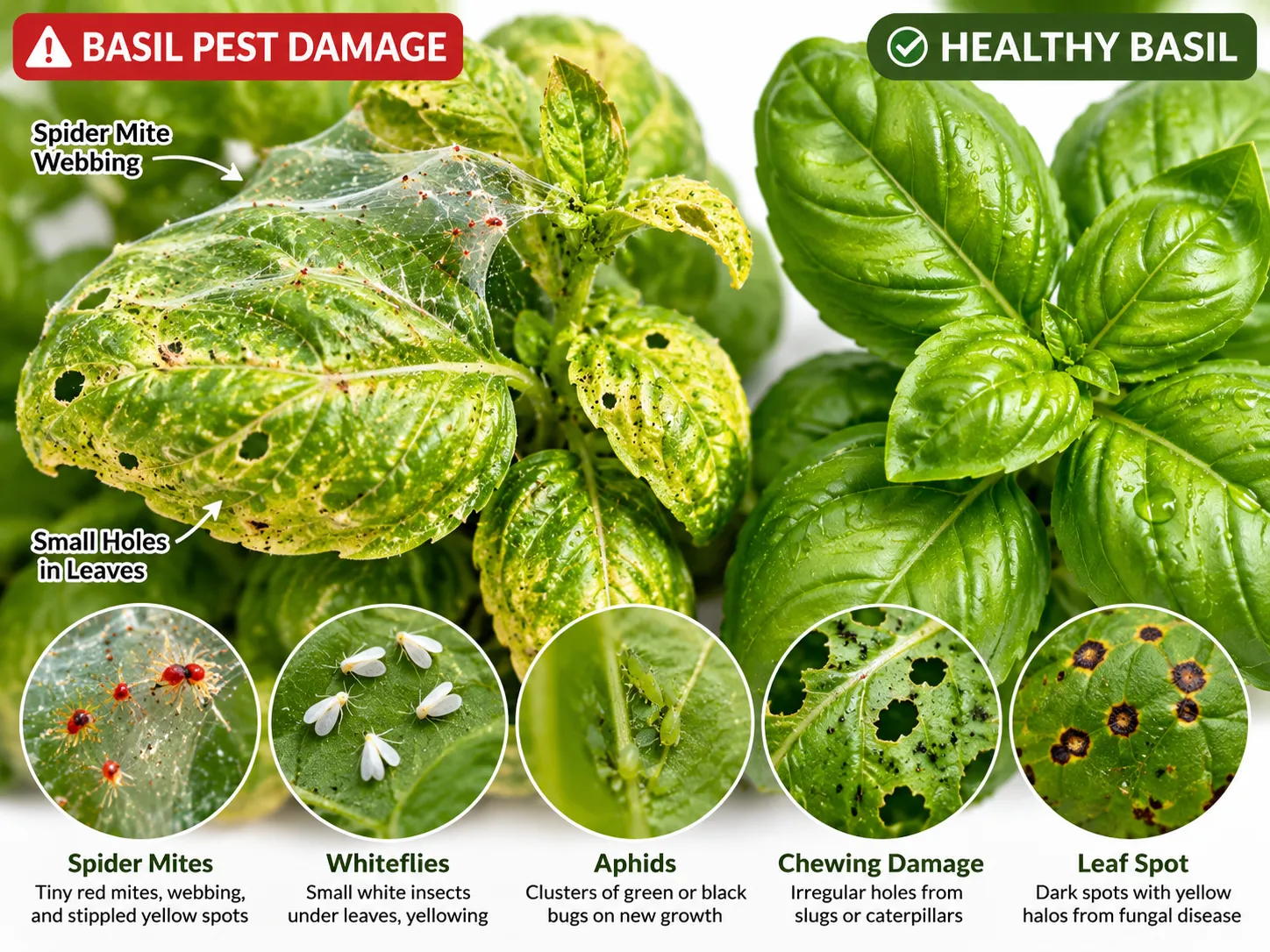
Yellowing leaves → Usually overwatering or poor drainage. Check soil, ensure drainage holes exist.
Leggy, tall growth → Not enough light. Move to a brighter spot or add a grow light.
Wilting despite moist soil → Root rot from overwatering. Let soil dry and consider repotting.
Holes in leaves → Pests (aphids, spider mites). Spray with neem oil or insecticidal soap weekly until resolved.
Brown spots → Fungal from humidity + poor airflow. Improve circulation, avoid wetting leaves.
Slow/no growth → Insufficient light, cold temperatures, or underfeeding. Address all three.
Companion Planting With Basil
Once you’ve mastered basil, you might want to expand your herb garden. Here’s what grows well alongside it.
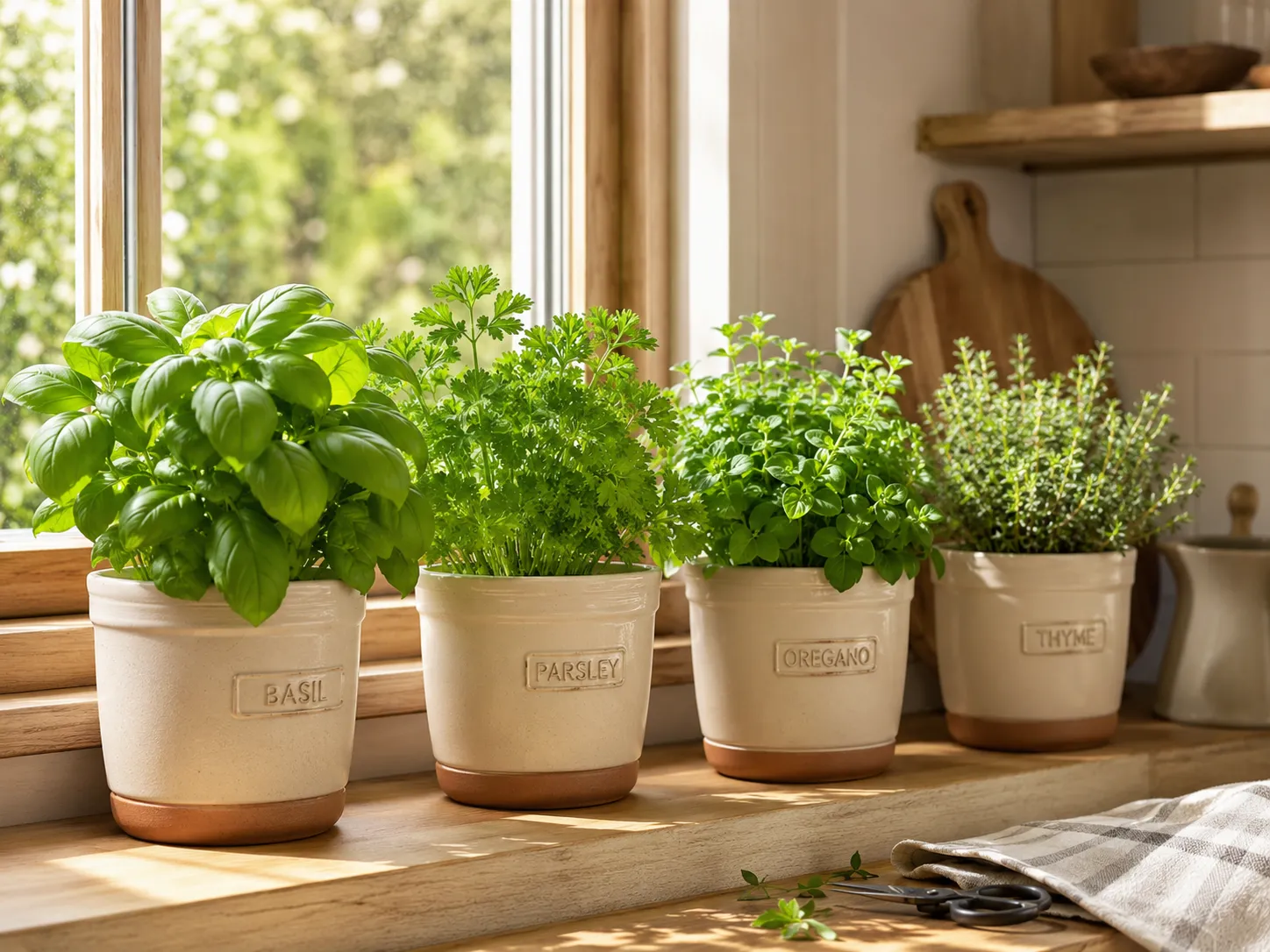
Great companions: Parsley, oregano, thyme (all prefer similar conditions).
Keep separate: Mint (spreads aggressively, give it its own pot), rosemary and sage (prefer drier soil).
If you’re setting up a full herb station in a compact kitchen, see our guide to small kitchen ideas for more space-savvy styling tips.
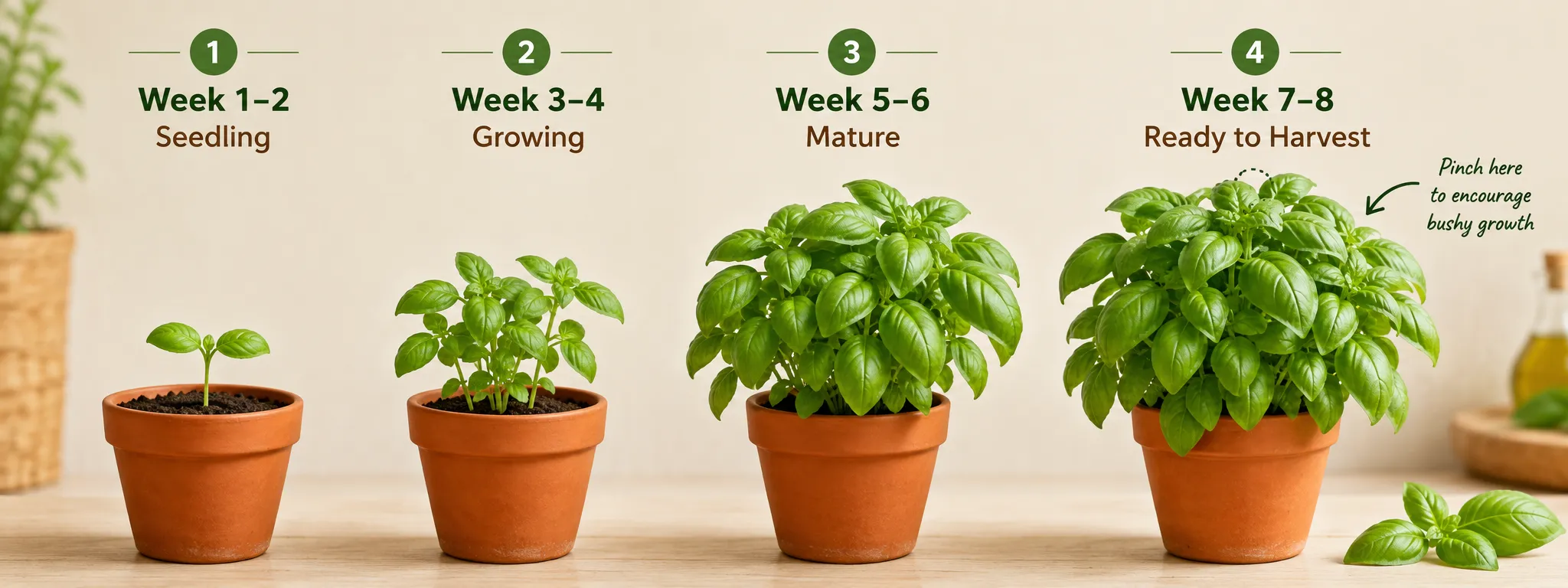
Growing basil at home is genuinely one of the best decisions you can make for your kitchen. In 6-8 weeks you’ll have a plant that produces continuously for months. Start simple: one pot, one packet of seeds, one sunny windowsill. The rest follows naturally.