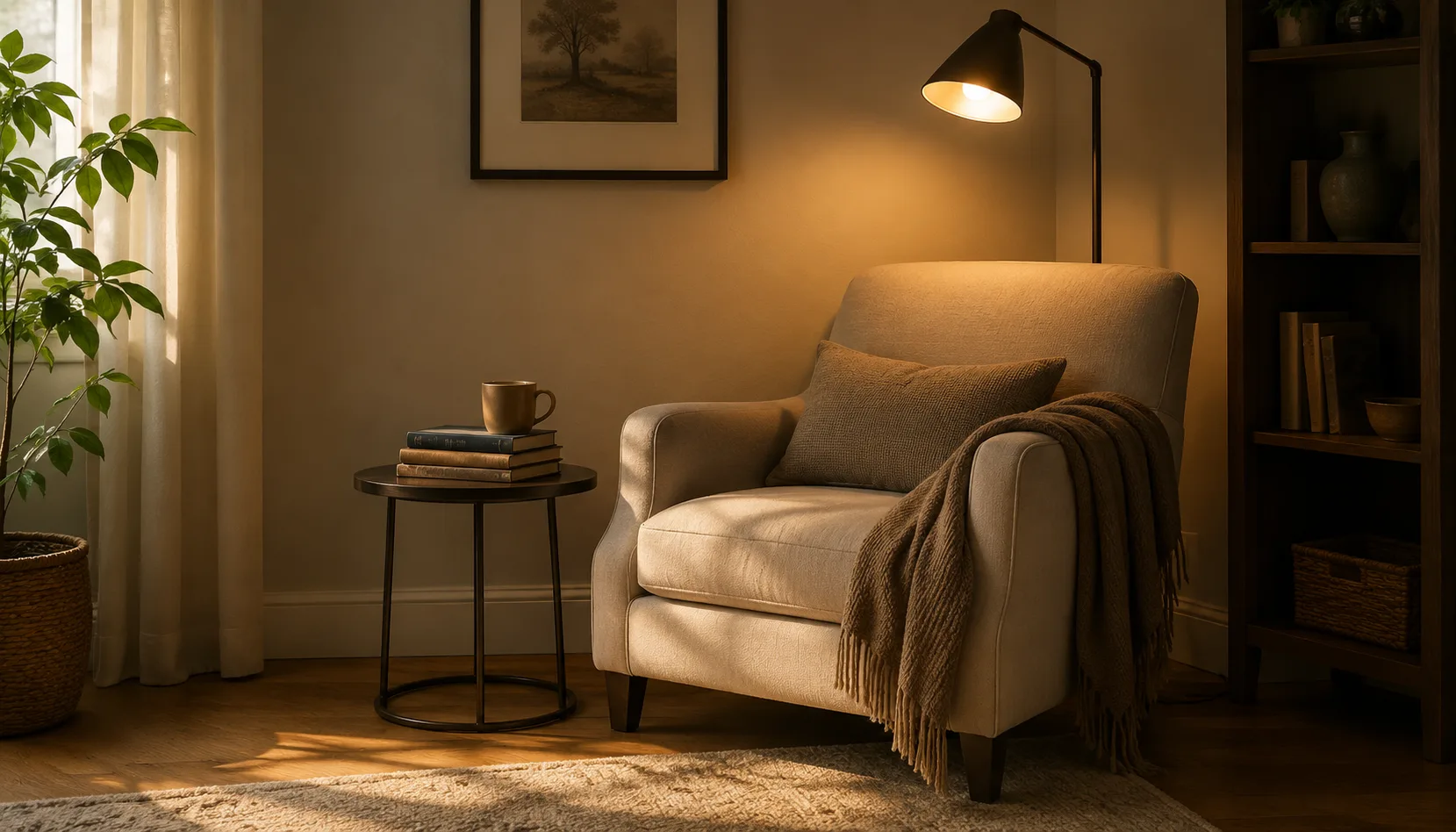
A reading nook sounds like something that needs a spare room, a bay window, or at minimum a house with rooms to spare. It doesn’t. It needs one corner, the right chair, and a handful of decisions that most small-space guides skip entirely because they’re written for people who already have the square footage to work with.
The actual requirements are smaller than people think. A reading nook is really just a spot that signals “this is for sitting and doing one thing,” separate from the rest of whatever room it’s tucked into. That signal can come from a chair angle, a rug, a light source, or all three, and none of it requires dedicated floor space you don’t have.
These 15 ideas are built around finding and using the corner you already have, not finding a new one.
What Actually Makes a Reading Nook Work
Before getting into specific setups, it’s worth naming what actually separates a reading nook from a chair someone happened to put in a corner.
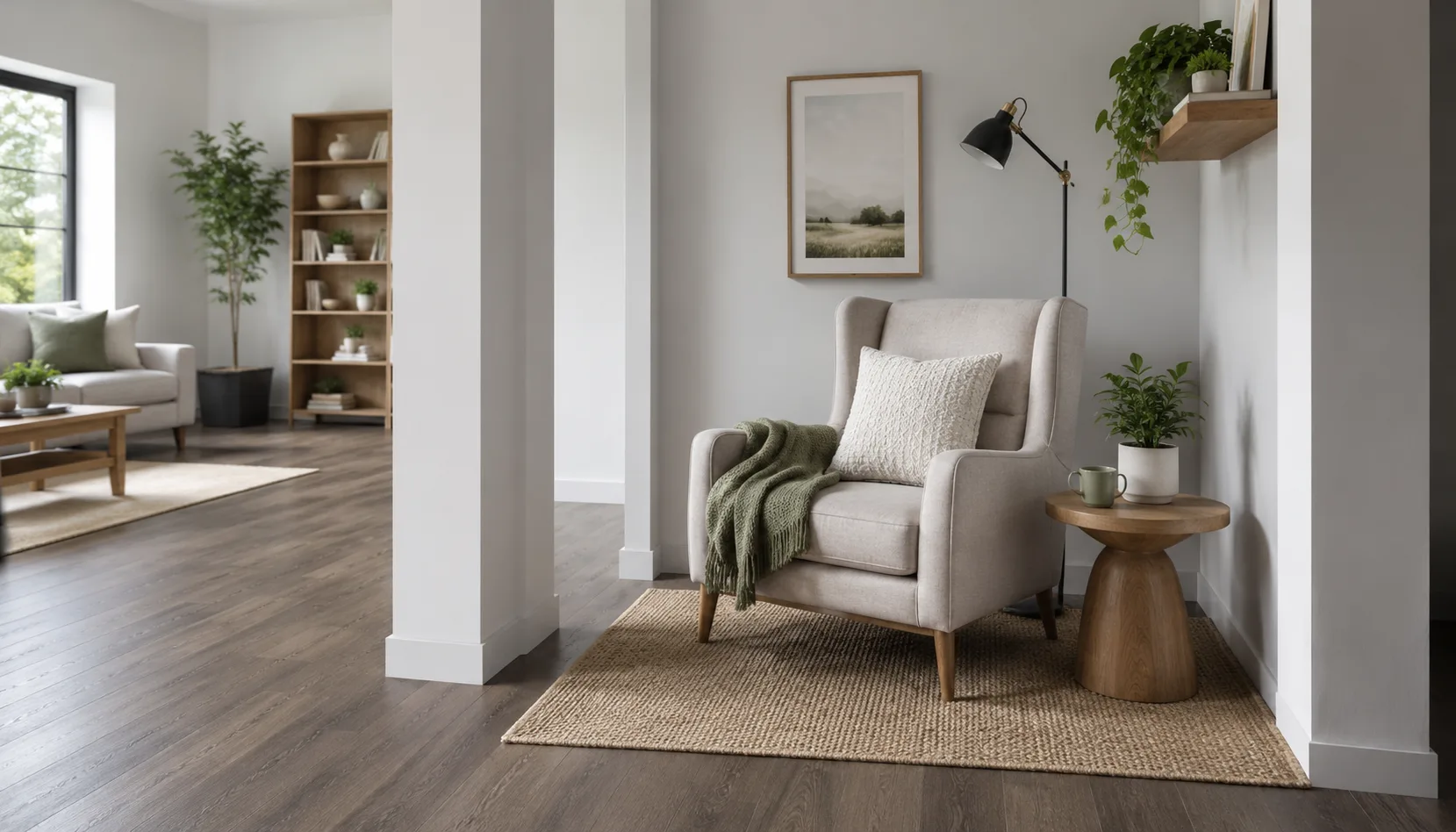
A reading nook needs a clear edge. That can be a wall on two sides, a rug that stops where the rest of the room’s flooring continues, or furniture angled to face away from the room’s main activity. Without some kind of edge, a chair in a corner just reads as a chair, not a destination.
It needs its own light source, separate from the room’s main lighting. This is the single most overlooked requirement and the one covered in more depth later in this guide. A nook lit only by the room’s overhead fixture never quite feels like its own spot.
It needs to be sized for one person, not adjusted down from a two-person setup. A loveseat squeezed into a corner still reads as “extra seating.” A single chair, sized correctly, reads as a nook.
Every idea that follows is really just a different way of satisfying these three requirements in a space that was never designed to have a reading nook at all.
A Corner Chair and Nothing Else
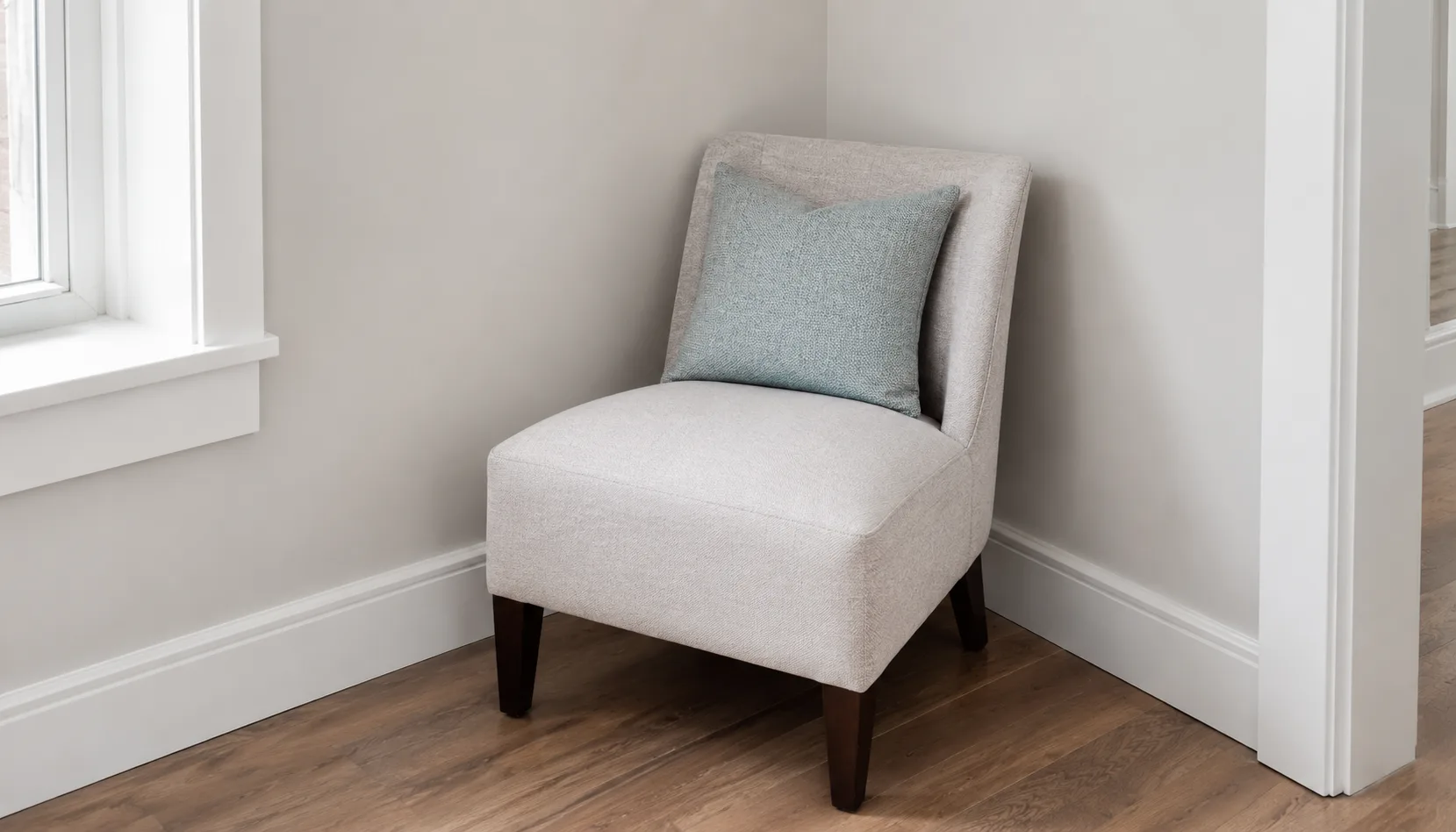
This is the lowest-commitment version of everything in this guide, and it’s genuinely enough on its own.
Angle the chair toward the corner rather than out into the room. This single adjustment does more to signal “reading spot” than almost any other change, since it visually removes the chair from the room’s main traffic flow and gives it a sense of its own space.
A chair that’s noticeably smaller in scale than the room’s main seating, an accent chair rather than another full-size armchair, reinforces the sense that this spot is doing something different from the rest of the room.
Skip the ottoman if the corner is genuinely tight. A footrest is a nice addition in a larger space, but in a true small-space setup it usually just eats the floor clearance that makes the corner feel intentional rather than crowded.
If there’s truly nothing else to add, a single chair with good lighting, covered later, is a complete reading nook on its own. Everything else in this guide is optional layering on top of that baseline.
Turning a Windowsill Into a Seat
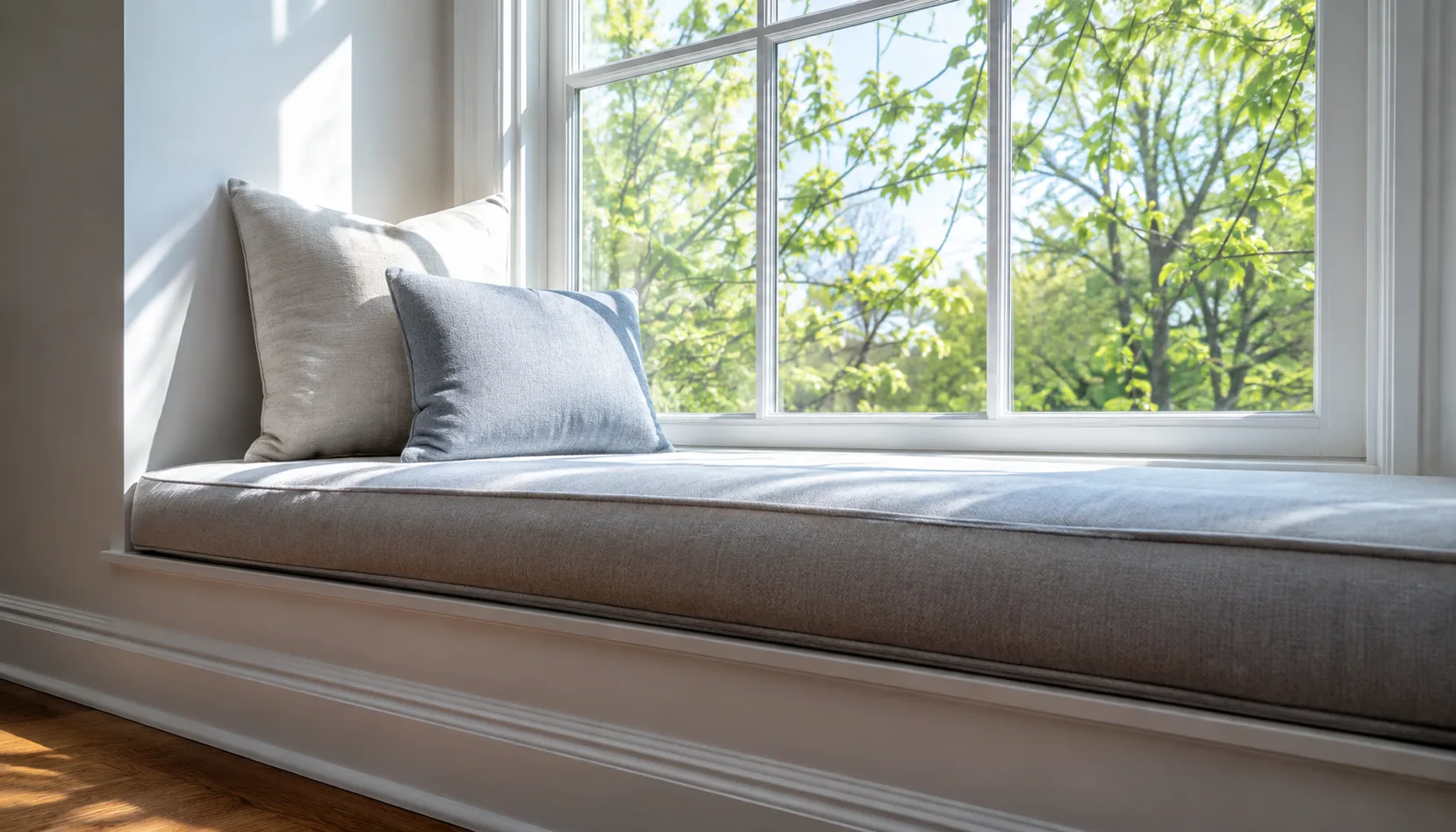
A deep windowsill is one of the few genuinely free reading nook opportunities, since the architecture is already doing the work of defining the space.
A windowsill needs to be at least 16 to 18 inches deep to work as real seating, not just a spot to rest a book. Measure before committing to this idea. A shallower sill can still hold a small cushion and function as a footrest for a nearby chair, which is a reasonable fallback if the depth isn’t quite there.
A custom-cut foam cushion, wrapped in fabric, fits the exact dimensions of the sill far better than a generic bench cushion bought off the shelf. This is worth the slightly higher cost for how much better the fit looks and feels.
Add two or three pillows in a size scaled to the sill’s width, not full-size sofa pillows, which tend to overwhelm a windowsill’s proportions and eat the actual seating depth.
Natural light from the window itself often means less artificial lighting is needed during the day, though the lighting section later in this guide still matters for evening use.
Using a Closet as a Reading Nook
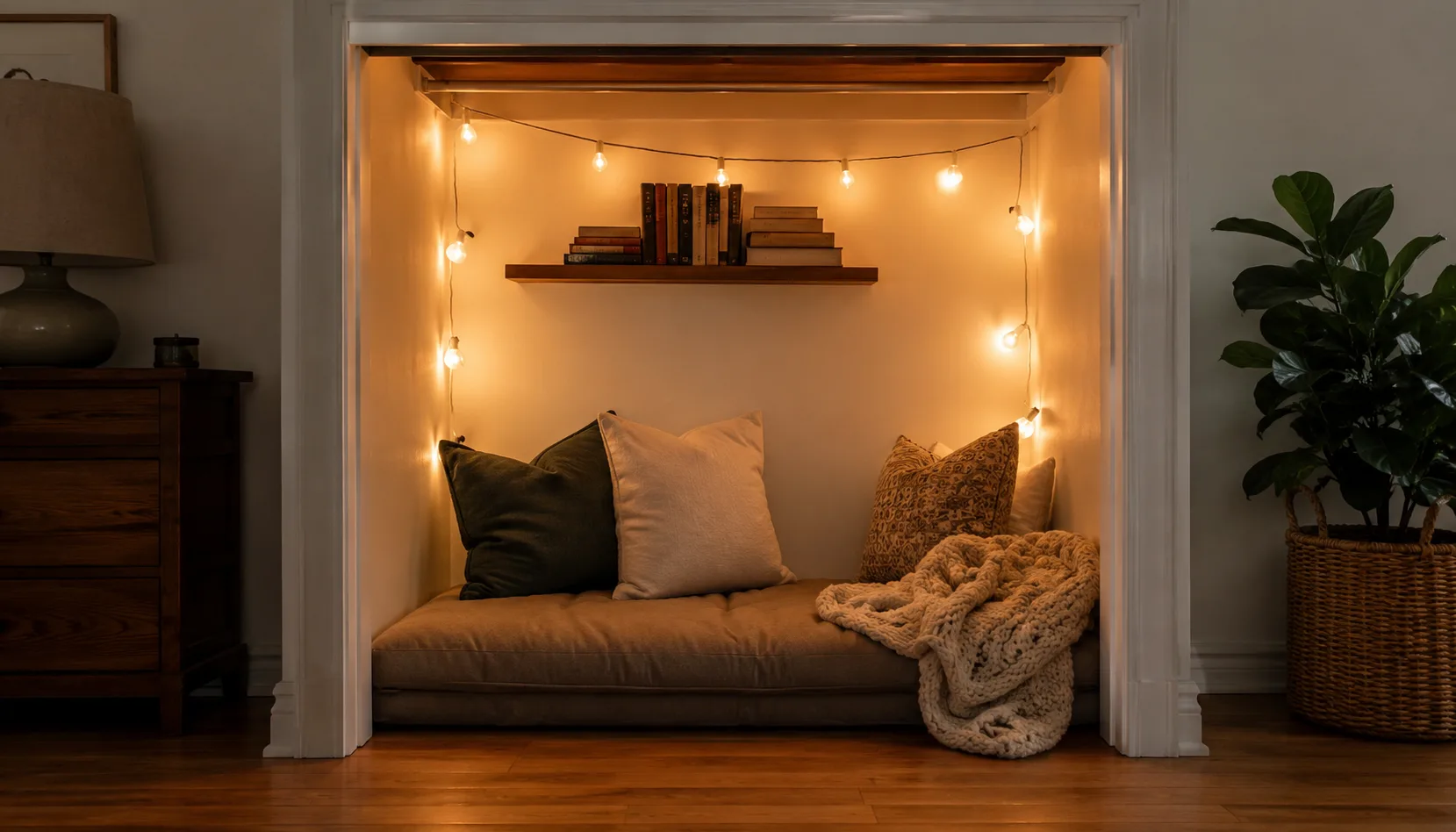
This sounds more drastic than it actually is, and it’s one of the most naturally suited spaces for exactly the “clear edge” requirement covered earlier.
A small unused closet, with the doors removed or left open, already has three walls, which does more of the enclosure work than almost any other setup in this guide. A simple bench cushion cut to the closet’s footprint, plus a small light source, turns genuinely wasted space into the coziest option on this whole list.
Remove the closet rod and any shelving above head height, but leave lower shelving if it can double as a spot for books or a small lamp within reach of the seat.
This works particularly well in a small apartment with an underused hall or entry closet, spaces that often sit half-empty holding coats that could live on a slimmer hook system elsewhere.
If removing the doors entirely isn’t an option, doors that fold back flat against the closet’s interior walls achieve nearly the same open, inviting feel while staying reversible for a rental.
A Daybed Doing Double Duty
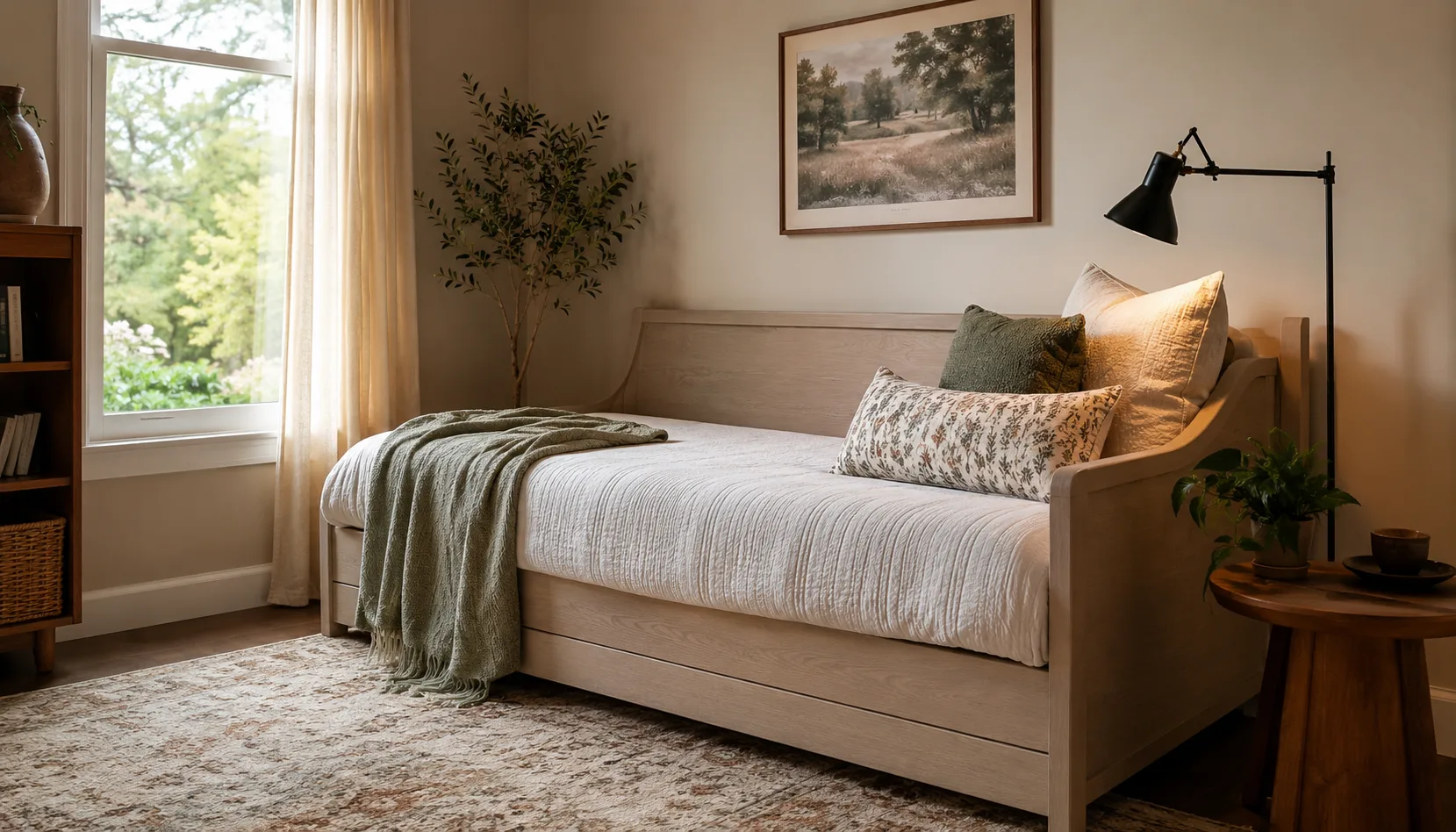
For a studio apartment or a home office that needs to earn its keep, a daybed solves two problems in the space of one piece of furniture.
Push the daybed against a wall rather than floating it in the room, and style one end specifically as the reading spot with a reading lamp, a small side table, and a pillow arranged for sitting up rather than lying flat. This keeps the “guest bed” function available while giving the reading use a clear, intentional zone.
A daybed with a back and one raised arm, rather than a flat mattress-style frame, does more to create the enclosed, nook-like feeling this whole guide is built around, since the raised sides function the same way a closet’s walls do.
Keep the reading end of the daybed visually distinct from the sleeping end through pillow arrangement and lighting, even though it’s technically one continuous surface. That visual separation is what keeps it from reading as “just a bed” during the day.
Floor Cushions for a Truly Tiny Space
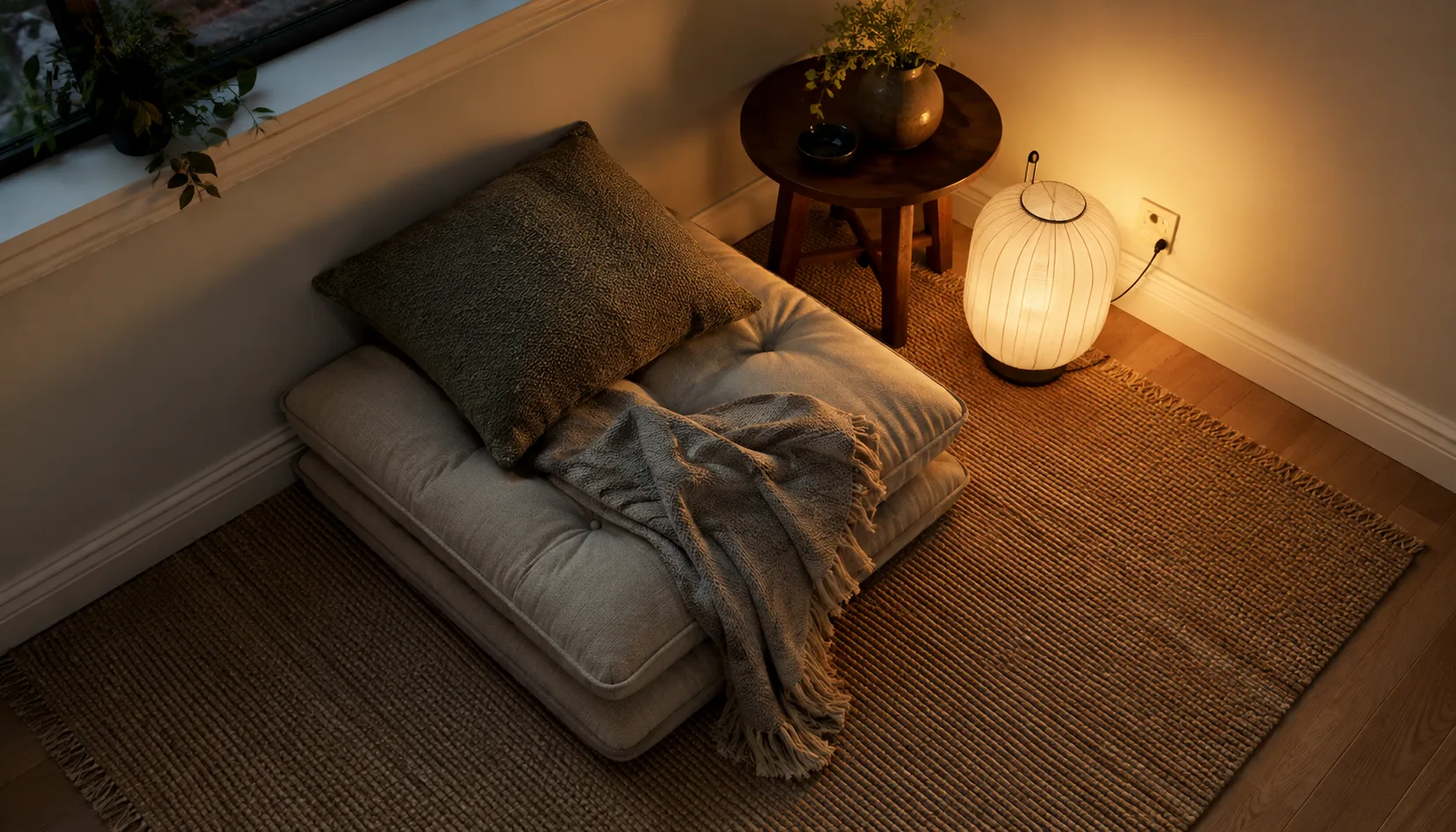
If a corner genuinely can’t spare the footprint for a chair, floor seating removes that requirement entirely.
A large floor cushion, or two stacked for more height, paired with a low side table and a plug-in floor lamp creates a complete reading nook using a fraction of the floor space a chair would need. This is also one of the easiest setups to fully remove when the space is needed for something else, since nothing about it is fixed or heavy.
A low pile rug underneath, even a small one, keeps the setup from feeling like it’s floating in the middle of bare flooring, and it adds a layer of the comfort a chair would otherwise be providing structurally.
This setup works especially well in a corner that’s awkward for furniture anyway, an oddly shaped nook, the space beside a radiator, or a spot too narrow for a standard chair’s footprint.
Floor seating isn’t for everyone long-term, but it’s a genuinely good way to test whether a corner works as a reading nook before committing to furniture.
Faking a Built-In Feel
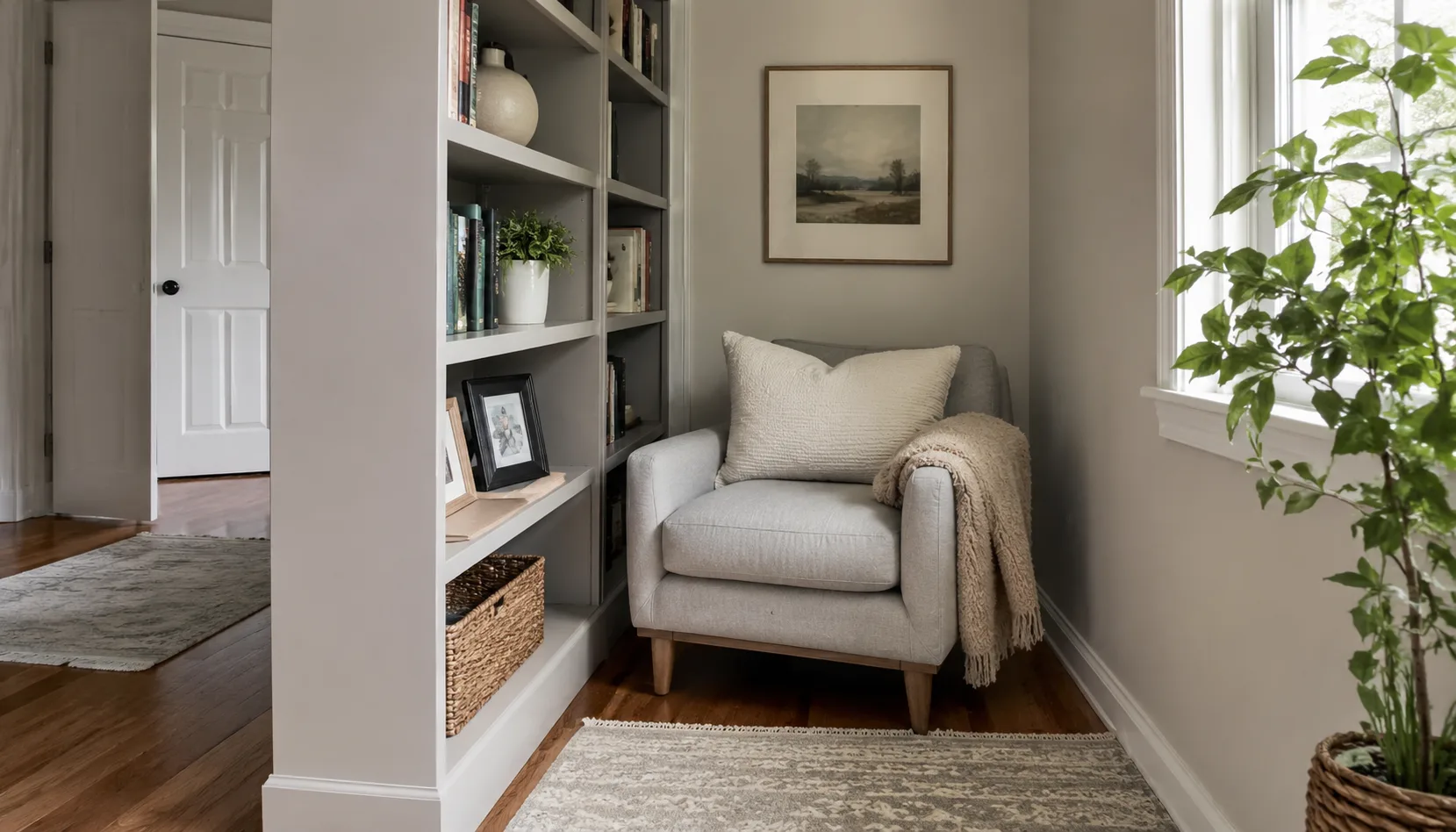
A genuine built-in reading nook, the kind with custom shelving flanking a window seat, isn’t realistic for most small apartments or rentals. Furniture placement can get surprisingly close without any construction at all.
A tall, narrow bookshelf placed perpendicular to a wall, rather than flush against it, creates a partial enclosure on one side of a chair, mimicking the effect of a built-in without any permanent changes. This is fully reversible and works in almost any rental.
Position the chair so its back sits against the room’s actual wall, with the bookshelf forming the second “wall” of the nook. This two-sided enclosure is often enough to trigger the same psychological sense of a defined space that a true architectural built-in provides.
A curtain hung from a tension rod can serve a similar function on the open side of the nook, adding a soft boundary without needing any furniture at all.
This approach is worth trying before assuming a built-in-style nook is out of reach. Most of the feeling comes from the enclosure, not the custom carpentry.
Lighting a Reading Nook Properly
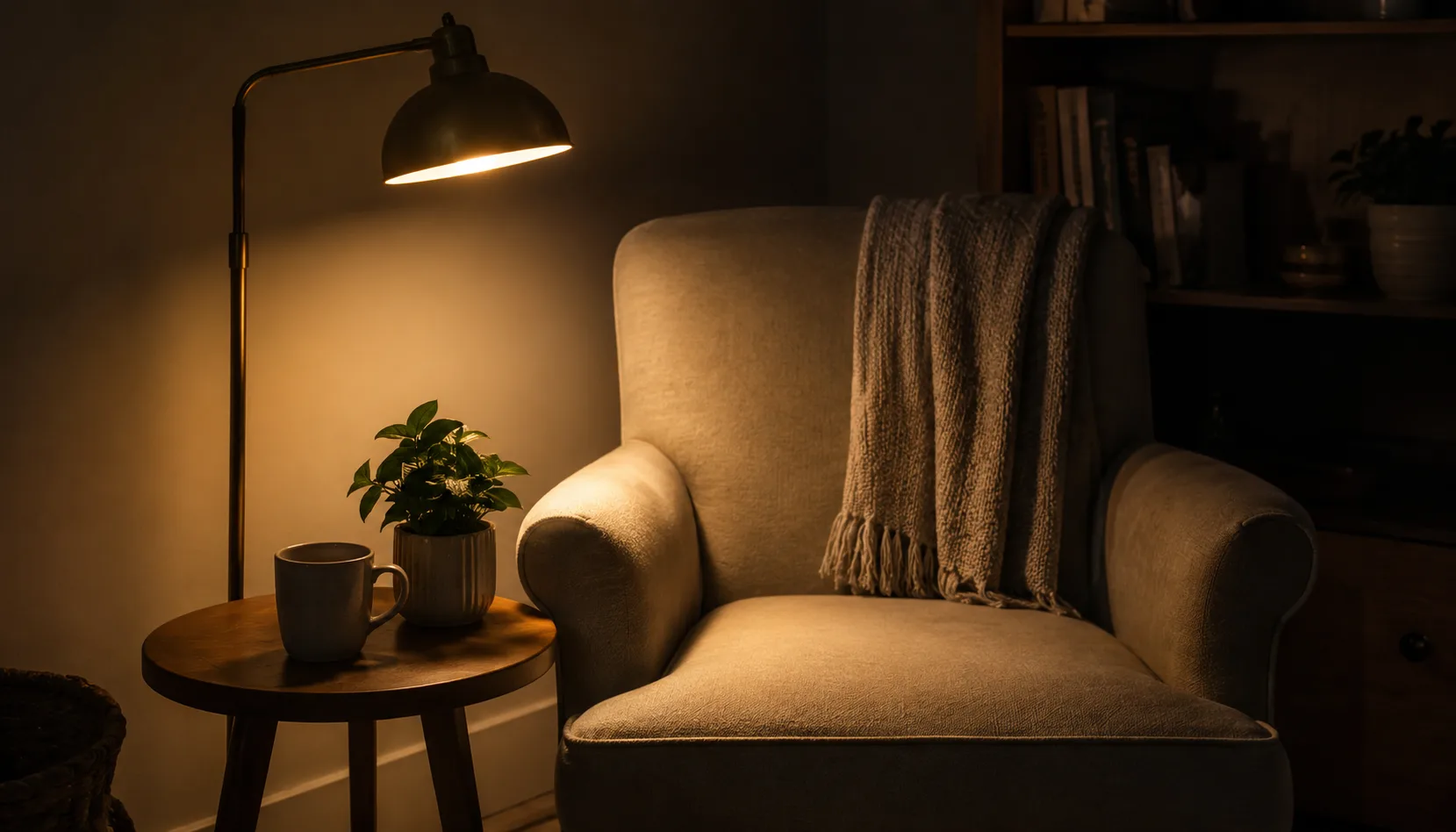
This was flagged as one of the three core requirements earlier, and it deserves real attention on its own.
A dedicated light source at shoulder height when seated, a floor lamp, a wall sconce, or a clip-on reading light, makes more difference than any other single choice in this guide. Overhead room lighting, even when it technically reaches the corner, creates flat, unflattering light that doesn’t feel like it belongs to the nook specifically.
Choose a warm bulb, in the 2700K to 3000K range, over anything cooler. A reading light in the 4000K+ range reads as clinical and undercuts the cozy feeling every other choice in this guide is working to build.
A dimmer, even a simple plug-in lamp dimmer, adds real flexibility between focused daytime reading light and a softer evening glow, without needing two separate fixtures.
If running a cord to an outlet is awkward in the chosen corner, a battery-operated stick-on light solves the same problem with no wiring at all, and it’s easy to reposition if the nook ever moves.
A Small Side Table That Earns Its Space

A reading nook without a surface within reach isn’t quite finished, but the table itself needs to be genuinely small to fit the space this guide is built around.
A round side table 14 to 16 inches in diameter fits beside most accent chairs without eating meaningful floor space, while still holding a drink, a book, and a small lamp. A table any larger starts to compete with the chair for the corner’s limited footprint.
A table with some storage built in, a small drawer or an open shelf underneath, does double duty for the book storage covered in the next section, useful if there’s no room for a separate solution.
If floor space is truly at a premium, a table that clamps or hangs directly onto the arm of the chair removes the footprint question entirely, though these hold less weight and work best for a single book and a drink rather than a full stack.
Keep the table’s height close to the chair’s arm height. A table that sits too low or too tall relative to the seat undermines the comfort the rest of the nook is built around.
Storage for Books Without a Bookshelf
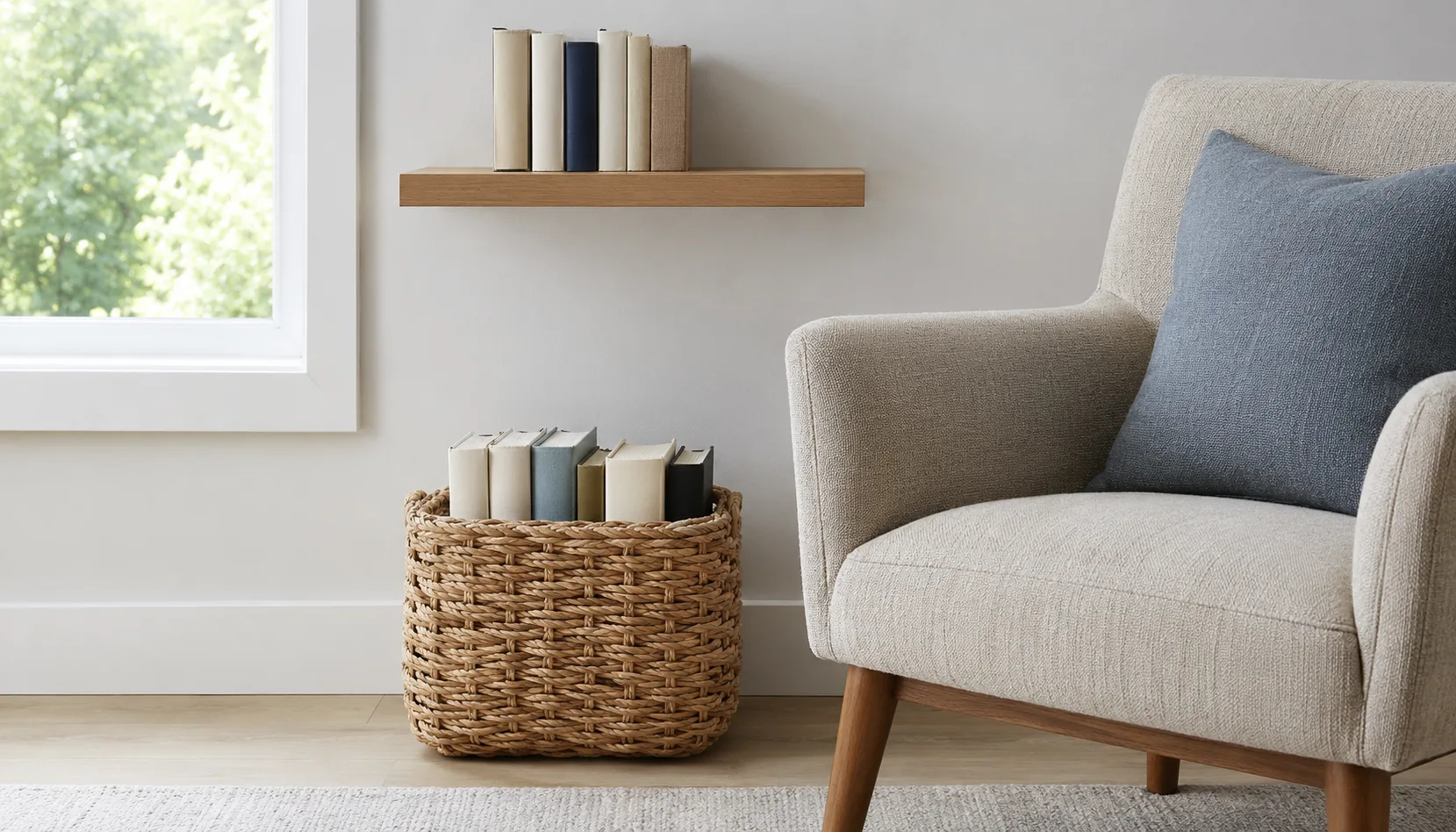
A full bookshelf is the first thing people assume a reading nook needs, and it’s often the first thing that makes the space feel cramped instead of cozy.
A single woven basket beside the chair holds a rotating handful of current reads far better than a shelf holds an entire collection in a tight corner. This also solves the visual clutter problem that a packed shelf can create in a space this small, since only a few books are ever visible at once.
A slim floating shelf mounted above or beside the chair, wide enough for a stack of five or six books, works well if a basket feels like too little structure. Keep it to one shelf rather than a full vertical run, which starts to compete with the chair for wall space.
If the side table from the previous section has a shelf or drawer, that’s often enough storage on its own without adding a separate solution at all.
The goal here isn’t housing a full library, it’s keeping whatever’s currently being read within arm’s reach without the storage itself taking over the nook.
Layering Textiles for Comfort
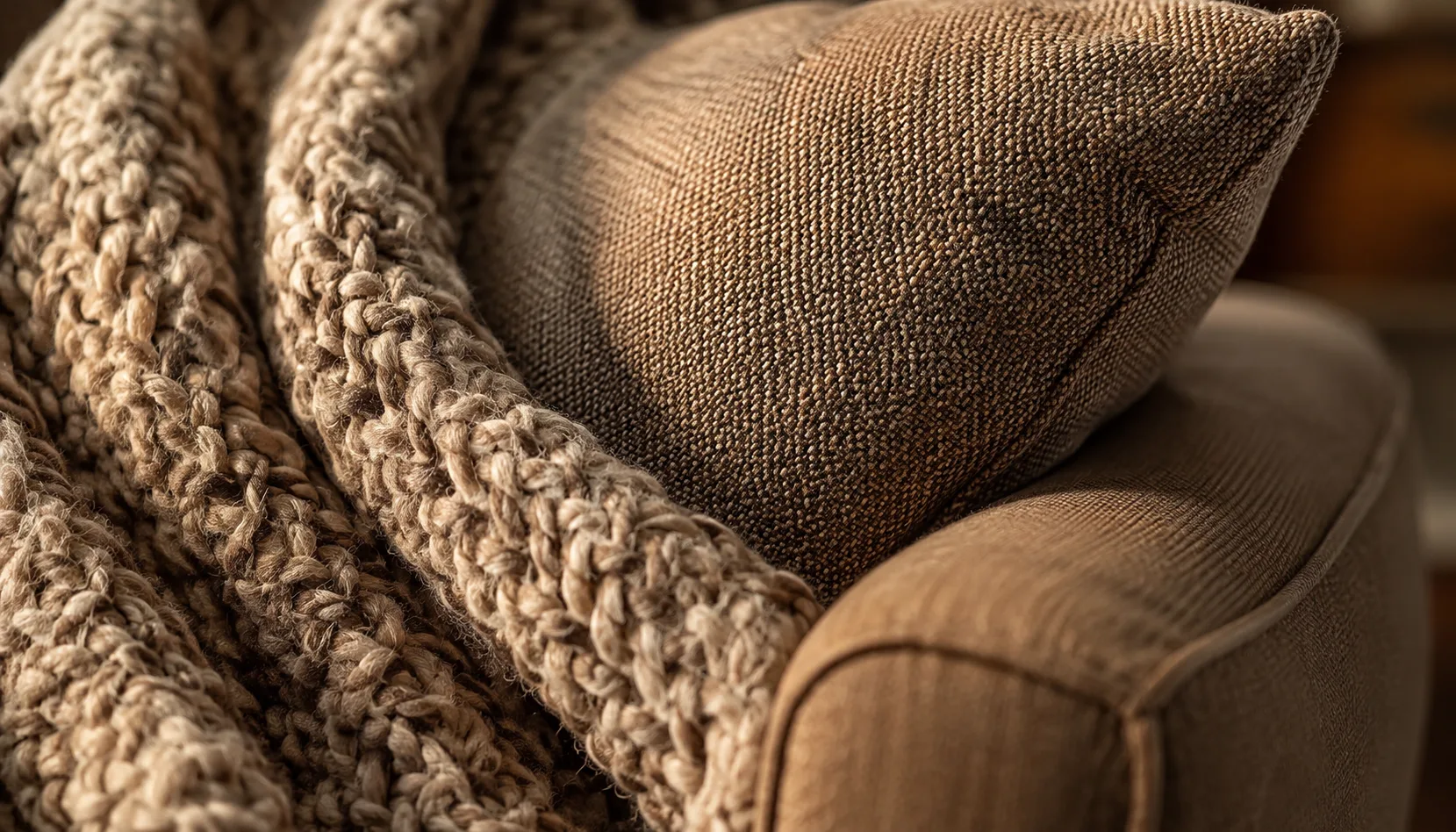
A reading nook lives or dies on comfort more than almost any other spot in a home, and textiles are the cheapest, most flexible way to build that in.
One textured throw blanket, draped rather than folded, and one or two pillows in a mix of textures, a knit and a woven fabric rather than two identical smooth ones, do more for the cozy factor than upgrading the chair itself. This is also the easiest part of the whole setup to change seasonally without any real cost.
Keep pillow count to two at most in a genuinely small nook. More than that starts to crowd the actual sitting space, which defeats the purpose of a spot meant for settling in comfortably.
A sheepskin or faux fur throw over the seat itself, rather than just draped on the back, adds a tactile layer that a standard cushion alone doesn’t provide, and it’s a small detail that reads as considered rather than default.
This is one of the lowest-cost ideas in this entire guide relative to how much it changes the feel of the finished space.
Privacy Without a Door
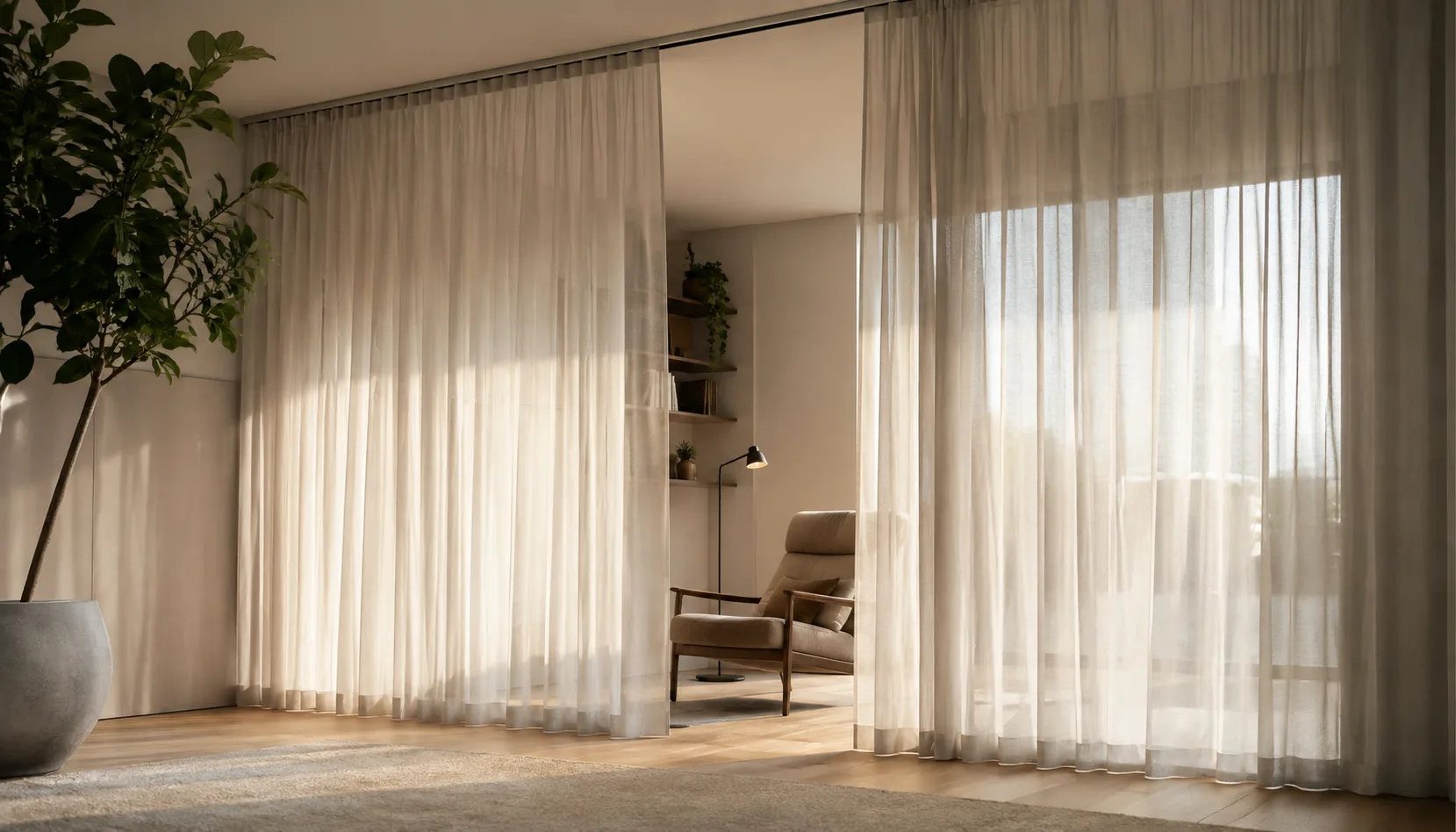
Most small-space reading nooks share a room with something else, which makes a genuine sense of retreat harder to achieve without any kind of boundary.
A curtain on a tension rod or ceiling-mounted track, positioned to partially close off the nook, adds a real sense of privacy and enclosure without requiring any construction. Even a sheer, semi-transparent curtain accomplishes this, since the psychological boundary matters more here than actual visual blocking.
A room divider or screen serves a similar function for a nook that sits more in the open, though it takes up more floor space than a curtain and works better in a larger small-space setup than a truly tight corner.
This idea pairs particularly well with the closet nook and the fake built-in ideas covered earlier, since both already have partial enclosure that a curtain can complete on the remaining open side.
Even without full privacy, this small addition changes how a nook feels to sit in, more like a retreat and less like a chair positioned in a shared room.
Choosing the Right Chair for a Tiny Footprint
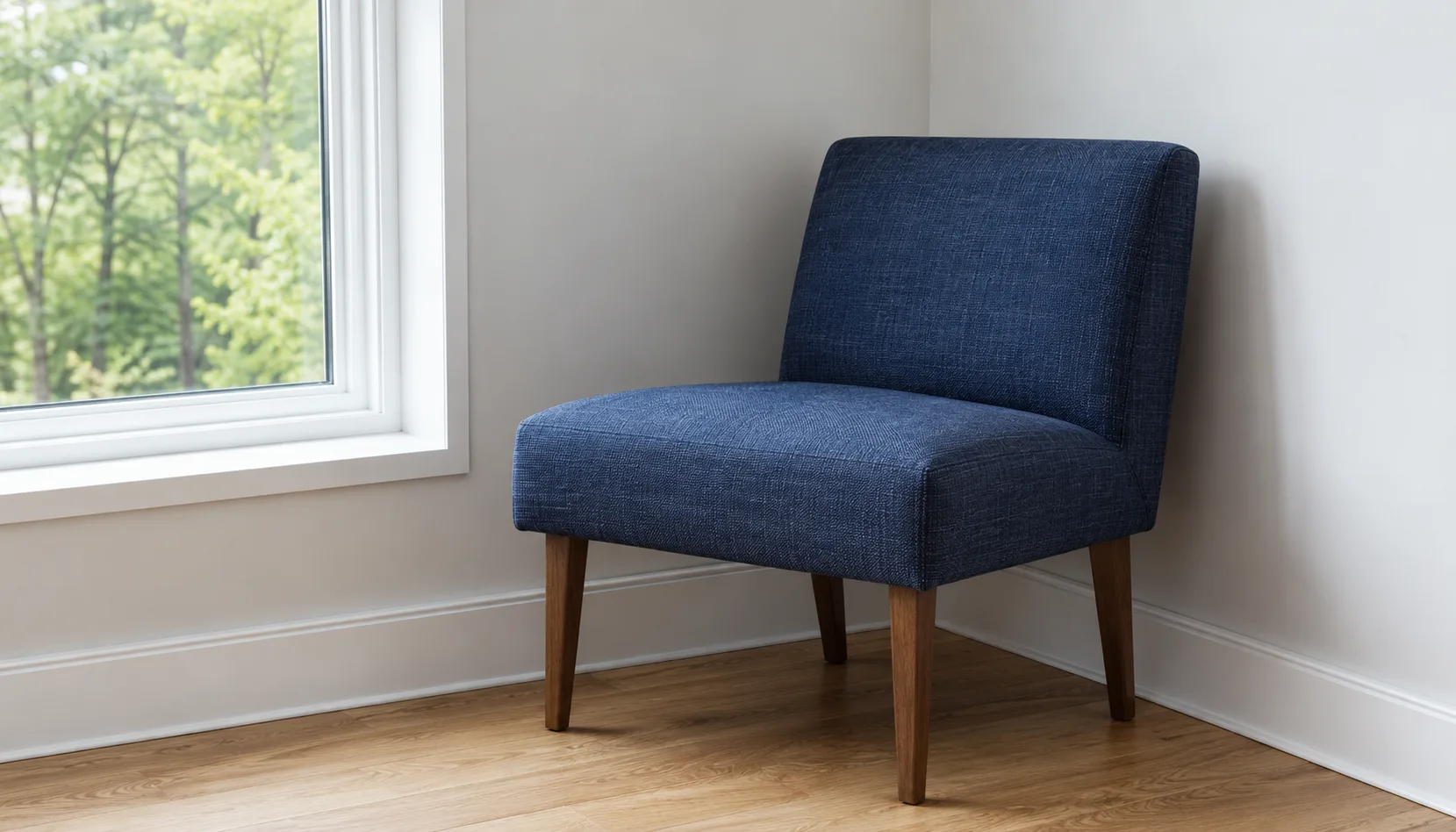
The chair itself deserves more thought than “whatever accent chair looks nice,” since scale is doing real functional work in a setup this tight.
An armless or slim-armed chair typically saves four to six inches of width compared to a fully upholstered armchair, which matters enormously in a corner measured in single-digit square footage. A swivel base is worth considering too, since it lets the chair face into the room when not in use and turn toward the window or wall when it’s actually reading time.
A chair with visible legs, rather than a fully upholstered base skirted to the floor, reads as lighter and less bulky in a small space, even at the exact same seat dimensions. This is the same visual-weight principle that applies to furniture choices throughout small-space decorating generally.
Avoid a recliner or any chair with a mechanism that needs extra clearance to fully extend. In a nook this tight, that clearance requirement usually isn’t available, and a chair that can’t fully recline defeats its own purpose.
Sit in any chair being considered for this use, if at all possible, before committing. A chair that photographs well doesn’t always feel right for actual extended reading.
Renter-Friendly Reading Nook Ideas
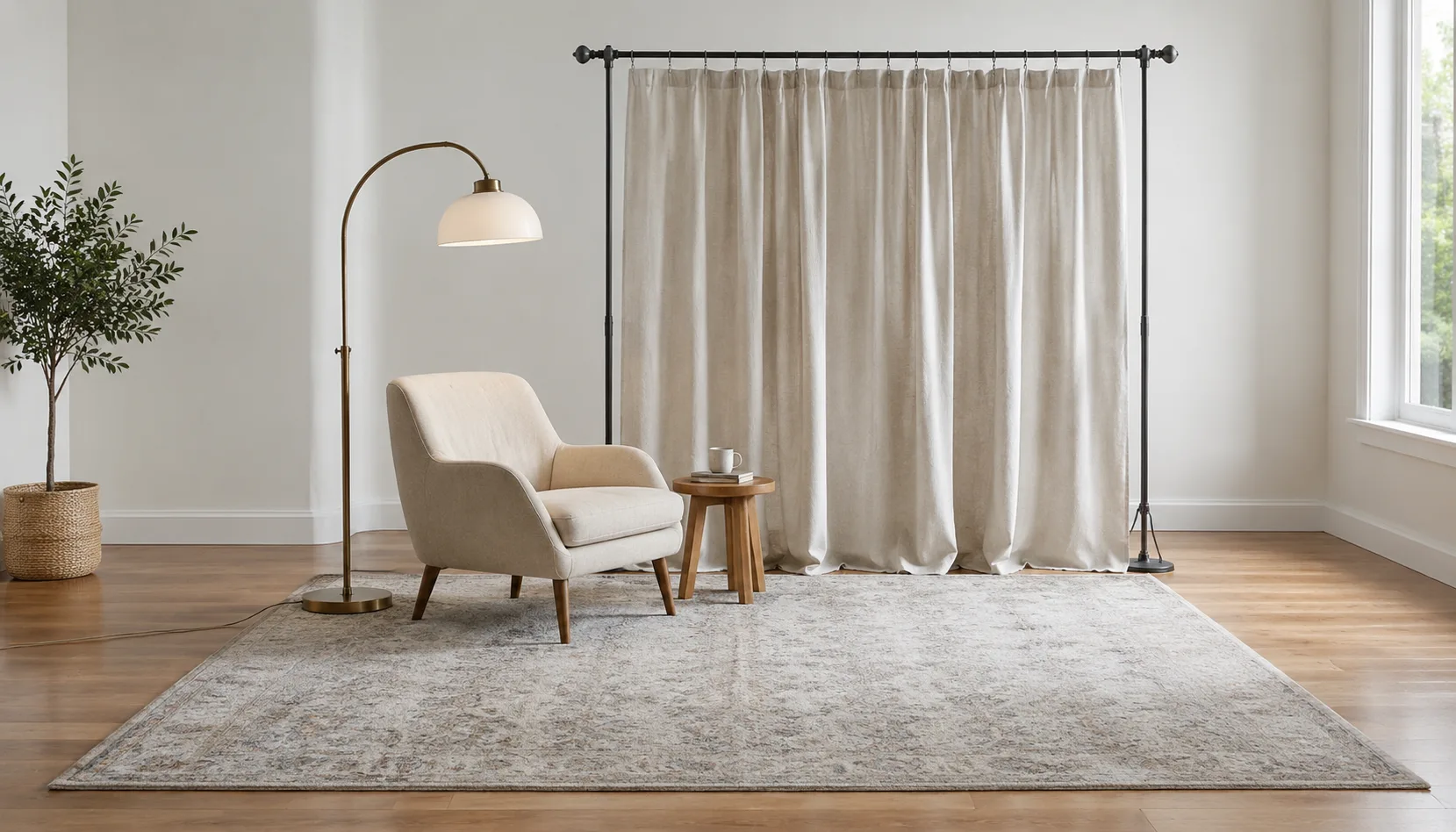
Everything covered so far can be adapted for a rental, but it’s worth pulling the renter-specific version together in one place.
A tension rod curtain, a plug-in floor lamp, a freestanding side table, and a chair cover the entire setup without touching a wall. Nothing here requires landlord approval, and all of it comes down and moves with you at the end of a lease.
Skip the closet conversion’s door removal if the doors need to go back on before move-out, but the bench cushion and light can still go in, and the doors can simply stay open rather than being physically taken off their hinges.
A large area rug, rather than anything adhered to the floor, still defines the nook’s edge the same way built-in flooring changes would in a house, and it travels with you to the next place.
This version costs more upfront than a built-in would, since nothing here is permanent or shared with the room’s existing fixtures, but it’s the only version that fully protects a security deposit.
Common Reading Nook Mistakes
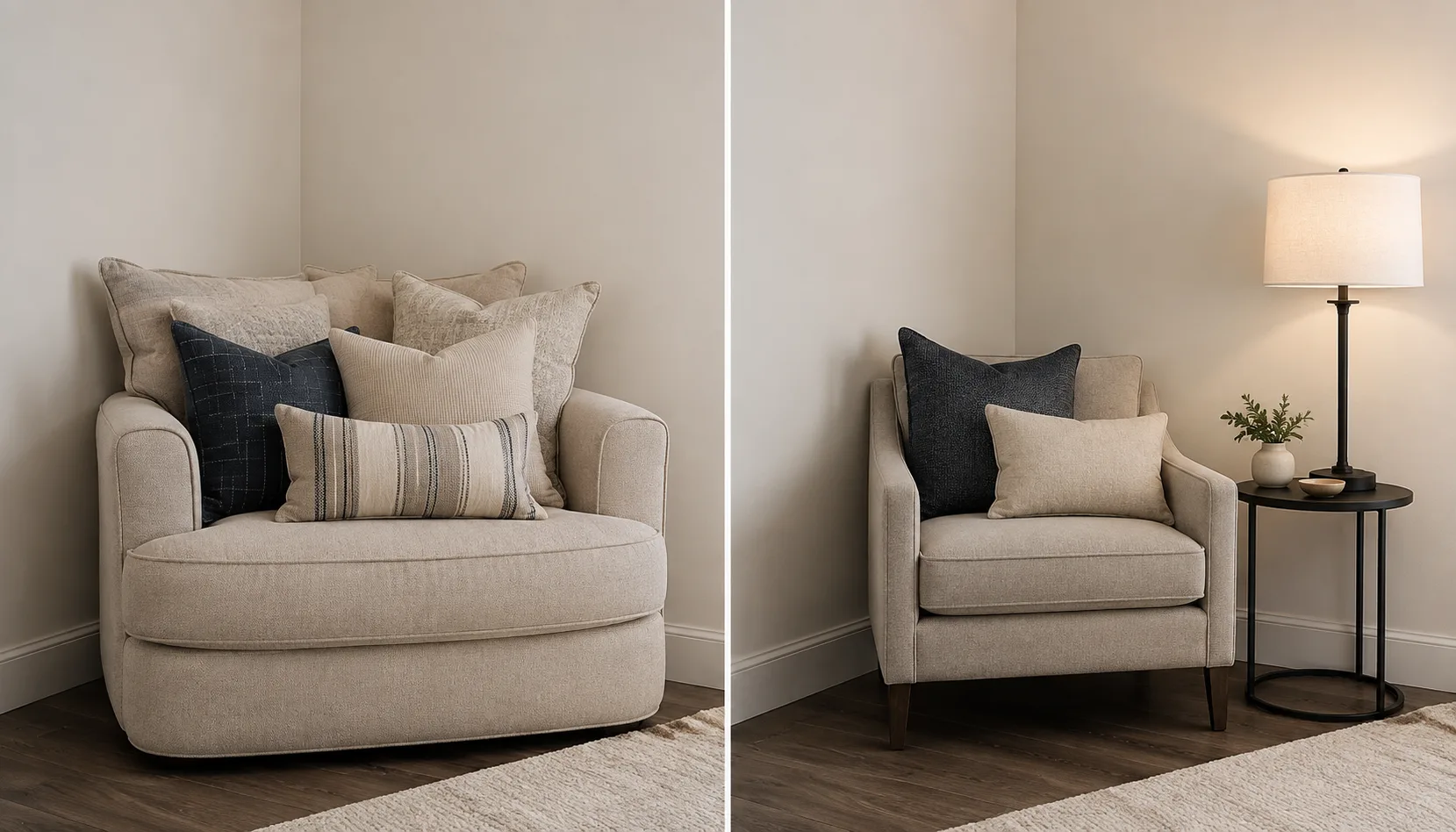
A handful of mistakes show up repeatedly when a reading nook gets squeezed into a space that wasn’t planned for one.
Mistake 1: Choosing a chair sized for a living room, not a corner. A full-size armchair in a tight nook eats the clearance that makes the spot feel intentional rather than crowded.
Mistake 2: Relying entirely on the room’s overhead light. Covered in depth earlier, and still the single most common reason a nook never quite feels like its own space.
Mistake 3: Adding a full bookshelf before checking if the corner can actually spare the width. A basket or a single slim shelf usually does the job with far less footprint.
Mistake 4: Overloading the seat with too many pillows. More than two in a genuinely small nook starts to crowd the actual sitting space.
Mistake 5: Skipping the side table entirely. A reading nook without a surface within reach for a drink or a second book feels unfinished no matter how nice the chair is.
Mistake 6: Forcing a two-person setup into a one-person space. A loveseat squeezed into a corner rarely reads as a nook, it reads as overflow seating.
A reading nook doesn’t need a spare room, a bay window, or custom carpentry. It needs one corner, a chair sized correctly for the space, a light source of its own, and a couple of the smaller details covered above. Start with the chair and the lighting, since those two choices carry most of the weight, and layer in storage and textiles once the basics are working.
For more ways to make a small space work harder without adding square footage, see our guide to Room Decoration Ideas for Small Spaces, or for another approach to making a small living room feel more open, see Bright Small Living Room.